
For backyard flock masters and small-scale breeders, the jump from a tabletop incubator to a full-size cabinet incubator is the single most impactful upgrade you can make. A cabinet incubator eliminates the guesswork of manual turning and the instability of small foam boxes, replacing them with industrial-grade temperature uniformity, automated humidity management, and capacities ranging from 136 to over 1,300 eggs. The challenge is no longer about hatching a few chicks—it is about managing a controlled environment across dozens or hundreds of developing embryos simultaneously, where even a 1°C fluctuation can wipe out an entire batch.
I’m Min — the co-founder and writer behind Gadgets Feed. I have spent hundreds of hours analyzing the technical specifications, customer feedback, and real-world hatch rates of the most popular cabinet incubators on the market to separate the machines that deliver consistent results from those that overpromise.
This guide cuts through the marketing to deliver actionable comparisons of airflow systems, humidity control methods, sensor accuracy, and build quality so you can confidently choose the best cabinet incubator for your poultry operation.
How To Choose The Best Cabinet Incubator
Selecting the right cabinet incubator is a balancing act between capacity, automation sophistication, and build quality. A machine that hits your egg count number but fails on temperature uniformity will produce disappointing hatch rates, while a premium unit with advanced humidity control may be overkill for a small seasonal hatch. Focus on these three factors to match the incubator to your real breeding volume and species mix.
Airflow and Temperature Uniformity
The single biggest differentiator in cabinet incubator performance is how air moves through the cabinet. Fan-forced systems—especially those with ducted airflow designs like Brinsea’s Induced Dual Airflow or Hatching Time’s IP55-certified AirRoute—create a uniform thermal envelope across every tray. Passive convection units or poorly sealed cabinets can develop hot spots and cold zones that cause uneven development. Look for models that explicitly describe their circulation system and check customer reviews for mentions of “temperature variation” between shelves.
Humidity Management and Sensor Fidelity
Humidity fluctuations are the leading cause of failed hatches in cabinet incubators. The best machines feature an integrated pump or external reservoir system that maintains humidity without requiring you to open the door—opening the lid during lockdown can cause catastrophic moisture loss. Premium models from Brinsea use peristaltic pump technology for precise, automated water delivery, while mid-range units like Vevitts offer rear external water refills. Always verify the sensor type: thermocouple-based sensors are more stable than basic NTC thermistors over long incubation cycles.
Capacity Versus Multi-Species Flexibility
A cabinet incubator that holds 400 chicken eggs may only accommodate 120 duck eggs or 72 goose eggs due to larger egg sizes. Some models, like the GQF 1502 from Pinnon Hatch Farms, offer universal trays that adapt to different egg diameters and lengths, while others lock you into species-specific carriers. If you hatch multiple bird types—chickens, quail, ducks, turkeys—prioritize a unit with interchangeable or adjustable cradle gaps to avoid buying expensive add-on trays later.
Quick Comparison
On smaller screens, swipe sideways to see the full table.
| Model | Category | Best For | Key Spec | Amazon |
|---|---|---|---|---|
| Brinsea Ovation 56 EX | Premium | Serious breeders wanting automation | 56 chicken eggs; Induced Dual Airflow | Amazon |
| Brinsea Ovation 28 EX | Premium | Hobbyists with small specialty hatches | 28 chicken eggs; integrated humidity pump | Amazon |
| Hatching Time CT180SH | Premium | Multi-species setter & hatcher combo | 180 chicken eggs; APC technology | Amazon |
| Pinnon Hatch Farms GQF 1502 | Premium | High-volume commercial poultry hatcheries | 288 chicken eggs; 3030 Water Reserve System | Amazon |
| YAKUST 400 Eggs Incubator | Mid-Range | High-volume budget-minded hatchers | 400 chicken eggs; adjustable egg cradles | Amazon |
| VEVOR 400 Egg Incubator | Mid-Range | Scaling up from tabletop to cabinet | 400 chicken eggs; 12V battery backup | Amazon |
| SHAWLA 256 Egg Incubator | Mid-Range | Beginner-friendly large capacity | 256 chicken eggs; transparent cover | Amazon |
| Vevitts 136 Eggs Incubator | Mid-Range | Backyard flock keepers upgrading | 136 chicken eggs; energy-efficient PE cabinet | Amazon |
| IVYX Scientific 25L Incubator | Budget | Lab work, sourdough, small reptile eggs | 25L capacity; 2°C to 60°C range | Amazon |
In‑Depth Reviews
1. Brinsea Ovation 56 EX 56-Egg Incubator
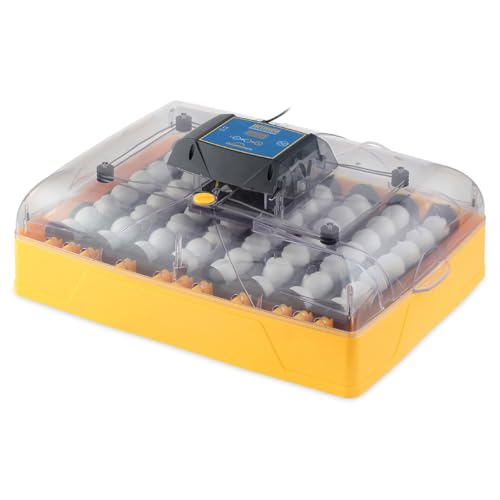
The Brinsea Ovation 56 EX is the benchmark for automated cabinet incubation, combining a peristaltic pump-driven humidity system with Induced Dual Airflow that eliminates temperature stratification across its 56-egg capacity. The digital display provides real-time temperature and humidity readings in both Fahrenheit and Celsius, while the programmable egg turner allows custom interval settings—critical for species like ducks that benefit from more frequent turning than chickens. Users consistently report hatch rates exceeding 90% even with shipped eggs, a testament to the stability of the 0.5°C temperature fluctuation tolerance.
This UK-manufactured unit includes a 3-year warranty and US-based support, which is rare at this price point. The clear-top design enables non-intrusive visual checks, and the external water reservoir minimizes the need to open the cabinet during incubation. However, the 56-egg maximum may feel restrictive for breeders running continuous production, and the ABS plastic top requires unscrewing six small fasteners for deep cleaning—a minor but notable friction point during annual maintenance.
For the serious backyard breeder who values “set it and forget it” reliability over raw egg capacity, the Ovation 56 EX is the most technologically complete cabinet incubator under 100 eggs. The auto-humidity system alone eliminates the single most common cause of failed hatches, and the low noise operation makes it suitable for indoor use in a laundry room or home office.
Why it’s great
- Fully automated peristaltic pump humidity control—no lid opening required during incubation
- Induced Dual Airflow delivers uniform temperature within 0.5°C across all trays
- 3-year warranty with responsive US-based customer service
Good to know
- Top disassembly for cleaning involves removing six small screws
- Hatching baskets are not included for lockdown phase
2. Brinsea Ovation 28 EX Incubator
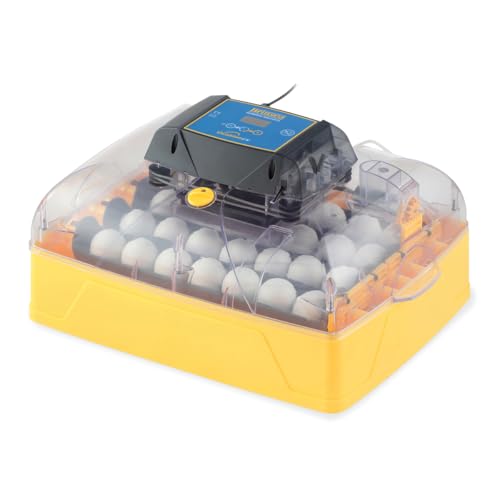
The Brinsea Ovation 28 EX inherits the same peristaltic pump humidity technology and Induced Dual Airflow as its 56-egg sibling but in a more compact footprint ideal for hobbyists with limited space. The 28-egg capacity is a sweet spot for small-scale breeders who hatch multiple species seasonally—it accommodates chicken, quail, duck, and turkey eggs with optional large carriers. The integrated alarm system alerts users to temperature deviations, power interruptions, and humidity drifts, which is especially critical when hatching shipped eggs with unknown viability.
Customer feedback over seven years of production reveals near-100% hatch rates when the unit is set up correctly, though some users note the peristaltic pump hose can slip off the fitting during shipping and require a zip-tie fix. The humidity sensor defaults to a higher reading until the included sponge is removed during maintenance, a quirky calibration step. The 8-pound weight and 16 x 13 x 9-inch dimensions make it the most portable cabinet-style incubator in this guide—genuinely easy to move from a garage to a classroom for embryology demonstrations.
Where the Ovation 28 EX truly excels is in reliability for rare-breed conservationists and wildlife rehabilitators who cannot afford batch failures. The UK-manufactured ABS plastic with Biomaster antimicrobial protection resists bacterial buildup, and the 3-year warranty provides peace of mind that cheap imports seldom match. The trade-off is straightforward: you pay a premium per egg slot for the automation and build quality.
Why it’s great
- Fully automated humidity pump eliminates the need to open the lid during incubation
- Consistent 0.5°C temperature stability reported by users over years of use
- Lightweight 8-pound design with clear top for easy monitoring
Good to know
- Peristaltic pump hose may need a zip-tie to secure after shipping
- Optional large carriers required for duck eggs (not included)
3. Hatching Time CT180SH Incubator by Cimuka
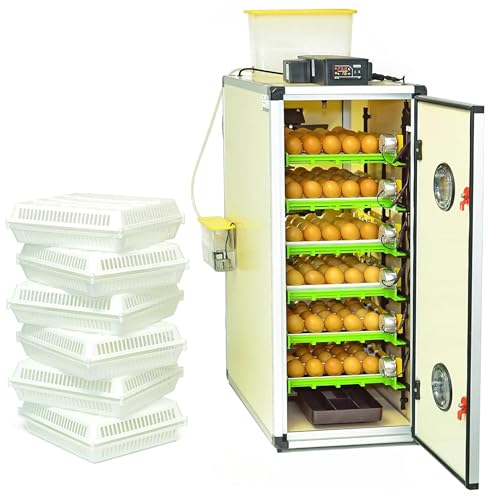
The Hatching Time CT180SH from Cimuka redefines the setter-hatcher category with Active Periodic Cooling (APC) technology, a first-in-market system that cycles temperature and humidity to simulate a broody hen leaving the nest. This natural cooling pattern triggers stronger embryo development, particularly benefiting duck and goose eggs that have higher lipid content and require more ventilation during late incubation. The cabinet holds 180 chicken eggs in settable trays that convert to hatching baskets during lockdown—no separate hatcher unit required.
The Humisonic humidity system and AirRoute IP55-certified ventilation work in concert to maintain uniform conditions across all shelves, a critical advantage over units that rely on a single fan. Users upgrading from GQF machines consistently report that the CT180SH holds temperature without the 1-2°F swings common in older designs. The dual front-and-back door design simplifies egg handling and cleaning, and the Conturn 30 egg turners operate vibration-free, reducing embryo stress during the critical first 18 days.
For mid-scale breeders running continuous production cycles, the 180-egg capacity combined with APC and dual-access doors makes this the most versatile incubator under . The unit is heavier than its footprint suggests—the insulated construction adds thermal mass that stabilizes internal conditions against room temperature fluctuations. The only real downside is the learning curve for programming the APC intervals, though the manual provides clear species-specific presets.
Why it’s great
- Active Periodic Cooling mimics natural nest-leaving for stronger embryo development
- IP55-certified AirRoute ventilation ensures uniform temperature and humidity
- Dual front and back doors for easier access and cleaning
Good to know
- APC programming requires a short learning curve
- Some units arrive with minor cosmetic damage from shipping
4. Pinnon Hatch Farms GQF 1502 Cabinet Incubator

The Pinnon Hatch Farms GQF 1502 is a commercial-grade cabinet incubator designed for high-volume hatcheries, handling up to 288 chicken eggs or 1,368 quail eggs with its included universal trays. The 3030 Water Reserve System integrates a 5-gallon external tank with a constant-level humidity pan, drastically reducing daily refill frequency—a critical feature for production environments where every minute counts. The high-strength plastic board construction provides excellent insulation and noise dampening, and the LCD display with on-board computer gives real-time temperature and humidity readouts.
Hand-assembled and tested for 24 hours before shipping, the GQF 1502 includes three automatically turned racks plus a dedicated hatching tray, functioning as both a setter and hatcher out of the box. The electronic egg turning control with audio/visual indicators alerts users to rotation cycles, and the easy-view door allows non-intrusive inspection. Users report successful hatches of emu and duck eggs in addition to chicken, thanks to the adjustable tray spacing.
The machine’s 31.75-inch height and 55+ pound weight require a dedicated stand or sturdy table, and the control panel mounted on the back side of the cabinet means you must reach around to adjust settings—a design ergonomic shortcoming noted by multiple users. The 20% restocking fee on returns also makes it critical to verify the unit works within the first 24 hours. For commercial operators who value capacity and a known brand over cutting-edge features like APC, the GQF 1502 remains a workhorse.
Why it’s great
- 5-gallon external water tank minimizes refill frequency in high-volume hatches
- Hand-assembled and 24-hour tested before shipping for quality assurance
- Universal trays accommodate chicken, quail, duck, goose, and emu eggs
Good to know
- Control panel is located on the back of the cabinet, awkward to reach
- Returns are subject to a 20% restocking fee
5. YAKUST 400 Eggs Incubator
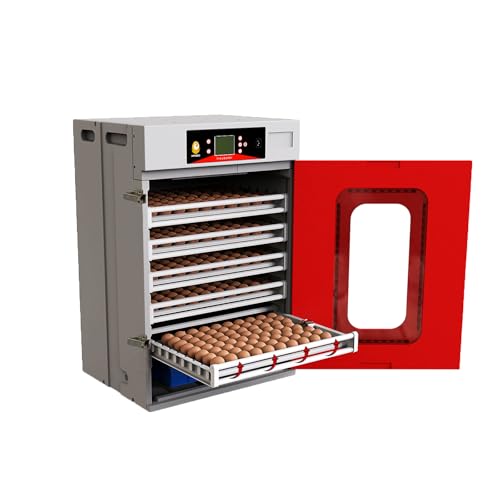
The YAKUST 400 Eggs Incubator delivers an impressive 400-egg capacity at a price point that typically buys half that capacity from premium brands, making it a strong contender for budget-conscious breeders scaling up production. The metal-frame cabinet with removable door and adjustable egg cradles can accommodate chicken, duck, goose, and quail eggs, and the LED display provides clear real-time temperature and humidity readouts. The automatic egg turning system operates silently, and the intelligent alarm alerts users to deviations from preset parameters.
Customers highlight the lightweight construction—around 40-50 pounds makes it manageable for two-person assembly—and the clear instruction set for setup. The motor connectors for each tray come unplugged during shipping and must be reseated before first use, a quirk of the design that is clearly noted in the pre-use instructions. The unit lacks casters, so you will need a sturdy cart if you plan to move it between rooms, and the top-hinged door uses four clasps that some users found flimsy.
The YAKUST’s main vulnerability is its open water pit design at the bottom, which experienced breeders warn can be a drowning hazard for chicks that hatch early or roll into it during the hatch window. The roller rotation timing is also fixed, not adjustable per species—a limitation for duck breeders who prefer more frequent turning. For operators who primarily hatch chicken eggs and are comfortable with the water pit risk, the per-egg cost of this incubator is unmatched.
Why it’s great
- 400-egg capacity at a cost significantly lower than premium equivalents
- Lightweight metal cabinet with handles and removable door for easy assembly
- Adjustable egg cradles accommodate multiple species
Good to know
- Open water pit at bottom presents a drowning hazard for hatching chicks
- Roller rotation timing is fixed and not adjustable by species
6. VEVOR 400 Egg Incubator Cabinet
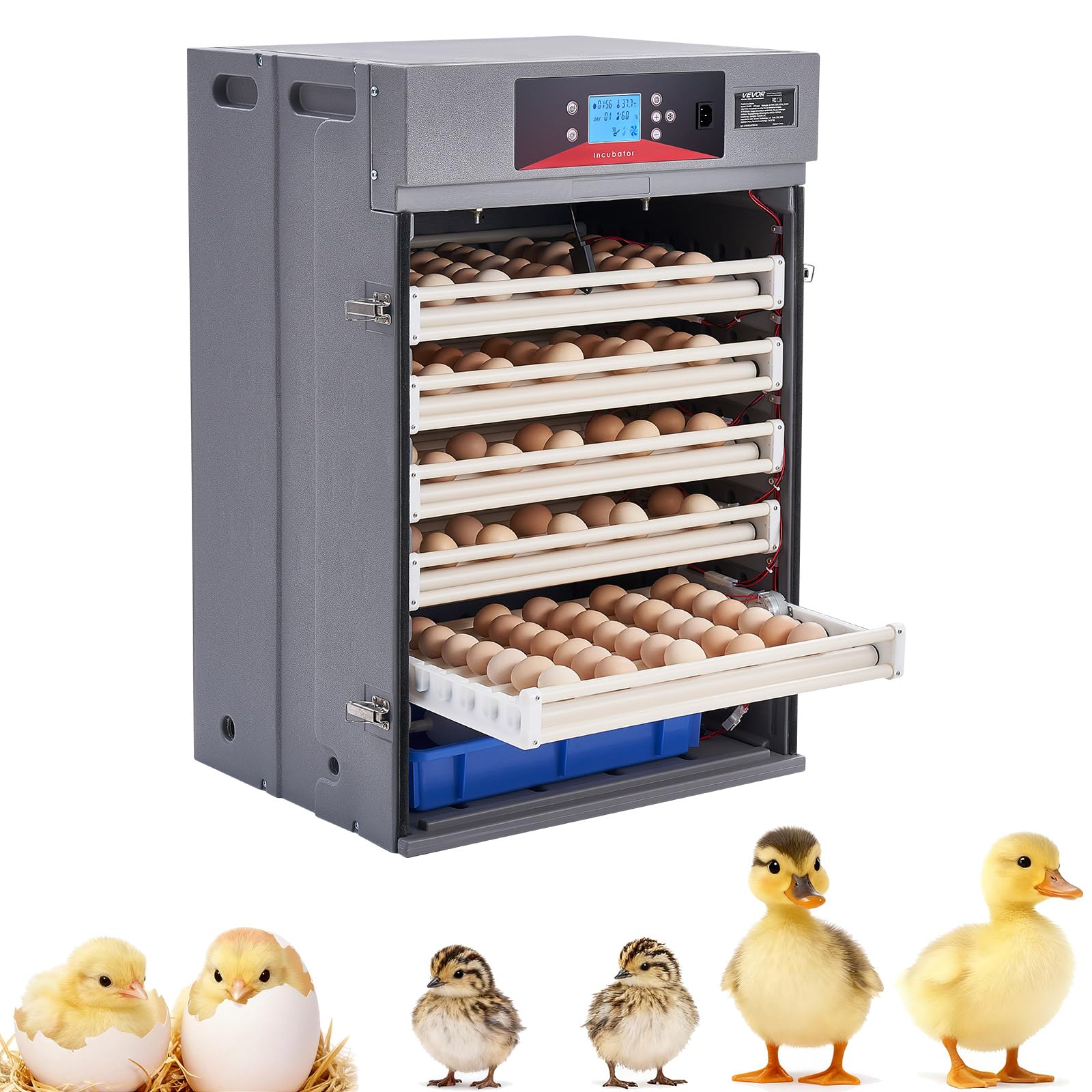
The VEVOR 400 Egg Incubator differentiates itself with a 360° air circulation design and the ability to switch to a 12V battery power source during outages, a critical failsafe for breeders in rural areas with unreliable electrical grids. The integrated temperature and humidity sensor provides real-time monitoring displayed on a digital screen, and the 360° egg-turning design ensures every egg receives even temperature exposure during rotation. The PP shell with transparent door allows non-intrusive observation of embryo development, and the 55-pound weight with 37.6-inch height gives it a substantial, stable footprint.
User experiences with temperature uniformity are mixed: one operator measured a 2°F variation between the left and right sides of the cabinet, while others reported perfect temperature stability across multiple batches. The instruction manual advises keeping the styrofoam packing for additional insulation in cold environments, which suggests the factory insulation may be marginal in extreme temperatures. The egg turner mechanism rocks rather than fully rotates eggs, and the internal lighting works well for candling.
The VEVOR’s strongest selling point is its dual-power capability—the 12V port lets you connect a car battery or deep-cycle marine battery during outages, potentially saving an entire batch. However, the inability to disable the alarm system and the slick interior surface that contributed to splay leg issues in quail are notable drawbacks. For the budget-conscious breeder who prioritizes backup power over precision engineering, the VEVOR offers a compelling package.
Why it’s great
- 12V battery backup port keeps eggs viable during power outages
- 360° air circulation design and transparent door for easy monitoring
- Large 400-egg capacity in a stable cabinet platform
Good to know
- Some units show 2°F temperature variation between sides
- Egg turner rocks rather than fully rotates eggs
7. SHAWLA 256 Egg Incubator

The SHAWLA 256 Egg Incubator is an entry-level cabinet that offers a 256-egg capacity at a price point competitive with premium tabletop units. The transparent ABS plastic cover allows full visibility of the hatching process, making it an excellent educational tool for classrooms or 4-H programs. The LED display provides temperature, humidity, and egg turning time data, and the automatic turner cycles eggs every two hours to improve hatch speed without manual intervention.
This incubator uses an external water system, but experienced users report high water consumption—approximately 1 gallon per day to maintain humidity in dry environments. Some operators have built an external water pump to extend refill intervals. The unit’s heating element and drawer alignment have drawn criticism from a subset of users, with several reporting difficulty holding temperature. However, repeat customers note that placing the unit on a perfectly level surface and adding a warm blanket wrap resolves most performance issues.
The SHAWLA is best suited for beginners who want a large-capacity unit to learn the basics of cabinet incubation without a large financial commitment. The transparent cover that makes it great for education also means it is not as thermally efficient as insulated solid-panel cabinets. Users consistently stress that this is not a “set it and forget it” machine—it requires daily attention to water levels and temperature calibration.
Why it’s great
- Fully transparent cover provides excellent visibility for teaching and observation
- 256-egg capacity at a price accessible to beginners
- Automatic egg turning every 2 hours reduces manual labor
Good to know
- High water consumption (~1 gallon/day) in dry environments
- Some units have difficulty holding stable temperature without additional insulation
8. Vevitts 136 Eggs Automatic Incubator
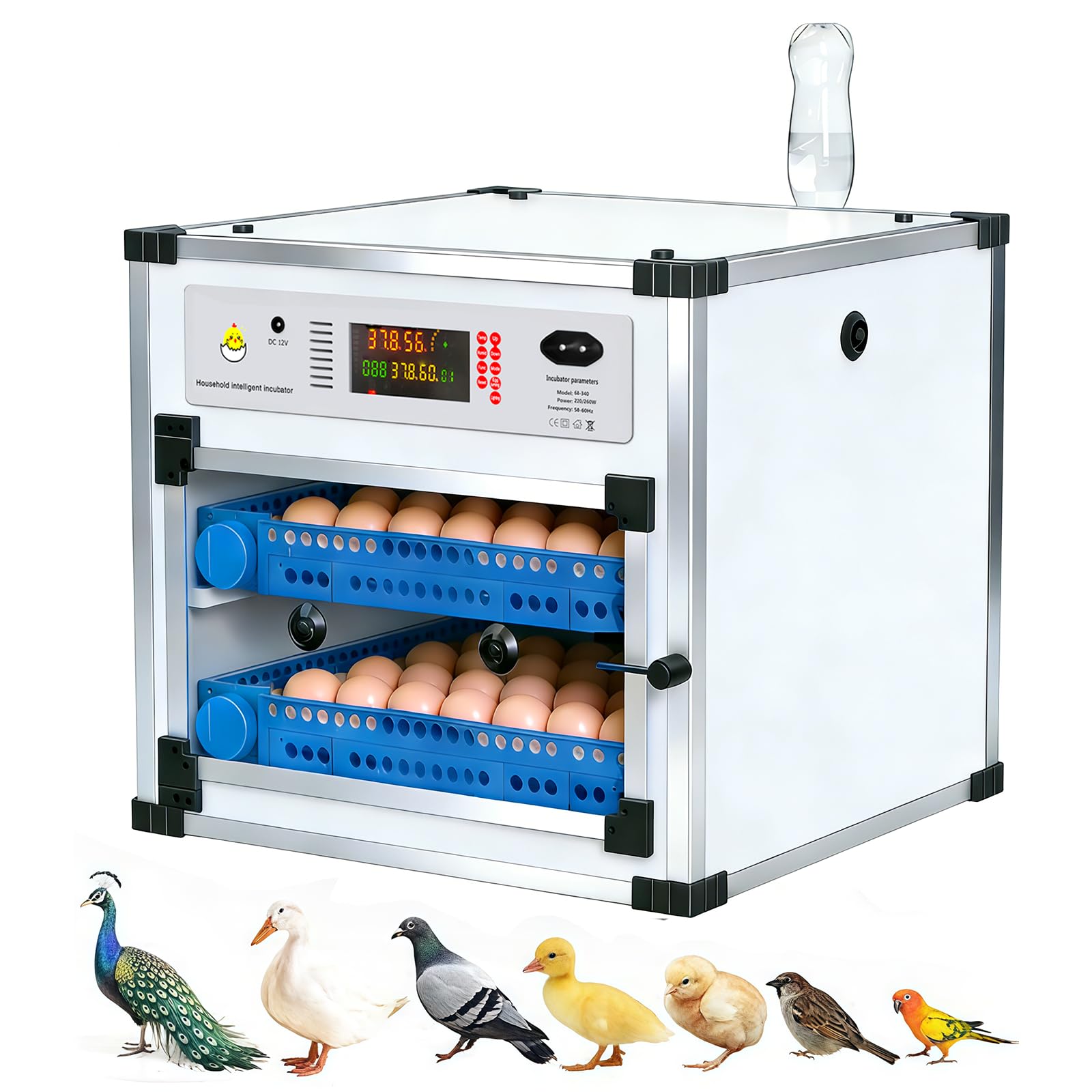
The Vevitts 136 Eggs Incubator is a mid-range cabinet built for the backyard flock keeper who is ready to move beyond tabletop units. The PE material cabinet is corrosion-resistant and the company claims 70% lower energy consumption compared to comparable products, a significant long-term savings for continuous operation. The rear external water refill system allows you to add water without opening the door—preserving heat and humidity—and the automatic egg turner uses adjustable cradle gaps to accommodate different egg sizes without causing misalignment.
First-time users report strong results: 38 out of 40 chicken eggs hatched on the first run, and quail hatch rates reached 88% in subsequent batches. The intelligent alarm system alerts users to temperature and humidity deviations before they become critical, and the panoramic transparent window (with protective film removed) allows non-intrusive monitoring. However, some units require switching to manual mode after the initial cycle to maintain performance, and the lack of a Celsius/Fahrenheit toggle is frustrating for users in certain regions.
The 136-egg sweet spot makes this ideal for seasonal breeders who hatch two to three batches per year without needing the industrial capacity of a 400-egg unit. The energy efficiency claim holds up under real-world testing—users running the unit continuously report modest electricity bill impacts. The one-year manufacturer warranty is shorter than Brinsea’s three-year coverage, so buyers should verify the unit’s full functionality within the first 30 days of ownership.
Why it’s great
- Rear external water refill eliminates the need to open the door for humidity maintenance
- Energy-efficient PE cabinet reportedly uses 70% less power than comparable models
- Adjustable cradle gaps accommodate multiple egg sizes from quail to goose
Good to know
- Some units require manual mode after the first cycle for consistent performance
- No Celsius/Fahrenheit toggle button on the control interface
9. IVYX Scientific 25L Incubator

The IVYX Scientific 25L Incubator is fundamentally different from the poultry-focused cabinets in this guide—it is a lab-grade unit that can both heat to 60°C and cool to approximately 20°C below ambient temperature, making it equally suited for sourdough starter cultivation, polyacrylamide gel solidification, kefir fermentation, and biological culture incubation. The 110V standard power cord and included 12V car adapter mean it operates on the go, and the 16-pound weight makes it genuinely portable.
The temperature control is accurate to 0.5°C when the probe and product are on the same shelf, though the displayed temperature may need a +3°C offset to match internal conditions (e.g., set to 40°C for a true 37°C). Users running it for lab applications report reliable service for nearly a year before power switch issues, with customer service replacing units without requiring the original to be returned. The unit should not be left plugged in continuously due to a design quirk where it automatically powers on after a blackout.
For the niche audience that needs incubation capabilities for non-poultry purposes—yeast cultivation, petri dish incubation, or reptile hatching of small clutches—this unit offers a unique combination of heating and cooling in a compact form factor. The 25L internal volume (9 x 14.5 x 10.5 inches) is insufficient for standard chicken eggs but supports small reptile eggs, test tubes, and culture plates. It is not a competitor to the 136-400 egg units above, but it occupies a valid sub-category for specialty users.
Why it’s great
- Unique dual heating and cooling capability (2°C to 60°C range)
- Includes both 110V power cord and 12V car adapter for portable use
- Lightweight 16-pound construction with small footprint (19 x 16 x 13 inches)
Good to know
- Display temperature requires calibration offset for accurate internal readings
- Automatically powers on after a blackout; not safe for 24/7 continuous use
FAQ
How does a cabinet incubator differ from a tabletop incubator?
What is the ideal temperature and humidity for most poultry eggs?
Do I need a separate hatcher if I have a cabinet incubator?
Final Thoughts: The Verdict
For most users, the best cabinet incubator winner is the Brinsea Ovation 56 EX because it combines peristaltic pump humidity automation, Induced Dual Airflow uniformity, and a forgiving 56-egg capacity that fits both hobbyists and small-scale breeders. If you need Active Periodic Cooling for stronger duck and goose hatches, grab the Hatching Time CT180SH. And for high-volume commercial production with a 288-egg capacity, nothing beats the Pinnon Hatch Farms GQF 1502.