
That hollow, distant, or muddy vocal quality you hear on a recording isn’t your voice—it’s the microphone failing to capture the natural presence of your speech. When you rely on a built-in headset or laptop mic for streaming, podcasting, or remote work, you lose the critical low-end warmth and articulate high-frequency detail that keeps an audience engaged. Swapping to a dedicated cable microphone places a focused capsule closer to your mouth, fundamentally changing how your voice cuts through noisy chat channels or sits in a mix.
I’m Min — the co-founder and writer behind Gadgets Feed. I have spent hundreds of hours cross-referencing cable microphone pickup patterns, self-noise floors, gain requirements, and capsule types to identify which studio-quality models actually deliver on their promise without forcing you into complex audio interfaces or expensive signal chains.
Whether you are upgrading from a headset or assembling your first home studio, the right model transforms your recordings. This guide breaks down the top contenders in the best cable microphone landscape by analyzing real specifications like frequency response, impedance, and polar patterns so you can match a mic to your exact voice and use case.
How To Choose The Best Cable Microphone
Selecting a cable microphone requires understanding how its capsule type, polar pattern, and connection interact with your recording environment. A mic that sounds pristine in a treated vocal booth can sound thin and hollow in an untreated bedroom. Focus on three critical pillars before looking at any brand name.
Capsule Type: Dynamic vs. Condenser
Dynamic microphones use a moving coil design that handles high sound pressure levels without distortion and naturally rejects ambient room noise. They require significant gain—often 60 dB or more—from your interface or preamp. Condenser capsules are electrically charged diaphragms that capture far more detail and transient response, making them ideal for voice-over and streaming, but they are more sensitive to background rumble, fan noise, and untreated acoustics. For a home office with no acoustic treatment, a dynamic cable microphone often yields cleaner results.
Polar Pattern: Cardioid, Supercardioid, or Omnidirectional
A cardioid polar pattern picks up sound from the front while rejecting about half the noise from the sides and rear, making it the default for solo podcasting and streaming. Supercardioid patterns tighten that front focus even further, reducing side pickup but introducing a small rear lobe that can catch reflections behind you. Omnidirectional patterns capture sound equally from all directions and should be avoided for single-voice use because they amplify room reverb and background chatter.
Impedance and Gain Compatibility
Impedance, measured in Ohms, determines how much voltage a mic outputs. Low-impedance XLR microphones (150–600 Ohms) can drive long cable runs without signal degradation but often require a preamp or cloudlifter to boost the signal to usable levels, especially for dynamic capsules. USB microphones bypass this entirely by integrating the preamp inside the body, but they limit your ability to upgrade components later. Choose XLR if you plan to expand your studio; choose USB for immediate plug-and-play simplicity.
Quick Comparison
On smaller screens, swipe sideways to see the full table.
| Model | Category | Best For | Key Spec | Amazon |
|---|---|---|---|---|
| Sennheiser Profile | Condenser USB | Natural vocal warmth | 20 Hz – 20 kHz frequency response | Amazon |
| HyperX QuadCast 2 | Condenser USB | Versatile streaming | 32 Ohm impedance | Amazon |
| Logitech G Blue Yeti | Condenser USB | Multiple pickup patterns | Four selectable polar patterns | Amazon |
| Razer Seiren V2 X | Condenser USB | Gaming precision | Supercardioid pattern | Amazon |
| HyperX SoloCast 2 | Condenser USB | Compact desk setup | 24-bit / 96 kHz sampling | Amazon |
| Razer Seiren V3 Mini | Condenser USB | Tiny footprint | Supercardioid pattern | Amazon |
| MAONO PD100 | Dynamic XLR | Entry-level broadcast | 60 Hz – 14 kHz frequency range | Amazon |
In‑Depth Reviews
1. Sennheiser Profile USB Cardioid Condenser Microphone

The Sennheiser Profile delivers a natural, warm tonality that flatters the human voice without requiring any software EQ. Its 20 Hz to 20 kHz frequency response covers the full audible spectrum, and the built-in cardioid condenser capsule captures chest resonance and vocal presence without the harshness many budget USB mics introduce. The 717-gram all-metal construction provides heft that stays planted on the desk, and the compact footprint leaves room for a keyboard and mouse alongside it.
Connectivity is pure plug-and-play via the included 1.2-meter USB-C cable, and the mic is recognized natively by Windows, macOS, and Linux without any driver installation. Onboard controls include a mute button alongside dedicated gain, mix, and volume knobs, giving you instant tactile adjustments without opening a software suite. The built-in headphone jack provides zero-latency monitoring, a critical feature for live streaming where delay breaks timing.
This cable microphone’s cardioid pickup pattern effectively attenuates keyboard clatter and rotating fan noise, though it will still capture loud room reflections if the space lacks acoustic panels. The low-profile table stand works well for tight desks, but the mic sits low enough that some users prefer a boom arm to position the capsule at mouth level. Sennheiser’s reputation for German-engineered components backs the reliability, making this a long-term investment for creators who value audio quality over flashy RGB features.
Why it’s great
- Natural, warm sound that requires no post-processing EQ
- Zero-latency headphone monitoring for live streaming and recording
- Plug-and-play USB-C compatibility with all major operating systems
Good to know
- Low-profile desk stand may require a boom arm for optimal mouth positioning
- Does not offer multiple polar patterns or onboard RGB controls
2. HyperX QuadCast 2 USB Microphone

The HyperX QuadCast 2 improves on its predecessor with a USB-C connection, a removable shock mount, and an aluminum body that strikes a balance between lightweight portability at 335 grams and structural rigidity. Its condenser capsule captures sound from 20 Hz to 20 kHz, and the cardioid pattern effectively isolates your voice from side noise like mechanical keyboard switches or mouse clicks. The built-in anti-vibration shock mount further decouples the capsule from desk bumps and accidental knocks, a feature that matters when the mic sits on a busy gaming desk.
Onboard controls include a tap-to-mute sensor with a red LED indicator that provides clear visual confirmation of your mute status. The rear panel houses a gain control dial and a 3.5 mm headphone jack for latency-free monitoring. HyperX NGENUITY software allows you to adjust the microphone’s EQ and side-tone mix, though the mic works perfectly out of the box without any software intervention.
The QuadCast 2 uses a 32 Ohm impedance that interfaces cleanly with any PC or laptop headphone jack, and its 77 dB signal-to-noise ratio keeps self-noise almost inaudible in quiet recordings. The included USB-C cable runs 9.84 feet, giving you ample slack for routing behind a desk. The single red LED scheme may clash with certain setups, but the core audio performance justifies the premium placement in this list.
Why it’s great
- Removable shock mount effectively decouples capsule from desk vibrations
- Zero-latency headphone monitoring and tap-to-mute with visual LED indicator
- USB-C connectivity with a long 9.84-foot cable for flexible desk routing
Good to know
- Single red LED lighting may not match all gaming or studio setups
- Software EQ adjustment requires HyperX NGENUITY installation
3. Logitech G Blue Yeti USB Microphone
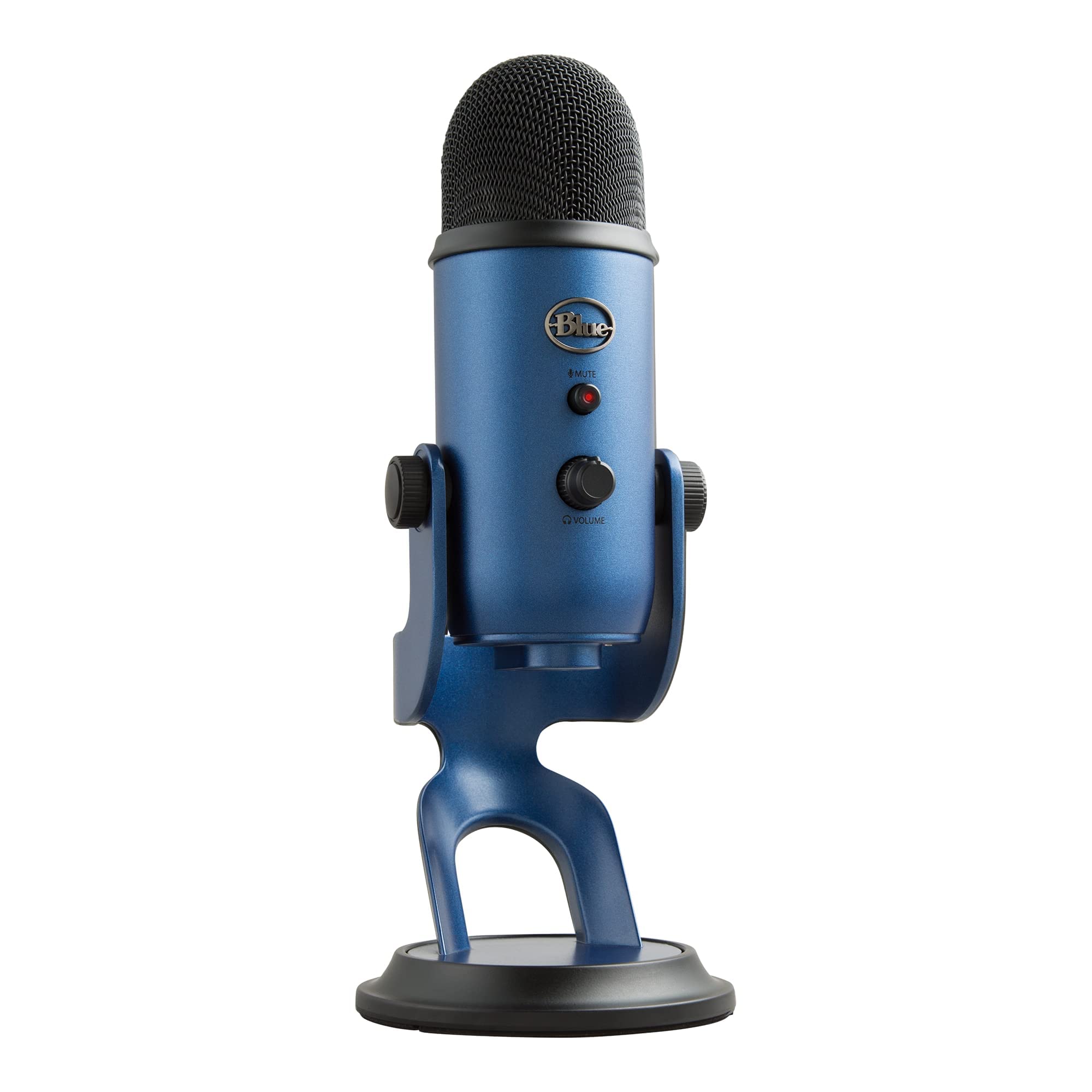
The Blue Yeti remains a staple in the broadcasting world because of its three-capsule array that yields four selectable pickup patterns: cardioid, omnidirectional, bidirectional, and stereo. This flexibility means the same microphone that captures a single podcast host can also record a two-person interview or an acoustic guitar with room ambiance. The 45 dB sensitivity rating ensures the condenser capsule picks up quiet vocal nuances, but it also means the mic captures more room echo than a dynamic microphone would in the same space.
Blue VO!CE software provides a suite of broadcast-grade processing including compression, EQ, and noise gate effects that run in real time on your computer. The onboard controls include a mute button, headphone volume knob, pattern selection dial, and mic gain knob, giving you manual oversight without reaching for a mouse. The adjustable desktop stand allows you to tilt the mic toward your mouth, and its 11.6-inch height sits above most monitor bezels.
The Yeti’s self-noise floor is higher than modern USB microphones, meaning you may hear a faint hiss in quiet passages if you boost gain past 80%. Its 100 dB maximum SPL handles loud vocals without peaking, but the metal body is heavy at over 2 pounds, making it less suitable for boom arms with low weight ratings. For creators who switch between solo recording, interviews, and instruments, the Blue Yeti’s pattern flexibility is unmatched at this tier.
Why it’s great
- Four selectable pickup patterns replace multiple microphones for different recording scenarios
- Blue VO!CE software adds real-time broadcast-grade compression, EQ, and noise gate effects
- Sturdy adjustable desk stand positions the capsule well above monitor height
Good to know
- Self-noise floor is higher than modern USB mics, producing faint hiss at high gain levels
- Heavy all-metal construction exceeds 2 pounds, limiting boom arm compatibility
4. Razer Seiren V2 X USB Condenser Microphone

The Razer Seiren V2 X uses a 25 mm condenser capsule paired with a supercardioid pickup pattern, giving it a narrower front acceptance angle than a standard cardioid mic. This tighter focus rejects keyboard switches, mouse clicks, and fan noise from the sides more aggressively, making it an excellent choice for gaming setups where the PC tower sits close to the desk. The integrated digital limiter automatically catches sudden volume spikes—like a shout during a clutch moment—before they cause distortion or peaking.
Onboard controls include a front-facing mute button and a gain control knob that lets you adjust input sensitivity without opening software. The 3.5 mm headphone jack provides zero-latency monitoring so you can hear yourself in real time. The built-in shock absorber dampens vibrations from accidental desk bumps, though the plastic enclosure makes the microphone feel less premium than all-metal alternatives.
At a 78 dB signal-to-noise ratio, self-noise is present but masked during active voice chat or streaming. The supercardioid pattern creates a small rear lobe that can pick up wall reflections if the mic is placed too close to a rear surface. The included USB-C to USB-A cable is longer and thicker than the previous generation, and Razer Synapse software allows you to set sample rates and adjust side-tone levels.
Why it’s great
- Supercardioid pattern aggressively rejects side noise from keyboards and fans
- Integrated digital limiter prevents audio clipping during loud vocal spikes
- Dedicated mute button and gain knob for tactile control without software
Good to know
- Plastic enclosure feels less durable than metal-body competitors
- Supercardioid rear lobe can pick up wall reflections if placed poorly
5. HyperX SoloCast 2 USB Condenser Microphone
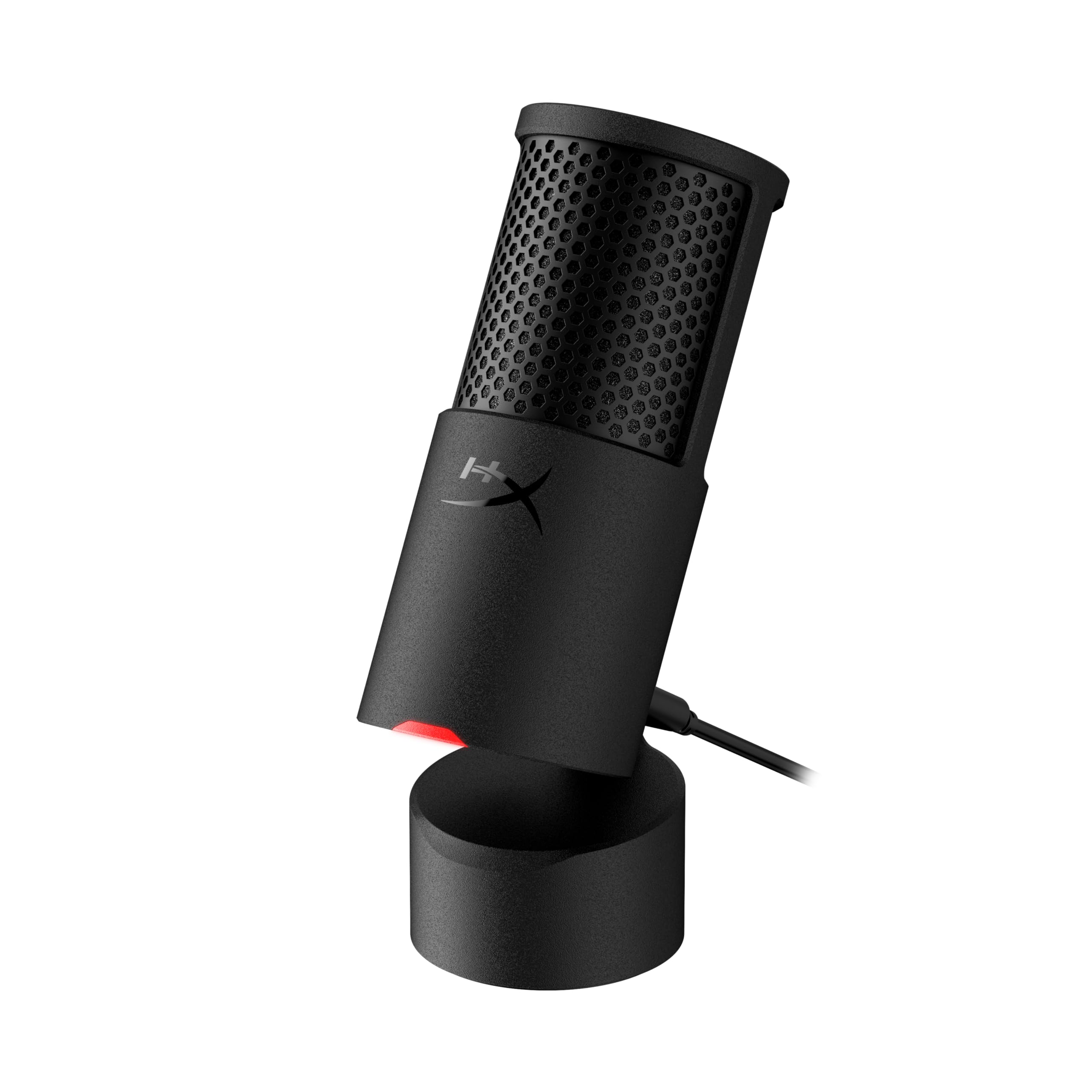
The HyperX SoloCast 2 differentiates itself with a compact, integrated design that eliminates the need for separate accessories. The internal suspension system acts as a shock mount to dampen desk vibrations, and the built-in foam pop filter reduces plosive P and B sounds without requiring an external windscreen. The cardioid condenser capsule records at 24-bit depth and a 96 kHz sampling rate, delivering studio-level resolution that captures subtle vocal detail for voice-over work or ASMR content.
The tiltable stand uses a weighted base for stability, though the overall 330-gram weight is light enough to reposition easily. Built-in 3/8-inch and 5/8-inch threads allow quick mounting to any standard boom arm, solving the low stand height complaint that affected the previous SoloCast model. The tap-to-mute sensor glows red when the mic is hot and turns off when muted, providing a clear visual reference.
HyperX NGENUITY software offers customizable high-pass, low-pass, and voice enhancement filters that can be saved directly to the microphone for consistent sound across different computers. The USB-C connection is plug-and-play, and the 79 dB signal-to-noise ratio keeps background hiss low enough for clean recordings.
Why it’s great
- Built-in shock mount and pop filter eliminate the need for separate accessories
- 24-bit / 96 kHz resolution captures detailed high-frequency vocal nuances
- Customizable audio filters saved directly to the mic for consistent sound
Good to know
- High sensitivity picks up room echo and fan noise at distances over one foot
- Onboard gain control is absent, requiring software adjustment for input levels
6. Razer Seiren V3 Mini USB Condenser Microphone

The Razer Seiren V3 Mini reduces the desktop footprint to a mere 3.59 inches wide and weighs just 0.52 pounds, making it the smallest cable microphone in this lineup. Despite the size, its supercardioid condenser capsule still delivers focused vocal pickup, and the tap-to-mute sensor on top provides instant mute control with an LED status indicator. The built-in shock absorber in the tiltable stand reduces bump noise, and the stand can be detached for mounting on a boom arm via standard threads.
Connectivity is USB-C plug-and-play with no driver installation required, and the microphone is recognized immediately by Discord, OBS Studio, XSplit, and standard recording software. The Razer Synapse app offers customization of sample rates and volume mixes, though the mic lacks onboard gain control, so input level must be adjusted through Windows or macOS sound settings. The LED indicator changes color based on mute status, providing a clear at-a-glance reference during heated gaming sessions.
The supercardioid pattern effectively reduces keyboard and mouse noise compared to omnidirectional laptop mics, but its compact condenser capsule is still sensitive enough to capture desk vibrations if the stand sits on an unstable surface. The 20 kHz maximum frequency response covers the full vocal range, but users who need deep sub-bass response for voice-over may find the Mini slightly thin compared to larger-capsule models. It excels as a space-saving upgrade for minimalist gaming desks or cramped home office setups.
Why it’s great
- Ultra-compact 3.59-inch footprint fits easily on the smallest desks
- Tap-to-mute sensor with LED indicator provides instant visual mute confirmation
- Supercardioid pattern effectively reduces keyboard and mouse side noise
Good to know
- No onboard gain control, requiring OS-level input adjustment
- Small condenser capsule may sound thin for deep voice-over applications
7. MAONO XLR Podcast Microphone PD100

The MAONO PD100 introduces XLR connectivity at a price point typically reserved for USB mics, making it an accessible entry into a truly modular recording chain. Its dynamic capsule operates on a 600 Ohm impedance and a 60 Hz to 14 kHz frequency response, which rolls off the extreme highs and sub-bass but produces a smooth, broadcast-ready vocal tone that naturally minimizes sibilance and plosives. The cardioid pickup pattern focuses on sound coming from the top of the mic, reinforcing the warm low-mid presence that makes voice-over and podcasting sound authoritative.
The all-metal body and compact desktop stand include a 2.36-inch rod extender that raises the capsule closer to mouth level, and the included 6.56-foot XLR cable allows connection to any audio interface, mixer, or sound card with a standard XLR input. No phantom power is required, which simplifies the setup for users with bus-powered interfaces. The inner double-layer pop filter reduces breath pops without an external windscreen, and the threaded base accommodates 5/8-inch and 3/8-inch boom arm mounts.
Because this is a true XLR dynamic microphone, you will need an audio interface or mixer with a preamp capable of delivering at least 50 dB of clean gain. Users who connect the PD100 directly to a standard interface may find the output quiet compared to condenser microphones, requiring a cloudlifter or FET preamp for optimal levels. The build quality exceeds expectations at this tier, and the PD100 serves as an excellent foundation for a growing studio that will later upgrade to higher-end XLR microphones.
Why it’s great
- True XLR dynamic capsule at an accessible price point for entry-level studio setups
- No phantom power required, simplifying connection to bus-powered audio interfaces
- All-metal body with included rod extender and standard 5/8-inch and 3/8-inch threading
Good to know
- Requires at least 50 dB of clean preamp gain for usable recording levels
- 60 Hz – 14 kHz frequency response rolls off extreme highs and sub-bass
FAQ
What is the difference between a dynamic and condenser cable microphone for home use?
Do I need an audio interface for an XLR cable microphone?
Why does my cable microphone sound quiet even with gain turned up?
Final Thoughts: The Verdict
For most users, the best cable microphone winner is the Sennheiser Profile because it delivers natural, warm vocal tonality without requiring software EQ or complex preamp chains, and its plug-and-play USB-C compatibility works across every major operating system. If you want the versatility of multiple polar patterns for interviews or instruments, grab the Logitech G Blue Yeti. And for an entry-level XLR setup that lets you upgrade components later without replacing the entire system, nothing beats the MAONO PD100 at its price tier.