
Matching a vintage-styled motorcycle with a bulky, modern full-face lid ruins the silhouette. The right retro shell hugs the head without creating that “mushroom” look, yet still packs impact-absorbing EPS and a proper DOT certification. Whether you ride a café racer, bobber, or classic cruiser, the shape, weight, and visor system matter as much as the paint job.
I’m Min — the co-founder and writer behind Gadgets Feed. I’ve spent countless hours digging through fiberglass shell construction, EPS liner densities, retention system designs, and real-world crash reports to separate the stylish safety gear from the costume-grade novelties.
This guide examines nine top contenders across open-face, 3/4, and full-face configurations to help you find the best cafe racer helmet that balances authentic retro aesthetics with genuine head protection.
How To Choose The Best Cafe Racer Helmet
Retro motorcycle helmets walk a fine line between vintage aesthetics and modern safety engineering. A cheap polycarbonate bucket that looks the part won’t absorb energy the same way a fiberglass composite shell does, while an over-engineered touring helmet defeats the whole purpose of a slim café racer profile. Focus on shell material, certification level, and whether the interior accommodates your head shape — round oval, intermediate oval, or long oval.
Shell Construction and Weight
Fiberglass composite shells (Bell, TORC, CRG Sports) offer the best strength-to-weight ratio for retro helmets, typically falling between 1300 and 1550 grams. Polycarbonate options (Daytona, ILM) are heavier and more prone to deformation under repeated impacts but cost significantly less. Lighter shells reduce cervical spine strain on long rides and make the helmet feel less top-heavy at speed.
Certification Standards
DOT FMVSS 218 is the minimum legal requirement in the US, testing impact attenuation, penetration resistance, and retention system strength. ECE 22.06 is a more rigorous international standard that includes rotational impact testing and a broader range of impact speeds. Helmets carrying both certifications (like the ILM Z502 or BEON B-120) offer verified protection across multiple regulatory frameworks.
Visor and Shield Configuration
Open-face and 3/4 retro designs often rely on clip-on bubble shields or flat visors with a five-snap pattern. Full-face café helmets typically include a clear polycarbonate shield with optional tinted or mirrored aftermarket options. Look for an anti-fog coating or pinlock-ready shield if you ride in variable weather — an affordable luxury that keeps vision clear without constant wiping.
Quick Comparison
On smaller screens, swipe sideways to see the full table.
| Model | Category | Best For | Key Spec | Amazon |
|---|---|---|---|---|
| Bell Bullitt | Premium | Iconic retro style | 3 carbon composite shell sizes | Amazon |
| TORC T9/Pomona | Mid-Range | Fiberglass full-face | DOT & ECE approved, 1450g avg | Amazon |
| Daytona Retro Full Face | Mid-Range | Compact vintage fit | Smallest DOT full-face | Amazon |
| BEON B-120 | Mid-Range | Open-face with dual visors | DOT + ECE 22.05 | Amazon |
| CRG Sports Retro | Mid-Range | Affordable fiberglass full-face | Fiberglass composite shell | Amazon |
| Bell Custom 500 | Mid-Range | Authentic open-face | Low-profile fiberglass composite | Amazon |
| ILM Z502 | Entry | Budget full-face | DOT + ECE 22.06 | Amazon |
| ILM Z302 | Entry | Versatile 3/4 open-face | 4 configurations, 9 vents | Amazon |
| Daytona 3/4 Shell | Entry | Budget open-face | Polyester shell, 1.66 kg | Amazon |
In‑Depth Reviews
1. Bell Bullitt Helmet

The Bell Bullitt is the gold standard for premium café racer aesthetics, offering three distinct carbon composite shell sizes that keep the profile slim while accommodating head circumferences from XS to XXL. Its low-profile shape avoids the exaggerated bubble top common in cheaper retro helmets, and the genuine leather interior with integrated speaker pockets proves this is built for real riding, not just Sunday photo shoots. The clear flat shield ships installed, and the chin vent with metal mesh intake provides actual airflow within a design that prioritizes looks.
Weighing under 1.9 kg for the medium shell, the Bullitt feels notably lighter than polycarbonate alternatives, reducing neck fatigue during longer rides. Riders with intermediate oval head shapes report a snug fit after break-in, though the cheek pads run wide — ordering 25 mm or 30 mm pads separately can tighten the lower face area. The magnetic chin strap closure works beautifully with gloved hands, a small luxury that becomes essential in daily use.
On the road, the wide field of view earns universal praise, but the helmet is noticeably loud above 70 mph — earplugs are strongly recommended. The front vent is minimally effective at low speeds, and stationary heat buildup forces you to lift the visor at stoplights. Still, for the rider who values crash-proven protection and timeless styling above all, the Bell Bullitt justifies its premium-tier price with materials and finish that outclass anything in the budget bracket.
Why it’s great
- Authentic low-profile carbon composite shell with true retro proportions
- Removable genuine leather interior with dedicated speaker pockets
- Magnetic chin strap is effortless to operate with riding gloves
Good to know
- Significant wind noise at highway speeds; earplugs are essential
- Front vent provides minimal airflow when stationary
- Cheek pads run wide; may require aftermarket sizing pads
2. TORC T9/Pomona Full Face
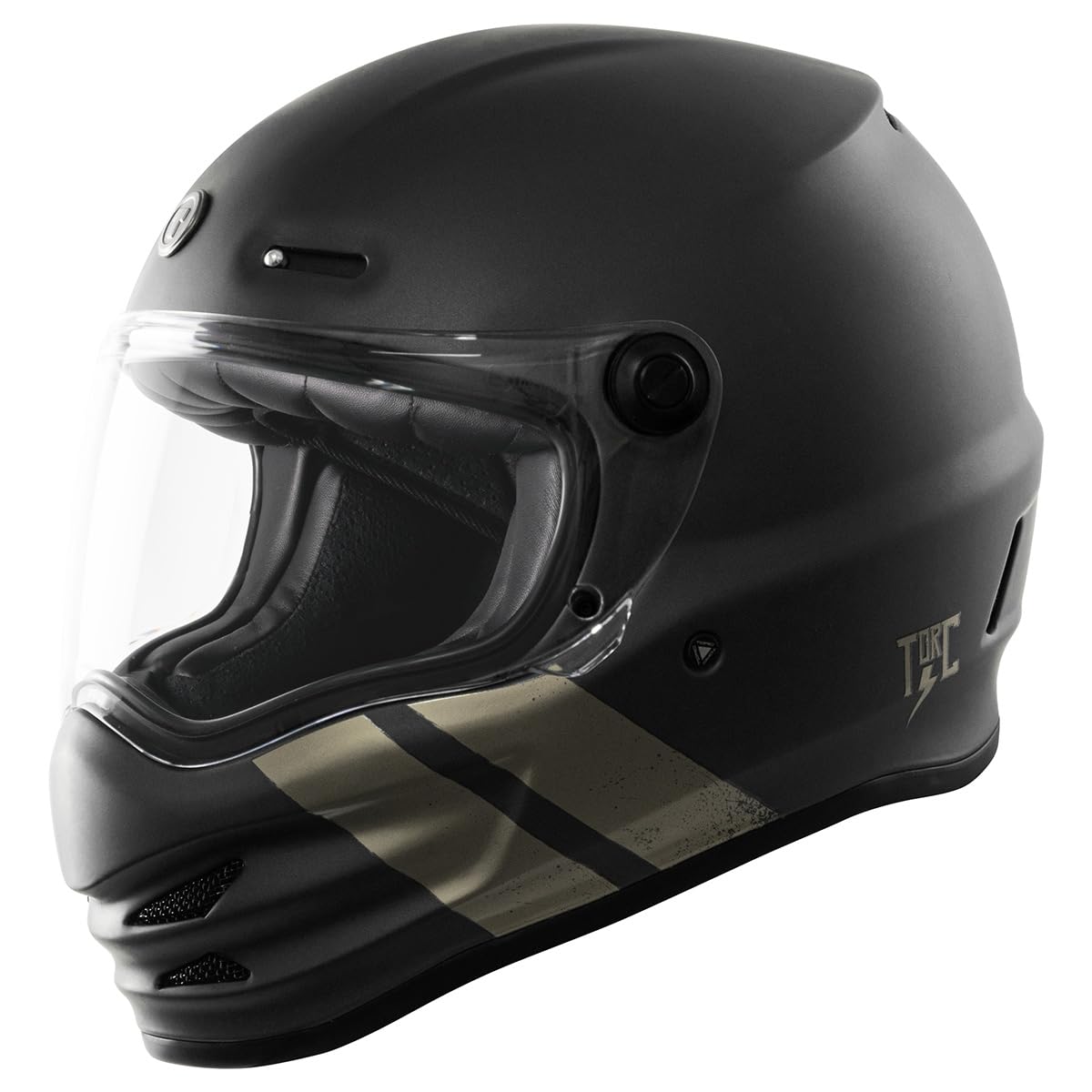
The TORC T9/Pomona delivers a true fiberglass composite shell at a mid-range price point, undercutting premium helmets by hundreds of dollars while still carrying both DOT and ECE homologation. The shell weight sits around 1450 grams for XS-M and 1550 grams for L-XXL, placing it in the same weight class as helmets costing significantly more. The medium oval fit is generous — buyers consistently report needing to size down one step for a proper snug hold on the crown and temples.
This helmet incorporates four barrel metal mesh exhaust ports, adjustable crown intake vents, and a chin vent with an internal airflow switch. The removable anti-scratch shield is also treated for fog resistance, though hardcore commuters may still want a pinlock insert. The sweat-wicking faux suede liner feels comfortable against the skin and removes easily for cleaning, and the padded chin strap with D-ring closure offers secure retention without the bulk of a quick-release mechanism.
Real-world crash testimony from a verified buyer who survived a 30–40 mph low-side without concussion speaks volumes about the EPS liner’s energy management. On the downside, the face shield does not flip up fully, which can obstruct peripheral vision for taller riders, and some units have loose mesh vent alignment out of the box. For the fiberglass weight, dual certification, and sub-premium price, the TORC T9 is hard to beat as a daily-driver full-face retro lid.
Why it’s great
- True fiberglass composite shell at an accessible mid-range price point
- Dual DOT and ECE certification for international riding confidence
- Multi-density EPS with proven crash energy management
Good to know
- Runs large; order one size down from your normal fit
- Face shield does not open fully, limiting vision at stops
- Chin vent mesh alignment can be imperfect on some units
3. Daytona Retro Full Face Helmet

Daytona claims this is the smallest DOT-approved full-face helmet on the market, and based on how it hugs the cranium without extending into a bulbous teardrop shape, that claim holds water. The two shell sizes cover XS to 2XL across six padding sizes, which means a rider at the small end of the spectrum gets a truly compact look rather than rattling around inside a one-size-fits-most shell. The retro shape works especially well with upright café racer seating positions where wind hits the chin rather than the top of the helmet.
The nylon strap retention system with D-ring closure is low-profile and secure, though it lacks the quick-release convenience of ratcheting buckles found on the BEON B-120. The moisture-wicking inner liner is removable and hand-washable, with premium leather accents that elevate the cabin feel. A dual-density EPS liner and pinlock-ready shield keep fogging at bay — a verified buyer noted surviving a head-on collision with only shield damage and no head trauma, which is the ultimate endorsement of any helmet.
Unventilated shell design means airflow is minimal by default; the helmet can get stuffy in stop-and-go summer traffic. Some riders also report the interior padding presses uncomfortably on cheekbones, though sizing up creates too much free space in the crown. If your head shape matches the medium oval profile, this is the sleekest retro full-face at its price tier. Otherwise, budget for return shipping and the 15% restocking fee if sizing misses.
Why it’s great
- Exceptionally compact shell profile for a DOT-certified full-face helmet
- Pinlock-ready shield effectively prevents interior fog accumulation
- Proven crash survival record from real-world owner reports
Good to know
- Minimal ventilation; can become hot in slow-moving traffic
- Interior padding may press on cheekbones depending on head shape
- D-ring closure less convenient than quick-release alternatives
4. BEON B-120 Open Face 3/4

The BEON B-120 solves one of the biggest complaints about open-face 3/4 helmets — eye protection versatility — by shipping with a retractable inner sun visor, a clear outer visor, and an additional long outer visor for high-speed wind blocking. The dual certification (DOT FMVSS 218 + ECE 22.05) reassures buyers that the thermoplastic shell and high-density EPS liner meet both US and international impact standards. At approximately 1.72 kg, it sits on the heavier side of the mid-range, but the weight is balanced well by the round shell shape that follows the natural head contour.
The Click-n-Secure quick-release buckle is sturdy enough to withstand a gloved hand yanking it loose at a rest stop, and the metal visor base screws on and off without tools — a detail that makes swapping between the short and long visors a 30-second job. Removable velcro ear pads accommodate earbuds and eyeglass temples without pressure points, a feature that resonates strongly with urban commuters who rely on GPS directions and phone calls while riding. The tan PU leather liner on certain color options looks genuinely vintage rather than costume-grade faux leather.
Optical clarity on the included visors is excellent — no fisheye distortion or wavy surface artifacts that plague sub- shields. The flip-down tinted sunshade clicks into place with a positive detent and retracts cleanly out of the line of sight. On the road, airflow through the shell is adequate but not exceptional; the foam vents prioritize structural integrity over cooling. Riders with round face shapes will find the B-120 fits comfortably out of the box, while intermediate ovals may notice slight temple pressure during the first week.
Why it’s great
- Retractable inner sun visor plus two outer visors included in the box
- Quick-release buckle operates smoothly even with thick winter gloves
- Removable ear pads give clearance for earbuds and eyeglass arms
Good to know
- Thermoplastic shell is heavier than fiberglass alternatives
- Foam-fed vents provide modest airflow on hot days
- Fit favors round head shapes; intermediate ovals may need break-in
5. CRG Sports Retro Full Face

The CRG Sports ATV-1 is one of the few sub-premium retro helmets to use a fiberglass composite shell, giving it a weight advantage over the polycarbonate-heavy budget tier without the Bell or TORC price tag. The aggressive vintage street racing silhouette looks right at home on a cafe racer build, and the glitter-infused paint jobs — especially the blue — catch sunlight in a way that photographs beautifully on group rides. At 4 pounds, it is noticeably heavier than the TORC T9 but still lighter than entry-level polycarbonate full-face lids that push 5 pounds or more.
The clear visor provides adequate wind protection for daily commuting, though multiple owners report the shield is difficult to lift with gloved fingers and prone to fogging. The D-ring chin strap is a secure, old-school solution that never fails, but it lacks the convenience of a magnetic or quick-release buckle. The interior padding is firm and supportive out of the box, with a neutral head shape that accommodates intermediate ovals without excessive pressure on the forehead or temples.
Durability is a mixed bag — the fiberglass shell itself holds up well, but the visor ratcheting mechanism has been known to fail after several months of daily use, with the threaded rod detaching and the nut rattling inside the shell. The finish scratches easily on matte colorways, and road noise is pronounced above 55 mph. For the rider who wants fiberglass construction on a budget and is willing to accept finicky visor hardware, the CRG Sports Retro delivers vintage looks that few others in its price range can match.
Why it’s great
- Fiberglass composite shell at an accessible price point
- Vintage glitter paint finish stands out in natural light
- Neutral head shape fits most intermediate ovals without hot spots
Good to know
- Visor ratcheting mechanism prone to failure with daily use
- Shield fogging is frequent; no pinlock-ready system included
- Matte finish scratches easily; gloss colorways hold up better
6. Bell Custom 500

The Bell Custom 500 is a direct descendant of the original Bell 500 that protected racers in the 1960s, and its low-profile fiberglass composite shell retains the authentic shape that modern reproductions struggle to imitate. Five shell and EPS liner sizes ensure that even riders at the extremes of the size spectrum get a proportional fit rather than a one-shell-fits-all compromise. The integrated five-snap pattern accepts any aftermarket shield or visor from Bell’s ecosystem, giving owners flexibility to swap between a flat bubble shield for city use and a longer peak for highway cruising.
Owners consistently praise the quilted lining for its premium feel against the skin, though the lack of venting means this is strictly a warm-weather or short-ride helmet — airflow is driven entirely by the open-face design rather than ducts. The ear pockets provide enough clearance for in-ear monitors or earbuds, but sliding earbuds in and out can be cumbersome when the helmet is seated. Sizing is true to circumference but demanding on head shape: intermediate ovals report a snug fit, while round oval heads may find the temple area pinches noticeably during the first several rides.
At , the Custom 500 occupies a crowded space where buyers weigh authenticity against modern convenience. The lack of ventilation, minimal wind noise attenuation, and the need to try on before buying if you are between sizes are genuine hurdles. However, for the rider who wants the exact silhouette that defined 1970s café racer culture and is willing to accept that the Custom 500 prioritizes period-correct style over modern comfort features, this helmet delivers heritage that aftermarket replicas simply do not.
Why it’s great
- Authentic 1960s silhouette that defines the café racer aesthetic
- Five shell sizes ensure proportional fit across the size range
- Five-snap pattern accepts the full Bell aftermarket shield ecosystem
Good to know
- No venting system; airflow depends entirely on open-face design
- Fits intermediate oval heads well but pinches round ovals
- Ear pocket access for earbuds is tight and cumbersome
7. ILM Z502 Full Face

The ILM Z502 punches far above its entry-level price by carrying both DOT and the stricter ECE 22.06 certification, the latter of which requires rotational impact testing that many helmets in this price bracket avoid. The ABS outer shell and suede-trimmed liner feel more substantial than the price suggests, and the retractable inner visor — operated via a seven-snap adjustment system — lets riders transition from bright sun to tunnel lighting without swapping shields. The quick-release metal buckle is a welcome upgrade over unbuckling D-rings with thick winter gloves.
Eyeglass-friendly cutouts in the padding work as advertised, and the reserved pockets on each side provide enough space for slim Bluetooth speaker units like the Sena 30S. The Z502 runs large — multiple verified buyers report needing to order one size down from their usual measurement — so careful reference to the size chart is critical. The retractable inner shield is not as dark as some riders prefer, and the clear outer visor is prone to scratches if wiped with dusty gloves.
At just 1300 grams, the Z502 is one of the lightest helmets in its category, which reduces neck strain on long urban commutes. The interior padding is thick and soft, drawing comparisons to the Shoei EX Zero at a fraction of the cost. On the highway, the shell transmits more wind noise than fiberglass competitors, but the trade-off is expected at this price point. For the budget-conscious café racer rider who demands modern safety certifications and does not want to sacrifice weight, the ILM Z502 delivers a compelling package.
Why it’s great
- DOT and ECE 22.06 certification for verified impact protection
- Ultralight 1300 grams reduces neck strain on long suburban rides
- Thick, soft padding rivals premium brands like Shoei in comfort
Good to know
- Runs large — order one size smaller than your usual measurement
- Retractable inner shield is not dark enough for direct noon sun
- Outer visor scratches easily; clean only with soft microfiber cloth
8. ILM Z302 3/4 Open Face

The ILM Z302 offers the most configurable design in this roundup, with a detachable front cover and detachable brim that create four distinct riding profiles: full open-face, short peak, long visor, and front-cover closed. The nine-vent aerodynamic intake system is overbuilt for a 3/4 helmet, but the airflow is genuine — riders consistently report staying cool on hot asphalt even at low speeds. The ABS outer shell meets DOT standards, and the EPS inner liner absorbs impact energy without adding excessive bulk to the oval shell shape.
The tinted outer lens blocks direct sun glare effectively, though buyers note the mirror replacement lenses are overpriced for the optical quality. The quick-release strap and closable vents add convenience for daily use, but the lower shell profile reduces vertical visibility compared to taller 3/4 helmets — riders leaning into a tuck position may find the top of the road obscured. The included camera mount on the brim is a thoughtful addition, though its plastic construction feels fragile under heavy motion.
At approximately 3.26 pounds, the Z302 is heavier than fiberglass open-face options, but the weight distribution is balanced by the oval shape that cradles the crown rather than perching on top. The padding runs slightly snug — several owners downsize from their normal size — which helps the helmet stay planted at highway speeds. For the rider who values adaptability and wants one helmet that can shift from a summer cruiser lid to a fall commuter with visor, the Z302 is the most flexible option in the entry-level tier.
Why it’s great
- Four configurable setups with detachable front cover and brim
- Nine vent system delivers effective airflow in stop-and-go traffic
- Built-in camera mount on the brim for recording rides
Good to know
- Lower shell profile reduces vertical visibility when tucked
- Mirror replacement lenses are overpriced for the optical quality
- Plastic camera mount feels less durable than metal alternatives
9. Daytona 3/4 Shell Open Face

The Daytona 3/4 Shell Open Face is the lowest-priced entry in this guide, targeting scooter commuters, short-hop cruisers, and riders who want the café racer silhouette without the financial commitment of fiberglass construction. The polyester outer shell lacks the impact energy absorption of ABS or fiberglass, but the DOT certification confirms it meets minimum federal standards for street-legal use. At 1.66 kilograms, it is heavier than the fiberglass options but not punishingly so for sub-30-minute rides around town.
The removable padding and ratchet chin strap are genuinely useful features at this price tier — the ratchet buckle allows one-handed cinching that D-ring systems cannot match, and the washable liner helps manage helmet odor through summer seasons. The included cloth drawstring bag and keychain are small bonuses, but the real selling point is the low-profile design that avoids the exaggerated bobblehead look common in cheap polycarbonate buckets. Multiple owners confirm the sizing chart runs tight, with measurements closer to race fit than comfort fit.
Ventilation is adequate for moderate temperatures, but the shell lacks the sophisticated ductwork of the ILM Z302 — airflow is driven entirely by the open-face design. The clear visor provides basic wind protection but distorts peripheral vision at extreme angles. Riders above 50 mph will feel significant wind tugging at the chin. For the price-conscious buyer who needs a DOT-stamped helmet for a cafe racer project or a spare passenger lid, the Daytona 3/4 Shell gets the job done without pretending to rival mid-range fiberglass options in comfort or crash performance.
Why it’s great
- Low-profile shell avoids the bobblehead appearance of budget competitors
- Ratchet chin strap enables one-handed fastening with gloved fingers
- Removable and washable liner helps control odor during summer use
Good to know
- Polyester shell offers less impact energy absorption than ABS or fiberglass
- Sizing chart runs tight; order one size up for comfortable fit
- Peripheral visor distortion at extreme viewing angles
FAQ
Can I use a café racer helmet for highway riding?
How do I know if a retro helmet will fit my head shape?
Final Thoughts: The Verdict
For most riders, the best cafe racer helmet is the Bell Bullitt because its carbon composite shell, true low-profile proportions, and genuine leather interior deliver the highest combination of safety and style. If you want fiberglass weight with dual DOT and ECE certification at a mid-range price, grab the TORC T9/Pomona. And for a versatile open-face that accepts earbuds and eyeglasses without fuss, nothing beats the BEON B-120.