
Our readers keep the lights on and my morning glass full of iced black tea. As an Amazon Associate, I earn from qualifying purchases.
Specs are compiled from manufacturer listings and verified buyer reviews and can change over time — please confirm the key details on the product page before buying.
If you have ever stood in the supplement aisle holding two bottles that both say “calcium with vitamin D,” the real question is simpler than the label makes it look: which one actually gets absorbed, and which one can you stand taking every single day? This guide answers both. Every pick below uses calcium citrate rather than calcium carbonate, and every one pairs it with vitamin D — the two things that decide how much of that calcium your body actually absorbs.
I’m Min — the founder and writer behind Gadgets Feed. This guide is built by comparing the manufacturers’ published specifications and the patterns across verified customer reviews, so you get each pick’s real strengths and trade-offs instead of marketing spin.
Some people need a mini-tablet they can swallow without dread, some need a liquid, and some need a chewable that tastes like candy. Below you will find the nine strongest calcium citrate and vitamin D options sorted by who they actually suit, so you can match one to your routine.
Our Picks at a Glance


How To Choose The Best Calcium Citrate With Vitamin D
Three things decide whether a calcium citrate supplement earns a permanent spot on your counter. Get these right and the rest is format preference. Get them wrong and the bottle sits half-full in the cupboard.
The Form: Why Citrate And Not Carbonate
Calcium citrate is the form that dissolves without needing stomach acid, so it can be taken with or without food, which is a real advantage if you take acid-reducing medication or eat irregularly. Calcium carbonate, the cheaper and more common form, needs stomach acid to break down, so it is usually taken with meals. That difference is the reason citrate is the default choice for so many people who found carbonate hard on the stomach.
Vitamin D3 And Why It Rides Along
Vitamin D is what helps your body absorb the calcium you just swallowed, so a calcium supplement without D3 absorbs poorly. You will see it listed as vitamin D3, and the strengths vary widely between products — some supply far more per tablet than others, which is worth checking against whatever your doctor has told you to target. Water-miscible vitamin D3, found in some chewables, is designed to be absorbed without needing dietary fat alongside it.
Serving Size And Pill Size
Serving size is the detail people miss. A bottle that says 1260 mg of calcium per serving may mean four caplets at once, not one. Before you commit, check whether a serving is one tablet or several, then check how big that tablet actually is. Mini-tablets, capsules, liquids, gummies, and chewables all exist precisely because swallowing a large coated caplet four times a day is a deal-breaker for a lot of people.
Who Each Format Suits
Tablets and caplets suit anyone comfortable swallowing a pill and wanting a precise dose. Capsules tend to be easier to get down than caplets of the same strength. Liquids work for people who want no pill at all and don’t mind refrigeration. Gummies and chewables fit anyone who wants the daily habit to feel less like medicine — including people who have trouble with pills entirely.
Quick Comparison
| Model | Best For | Calcium Per Serving | Vitamin D | Format | Amazon |
|---|---|---|---|---|---|
| Citracal Calcium Citrate Caplets (Maximum Plus) + D3★ Best Overall | Everyday one-caplet routine | 1000 mg | 200 IU D3 | Coated caplet | Amazon |
| Bluebonnet Nutrition Liquid Calcium CitrateBest Liquid Option | Pill-free daily dosing | Calcium citrate, magnesium citrate, D3 blend | D3 included | Liquid, 16 fl oz | Amazon |
| Rainbow Light Calcium Citrate Mini TabletsBest Mini Tablet | Small-tablet swallowers | 800 mg | 800 IU vegan D3 | Coated mini-tablet | Amazon |
| Horbäach Calcium Citrate with Vitamin D3 | High-strength per-serving dose | 1260 mg | D3 included | Coated caplet | Amazon |
| Bariatric Fusion Calcium Citrate with Vitamin D3 | Divided doses through the day | 200 mg per tablet | D3 included | Coated tablet | Amazon |
| Life Extension Calcium Citrate with Vitamin D | Custom, flexible dosing | 200 mg per capsule | 100 IU D3 | Capsule | Amazon |
| SOLARAY Calcium Magnesium Citrate 2:1 with Vitamin D3 | Calcium plus magnesium together | Calcium citrate 1000 mg | 25 mcg D3 | Capsule | Amazon |
| Calcium Citrate Gummies with Vitamin D3, K2, Magnesium, Zinc | Anyone who hates pills | 1200 mg | D3 plus K2 | Strawberry gummy | Amazon |
| Celebrate Vitamins Calcium Plus Chewable | Post-bariatric chewable routine | 500 mg per tablet | 333 IU water-miscible D3 | Cherry chewable | Amazon |
In‑Depth Reviews
1. Citracal Calcium Citrate Caplets (Maximum Plus) + D3, 280 Count
Our pick — over 4.5★ from 550+ verified ratings; the strongest balance of quality and price.
One caplet, 1000 mg of calcium citrate, and a bottle that lasts — the daily-driver calcium supplement most people should start with.
For anyone who wants a single, predictable tablet each morning without juggling a handful of pills, this is the pick. Each caplet delivers 1000 mg of elemental calcium as calcium citrate — that means the actual amount of usable calcium in the tablet, not the weight of the whole compound — plus 200 IU of vitamin D3, which is the form of vitamin D your body uses to pull that calcium in. The formula is unflavored, with no artificial colors or flavors, and it is Kosher.
The thing that wins people over here is how it fits into a life. As owners put it: “I take these things every day.” The dose is straightforward enough that it becomes automatic rather than a chore you negotiate with yourself each morning. This is also the calcium citrate formula that carries the 200 IU D3 figure — the same figure that appears at the bottom of the vitamin D range across this whole list, while the Rainbow Light mini-tablets carry 800 IU. That 4.0x gap matters if your target D intake is on the higher side, and it is the one number to check against your own plan before you commit. The bottle itself is one of the largest here at 9.21 x 7.72 x 3.62 inches and 1.23 pounds — compare that to the Rainbow Light bottle at 2.5 x 2.5 x 4.38 inches and you see how much shelf space a 280-count supply claims.
The honest catch is the caplet size. Several people note the tablets are large and hard to swallow, and one owner summed it up with “Pills are very big.” That is a real fit issue rather than a flaw, and it is precisely why the mini-tablet and capsule picks further down this list exist. If you already swallow standard caplets without thinking about it, this will not bother you. If you dread large pills, jump ahead to the Rainbow Light or Life Extension entries. A separate packaging note: a bottle lid occasionally arrives damaged in shipping, so inspect the seal on arrival.
What earns it the top spot
- 1000 mg of elemental calcium citrate in a single caplet, so one tablet covers your daily base instead of four or six.
- 200 IU of vitamin D3 built in, which supports how well your body takes up the calcium.
- Unflavored with no artificial flavors or colors, and Kosher-certified.
- A 280-count bottle that keeps a daily routine supplied for months without reordering.
Where it asks something of you
- The caplets are genuinely large, and swallowing them is the recurring gripe.
- 200 IU of D3 sits at the lower end of this list, so check it against your own D target.
- Large, heavy bottle takes up more cabinet room than the mini-tablet options.
Grab this one if: you are comfortable swallowing a standard caplet and want one tablet a day to be the entire routine.
Keep scrolling instead if: large pills are the reason you have quit calcium supplements before — the Rainbow Light minis were built for exactly that problem.
2. Bluebonnet Nutrition Liquid Calcium Citrate with Magnesium and Vitamin D3
No pills at all — 16 fl oz of strawberry liquid that delivers calcium citrate, magnesium citrate, and D3 in a single measured spoonful.
If swallowing tablets is the barrier between you and a daily calcium habit, this removes it entirely. You measure out a liquid instead. One bottle holds 16 fl oz, which works out to 32 servings, and the formula combines calcium citrate with magnesium citrate and vitamin D3 in a strawberry flavor. It is soy-free, gluten-free, dairy-free, and Kosher certified, and it carries a caution that it is for adults only.
The strongest argument for this format comes from people who have to take calcium consistently for years. One buyer’s reasoning is worth quoting directly: “I need to take calcium citrate with a certain mg level 2x’s anx day for life and after trying this liquid flavor and I’ve tried the others too.” That is the whole case for a liquid in one line — it is the only format some people keep taking.
Where it gets personal is taste, and this is genuinely divided. Some describe it as tasting like yogurt despite being dairy-free, while others find it harsh and tart with no sweetness at all. A few people report it makes them gassy. That is a texture-and-flavor gamble you do not take with a capsule, so this is the one pick on the list where reading a few recent reviews before you buy is genuinely worthwhile. Note also that the liquid’s bottle is small and light compared to the biggest tablet bottles here — 1 pound against 1.23 pounds for the Citracal pack — though that weight difference is mostly the volume of the bottle itself.
The format is the point: 32 servings of liquid calcium, magnesium, and D3 in a 16 fl oz bottle, with a thick consistency that measures without spilling.
The honest trade-off: you must refrigerate it after opening, and taste splits people sharply, so it is not a blind buy.
Best fit for: anyone who has abandoned tablets and needs a calcium source they can actually keep taking long-term.
Think twice if: you want zero fuss — the refrigeration requirement and divided flavor make this the least set-and-forget option here.
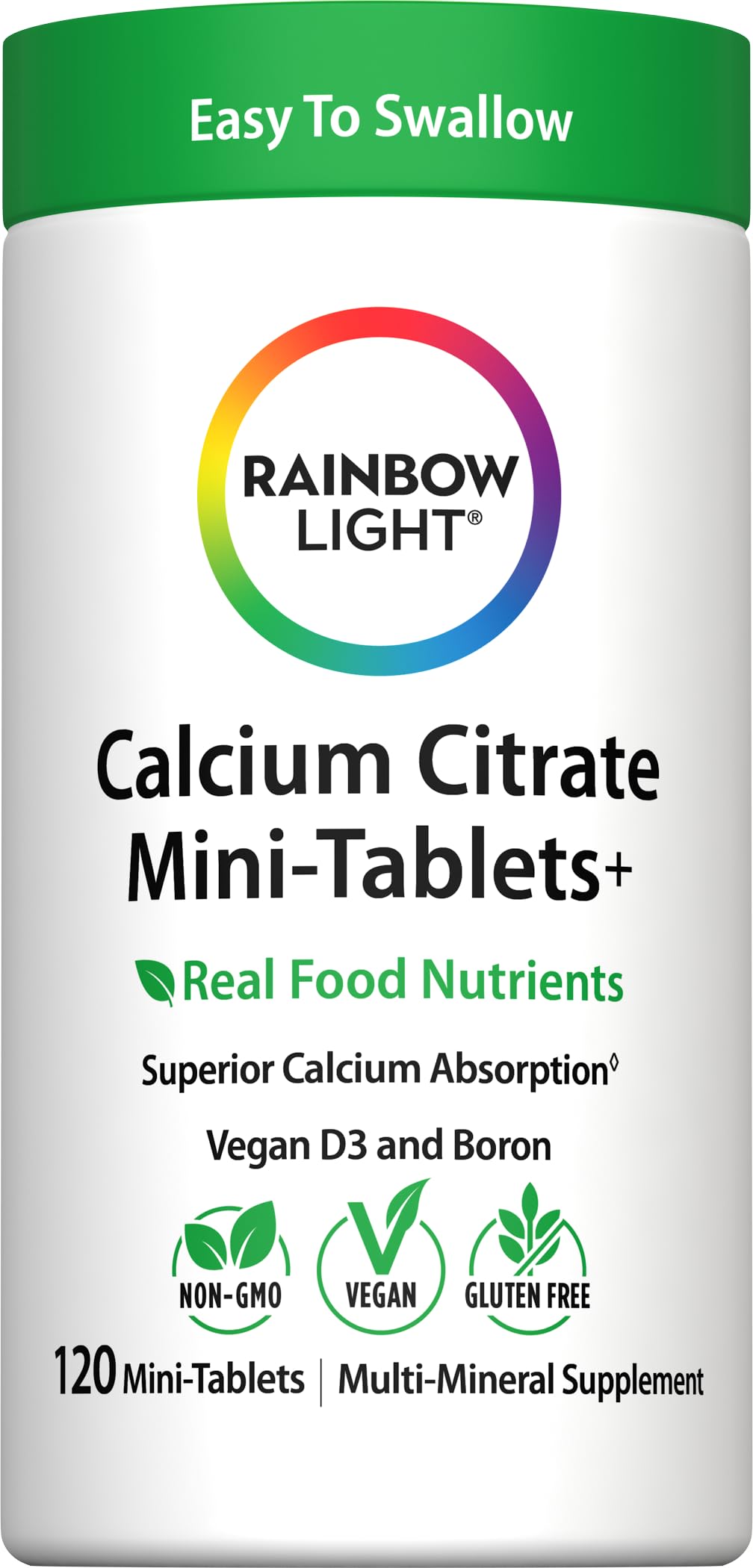
3. Rainbow Light Calcium Citrate Mini Tablets, 120 Count
The coated mini-tablet that solves the swallowing problem — 800 mg of calcium citrate with 800 IU of vegan D3 packed into a far smaller pill.
This is the answer for the person who read the Citracal review, winced at “pills are very big,” and kept scrolling. Each tablet carries 800 mg of calcium as calcium citrate, the same highly recommended form, plus 800 IU of vegan vitamin D3 and boron, which are two nutrients that work alongside calcium. The formula also folds in food-based ingredients like spirulina, kale, beet, and broccoli, plus bamboo extract, and is made without wheat, gluten, milk, peanuts, eggs, fish, shellfish, artificial flavors, or sweeteners.
Swallowability is what the manufacturer built the whole product around, and it lands. The tablets are coated to go down smoothly, and one buyer’s reaction after receiving them was that “the size of the tablets seems pretty small” — a direct contradiction of the reviews that claim otherwise, which tells you how much pill tolerance varies from person to person. What matters is the pocket of D: at 800 IU this carries four times the vitamin D3 of the Citracal caplets at 200 IU, so if your target D intake is higher, this delivers more per tablet without you adding a separate supplement.
Two things to know before you buy. First, these are not chewable — they must be swallowed whole, and that is a hard rule, not a preference. Second, a serving is four tablets, not one, so a 120-count bottle is a 30-day supply at the intended dose. If you were hoping for a one-and-done tablet, check that math against your routine. The size question is genuinely mixed among owners, so treat any single opinion — including the enthusiastic ones — as personal rather than universal.
Pick this if: pill size is your main obstacle and you want 800 IU of vegan D3 riding along with 800 mg of calcium citrate.
Look elsewhere if: you want a chewable — this one must be swallowed, and a serving is four tablets rather than one.
4. Horbäach Calcium Citrate with Vitamin D3, 1260 mg, 250 Caplets
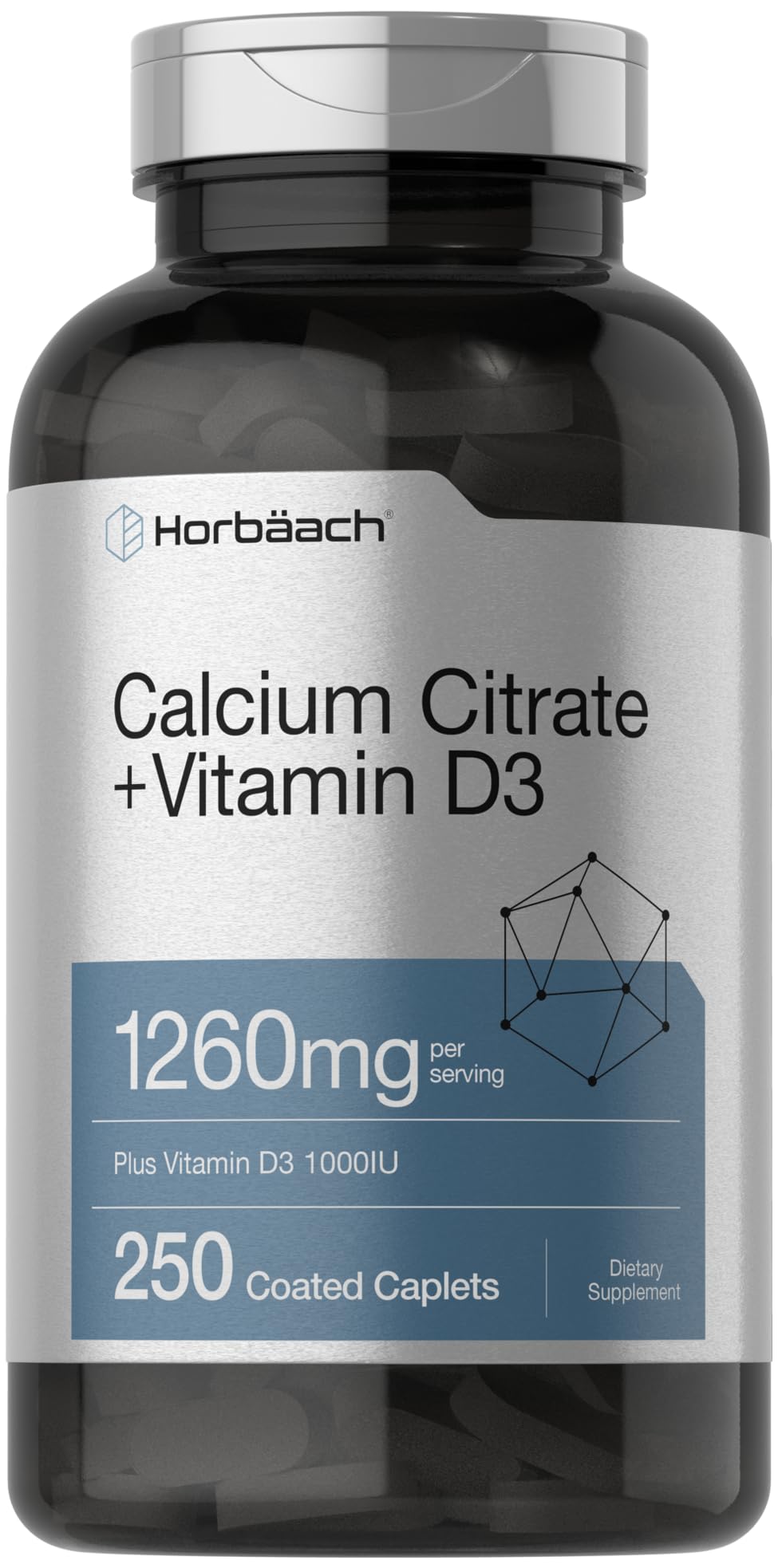
The biggest calcium number on this list — 1260 mg of calcium citrate per serving, in a vegetarian caplet with vitamin D3 built in.
Buyers chasing a high daily calcium figure will find it here. This vegetarian formula provides 1260 mg of calcium citrate per serving plus vitamin D3 in coated caplets, and it is naturally free of gluten, wheat, yeast, artificial flavor, artificial sweetener, and is non-GMO. The manufacturer states the formula is laboratory tested and made with ingredients selected for purity and potency. That 1260 mg figure is the highest calcium concentration per serving anywhere in this comparison — the Rainbow Light minis sit at 800 mg by contrast — so a single serving here carries substantially more of the mineral.
Read the serving size carefully, though, because it is the catch buried in the headline number. The dose is four caplets per serving, not one, and a couple of owners have questioned whether the high count is worth it versus a stronger single-tablet option. What people consistently value is the formula itself — the quality and the purity of the ingredients come up again and again, and the low-compaction caplets dissolve quickly in water if you would rather not swallow them whole. The caplets are also coated, which helps if you are one of the people for whom coating makes a large pill manageable.
Here is the part to actually decide on: pill size. Owners describe the caplets as very large and hard to swallow, and at four per serving, that is a lot of large pills to get through in a day. If your doctor has you targeting a high calcium intake, the trade-off is real — you get the highest per-serving calcium figure here, but you pay for it in swallow effort. If that sounds like a problem, the Horbäach still works, but the Rainbow Light mini-tablets or Life Extension capsules will be an easier habit to keep.
Where it leads the field: 1260 mg of calcium citrate per serving with vitamin D3, the highest calcium concentration of anything on this list, in a vegetarian, non-GMO caplet.
The catch to budget for: a serving is four caplets, and owners find those caplets very large, so this is a formula for people with high calcium targets and cooperative swallowing.
Choose this for: the highest calcium citrate dose per serving on the list, with vitamin D3 included for absorption.
Skip if: you want one tablet a day — the four-caplet serving and the large pill size make this a poor fit for easy daily habits.
5. Bariatric Fusion Calcium Citrate with Vitamin D3, 180 Tablets

Low-dose, scored, and coated — built for splitting calcium across the day rather than swallowing a big dose all at once.
Each tablet delivers 200 mg of calcium citrate, and it is scored so you can snap it in half for even finer control. That low per-tablet dose is deliberate. Spreading calcium across the day is generally better tolerated than one big dose, and a 200 mg tablet makes that pattern easy to manage whether you are taking a couple a day or more. The formula pairs calcium citrate with vitamin D3, and the tablets are Non-GMO with no artificial preservatives or synthetic dyes, free from all major allergens.
This one is formulated by a bariatric surgical team, which is why the dose structure looks the way it does — designed for people whose absorption profile means many small doses beat one large one. It is note plainly that the marketing focuses on gastric bypass, sleeve gastrectomy, duodenal switch, and lap band patients, and the manufacturer states over 15 years of experience developing these products. The 180-tablet bottle reflects that: it is a supply meant for a divided routine, not a one-a-day habit.
The practical downside people run into is the same one that follows every tablet on this list. The pill is not small — owners comment that it is as big as the others, with a bit of a laugh about it — despite the lower 200 mg dose. So if you were hoping a 200 mg tablet would be a genuinely tiny pill, temper that expectation. Measured against the rest of this list, though, the combination of a low, splittable dose, a coated surface, and a clean allergen-free formula is exactly what someone on a structured, doctor-directed calcium plan needs.
What makes it different: 200 mg of calcium citrate per scored tablet, so you can divide your intake through the day and adjust by half-tablets.
One thing to know: the tablet is still on the larger side despite the low dose, so the pill size does not scale down with the calcium number.
Reach for this if: you need small, splittable doses of calcium citrate with vitamin D3 through the day, on a clean allergen-free formula.
Not your bottle if: you want one big dose a day — that is what the Citracal and Horbäach caplets are for.
6. Life Extension Calcium Citrate with Vitamin D, 200 Capsules

A capsule instead of a tablet — 200 mg of calcium citrate and 100 IU of D3, aimed at people who want to build their own dose.
The capsule format is the whole reason to pick this life Extension bottle over a caplet. Capsules tend to be easier to swallow than coated tablets of the same strength, and each capsule here gives you 200 mg of calcium citrate with 100 IU of vitamin D3. Because the dose is small and individual, you can take exactly as many as you need and scale down on days when you have already eaten calcium-rich food — the body tends to use only so much calcium at once, so a customizable capsule fits that reality better than a fixed high-dose tablet.
People who choose this for absorption reasons reliably stick with it. The pattern across owners is that their calcium levels come up, and the “200mg capsules allow customizable dosing” setup is what makes that practical. Take two capsules three times a day and you reach the same territory as a single high-dose tablet, but you have spread it out. It is also worth knowing that the vitamin D here is 100 IU — a modest figure, lower than the Rainbow Light’s 800 IU, so if you are leaning on this bottle for your D intake alone, it will not carry that load for you.
There is one genuine caution worth respecting. Long-time users report that a recent batch changed — the capsules turned off-white and caused an unpleasant reflux-like burping — and that they could no longer continue with it. That is an outlier, and most owners are happy, but because this is a supplement you might take for years, it is fair to note that a formula or ingredient change can happen. An occasional bottle has also arrived with a bulging inner liner and leaking gas — that is a shipping or storage problem, not a formula one, and a reason to inspect the seal when the bottle lands.
The daily math: 200 mg of calcium citrate and 100 IU of D3 per capsule, so you decide your dose rather than accepting a fixed one.
The caution to keep: the vitamin D here is low, and a few long-term owners hit a batch change they could not tolerate — inspect the seal on arrival.
Best for: anyone who wants a capsule rather than a tablet and prefers to fine-tune their daily calcium by capsule count.
Less ideal if: you want a strong vitamin D figure in the same pill — 100 IU is modest, so you may still need a separate D source.
7. SOLARAY Calcium Magnesium Citrate 2:1 with Vitamin D3, 180 Capsules
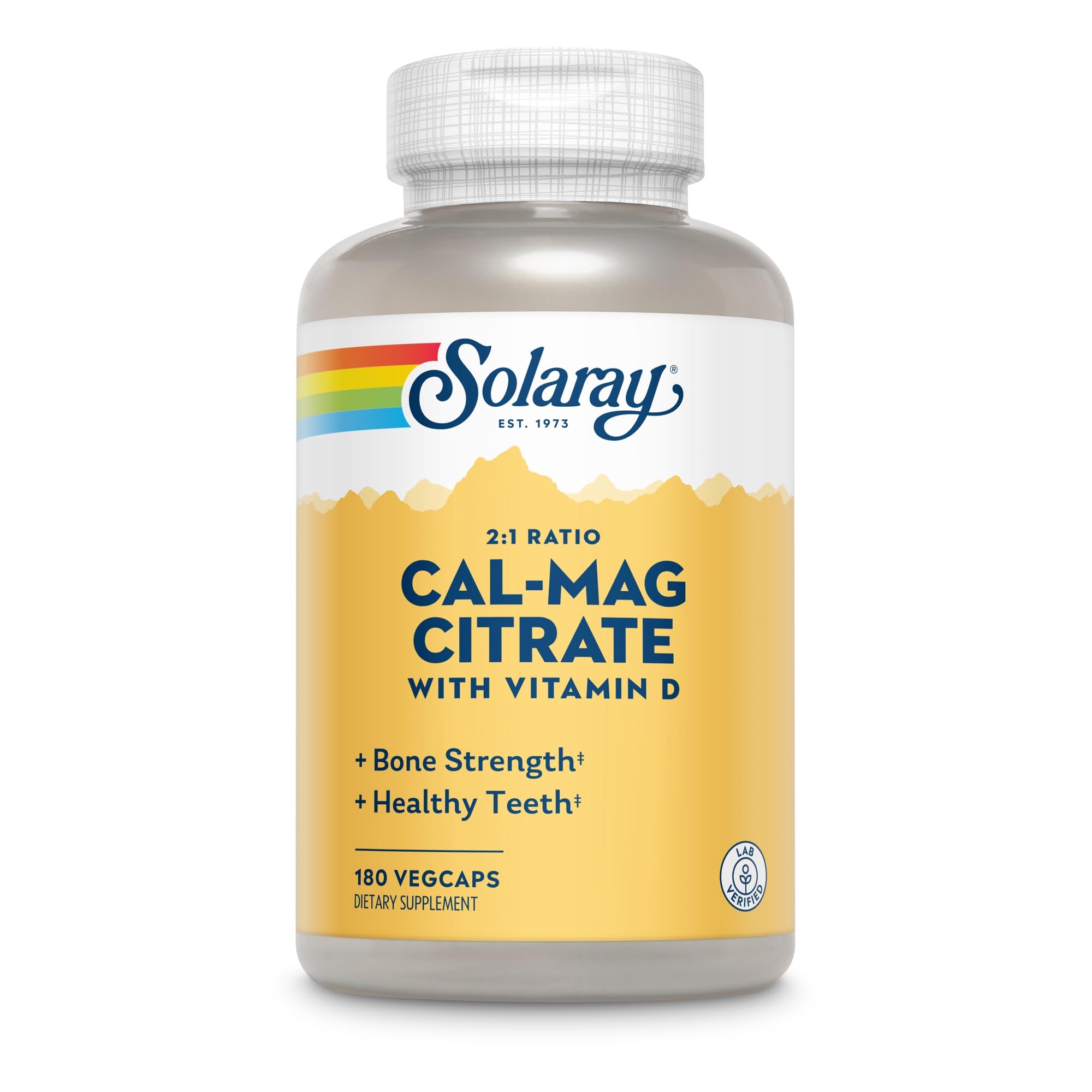
Two minerals in one bottle — 1000 mg of calcium citrate and 500 mg of magnesium citrate in a 2:1 ratio, with 25 mcg of D3.
If you already take magnesium alongside your calcium, this combines them so you are not buying two bottles and remembering two doses. The blend puts calcium citrate at 1000 mg and magnesium citrate at 500 mg in a 2:1 ratio, chelated to citric acid — which means the minerals are bound to a carrier that makes them easier for the body to take up — plus 25 mcg of vitamin D3 to help the body use those minerals. There is also an herbal base of parsley, alfalfa, watercress, and dandelion root, and the formula ships in bottles made from 100% recycled plastic.
The formulation is what gets people to stay. The clearest evidence is owners taking it for years and simply saying it “gets the job done with no problems,” and the phrase “perfect formulation” showing up for a 2:1 cal-mag is a real signal from a category where people are usually quiet about a supplement that just works. There is also the practical side — the capsules are described as easy to swallow, and several owners note how well they tolerate the capsule format compared to tablets, which is worth flagging for anyone who has struggled with the chewable and caplet picks above.
The trade-off was predictable: the dose is six capsules per serving, and that is a real amount of swallowing to do every day. Some owners are happily taking four and accepting a slightly lower mineral intake, while a handful report the capsules arrived dusty and questioned the manufacturing quality on that count. The six-capsule serving is the thing that will decide it for you — if you already take a multi-capsule supplement routine, this is nothing new. If you want a single tablet, this is the wrong pick.
Worth having if: you want calcium and magnesium together on a 2:1 ratio with D3, from a brand that keeps people coming back for years.
Reconsider if: six capsules a day is more than you want to swallow — a one-tablet calcium source will suit you better.
8. Calcium Citrate Gummies with Vitamin D3, K2, Magnesium, Zinc, 120 Count
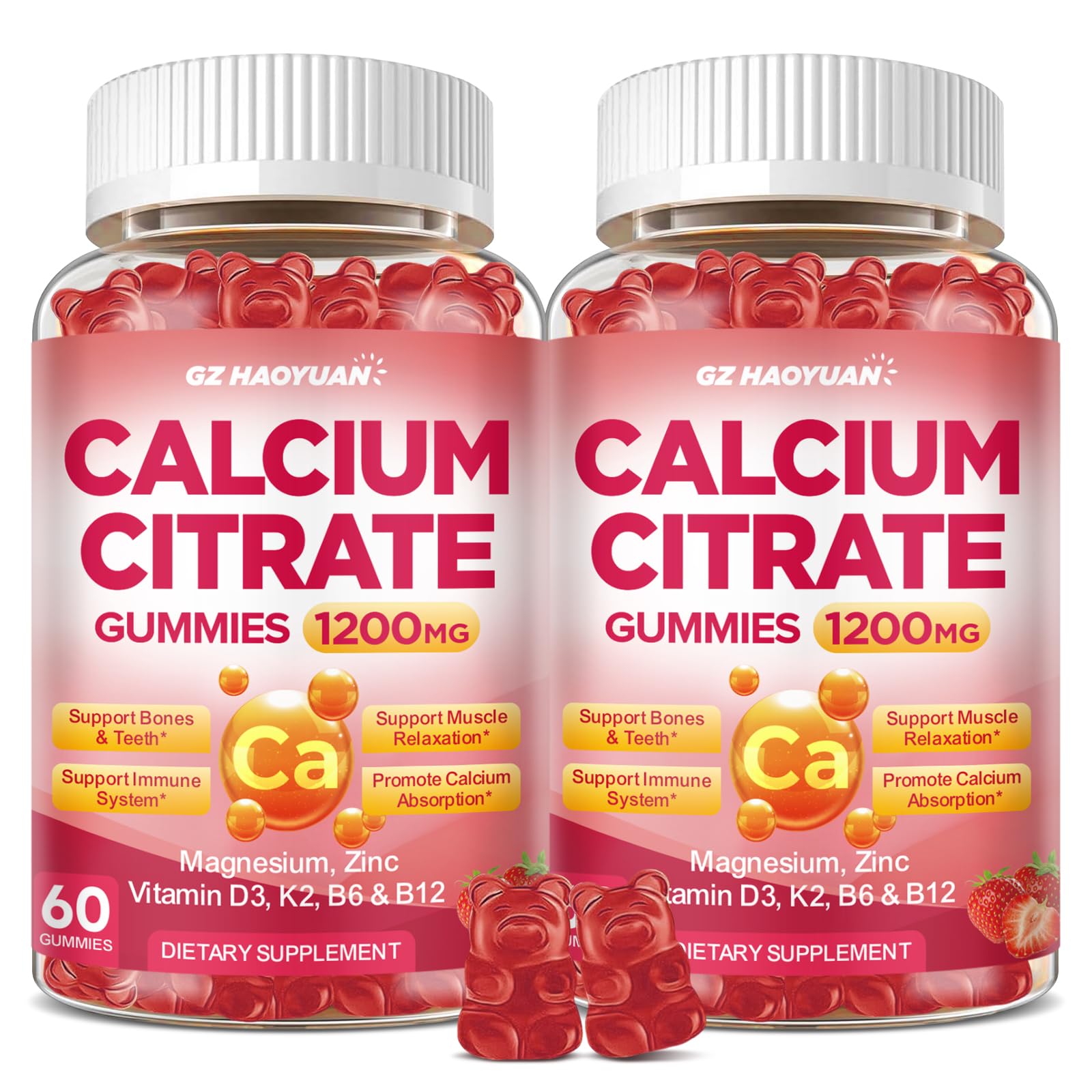
Strawberry gummies that happen to be a full calcium complex — 1200 mg of calcium citrate that goes down like candy.
If pills are the reason calcium never became a habit for you, a gummy changes the equation. Each gummy carries 1200 mg of calcium citrate, and the formula bundles in vitamin D3, magnesium glycinate, and zinc along with vitamins C, B6, B12, and K2 — a genuinely broad blend rather than calcium alone. The gummies are non-GMO, gluten-free, and vegan-friendly, with no artificial colors, flavors, or preservatives, and the accompanying vitamins are part of the formula, not a separate purchase. It is also a nicer format for anyone who wants an easy daily habit: two gummies a day covers the dose.
Taste is the headline, and it is not a hedge. Owners call these “yummy,” note the strawberry flavor is genuinely pleasant, and one parent ended up sharing with the whole house because the gummies disappeared too fast. That is the pleasant side of a formula this format gets exactly right — a supplement that tastes like a treat turns a daily obligation into something you actually do. The simple act of not dealing with a giant pill is the other thing owners keep returning to.
The recurring quirk is texture. These gummies tend to stick together in the container, though the mouth of the bottle is wide enough to dig them out without much trouble. A couple of owners also note the vitamin D here only covers part of what they need, since the D3 is present at a level the label specifies rather than a high one — worth checking if your D target is high. And the gumminess, while a positive for most, does make this the least precisely dosed format on the list.
The gummy advantage: 1200 mg of calcium citrate per gummy with a full accompanying blend of D3, K2, magnesium, zinc, and B vitamins — two gummies a day, no pills.
The texture quirk: they tend to clump in the bottle, and the included D3 is not a high dose, so check it against your target if D is your priority.
Perfect for: households that hate pills and want calcium, D3, K2, magnesium, and zinc in one easy, tasty daily dose.
Not the best fit if: precise dosing matters to you — gummies are the least exact format, and the D3 is not a high-strength dose.
9. Celebrate Vitamins Calcium Plus, 500 mg Calcium Citrate, 333 IU D3, 90 Chewables
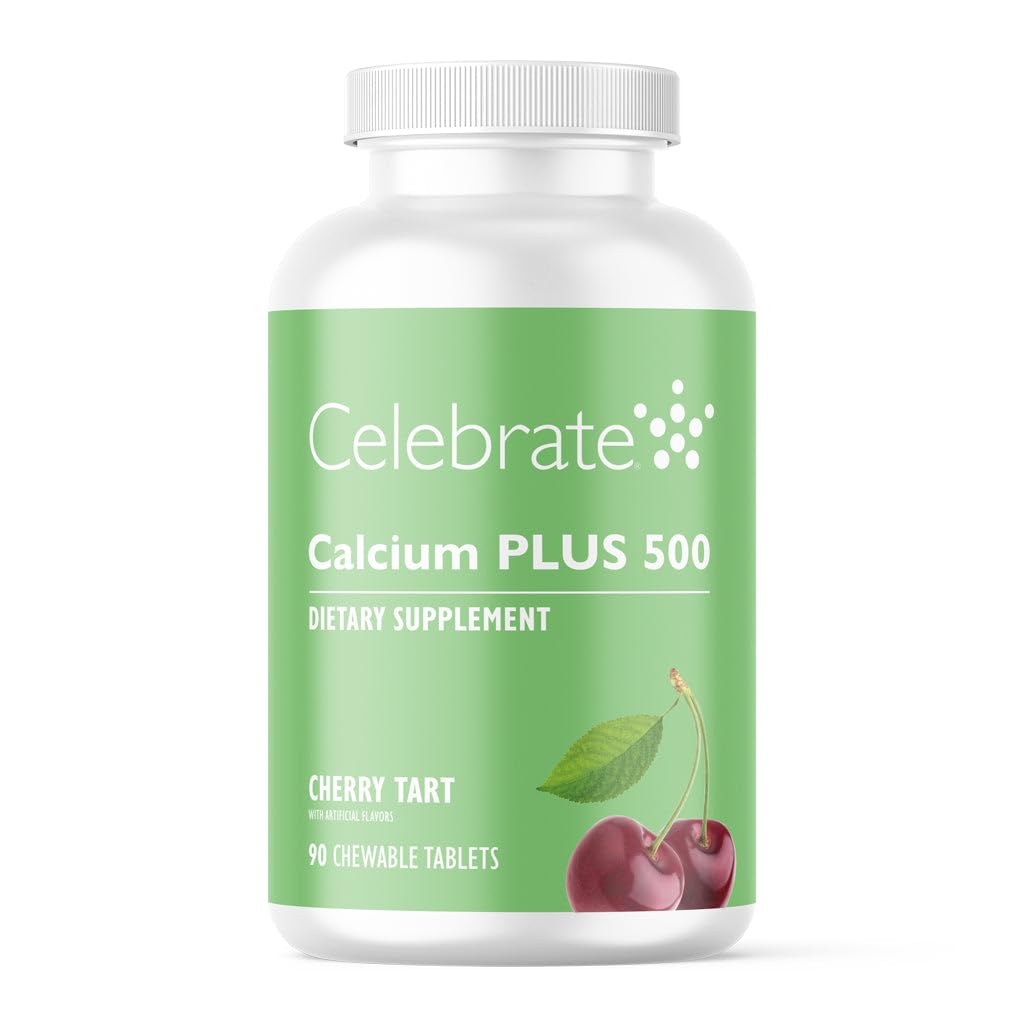
A cherry chewable built for post-surgery routines — 500 mg of calcium citrate with 333 IU of water-miscible vitamin D3.
This chewable is formulated for people whose absorption needs closer attention. Each tablet provides 500 mg of calcium citrate with 333 IU of water-miscible vitamin D3 — water-miscible meaning the D is designed to be absorbed without needing dietary fat alongside it — plus 34 mg of magnesium to support muscle function. It is free from gluten, sugar, and artificial colors, and it is chewable, which avoids the swallow problem entirely. The format targets RNY/GB, VSG, AGB, and DS patients specifically, and it is made in a GMP-Certified facility in the USA.
The format does what the pills cannot. Owners describe the Cherry Tart flavor as genuinely good — juicy, not medicine-like, good enough that it replaced their old flavor entirely — and switching to a chewable cut one reviewer’s routine from nine calcium pills a day down to four. That is a meaningful change to a daily life. People also appreciate that a single tablet is doing more work: the format carries a stronger calcium and D3 load per tablet than the small pill alternatives, which is why fewer of them are needed to hit a target.
The truth to balance that against is texture. Chewables are a matter of opinion, and this one is no different — owners describe it as having a mild gritty or chalky aftertaste that some tolerate easily and others find hard to overlook. A couple also flag that a sweetener is present, so check that if you have any sensitivities. The cherry tart flavor is described as decent by most, not amazing by all, and that is the honest picture: a cheerfully effective chewable with a chalky finish you have to accept for the convenience.
The routine-changer: 500 mg of calcium citrate with 333 IU of water-miscible D3 per chewable, designed for divided doses — buyers report swapping nine pills a day for four chewables.
The honest finish: a mild gritty or chalky aftertaste that some find easy to ignore and a few cannot, plus a sweetener for anyone watching sensitivities.
Made for: post-surgical routines that need chewable calcium citrate with water-miscible vitamin D3 and a genuinely enjoyable cherry flavor.
Look past this if: chalky texture is a deal-breaker for you — the chewable format comes with that finish, so a coated mini-tablet may serve you better.
Understanding the Specs
Elemental Calcium vs. Calcium Citrate Weight
The number on the front of the bottle is almost always elemental calcium — the actual amount of usable calcium you are getting, not the total weight of the compound it came in. So when a label says 1260 mg of calcium citrate, the elemental calcium it delivers is part of that figure, and a bottle that says 500 mg per tablet delivers 500 mg per tablet, no matter how big the pill is. This is why you can see a small 200 mg tablet and a large 1000 mg tablet on the same shelf: the calcium amount is not the pill size.
Why Vitamin D3 Is Listed Separately
Vitamin D is what helps your body put calcium to work, so the two are usually sold together. You will see the D listed in IU (international units) or mcg (micrograms), and those are simply different ways of measuring the same vitamin. Strengths vary widely across this list, from a modest figure on one bottle to a much higher one on another, and the amount matters if your doctor has given you a target. Water-miscible vitamin D3, found in some chewables, is formulated to be taken without dietary fat, which is a convenience for anyone taking it on an empty stomach.
Serving Size And Split Dosing
A serving size tells you how many tablets or capsules make up the daily dose the manufacturer intends — and it can be as few as one and as many as six across the products here. Doses are often split through the day because the body handles calcium best in smaller amounts rather than all at once, which is why tables and capsules with smaller per-unit doses exist. If a label says a serving is four or six units, the bottle count is a supply of that many days at the intended routine.
Formats: Caplet, Capsule, Liquid, Gummy, Chewable
The format is the part buyers underestimate. A caplet is a compressed tablet, usually coated; a capsule is a shell that can be easier to swallow; a liquid is measured out and often needs refrigeration; a gummy is chewed and tastes like a sweet; and a chewable is a flavored tablet you chew, sometimes with a chalky finish. None of these forms changes what the calcium is — but the format you will actually keep taking is the one that matters most for a daily supplement.
FAQ
Is calcium citrate better than calcium carbonate for absorption?
Does vitamin D3 in a calcium supplement actually help absorption?
Why do some calcium citrate supplements need four or six tablets per serving?
Can I take calcium citrate on an empty stomach?
Is a calcium citrate gummy or chewable as good as a tablet?
How many calcium citrate tablets should I take in a day?
Do calcium citrate supplements interact with other medications?
Which calcium citrate with vitamin D is easiest to swallow?
Are there vegan or allergen-free calcium citrate options?
Does calcium citrate need to be refrigerated?
Final Thoughts: The Verdict
For most people, the calcium citrate with vitamin d winner is the Citracal Calcium Citrate Caplets (Maximum Plus) + D3 because a single caplet delivers 1000 mg of calcium citrate with 200 IU of D3, and the formula has earned the trust of a large base of daily users — one of the strongest-rated options here. If you want the highest calcium figure per serving and will accept the four-caplet dose, grab the Horbäach Calcium Citrate with Vitamin D3. And if swallowing pills is what stopped you before, the Rainbow Light Calcium Citrate Mini Tablets — with 800 IU of vegan D3 and a pill engineered to go down easily — is the one to reach for.
How We Picked
We do not accept paid placement. Every pick is matched to a real buyer and a real use-case; we do not hands-on test units.
Sources & Methodology
Specifications: manufacturer listings and product documentation. Review insights: verified customer reviews, as of September 2026. Pricing: not shown on this page (it changes often); check the current price via the retailer link.
As an Amazon Associate, Gadgets Feed earns from qualifying purchases. This does not affect which products we feature.