
Our readers keep the lights on and my morning glass full of iced black tea. As an Amazon Associate, I earn from qualifying purchases.
Radiation therapy saves lives, but the collateral damage to your skin—redness, peeling, burning, and relentless itching—can make each day feel like a battle. A targeted moisturizer formulated with ingredients like calendula, aloe, and hyaluronic acid isn’t just a comfort; it’s a clinical necessity to preserve skin integrity through treatment.
I’m Min — the co-founder and writer behind Gadgets Feed. I’ve pored over clinical trial data, ingredient decks, and hundreds of patient reviews to sort through the crowded field of oncology skincare and pinpoint the formulations that genuinely deliver measurable relief for radiodermatitis.
Whether you’re preparing for your first session or managing a painful reaction mid-cycle, this guide cuts through the marketing to name the best calendula cream for radiation damage based on what actually works on compromised skin.
How To Choose The Best Calendula Cream For Radiation
Selecting the right cream for radiodermatitis requires a shift in thinking. You aren’t looking for a luxury moisturizer; you need a clinical-grade formula that hydrates without occluding, soothes without stinging, and supports the skin barrier without trapping heat. Here are the three non-negotiable criteria.
Active Ingredients Beyond the Base
Calendula is the headline, but the supporting cast matters more. Look for formulations that layer hyaluronic acid for deep humectant hydration, aloe vera for immediate cooling, and allantoin for gentle cellular turnover. Avoid formulas with mineral oil, petrolatum, or heavy waxes—these can trap heat against irradiated skin and worsen the burn. Peptides and colloidal oats are excellent additions for supporting collagen synthesis and calming inflammation respectively.
Texture and Absorption Profile
Your skin during radiation is hypersensitive, often weeping or peeling. A cream that sits on the surface feels sticky and stains clothing is unusable. The ideal texture glides on without dragging, absorbs within 60–90 seconds, and leaves a barely-there protective film. “Non-greasy” isn’t a luxury here—it’s a requirement for compliance, since you’ll be applying it multiple times daily, often under clothing or medical tape.
Clinical Validation and Application Protocol
The best products have either published phase III trial data or a clear usage protocol endorsed by oncology teams. Some creams are designed to be applied 30 minutes before radiation and then again immediately after. Others are meant for nighttime recovery. Understanding the timing matters. Products developed or recommended by radiation oncology departments carry significantly more weight than generalist skincare brands repurposed for the category.
Quick Comparison
On smaller screens, swipe sideways to see the full table.
| Model | Category | Best For | Key Spec | Amazon |
|---|---|---|---|---|
| TriDerma Radia-Soothe | Radiation Cream | Targeted burn relief | Calendula + AP4 Aloe Complex + Colloidal Oats | $22.00Amazon |
| RemeVerse Radiation Cream | Calendula + Peptides | Deep moisture + repair | 6 oz / Hyaluronic Acid + Peptides + Calendula | $29.00Amazon |
| Rejuvaskin Recovery Cream | Oncologist Approved | Pre-treatment prep | 100 ml / Calendula + Aloe + Hyaluronic Acid | $49.95Amazon |
| Miaderm-L Lidocaine Lotion | Lidocaine Cream | Pain relief + desensitizing | 4% Lidocaine + Calendula + Hyaluronic Acid | $43.00Amazon |
| PhysAssist Oncology Cream | Scent-Free Therapy | Ultra-sensitive face & body | 4 oz / Jojoba Oil + Vitamin E + Color-Free | $21.00Amazon |
| All Good Goop Recovery Balm | Organic Balm | All-purpose skin relief | Beeswax + Calendula Oil + Vitamin E | $15.99Amazon |
| Jeans Maximum Skin Therapy Cream | Aloe + Vitamin E | Budget-friendly hydration | 2 oz / Aloe Vera + Vitamin E + Color-Free | $22.95Amazon |
In‑Depth Reviews
1. TriDerma Radia-Soothe Skin Relief Radiation Cream

TriDerma Radia-Soothe is purpose-built for radiodermatitis, not a general moisturizer adapted for the task. Its proprietary AP4 Aloe Vera Gel Complex delivers over 200 bioactive compounds alongside concentrated calendula, allantoin, and colloidal oats—ingredients specifically chosen to reduce the redness and heat of radiation burns. Multiple patient reports confirm it glides onto raw, hypersensitive tissue without stinging or dragging, which is the single most important baseline test for any cream in this category.
At 4 oz per tube, the value proposition is strong given its FSA/HSA eligibility and dermatologist-tested formulation. Users undergoing brain, breast, and head/neck radiation consistently report that it softens scaly patches, alleviates itching during hair loss, and helps maintain skin integrity between sessions. The absence of fragrance, parabens, steroids, and mineral oil means it won’t conflict with your oncology team’s protocol.
The cream absorbs in roughly 60 seconds and leaves a non-greasy film that doesn’t transfer to clothing. It is designed to be applied after each radiation session and as needed throughout the day. For anyone seeking a dedicated, clinically-minded solution that checks every box for compromised skin, this is the standard-setter.
Why it’s great
- Proprietary AP4 aloe complex with 200+ healing compounds
- Dermatologist-tested and won’t sting damaged skin
Good to know
- Some users want a larger tube size for whole-body use
- Texture is richer than a standard lotion; requires full absorption
2. RemeVerse Radiation Cream
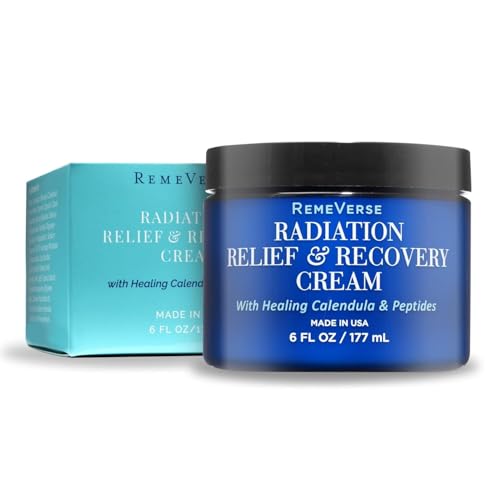
RemeVerse leans into ingredient density that most radiation-specific creams avoid: hyaluronic acid for moisture retention, peptides for collagen support, and calendula for inflammation control. The 6 oz pump format is generous, and patients consistently report that it resolves cracking and deep flaking within 72 hours. One review from a breast cancer survivor noted that the cream healed radiation blisters on her neck in two to three days—a timeline that suggests genuine barrier repair, not just surface lubrication.
The unscented, paraben-free formula is particularly impressive on the reactivity front. Users switching from Aquaphor report immediate relief from the sticky, occlusive sensation that can make irradiated skin feel hotter. The cream absorbs quickly enough for morning application under clothing and doesn’t leave white streaks. This is the strongest option for anyone who wants a lightweight daily moisturizer that also delivers targeted burn relief.
Some patients note the cream works best when applied twice daily—once in the morning before radiation and again at night. The pump dispenser is practical for one-handed use during treatment days. For those who prioritize ingredient elegance and modern skincare science alongside traditional botanical relief, this is a top-tier choice.
Why it’s great
- Peptide and hyaluronic acid support active skin repair
- Large 6 oz pump bottle offers excellent daily value
Good to know
- Higher price point reflects advanced ingredient formulation
- Some users prefer a richer cream for nighttime use
3. Rejuvaskin Skin Recovery Cream
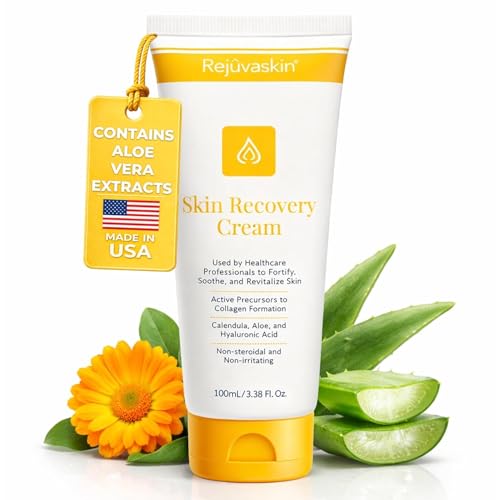
Rejuvaskin carries a rare distinction: it is trusted by over 200 radiation treatment centers and holds the National Eczema Association Seal of Acceptance. The formula layers calendula with aloe vera, hyaluronic acid, bamboo extract, and glucosamine—a combination designed to support collagen synthesis and skin structure, not just calm surface irritation. Patients using it from the start of their treatment report significantly reduced redness and rash severity compared to what their oncologists expected.
The 100 ml tubes are sold in a 3-pack, which aligns perfectly with a standard six-week radiation course. The texture is emollient without being greasy, and it doesn’t stain clothing—a frequent pain point with heavier ointments. One extremely fair-skinned patient noted she was halfway through treatment without significant damage, which is a strong qualitative indicator of barrier support efficacy. The formula is steroid-free and fragrance-free, meeting the strictest oncology protocols.
Of all the products reviewed, Rejuvaskin has the most clinical infrastructure behind it. The fact that oncologists recommend it by name and radiation centers stock it gives it a credibility edge that generic “natural” creams simply cannot match. It is the safest bet for anyone who wants a product that has been vetted at the institutional level.
Why it’s great
- Oncologist-recommended and used by 200+ radiation centers
- National Eczema Association approved for sensitive skin
Good to know
- 3-pack may be more than needed for short treatment courses
- Premium ingredient list commands a premium price
4. Miaderm-L Radiation Relief Lotion with 4% Lidocaine

Miaderm-L stands alone in this lineup as the only product that incorporates 4% lidocaine—a topical anesthetic that provides active pain desensitization for skin that has become unbearably sore and itchy. The base formula is water-based and includes calendula, hyaluronic acid, and aloe vera, but it’s the lidocaine that makes the difference for patients whose radiodermatitis has progressed to the point where standard moisturizers provide insufficient relief.
The product was validated in phase III randomized trials published in scientific journals, giving it a level of clinical evidence that no other product in this review can claim. Patients from top cancer centers like City of Hope recommend using the non-lidocaine version early in treatment, then switching to this formulation mid-cycle when skin sensitivity peaks. The 4 oz tube is relatively small, but the lidocaine component means you’re using a targeted medicine, not a daily moisturizer.
The trade-off is that lidocaine can feel slightly numbing, and the cream is priced at a premium. However, for patients who are actually in pain—not just dealing with dryness—this is the only product on this list that addresses the neurological component of radiation burns. Use it as a rescue cream for breakthrough discomfort.
Why it’s great
- 4% lidocaine provides genuine pain relief for damaged skin
- Validated by phase III clinical trials and oncologist-recommended
Good to know
- Small 4 oz tube is expensive due to lidocaine content
- Best used mid-cycle rather than from day one
5. PhysAssist Oncology Cream Scent-Free
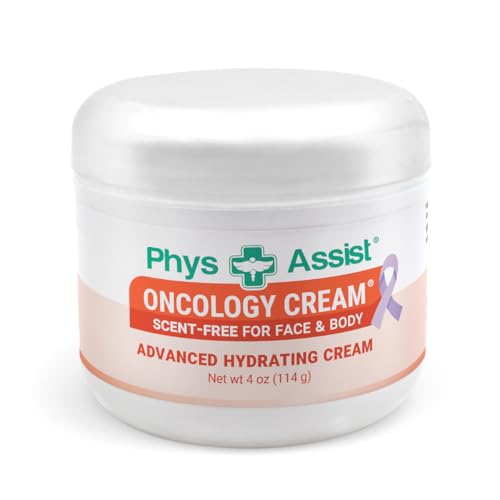
PhysAssist Oncology Cream is the most deliberate “first-line” option on this list. It is fragrance-free, color-free, and formulated with sweet almond oil, jojoba oil, arnica montana, and vitamin E—ingredients selected to avoid any potential irritants while delivering deep hydration. The 4 oz jar is compact, but the cream’s lightweight texture makes it suitable for both face and body, which is rare in radiation-specific skincare.
Patient reviews consistently highlight one theme: this is the cream that works when everything else stings. A cancer patient undergoing Fluorouracil treatment reported that PhysAssist resolved facial scarring within two days despite the severity of the reaction. Others note it fixed chemo-related scaly skin and cracked hands without any sticky residue. The price point slots it comfortably in the mid-range, making it an accessible option for those who need something gentle immediately.
The trade-off is that PhysAssist lacks the active humectants like hyaluronic acid or the specialized botanicals like high-concentration calendula that some of the premium options carry. It is a solid, reliable moisturizer rather than a targeted radiation recovery treatment. For patients in the early stages of treatment or those with moderate dryness, this is a no-regret purchase.
Why it’s great
- Extremely gentle formula—won’t sting even on broken skin
- Works equally well on face and body for convenience
Good to know
- Lacks heavy-duty active ingredients for severe burns
- Small 4 oz jar may require frequent repurchases
6. All Good Goop Organic Recovery Balm

All Good Goop takes a different approach from the creams above—it is a beeswax-based balm infused with calendula oil from the brand’s own organic farm, plus lavender essential oil, comfrey, plantain, and yarrow. The texture is firm and waxy, designed to create a protective seal over damaged skin rather than sinking in as a moisturizer. This makes it a strong alternative for chafing, cracked heels, and isolated dry patches where you need a durable barrier.
The 2 oz tin is portable and intensely concentrated—a little goes a very long way. Patients report that it cleared chronic ankle abrasion overnight and helped heal tattooed skin faster than unscented lotions. The balm is paraben-free, cruelty-free, and contains no petroleum or mineral oils. For patients who can tolerate a heavier occlusive layer, this can be used as a nighttime spot treatment for the most irritated areas.
The caveat is that the beeswax base may not be ideal for full-body application during radiation, especially on large treatment fields like the chest or back. The lavender essential oil, while naturally antibacterial, can sometimes cause a mild reaction on hypersensitive skin. Consider this a complementary product—excellent for specific trouble spots, but not a primary daily radiation cream.
Why it’s great
- Organic calendula from the brand’s own farm ensures purity
- Extremely concentrated—a tiny amount covers a lot of area
Good to know
- Beeswax base is occlusive; may trap heat on large burns
- Lavender essential oil could irritate some hypersensitive skin
7. Jeans Maximum Skin Therapy Cream
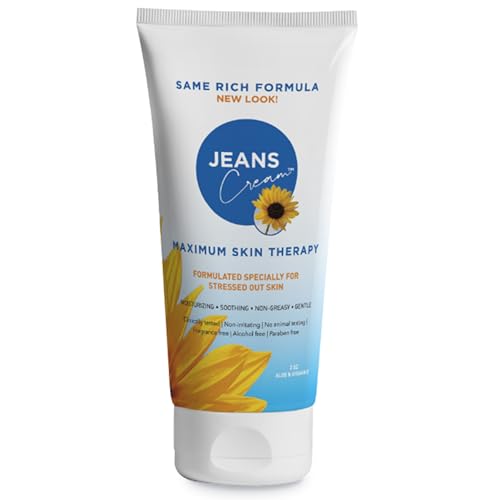
Jeans Maximum Skin Therapy Cream is the entry-level option that punches above its weight class. The formula is simple—high-potency vitamin E and aloe vera, no fragrance, parabens, or alcohol—but it delivers exactly what it promises: fast-absorbing hydration that doesn’t feel greasy. Patients undergoing radiation report that applying it a week before treatments and reapplying after each session noticeably limits skin damage, and that a single tube lasts weeks because a little goes a long way.
The 2 oz tube is the smallest format in this review, but the price point makes it a low-risk trial for anyone unsure about committing to a premium product. The cream is made in the USA and is marketed as a general therapy cream, not a radiation-specific product. However, its performance on sunburn and minor burns suggests strong crossover efficacy for radiodermatitis. Multiple patients who used it through full radiation courses continued using it afterward for daily skin maintenance.
The trade-off is clear: Jeans Cream lacks the calendula concentration and specialized botanicals of the higher-tier options. It also doesn’t have the clinical backing or the Hydrating actives like hyaluronic acid. For patients with mild skin reactions or those on a tight budget, it is an honest, effective moisturizer that will support skin through treatment without adding financial stress.
Why it’s great
- Unbeatable value for a clean, effective moisturizer
- Non-greasy formula absorbs quickly and doesn’t stain
Good to know
- Small 2 oz tube may need frequent reordering
- Lacks targeted active ingredients for severe radiodermatitis
FAQ
Should I apply calendula cream before or after radiation treatment?
Can I use a calendula cream with lidocaine from day one of radiation?
Why do many radiation creams avoid petroleum and mineral oil?
Final Thoughts: The Verdict
For most users, the best calendula cream for radiation winner is the TriDerma Radia-Soothe because it was built from the ground up for radiodermatitis, combining a proprietary aloe complex with calendula and colloidal oats in a non-greasy, clinically-minded formula. If you want advanced skin repair with peptides and hyaluronic acid, grab the RemeVerse. Oncologist-recommended institutional trust goes to the Rejuvaskin. And for breakthrough pain relief mid-cycle, nothing beats the Miaderm-L with 4% lidocaine.
Product prices and availability are accurate as of the date/time indicated and are subject to change. Any price and availability information displayed on Amazon at the time of purchase will apply to the purchase of this product. As an Amazon Associate I earn from qualifying purchases.
CERTAIN CONTENT THAT APPEARS ON THIS SITE COMES FROM AMAZON. THIS CONTENT IS PROVIDED "AS IS" AND IS SUBJECT TO CHANGE OR REMOVAL AT ANY TIME.
Amazon and the Amazon logo are trademarks of Amazon.com, Inc. or its affiliates.