
Our readers keep the lights on and my morning glass full of iced black tea. As an Amazon Associate, I earn from qualifying purchases.
Specs are compiled from manufacturer listings and verified buyer reviews and can change over time — please confirm the key details on the product page before buying.
If your calves ache after a run, throb after a twelve-hour shift, or swell on long flights, the fix is a calf compression sleeve that fits your actual calf measurement — not your shoe size, not your height, and not the size you wear in jeans. Get that measurement right and a good sleeve keeps your lower leg supported all day without rolling down. Get it wrong and you will be tugging at it constantly or cutting it off after five minutes. This guide covers nine real options, sorted by how they are actually used and who they genuinely suit.
I’m Min — the founder and writer behind Gadgets Feed. This guide is built by comparing the manufacturers’ published specifications and the patterns across verified customer reviews, so you get each pick’s real strengths and trade-offs instead of marketing spin.
Almost every complaint about these sleeves traces back to one thing: sizing. Measure the thickest part of your calf with a soft tape, check that number against the brand’s own chart, and you avoid nine out of ten disappointments. That single habit is what separates a calf compression sleeve you wear daily from one that sits in a drawer.
Our Picks at a Glance


How To Choose The Best Calf Compression Sleeve
A calf compression sleeve wraps around your lower leg from just below the knee down toward the ankle, leaving your foot bare. It squeezes graduated — a term that simply means the pressure is firmest at the bottom and eases as it climbs. That gradient is what helps move fluid up and out of your calf instead of letting it pool there. The three things that decide whether a sleeve works for you are sizing, pressure level, and whether the length actually covers your calf.
Measure your calf, not your body
Wrap a soft tape around the thickest part of your calf, usually a few inches below the knee crease, and write that number down. Every brand here sizes off that circumference, so a 16.5-inch calf might be a Large in one chart and a Medium in another. If your measurement lands near the top of a size range, sizing up gives you a more comfortable fit that still delivers firm pressure. Sizing down gives you tighter compression but a much harder pull-on. Nothing on your clothing label or your scale tells you which sleeve fits — only the tape does.
Pick your pressure level
Compression is measured in mmHg, a unit that tells you how firmly the fabric pushes back on your leg. Light everyday pressure sits in the 15-20 mmHg range and suits office days, travel, and standing work. Firm 20-30 mmHg is the range most runners, nurses, and recovery wearers choose. Higher numbers are not automatically better — they are harder to put on and can feel constrictive if your calves are large. Match the level to how you will wear it, not to how tough the number sounds.
Decide on length and foot coverage
Footless sleeves leave your toes and heel free, so you can wear your own socks and shoes without a seam bunching under your arch. They also let your feet breathe in summer and sit invisibly under trousers. The trade-off is coverage: some sleeves run long enough to reach from just below the knee to the lower ankle, while others stop partway down the calf. Taller wearers often find standard lengths come up short. Check the stated length against your own calf before you commit.
Quick Comparison
| Model | Best For | Compression Level | Pairs Included | Fabric Blend | Amazon |
|---|---|---|---|---|---|
| Rymora Calf Compression Sleeves★ Best Overall | All-day support and shin splints | Graduated | 1 pair | 54% nylon, 39% polyester, 7% elastane | Amazon |
| CAMBIVO 20-30mmHg SleevesBest Value | Nurses, runners, and travelers | 20-30 mmHg | 1 pair | 85% nylon, 14% spandex, 1% polyester | Amazon |
| Doctor’s Select Copper SleevesTwo-Pair Pick | Two-pair backup sets | Compression sleeve | 2 pairs | Copper-infused knit | Amazon |
| Run Forever Calf Compression Sleeve | Runners and recovery days | 20-30 mmHg | 1 pair | 60% nylon, 25% polyester, 15% spandex | Amazon |
| Doc Miller Calf Compression Sleeve | Wide-calf friendly fit | 20-30 mmHg | 1 pair | Nylon and spandex blend | Amazon |
| BLITZU Calf Compression Sleeves | Three-pair rotation | Graduated compression | 3 pairs | Breathable knit with kinesiology strips | Amazon |
| CAMBIVO 3 Pairs Footless Socks | Everyday wearers and standing jobs | 15-20 mmHg | 3 pairs | Nylon, elastane, spandex 3D-knit | Amazon |
| Sosation 6 Pairs Sleeves | Colour variety and value | Light compression | 6 pairs | Nylon and spandex blend | Amazon |
| Bauerfeind Sports Calf Sleeves | Long-run durability and fit security | Medical standard graduated | 1 pair | Airknit microfiber knit | Amazon |
In‑Depth Reviews
1. Rymora Calf Compression Sleeves for Men & Women
Our pick — over 4.5★ from 22,500+ verified ratings; the strongest balance of quality and price.
The sleeve most people should buy first, and the one they rarely need to replace.
Start with the fabric, because it decides how the sleeve behaves on day one and on wash thirty. The Rymora mixes 54% nylon, 39% polyester, and 7% elastane, which reads as a blend built for stretch recovery rather than raw squeeze. In plain terms, that 7% elastane is the spring that pulls the sleeve back into shape after every wear. The knit is described as lightweight with medium stretch, so it sits close without the wrestling match some firmer sleeves demand.
What wins people over here is the quality of the knit itself — it is the quality of construction, not the maximum squeeze, that keeps owners coming back. The fit is the second thing that holds up, running true to the chart when you measure your calf properly. The brand is unusually direct about this: don’t guess, check the chart in the images, because calf sleeve sizing has nothing to do with your height, your weight, or what size jeans you buy. Owners who follow that advice report the sleeve holding position all day. The verbatim feedback sums it up: “Stay in place until you remove it.”
The honest catch is the sizing curve. This is listed as a slim fit, which means the medium flatters a mid-range calf and leaves bigger calves needing a size up. A few wearers find the level varies slightly between colours, and one noted that on inactive days a snug cuff can leave the foot and ankle feeling puffy. That is a fit-and-wear note, not a fault — if you spend most of the day seated, a lighter-pressure sleeve may suit you better. For everyone else, this is the sleeve that quietly does its job.
The case for it
- Fabric blend of 54% nylon, 39% polyester, and 7% elastane keeps its shape wash after wash
- Holds position through long runs and full workdays without rolling down
- Machine washable and quick to pull on
- Widely stocked colour range for matching your kit
Worth knowing
- Listed as a slim fit, so larger calves need to size up
- Compression level can feel slightly different between colourways
- Very snug cuffs can leave ankles puffy on low-activity days
Buy this if: you want one dependable sleeve for running, standing shifts, and post-workout recovery.
Size up instead if: your calf measures at the top of a size band, because the slim cut leaves little room.
2. CAMBIVO Calf Compression Sleeves 20-30mmHg
Firm 20-30 mmHg pressure in a knit thin enough to disappear under jeans.
Nurses, long-haul flyers, and anyone on their feet for a twelve-hour shift: this is the CAMBIVO built for you. It runs graded pressure from 20-30 mmHg, which is the firm tier — enough resistance that you feel it working, and enough that the maker warns it will feel snug on first pull. The knit is 85% nylon, 14% spandex, and 1% polyester, a combination that lands it in the lightweight category at just 118 g per pair. Laid against the Rymora’s 54% nylon, 39% polyester, 7% elastane blend, the CAMBIVO leans harder on spandex, which is why the fabric reads as feather-light and stretchy rather than dense.
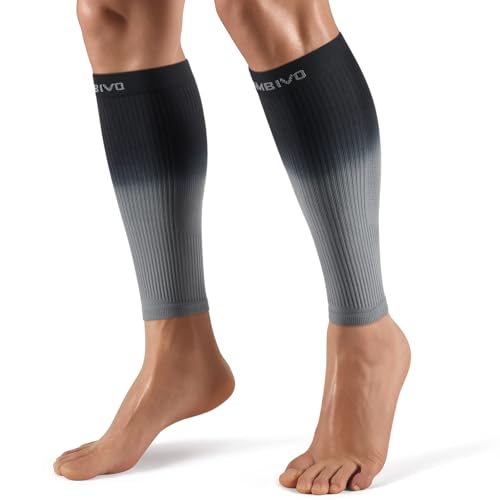
The gradient ombré finish is where this sleeve earns its spot on your shelf. The colour runs through the entire knit rather than sitting on the surface, so it will not peel or fade with proper care — a genuine advantage over printed sleeves that crack after a season. Compression holds well and does not bunch or slide, which is the thing that matters most during a long flight or a standing shift. Between the classic and gradient options, the look is a real reason people pick this pair over plainer rivals.
Here is the trade-off you should plan around. The fit is the most-discussed topic on this listing, and it is genuinely mixed: the sleeve runs slightly long, reaching just below the knee and down toward the ankle when pulled up. A 5’3″ wearer found them an inch or two long, and a 5’6″ reviewer considered returning for the same reason. The ankle opening is also tight — one buyer with normal ankles could not leave them on for five minutes. Measure your calf and your ankle before ordering, and take the larger size if you land near the top of a band. Get that right and the pressure is exactly what a firm sleeve should feel like.
Where it shines: the 20-30 mmHg gradient delivers the same firm support tier as the Doc Miller and BLITZU sleeves, but in a fabric that stays cool enough for summer wear and thin enough to sit under trousers.
The catch to plan for: the length and a snug ankle cuff. If your lower legs run short, or your ankles are on the fuller side, order a size up or look at a shorter-cut sleeve.
Reach for this if: you want firm pressure and a design that reads as deliberate rather than medical.
Look elsewhere if: you are shorter than about 5’4″ or your ankles run wide — the length and cuff will fight you.
3. Doctor’s Select 2 Pairs Copper Calf Compression Sleeve
Two footless sleeves in the box, so one can be on your legs while the other dries.
The practical case for this pair is rotation. You get two sleeves, which means a wash day never leaves you without support — a small thing until you are the person who stands all day and forgets to launder on schedule. They pull on over the calf with no foot section, so your own socks and shoes go on normally. A husband whose job involves constant walking wore his for a full day and reported comfortable support throughout.
Comfort is the strength owners talk about most here, closely followed by the copper-infused knit itself. The material is described as soft, and the sleeve pulls on and off without a fight — useful when you are putting them on before a shift rather than before a race. Sleeping in them is a real use case for some wearers, not just a workout accessory. If you want support that does not feel like medical gear, the finish and the softness make that easy.
Two things to weigh. The most-discussed topic in this listing is fit, and it is genuinely mixed — some buyers find the sleeve shorter than expected, with one 5’1″ wearer noting it did not cover as much of the calf as hoped. Several also find the compression lighter than they expected, and this pair is not labelled with a specific mmHg figure the way the CAMBIVO or Doc Miller sleeves are. If you want quantified firm pressure, look at those instead. If you want a soft, comfortable footless sleeve in a two-pack, this is a sensible buy.
Best for: anyone who wants a spare pair on hand and softness over maximum squeeze.
Not for: buyers who need a stated mmHg rating or full calf-length coverage on shorter legs.
4. Run Forever Calf Compression Sleeve

Mile-one shin splint relief that holds through mile three and past the finish line.
Runners describe calf and shin pain fading within the first mile and staying gone. That is the pattern behind the reviews — the sleeve is bought for shin splints, and it delivers on them. The construction is 60% nylon, 25% polyester, and 15% spandex, a heavier spandex load than the Rymora’s 7% elastane, which translates to a firmer, springier pull when you slide it on. Think of that spandex percentage as the sleeve’s memory — the higher it goes, the harder the fabric snaps back after a wash.
Value is the second thing that surfaces again and again. The listing is written as a two-pairs-for-the-price-of-one proposition, which means a runner can keep one clean and one in rotation without buying twice. The footless cut lets you wear your own arch-support socks underneath, which matters if you have a sock you trust for long distances. Wearers recovering from post-run stiffness report less soreness the next morning, and the black and hot pink colourways appeal to runners who care how their kit looks.
The fit is where you need to be careful. It runs small, and this is the dominant complaint: one 6-foot wearer with a roughly 12-inch calf sized up to a medium and found the ankle band almost too tight. Sizing up is the move here, and several buyers report the larger size delivers the compression they wanted without the pressure points. Getting them off can also take effort — one wearer found the ankle elastic too tight for easy removal. If you have a thick ankle or dislike a firm ankle band, factor that in. For most runners, though, the trade is worth it.
Why runners keep them
- Firm 20-30 mmHg graduated pressure that holds its shape through hot washes
- Footless design works with your own arch-support socks
- Colour range keeps your kit coordinated
- Snug without slipping during a full run
Where it strains
- Runs small — sizing up is the safe call for most calves
- The ankle band is firm, which can make removal awkward
- Testing the fit matters more here than with looser sleeves
Ideal for: runners chasing shin splint relief who want firm graduated pressure and a footless fit.
Think twice if: your ankles run thick or you dislike a tight band at the bottom — size up or pick a lighter-pressure sleeve.
5. Doc Miller Calf Compression Sleeve 20-30 mmHg

Built for bigger calves that get squeezed out of most standard sizing charts.
If other sleeves have pinched at the top or refused to reach around your calf, this is the one to try. Doc Miller markets it explicitly as a wide calf compression sleeve, and the payoff shows up in use: desk workers with heavy legs, people on long shifts, and wearers who sit all day report the sleeve helping with the ache that builds by evening. A desk worker found night-time leg pain eased after wearing the sleeve during the day.
The construction is a nylon and spandex blend at 20-30 mmHg, which puts it in the same firm tier as the Run Forever and CAMBIVO sleeves. Where it differs is the knit feel — it is described as lightweight and breathable, quick-drying, and flexible, which makes it easier to wear through a workday than a denser sleeve. The colour range is unusually broad, spanning patterns alongside solids, so you are not stuck with the medical-looking options if you would rather match your outfit. A 14.5-inch calf fits the Large well, according to a wearer who also found the ankle fit comfortable — a useful signal that the proportions work when the chart matches your measurement.
Now the honest part. Sizing is the most-discussed topic here and it cuts both ways. Some wearers find the fit true to size and comfortable; others find it runs tight, and one small wearer who ordered up two sizes still found it restrictive. That points to a sleeve that rewards accurate measurement and punishes guessing. The other minor gripe is that pulling them on takes some effort, which is typical of a firm compression knit. Read the washing directions — air drying helps extend the life of the elastic rather than breaking it down in a tumble dryer.
What earns the place: a 20-30 mmHg sleeve with the widest deliberate fit range in this group, plus a colour selection well beyond standard black and white.
The honest limit: sizing feedback is genuinely mixed, and the sleeve takes a firm tug to get on. Measure accurately and treat wash care as a way to make the elastic last.
Go for it if: you have a fuller calf and want firm pressure in a colour you actually like.
Skip if: you want a sleeve that slips on with no effort or your measurement sits at the very top of a size band.
6. BLITZU Calf Compression Sleeves, 3 Pairs
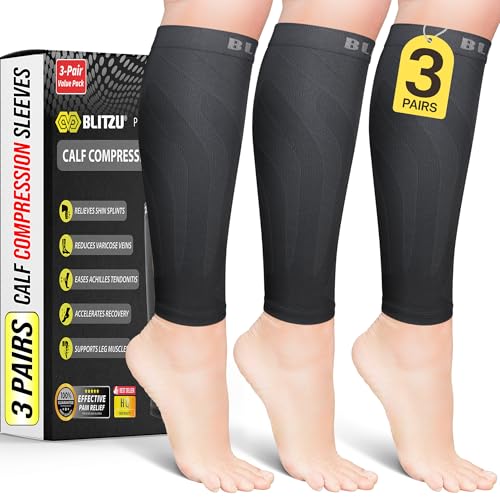
Three sleeves in one box, each with sewn kinesiology strips running down the calf.
The unusual detail here is the construction pattern. Where most sleeves are built from two sewn sections, the BLITZU uses three curvy panels — a design choice that spreads the compression more evenly across the calf rather than concentrating it in two zones. At 3 ounces per sleeve and 0.1 inches thick, they are light enough to forget you are wearing them, and thin enough to sit under trousers without a visible bulge. For anyone who has to dress for an office and still wants support, that thinness is the whole point.
Owners who wear them consistently come back to the same two themes: support and fit. A wearer with 17-inch calves found the Large-X-Large spot on — comfortable, barely noticeable, with just enough stretch and adequate compression. Someone with a 6’5″ frame found the sleeve long enough for their lower legs, solving the coverage gap that full compression socks create by pinching the toes. The three-pair pack also means a wearer can rotate one on, one drying, one spare, which is the practical reason multi-packs outsell single pairs for daily users.
Two honest notes. Durability feedback is mixed, so treat the seams kindly — a wearer with swelling noted brief indentations where the seams sit, which is normal for a sewn compression knit but worth knowing if your legs mark easily. The other tip that keeps coming up: pull the sleeve higher than you need, then slide it down into place, especially if you have leg hair that snags on the way up. Sizing runs to the brand’s own chart, and the advice is to size up for a looser fit or down for tighter pressure — check which one you actually want before ordering.
Choose these if: you want three everyday sleeves with an even pressure profile and a low-profile fit under clothing.
Pass if: you need maximum squeeze rather than balanced support, or your skin marks easily under seaming.
7. CAMBIVO Calf Compression Sleeve 3 Pairs Footless

A gentler 15-20 mmHg squeeze for people who wear compression through a whole workday.
This is the lighter-pressure sibling of the CAMBIVO pair above, and the difference is the point. Instead of the firm 20-30 mmHg tier, this one runs 15-20 mmHg, the everyday range. Nurses, teachers, retail staff, and anyone logging long hours upright tend to prefer that gentler level because it does not fight back all day. The fabric is listed as a 3D-knit and the spec sheet names 40% nylon, 40% elastane, and 20% spandex, which is a stretch-forward blend — the kind that pulls on easily and settles without pinching.
Three pairs in one box is the practical draw. One on the leg, one in the wash, one spare is exactly the rotation a daily wearer wants, and it means you are not hand-washing one sleeve every night. A wearer with a 16.5-inch calf found the chart accurate and wore the sleeve through a full standing day pain-free. The double cuffs at the top and bottom help the sleeve hold position, and the open-toe cut sits under your usual socks and shoes. One buyer found it cooler than expected and effective at reducing end-of-day leg swelling.
The honest caveat is size again — this listing tells a slightly smaller story than the chart. Several wearers find it runs small, and that is the single dominant negative on an otherwise well-regarded sleeve. There is also a small cosmetic point: the sleeve can leave faint impressions on your skin where the knit presses in, which one wearer noticed on removal but decided to keep wearing anyway. That is typical of any snug knit, and it fades. Measure your calf, take the size up if you are between bands, and air-dry rather than tumble to keep the compression honest.
Why it suits long days
- 15-20 mmHg gives steady support without a constant squeeze
- Three pairs allow a full week of rotation with a spare
- 3D-knit fabric with double cuffs holds position on the leg
- Open-toe cut fits under regular socks and shoes
The honest trade-offs
- Runs small relative to the size chart — size up if you are between bands
- Knit can leave faint skin impressions after removal
- Air-drying is required to protect the compression
Worth it for: standing-shift workers who want gentle all-day pressure and three pairs in one purchase.
Not for you if: you want firm 20-30 mmHg support for running or recovery work.
8. Sosation 6 Pairs Calf Compression Sleeves

Six sleeves in six colours, for people who want support that matches the rest of their wardrobe.
Half a dozen sleeves in white, black, lake blue, light pink, light grey, and rose red is the reason people pick this pack. It is light compression — the gentlest offering in this group — made from a nylon and spandex blend that pulls on easily and stays put without a fight. Say you are building a drawer of everyday support and want a colour for each outfit rather than one black sleeve washed on repeat: that is the buyer Sosation is aimed at, and the six-pack covers a full week of wear before you need the machine.
Breathability is the standout here, and it earns its reputation honestly. A hot-weather wearer with circulation needs found these caused none of the skin rashes full footed stockings can, and a POTS patient who cannot tolerate sweaty feet chose them because the feet stay bare and cool. The colours are described as bright and matchable, and several wearers bought more after the first set. If you dislike the look of medical compression or want it to disappear under light trousers, the palette does that job outright.
Two limits to keep in mind. This is light compression, which means it is a sensible first sleeve rather than a firm recovery one — a wearer who self-prescribed for heavy calves found them a good starter, then bought tighter sleeves for long flights. The second issue is length: several wearers find the sleeve short for a full calf, and taller buyers find the same. If you are on the shorter side or want gentle everyday pressure, that is not a problem. If you want firm, full-length coverage, this is not the pack.
Pick this pack if: you want gentle pressure, easy on-and-off, and enough colours to match a whole week of outfits.
Look past it if: you need firm compression for running, or your calf runs long and you want full coverage.
9. Bauerfeind Sports Compression Lower Leg Calf Sleeves

The pair that survives years of twelve-hour shifts and still holds its compression.
Bauerfeind makes this sleeve in Germany, and the build quality is the first thing wearers notice. A twelve-hour-shift worker reports the sleeve eliminated calf pain entirely, with compression still firm after years of wear. The fabric keeps its tension, which is what separates a premium compression knit from a budget one — the elastic holds instead of relaxing into a loose tube. The knit is temperature-regulating microfiber, so it stays warm against the muscle in cold air but breathes on the skin when you warm up. Athletes running in cold weather before a 15K race found the sleeve a manageable comfort on long efforts.
Two technical details set it apart from everything else on this list. The first is a UPF 80 rating, meaning the knit blocks a large share of UV when stretched or wet, tested under UV Standard 801 by the association that certifies sun-protective textiles. The second is the fit system: wide ends with silicone-dotted bands and adhesive zones that hold the sleeve in place even through hard activity. Pull-on sleeves rely on fabric tension alone; this one uses grip, which is why it stays put through beach volleyball and long runs alike.
The catch is cost and length. This is the most expensive sleeve here, and value-for-money feedback is genuinely mixed — worth the cost for daily wearers, less so for occasional use. Length is the other honest issue: wearers around six feet find even the X-Long runs short, and one described the X-Long as still needing another few inches. The knit is also compact from the start and stretches snug, so the fit curve is firmer than a lightweight sleeve. If you are tall or want a long, high-coverage sleeve, check the sizing chart closely before committing.
The reason it costs more: German-made construction, targeted compression zones, UPF 80 protection, and silicone grip bands that keep the sleeve exactly where you put it.
The one to plan around: length. Taller wearers consistently need the X-Long, and even that may sit shorter than they would like.
Worth the spend if: you wear compression daily and want one pair to outlast several cheaper sets.
Consider the budget options if: you only need occasional support or you are over six feet and want a longer cut.
Understanding the Specs
What mmHg means on a sleeve label
mmHg is the unit that measures how firmly a compression garment presses on your leg. Think of it as the sleeve’s grip strength: 15-20 mmHg is a light, all-day hug, while 20-30 mmHg is a firmer hold you notice whenever you pull the sleeve on. Neither is better on its own — the lighter range suits desk days, travel, and standing shifts where you want support without constant squeeze, and the firmer range suits running, recovery, and long days where you need real pressure. A sleeve that does not list an mmHg figure can still work well, but you will not have a number to compare against other options. The key is to match the pressure to how you actually wear the sleeve, not to simply pick the highest number available.
Graduated compression and fabric blends
Graduated compression means the pressure is highest at the bottom of the sleeve and eases as it climbs toward the knee. That gradient is what supports your circulation: the tightest point sits near the ankle where fluid tends to pool, and the sleeve releases pressure higher up. Fabric is the other half of the equation. Nylon brings strength and a smooth finish, polyester adds breathability and shape retention, spandex or elastane is the stretch that lets the sleeve put pressure on at all. The higher the spandex or elastane percentage, the more the sleeve snaps back after washing — which is why a 10-15% spandex blend tends to hold its compression longer than one leaning almost entirely on nylon.
Footless design versus full compression socks
A footless calf sleeve covers the calf but leaves the foot bare, so your toes and heel stay free. That solves two everyday problems: you can wear your own socks and shoes without a seam bunching under your arch, and your feet do not overheat in warm weather. Full compression socks offer continuous coverage down through the foot, which some wearers prefer for circulation support further down. Sleeves are easier to pull on and off, and easier to rotate through a wash cycle since you only launder the calf section. If you have ever cut the foot off a compression sock because it pinched your toes, a footless sleeve is the cleaner answer.
Why calf circumference beats every other measurement
Calf circumference is the only number that should decide your size. Height, weight, and clothing size tell you almost nothing about how a sleeve fits, because calves vary wildly between people of the same build. A 14.5-inch calf might be a Large in one brand and a Medium in another. Measure the thickest part of your calf with a soft tape and compare it to that brand’s chart specifically. If your number lands near the top of a size range, choose the size up — you lose a little pressure but gain a fit that stays comfortable all day. Ordering based on a guess is the single most common reason people end up with a sleeve they never wear again.
FAQ
How do I measure my calf for a compression sleeve?
What does 20-30 mmHg compression actually feel like?
Is a footless calf sleeve better than a compression sock?
How long will a calf compression sleeve last?
Can I wear a calf compression sleeve all day?
Will a calf compression sleeve help with shin splints?
Should I size up or down if I am between sizes?
Do copper compression sleeves work differently from plain ones?
Can I put a compression sleeve in the washing machine?
Will a calf sleeve stay in place during a long run?
Final Thoughts: The Verdict
For most people, the calf compression sleeve winner is the Rymora Calf Compression Sleeves because the 54% nylon, 39% polyester, and 7% elastane blend holds its shape wash after wash, and the sleeve stays put through a full day without rolling down. If you want firm quantified pressure in a fabric thin enough to hide under jeans, the CAMBIVO 20-30mmHg sleeve is the pick — just size up if your calf measures near the top of a band. For a three-pair rotation on a gentler 15-20 mmHg squeeze, reach for the CAMBIVO 3-Pair set. And if you want one German-made pair with UPF 80 protection and silicone grip bands to outlast several cheaper sets, the Bauerfeind Sports sleeve earns its higher tier — provided you check the length chart first.
How We Picked
We do not accept paid placement. Every pick is matched to a real buyer and a real use-case; we do not hands-on test units.
Sources & Methodology
Specifications: manufacturer listings and product documentation. Review insights: verified customer reviews, as of September 2026. Pricing: not shown on this page (it changes often); check the current price via the retailer link.
As an Amazon Associate, Gadgets Feed earns from qualifying purchases. This does not affect which products we feature.