
Our readers keep the lights on and my morning glass full of iced black tea. As an Amazon Associate, I earn from qualifying purchases.
Specs are compiled from manufacturer listings and verified buyer reviews and can change over time — please confirm the key details on the product page before buying.
You pull your calf sleeve up before the swim, and it needs to stay put through the swim-to-bike transition, the whole bike leg, and every stride of the run. The best calf sleeve for triathlon does exactly that — no rolling down, no bunching at the ankle, and no squeeze so tight you want to rip it off at mile two. This list ranks nine sleeves that hold their position and their pressure, and I’ll tell you plainly which ones suit wide calves, which ones suit narrow calves, and which ones you should pull higher before you slide them down.
I’m Min — the founder and writer behind Gadgets Feed. This guide is built by comparing the manufacturers’ published specifications and the patterns across verified customer reviews, so you get each pick’s real strengths and trade-offs instead of marketing spin.
Compression is the one piece of triathlon gear where the wrong size ruins the whole purchase, so every pick below is judged on how the fit actually behaves. That is the lens behind this guide to the best calf sleeves for triathlon.
Our Picks at a Glance
How To Choose The Best Calf Sleeves For Triathlon
A triathlon asks one pair of sleeves to do three different jobs on the same day. They sit under a wetsuit in the water, then against bare skin or under cycling kit on the bike, then through the run — and at no point do you get a chance to stop and re-seat them. That is why the buying decision here is narrower than in general running gear: you are choosing a pressure level, a length, and a grip, in that order.
Measure your calf before you read anything else
Every sleeve on this list is sized from calf circumference, measured around the thickest part of your calf with a soft tape. Nothing else matters — not your shirt size, not your height, not what you wear in another brand. A 14.5″ calf lands in a Doc Miller Large, and a 17″ calf lands in a BLITZU Large-XL. Between two sizes, most makers tell you to go up for a looser fit or down for more squeeze. Get this wrong and the sleeve will either cut in or slide.
Pick your pressure level, and pick it on purpose
Compression here is rated in mmHg, which stands for millimetres of mercury — it is simply how tightly the fabric grips. The CAMBIVO sleeve runs 15-20 mmHg, which is the lighter end and the easier one to wear all day. The Doc Miller sleeve runs 20-30 mmHg, which is firmer and built for firmer support. Neither is better in the abstract. A lighter sleeve is easier to keep on through a long race day; a firmer sleeve gives you a more pronounced squeeze without needing to size down.
Length is the quiet deal-breaker
A sleeve that stops halfway up your calf gives you compression in the wrong place. Taller athletes run into this most — the feedback on these products keeps returning to the same point, that a sleeve can be correctly sized around the calf and still be a couple of inches short of the knee. If you are well over six feet, read the length notes in each review below before you commit.
Quick Comparison
| Model | Best For | Compression | Pairs Included | Fabric | Amazon |
|---|---|---|---|---|---|
| Rymora Calf Compression Sleeves★ Best Overall | All-round training and recovery | Graduated (level not stated) | 1 | 54% Nylon, 39% Polyester, 7% Elastane | Amazon |
| Doc Miller Calf Compression SleeveFirmest Squeeze | Firmer printed-pressure support | 20-30 mmHg | 1 | Nylon | Amazon |
| ITHW Copper Calf Compression SleevesBest Grip | Sweaty sessions and slip-free grip | Graduated (level not stated) | 1 pair (2 items) | Nylon | Amazon |
| CAMBIVO Calf Compression Sleeve | Daily rotation on a multi-pair budget | 15-20 mmHg | 3 | 40% Nylon, 40% Elastane, 20% Spandex | Amazon |
| BLITZU Calf Compression Sleeves | Long-wearing comfort for taller athletes | Graduated (level not stated) | 3 | Breathable knit (blend not stated) | Amazon |
| Sosation Calf Compression Sleeves | Colour-matching and light compression | Light (level not stated) | 6 | Nylon and Spandex blend | Amazon |
| 2XU Compression Calf Guards | Race-day cooling and UV cover | Graduated with Invista Lycra (level not stated) | 1 | 80% Nylon, 20% Elastane | Amazon |
| Incrediwear Calf Sleeve | Recovery-focused walking and court sports | Graduated (level not stated) | 1 | Anti-inflammatory fabric blend | Amazon |
| Bauerfeind Sports Compression Lower Leg Calf Sleeves | Premium long-shift and race-day support | Targeted graduated zones (level not stated) | 1 | Temperature-regulating microfiber knit | Amazon |
In‑Depth Reviews
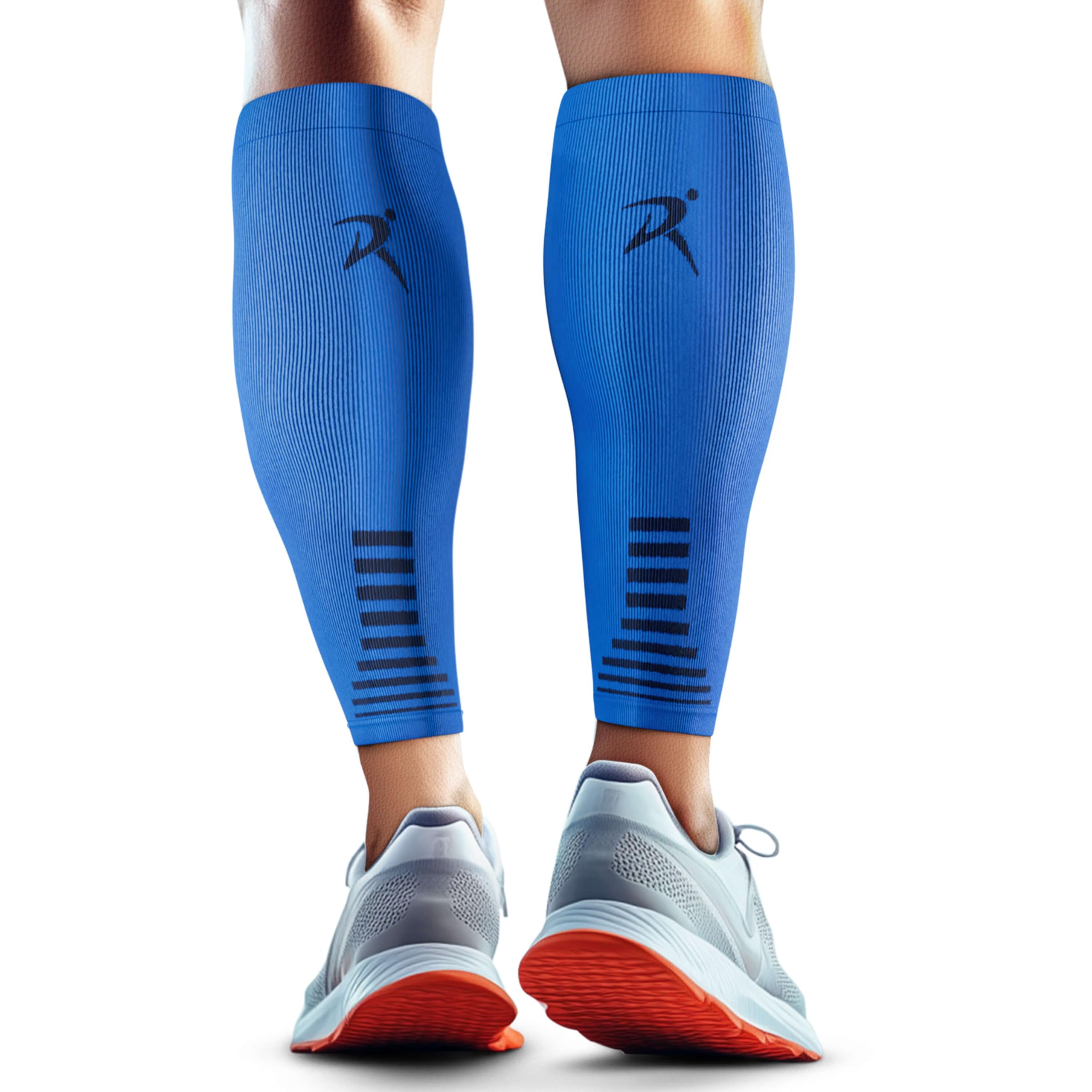
1. Rymora Calf Compression Sleeves for Men & Women
Our pick — over 4.5★ from 22,500+ verified ratings; the strongest balance of quality and price.
The crowd favourite — 4.6 stars across 22,000+ ratings, the most-reviewed sleeve here by a wide margin.
Start with the fabric, because this is where the Rymora earns its place. It is a 54% nylon, 39% polyester, 7% elastane blend (elastane is the stretchy fibre that makes a sleeve snap back to shape), and the knit is classified as lightweight with medium stretch. In practice that combination does two things a triathlete cares about: it wicks sweat away instead of holding it, and it keeps its grip instead of going baggy after a few washes. Buyers report the elasticity behaving like day one after a couple of wash cycles, and that it does not roll down mid-session.
The sizing warning is the important part of this listing, and it is blunt about it. Calf sleeves size on calf circumference alone — not your height, not your weight, not your normal clothing size, and not the size you wear in another brand. There is a size chart in the product images, and the whole measurement takes well under a minute. Do that first, because the recurring fit note on this sleeve is that it can run too small if you assume a size. Get the chart right and what you get is what the fit data praises most: a snug, slim-fit sleeve that stays put from the first mile to the last.
The graduated compression runs tighter low on the calf and lightens as it climbs, the pattern that keeps the heavy, achy feeling out of your legs on a long run. Recovery use is the honest second act here — the same sleeve works after training, not just during it. As owners put it: “After 1 week, still fits fine and has adequate compression.”
What Owners Praise Most
- Fabric quality wins people over more than any other trait on this sleeve — the 54% nylon knit is the single most-praised element, and fit sits right behind it.
- Described as thick, breathable and non-itchy, with no rolling down and no slipping during play.
- Sentiment on sizing leans positive overall, and a wash-and-dry restores the stretch.
- Machines washable, so no delicate hand-washing ritual between sessions.
- Available in a wide set of colours, so you can match your race kit.
Where It Falls Short
- The sizing feedback is genuinely mixed — some buyers find their usual size comes up small, so the chart is not optional.
- One buyer ordered gray and received a dark bluish shade instead.
- Fit type is slim, so a very full calf needs the larger end of the chart.
Reach for this if: you want the safest first purchase in this category — a breathable 54% nylon blend that holds its shape, holds its position, and costs no more than the rest of the mid-range field.
Measure first, though: the fit data is split and the listing itself warns against guessing, so a tape around the calf is what decides between a great sleeve and a return.
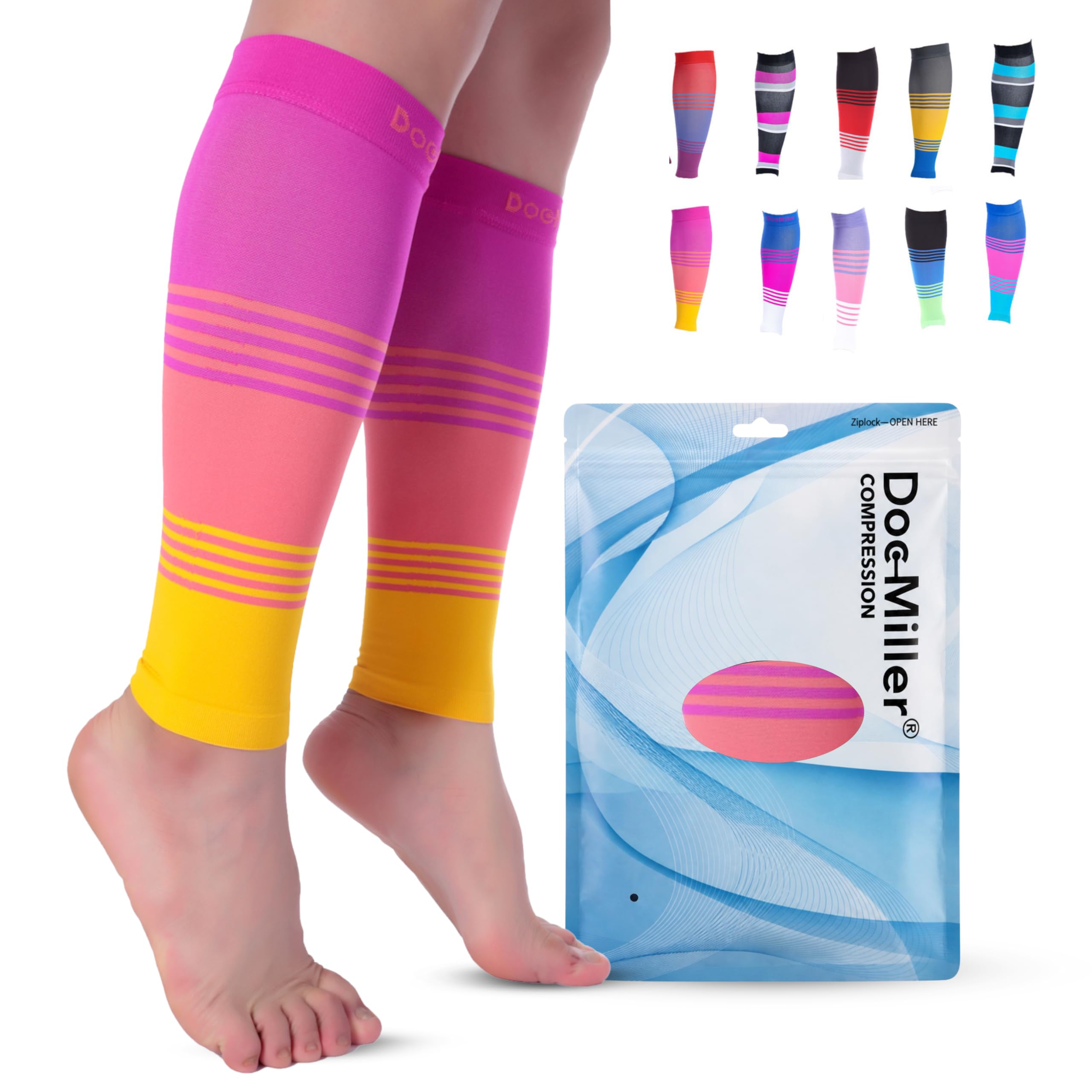
2. Doc Miller Calf Compression Sleeve 20-30 mmHg
The one that tells you exactly how tight it is — 20-30 mmHg, printed right in the name.
Most sleeves on this list keep their pressure level vague. This one does not. It is rated 20-30 mmHg, which is the firmer end of the scale, and it is the only pick here that hands you a real number before you buy. That matters for a triathlete because it lets you shop against the fit rather than guessing at it. It also weighs 0.06 kg — the lightest sleeve on this list by a wide margin, and roughly half the weight of the ITHW copper sleeve at 0.11 kg. On a leg that is already carrying race kit, that difference is real.
The graduated pattern runs tighter at the ankle and eases as it climbs, which is the classic arrangement for pushing blood back up the leg. The footless build means nothing wraps your foot, so it slides under cycling shoes and doesn’t add a soggy layer after the swim. Fabric is nylon with a spandex blend for airflow. What wins people over is the compression itself — it is comfortably the most-praised trait on this product, with build quality right behind it — and desk-bound buyers with heavy legs report it helping through a full working day.
The honest catch is the sizing, and it is a real one. Fit and size are the two traits where feedback splits, with some finding it true to size and others finding it a little tight and almost too small. It is also harder to pull on than the lighter sleeves, which is simply what firmer compression means. Owners mention: “14.5” calf fits L perfectly, ankle not loose.”
The number you get: a stated 20-30 mmHg rating, a footless profile, and a 0.06 kg weight — a firm, light sleeve with no ambiguity about what you are buying.
The number you don’t: your calf circumference. This sleeve rewards anyone who measures, and pinches anyone who assumes.
Choose it when: you want a defined firm compression level and the lightest sleeve in this line-up, and you are willing to take a tape measure to your calf before ordering.
Think twice if: you want to pull a sleeve on half-asleep at 5 a.m. — the firmer grip takes more effort to seat than the lighter options below.
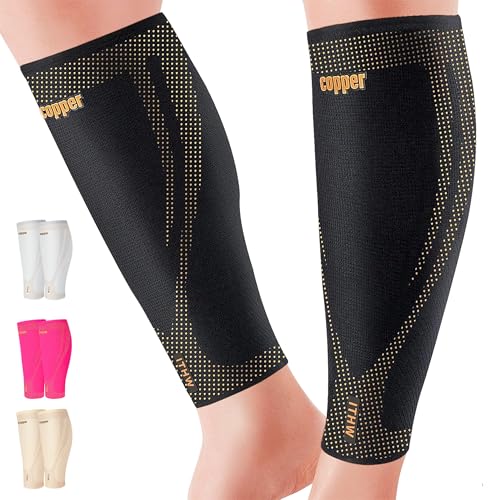
3. ITHW Copper Calf Compression Sleeves
Built around one problem: keeping a sleeve up when your legs are wet with sweat.
ITHW attacked the rolling problem head-on. There is a premium elastic band engineered to lock the sleeve in place, and the grip is described as sweat-resistant, so no mid-session tugging. Translation for a triathlete: this is the sleeve that is most likely to still be where you put it when you come out of the water and onto the bike. The copper ion knit wicks sweat fast, and the smooth lining cuts friction on sensitive skin. The graduated pattern deliberately runs stronger low on the calf and gentler up top, so it supports without leaving deep indentations.
What buyers single out is the support — it is the most-mentioned positive on this product, with build quality next — and the consensus description is a sleeve that is very supportive and high-quality in the hand. It is also the heavier of the two sleeves we can weigh directly: 0.11 kg against the Doc Miller’s 0.06 kg. That extra weight is the price of the grip band and the thicker knit. The footless cut lets it pair with sneakers, dress shoes or loafers, which is why it turns up in gym-to-office rotations as often as it does in training logs.
Here is the catch, and it comes straight from the fit notes: more than one buyer suggests ordering a size up. The small lands snug on the calf and looser at the ankle, which is outside the compression zone and therefore fine — it also makes removal easier. Get the size right and the reviewer verdict is that the material is thick, soft and well-stitched, and that it should hold up over years of use.
Best matched to: sweaty sessions and multi-sport days where a sleeve that shifts is worse than no sleeve at all.
The trade-off: that anti-slip build is the heaviest on this list at 0.11 kg, and the sizing runs tight enough that most buyers should step up one.
4. CAMBIVO Calf Compression Sleeve, 3 Pairs

Three pairs in one box, at a light 15-20 mmHg — the rotation play, not the squeeze play.
CAMBIVO sells you a system rather than a single sleeve. Three pairs means one on your legs, one drying, and one spare, which is exactly what a training block with back-to-back sessions needs. The stated compression is 15-20 mmHg, and mmHg is simply the pressure rating — this sits at the lighter end, so it is the easiest of the calibrated sleeves here to wear for a full day. The graduated pattern runs from calf down to ankle. The fabric is listed as a 40% nylon, 40% elastane, 20% spandex blend, and the listing separately describes a 58% nylon, 24% polyester, 18% spandex 3D-knit build with anti-slip double cuffs.
Fit information runs S/M through 4XL, which is the widest size ladder in this line-up, and the maker’s own instruction is to size up when you land between two. Quality and fit are the twin strengths buyers describe most — quality leads and fit is right behind it — and the practical reports are that the sleeves cut end-of-day leg swelling, feel less hot than expected, and go on easily once you learn the technique. A 16.5″ calf fits, and one buyer notes the sleeve eliminates leg discomfort across a full day on their feet.
The caveat is the sizing, and it points in one direction. Several buyers find these run small against the chart, so the chart is a floor rather than a guide. There is also a minor cosmetic note — the sleeve can leave light impressions on the skin after long wear, which fades and is normal for graduated compression. Wash cold and air dry, and the pressure holds.
The value read: three pairs of 15-20 mmHg graduated sleeves across an S/M-to-4XL ladder is the most forgiving combination on this list for a first-time buyer who is not yet sure of their size.
Watch for: the sizing runs small, so measure generously and take the maker’s advice to size up between sizes.
Suit yourself to this one if: you want a lighter, all-day-wearable sleeve and you want more than one of them, without chasing a firm squeeze.
Look elsewhere for: a firm, firmly-defined pressure level — 15-20 mmHg is deliberately gentle, and if you want more grip than that, the Doc Miller or the Bauerfeind is the direction to go.
5. BLITZU Calf Compression Sleeves, 3 Pairs
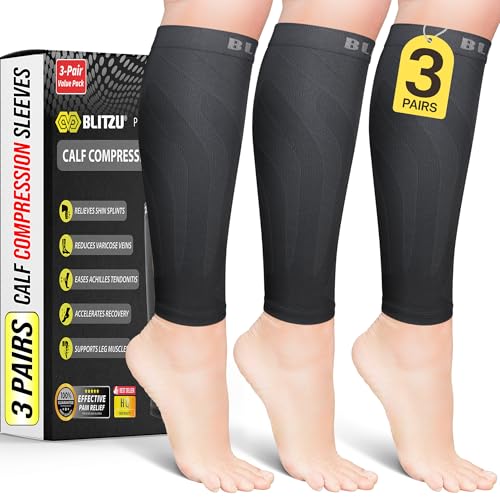
Three pairs, sewn with curvy kinesiology strips instead of a plain tube — and long enough for a 6’5″ frame.
The defining feature here is the sewn construction. BLITZU builds in kinesiology strips — raised, engineered sections of the knit — rather than a flat panel, and buyers who have owned both describe the difference directly: three sewn curvy sections against two in another brand, which reads as more compression and more support around the calf. Compare that with the plain knit on the Rymora above and you can feel the design intent. Each sleeve weighs 3 ounces and is sold as three pairs, so you get the same rotate-dry-spare logic as the CAMBIVO pack.
Length is where this pick separates itself. One buyer over six and a half feet tall reports the sleeves are long enough without pressing on their toes, and a 17″ calf fits the Large-XL well. That is a genuinely useful data point, because the single most common complaint across this whole category is a sleeve that stops short of where it should. The fit reads comfortable rather than aggressive — snug without being tight, and barely noticeable under clothing. Support and fit are the two strengths that come up most, and versatility gets a nod too, with buyers wearing them under trousers and out on runs.
The honest note: the knit here runs thinner than this maker’s heavier style, and the seams can leave a brief indentation if you are carrying edema. The practical trick owners share is to pull the sleeve higher up the leg first and then slide it down into position — that avoids the skin drag that frustrates first-timers.
The standout case: length and construction. A sewn-strip knit that suits a very tall athlete and arrives in a three-pair pack is a rare combination in one listing.
Know before you buy: the fabric is thinner than BLITZU’s heavier sleeve, so if you want a dense, thick feel against the skin, this is not the one.
6. Sosation 6 Pairs Calf Compression Sleeves

Six pairs in six colours — less a performance sleeve, more a wardrobe of light compression.
Nobody buys the Sosation pack for the squeeze. You buy it because six pairs arrive in white, black, lake blue, light pink, light gray and rose red, and because the footless elastic build is genuinely easy to get on and off. That last point is not filler — it is what makes this the friendliest starter sleeve in the line-up. A buyer around 5’2″ and 102 lb found these solved a fit problem other compression stockings created, where longer options folded at the knee and ankle. Another, at 5’4″ and 165 lb, wears them with the feet left bare and finds the compression not too binding for all-day use.
The quality of the knit is the trait buyers describe most, with breathability close behind, and the practical upside is that they breathe well enough to avoid rashes in hot weather. Being a nylon and spandex blend in a light footless cut, they work under trousers or shorts without announcing themselves. Six pairs at this tier is the highest sleeve count on this list, and it turns a single purchase into a full rotation — one on, one in the wash, several matching different kit.
Two honest limits. The compression is light, so if you are chasing a firm hold, this is not it — buyers who want more pressure do tend to move on to firmer sleeves later. And length is the recurring complaint: a couple of buyers found them too short to cover the whole calf, and a medium is noted as too short for taller wearers. There is also one report that a hand-wash is needed despite what the listing suggests.
Colour as a feature: six pairs across six named colours, in a light sleeve that reviewers describe as comfy and cute as much as functional — the fit range is forgiving for a shorter frame.
Set your expectations: light compression and a shorter cut. This is a comfortable everyday sleeve, not a race-day squeeze.
Pick this pair if: you want light, breathable compression in a colour that matches your kit, and you like the idea of six pairs for the price of a single race-tier sleeve.
Pass if: you are tall or you want a firm, knee-hugging fit — length is where this sleeve gets the most pushback.
7. 2XU Unisex Compression Calf Guards

Knee-high guards with a 360° knit, UPF 50 sun protection, and a lightweight build for hot race days.
2XU’s guards are the most engineering-forward build on this list. The fabric is 80% nylon and 20% elastane, and the compression uses Invista Lycra with a graduated pattern aimed at pushing blood flow and cutting muscle fatigue. The 360° knit construction is the part worth pausing on: instead of panels sewn together, the sleeve is knitted in the round, so the pressure is consistent all the way around the shin and calf rather than varying from seam to seam. Those numbers add up to a sleeve that cools as well as it compresses. Add UPF 50 fabric, which blocks the sun’s UV rays, and you get real value on a long course with no shade.
Effectiveness is what buyers rate highest here — it is comfortably the most-mentioned positive, with calf comfort next — and comfort is a recurring theme, with cramp prevention coming up specifically. Buyers also report a shorter recovery window after a hard session. At 80% nylon and 20% elastane with a knee-high cut, it is designed to stay in place without needing constant adjustment.
Now the part that decides whether this sleeve suits you. Fit, compression and ease of use are all mixed in the feedback, with some buyers finding them comfortable and easy to pull on, and others finding them too tight and hard to get on. There is also a durability note worth knowing before you commit: the initial compression is strong and recovery time drops, but at least one buyer reports it fading after the first wear despite following the maker’s wash instructions. Follow the 2XU size chart and you land on the right side of that split.
Go here for: hot-weather racing and training. UPF 50 protection, a 360° knit that presses evenly around the calf, and a lightweight cut meant to breathe.
Weigh this first: sizing is unforgiving and the pressure is reported as fading with use — the size chart is what keeps you on the good side of both.
8. Incrediwear Calf Sleeve

A wellness-first sleeve with a signature fabric blend, sized from a simple calf measurement.
Incrediwear’s sleeve uses its own fabric blend, which it says has semiconductor elements woven in to support blood flow. The sizing is unusually clear, and this is the part a triathlete should actually use: S/M is designed for a calf circumference of 12″-16″ (30-41 cm), and Large for 16″-20″ (41-51 cm). That is a straight circumference rule with no other variable, and it is the cleanest sizing statement on this list. The sleeve itself is a slim, graduated support designed around a footless fit.
Comfort sits at the centre of the case. The fabric keeps the calf warm and supported without restricting it, wears comfortably all day, and pulls on and off easily. Quality and durability are the two other strengths cited most, and one buyer wore a pair hand-washed nightly through two straight weeks of long daily walks, and reports they came out of it holding shape. If you are training hard and then living in the sleeve between sessions, that resilience is the thing worth knowing.
The trade-off is cost and value. Value for money is genuinely mixed in the feedback here, with some buyers finding it expensive relative to other sleeves on this list. There is also an honest note about the compression: some buyers who are coming off a calf injury find themselves wanting more squeeze than this sleeve provides, which suits everyday wear better than intense rehabilitation with a firmer grip. Read that as a fit question, not a defect — this is a comfort-weight sleeve in a market that includes much firmer ones.
The sizing advantage: S/M at 12″-16″ and Large at 16″-20″ is the most straightforward fit rule in this article — one measurement and you are done.
The honest cost: value pricing divides buyers, and the compression runs toward comfortable rather than clinical — closer to the Rymora’s feel than the Doc Miller’s.
Made for: all-day comfort wear, recovery habits, and anyone who wants a clean two-size ladder rather than a wide chart.
Not for: athletes who want a firm, race-day squeeze — if you are used to a tighter fit, the compression here will feel light.
9. Bauerfeind Sports Compression Lower Leg Calf Sleeves

The premium German-built sleeve with targeted compression zones and a UPF of 80.
Bauerfeind is the top-tier entry, and the specification sheet is the reason. It uses a soft, breathable knitted microfiber that sits anatomically close, with targeted compression zones that decrease gradually from lower calf to upper calf. The ends are held by silicone dotted bands and adhesive zones, so the sleeve stays where you put it even through hard efforts. There is a knitted structure built for maximal breathability, and the material regulates temperature — keeping muscles warm while staying breathable against the skin. The sun protection is the standout number here: a UPF of 80, and the listing notes it holds even when the fabric is wet or stretched.
What buyers keep coming back to is the build. Quality is the most-praised trait on this product and functionality sits right behind it, and the pattern is repeat purchasing — more than one owner is on their third or fourth pair and still calls it the best quality and function in the category. A worker on twelve-hour shifts reports the sleeve eliminates calf pain, holds consistent compression, washes well in cold water, and stays compressed after years of use. A hockey player who was collapsing in pain from calf cramps reports wearing this the following game pain-free.
The two honest points are length and price. Length is the recurring gripe: buyers near six feet and around six foot five both report the sleeve is shorter than they would like, with one suggesting the X-Long still needs another couple of inches. And value-for-money is genuinely split. It is also a hand-in-the-wash product — machine wash at a maximum of 86°F on a gentle cycle with a mild detergent, no fabric softener, no ironing, and air-dry only. Do that and the compression holds.
Why It Costs More
- A UPF of 80 — sun-blocking protection that stays effective even when the fabric is wet or stretched.
- Targeted compression zones that taper from lower calf to upper calf, plus silicone dotted bands and adhesive ends that hold the fit through hard efforts.
- Temperature-regulating knitted microfiber that stays breathable on the skin while keeping muscles warm.
- The build quality is the single most-praised thing about it, and repeat buyers are on their third or fourth pair.
Where It Asks More Of You
- Length. Taller athletes are the recurring note — several want more coverage toward the knee.
- Value is split; plenty are happy, some find it dear for a sleeve.
- Care is specific: 86°F gentle cycle, no softener, no ironing, air-dry only.
The case for: if you race in strong sun and want a slow-tapering compression zone plus UPF 80, and the fit is generous enough at your calf size, this is the highest-specification sleeve in the article.
The catch: length runs short for taller frames and the upkeep is a deliberate hand-wash routine — neither is a fault, but both are real.
Understanding the Specs
Compression in mmHg, Explained
mmHg stands for millimetres of mercury, and it is just the unit used to state how much pressure the fabric puts on your leg. The scale is narrow, so small differences feel larger than the number suggests. A 15-20 mmHg sleeve is the lighter grade, and 20-30 mmHg is the firmer one you can spot on the Doc Miller. A lighter sleeve is easier to pull on and easier to leave on through a long day or a full race; a firmer sleeve delivers its grip through the fabric rather than through a tighter size. Neither wears better than the other — pick the one you will actually keep on for the whole session, because a sleeve you remove at the halfway point gives you nothing.
Graduated Compression and Why Direction Matters
Graduated means the pressure changes along the length of the sleeve rather than staying even. The usual build presses most firmly low on the calf or at the ankle and eases off as the sleeve climbs. For a triathlete the practical effect is that the support sits under the part of the leg that takes the most load during the run, while the top of the sleeve stays gentle enough not to cut in or leave marks under the knee. Look for it stated explicitly on the sleeve you buy. Some sleeves print the mmHg number, some do not — the ones without a printed number are doing the same job, they just leave you to judge the pressure by fit.
FAQ
Can I wear calf sleeves under a wetsuit or in the swim leg?
What size calf sleeve do I need if my calf measures 14.5 inches?
Do calf sleeves help with shin splints during a triathlon?
How tight should a calf compression sleeve feel?
Which calf sleeve lasts longest after repeated washing?
Are these sleeves compressive enough to wear after the race?
Should I size up or down if my calf is between two sizes?
Can I wear calf sleeves during the bike leg of a triathlon?
Do compression sleeves help withswelling on long flights and travel?
Are calf sleeves machine washable or do they need hand washing?
Final Thoughts: The Verdict
For most triathletes, the calf sleeves for triathlon winner is the Rymora Calf Compression Sleeves because a 54% nylon, 39% polyester, 7% elastane knit keeps its stretch and its position wash after wash, and the graduated compression runs tight at the calf and eases as it climbs. If you want a defined, firmer squeeze and the lightest sleeve here, the Doc Miller Calf Compression Sleeve prints its 20-30 mmHg rating right in the name. And for hot-weather racing where sun exposure and airflow matter, the Bauerfeind Sports Compression Lower Leg Calf Sleeves bring targeted zones, a UPF of 80, and a build buyers repurchase again and again. Wherever you start, measure your calf circumference before you order — that single measurement decides more about whether you will love these sleeves than any other choice on this page.
How We Picked
We do not accept paid placement. Every pick is matched to a real buyer and a real use-case; we do not hands-on test units.
Sources & Methodology
Specifications: manufacturer listings and product documentation. Review insights: verified customer reviews, as of September 2026. Pricing: not shown on this page (it changes often); check the current price via the retailer link.
As an Amazon Associate, Gadgets Feed earns from qualifying purchases. This does not affect which products we feature.