
Muffled audio, wind shear, and the faint echo of your own voice are the hallmarks of a bad call experience. For professionals, remote workers, and anyone who relies on their earbuds for daily conversations, the gap between “I can hear you” and “You’re breaking up” is defined by microphone array design, AI noise suppression, and environmental sealing. The right pair turns a chaotic coffee shop into a silent boardroom.
I’m Min — the co-founder and writer behind Gadgets Feed. I’ve spent countless hours parsing frequency response charts, decoding beamforming mic configurations, and comparing ENC (Environmental Noise Cancellation) algorithms across dozens of models to isolate which earbuds actually deliver speech clarity in real-world conditions, from windy sidewalks to open-plan offices.
After evaluating signal-to-noise ratios, wind tunnel tests, and user feedback on voice pickup patterns, I’ve identified the models that consistently outperform the pack. This guide breaks down the top contenders for call quality earbuds, analyzing the specific technology that makes each pair a reliable communication tool.
How To Choose The Best Call Quality Earbuds
Not all earbuds are created equal when it comes to voice transmission. A great music driver does not guarantee that the person on the other end can hear you clearly. The voice pickup chain — microphones, noise filtering algorithms, and physical design — is what separates a conversation from a garbled mess. Here’s what to scrutinize before buying.
Microphone Array and Beamforming
The sheer number of microphones matters, but only if they work in concert. Look for earbuds with a minimum of three mics per side that use beamforming to isolate your mouth’s direction. This technique creates a virtual “cone of pickup” that focuses on your voice while rejecting sounds from the sides and rear. Premium models may employ six or more mics to triangulate your speech with greater precision.
AI-Powered Noise Suppression vs. Passive ENC
Environmental Noise Cancellation (ENC) is the catch-all term, but the implementation varies wildly. Basic ENC uses phase cancellation on microphone signals to subtract ambient hum. Advanced models integrate dedicated AI chips — like Anker’s Thus AI — that analyze thousands of noise patterns per second to separate speech from transient sounds like honking horns or keyboard clatter. A dedicated AI co-processor is the gold standard for chaotic environments.
Physical Design and Wind Resistance
Body design dictates wind noise. Earbuds with a stem or a protruding microphone housing often place the mic closer to the mouth, improving the signal-to-noise ratio. Look for airflow channels or mesh windshields on the mic ports — these reduce the low-frequency rumble caused by gusts. A detachable boom mic, as seen on the JLab Work Buds, physically places the pickup point at your lips, offering the highest possible rejection of ambient noise.
Quick Comparison
On smaller screens, swipe sideways to see the full table.
| Model | Category | Best For | Key Spec | Amazon |
|---|---|---|---|---|
| Soundcore Liberty 5 Pro | Premium | Noise immunity & record-setting call quality | Guinness G-MOS certified, Thus AI Chip | Amazon |
| Bose QuietComfort Ultra Earbuds 2nd Gen | Premium | Best noise rejection for mobile calls | CustomTune, AI wind suppression | Amazon |
| Sony WF-1000XM5 | Premium | Adaptive call handling | Integrated Processor V2, Speak-to-Chat | Amazon |
| JBL Live Beam 3 | Mid-Range | Feature-rich with touchscreen case | 6 beamforming mics, voice optimizer | Amazon |
| Nothing Ear (a) | Mid-Range | Wind-resistant calls with clear tech | 60% less wind noise, dedicated talk mic | Amazon |
| EarFun Air Pro 4i | Budget-Friendly | 6-mic ENC at an entry-level price | 6 Mics AI ENC, LDAC codec | Amazon |
| JLab Work Buds | Budget-Friendly | Ultimate noise rejection with boom mic | Detachable Noise-Canceling Boom Mic | Amazon |
In‑Depth Reviews
1. Soundcore Liberty 5 Pro
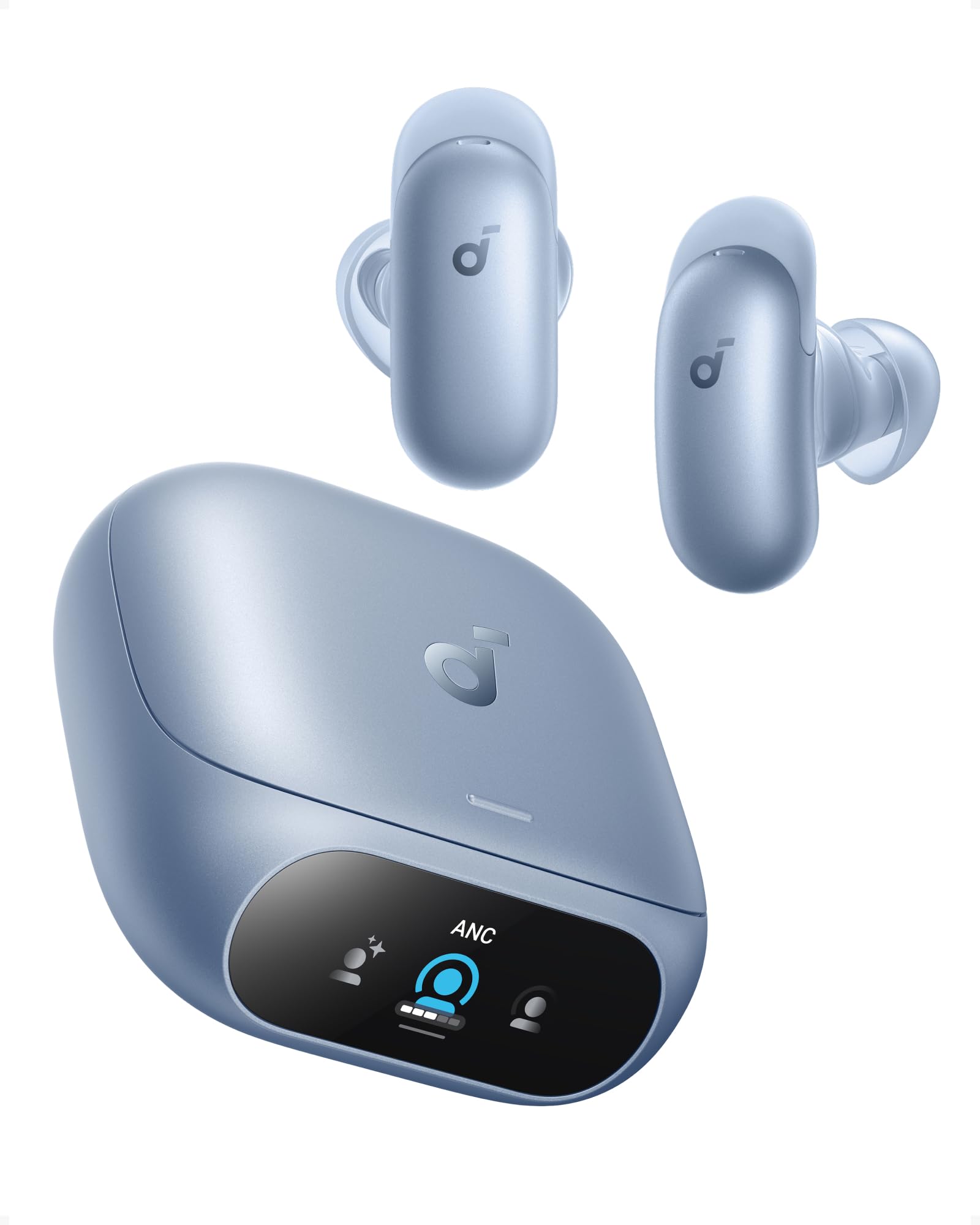
The Soundcore Liberty 5 Pro holds a Guinness World Record for the highest speech quality score (G-MOS) in an objective test for TWS earbuds. This is not marketing fluff — it is a standardized metric for voice clarity. The secret lies in the dedicated Thus AI Chip paired with ten sensors that process over 384,000 noise signals per second. Whether you are whispering in a quiet room or shouting over 100 dB of construction noise, the algorithm dynamically adjusts the microphone gain and filtering to keep your voice legible.
On the acoustic side, the Liberty 5 Pro uses HearID 5.0 to calibrate the sound to your specific ear shape, and the 12-hour per-charge battery (with ANC on) means you can power through a full day of back-to-back meetings. The smart case includes a touchscreen for quick settings, and Bluetooth 6.1 ensures a stable, low-latency connection for voice transmission. This is the most scientifically validated call-focused earbud on the market today.
Customer feedback consistently highlights that the voice isolation in noisy environments is “next level” compared to older flagship models from Sony and Bose. The adjustable wing tips and ear fins provide a locked-in fit that prevents the microphones from shifting during movement, ensuring consistent beamforming alignment. For anyone who takes critical calls in unpredictable soundscapes, this is the benchmark.
Why it’s great
- Record-setting G-MOS speech quality score.
- Dedicated Thus AI Chip for real-time noise analysis.
- 12-hour battery life with active noise cancellation.
Good to know
- Premium price point reflects the advanced chipset.
- Case is slightly bulkier than compact competitors.
2. Bose QuietComfort Ultra Earbuds (2nd Gen)
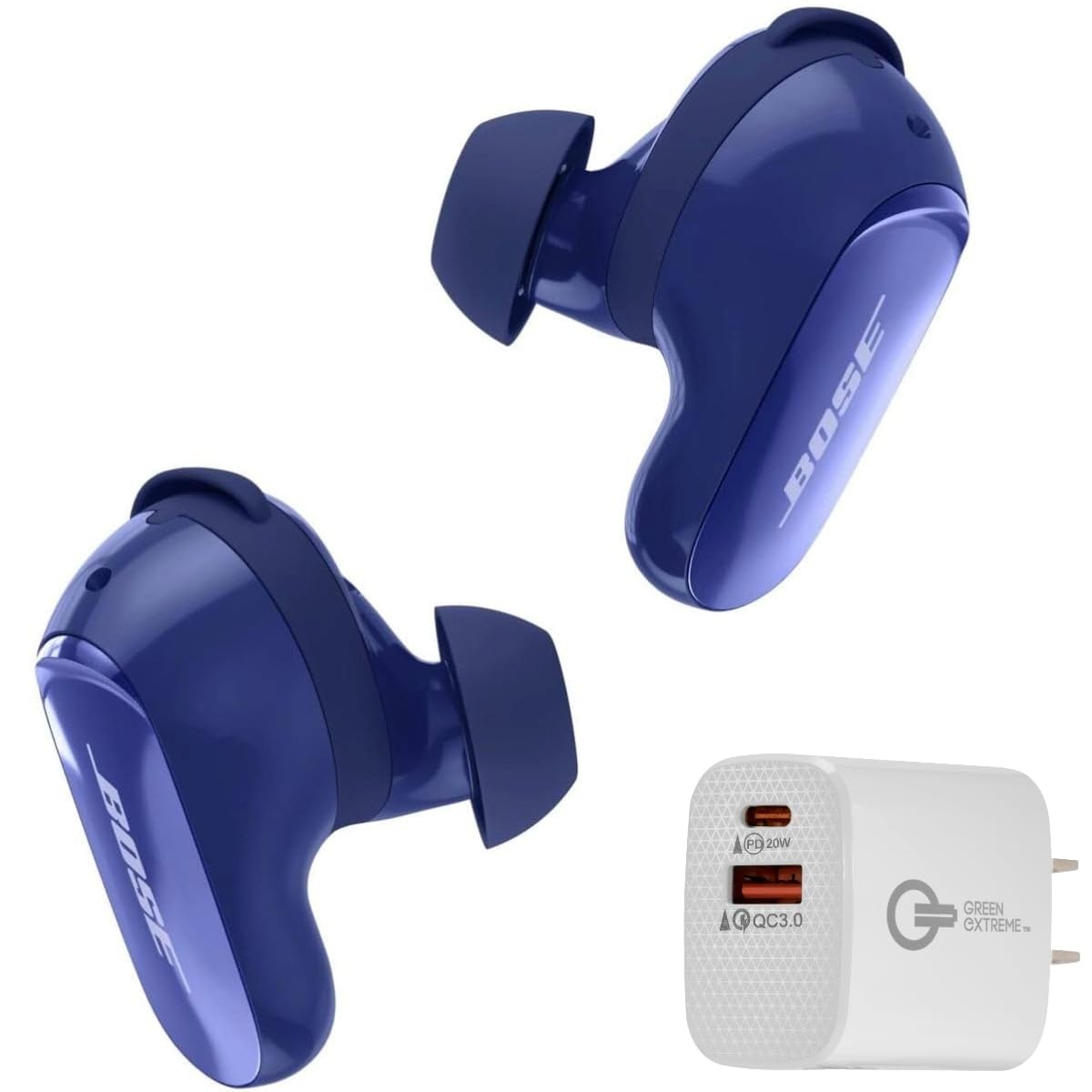
Bose has engineered the QuietComfort Ultra Earbuds with CustomTune technology, which plays a tone upon insertion to analyze your ear canal’s acoustic properties and calibrate both noise cancellation and sound output. For call quality, this means the noise-rejecting microphone array is tuned to your specific anatomy. The AI-based background noise suppression goes beyond simple filtering — it actively identifies wind, traffic rumble, and conversation chatter and attenuates each type differently. The result is a voice feed that sounds close to a studio mic, even on a breezy street.
The earbuds offer up to 6 hours of playback in Quiet mode, with the wireless charging case providing three additional full charges. The IPX4 rating makes them resistant to sweat and light rain, which is useful if you take calls during a commute. Bose Ignite mode blends spatial audio with noise cancellation for a unique listening experience, but the core value for callers is the consistency of the transmission across diverse acoustic environments. The nine combinations of ear tips and stability bands ensure a seal that keeps the microphones optimally positioned.
Users consistently report that the person on the other end cannot tell they are outdoors or in a crowded space. The Aware Mode with ActiveSense smooths sudden spikes in background noise without muting you entirely, maintaining a natural conversational flow. This is the earbud for the mobile professional who demands the same call quality from a taxi as from a quiet home office.
Why it’s great
- CustomTune adapts mic tuning to your ear shape.
- AI-based wind and transient noise suppression.
- Excellent seal options for stable microphone placement.
Good to know
- Short per-charge battery life at 6 hours.
- Premium cost for the top-tier noise rejection tech.
3. Sony WF-1000XM5

The Sony WF-1000XM5 leverages the Integrated Processor V2, which handles both audio and voice processing with dedicated neural network acceleration. This chip enables Adaptive Sound Control that learns your frequent locations and adjusts the call mode accordingly — toggling between a more transparent mic feed in quiet offices and a noise-tight filter on public transit. The beamforming microphones are supplemented by a bone conduction sensor that detects when you are speaking, allowing the earbuds to keep the call active while muting environmental noise during your pauses.
Audio quality remains a Sony hallmark, with Hi-Res Audio support and 360 Reality Audio for immersive music. The battery is rated at 8 hours per charge with 24 hours in the case, slightly behind competitors. However, the Speak-to-Chat feature — which automatically pauses audio when you begin talking — is a useful productivity tool for hybrid workers. The IPX4 rating adds a basic sweat resistance for commuting scenarios.
User reviews are generally positive on call clarity in moderate noise, though some have noted the stock ear tips can compromise the seal for some ear shapes, impacting microphone performance. Aftermarket tips often resolve this. For those already in the Sony ecosystem who value the intelligent call-handling features and top-tier music playback, the XM5 remains a potent choice.
Why it’s great
- Adaptive Sound Control learns location-specific call settings.
- Bone conduction sensor for precise voice detection.
- Excellent sound quality with Hi-Res Audio support.
Good to know
- Stock ear tips may not fit all ear shapes well.
- Battery life is average for the premium category.
4. JBL Live Beam 3

The JBL Live Beam 3 brings a truly unique feature to the call quality conversation: a 1.45-inch touchscreen on the charging case that allows you to control call settings, EQ, and ambient sound levels without a phone app. For busy professionals who take quick calls, this means you can toggle the Voice Equalizer and Voice Level Optimizer on the fly. The six beamforming microphones are positioned to reduce wind and lateral noise, and the Personal Sound Amplification feature lets you create a custom ambient mix so you can hear your own voice naturally.
Battery life is a strong point, with 12 hours in the earbuds and 36 hours in the case (ANC off), plus wireless charging support. The 10mm dynamic drivers deliver JBL Signature Sound, which provides a clear midrange that helps you hear the caller’s nuances. The IP55 dust and water resistance makes these suitable for outdoor commutes and gym calls. The Adaptive Noise Cancelling uses four noise-sensing mics that adjust in real time to your environment, ensuring the call microphones are not fighting against noise they should already be canceling.
Customers praise the convenience of the case screen for rapid call controls and the “amazing” call clarity during windy conditions. The multi-point connection switches seamlessly between laptop and phone, which is essential for video conferences that transition to mobile calls. For the price, the Live Beam 3 offers a complete package with a unique hardware advantage.
Why it’s great
- Touchscreen case for instant call control.
- 6 mics with dedicated voice equalizer.
- 48-hour total playtime with wireless charging.
Good to know
- Earbud battery life is mediocre at 12 hours max.
- Case can unlock accidentally in a pocket.
5. Nothing Ear (a)
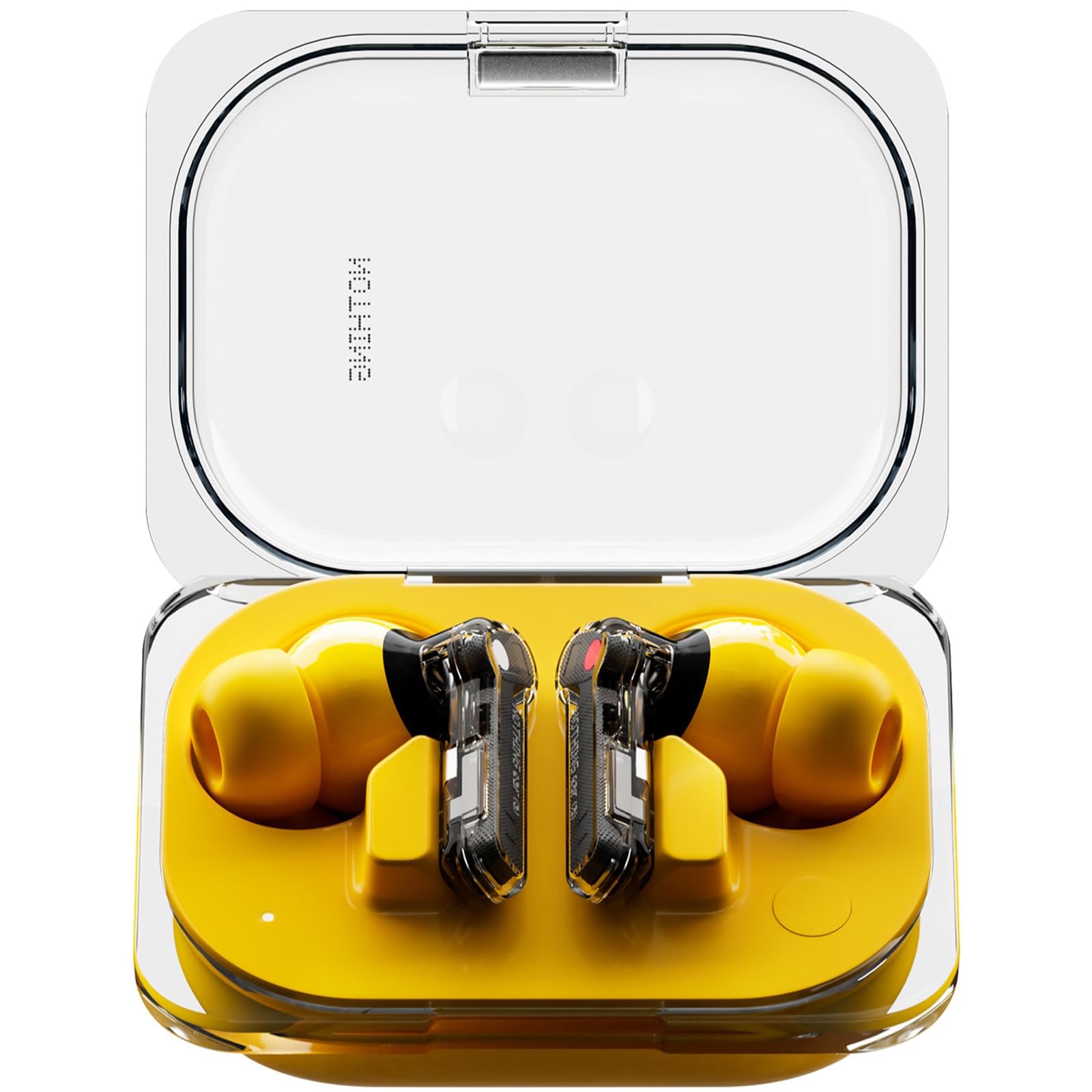
Nothing has engineered the Ear (a) with a specific focus on wind noise reduction — a common weak point for most earbuds. They added a dedicated talk microphone on the stem and an internal airflow channel that reduces wind interference by 60% compared to the Nothing Ear (2). The Clear Voice Technology uses a six-mic array to isolate your voice from background noise, and the algorithm is tuned to filter out transient sounds like passing cars without gate artifacts. This makes the Ear (a) a strong contender for outdoor workers or urban commuters.
The 11mm dynamic drivers deliver twice the power of the previous generation, and the 45dB Smart Active Noise Cancellation adapts the seal in real time. Battery life reaches 42.5 hours total with the case (ANC off), with fast charging providing 10 hours of playback from a 10-minute charge. The Nothing X app offers granular control over the three ANC levels and EQ. The low-latency mode is a bonus for gamers who also take calls.
User feedback highlights the microphone clarity as “much clearer than the Jabra Elite 7 Pro,” especially in calm to moderately windy conditions. The pinch controls on the stem are responsive once you adjust to them. For its price bracket, the Nothing Ear (a) delivers a level of call engineering usually found in more expensive competitors, making it a smart mid-range investment.
Why it’s great
- Specific wind noise reduction via airflow channels.
- Dedicated talk microphone on the stem.
- Fast 10-minute charge yields 10 hours of playback.
Good to know
- Transparency mode is less natural than competitors.
- Pinch controls have a learning curve.
6. EarFun Air Pro 4i
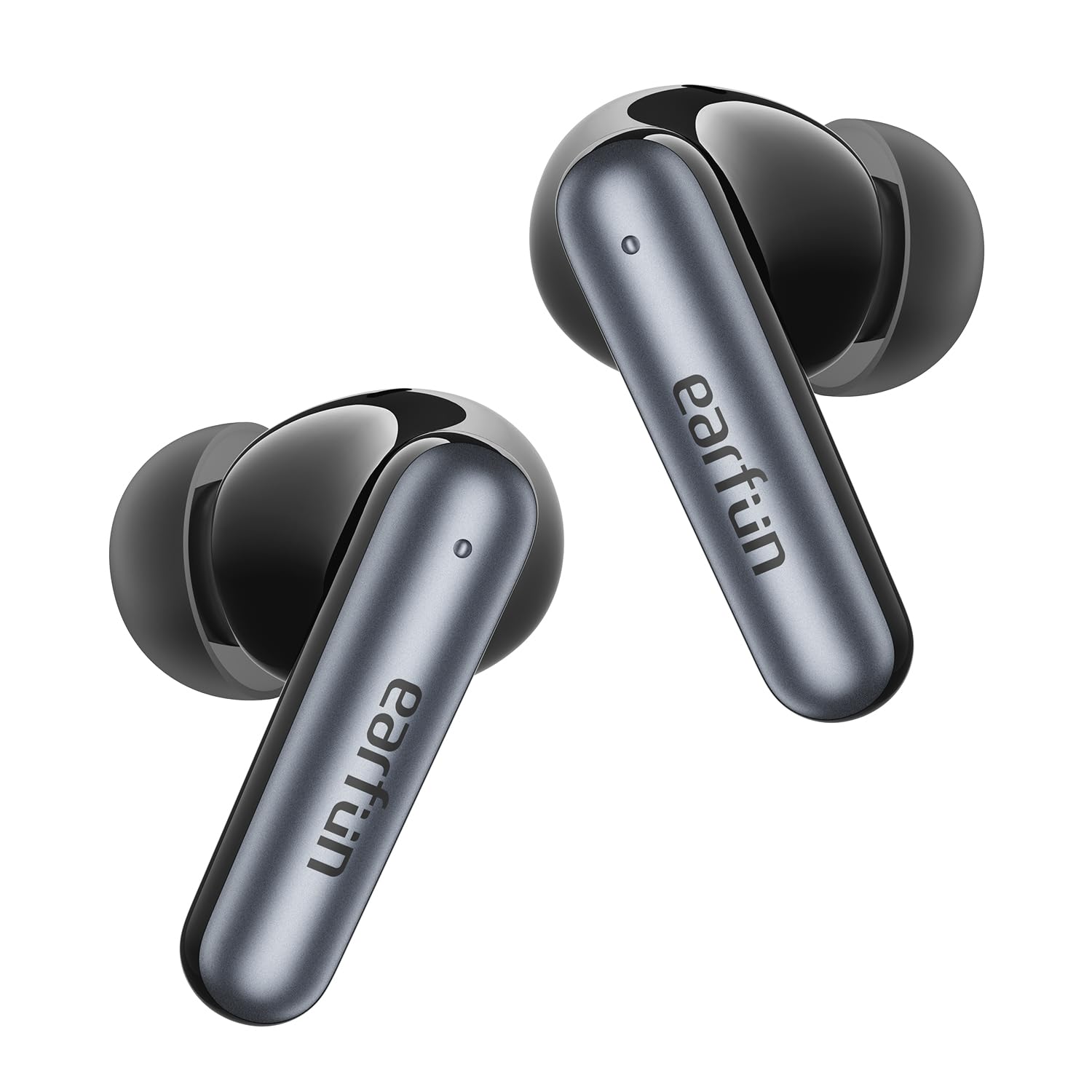
Do not let the accessible price fool you — the EarFun Air Pro 4i packs a six-microphone AI ENC array that competes with models costing three times as much. Each earbud houses three mics that work with an AI algorithm to separate your voice from background noise. The system is effective enough for use in busy cafes or near traffic, reducing the ambient hum without making you sound like you are in a tin can. LDAC support also ensures that when you are not on a call, music streaming maintains high-resolution quality.
The hybrid ANC reaches up to 50dB of noise reduction, which is excellent for this tier. Battery life is rated at 9.5 hours per charge (40 hours with the case) in normal mode, dropping to 6.5 hours with ANC active. Bluetooth 5.4 supports multipoint connection to two devices simultaneously, and Google Fast Pair makes initial setup effortless. The EarFun App allows for custom EQ profiles and control over ANC modes, adding a layer of personalization rarely seen at this price point.
Users consistently note the “fantastic sound” and “incredible noise canceling” for the price. The call quality is described as clear and reliable, with the AI effectively dampening background conversations. The lightweight build and multiple ear tip sizes ensure a comfortable all-day fit. The only compromise is the lack of a premium case material, but the internals deliver where it matters most for calls.
Why it’s great
- Six-mic AI ENC at a very accessible price.
- 50dB hybrid ANC for quiet environments.
- LDAC codec for high-res music streaming.
Good to know
- Case feels less premium than metal alternatives.
- Battery life reduces to 6.5 hours with ANC active.
7. JLab Work Buds

The JLab Work Buds take a divergent approach to call quality: instead of relying entirely on beamforming arrays, they include a detachable noise-canceling boom microphone that attaches to either earbud. This physically places the pickup element inches from your mouth, providing the most effective reduction of ambient noise possible without a headset boom. In loud environments — think open-plan offices, co-working spaces, or near construction — this hardware approach dramatically outperforms software-only filtering from in-ear mics.
Battery life is a standout feature, with 55+ total hours of playback via the USB-C charging dock. The earbuds themselves deliver around 27.5 hours per charge, with the case providing an additional 27.5 hours. Bluetooth Multipoint allows seamless switching between a laptop and smartphone, which is essential for hybrid work. The JLab App offers custom EQ settings, though the default tuning is serviceable for voice calls. The 2-year warranty and US-based support add peace of mind for daily professional use.
Customers confirm that the boom mic “prioritizes microphone quality for calls” and makes you sound like you are using a dedicated headset. The main critique is the large case size and the volume limitation some users have experienced — the maximum volume may feel quiet for those used to high-output earbuds. For anyone whose primary need is spoken communication in noisy settings, the Work Buds are a unique and effective solution that prioritizes voice above all else.
Why it’s great
- Detachable boom mic provides headset-level noise rejection.
- 55+ hour total battery life for all-day work.
- Bluetooth multipoint for laptop-phone switching.
Good to know
- Max volume is lower than some competitors.
- Large charging case may not fit in a pants pocket.
FAQ
How many microphones do I need for good call quality?
Is a boom mic better than built-in microphones for calls?
What does “AI ENC” actually do for voice calls?
Final Thoughts: The Verdict
For most users, the call quality earbuds winner is the Soundcore Liberty 5 Pro because its Guinness-certified G-MOS score and dedicated Thus AI Chip guarantee reliable voice transmission in any environment. If you want maximum wind resistance and a sleek design, grab the Nothing Ear (a). And for the most extreme noise rejection where a boom mic is non-negotiable, nothing beats the JLab Work Buds.