
Nothing ruins a perfectly planned calligraphy piece faster than an ink that feathers into fuzzy lines, bleeds through the page, or refuses to flow from the nib. The difference between a clean, confident stroke and a muddy, inconsistent mess often comes down to the ink’s viscosity, pigment particle size, and how it bonds with your paper. This guide focuses exclusively on inks formulated for the specific demands of calligraphy—where capillary action, dry time, and opacity matter more than generic fountain pen standards.
I’m Min — the co-founder and writer behind Gadgets Feed. I’ve spent countless hours cross-referencing pigment density, water resistance claims, and customer reports of clogging across dozens of ink formulations designed for dip pens, brushes, and fountain pens used in lettering work.
After reviewing top-selling black sumi inks, metallic mica inks, and premium dye-based options, this guide narrows the field to the most reliable contenders for the best calligraphy ink that delivers consistent line quality across different nib widths and paper stocks.
How To Choose The Best Calligraphy Ink
Calligraphy ink differs from standard fountain pen ink in viscosity, pigment concentration, and binder composition. The wrong ink leads to railroading, skipping, or excessive feathering on the textured papers calligraphers prefer. Understanding a few core parameters will help you match the ink to your nib type, paper surface, and intended finish.
Pigment vs. Dye-Based Formulation
Pigment inks contain solid color particles suspended in a binder, offering superior lightfastness and water resistance once dry. Dye-based inks dissolve completely in the carrier, flowing more freely through fine feeds but often lacking the permanent, opaque black that dip pen calligraphers expect. For dip nibs, pigment-heavy sumi inks provide the richest black line; for fountain pens, dye-based inks prevent clogging in narrow channels.
Viscosity and Nib Compatibility
Thicker inks with a honey-like consistency work best with broad-edge nibs and brushes, delivering crisp hairlines and dramatic swells. Thinner, more watery inks suit flex nibs where capillary action must pull ink rapidly down a slit. An ink that is too viscous for a pointed nib causes skipping; one that is too thin for a flat nib puddles and bleeds unevenly.
Water Resistance and Layering
If you plan to apply watercolor washes over your lettering or use the ink in mixed-media pieces, a waterproof formulation is non-negotiable. Inks that re-wet on contact with water will bleed into subsequent layers, muddying the work. Many sumi inks and India inks achieve permanent adhesion after drying, while most fountain pen inks remain water-soluble.
Quick Comparison
On smaller screens, swipe sideways to see the full table.
| Model | Category | Best For | Key Spec | Amazon |
|---|---|---|---|---|
| Zig Sumi Pen Ink 60ml | Sumi Black | Dip pens & manga | 60ml bottle, waterproof | Amazon |
| Waterman Intense Black 50ml | Fountain Pen | Fine nib fountain pens | 50ml, dye-based, non-clogging | Amazon |
| Yasutomo Bokuju Liquid Ink 6oz | Sumi Black | Brush lettering & washes | 6oz, matte finish, water-resistant | Amazon |
| Kuretake Gold MICA Ink 60ml | Metallic Pigment | Gold lettering & cards | 60ml, mica particles, dip pen only | Amazon |
| Pilot Iroshizuku Kon-peki 50ml | Premium Dye | Expressive fountain pen scripts | 50ml, fast-drying, blue dye | Amazon |
| Diamine Writers Blood 30ml x3 | Dye-Based Trio | Everyday fountain pen calligraphy | 3x30ml, pH neutral, natural dyes | Amazon |
| Dr. Ph. Martin’s Bombay India Ink Set | India Ink Set | Multicolor painting & illustration | 12oz total, waterproof, lightfast | Amazon |
In‑Depth Reviews
1. Zig Sumi Pen Ink 60ml, Black

This Kuretake-produced sumi ink delivers the deep, opaque black that dip pen calligraphers expect, with a viscosity that flows smoothly through both pointed and broad-edge nibs without forming blobs at the tip. The 60ml glass bottle feels substantial on the desk, and the ink dries quickly enough to avoid accidental smearing during lettering sessions, yet not so fast that it gums up the nib between dips.
Multiple users report consistent performance across manga illustration and daily calligraphy practice, noting zero feathering on Bristol board and minimal bleed on standard copy paper. The ink conforms to ASTM D4236 safety standards, which matters for artists who work with brushes held close to the face or in poorly ventilated spaces. Once dry, the black layer resists water completely, enabling watercolor washes over completed lettering without lifting the ink.
The bottle opening could be wider for larger dip pen reservoirs, but the functional design prevents the bottle from tipping over during use. For calligraphers seeking a reliable, permanent black ink that works straight from the bottle without dilution, this is the baseline against which other sumi inks should be measured.
Why it’s great
- True waterproof black that survives watercolor layering
- Smooth, consistent flow without blobbing or railroading
- 60ml capacity offers excellent value for regular practice
Good to know
- Bottle mouth is narrow for oversized dip pen feeds
- Not suitable for fountain pens due to pigment particle size
2. Pilot Iroshizuku Fountain Pen Ink – 50 ml – Kon-peki Deep Azure Blue
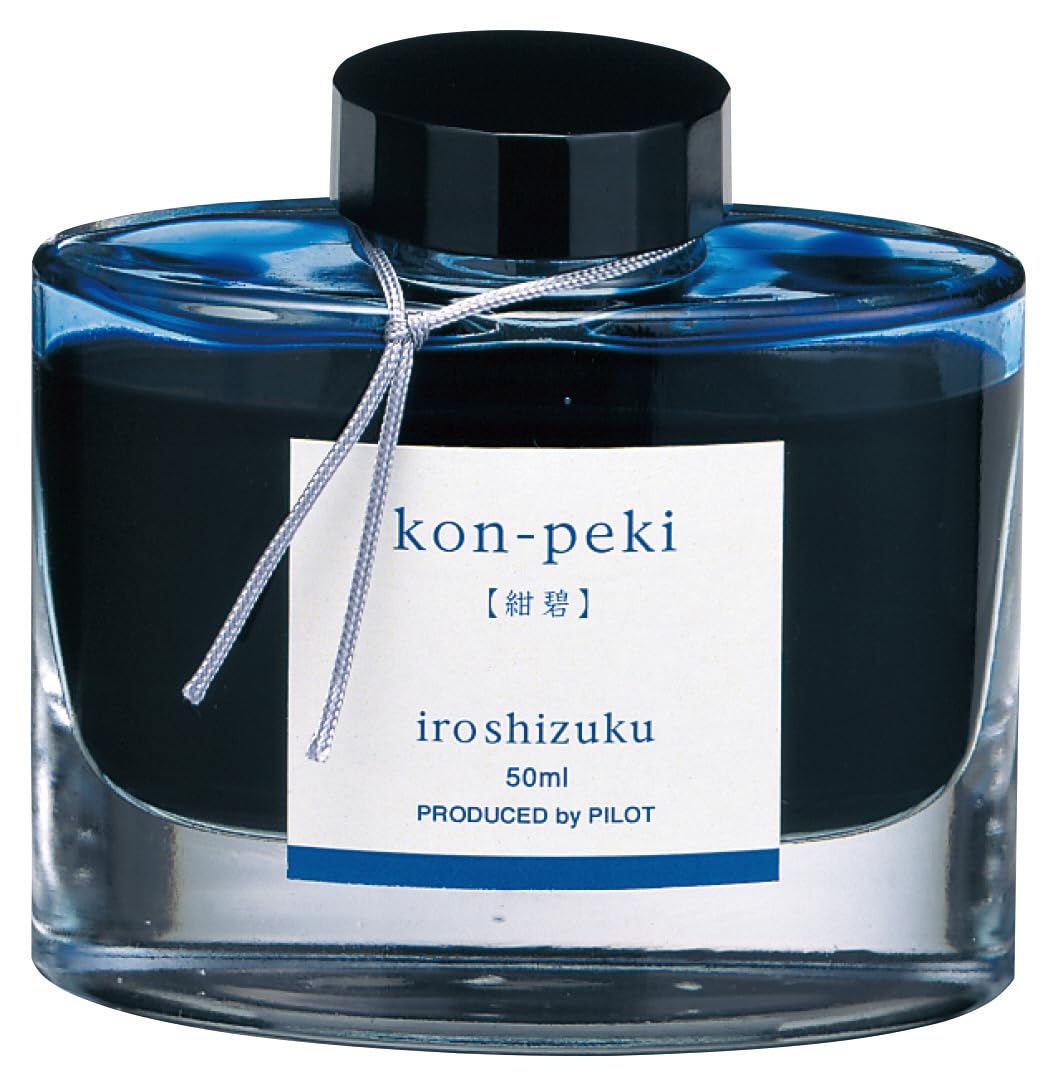
Pilot’s Iroshizuku line is revered in fountain pen communities for its wet, lubricated flow that brings out shading in broader nibs while maintaining crisp edges in extra-fine points. Kon-peki, a deep azure blue with subtle green undertones, exhibits remarkable color saturation that shifts slightly in intensity depending on nib width and paper absorbency, giving calligraphers expressive variety without sacrificing line control.
The 50ml faceted glass bottle is as much a desk ornament as it is a functional container, though the ink collects around the bottle neck—users recommend wiping the rim before resealing. Dry time on Rhodia paper clocks between 26 and 27 seconds, which is fast enough for left-handed writers but slower than most pigment-based sumi inks. The dye-based formulation means it will not survive water exposure; a single drop of water smears the lettering completely.
This ink is at its best in fountain pens with fine to medium nibs used for Spencerian or Italic scripts on coated paper. It does not feather on high-quality stationery and produces gentle shading that adds dimension to letterforms. For calligraphers who prioritize color nuance and fountain pen compatibility over water resistance, Kon-peki justifies its price with predictable behavior and a truly beautiful hue.
Why it’s great
- Rich, complex blue with noticeable shading across nib sizes
- Exceptionally smooth flow, no clogging in fountain pens
- Attractive bottle design that looks professional on any desk
Good to know
- Not waterproof—water contact ruins the lettering
- Ink collects around bottle cap opening; requires periodic cleaning
3. Diamine Fountain Pen Ink 30ml – Writers Blood, Midnight Blue, Green Black

Diamine’s three-bottle set offers an immediate palette of colors for calligraphers who want variety without committing to full-size bottles. Writers Blood, a deep brownish-red reminiscent of dried oxblood, is the standout performer—it flows heavily through fine nibs, dries quickly on Rhodia and similar papers, and shows no feathering even on standard office paper. Midnight Blue reads as a very dark navy that almost appears black in fine nibs, while Green Black presents a muted forest green with grayish undertones suitable for botanical lettering.
The 30ml plastic bottles are compact and travel-friendly, though users caution that the narrow base makes them prone to tipping if you have a heavy pen. All three inks are water-based and pH neutral, so they are safe for any fountain pen brand. The dye-based composition means none of them are waterproof—washes or watercolor overlays will cause the ink to lift and spread, limiting their use in mixed-media calligraphy projects.
For beginners exploring fountain pen calligraphy, this trio provides three distinct moods at a lower per-milliliter cost than most single bottles. Writers Blood alone has earned a devoted following for its rich, unexpected color that pairs well with cream and ivory papers. Just keep the bottles secured during filling to avoid spills.
Why it’s great
- Three versatile colors in one affordable set
- Writers Blood offers unique deep red that performs well on cheap paper
- Safe for all fountain pens with no gumming or clogging
Good to know
- Not waterproof; ink mixes with watercolor washes
- Narrow bottle bases tip over easily during use
4. Kuretake Gold MICA Ink, 60ml

Kuretake’s Gold MICA Ink stands apart from standard calligraphy inks by incorporating suspended mica particles that catch light and produce a true metallic sheen on both bright and dark papers. The water-based pigment formulation has a thicker consistency than dye inks, which allows it to sit on the paper surface rather than soaking in, preserving the reflective quality of the gold finish. This ink is explicitly formulated for dip pens and brushes only—it will clog fountain pen feeds irreversibly.
Users consistently praise the vibrancy of the gold, noting it outperforms competitor metallic inks that often dry to a dull copper or muddy brown. The wide-rimmed bottle makes it easy to load a brush or dip pen nib, though the mica particles settle quickly, so shaking the bottle before every dip is mandatory for consistent sparkle. The ink dries rapidly and, once set, can be painted over with watercolor without lifting or smearing.
For calligraphers creating greeting cards, place settings, or illuminated manuscripts, this ink delivers the closest thing to liquid gold leaf without the complexity of actual metallic leaf application. The 60ml bottle will last through many projects, but the ink’s thickness means it requires more frequent nib cleaning than standard sumi inks to prevent buildup in the reservoir.
Why it’s great
- True shiny gold finish, not dull or coppery
- Waterproof when dry, allows watercolor layering
- Works beautifully with both brush and dip pen
Good to know
- Mica particles settle; shake vigorously before each use
- Too thick for fountain pens—dip pen or brush only
5. Yasutomo Bokuju Liquid Ink – 6oz Sumi Ink

Yasutomo’s Bokuju Liquid Ink offers a traditional sumi ink experience in a large 6oz bottle, formulated with carbon black pigment that produces a rich matte finish on unsized papers. The ink is water-resistant once fully dry, making it suitable for calligraphers who want to apply watercolor or marker layers without the black line work running. The smudge-proof claim holds up on rice paper and slightly textured watercolor sheets, though performance varies on highly coated or glossy stocks.
The heavy pigmentation allows the ink to be diluted with water for softer gray washes while retaining the same matte, non-reflective character. This versatility makes it a favorite among brush calligraphers and sumi-e artists who shift between bold strokes and delicate hairlines in the same piece. The bottle size at 6oz is generous for the price, and the screw-top closure seals securely to prevent evaporation between sessions.
One consideration: the ink does not perform identically on every paper type. On absorbent unsized papers, the black remains crisp and dense; on sized or coated papers, it can bead slightly and take longer to dry. Calligraphers working exclusively with dip pens on high-rag content paper will find reliable results, but fountain pen users must keep this ink away from their pens—the pigment load will clog feeds permanently.
Why it’s great
- Large 6oz bottle offers great value for heavy use
- Matte finish stays smudge-proof on unsized papers
- Dilutable for gray tones without losing water resistance
Good to know
- May bead or dry slowly on coated/sized paper
- Not usable in fountain pens—pigment clogs feeds
6. Waterman Fountain Pen Ink, Intense Black, 50ml
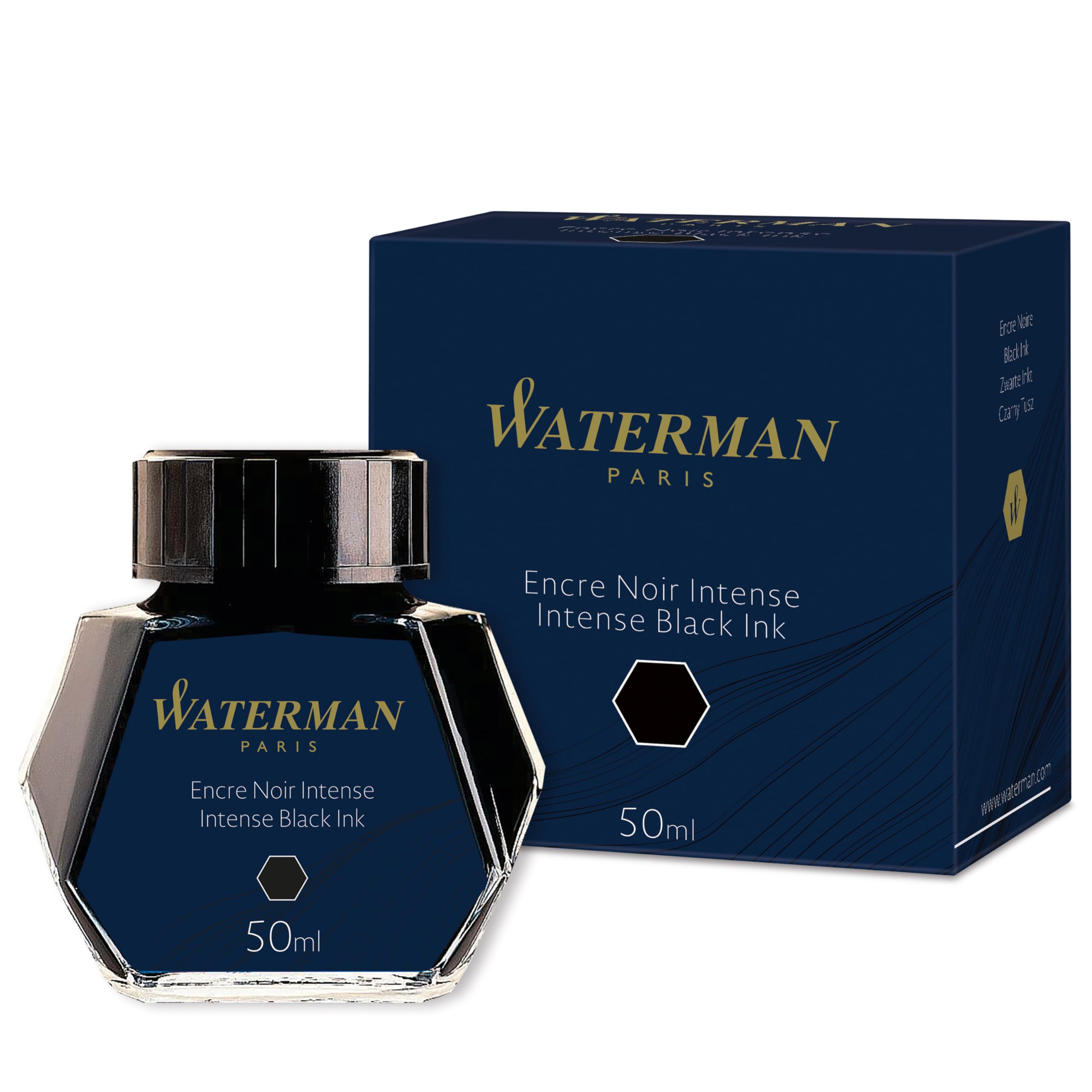
Waterman Intense Black has been a benchmark fountain pen ink for generations, prized for its wet flow that prevents skipping even in extra-fine nibs where other blacks feel dry and scratchy. The dye-based formulation produces a deep black with slight gray undertones when dry—not as opaque as sumi ink, but rich enough for professional correspondence and everyday calligraphy exercises. The 50ml faceted bottle includes a clever tilt feature that pools ink at the side for easy filling when the bottle runs low.
Users highlight the ink’s complete lack of clogging, even in pens left unused for weeks—a rare trait among black inks, which often contain pigments that settle and crust. The ink flows readily through feeds, providing consistent wetness that smooths out less refined nibs. Some reviewers note a small amount of spread on medium and broad nibs, so fine nibs are the ideal match for maintaining crisp edges in Copperplate and Spencerian scripts.
The ink offers mild water resistance once dry, but it is not waterproof—prolonged exposure or a wet brush will lift and smear the lines. For fountain pen calligraphers who value reliability and a classic black that behaves predictably across nib sizes, Waterman remains a trusted staple that needs no special handling or shaking before use.
Why it’s great
- Exceptionally reliable flow that prevents skipping in fine nibs
- Low clogging risk; pens can sit unused for weeks
- Bottle design tilts for easier low-level filling
Good to know
- Not fully waterproof—water contact causes smearing
- Some spread on medium and broad nibs
7. Dr. Ph. Martin’s Bombay India Ink Set – 12 Colors

Dr. Ph. Martin’s Bombay India Ink Set brings 12 vibrant, lightfast colors to the calligrapher’s palette, each made from finely ground pigments suspended in a waterproof shellac binder. The inks are intensely concentrated—one drop delivers full opacity, making the 1oz bottles last far longer than their size suggests. Each bottle includes a built-in dropper for precise dispensing, and the set comes with a mixing palette for custom color blending.
Users spanning calligraphy, scale modeling, and abstract painting report that the colors remain true to their labeled hue after drying, with no fading or shifting over time. The inks dry waterproof, enabling the layering of multiple colors without bleeding or re-wetting previous strokes. The shellac base does require more thorough cleaning of nibs and brushes than water-based dyes, and the inks will stain brushes permanently if not rinsed immediately after use.
For calligraphers working on illustrated manuscripts, envelope art, or mixed-media projects that demand color permanence, this set provides a professional-grade toolset. The stainless steel palette included in the box is a practical bonus for blending intermediary shades. The inks are not suitable for fountain pens due to particle size, but they excel in dip pens, brushes, and ruling pens where control over color separation matters most.
Why it’s great
- Intense, lightfast colors that remain waterproof when dry
- 12-color palette plus mixing tray for custom blends
- Highly concentrated; a small drop covers large areas
Good to know
- Shellac base requires prompt nib and brush cleaning
- Not for fountain pens—will clog feeds permanently
FAQ
Can I use India ink in a fountain pen?
Why does my calligraphy ink feather on paper?
How do I clean dried ink from a dip pen nib?
Final Thoughts: The Verdict
For most users, the best calligraphy ink winner is the Zig Sumi Pen Ink 60ml because it delivers a dense, waterproof black that flows predictably through dip pens, dries quickly without blobbing, and resists watercolor overlays. If you want expressive color with beautiful shading, grab the Pilot Iroshizuku Kon-peki. And for a versatile budget-friendly starter set that introduces three distinct ink personalities, nothing beats the Diamine Trio.