
Our readers keep the lights on and my morning glass full of iced black tea. As an Amazon Associate, I earn from qualifying purchases.
Specs are compiled from manufacturer listings and verified buyer reviews and can change over time — please confirm the key details on the product page before buying.
You want travel memories that look as good as they felt — not shaky, blurry clips with muddy audio. The right camcorder fits in your day bag, survives a splash of rain, and lets you focus on the moment, not the settings. This guide cuts through the noise to pick the models that actually deliver on that promise.
I’m Min — the founder and writer behind Gadgets Feed. This guide is built by comparing the manufacturers’ published specifications and the patterns across verified customer reviews, so you get each pick’s real strengths and trade-offs instead of marketing spin.
Whether you pack light or bring a full kit, the best camcorder for travel balances stabilization, battery life, and image quality in a compact body you can take anywhere.
Our Picks at a Glance

How To Choose The Best Camcorder For Travel
For travel, a camcorder needs to do three things well: fit in your bag, stay steady when you are walking, and keep recording through a day of exploring. The specs below will tell you which model handles those tasks best.
Stabilization: The Difference Between Smooth and Seasick
If you are walking, riding, or just holding the camera at arm’s length, a 3-axis gimbal (a mechanical arm that counteracts your hand movements in three directions) turns jerky motion into glide-cam footage. Some models rely on electronic image stabilization (EIS), which crops the frame to reduce shake — that works fine for minor bumps but can soften the image.
Battery Life: Your Day Can’t Stop at 32 Minutes
Nothing ruins a sunset timelapse like a dead battery. Some compact cameras run dry after 30 minutes; travel-focused models push past several hours. If you shoot all day, look for a battery life of 4 hours or more, or at least a camcorder that charges via USB-C while you use it.
Sensor Size and Low-Light Performance
A 1-inch CMOS sensor (the light-gathering chip that determines image quality) is the balance for travel cameras. It captures more light than smaller sensors, so you get cleaner footage indoors, at dusk, or in shadowy streets without adding noise (the grainy static that ruins low-light shots).
Quick Comparison
| Model | Best For | Stabilization | Battery Life | Max Video Res | Amazon |
|---|---|---|---|---|---|
| DJI Osmo Pocket 3★ Best Overall | Best Overall | 3-Axis Mechanical | 32 min | 4K at 120fps | Amazon |
| ORDRO M3All-Day Runner-Up | Budget Value | Electronic (EIS) | — | 5K at 30fps | Amazon |
| Xtra MusePremium Value | Premium Value | 3-Axis Gimbal | — | 4K at 120fps | Amazon |
| SJCAM C400 | All-Day Battery | 6-Axis Stabilizer | 7 hours | 4K UHD | Amazon |
| 5K Camcorder FJFJOPK | Optical Zoom | 6-Axis EIS | — | 5K | Amazon |
| ORDRO M5 | Gimbal Budget | 3-Axis Gimbal | — | 5K at 30fps | Amazon |
| Xoieod 1080P | Beginner Friendly | Electronic | Dual Battery | 1080P Full HD | Amazon |
| Canon PowerShot V10 | Brand Pedigree | Electronic (3 Modes) | ~1-2.5 hrs | 4K at 30fps | Amazon |
| Insta360 Luna Ultra | Pro-Grade 8K | 3-Axis Mechanical | 4 hours | 8K at 30fps | Amazon |
In‑Depth Reviews
1. DJI Osmo Pocket 3
Our pick — 4.5★ from 6,500+ verified ratings; the strongest balance of quality and price.
The pocket-sized gimbal cam that makes every walk look like a dolly shot.
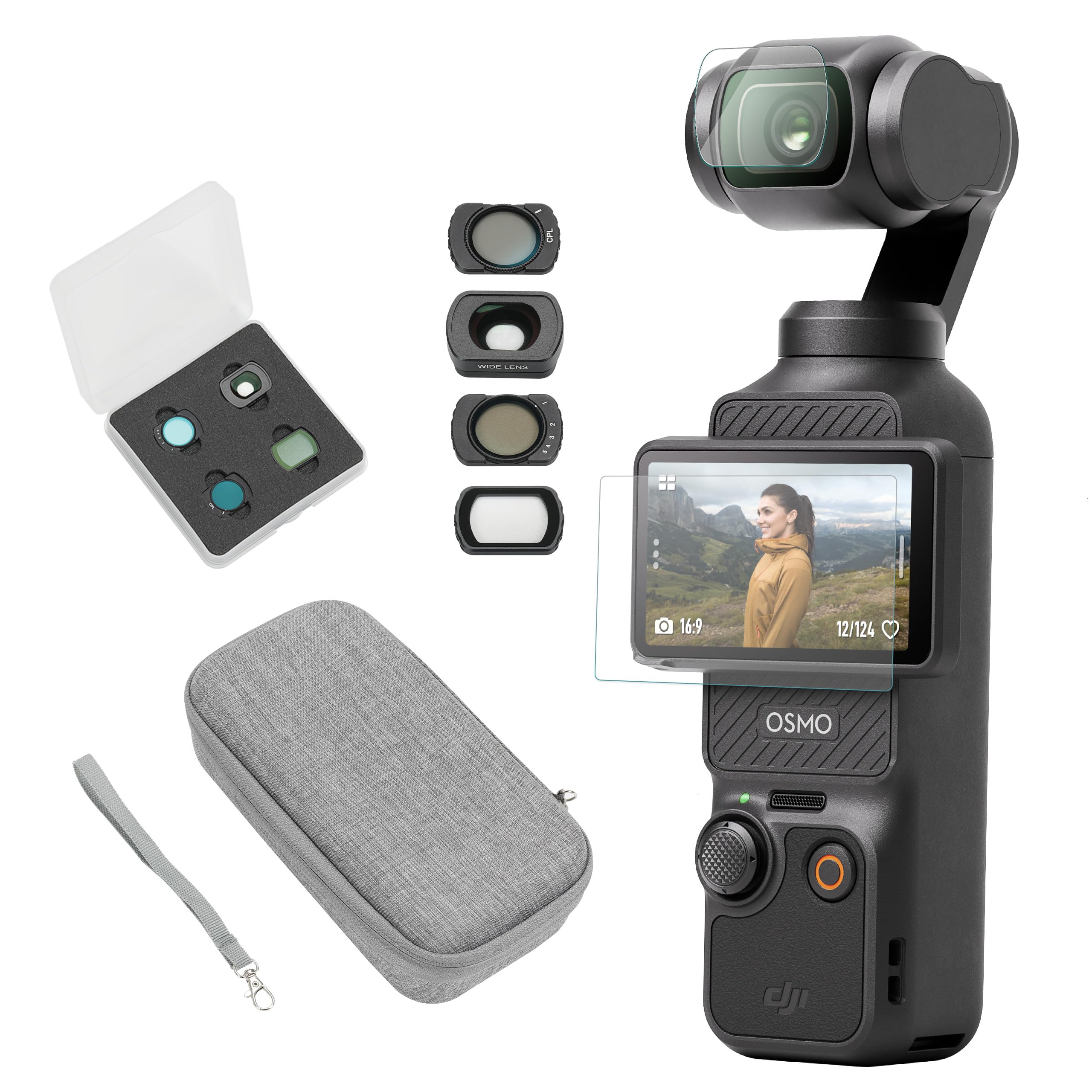
The DJI Osmo Pocket 3 is the crowd favorite for a reason. Its 1-inch CMOS sensor (a larger-than-average light-gathering chip for a pocket camera) and 4K recording at 120fps deliver footage that rivals professional mirrorless cameras in good light. The 3-axis mechanical stabilization (three motorized arms that cancel out shake) is the gold standard — you can jog, spin, or ride a bumpy tuk-tuk and the footage stays silky smooth.
Owners consistently praise the quality and video quality above all else — “insane video quality in a tiny camera” is a common refrain. The 2-inch rotating touch screen flips between horizontal and vertical shooting for TikTok or YouTube without awkward rotation. The catch, and it is a real one for travel: the battery lasts only 32 minutes. That is enough for short clips and vlog snippets, but a full day of exploring requires an external battery pack or a mid-day charge.
Why It Wins
- Exceptional 4K/120fps video from a pocket-friendly 1-inch sensor
- Industry-leading 3-axis gimbal eliminates all hand-shake
- Sharp autofocus and ActiveTrack 6.0 keep you in frame while moving
- Rotating screen for instant vertical or horizontal shooting
The Travel Trade-off
- Battery life is short at 32 minutes — expect to recharge mid-day
- No built-in zoom; you rely on cropping or moving closer
- Higher price point than many travel camcorders
Reach for this: If your travel style is short, vlog-style clips where smooth, cinematic quality is non-negotiable.
Think twice if: You need all-day recording on a single charge — this camera demands a backup battery or a USB power bank.
2. ORDRO M3 5K Video Camera Camcorder
A 5K camcorder that runs six hours — the perfect companion for long days out.
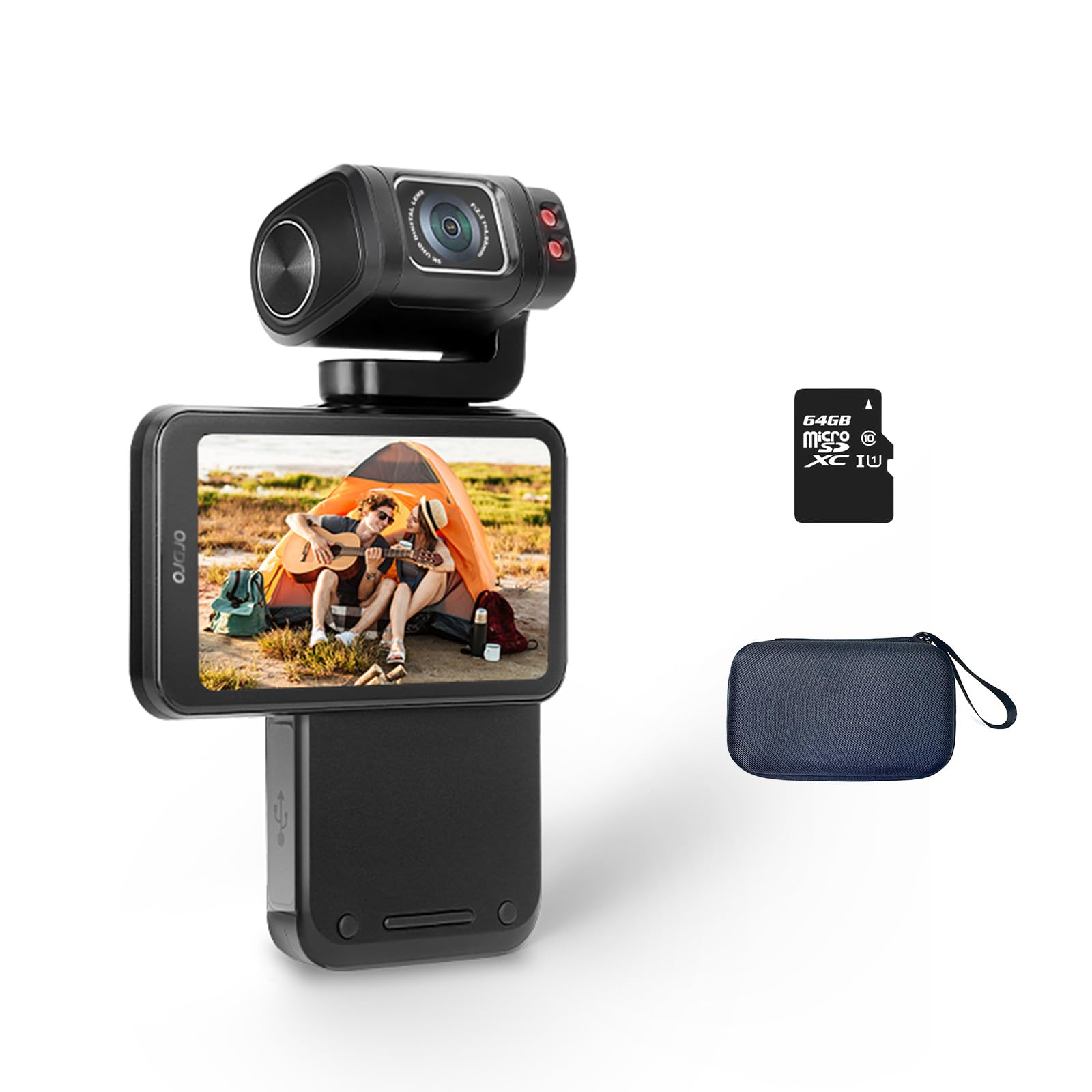
The ORDRO M3 flips the DJI’s weakness into its strength. You get 5K at 30fps (sharper than standard 4K) and a 48MP still photo mode, all in a body that measures just 5.3 by 2.2 inches.
Where the M3 cuts corners is stabilization. It relies on electronic image stabilization (EIS — software that crops the frame to reduce shake) rather than a physical gimbal. That means walking footage stays steady, but fast moves or running look wobbly. The built-in WiFi lets you transfer clips to your phone, though some owners note the app setup is clunky. The video quality itself gets strong praise for sharp clarity, and the M3 is one of the few budget models to include a 64GB SD card straight in the box.
A 6-hour workhorse: The battery alone makes it the best pick for all-day solo travel. You lose some smoothness on the move, but for tripod shots, interviews, or slow walks, the 5K clarity is excellent at this price.
Grab this if: You want 5K video without worrying about battery life for a full day out.
Look elsewhere if: You need rock-solid stabilization for running, cycling, or action sports.
3. Xtra Muse Vlogging Camera
Gimbal-smooth 4K footage at a price that undercuts the big names.
The Xtra Muse delivers a 1-inch CMOS sensor and a true 3-axis gimbal stabilizer for a price that splits the difference between budget and premium. It shoots 4K at 120fps (the same smooth slow-motion capability as the DJI Pocket 3) and includes a 2-inch touch screen that rotates for vertical or horizontal framing. Owners call it a “near identical” alternative to the DJI at roughly half the price.
The “Master Follow” face-tracking feature locks onto your face automatically, making solo vlogging simple. The image quality gets high marks for being sharp and vibrant, and the gimbal earns consistent praise for keeping action shots smooth. The most-discussed caveat is microphone connectivity; built-in audio is decent close-up, but serious vloggers will want a wireless mic.
Smart Alternative
- 1-inch sensor and true 3-axis gimbal for premium stabilization
- Nearly 2.7 hours of battery life beats the DJI by a wide margin
- Face/object tracking makes solo shooting easy
- Compatible with DJI Pocket 3 accessories
Keep in Mind
- Microphone connectivity is the common owner complaint
- Build feels less premium than the DJI equivalent
Perfect for the value-conscious creator who wants near-DJI performance without the DJI price tag.
skip it if you rely on wireless mic audio without a separate adapter — check compatibility first.
4. SJCAM C400 4K Travel Vlogging Camera
A 4K action cam that keeps recording for seven hours and dives to 30 meters.
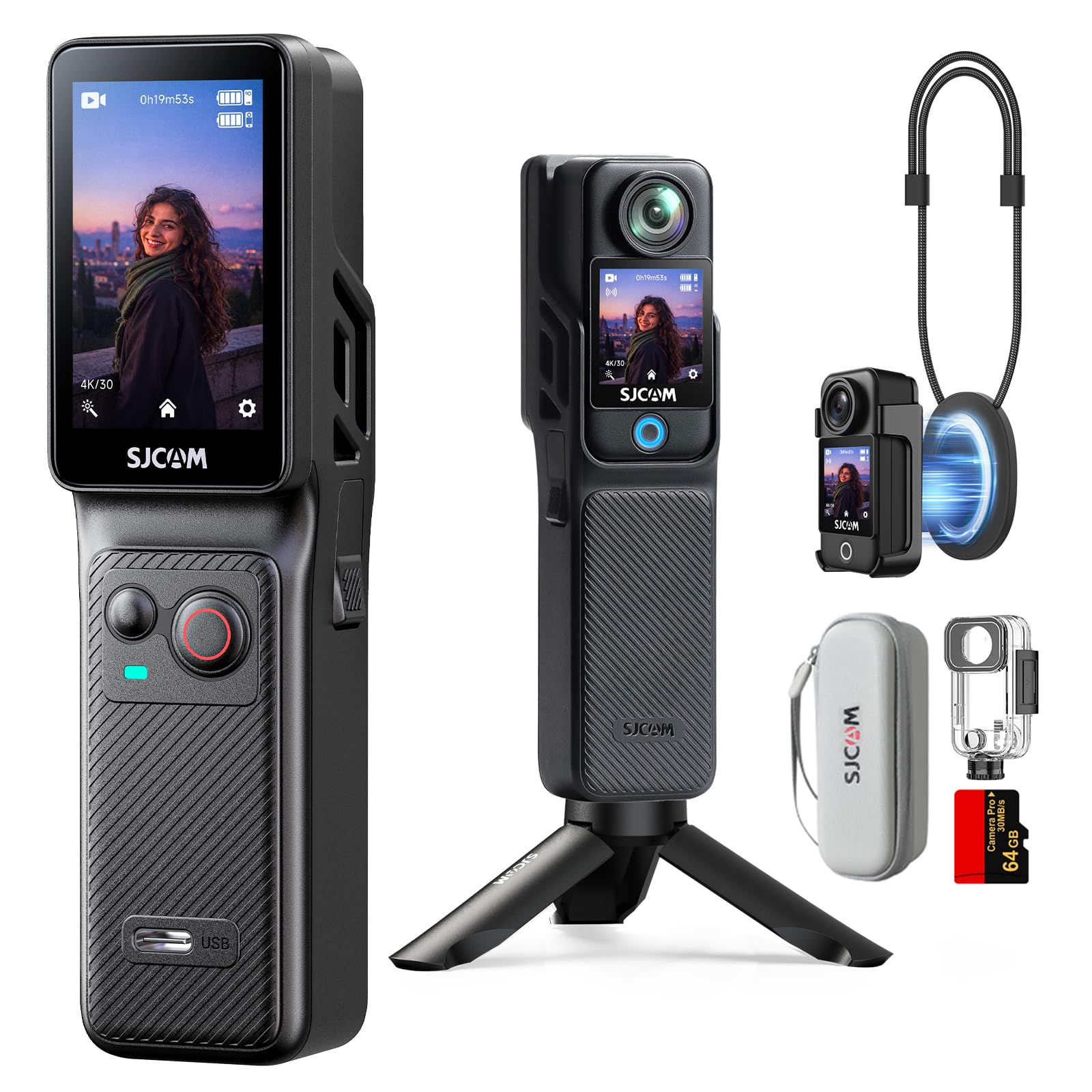
The SJCAM C400 earns its spot as the most versatile all-weather travel cam here because it shoots 4K UHD through a 154° wide-angle lens with an f/2.0 aperture (a big glass opening that lets in more light for dimmer scenes) and lasts a staggering 7 hours on one charge — enough to cover a full hike, a snorkeling session, and dinner footage without swapping batteries. The 6-axis stabilizer keeps walking and cycling footage smooth, though it is not as fluid as a mechanical gimbal. If you need a single camera for land and water, this is your pick; pass on it if you prioritize audio quality for vlogging without an external mic.
The real a neat extra is the waterproofing: the included housing takes the camera down to 30 meters, making it perfect for surf, snorkeling, and rainy treks. The detachable handheld controller lets you start and stop recording from a distance, which is handy for POV clips. Owners consistently praise the camera quality and value for money, calling it “a great first time vlogger’s camera.” The audio quality does get a mixed verdict — some find it clear, others call it “horrible” — so for voiceover work, a separate mic is a wise add.
Best for adventure travelers: The 7-hour battery and 30-meter waterproof rating are unique in this price range. Audio is the Achilles’ heel; good-enough for ambient sound, but scripted vlogs want an external mic.
Reach for it if your travel involves water sports, all-day outdoor shoots, or rainy cities.
Not for you if pristine audio is a priority without buying extra gear.
5. FJFJOPK 5K Video Camera Camcorder
An 8X optical zoom and 64MP photos in a package made for live streaming.
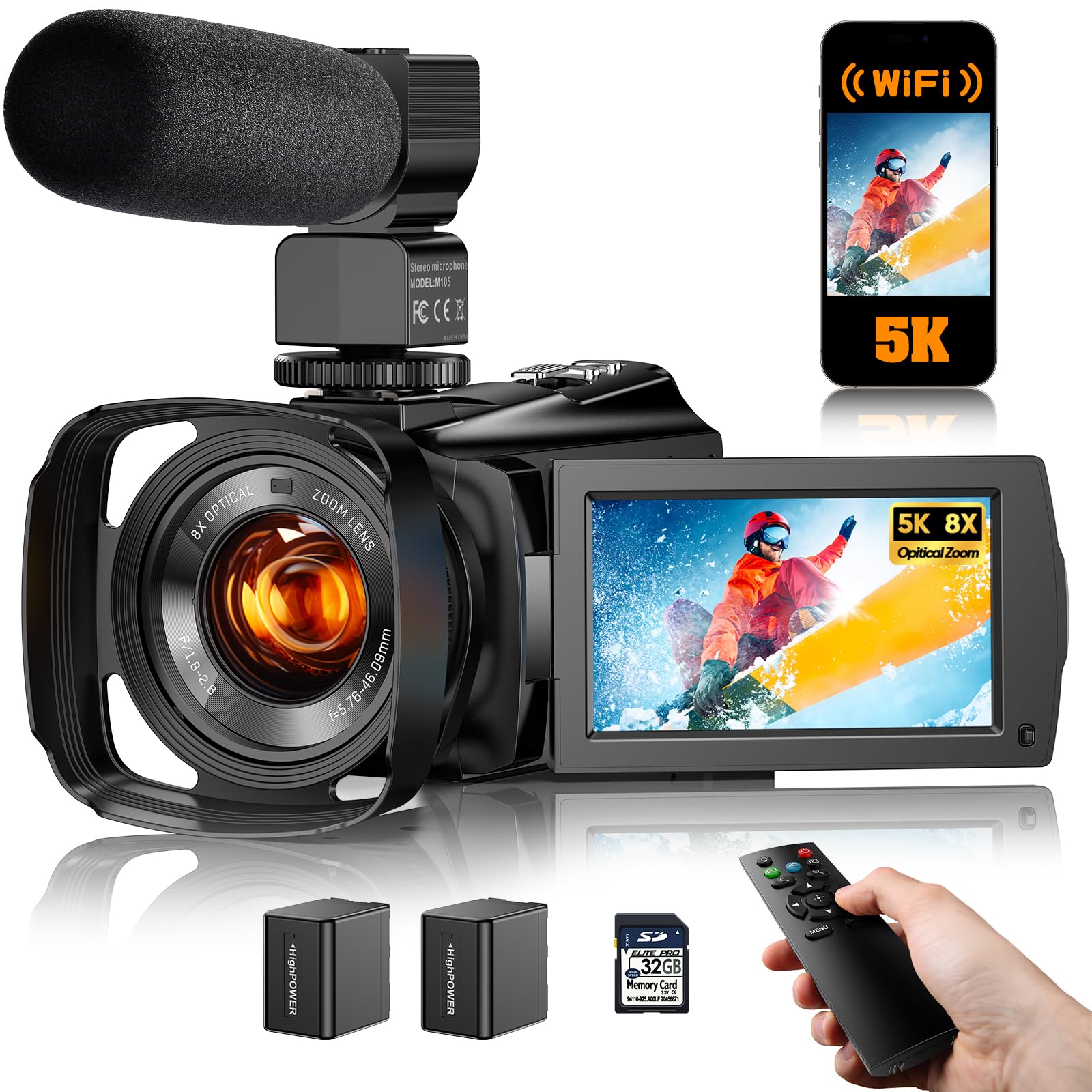
This camcorder stands out for its 8X optical zoom (which magnifies the image without losing detail, unlike digital zoom). That makes it a strong pick for wildlife trips, stadium events, or any scenario where you cannot walk closer. It records 5K video and captures 64MP stills — the highest photo resolution on this list. The 3.6-inch 270° rotating IPS touchscreen gives you plenty of space to frame shots, and the full-color night vision captures clear footage in near-total darkness.
The catch: audio sync is a known issue when recording at 4K or 5K with a lapel mic — you must drop to 1080p for proper sync. The FJFJOPK-brand camcorder has a mixed reliability record; some buyers report touchscreen responsiveness issues and problems transferring files to Windows 11 via USB-C. Video quality itself gets positive marks, especially for its price range, and the included remote control and two rechargeable batteries are practical bonuses for travel.
Why It Stands Out
- 8X optical zoom captures distant subjects without quality loss
- High-resolution 64MP still photos for hybrid shooters
- Full-color night vision works in complete darkness
Real Gripes
- Audio only syncs properly at 1080p, not at 4K/5K
- Mixed reliability reports on touchscreen and computer connectivity
Best for the zoom-obsessed traveler who shoots wildlife or stadium concerts and needs reach.
Skip if plug-and-play audio sync at high resolution is critical for your workflow.
6. ORDRO M5 5K Camcorder
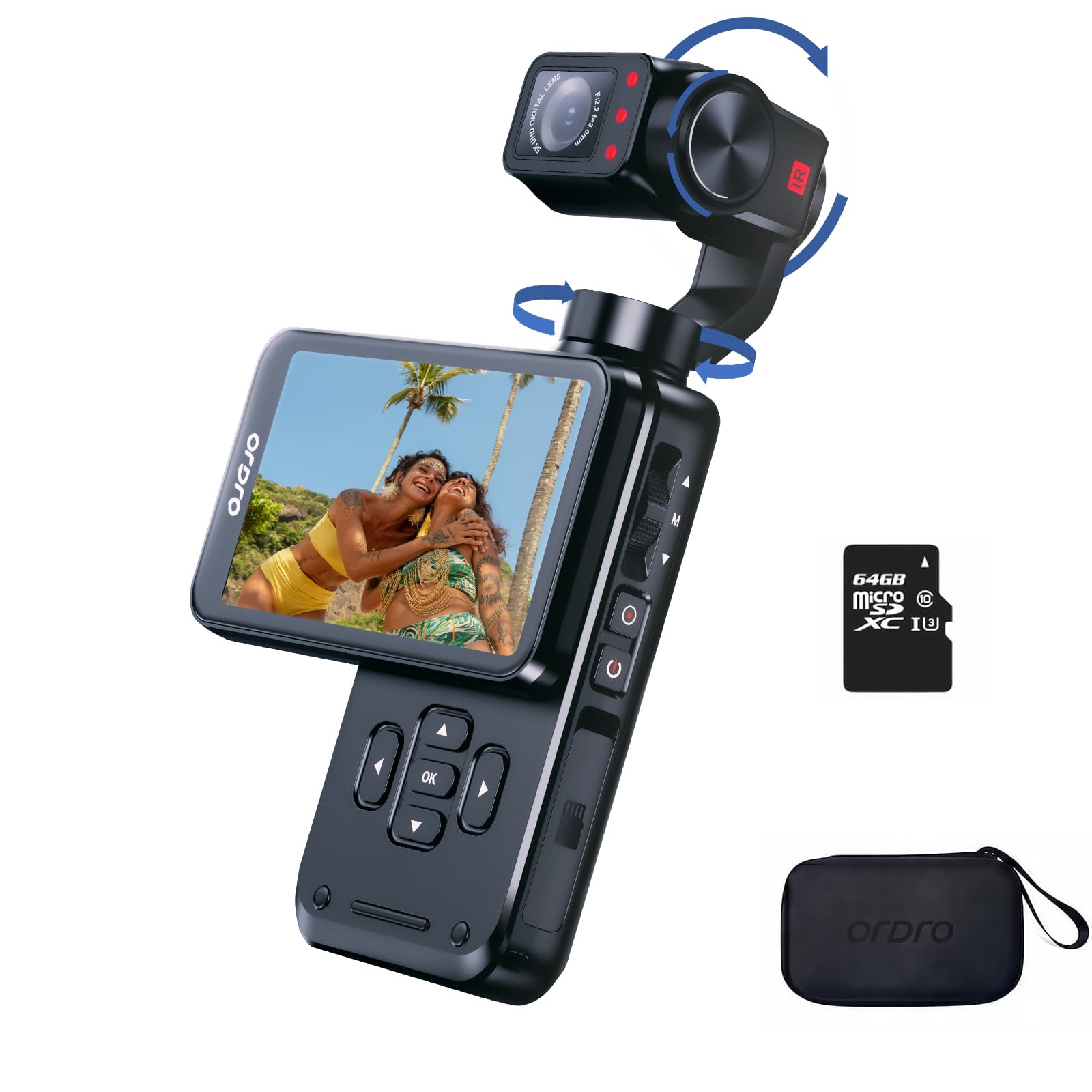
The ORDRO gets a 3-axis gimbal — gimbal-smooth travel footage without the premium price.
The ORDRO M5 brings a mechanical 3-axis gimbal — the same type used in the DJI and Xtra Muse — to a sub-premium price point. It records 5K at 30fps and 4K at 60fps, with the gimbal actively counteracting hand tremors during walking or slow pans. The 180° rotating lens flips from front to back instantly, and auto face tracking keeps you centered in the frame. Weighing only 8.8 ounces, it is genuinely pocketable for a gimbal camera.
The reviews tell a split story. Picture quality and image stabilization earn the most praise — owners describe the video as “clear” and the stabilization as “excellent.” However, the small lens struggles in low light, producing pixelated, soft footage that falls well below its 5K spec in dim conditions. The IR night vision is functional but not a replacement for dedicated low-light hardware. For daytime vlogging and golden-hour clips, the M5 delivers gimbal smoothness at a fraction of the premium cost. This is the budget pick for smooth daytime footage; it’s not for you if you shoot often after sunset.
A balanced performer: Great daytime stabilization and face tracking. Low-light quality is the weak spot — stick to well-lit scenes for sharp results.
Choose this if you want gimbal stabilization on a budget and mostly shoot outdoors.
Look elsewhere if you frequently film after dark or in dim interiors.
7. Xoieod 1080P Full HD Camcorder
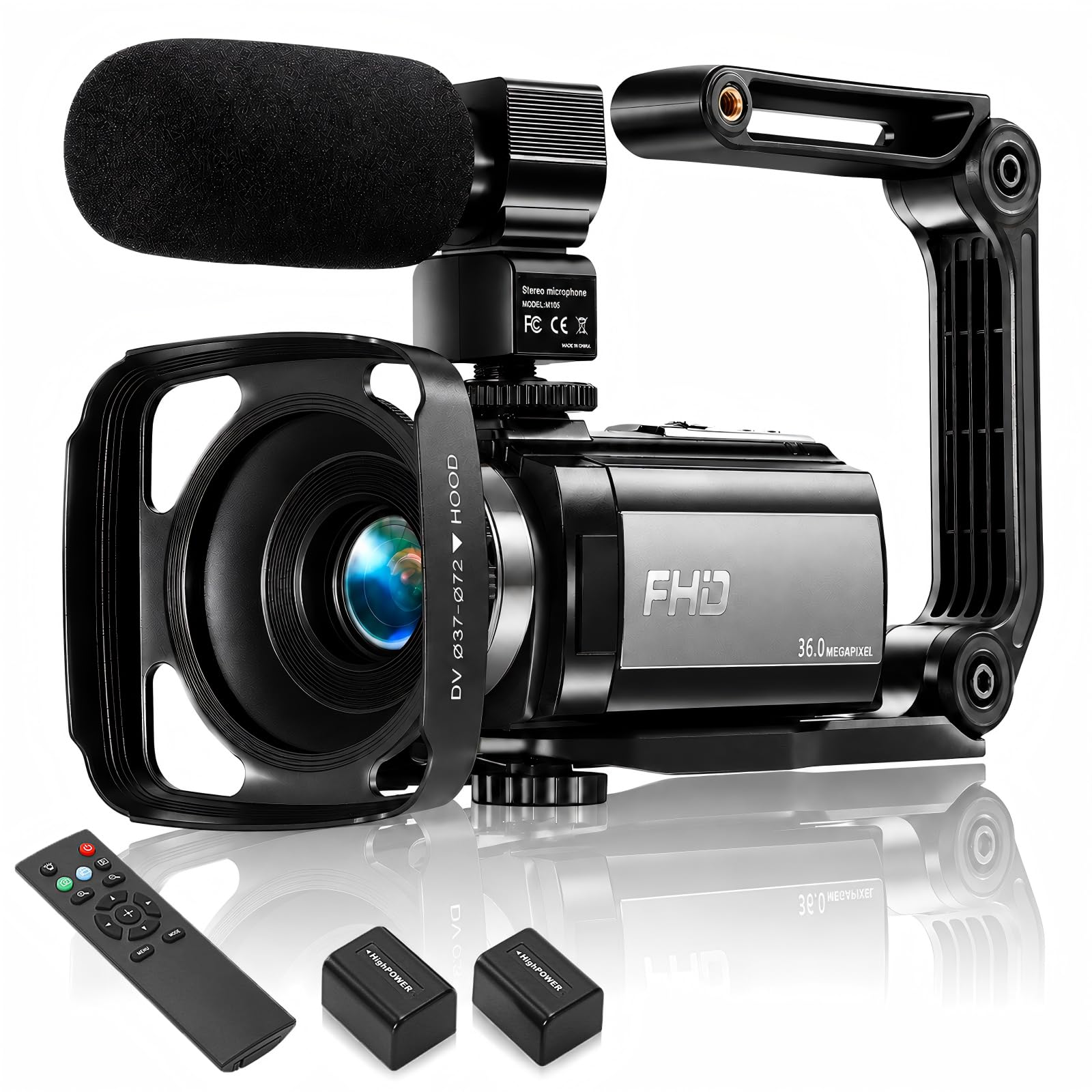
A wallet-friendly 1080P camcorder packed with accessories for first-time travel vloggers.
If 4K is not a dealbreaker, this Xoieod camcorder is the most complete out-of-box starter kit. It shoots Full HD 1080P video and 36MP stills, with a 16X digital zoom (which crops in on the image) and a 3-inch 270° rotating screen for selfies. The included X-Y stereo external microphone captures clearer sound than built-in mics on most budget cameras, and the wireless remote lets you start and stop recording from up to 16 feet away.
The value shines in the included accessories: two rechargeable batteries, a lens hood, a handle holder, the external mic, and a carrying bag. Quality is the top-praised aspect, with owners calling it “great value” and “easy to set up.” Night vision works well for dark interiors. The trade-off is a soft 1080P max resolution — it will not match the sharpness of a 4K camcorder — and the digital zoom loses detail at high magnification.
Great for Beginners
- Comes with dual batteries, external mic, remote, and bag
- 1080P is easy to edit on older computers and phones
- Night vision mode works well in complete darkness
Limits to Know
- Max resolution is 1080P — no 4K option
- Digital zoom degrades image quality at high zoom levels
Best for young creators or streamers on a tight budget who want everything in one box.
Not for you if 4K resolution is essential for your final videos.
8. Canon PowerShot V10 Compact Vlogging Camera

The brand name brings a 1-inch sensor and built-in stand in an ultra-compact body.
The Canon PowerShot V10 is a purpose-built vlogging camera with a 15.2-megapixel 1-inch back-illuminated CMOS sensor (a chip that captures more light by moving the wiring behind the sensor) — the same sensor size as the top-tier picks. It records 4K at up to 30fps and features a retractable front-facing screen for easy self-framing. The built-in stand folds out the front or back, letting you set it down on a table for hands-free shots without an extra tripod.
Compactness is the headline — owners say it “fits in a fanny pack” and call it “perfect for vlogging.” The three stabilization modes (Off, On, and Enhanced) give flexibility for handheld walking shots. The battery, however, runs down in 1 to 2.5 hours of active use, which is average at best. It also lacks optical zoom; you only get a fixed 19mm wide-angle lens (equivalent to about a smartphone camera’s main lens) and a 3X digital zoom. For casual, short-form content, the Canon name and image quality are tough to beat.
Great for quick clips: The built-in stand and front-facing screen are genuinely useful for solo vloggers. The short battery and lack of zoom limit it for all-day exploring.
Reach for it if you want a trusted Canon camera that slips into a tiny pocket for quick clips.
Not the pick if you need optical zoom or more than 90 minutes of continuous recording.
9. Insta360 Luna Ultra
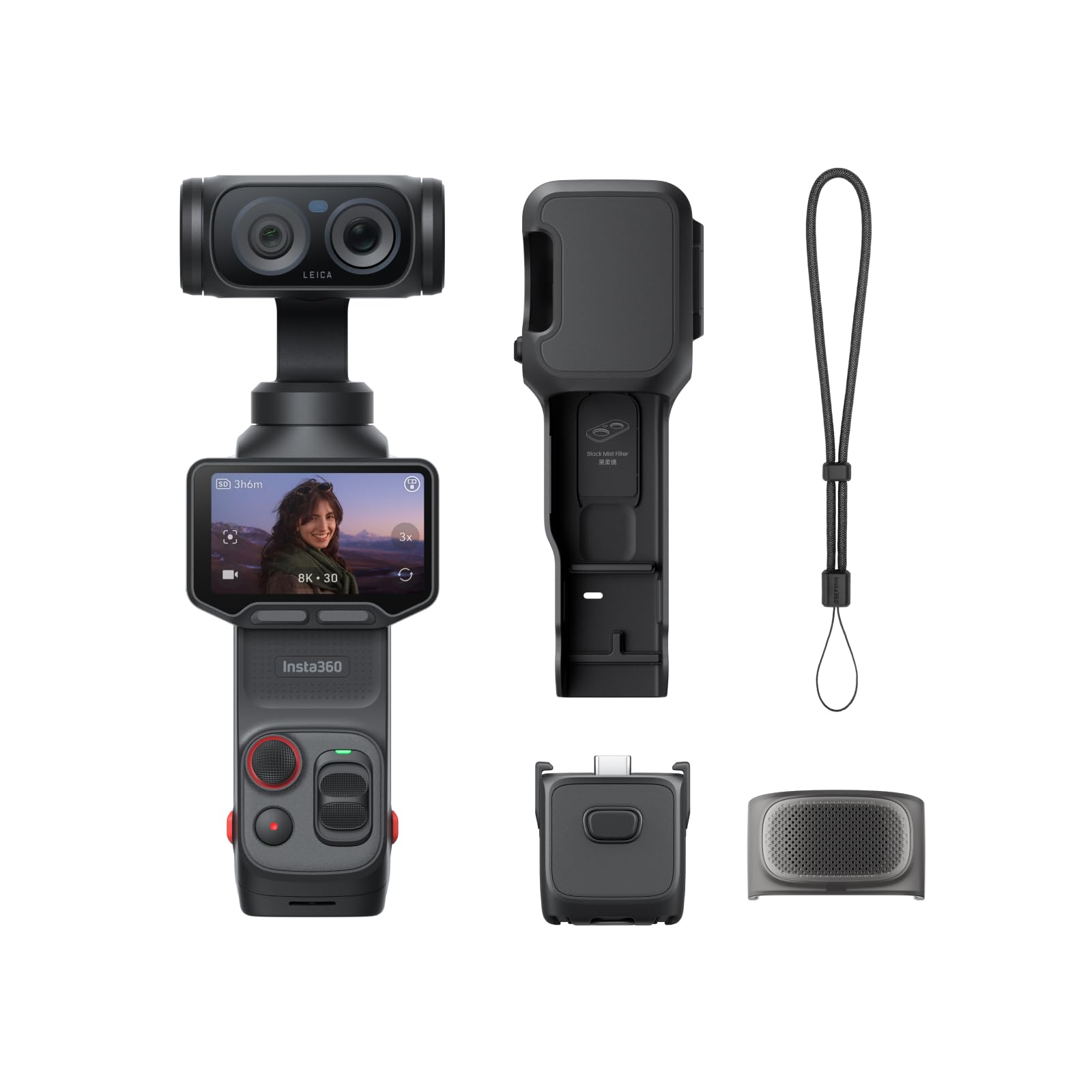
Dual Leica lenses and an 8K sensor in a gimbal camera with a detachable screen.
The Insta360 Luna Ultra is the most technically ambitious travel camcorder here. It pairs dual Leica lenses (a main 1-inch sensor and a telephoto 1/1.3-inch sensor) to shoot 8K at 30fps with Dolby Vision HDR — capturing a wider color range and higher contrast than standard video. The 6X lossless zoom (true optical crop without quality loss) extends to a 12X total zoom range. The 2-inch OLED touchscreen detaches and works wirelessly up to 20 meters away, letting you frame yourself from across a room or a café table.
The 4-hour battery is strong, and fast charging hits 80% in 23 minutes. Build quality and video quality are the most-praised aspects — owners call the 8K footage “excellent” and note the natural background blur from the telephoto lens. The 10-bit I-Log mode records richer color data for professional editing in DaVinci Resolve. The main caveat is reliability; some owners mention intermittent screen freezing. At its price point, this is for serious creators who want 8K flexibility and Leica color science in a pocketable body.
The ultimate travel cinema tool: class-leading zoom range and 8K resolution. The detachable screen is a genuine innovation for solo shooters. Reliability queries stop it from being an automatic recommendation. Choose this over the DJI Osmo Pocket 3 if you need extreme zoom and 8K detail; look elsewhere if reliability is your top concern.
Worth the price for creators who demand 8K, dual-lens versatility, and a detachable remote screen.
Pass on it if 4K is sufficient — the extra cost and occasional screen bugs are not worth it for casual shooters.
Understanding the Specs
Stabilization: Gimbal vs Electronic
Stabilization determines whether your walking or bumpy-ride footage looks smooth or seasick. 3-axis mechanical gimbal uses three tiny motors to physically counter every shake — it is the best you can get, producing panning shots that look like they were on rails. Electronic image stabilization (EIS) does the same job in software by cropping the frame and shifting it around. It is cheaper and works for minor bumps, but it cannot keep up with running or fast motion, and it slightly softens the image.
Sensor Size: The 1-Inch balance
The sensor is the light-capturing chip inside the camera. A 1-inch CMOS sensor is roughly 4x larger than the tiny sensors inside budget camcorders and typical smartphones. That extra size means more light, less noise (grainy static) in low light, and a more natural background blur. A camera with a 1-inch sensor will produce noticeably cleaner footage in a dim restaurant or at dusk than one with a smaller sensor — even at the same 4K resolution.
FAQ
What is the most important spec for a travel camcorder?
Can I use a travel camcorder for live streaming?
How does 5K video compare to 4K for travel?
Is infrared night vision useful for travel?
What size SD card do I need for a travel trip?
Can I charge the camcorder with a power bank on the go?
What does optical zoom do for travel shooting?
How do I keep audio clean while traveling?
Is 1080P enough for travel videos in 2025?
Are gimbal cameras fragile for backpacking?
Final Thoughts: The Verdict
Across the board, the best camcorder for travel is the DJI Osmo Pocket 3 because it pairs a 1-inch sensor with top-tier 3-axis stabilization in a truly pocketable body. If you need all-day battery life on a budget, grab the ORDRO M3 and its 5K clarity. And for the ultimate in image quality and zoom flexibility, the Insta360 Luna Ultra is the one to reach for.
How We Picked
We do not accept paid placement. Every pick is matched to a real buyer and a real use-case; we do not hands-on test units.
Sources & Methodology
Specifications: manufacturer listings and product documentation. Review insights: verified customer reviews, as of July 2026. Pricing: not shown on this page (it changes often); check the current price via the retailer link.
As an Amazon Associate, Gadgets Feed earns from qualifying purchases. This does not affect which products we feature.