
The difference between a memorable wildlife clip and a missed opportunity often comes down to a single factor: optical reach. A camcorder for wildlife needs to resolve feather detail, track erratic movement, and handle challenging light without introducing noise or blur.
I’m Min — the co-founder and writer behind Gadgets Feed. I’ve spent countless hours analyzing technical specifications for this category, comparing sensor sizes, optical zoom ratios, and stabilization systems to separate marketing claims from real-world field performance.
This guide isolates the models that deliver genuine utility for documenting nature from a distance, helping you find the right camcorder for wildlife without overspending on features that sound impressive on paper but rarely matter in the brush.
How To Choose The Best Camcorder For Wildlife
Wildlife videography places extreme demands on gear. You are often shooting from a fixed position, at maximum zoom, in fading light, with a subject that refuses to hold still. The wrong camcorder will deliver grainy footage, hunt for focus on every branch, or simply run out of optical reach before the animal is close enough to fill the frame. Focus on these three pillars instead of flashy marketing specs.
Optical Zoom: The Real Reach
Ignore digital zoom entirely. The number that matters is optical zoom — the physical movement of glass inside the lens. A camcorder with 20x optical zoom will pull a deer at 200 meters into a usable frame. At 52x or 83x, you can fill the frame with a bird on a distant snag. Every model below lists its optical zoom clearly, and that single number is a stronger predictor of wildlife usefulness than megapixel count or 4K resolution.
Image Stabilization: Handheld Telephoto Reality
At maximum optical zoom, even your pulse becomes visible as micro-shake in the footage. Optical image stabilization (OIS) or sensor-shift stabilization compensates for this movement in-camera. Balanced Optical SteadyShot from Sony and 5-Axis Hybrid OIS from Panasonic are the gold standards here. A camcorder with weak or no stabilization will produce unusable footage at full zoom unless you are locked into a heavy tripod.
Sensor Size and Low-Light Performance
Wildlife activity peaks at dawn and dusk. A larger sensor — 1.0-inch or a high-quality 1/2.3-inch — collects more light, reducing noise when you need to boost gain. A 1.0-inch sensor like the one in the Panasonic HC-X20 can shoot cleanly in light levels that would force smaller sensors into muddy, artifact-filled footage. If you plan to shoot early mornings or in dense forests, prioritize sensor size over zoom reach.
Quick Comparison
On smaller screens, swipe sideways to see the full table.
| Model | Category | Best For | Key Spec | Amazon |
|---|---|---|---|---|
| Kodak PIXPRO AZ528 | Budget | Entry-level long zoom | 52x optical zoom | Amazon |
| ORDRO M5 | Mid-Range | Compact gimbal shooting | 3-axis gimbal stabilization | Amazon |
| ORDRO AX65 | Mid-Range | Versatile 4K with accessories | 12x optical zoom | Amazon |
| Minolta Pro Shot 20MP | Mid-Range | Extreme zoom on a budget | 67x optical zoom | Amazon |
| Nikon COOLPIX P950 | Premium | Longest optical reach | 83x optical zoom | Amazon |
| Sony FDR-AX43 | Premium | Smooth handheld 4K | Balanced Optical SteadyShot | Amazon |
| Canon VIXIA HF G70 | Premium | Professional 4K video | 20x optical zoom | Amazon |
| Canon VIXIA HF G70 Bundle | Premium | Ready-to-shoot kit | 20x optical zoom | Amazon |
| Panasonic HC-X20 | Premium | Best low-light image quality | 1.0-inch MOS sensor | Amazon |
| Canon XF605 | Premium | Broadcast-level production | 1.0-inch CMOS sensor | Amazon |
In‑Depth Reviews
1. Nikon COOLPIX P950

The Nikon COOLPIX P950 hits the sweet spot for dedicated wildlife shooters. Its 83x optical zoom converts to a 2000mm equivalent focal length, letting you frame a hawk perched on a power line a quarter mile away. The built-in Bird and Moon modes optimize exposure and sharpness for those specific subjects, cutting down on menu fumbling when the action is fleeting.
At 16 megapixels with a 1/2.3-inch sensor, this is not a low-light champion, but the optical image stabilization is robust enough to keep handheld shots steady at extreme reach. The manual focus ring on the lens barrel provides a tactile override when the contrast-detection autofocus hunts on busy backgrounds — a common frustration with superzoom cameras at maximum zoom.
The rotating LCD screen tilts for low-angle ground-level mammal shots, and Wi-Fi connectivity lets you transfer clips quickly from the field. The main tradeoff is the shallow depth of field at full zoom, which makes precise focus critical. Users consistently report that a gentle touch on the manual focus wheel solves the occasional misfocus.
Why it’s great
- Astonishing 83x optical zoom with dedicated Bird and Moon scene modes
- Effective stabilization for handheld use at maximum focal length
- Manual focus ring provides quick override when autofocus struggles
Good to know
- Sensor size limits performance in very low light at dawn and dusk
- Autofocus can hunt on complex backgrounds at full zoom
2. Canon VIXIA HF G70

The Canon VIXIA HF G70 is a dedicated camcorder with a form factor designed for long-hold shooting. Its 20x optical zoom lens combined with the DIGIC DV 6 processor delivers true 4K UHD at 30 fps with an 8-blade aperture that creates smooth, cinematic out-of-focus backgrounds — useful when you want to isolate a subject from messy foliage.
The Hybrid AF system with face detection locks onto subjects quickly, and the adjustable focusing speeds let you dial in the response for slow-moving animals versus birds in flight. The 3.5-inch touchscreen is bright and responsive, though some users report that the fold-out viewfinder washes out in direct sunlight — a consideration if you shoot open plains at midday.
Dual SD card slots allow relay recording, so a 30-minute deer visit won’t be cut short by card capacity. The UVC livestreaming function is a bonus for remote field broadcasts, but the HDMI output and USB webcam mode are limited to 1080p, not 4K. Low-light performance is decent for a 1/2.3-inch sensor but becomes soft beyond moderate gain.
Why it’s great
- Crisp 4K UHD video with cinematic bokeh from the 8-blade aperture
- Hybrid AF with face detection and adjustable focusing speeds
- Dual SD card slots for uninterrupted long-duration recording
Good to know
- Low-light performance degrades noticeably above moderate ISO gain
- HDMI output streams at 1080p, not 4K
3. Panasonic HC-X20

The Panasonic HC-X20 is the clear choice if your wildlife shooting hours fall at dawn and dusk. Its 1.0-inch MOS sensor is substantially larger than the 1/2.3-inch sensors found in most consumer camcorders, collecting significantly more light at equivalent aperture. This translates to clean 4K 60p footage in conditions that force smaller sensors into visible noise grain.
The 20x optical zoom is paired with a 24.5mm wide-angle lens, giving you flexibility to frame a bear at a river bend and then zoom back to capture the landscape context. The 5-Axis HYBRID O.I.S. handles body sway and vibration effectively, keeping footage steady even at full zoom without a tripod. The 4K High Precision AF with Face Detection AF/AE keeps focus locked on moving subjects.
Professional touches like XLR audio input, a triple manual ring, and versatile streaming protocols justify the investment for semi-pro and serious enthusiast use. The HEVC codec records efficiently without sacrificing quality. The only drawback is that the auto exposure system tends to darken the image in strong backlighting, requiring a quick manual adjustment.
Why it’s great
- Large 1.0-inch sensor delivers exceptional low-light 4K 60p quality
- 5-Axis HYBRID O.I.S. for extremely stable handheld telephoto footage
- XLR audio input and triple manual ring for professional-grade control
Good to know
- Auto exposure can underexpose in strong backlighting
- Higher price point reflects professional features and sensor size
4. Sony FDR-AX43

The Sony FDR-AX43 brings Balanced Optical SteadyShot — a technology that uses a built-in gimbal mechanism rather than pure software stabilization. The result is remarkably smooth 4K footage even when walking through uneven terrain while keeping a distant subject framed. The 20x optical zoom extends to 30x Clear Image Zoom in 4K and 40x in HD without the pixelation of pure digital zoom.
The 1/2.5-inch Exmor R CMOS sensor pairs with the BIONZ X processor for good low-light handling. The Fast Intelligent AF tracks subjects quickly, and the Zeiss Vario-Sonnar T lens with a 26.8mm wide-angle end gives you a solid starting field of view. The 3.0-inch touchscreen is responsive, and Wi-Fi with NFC enables fast remote control from a smartphone.
User-reported quirks include the battery protruding from the back, which can make the camcorder awkward on a selfie stick or in tight storage, and the date/time resetting after battery removal. The larger battery does provide extended runtime. At its tier, the AX43 offers the best stabilization-to-price ratio for handheld wildlife shooting.
Why it’s great
- Balanced Optical SteadyShot gimbal provides class-leading handheld stability
- Clear Image Zoom extends reach to 30x in 4K without severe quality loss
- Fast Intelligent AF and large battery for long field sessions
Good to know
- Rear battery protrusion makes storage and selfie-stick use awkward
- Date/time resets quickly after battery removal
5. Canon XF605

The Canon XF605 is a professional production camcorder built for documentary and broadcast wildlife work. Its 1.0-inch 4K UHD CMOS sensor with an independent 3-density ND filter allows clean 4K 59.94p recording in XF-AVC and MP4 formats at 4:2:2 10-bit color depth — essential for grading footage in post-production without banding artifacts.
The 15x optical 4K L-series zoom lens is optically stabilized with 5-axis correction, and the Dual Pixel CMOS AF provides the fastest and most reliable autofocus in this class. The lens covers a wide focal range that suits quick transitions from habitat-wide shots to tight animal portraits. The 2.8mm maximum aperture is consistent throughout the zoom range, maintaining exposure as you pull in.
This camcorder is complex — users warn of a steep learning curve and no in-home setup support from Canon. It is best suited for users who need broadcast-ready footage with professional audio input and robust build quality. For casual or semi-pro use, the complexity and investment may exceed practical needs.
Why it’s great
- Professional 4K 4:2:2 10-bit recording with broadcast-standard codecs
- 1.0-inch sensor with 3-density ND filter for exposure control in bright light
- Dual Pixel CMOS AF delivers extremely fast and accurate autofocus
Good to know
- Complex menu system and feature set require significant learning time
- Investment is high — overkill for casual or entry-level wildlife use
6. Canon VIXIA HF G70 Bundle
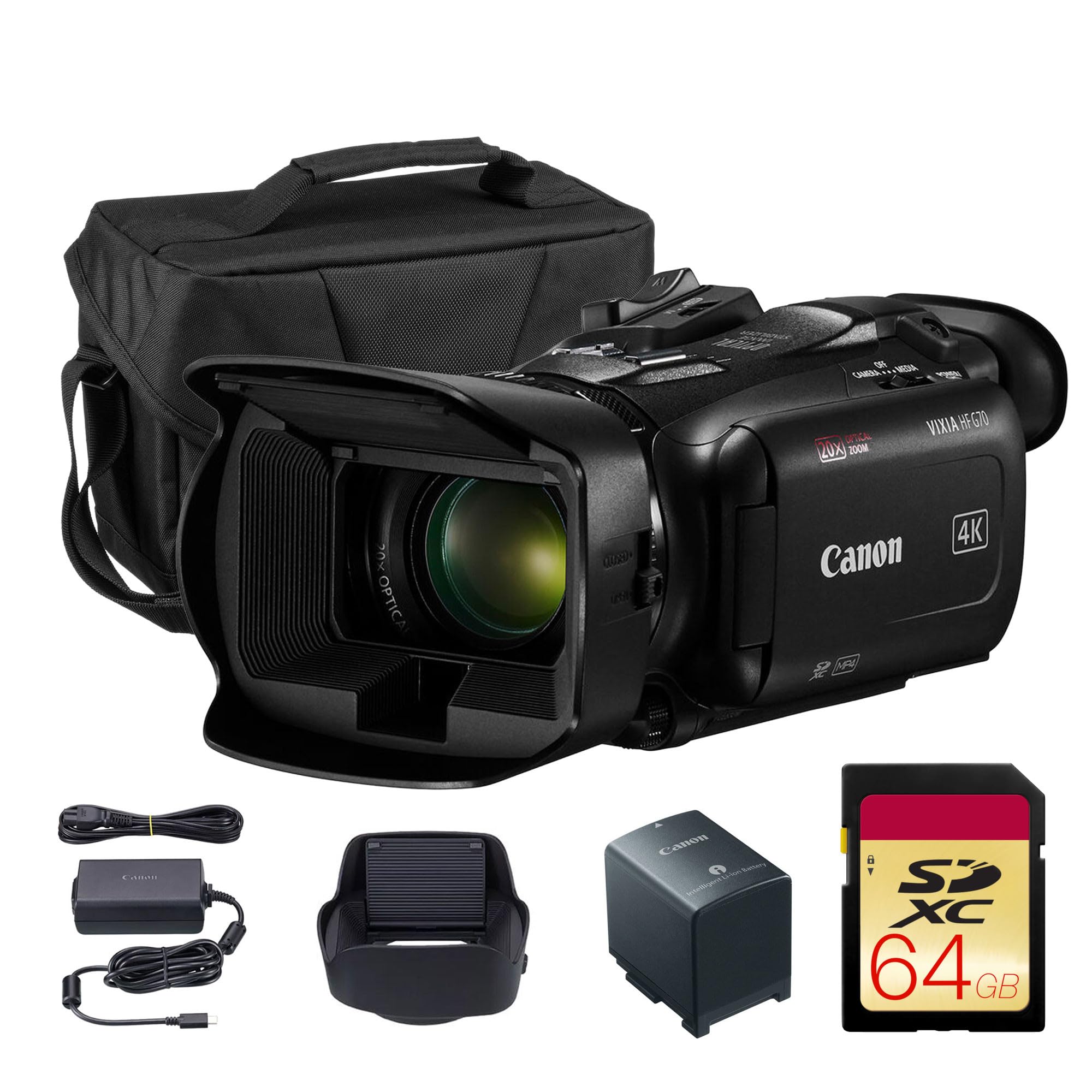
This bundle packages the Canon VIXIA HF G70 with a shoulder bag and 64GB memory card, providing a ready-to-shoot solution. The core camcorder performance mirrors the standalone G70: 20x optical zoom, 4K UHD from a 1/2.3-inch CMOS sensor, and the intuitive touchscreen interface that makes menu navigation fast in the field.
The dual SD slots are a genuine asset for wildlife shoots — you can record relay to extend capture time beyond a single card’s capacity, a critical feature when a rare animal decides to linger for 45 minutes. The HDMI output supports external monitoring and recording. Users praise the Canon build quality and the natural color reproduction straight out of the box.
Image stabilization at full zoom is adequate but not gimbal-smooth. Some users note a 7-8 second startup delay from cold power-on, which can cost you the first few seconds of a surprise encounter. The included bag and card add immediate value for someone who wants to hit the field without ordering accessories separately.
Why it’s great
- Dual SD slots for relay recording during long animal observations
- Bundle includes bag and card for immediate field readiness
- Canon’s intuitive touchscreen interface and natural color science
Good to know
- Image stabilization is good but not as smooth as dedicated gimbal systems
- Noticeable startup delay from cold power-on
7. Minolta Pro Shot 20MP

The Minolta Pro Shot 20MP offers a staggering 67x optical zoom at a price point that undercuts every other long-zoom option on this list. That reach lets you photograph birds at a feeder from indoors or capture a moose in a clearing without spooking it. The optical image stabilization helps keep those distant shots sharp, though users note that handheld stability requires practice at maximum zoom.
Video records at 1080p 30fps, which is fine for web-sharing but not competitive with 4K options at higher tiers. The articulating LCD screen and Wi-Fi for remote control are useful in the field. The hybrid autofocus system does a reasonable job in good light, but may hunt in low-contrast conditions like a shaded forest.
Build quality is mixed — some units have arrived with defects, including non-charging batteries and malfunctioning card readers. The menus are deep and non-intuitive, requiring time to learn. For wildlife shooters on a tight budget who prioritize focal length above all else, this camcorder delivers that reach, but the experience can be inconsistent.
Why it’s great
- Exceptional 67x optical zoom that outperforms phone and kit zoom ranges
- Articulating screen and Wi-Fi for flexible field positioning
- 20MP stills provide cropping room for distant subjects
Good to know
- Quality control is inconsistent — some units arrive with defects
- Menus are non-intuitive and require a significant learning investment
8. ORDRO AX65
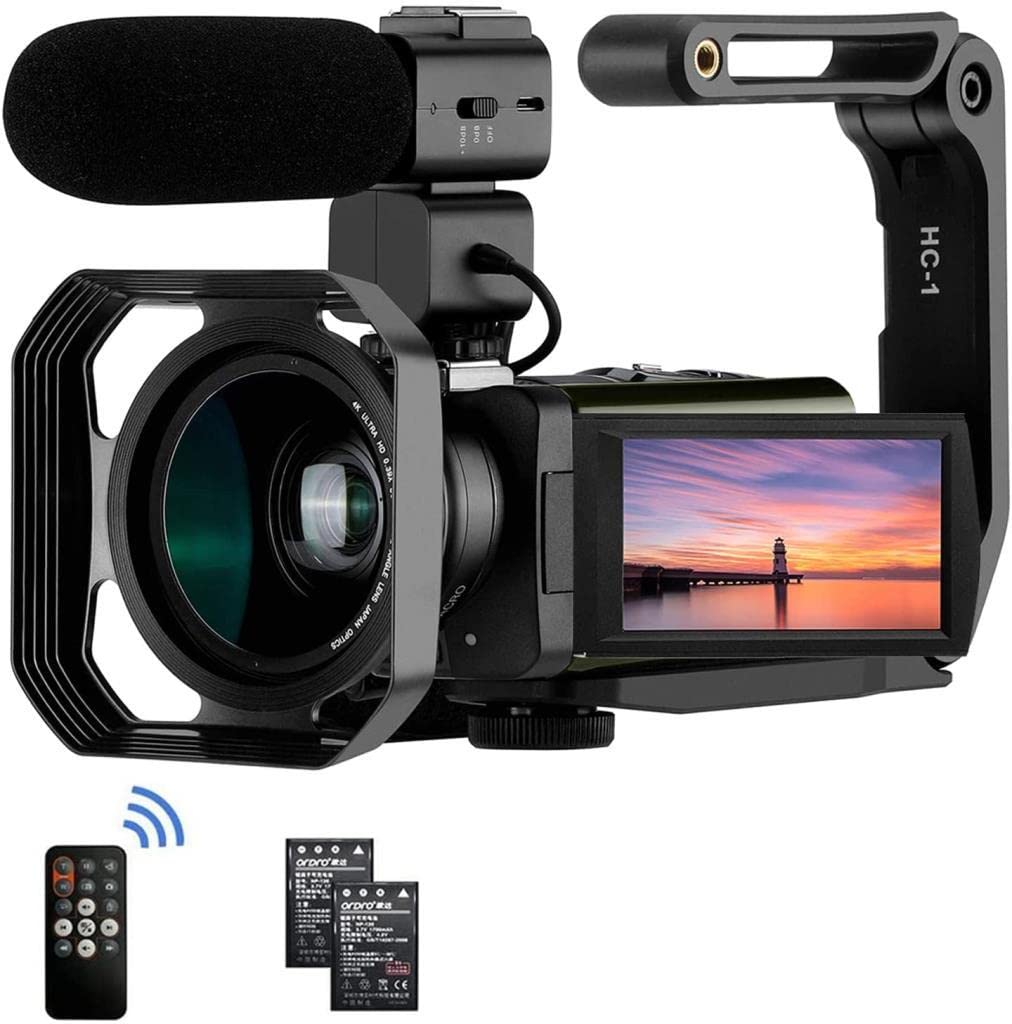
The ORDRO AX65 arrives with an impressive accessory bundle: two rechargeable batteries, an external microphone, a wide-angle lens, a macro lens, a 64GB SD card, and more. For a starting wildlife videographer, this package eliminates the need for separate accessory purchases. The camcorder records 4K at 24fps and 1080p at 60fps from a 5.0MP Sony CMOS sensor.
The 12x optical zoom is adequate for up-close subjects at established blinds or feeders but will leave you wanting more for distant animals. The 100x digital smart zoom sounds impressive but introduces pixelation rapidly — this is not a substitute for optical reach. The 3.5-inch touchscreen with a 270-degree rotation simplifies framing from any angle.
Durability is a concern. A significant number of users report the camcorder failing to turn on after 6-12 months of intermittent use, and a loud “croak” sound appearing in recordings. The initial video quality is sharp and clear, making this a passable entry-level option if you accept a shorter expected lifespan. The auto white balance also varies considerably between lighting conditions.
Why it’s great
- Comprehensive kit includes accessories needed to start filming immediately
- 4K video and 30MP stills from a Sony CMOS sensor
- 270-degree rotatable touchscreen for flexible framing
Good to know
- Reliability concerns — some units fail within the first year
- 12x optical zoom is limited for truly distant wildlife subjects
9. Kodak PIXPRO AZ528
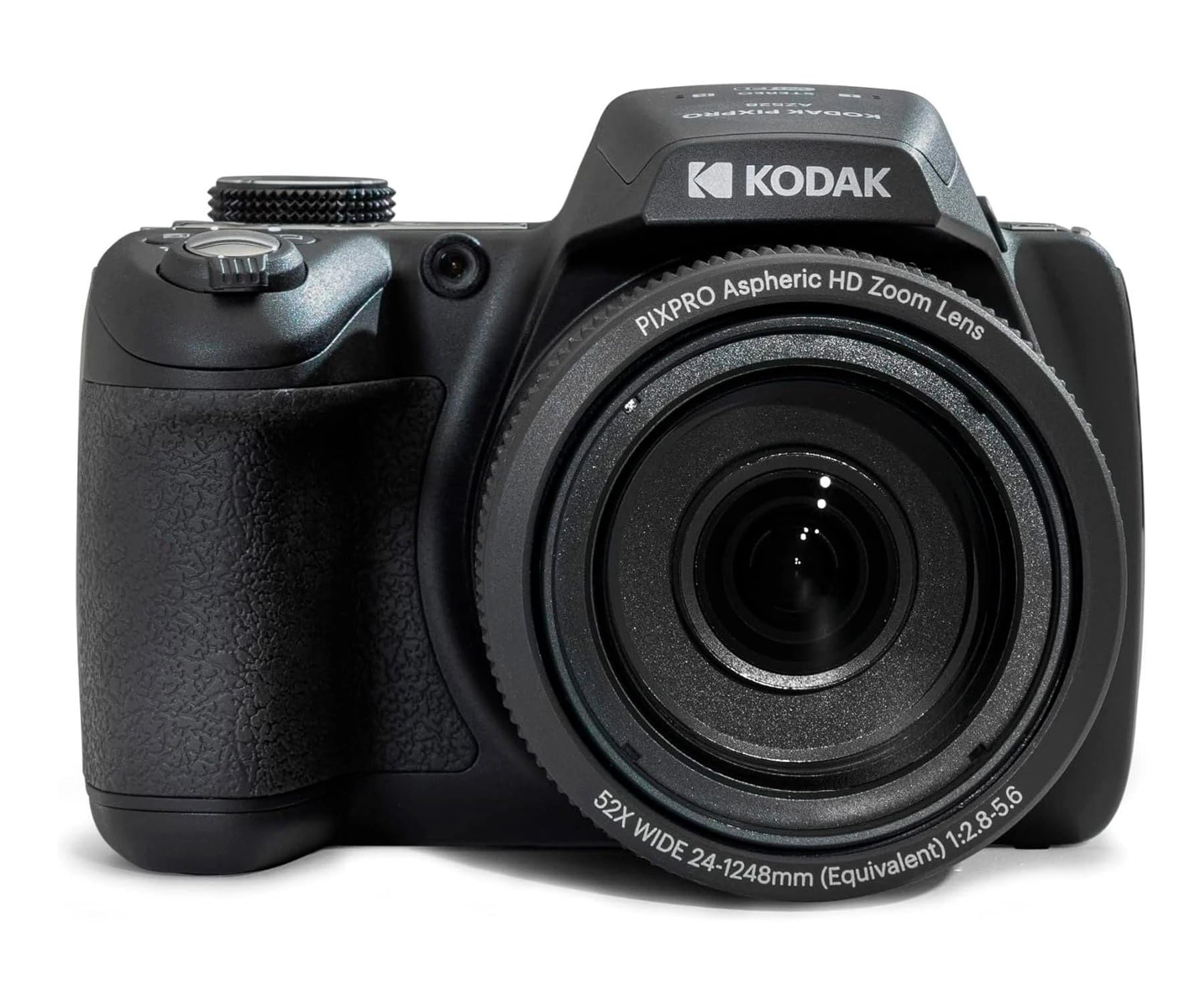
The Kodak PIXPRO AZ528 delivers 52x optical zoom at an entry-level price point that opens wildlife videography to newcomers. The backside-illuminated (BSI) 16MP CMOS sensor improves low-light sensitivity beyond standard CMOS designs, and the optical image stabilization compensates for hand movement at the telephoto end. Users consistently report sharp images of birds at feeders with minimal setup.
The 1080p Full HD video at 30fps is adequate for social media and personal projects, though the lack of 4K limits cropping and future-proofing. The 6 fps burst mode helps capture a sequence of a bird taking off, and the Wi-Fi connectivity enables quick transfers to a phone. The 3-inch LCD screen is clear and usable in moderate daylight.
Battery life is a weak point — user reports indicate the included lithium-ion pack provides limited runtime, and the casing scuffs easily in the field. The autofocus system uses contrast detection, which is slower than phase-detect systems. For the budget-conscious user wanting genuine optical reach, this is a functional entry point, but expect to carry spare batteries.
Why it’s great
- 52x optical zoom at a very accessible price point
- BSI CMOS sensor improves light gathering for entry-level sensor
- Wi-Fi for fast image transfer and remote control
Good to know
- Battery life is short; carrying spares is essential
- Contrast-detect autofocus is slower than phase-detect systems
10. ORDRO M5
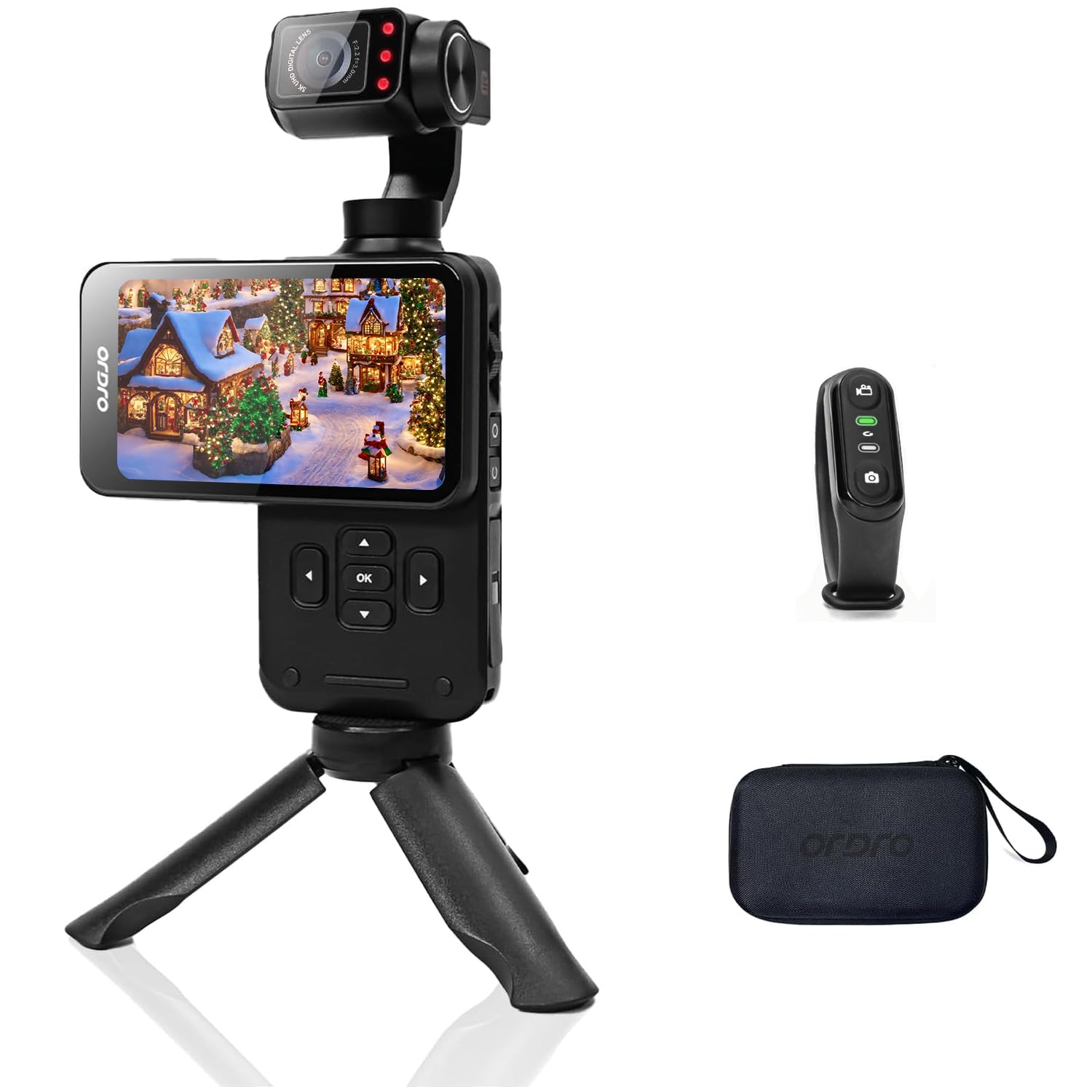
The ORDRO M5 is not a traditional long-zoom camcorder — it is a pocket-sized camera with a built-in 3-axis gimbal. This makes it an excellent choice for shooting close-quarters wildlife encounters or filming from moving vehicles where stability is paramount. The gimbal smooths out walking motion and hand tremor, producing fluid 4K 60fps footage even without a tripod.
The 120-degree wide-angle lens is unsuitable for distant subjects, and there is no optical zoom to speak of. For small mammals at a waterhole, insects on a flower, or filming your own nature hikes, the M5 excels. The IR night vision mode records black-and-white footage in total darkness, useful for nocturnal animal behavior at camp.
The 3.5-inch IPS touchscreen is bright and responsive, and the included remote control simplifies solo shooting. Battery life is solid for its size. This is a specialist tool — not for capturing a hawk on a distant ridge, but for the immersive, shake-free close-up work that traditional camcorders struggle with handheld.
Why it’s great
- Built-in 3-axis gimbal delivers exceptionally smooth handheld footage
- Compact pocketable size for casual hikes and close-up nature work
- IR night vision mode for recording nocturnal wildlife
Good to know
- Wide-angle lens with no optical zoom — not for distant subjects
- Stabilization struggles with very fast, jerky movement
FAQ
What minimum optical zoom do I need for bird-in-flight video?
Can I use a standard tripod with a long-zoom camcorder for wildlife?
Why does 4K 60fps matter more than 4K 24fps for wildlife?
Do I need an external microphone for wildlife camcorder recording?
How important is raw format for wildlife video?
Final Thoughts: The Verdict
For most users, the camcorder for wildlife winner is the Nikon COOLPIX P950 because it delivers monster 83x optical zoom with reliable stabilization and dedicated wildlife modes at a semi-premium price. If you want superior low-light performance with a 1.0-inch sensor and professional features for dawn and dusk shooting, grab the Panasonic HC-X20. And for the absolutely smoothest handheld footage with a built-in gimbal for close-encounter nature work, nothing beats the ORDRO M5.