
Our readers keep the lights on and my morning glass full of iced black tea. As an Amazon Associate, I earn from qualifying purchases.
Specs are compiled from manufacturer listings and verified buyer reviews and can change over time — please confirm the key details on the product page before buying.
Your camera finally shoots crisp 4K, but your audio still sounds like it was recorded inside a fish tank. The single fastest upgrade to your video quality is the microphone, not the lens. This guide breaks down the best camcorder microphone choices — separating the ones that genuinely isolate your subject’s voice from the ones that just make the noise louder.
I’m Min — the founder and writer behind Gadgets Feed. This guide is built by comparing the manufacturers’ published specifications and the patterns across verified customer reviews, so you get each pick’s real strengths and trade-offs instead of marketing spin.
Whether you shoot vlogs, interviews, or short films, picking the right directional mic decides if your audience hears you or your air conditioner.
Our Picks at a Glance

How To Choose The Best Camcorder Microphone
Before you worry about sound quality, check the port on your camera — a 3.5mm jack, a USB-C port, or an XLR input. If the mic doesn’t match your gear, you’ll be stuck buying adapters. Match the connector first, then compare audio specs.
Pickup Pattern: The Core of Directional Audio
The most important spec is the pickup pattern, which describes where the mic hears sound from. A shotgun mic uses a narrow beam to capture what is in front of it while rejecting noise from the sides and rear. A super-cardioid pattern is a slightly wider variation that still focuses on the front. If you are recording in a busy place, this is the feature that saves your audio.
Power: Phantom, Battery, or Plug-In
Condenser mics need power to work. Some draw it from the camera’s “plug-in power,” which is the easiest setup. Others run on an internal rechargeable battery for total independence. Professional XLR mics typically require “48V phantom power” from an audio recorder or mixer — a term you will see a lot, meaning the device sends power up the same cable that carries the sound.
Quick Comparison
| Model | Best For | Pickup Pattern | Power | Connector | Amazon |
|---|---|---|---|---|---|
| Audio-Technica AT875R★ Best Overall | Broadcast & narration | Shotgun | 48V Phantom | XLR | Amazon |
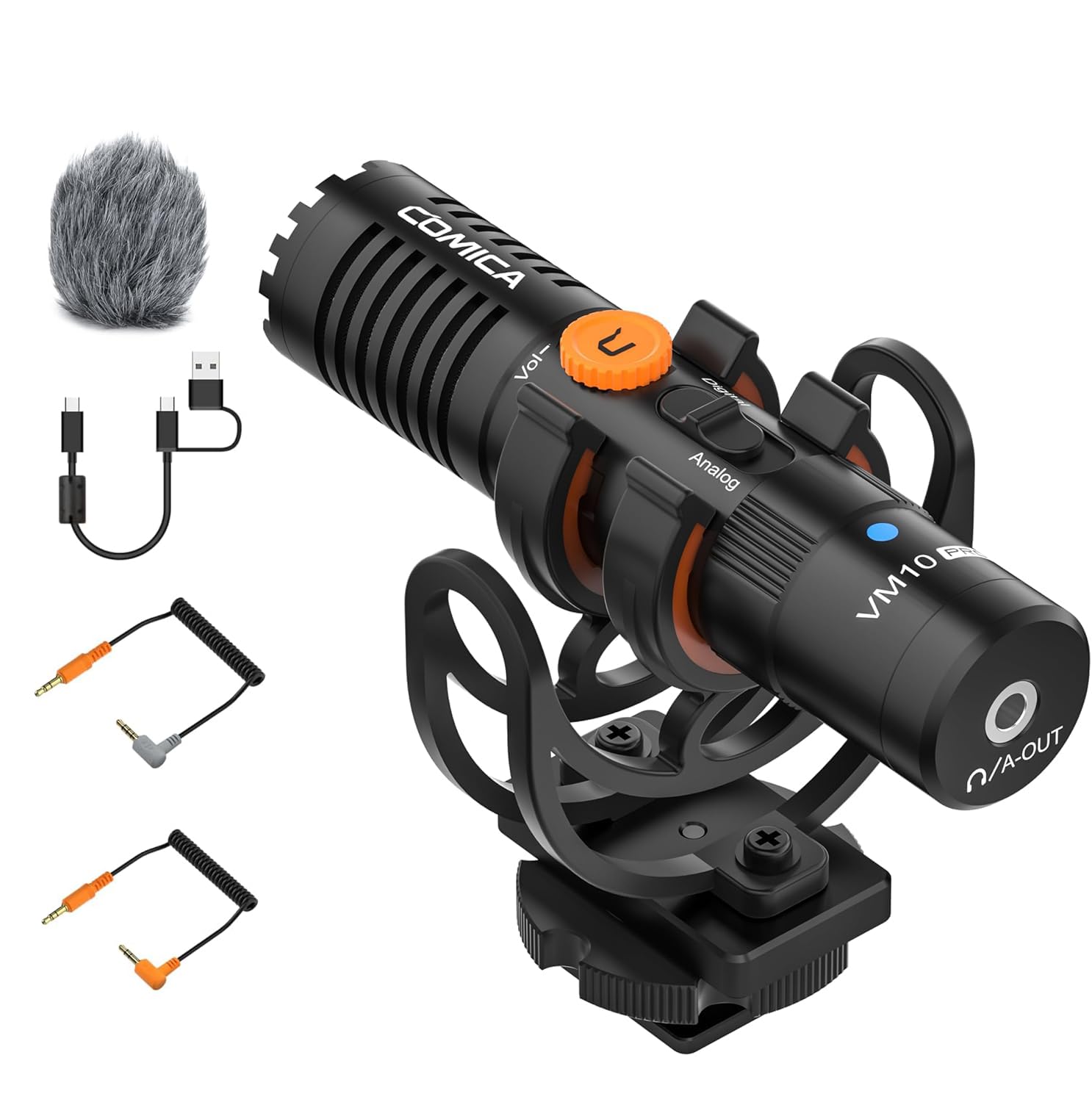
| COMICA VM10 PROBest Value | Phones & laptops | Super Cardioid | Battery-free | USB-C & 3.5mm | Amazon |
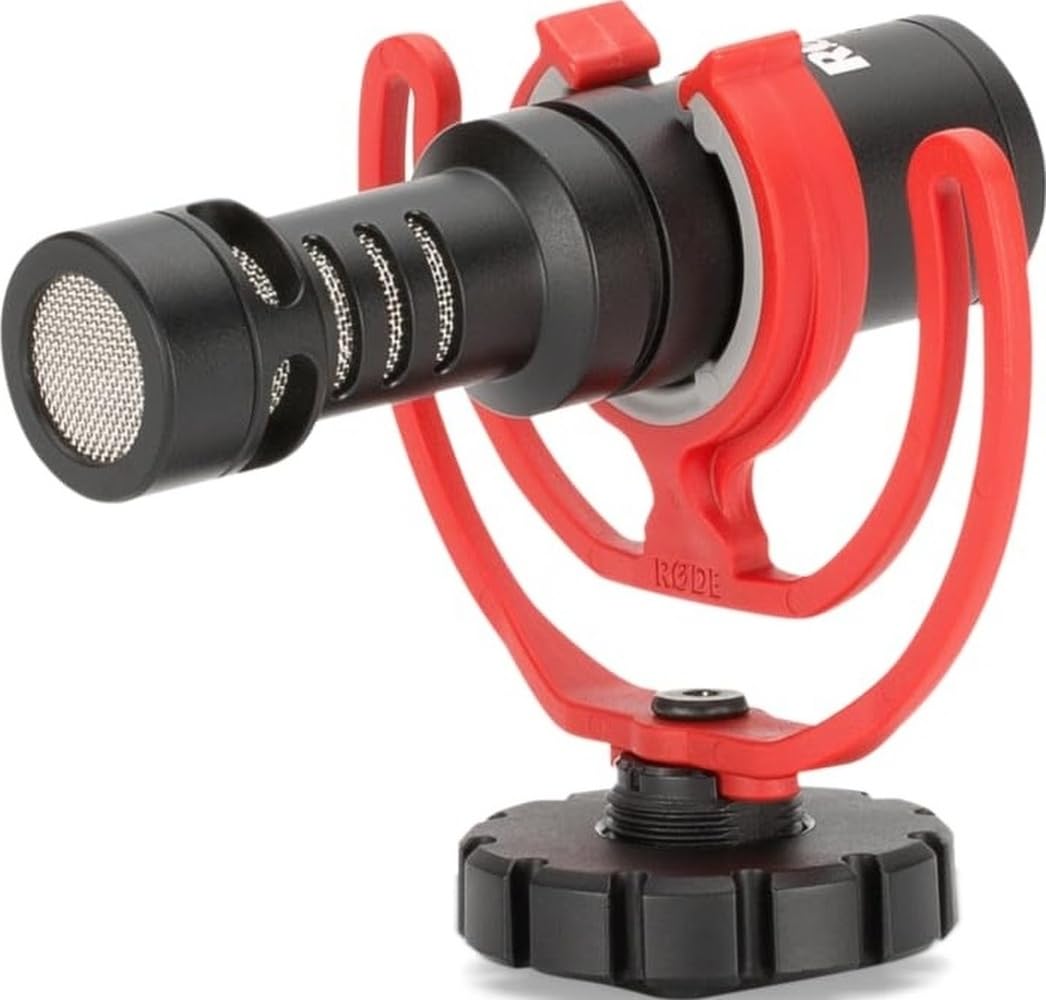
| Rode VideoMicroCompact Pick | Compact camera kits | Cardioid | Plug-in | 3.5mm | Amazon |
| Movo X1-Mini | Versatile phone & camera | Super Cardioid | Battery-free | USB-C & 3.5mm | Amazon |
| COMICA VM20 | All-day run-and-gun | Super Cardioid | Rechargeable | 3.5mm & USB | Amazon |
| Sennheiser MKE 400 | Monitoring on the fly | Super Cardioid | Battery | 3.5mm TRS/TRRS | Amazon |
| Audio-Technica AT897 | Field & studio recording | Shotgun | Battery or Phantom | XLR | Amazon |
| RØDE VideoMic Pro+ | Pro run-and-gun | Shotgun | Rechargeable | 3.5mm | Amazon |
| Sennheiser MKE 600 | Camcorder & DSLR pros | Shotgun | Phantom or Battery | XLR | Amazon |
In‑Depth Reviews
1. Audio-Technica AT875R Condenser Microphone
Our pick — over 4.5★ from 850+ verified ratings; the strongest balance of quality and price.
The broadcast-grade shotgun that turns a modest camera into a dialogue machine.
For video production and broadcast (ENG/EFP) work, this is the best-sounding choice here because its narrow pickup beam rejects the sides and rear so aggressively that your subject stays isolated. The secret is its extremely short length — under 7 inches — which keeps it from creeping into your frame on compact cameras. The 2.88-ounce weight means your camera’s gimbal or rig barely feels it.
This mic needs 48V phantom power (a voltage sent through the cable by a mixer or recorder), so it won’t work plugged straight into a bare camera. Pair it with a preamp, recorder, or audio interface that supplies that power, and you get what buyers describe as rich mids, tight lows, and a crisp top without sibilance (harsh “s” sounds). Buyers report the balance is about 2 feet from the mouth at 30° off-axis — ideal for narration or quiet interviews.
The thing that wins people over is the focused sound and minimal footprint for the money — a common refrain is that it blends well with far pricier mics. It is not a replacement for a legendary Sennheiser MKH 416, and there is no built-in low-cut filter or pad, so you will do light post-processing. In a quiet, treated room it is superb; in a chaotic environment it will still let kids or traffic bleed through.
Pro-level clarity: The AT875R earns its spot with superb off-axis rejection (it ignores sounds from the sides) and a sturdy build, backed by a 4.6-star rating from more than 800 owners.
One honest caveat: It demands phantom power and an XLR input, so it is made for recorder-and-mixer setups, not direct-to-camera shooting.
The short version: Reach for this when you are recording narration, commercial voice work, or any scene where you can control the room and want broadcast-quality audio on a budget.
Think twice if: your whole rig is a mirrorless camera with only a 3.5mm jack — you would need an external recorder to feed this XLR mic.
2. COMICA VM10 PRO Universal Video Microphone
The battery-free, dual-output shotgun that lives happily on phones, laptops, and cameras alike.
What makes this one so flexible is the digital/analog mode switch, letting you move between a USB-C connection for computers and phones, or a 3.5mm jack for cameras. It draws power directly from the host device, so there is no battery to charge or swap — plug in and it works. The build leans on a 100% aluminum body and an integrated shock mount to shave off handling rumble.
Despite its light 37-gram weight, the super cardioid pattern is the star, effectively eliminating background noise so the target sound stays clear. Owners mention it performs beautifully for karaoke video recording, wiping out bar noise while keeping clear sound from 20 feet away, with the gain at 50% as the recommended starting point. The stepless gain control operates in digital mode, and you can monitor the working status in real time, which is rare at this tier. It is a solid pick for call centers too, muffling background chatter for clear calls.
The trade-off shows up on PCs — analog output via a computer runs quieter and may need a boost, and the USB output is very quiet closer than a foot from the source. The gain knob only works on the USB path, and the digital switch needs a USB connection with headphones. Apple phone users should note the adapter cable is not included. But for mobile-first creators, the sound quality and easy analog/digital switching are exactly why it earns its praise.
Why it wins on a phone
- Battery-free plug-and-play design
- Clear voice pickup from 20 feet away
- Built-in shock mount cuts vibration noise
Where it stumbles
- PC analog output is quieter than expected
- Gain knob only functions over USB
- iPhone adapter cable not included
Reach for this if: you bounce between an Android phone, a laptop, and a camera and want one tiny mic that does not need batteries.
The honest limit: serious PC-based podcasting will leave you wanting more gain headroom than the VM10 PRO offers over a computer’s analog input.
3. Rode VideoMicro Compact On-Camera Microphone
The featherweight camera mic that blocks rear noise and never needs a battery.
At just 80mm long and 42 grams, this is the kind of mic you forget is mounted — until you hear the audio. It draws power from the camera’s plug-in power at a minimum of 3V, so there is no battery and no charging, just attach and shoot. The all-metal body feels far more premium than its plastic enclosure spec suggests, and it is small enough to vanish on a vlogging rig.
What surprises owners most is the rear sound rejection — it blocks sound from the back really well, making it a hidden gem for stage recordings where crowd noise sits behind the camera. The included Rycote Lyre shock mount absorbs bumps, and the bundled deluxe wind screen (the “dead cat”) handles outdoor breezes. It pairs famously with an action camera like the GoPro Hero 8 because the camera powers it directly.
The catch is placement: it needs your voice about 2 to 3 feet away to sound its best, and vlogging may require you to speak up. The included patch cable fits cameras, not phones, so mobile use demands an extra adapter. Outdoors, a persistent white noise can creep in that the compact capsule cannot fully suppress. For indoor interviews and YouTube content, the value is undeniable, especially since the sound quality rivals much larger Rode models.
The classic pick: Its reign as a best-seller — over 20,000 owners — is built on the simplest promise in audio: plug it in and instantly hear better sound.
The real-world note: Buyers consistently call out the shock mount and wind screen inclusions as the reason it works so well straight from the start.
Who it beats: Any camera’s built-in mic, especially for indoor dialogue where rear rejection matters.
Look elsewhere if: you are shooting outdoors in wind with a distant subject — the compact capsule needs proximity.
4. Movo X1-Mini Video Shotgun Mic

A multi-connector shotgun that jumps from a DSLR to a DJI action cam without breaking stride.
The Movo X1-Mini connects three ways out of one box: a 3.5mm TRS cable for cameras, a TRRS cable for smartphones, and a USB-C cable for computers and phones. Its aluminum body and integrated Rycote shock mount (a suspension that absorbs vibrations) keep handling noise low — perfect for on-the-go creators. It’s battery-free, so any device that can power it becomes a recording rig.
In digital mode it captures up to 24-bit resolution audio, which is the headline spec for anyone who wants broadcast-quality sound straight into a laptop or phone. The supercardioid pickup pattern is what isolates your voice, and owners note it does a good job rejecting side sounds. For PC gamers, it works with Nvidia Broadcast and delivers a warmer sound than gaming headsets, with clear pickup up to 5 feet away.
The main gripe is the hard-sided carrying case — owners call it mediocre because the fully assembled mic is a tight fit when the shock mount is attached. The mic itself is sensitive, so placement matters to keep it from peaking and distorting on loud speech. Those are small hurdles for a mic that covers cameras, phones, and computers, and the bundled foam and furry wind screens prepare you for indoor and outdoor shoots.
The flexibility payoff
- 24-bit audio via USB-C digital mode
- Three cables included for every device type
- Clear pickup up to 5 feet away
The rough edges
- Carrying case is too small when assembled
- No hardware mute button
- Sensitive capsule requires careful placement
The best fit: creators who refuse to carry separate mics for their phone, camera, and computer — this one genuinely does all three.
Who should hesitate: anyone planning to use the included case as their daily storage — it is tighter than it should be.
5. COMICA VM20 Professional Shotgun Microphone

The battery-backed shotgun that keeps recording long after every other mic has died.
The VM20 is built for endurance, with a built-in 3.7V/300mAh rechargeable lithium battery that delivers an astounding standby time of up to 60 hours. That number makes it the clear choice for all-day weddings, events, or multi-location shoots where power outlets are a fantasy. The USB-C interface lets you charge while you record, so a long interview never has to end because of a dead battery.
Sound control is deep for the price. You get two low-cut filter modes — below 75Hz and below 150Hz — to strip out rumble, plus a ten-level gain adjustment with a sensitivity range of -43dB to -23dB. The OLED screen shows remaining battery in real time, so you are never guessing. It is a super-cardioid condenser, and customers note it amplifies sound well, with audio still audible from nine feet away even though it sounds best within three feet.
The recurring issue is battery reliability over the long haul — a handful of reviewers point out the internal battery failing after several months of heavy use, though the manufacturer replaced defective units quickly. The mounting plate occasionally arrives misassembled, and the windscreen is mediocre for heavy wind. With a Rycote shock mount and cables for both 3.5mm TRS and TRRS, it covers Android phones, Canon/Nikon/Sony DSLRs, and camcorders — just not XLR gear.
The endurance winner: Shoppers say using it for all their wedding events with the battery lasting “sooo long,” and it is a common pick over pricier Deity and Rode models for its flat response.
The durability asterisk: the internal battery is the weak point, so keep that USB-C cable handy and test it early.
Reach for this if: you need a phone/camera shotgun that can run an entire event day without hunting for a charger.
The honest risk: battery failure after months of use is the one complaint that pops up, so buy with the warranty in mind.
6. Sennheiser MKE 400 Directional On-Camera Shotgun

The run-and-gun shotgun with a headphone jack for checking audio while you shoot.
What sets the MKE 400 apart is the integrated headphone output jack with volume adjustment — you can monitor your audio in real time, a feature that usually requires a separate recorder. The integrated wind protection and internal suspension mount minimize handling noise, and a built-in low-cut filter plus 3-step sensitivity switch give you control in any environment. It is a highly directional super-cardioid, so it isolates and enhances in-camera audio cleanly.
Owners describe it as a true upgrade from entry-level mics, praising the fine tuning that cheaper units lack. The interchangeable 3.5mm TRS and TRRS cables mean it works with DSLR and mirrorless cameras as well as mobile devices, and the compact metal build is discreet on-camera. For run-and-gun shooters and vloggers, the build quality and professional-grade audio are the consistent highlights.
The mixed feedback centers on the noise floor — some owners find the low-pass filter picks up unwanted noise when active, and the audio quality overall gets mixed reviews alongside the praise. At its price, it sits in a premium tier where the Sennheiser name carries weight, which explains why many say it is “worth the price” even with the noise quirks. For someone moving up from a mic, the added control and monitoring make this a genuine step forward.
The pro upgrade: The headphone monitoring jack is the headline feature, letting you hear exactly what the camera hears while you shoot.
The honest limitation: the noise floor on the low-cut filter is the one recurring complaint, so test it against your environment before relying on it.
The best fit: run-and-gun shooters and vloggers who want professional-grade sound and the ability to monitor audio live.
Who might skip it: budget-first creators who do not need headphone monitoring and would rather save the money.
7. Audio-Technica AT897 Line/Gradient Shotgun

The flexible-field XLR shotgun that records cleanly on battery or phantom power.
For video production and broadcast work, the AT897 delivers a smooth, natural-sounding on-axis tone, which owners call crisp and true. Its narrow acceptance angle is designed for long-distance pickup, and buyers report it immediately reduces anything not directly in front of it. The stainless steel body and Japan-made build give it a premium feel that owners mention is crisper than a Rode and comparable to pricier Sennheiser and Sony options.
The flexibility comes from dual power options — it operates on a battery or 48V phantom power, so it works with recorders like Zoom, Tascam, and Rodecaster without needing a dedicated power source. At 11 inches, the short length keeps it out of the shot on compact cameras. Owners using a Zoom H4n report a clean signal with a good case, and it works well with a variety of shock mounts.
The included wind screen is weak outdoors — you’ll want a “deadcat” furry cover for breezy shoots. It also needs more gain (amplification) than built-in mics, so your recorder works harder. One owner notes negative reviews often stem from misunderstanding: it’s a professional XLR mic for recorders, not a direct-to-camera plug-in. For studio dialogue and field recording, the clean, consistent audio is tough to top at this level.
The studio standard: Buyers consistently describe it as “professional quality” with very clear sound and low noise, plus solid build that handles the road.
The outdoor caveat: the stock wind screen is not up to heavy wind duty, so budget for a furry windscreen if you shoot outside.
Reach for this if: you record into a field recorder or mixer and want a reliable, natural-sounding shotgun that works whether you have phantom power or not.
Think twice if: you need a direct-to-camera mic — the AT897 is built for XLR recording gear.
8. RØDE VideoMic Pro+ Premium On-Camera Shotgun

The self-powered RODÉ that automatically switches on with your camera and records like a pro rig.
The VideoMic Pro+ is the on-camera mic others are measured against, thanks to its Automatic Power Function — it turns on and off with the camera’s plug-in power, so you never waste battery or miss a shot. It keeps the Rycote Lyre suspension system (a shock mount that isolates vibrations) and improves the capsule, line tube, and windshield over the original. Power comes primarily from the included RØDE LB-1 Lithium-Ion Rechargeable Battery, but you can also run it on 2 x AA batteries or continuously via Micro USB — three ways to keep it alive.
Owners rave about the rich “liquid gold” audio and a battery that holds a charge impressively well. The Digital Switching feature (which selects the correct input level) captures the audio signal cleanly at the source, cutting post-production time. It mounts easily and is sturdy for daily use on a Sony rig or a DSLR. For vloggers and filmmakers, the smooth power integration with the camera is the standout convenience.
The size is the first thing people notice — it is bigger than the compact VideoMicro, though the build quality justifies the footprint. The noise level is genuinely mixed: some owners say it filters out a lot of noise, while others complain it picks up too much from all directions. Phone users should keep in mind this is a DSLR-focused mic, and using it with a phone requires several adapters, which can be fiddly. And the low end can get heavy, slightly reducing clarity unless you do minor post EQ.
What pros love
- Auto power on/off with the camera
- Triple power options: LB-1, AA, or Micro USB
- top-tier Rycote Lyre shock mount
What to weigh
- Bulky size compared to compact mics
- Mixed noise-cancellation performance
- Complex setup for phone use
Who it suits: serious DSLR and mirrorless shooters who want a premium on-camera mic that powers itself and never leaves them scrambling for batteries.
Look elsewhere if: you are primarily a phone shooter — the adapter chain is more hassle than it is worth.
9. Sennheiser MKE 600 Shotgun Microphone

The XLR industry standard that anchors a camcorder kit with studio-grade field sound.
For camcorders and video DSLRs, the MKE 600 is the benchmark — a highly directional shotgun with a compact size that does not scream “big production” when mounted. It runs on phantom power or a battery, with a low battery indicator on the body so you are never caught dead on set. The switchable low-cut filter strips out rumble, and the included Auray Universal Shock Mount and Windshield turn it into a complete kit from the start.
The sound quality is the headline, with owners using it for everything from lead vocals and acoustic guitar to realtor videos and film audio. It records crisp, clear interviewee audio while rejecting footstep rumble on wooden docks and unwanted traffic noise. The unidirectional design is why it works so well indoors and outdoors, and the wind shield genuinely reduces wind noise in breezy conditions.
The catch is its sensitivity — it is so adept at picking up distant sound that it captured a car from roughly a mile away during one recording session, so a quiet location matters. It is also an XLR mic, meaning non-pro camcorders need an adapter cable (the KA 600 XLR-to-1/8″) to connect. The build is sturdy metal that feels professional, and the shock mount offers about 180° of adjustment for flexible positioning. For filmmakers who want one reliable XLR shotgun, this is the one.
The professional anchor: Owners call it incredible for on-set and off-set use, citing a sturdy Auray mount and a windshield that actually blocks wind noise.
The sensitivity warning: its excellent range is a double-edged sword — you will need a controlled, quiet space to get the cleanest takes.
Reach for this if: you want a complete XLR shotgun kit for a camcorder and value switching between battery and phantom power smoothly.
Who should think twice: anyone shooting on a consumer camcorder without an XLR input — the adapter requirement adds cost and complexity.
Understanding the Specs
Pickup Pattern
The pickup pattern tells you where the mic listens. A shotgun uses a tight beam to grab sound straight ahead while ignoring the sides and rear. A super-cardioid pattern is a slightly broader version of that focus. If you record in noisy environments, a narrower pattern is your best friend.
Power Source
Condenser mics need power. Plug-in power comes from the camera itself — the simplest option. Phantom power (48V) is sent by a mixer or recorder through the XLR cable. Internal batteries give you freedom but add something to charge. Know which your gear supports before you buy.
FAQ
What does a shotgun microphone actually do for a camcorder?
Will a 3.5mm mic work with my phone?
What is the difference between XLR and 3.5mm microphones?
How long does a camcorder microphone battery last?
What is phantom power and do I need it?
Why does my microphone pick up so much wind noise?
Is a shock mount necessary for a camera microphone?
Can I use a camcorder microphone for podcasting?
Final Thoughts: The Verdict
For most creators, the camcorder microphone winner is the Audio-Technica AT875R because it delivers broadcast-grade audio at a value that owners consistently say punches above its price. If you want a battery-free mic for your phone and camera, grab the COMICA VM10 PRO. And for a complete XLR kit with a shock mount and windshield, the Sennheiser MKE 600 is the one to reach for.
How We Picked
We do not accept paid placement. Every pick is matched to a real buyer and a real use-case; we do not hands-on test units.
Sources & Methodology
Specifications: manufacturer listings and product documentation. Review insights: verified customer reviews, as of August 2026. Pricing: not shown on this page (it changes often); check the current price via the retailer link.
As an Amazon Associate, Gadgets Feed earns from qualifying purchases. This does not affect which products we feature.