
Finding a camcorder that delivers crisp 4K video, reliable stabilization, and decent audio without exceeding your budget can feel like a compromise too far. The market is flooded with cheap options that promise the world but deliver soft footage and unusable sound, leaving you frustrated with your purchase. A smart buyer knows that the real battleground under is not just about resolution, but about the sensor size, stabilization system, and battery endurance that define a shootable camera.
I’m Min — the co-founder and writer behind Gadgets Feed. I’ve spent countless hours dissecting the technical specifications, combing through user experiences, and comparing sensor performance, stabilization hardware, and battery benchmarks to separate the genuine contenders from the over-hyped boxes of disappointing specs.
Whether you are a vlogger, a parent recording family events, or a content creator, finding the right camcorder under 500 demands understanding which features actually matter for real-world use and which marketing buzzwords to ignore.
How To Choose The Best Camcorder Under 500
The sub- camcorder market is a minefield of inflated specs and missing features. To choose wisely, you need to focus on the physical components that determine image quality and usability, not the theoretical maximums on the box. Prioritizing the right elements makes the difference between a camera you reach for constantly and one that collects dust.
Sensor Size: The Foundation of Image Quality
The sensor is the heart of the camera. A larger 1-inch CMOS sensor captures significantly more light than smaller 1/2.3-inch or 1/2.5-inch sensors commonly found in budget camcorders. This directly translates to better performance in low-light situations, less digital noise, and a more cinematic look with shallower depth of field. Many budget-minded buyers overlook this spec only to end up with grainy, disappointing indoor footage.
Stabilization: Optical vs. Gimbal vs. Digital
Shaky footage is the hallmark of an amateur recording. True optical stabilization uses floating lens elements to counter movement, but it is rare at this price. The gold standard for vlogging and walk-around shooting is a built-in 3-axis gimbal, which physically steadies the camera for buttery-smooth results. Basic digital stabilization crops into the frame and often leaves footage looking soft or jittery. You want either an optical system or a gimbal; digital-only stabilization should be a last resort.
Battery Life: The Real-World Test
A camcorder that dies mid-shoot is useless. Battery life claims are usually measured at 1080p with stabilization off and the screen dimmed. Always halve the advertised figure to estimate real-world 4K usage. Look for models that support recording while charging via USB-C — this feature transforms a short-lived battery into a camera that can shoot for hours when connected to a power bank.
Quick Comparison
On smaller screens, swipe sideways to see the full table.
| Model | Category | Best For | Key Spec | Amazon |
|---|---|---|---|---|
| DJI Osmo Pocket 3 | Premium | Pro-grade vlogging & travel | 1-inch CMOS; 3-axis gimbal | Amazon |
| Canon PowerShot V10 | Mid-Range | Beginner vlogging & grab-and-go | 1-inch CMOS; built-in stand | Amazon |
| Xtra Muse | Mid-Range | Budget gimbal stabilization | 1-inch CMOS; 3-axis gimbal | Amazon |
| Canon VIXIA HF R800 (Renewed) | Premium (Renewed) | Traditional camcorder feel & zoom | 57x Advanced Zoom; OIS | Amazon |
| Camcorder 6K 64MP | Budget | Value with many accessories | 6K upscaled; 4500mAh battery | Amazon |
| 6K Camcorder Video Camera | Budget | Kit with stabilizer & mic | 6K upscaled; 4.0-inch touchscreen | Amazon |
| Sony FDR-AX43 | Premium (Over Budget) | All-in-one traditional 4K camcorder | Balanced OIS; 20x optical zoom | Amazon |
In‑Depth Reviews
1. DJI Osmo Pocket 3
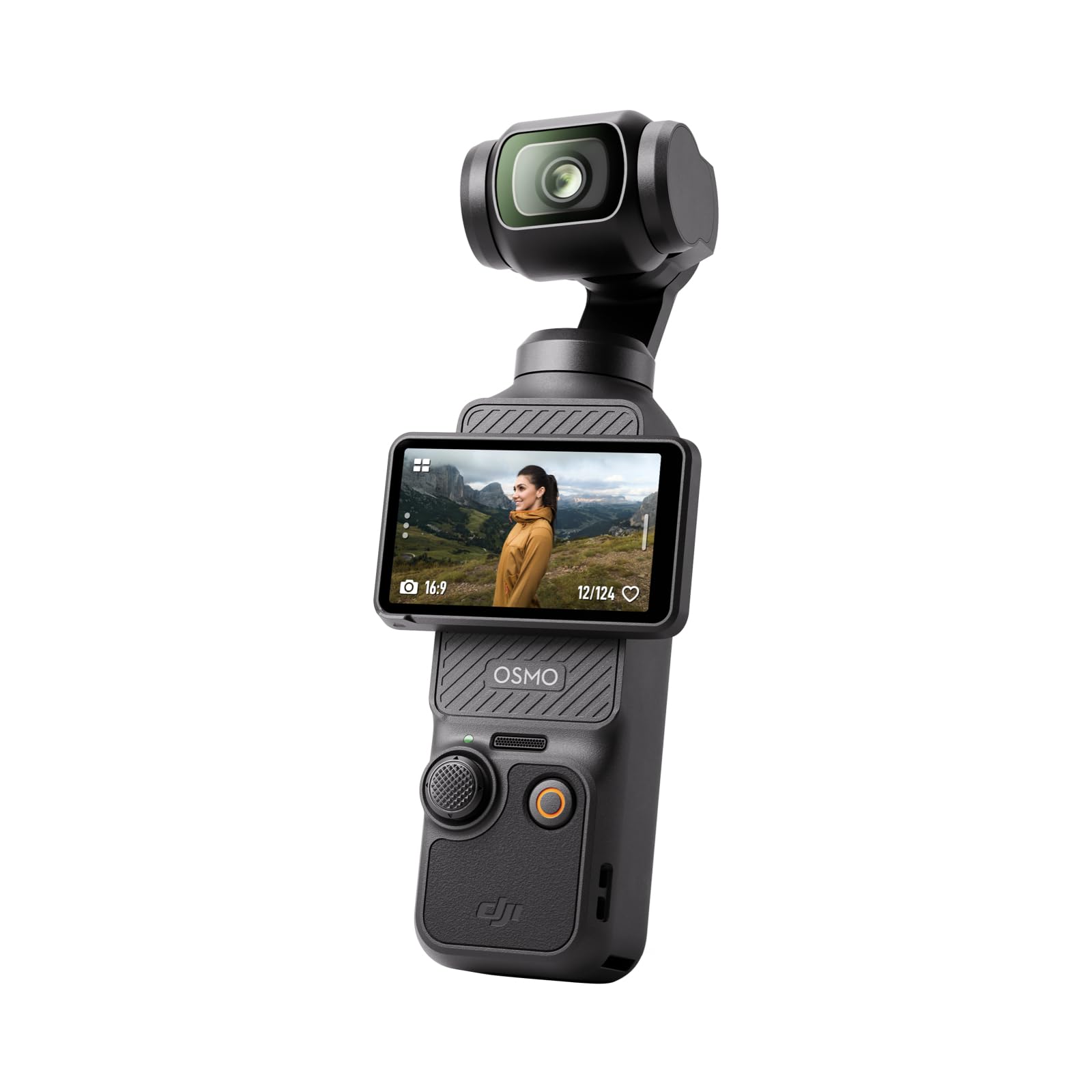
The DJI Osmo Pocket 3 dominates the sub- camcorder space by offering a genuine 1-inch CMOS sensor paired with a built-in 3-axis mechanical gimbal — a combination that usually costs far more. It records true 4K at 120fps, providing smooth slow-motion capability that many budget camcorders cannot touch. The 2-inch rotatable touchscreen makes switching between horizontal and vertical framing effortless, a feature essential for modern social media content creation.
ActiveTrack 6.0 tracking locks onto subjects reliably, making this a top choice for solo vloggers or action shooters who need to stay in frame while moving. The pocketable form factor means you can carry it everywhere, and the 166-minute advertised battery life translates to roughly 80-90 minutes of practical 4K shooting. It also supports direct connection to DJI Mic 2 transmitters, solving the audio quality problem that plagues most compact cameras.
The trade-off is the lack of optical zoom — you are stuck with the fixed wide-angle lens. Low-light performance is very good for a pocket camera, but it does not rival larger camcorders with bigger sensors and faster lenses. The touchscreen interface is responsive but can be fiddly in cold weather or when wearing gloves.
Why it’s great
- True 1-inch sensor delivers excellent image quality
- Built-in 3-axis gimbal for professional-level stabilization
- ActiveTrack 6.0 keeps subjects locked in frame reliably
- Rotating screen for easy vertical/horizontal shooting
Good to know
- Fixed wide-angle lens offers no optical zoom
- Relatively small battery requires charging mid-day for heavy use
- Touchscreen-only controls may require practice
2. Canon PowerShot V10

The Canon PowerShot V10 is a compact vlogging camera built around a 15.2-megapixel 1-inch back-illuminated CMOS sensor, which excels in low-light environments where smaller sensors fail. Its unique integrated stand folds forward or backward, allowing hands-free operation on a table without needing a separate tripod. The fixed 19mm wide-angle lens (35mm equivalent) is ideal for selfie-style vlogging, capturing spacious backgrounds without distortion.
It records 4K video at up to 30fps and Full HD at 60fps, with three image stabilization modes including an enhanced mode that smooths out walking footage reasonably well. The built-in stereo microphones include a third mic for noise reduction, and there is an external mic port for upgrading audio quality. The retractable front-facing screen is a clever design that protects the display when not in use while making self-framing intuitive.
The lack of any zoom — digital or optical — is a severe limitation for any subject further than a few feet away. Battery life is modest, and some users report it struggles to balance exposure in bright sunlight, blowing out highlights. The fixed lens means you cannot adapt it for different perspectives without cropping in post-production.
Why it’s great
- 1-inch sensor provides excellent low-light performance
- Innovative built-in stand enables hands-free vlogging
- External mic port for upgradeable audio quality
- Compact, pocketable design with protective flip screen
Good to know
- No zoom capability whatsoever, fixed lens only
- Battery life is below average for longer shoots
- Struggles with exposure balance in bright, contrasty scenes
3. Xtra Muse

The Xtra Muse enters the market as a direct competitor to the DJI Osmo Pocket 3, featuring the same core combination of a 1-inch CMOS sensor and a built-in 3-axis gimbal stabilizer. It records 4K video at up to 120fps, enabling smooth slow-motion playback that is almost indistinguishable from the DJI. The 2-inch touchscreen is responsive, and the camera supports both horizontal and vertical shooting modes natively.
Face and object tracking is reliable, though not quite as sticky as DJI’s ActiveTrack 6.0 in fast-moving scenarios. The 10-bit X-Log color mode is a standout feature, capturing up to one billion colors for serious post-production color grading — a rarity at this price point. The bundle includes a 1/4-inch tripod mount handle, carrying bag, and wrist strap, adding value for new creators.
The ecosystem is less mature than DJI’s, with fewer accessories and no official wireless mic support out of the box, though recent firmware updates allow DJI Mic 2 compatibility. Battery life is rated at 161 minutes, translating to roughly 70-80 minutes of real-world 4K recording. The build quality feels slightly less premium than the Osmo Pocket 3, with a lighter plastic construction.
Why it’s great
- 1-inch sensor and 3-axis gimbal for smooth, high-quality footage
- True 10-bit X-Log color for professional color grading
- 4K at 120fps for impressive slow-motion video
- Budget-friendly price undercuts main competitor
Good to know
- Subject tracking is less reliable than DJI in fast action
- Build quality feels less premium with plastic materials
- Limited accessory ecosystem compared to established brands
4. Canon VIXIA HF R800 (Renewed)
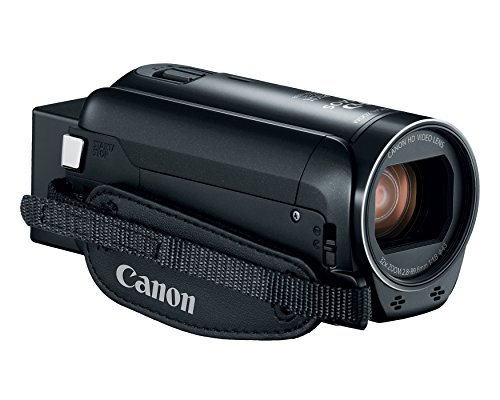
The Canon VIXIA HF R800 represents the traditional camcorder form factor with a 57x Advanced Zoom lens (32x optical) and Super Range Optical Image Stabilization. This is the only model in this roundup that offers genuine optical zoom reach, making it ideal for recording sports, concerts, or wildlife from a distance. The 3.28-megapixel Full HD CMOS sensor and DIGIC DV 4 processor deliver reliable 1080p footage with pleasing colors and Canon’s characteristic skin tone rendering.
As a renewed product, it offers a significant discount over new models, placing it within the sub- budget. It is lightweight, easy to operate, and produces videos with a nostalgic quality that some users prefer over the hyper-sharp digital look of modern sensors. The optical image stabilization works well at wide angles but struggles to keep up at maximum zoom without a tripod.
The major drawback is the resolution — it only records in Full HD 1080p, not 4K, which may be a dealbreaker for those wanting future-proofed footage. The 3.28MP effective still resolution is extremely low for photos. The lack of a mic input and relatively low-resolution LCD screen also show its age. It uses a proprietary battery that does not support USB charging.
Why it’s great
- Powerful 32x optical zoom reaches distant subjects
- Optical image stabilization smooths handheld footage
- Lightweight, traditional camcorder ergonomics
- Canon color science produces pleasing video tones
Good to know
- Limited to 1080p Full HD, no 4K recording
- Very low 3.28MP still photo resolution
- No external microphone input port
- Uses proprietary battery without USB-C charging
5. Camcorder 6K Video Camera 64MP

This OPRKQEE camcorder pitches itself as a 6K device, but in practice it records at 4K/60fps and upscales to a 6K resolution — a common tactic in this budget tier. The 4.0-inch touchscreen is large and responsive, making menu navigation and playback feel modern. It comes bundled with a 64GB SD card, a 4500mAh battery, a wired microphone, a remote control, and a handheld stabilizer handle, providing a complete starter kit for a beginner content creator.
The IR night vision function works well in complete darkness, capturing usable black-and-white footage for surveillance or nighttime events. The 18X digital zoom is essentially worthless at its maximum range, introducing heavy pixelation, but mild use is acceptable. The battery life is a standout feature, with the 4500mAh cell supporting up to 4.5 hours of 6K recording — though real-world 4K usage is closer to 2.5-3 hours.
Image quality is acceptable in bright daylight but falls apart quickly in low light, with noticeable noise and grain. The fixed focus lens means everything is in focus from about 3 feet to infinity, which works for general vlogging but prevents creative shallow depth-of-field shots. The built-in microphone picks up handling noise easily, making the included external mic a necessity.
Why it’s great
- Excellent value with extensive accessory kit included
- Large 4500mAh battery provides long shooting sessions
- Large 4.0-inch touchscreen for easy monitoring
- Functional IR night vision for low-light recording
Good to know
- 6K is upscaled, not true native resolution
- Digital zoom becomes very soft at maximum range
- Poor low-light performance with noticeable noise
- Fixed focus lens limits creative control
6. 6K Camcorder Video Camera 64MP

This ABJURNJ camcorder is a near-twin of the previous budget pick, sharing the same 6K upscaled sensor, 18X digital zoom, and generous accessory bundle including a 64GB SD card, external microphone, and handheld stabilizer. The key difference is a 270-degree rotatable screen that offers more flexible framing options, especially useful for overhead shots or low-angle recording. The 4.0-inch touchscreen is crisp and responsive.
The 4500mAh battery provides similar endurance, supporting up to 4.2 hours of 6K video on a full charge, with the ability to record while charging externally. The 2.4G wireless remote works from up to 65 feet away, making this kit suitable for group shots or solo recording where you need to trigger recording from a distance. The included external microphone noticeably improves audio clarity compared to the internal mic.
Like its counterpart, the image quality is adequate in good light but suffers in dim conditions, with the sensor producing noise above ISO 800. The digital zoom is only usable up to roughly 8-10X before artifacts dominate the image. The plastic build quality feels inexpensive, and the touchscreen can be unresponsive to rapid taps. The lack of any optical zoom or image stabilization beyond basic digital crop means you must use the included stabilizer handle for smooth footage.
Why it’s great
- Rotatable 270-degree screen for flexible shooting angles
- Complete kit with stabilizer, mic, and remote control
- Long battery life from 4500mAh cell
- Wireless remote works from 65 feet for group shots
Good to know
- 6K resolution is upscaled, not native
- Digital zoom degrades quickly past mild magnification
- Poor low-light performance with noisy sensor
- Plastic build and less responsive touchscreen
7. Sony FDR-AX43 4K Handycam

The Sony FDR-AX43 is the traditional all-in-one 4K camcorder that many buyers picture when they think of a camcorder. It features a 1/2.5-inch Exmor R CMOS sensor, 20x optical zoom, and Sony’s Balanced Optical SteadyShot image stabilization — a true built-in gimbal system that stabilizes the entire optical block. This combination delivers smooth footage at full zoom reach, something impossible for the pocket gimbal cameras in this list.
It records true 4K video at 30fps, with Clear Image Zoom extending to 30x in 4K and 40x in HD while maintaining excellent detail. Fast Intelligent AF tracks subjects reliably, and the ZEISS Vario-Sonnar T lens produces sharp, color-accurate images. The built-in Wi-Fi and NFC allow easy connection to a smartphone for remote control and file transfer, while the mic input and HDMI output provide connectivity for more advanced setups.
The main issue is price — it usually sits well above the mark, making it a stretch for this budget category. The 1/2.5-inch sensor is smaller than the 1-inch sensors found in the DJI and Canon options, resulting in visibly more noise in low-light conditions. The body is bulkier than the pocket cameras, and the large battery protrudes from the back, which can be awkward with certain accessories.
Why it’s great
- True 20x optical zoom reaches distant subjects clearly
- Balanced Optical SteadyShot stabilizes full zoom range
- Sony’s excellent autofocus system tracks reliably
- Traditional camcorder body with mic input and HDMI
Good to know
- Typically exceeds budget by a margin
- Smaller 1/2.5-inch sensor struggles in low light
- Bulkier form factor less portable than pocket cameras
- Proprietary battery protrudes awkwardly from back
FAQ
Is 6K video real at this price point?
How important is a microphone input for vlogging?
Can I use a camcorder under for live streaming?
Final Thoughts: The Verdict
For most users, the camcorder under 500 winner is the DJI Osmo Pocket 3 because its 1-inch sensor and built-in 3-axis gimbal produce footage quality and stability that rivals cameras costing double. If you want optical zoom for distant subjects, grab the Canon VIXIA HF R800. And for the best value gimbal camera, nothing beats the Xtra Muse.