
Our readers keep the lights on and my morning glass full of iced black tea. As an Amazon Associate, I earn from qualifying purchases.
Specs are compiled from manufacturer listings and verified buyer reviews and can change over time — please confirm the key details on the product page before buying.
You spot a hawk on a distant branch or a whale breaching off the bow. You lift your binoculars — the view is incredible. But by the time you fumble for your phone to grab a picture, the moment is gone. That is the exact pain camera binoculars solve: one device does both, so you never have to choose between seeing clearly and capturing the shot.
I’m Min — the founder and writer behind Gadgets Feed. This guide is built by comparing the manufacturers’ published specifications and the patterns across verified customer reviews, so you get each pick’s real strengths and trade-offs instead of marketing spin.
The challenge is that not every pair delivers on both promises equally; some prioritize crisp binocular optics while stuffing the camera in as an afterthought, and others lean hard on high megapixel claims that don’t hold up in everyday use. This roundup cuts through the noise to find the best camera binoculars that get both jobs right for the money.
Our Picks at a Glance
How To Choose The Best Camera Binoculars
A camera binocular is a compromise between two tools. The best ones balance magnification, light-gathering, and image quality so neither the view nor the photo is a letdown. Here is what to look for so you don’t end up with a great pair of binoculars that takes terrible pictures — or vice versa.
Magnification vs. Stability
Most models in this class use 12x magnification, which brings distant subjects very close. The trade-off: the higher the magnification, the more every little hand shake gets magnified too. A wider exit pupil (the circle of light you see through the eyepiece) helps keep the image bright and steady, especially in low light — look for a figure above 2.5 mm if you plan to use them at dawn or dusk.
Camera Resolution: What the Numbers Really Mean
Claims of 48MP photos are common at this price, but the truth is often more modest: the sensor itself may be a lower resolution, with the camera upscaling the file size through software. That 48MP image might only store at a few megabytes, which is a red flag. If the photo quality matters more than the binocular view, check real user samples rather than trusting the headline megapixel number.
Battery and Storage
You do not want the battery dying halfway through a hike. A built-in rechargeable battery in the 1000mAh to 1800mAh range should give you a few hours of continuous video recording. Most models come with a microSD card (often 8GB, 32GB, or 32GB), but check whether it is included — running out of space mid-trip is a real frustration. A pair that charges via USB-C is a lot more convenient than one needing a proprietary cable.
Quick Comparison
| Model | Best For | Magnification | Camera Resolution | Battery | Amazon |
|---|---|---|---|---|---|
| LeapFrog Magic Adventures★ Best Overall | Kids & Learning | 10x optical | Photo/video screen capture | 4 AA batteries | Amazon |
| ZZSTAR 12×32Brightest View | Best Optical Brightness | 12x | 5MP / 1080p video | 1800mAh | Amazon |
| Ansee 12×32Best Value | Capture & Review | 12x | 48MP / 2.5K video | 1000mAh (est.) | Amazon |
| Vazussk 12×32 | Rugged Outdoor Use | 12x optical + 8x digital | 48MP / 2.5K video | — | Amazon |
| Camonity 12×32 (Silver) | Compact Travel | 12x optical + 8x digital | 48MP / 2.5K video | 1000mAh | Amazon |
| Camonity 12×32 (Black/Silver) | Budget-Friendly Starter | 12x optical + 8x digital | 48MP / 2.5K video | 1000mAh | Amazon |
| Anweller 12×32 | Family Use | 12x | 48MP / 2.5K video | 1000mAh | Amazon |
| Minolta 12×32 Digital | 4K Video Ambition | 12x | 48MP / 4K UHD video | Rechargeable | Amazon |
In‑Depth Reviews
1. LeapFrog Magic Adventures Binoculars with Screen Capture
Our pick — over 4.5★ from 650+ verified ratings; the strongest balance of quality and price.
The camera binocular built for tiny hands and big curiosity.
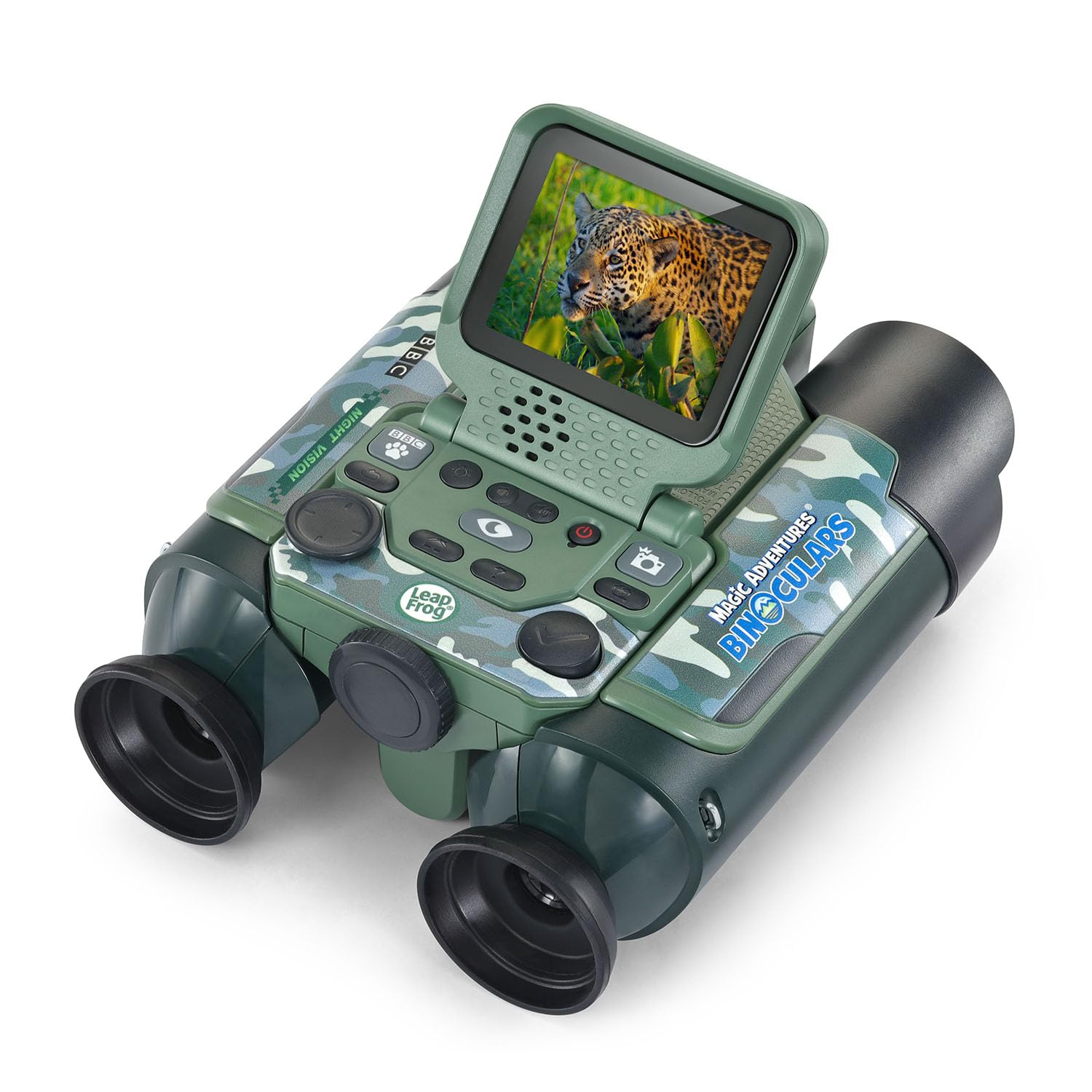
This is the only pick on the list designed specifically for children, and it shows in every detail. The 2.4-inch video screen makes it easy for a 4-year-old to see what they are looking at without squinting, and the audio menu narration means they do not need to read to navigate. The 10x optical magnification and night vision mode let kids explore both daytime backyards and evening critter-spotting sessions without missing a beat.
What really separates it is the educational layer: the binoculars are packed with 340+ BBC-curated pictures and videos about animals, plants, and habitats, plus an interactive adventure game and a Field Guide Quiz. Owners consistently say playability and age-appropriateness are the standout qualities — kids come back to it day after day, and it has survived drops that would shatter adult gear. The catch? During photo and video playback, the unit occasionally freezes and requires a power button reset, a glitch buyers report as the main frustration.
It does need 4 AA batteries (included for demo purposes, but you will want fresh ones for regular use), so budget for that. If the goal is a screen-based learning toy that also functions as real binoculars with camera capture, this is the obvious winner — just know it is a toy first and a serious optics tool second.
Why Kids (and Parents) Love It
- Audio narration and simple controls make it truly kid-independent
- Night vision mode works even in very low light, extending play time
- Rugged enough to survive repeated drops, per owner feedback
One Glitch to Know
- Photo/video playback can freeze, requiring a power button reset
- Requires 4 AA batteries (not rechargeable)
Grab it for: any child aged 4–7 who loves nature, games, and learning — they will use it for hours daily.
Look elsewhere if: you need a serious optics tool for an adult hobbyist; this is a kid’s learning device, not a precision instrument.
2. ZZSTAR 12×32 Binoculars with Camera
The sharpest optical image in this class, held back by a dud included accessory.
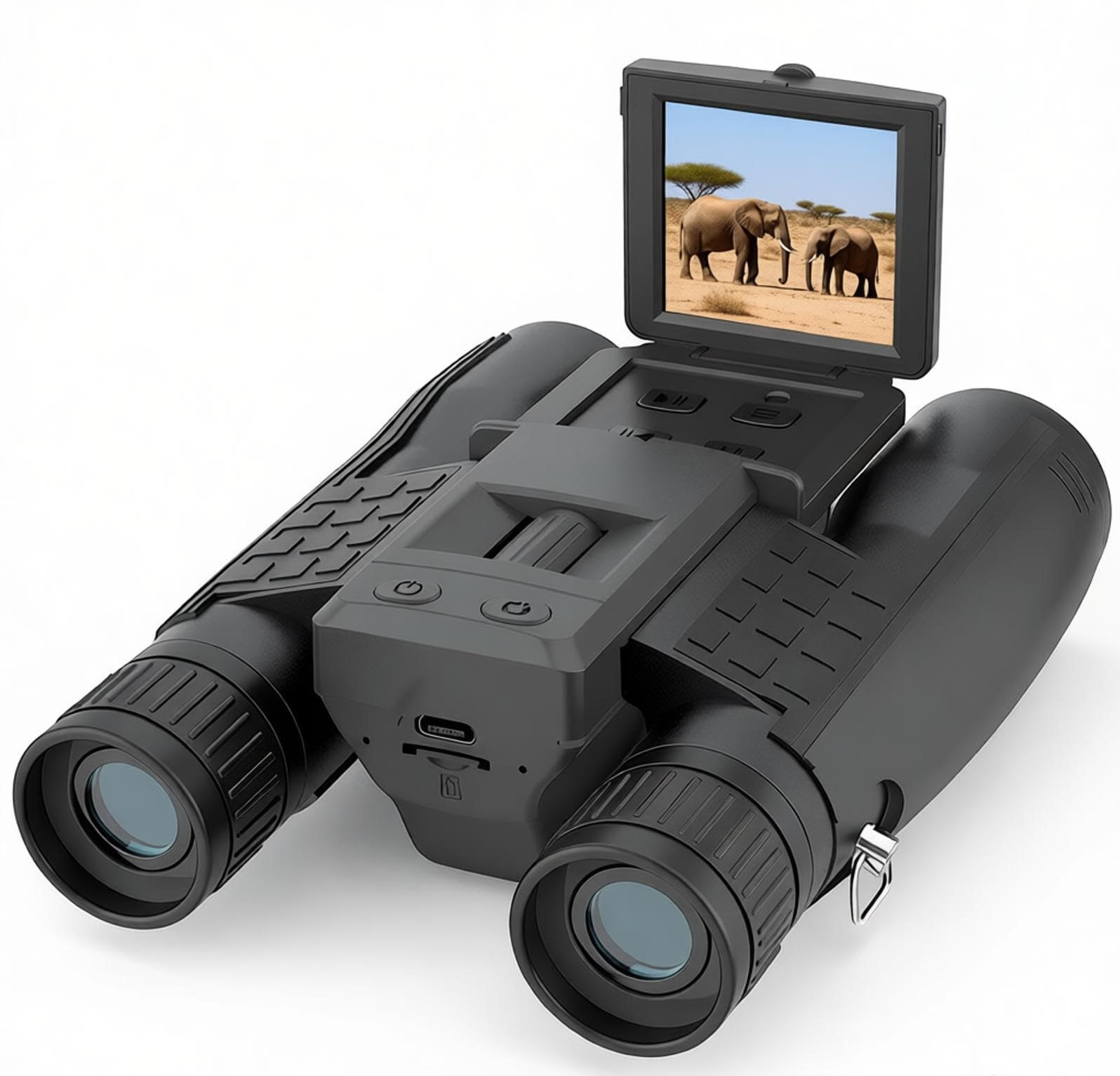
With a 3.8mm exit pupil diameter, the ZZSTAR gathers noticeably more light than nearly every other 12×32 camera binocular here — the Ansee 12×32, for example, has a 2.67mm exit pupil, a 42% gap that makes the ZZSTAR the clear choice for low-light dawn or dusk viewing. The FMC multi-coated lenses and BAK-4 prisms deliver the highest light transmission in the roundup at 99.68%, so the image stays bright and sharp even when the sun is low.
The 2.0-inch LCD screen and 5MP photo / 1080p video capture are modest by current spec-sheet standards, but owners say the video and zoom are genuinely impressive in real use — one took it on an Alaskan cruise and got “phenomenal photos and videos of whales and sea otters”. The built-in 1800mAh battery is the largest of any pick, letting you observe for hours without hunting for a charger. The recurring problem: the included microSD chip is unreliable and often doesn’t work. Owners mention replacing it with a fresh card fixes everything, but it is an immediate friction right from the start.
Once you swap the card, you get a 12x binocular that is comfortable for eyeglass wearers, well-made, and delivers the brightest optical view in its price bracket. It is a small fix for a big reward.
The Light-Gathering Advantage
- 3.8mm exit pupil is the largest in this roundup, brightening low-light scenes
- 1800mAh battery outlasts every other model here
- Owners praise the video and photo quality once the card is replaced
The Out-of-Box Hiccup
- Included microSD chip is often defective and needs replacing
- Manual is poorly written with typos, making setup frustrating
Best for: anyone who wants the brightest binocular view for dawn/dusk birding and is comfortable swapping a memory card.
Think twice if: you want a low-maintenance unboxing experience or need high-resolution photos (1080p video and 5MP photos are adequate, not stunning).
3. Ansee 12×32 Digital Binoculars with Camera
A solid 48MP camera binocular that needs a tripod to reach its potential.
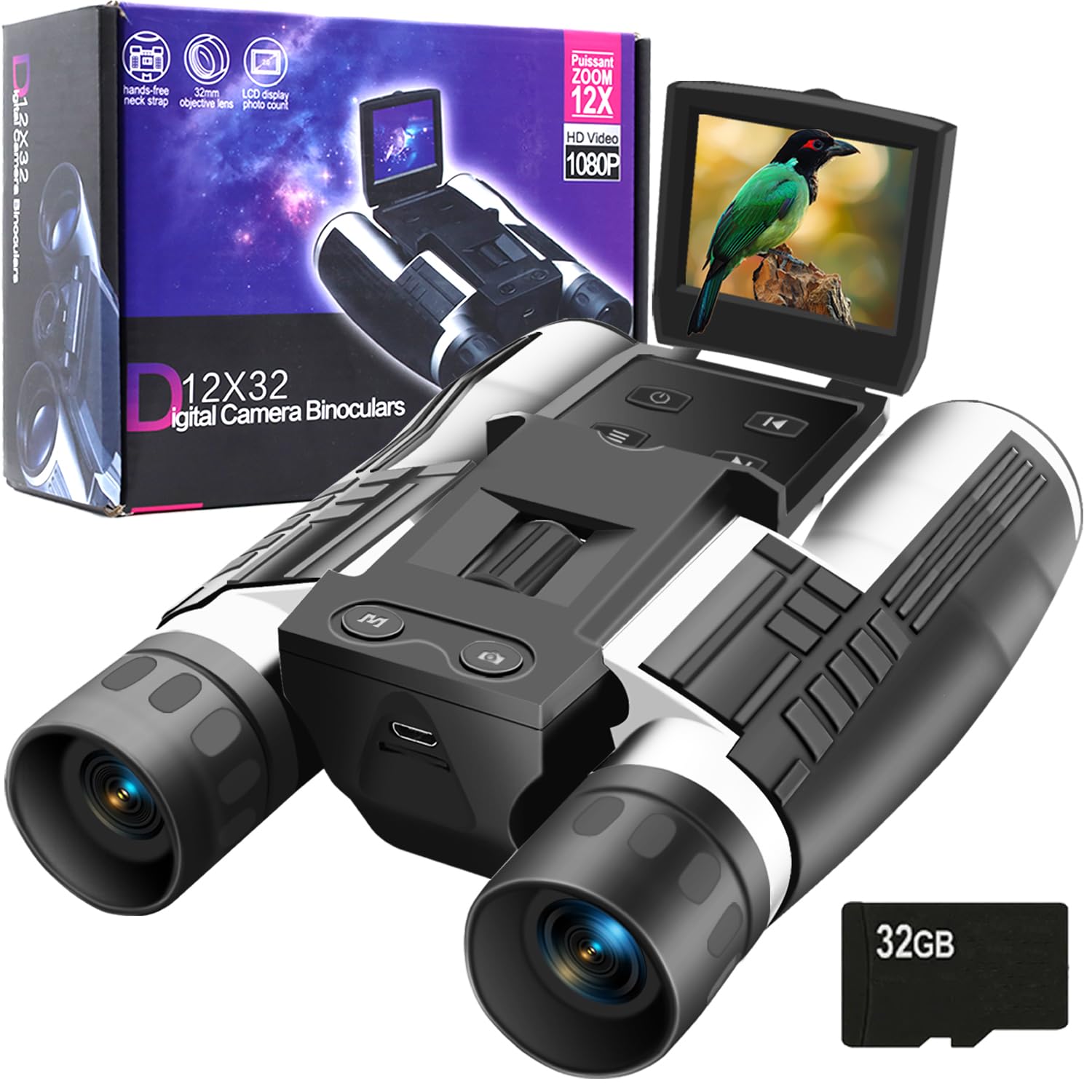
The Ansee 12×32 is among the most popular models in this category, and the numbers explain why: 48MP stills, 2.5K video recording, a 2.4-inch display for instant playback, and a 32GB card included. It also has a 6.2-degree field of view — slightly wider than the ZZSTAR’s 6.06 degrees, which gives you a marginally broader view of the scene. The BAK4 prism system is advertised to minimize distortion and boost light transmission, and many owners find the optics surprisingly good for the money.
But the image quality is a recurring mixed point, and it is the most-discussed aspect by a wide margin. Some customers note clear, sharp photos, while others describe graininess and soft focus — especially at longer distances beyond 50 feet. The camera is sensitive enough that getting a steady shot without a tripod is genuinely difficult; owners emphasize that for actual photography, a tripod is essential, not optional. The small on-screen preview is low quality, though the image looks better when viewed on a computer.
At well under a pound with a padded strap, it is light enough to carry all day. The value is undeniable — you get a functional photo/video binocular at a price that undercuts many competitors — but manage expectations around the camera quality and plan to use a tripod.
What the Price Gets You
- 48MP stills and 2.5K video with a 32GB card included
- Lightweight design under 1 lb with a padded neck strap
- Wider 6.2-degree field of view than most competitors
The Reality Check
- Image quality is mixed — grainy at 300 ft, adequate for ID at 50 ft
- Needs a tripod for sharp photos; hand-held shots are often blurry
Reach for this if: you want a lightweight, affordable camera binocular for casual bird watching and are willing to carry a small tripod.
Pass if: you expect crisp telephoto-quality photos or need to shoot hand-held without shake.
4. Vazussk 2.4″ LCD Digital Binoculars with Camera
Armor-clad optics built for the bump and grind of real outdoor adventures.
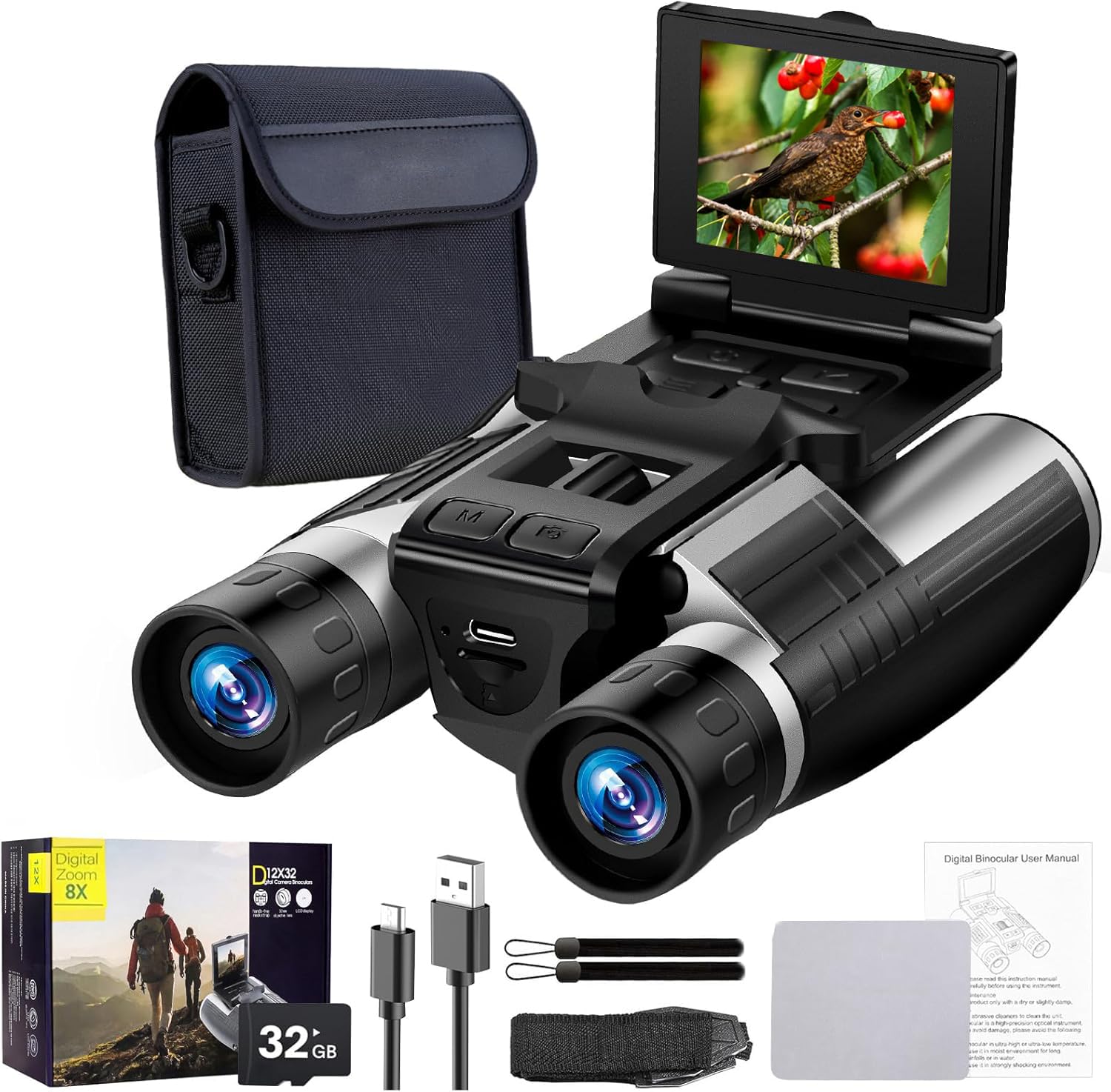
Most camera binoculars at this price use all-plastic bodies that feel delicate on a rocky trail. The Vazussk stands apart with its rugged rubber armor coating over an ABS and aluminum chassis, giving you a secure non-slip grip and genuine shock resistance. It packs the same 48MP photo and 2.5K video specs as the Ansee, but adds an 8x digital zoom on top of the 12x optical magnification for pulling in ultra-distant details.
The 2.4-inch LCD screen is tripod-ready, and the metal tripod mount is a solid addition for long stakeouts. Owners heading on an Alaskan cruise found the size and weight comfortable, with one noting the image is “crisp” and another appreciating that “the binos and camera are one piece” rather than a bulky two-device rig. On the downside, the audio recording at loud concerts is reportedly poor — the sound gets distorted in big venues — and at least one owner flagged that the 48MP images store at only 2.5MB, which suggests the sensor resolution is not truly 48MP.
If your priority is a durable build that can handle being jostled in a backpack or used in light rain, this is the toughest option here. Just keep expectations realistic for the camera’s audio and true megapixel output.
Built for the Trail
- Rubber armor coating and ABS/aluminum body shrug off bumps and drops
- 8x digital zoom adds reach beyond the standard 12x optical
- Compact enough to pack for a cruise or a hike without added bulk
Two Trade-Offs
- Audio quality is poor when recording loud concerts or events
- 48MP claim stores at 2.5MB per JPG, hinting at upscaled resolution
Choose this for: outdoor trips where durability matters more than perfect sound — hiking, camping, hunting, and cruise ship decks.
skip it if: you need clean concert audio recordings or expect true 48MP image quality.
5. Camonity 12×32 2-in-1 Camera Binoculars (Silver)
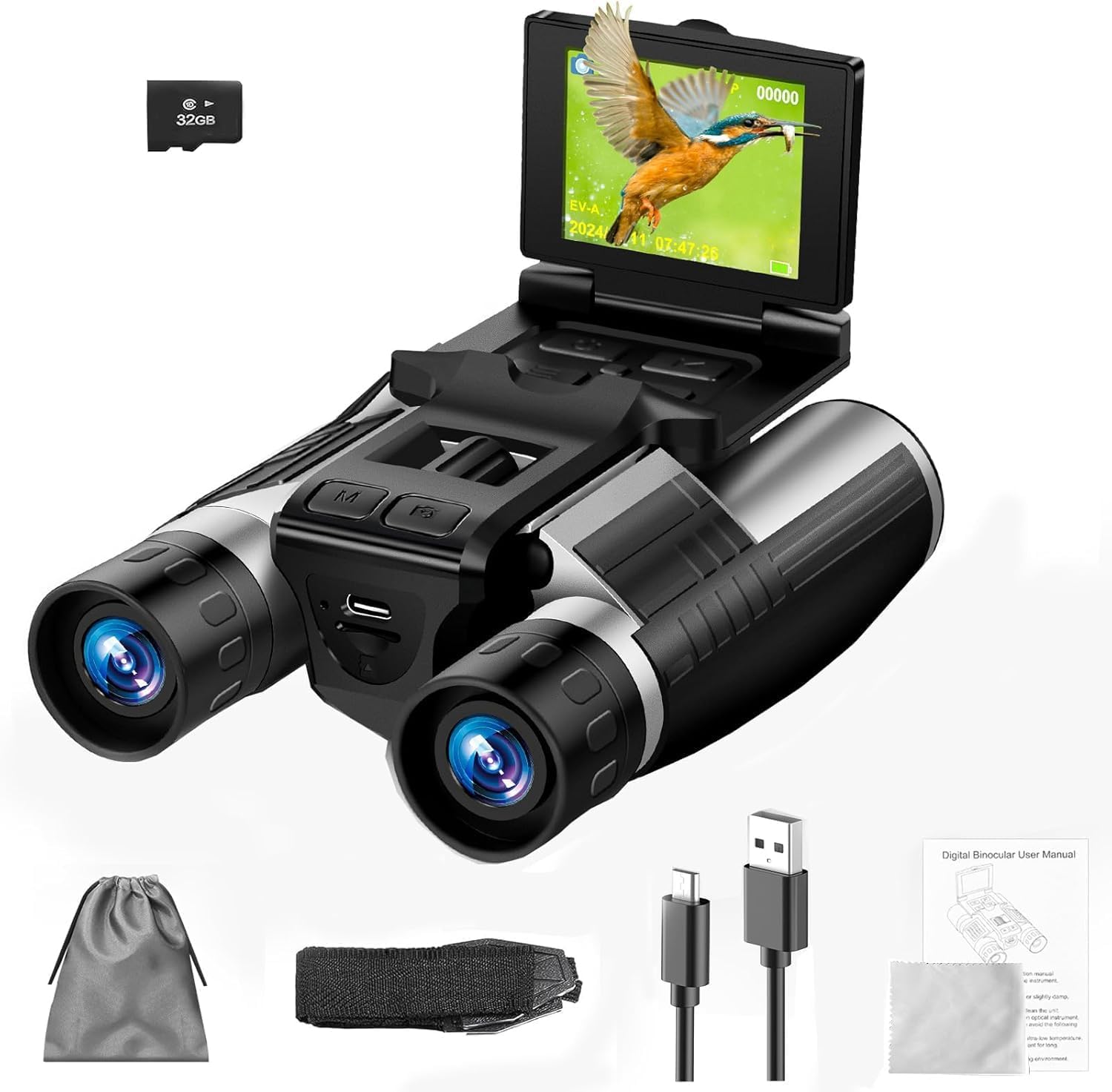
Palm-sized enough to clip to your backpack and forget until you need it.
At just 17 ounces and with dimensions of roughly 5.7 by 3.8 inches, the Camonity Silver is among the most portable camera binoculars in the lineup. The built-in hook on the body lets you strap it to the outside of a daypack rather than burying it inside, and owners heading to Yellowstone loved that feature for quick access on a hike. The 12x optical magnification plus 8x digital zoom gives you solid reach, and the 1000mAh battery supports up to three hours of continuous video recording.
The compact size earns the most praise — owners describe the view as clear at long distances with natural colors and minimal distortion, making it a strong choice for bird watching or casual wildlife spotting. It comes with a 32GB memory card pre-installed, so it is ready to use right away. The main limitation is the small form factor itself: some users found the field of view too narrow and the image grainy at full digital zoom, and a few felt the build quality was a bit cheap for the price point.
This is a binocular for the traveler who values portability and ease of carry over ultimate optical performance. It is not going to replace a dedicated spotting scope, but for the traveler who wants to document the trip without hauling a separate camera, it gets the job done.
Ideal for: hikers and travelers who need a lightweight camera binocular that clips onto a backpack for instant access.
Not for: anyone who needs a wide field of view or plan to shoot at full digital zoom regularly — the image gets grainy.
6. Camonity Digital Binoculars with Camera (Black/Silver)
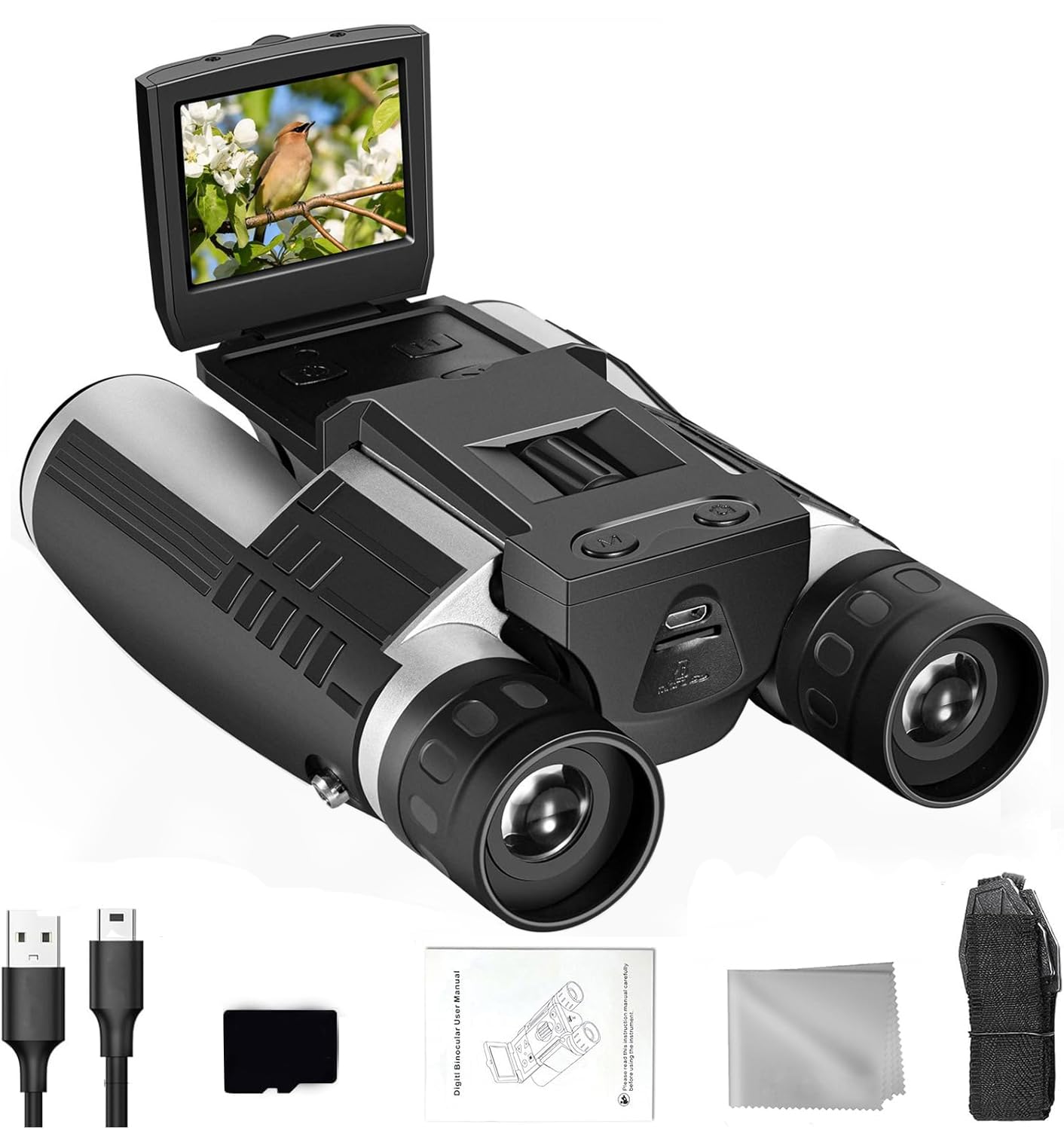
A no-frills entry point that is easy to use but limited in image quality.
This near-twin of the Camonity Silver shares the same 12×32 optics, 1000mAh battery, and 48MP / 2.5K video specs, but comes in a slightly different black-and-silver finish. It is the most beginner-friendly option on the list — owners consistently highlight ease of use as a top positive, noting the 2.4-inch screen is straightforward to navigate and the controls are simple enough to operate without reading a thick manual. The included 32GB SD card means you can start shooting immediately.
The image quality, however, is the most-discussed aspect with mixed results. Some reviewers point out “very good image quality” and call it perfect for backyard wildlife and casual recording, while others found the vision unclear or the photos disappointing in bright light. The instructions are notoriously sparse — one owner had to Google “D12x32” to find a usable manual — so be prepared to experiment with settings. It also works best with a tripod; hand-held shots tend to come out blurry due to the sensitivity of the 12x magnification.
At the entry-level price, this is the cheapest way to get a functional camera binocular that does not feel like a toy. The catch is you get what you pay for in photo resolution, so aim it at casual backyard use and budget for a small tripod.
Best for: beginners or casual users who want a simple, lightweight camera binocular for occasional backyard or park use.
Pass if: you need reliable, high-quality photos without having to troubleshoot or buy a tripod.
7. Anweller 12×32 Binoculars with Camera
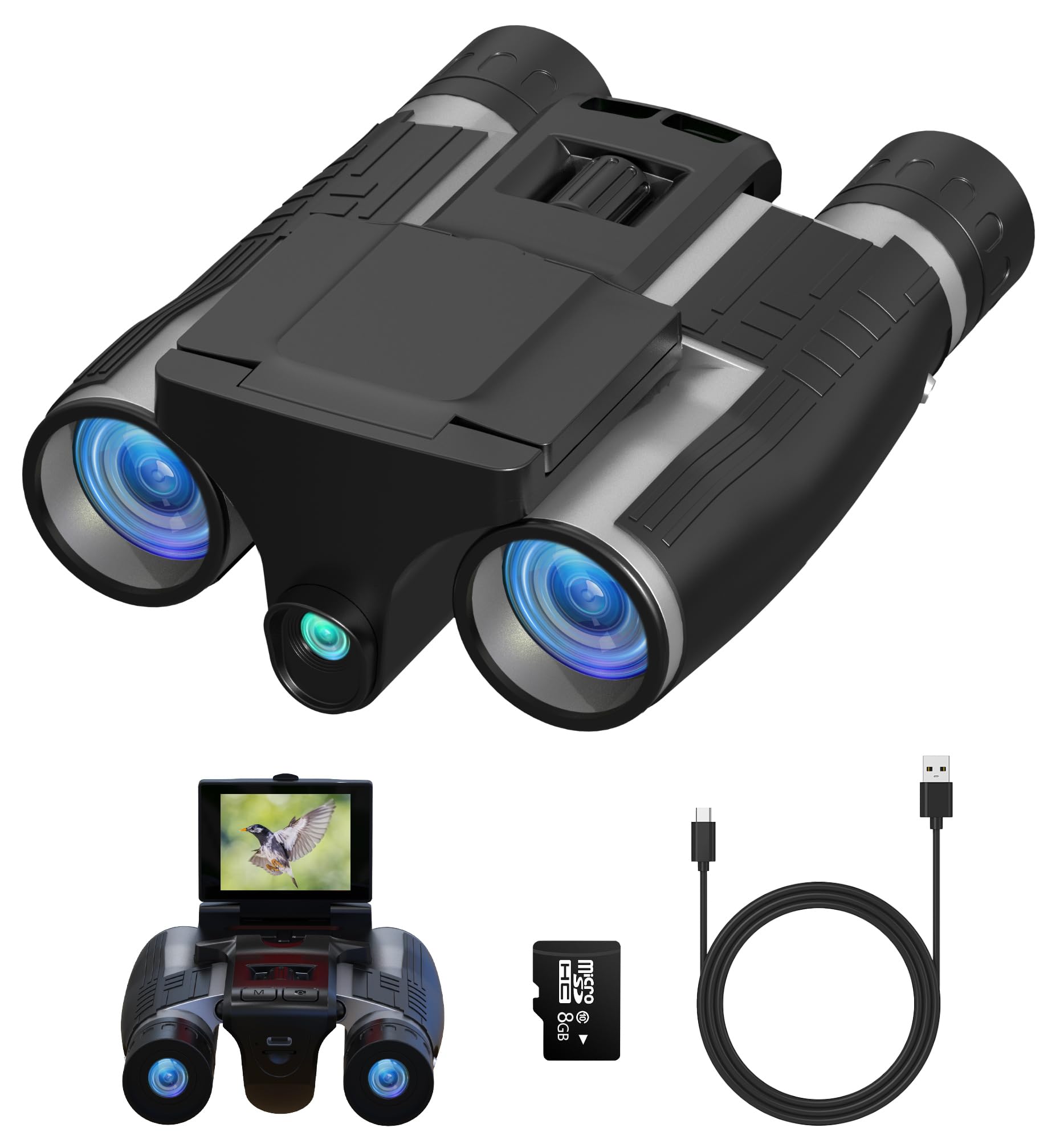
A 12×32 binocular that the whole family can share without fighting over the controls.
Rated for both adults and kids, the Anweller 12×32 is one of the few camera binoculars designed to fit smaller faces and larger ones alike. The ergonomic grips and intuitive controls make it beginner-friendly, and the 12×32 magnification with a viewing distance of 1100 yards (about 0.6 miles) gives you serious reach for birding, sporting events, or cruise ship sightseeing. The built-in 1000mAh lithium battery charges via USB-C and supports up to 4 hours of continuous video recording — the longest run time in this class.
Owners are enthusiastic about the clarity and zoom strength. The 48MP photos and 2.5K video capture are adequate for social media sharing, and the included 8GB memory card gives you a small buffer to start. What many appreciate most is the 12-month warranty and free lifetime technical support — a rare safety net at this price. The biggest frustration is the manual: it is almost unusably thin, with no instructions on how to set the time and date or delete files. Most owners figured it out through trial and error, but it is an unnecessary hurdle.
The ABS plastic and rubber armor body is lightweight at 1.1 pounds, making it comfortable for long use by both adults and older kids. It is a sound middle-ground pick for a family that wants one device everyone can use, as long as someone is willing to learn the controls without the manual’s help.
Get this if: you want a single camera binocular for the whole family with long battery life and a warranty that backs it up.
pass on it if: you need detailed operating instructions from the start — the manual is nearly useless.
8. Minolta 12×32 Digital Binoculars
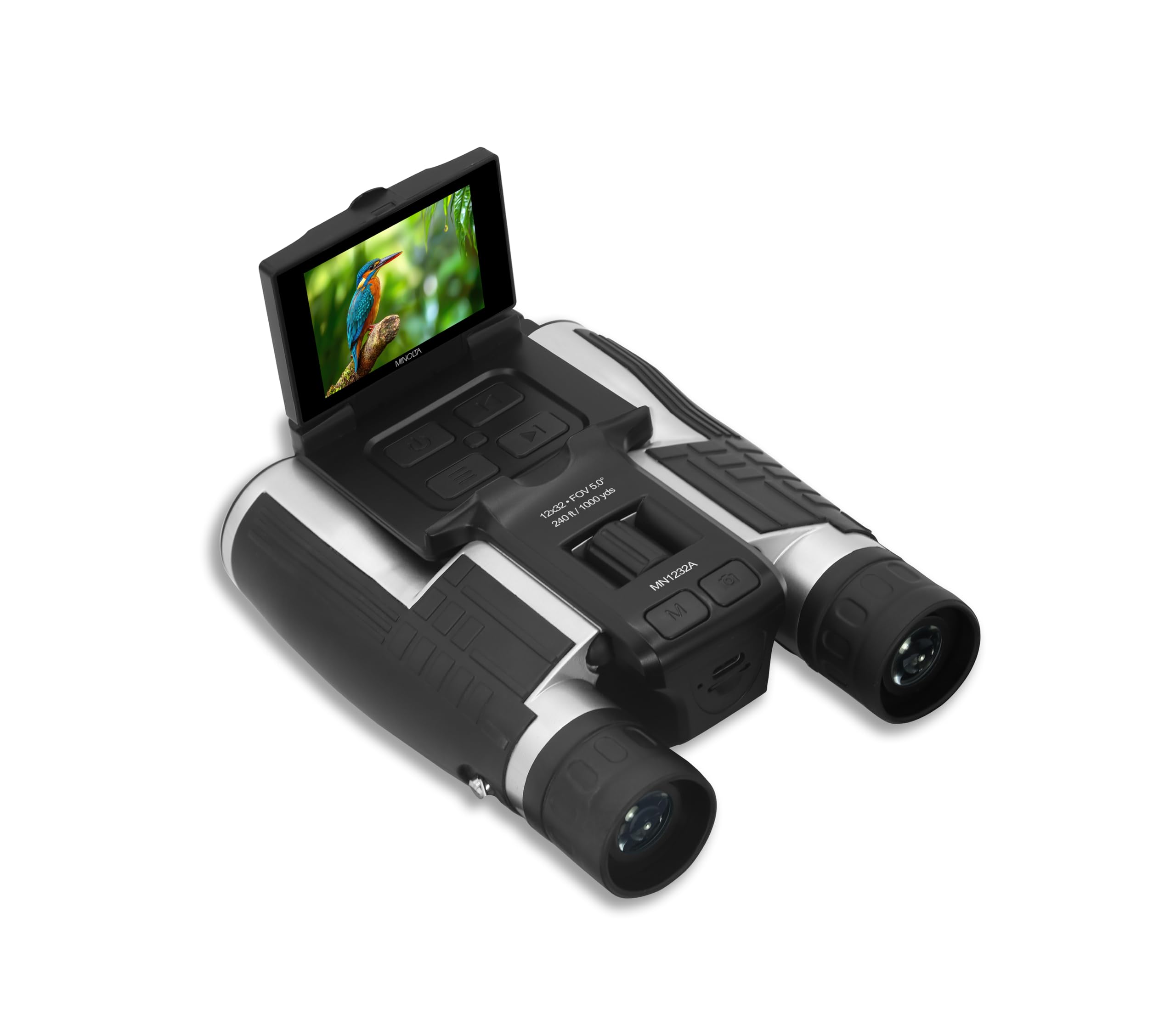
A recognizable brand name saddled with a camera that does not deliver.
Minolta is a well-known name in optics, and the specs on paper look impressive: 4K UHD video recording, 48MP photo resolution, a glare-resistant 2.4-inch IPS screen, and a metal-and-rubber body that feels more premium than the all-plastic competition. The 12x optical magnification and fog-resistant coating suggest a device built for serious outdoor use, and the included 32GB memory card, cleaning cloth, carrying pouch, and neck strap make the unboxing feel complete.
The reality reported by owners is disappointing. The image quality is the most-discussed aspect — and it is notably negative. Photos are described as “bad,” “grainy,” and so pixelated that one owner compared them unfavorably to a 10MP Canon from over a decade ago. The binocular optics themselves have issues too: the eyepieces are blurry at the bottom edge unless your eye is perfectly centered, which is hard to maintain in the field. A fog-resistant coating is advertised, but the optical alignment struggles to produce a single focused image through both barrels. The narrow 1.4-degree field of view is the smallest in the roundup by a wide margin, making scanning for wildlife feel claustrophobic.
At a significant price premium over the competition, the Minolta is the most expensive model here but delivers the poorest camera results. If the brand name is important to you and you only need the binocular function, you might be okay — but the camera is a genuine letdown.
What the Minolta Name Brings
- 4K UHD video is a step above the 2.5K competition on paper
- Metal and rubber body feels more substantial than ABS plastic
- Anti-glare IPS screen is genuinely usable in direct sunlight
The Hard Let Down
- Camera quality is widely panned — grainy, pixelated, not true 48MP
- 1.4-degree field of view is far too narrow for scanning landscapes
- Optical alignment issues make it hard to get a single focused image
Only consider if: the 4K video spec is a must-have and you are willing to accept a compromised photo mode and narrow field of view.
Steer clear if: you need decent photo quality or a wide binocular view — the Ansee or ZZSTAR beat it on both for significantly less.
Understanding the Specs
Exit Pupil Diameter
This is the diameter of the bright circle of light that hits your eye from the binoculars. A bigger number — measured in millimeters — means more light reaches your retina, which is crucial for seeing clearly in low-light conditions like dawn, dusk, or under a forest canopy. For the 12×32 binoculars in this guide, the exit pupil is calculated by dividing the objective lens diameter (32mm) by the magnification (12x), giving about 2.67mm. The ZZSTAR stands out with a larger 3.8mm exit pupil, giving it a real advantage when the light fades.
Field of View
This is the width of the scene you can see at a given distance, measured in degrees. A wider field of view makes it easier to spot moving wildlife or track action at a sports event because you see more of the scene without moving the binoculars. In this lineup, the Ansee leads at 6.2 degrees, while the Minolta trails severely at 1.4 degrees — that narrow scope will feel like you are looking through a straw and makes scanning for birds or whales genuinely frustrating.
Digital Zoom vs. Optical Zoom
Optical zoom uses the binoculars’ glass lenses to magnify the image — it preserves detail and clarity because the glass does the work. Digital zoom on a camera binocular simply crops and enlarges the image electronically, which makes it look grainy or pixelated the more you push it. Most models here advertise an 8x digital zoom on top of the 12x optical zoom, but that digital reach comes at a sharp cost to image quality. For the clearest photos, rely on the optical zoom and use digital zoom only as a last resort.
Battery Life and Storage
Camera binoculars run on built-in rechargeable batteries measured in mAh (milliamp-hours). Most in this guide have 1000mAh batteries that deliver roughly three hours of continuous video recording — enough for a morning or afternoon outing. The ZZSTAR’s larger 1800mAh battery stretches that further. Storage is handled by a microSD card, and most models include an 8GB, 32GB, or 32GB card in the box. A 32GB card can hold thousands of 48MP photos or several hours of 2.5K video, but check the card is included before you buy — some cheaper models leave it out.
FAQ
Can I use camera binoculars for bird watching?
Will these binoculars fit on a standard tripod?
How long does the battery last on a camera binocular?
Do camera binoculars work in low light or at night?
Can I use camera binoculars for concerts and sporting events?
How do I transfer photos from camera binoculars to my phone or computer?
Is 48MP a real resolution or marketing hype?
What is the difference between 12×32 and 10×42 binoculars?
Do camera binoculars need a memory card, or is it built in?
Why do my camera binocular photos come out blurry?
Final Thoughts: The Verdict
For most people, the best camera binoculars winner is the LeapFrog Magic Adventures because it nails the core goal — making the view and the capture accessible for its intended user — and backs it up with real educational value and proven durability across hundreds of owners. If you want the brightest optical view for adult use with a large battery, grab the ZZSTAR 12×32 (and swap the memory card). And for the most affordable entry point that is easy to operate straight from the start, the Camonity Digital (Black/Silver) is the one to reach for — just budget a few dollars for a small tripod.
How We Picked
We do not accept paid placement. Every pick is matched to a real buyer and a real use-case; we do not hands-on test units.
Sources & Methodology
Specifications: manufacturer listings and product documentation. Review insights: verified customer reviews, as of July 2026. Pricing: not shown on this page (it changes often); check the current price via the retailer link.
As an Amazon Associate, Gadgets Feed earns from qualifying purchases. This does not affect which products we feature.