
Our readers keep the lights on and my morning glass full of iced black tea. As an Amazon Associate, I earn from qualifying purchases.
Specs are compiled from manufacturer listings and verified buyer reviews and can change over time — please confirm the key details on the product page before buying.
Hunting for a camera drone under 300 usually means wading through spec sheets that promise 13,000-foot ranges and hour-long flights that never happen in real life. What actually matters is finding a drone that is easy to fly, survives a few crashes, and captures footage you are happy to share. Staying under 249 grams skips FAA registration entirely, a huge win for casual pilots.
I’m Min — the founder and writer behind Gadgets Feed. This guide is built by comparing the manufacturers’ published specifications and the patterns across verified customer reviews, so you get each pick’s real strengths and trade-offs instead of marketing spin.
If you are ready to find a reliable quadcopter while staying affordable, this breakdown of the best camera drone under 300 options will help you pick the one that fits your skill level and shooting style.
Our Picks at a Glance


How To Choose The Best Camera Drone Under 300
Buying your first drone is notable, but the spec sheet can be a minefield. The key is separating box claims from real backyard performance. These four factors separate a joy to fly from a frustration.
Real Flight Time vs. Total Flight Time
Many listings brag about “90 minutes of flight” — but that usually means three batteries that each last 30 minutes. Check how many batteries come in the box and how long each one truly flies. Buyers report that a real per-battery flight is often 20-25 minutes, not the 30-40 claimed. Two batteries is good; three is better if you hate waiting for charges.
The 249g Rule
Drones that weigh under 249 grams are exempt from FAA registration and Remote ID. That means zero paperwork — just take it out and fly. If a drone weighs more, you have to register it and label it before your first flight. Nearly every option here stays under that magic number, so you get portability and zero paperwork.
Stabilization: Gimbal vs. EIS
A physical 3-axis gimbal holds the camera level with motors, giving you smooth cinematic footage even when the drone tilts. EIS (electronic image stabilization) is software that crops and smooths the video after capture — it works but can struggle in fast movement. If smooth video is your priority, look for that mechanical gimbal.
Obstacle Avoidance and GPS
GPS enables auto return home, flying the drone back to you when the battery is low or the signal drops. Forward obstacle avoidance is a safety net that stops you crashing into trees — but remember, “forward” only means the front of the drone, not the sides or back.
Quick Comparison
| Model | Best For | Total Flight Time | Camera Resolution | Weight | Amazon |
|---|---|---|---|---|---|
| Potensic ATOM SE★ Best Overall | Value & Performance | 62 mins | 4K / 12MP | 8.8 oz | Amazon |
| UFLYTOO LA GPS DroneScreen on the Stick | Controller Screen | 45 mins | 4K / 8MP | Under 250g | Amazon |
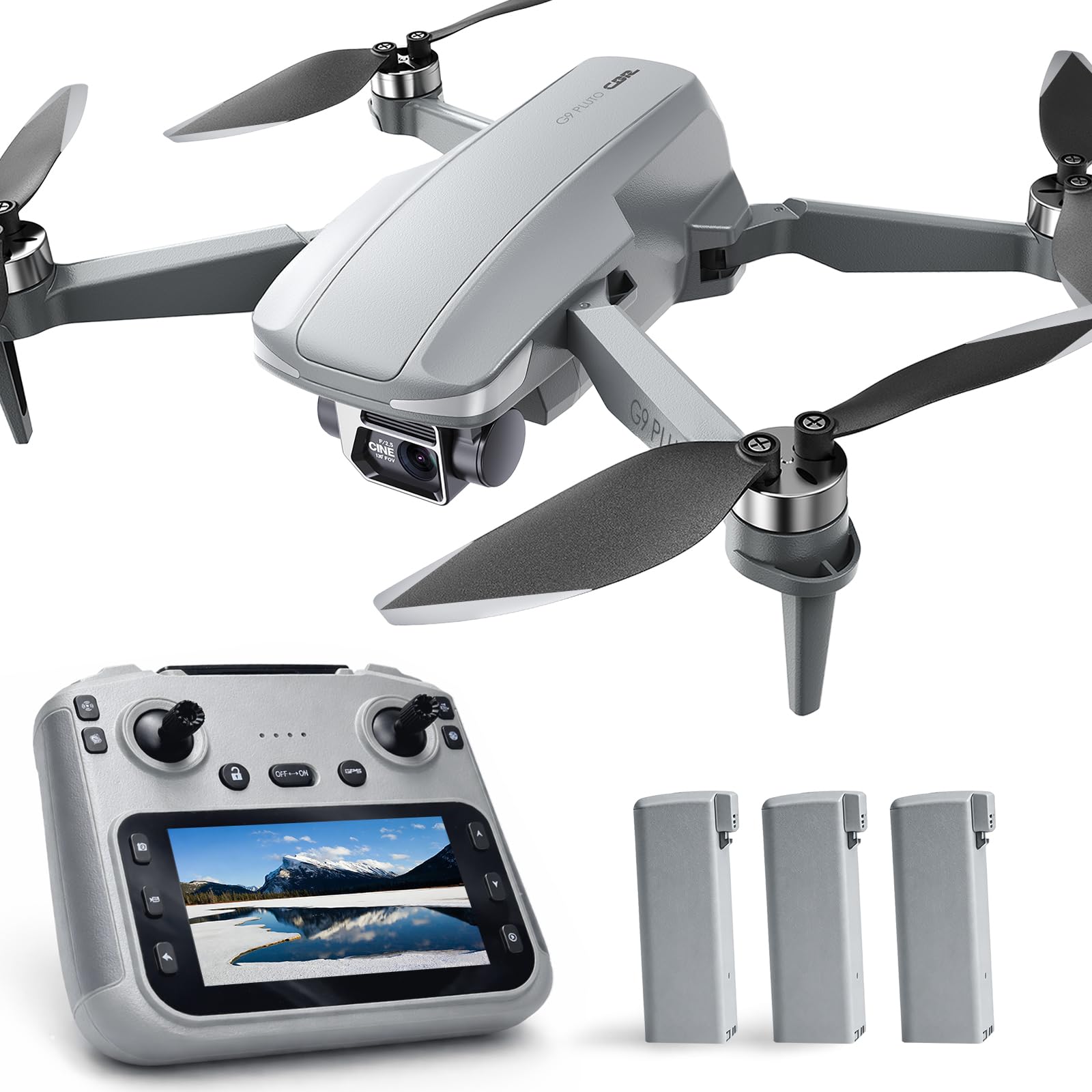
| CHUBORY G9 Pluto90-Minute Marvel | Screen & Value | 90 mins | 4K / 8.3MP | 193 g | Amazon |
| Specta Mini | 3-Axis Gimbal | 31 mins | 4K / 30fps | Under 249g | Amazon |
| Holy Stone HS175G | Popular Beginner | 60 mins | 4K / 8MP | 249 g | Amazon |
| Potensic ATOM LT | Battery Life | 80 mins | 2.5K / 3.68MP | 249 g | Amazon |
| Skyrover S1 Mini | Premium Features | 40 mins | 4K/60fps / 48MP | Under 249g | Amazon |
| Ruko Drone | Gift Bundle | 96 mins | 4K / 30fps / 48MP | 248 g | Amazon |
| Bwine F7MINI | Long Range | 96 mins | 4K / 30fps / 48MP | 249 g | Amazon |
In‑Depth Reviews
1. Potensic ATOM SE GPS Drone
Our pick — over 4★ from 6,500+ verified ratings; the strongest balance of quality and price.
The crowd favorite that balances price, power, and beginner-friendly controls with the strongest reputation in this class.
This drone wins people over with smooth, steady flight and a camera that punches above its weight. It shoots 4K video at 30fps (so you get ultra-high-definition footage, 30 frames every second) and 12MP photos using a 1/3-inch CMOS Sony sensor — the same sensor tech trusted in many premium cams. The ShakeVanish stabilization keeps your footage smooth, and you can tilt the camera from +20° down to -90° for those dramatic overhead shots.
Flight time is where it gets interesting: two 2500mAh batteries give you a total of 62 minutes, with each battery running up to 31 minutes. That is double the flight time of the UFLYTOO LA model below — a 2.0x gap on the claimed figures — and its 12MP still resolution is 50% higher than that rival’s 8MP. The SurgeFly control system adds Beginner Mode plus three flight modes (Video, Normal, Sport), and in Sport Mode it hits 16m/s in 2.8 seconds. GPS auto return brings it home automatically if you lose signal or the battery gets low.
Owners mention the real range is around 1,200-2,000 feet despite the 13,000-foot claim, and the controller needs careful handling, but the flying experience itself earns high marks. The brushless motor resists level-5 wind, and the fold-up design slips into a jacket pocket. As owners put it, it is “good value” for the price — just don’t expect true zoom or night-vision quality.
Why it Wins
- 62 minutes total flight with two batteries included
- 4K/30fps video and 12MP photos from a Sony sensor
- Beginner Mode with three flight modes to grow into
- Under 249g so no FAA registration needed
The Trade-offs
- Real-world range is far below the 13,000 ft claim
- Controller feels fragile in a few units
- Camera lacks optical zoom
Reach for this if: you want the best overall beginner drone that flies smoothly, shoots sharp 4K, and comes with two batteries so you are not stuck waiting to recharge.
Look elsewhere if: you need a long-distance flyer — the honest range tops out around 2,000 feet, not the 4km (13,123 ft) on the box.
2. UFLYTOO LA GPS Drone
The drone that puts the live view right on the controller, so you can ditch your phone entirely.
What makes this one special is the 4.5-inch HD screen built right into the remote control. That means the live video feed goes straight to the controller’s display, so you don’t have to clip your phone on top. It’s a big win for beginners who find phone-clamping fiddly — just switch it on and fly. The screen is not touch-sensitive, so you control everything with the sticks and buttons.
You get two intelligent 2200mAh batteries for 45 minutes of total flight, and the brushless motors help it resist wind better than cheaper geared drones. GPS Return to Home works well, and customers note the range holds up to about 1,800 feet.
Ease of use is the thing everyone praises most here, with owners calling it great for beginners and kids. The honest caveat is that quality and stability get mixed feedback — the materials do not feel super durable, and a few owners found the control buttons confusing until they studied the manual. It is a great entry point if you want the simplest possible setup, but treat it gently.
What Stands Out
- Built-in 4.5″ HD screen means no phone needed
- 45 minutes total with two batteries
- GPS Return to Home works reliably
- Simple for beginners and kids
What to Expect
- Quality gets mixed reviews — materials are not the toughest
- Screen is hard to see in direct sunlight
- Still resolution is just 8MP
Pick this if: you want the most straightforward setup where the video shows on the controller and there’s no phone app drama.
skip it if: you plan to fly in bright sunlight — the built-in screen washes out without a hood.
3. CHUBORY G9 Pluto
A triple-battery powerhouse that flies for 90 minutes and still shows the feed on a built-in screen.
If staying in the air is your top priority, this is the drone that delivers. Three high-capacity batteries give you a claimed 90 minutes of total flight time — that is exactly double the 45 minutes of the UFLYTOO LA above, a full 2.0x gap. Even if real-world flights run shorter, you are swapping batteries instead of waiting for a charge, which keeps your outing going. At 193g it is also the lightest pick on this list, well under the 249g FAA-free threshold.
The remote carries the same 4.5-inch non-touch HD display concept, showing live FPV video straight on the controller. It comes with a free 32GB SD card in the box, so you can start recording immediately. The 4K UHD camera has a 90° adjustable tilt and captures 8.3MP stills, with a 3280-foot (about 1km) control range and GPS auto return when the battery runs low.
Buyers consistently call the video quality “excellent” — noticeably sharp on the controller screen — and the kit is generous: three batteries, spare props, cables, and the SD card all in a protective case. The setup takes about five minutes including the manual. Wind is its weak spot, so save the high-wind flights for a heavier drone, but for casual park flying and learning, it is hard to argue with the value.
Why It Impresses
- 90 minutes total across three included batteries
- Lightest pick here at 193g
- Free 32GB SD card in the box
- 4.5″ HD display on the controller
The Catch
- Wind-sensitive — best in calm conditions
- No charger included in the box
- Still resolution is 8.3MP
Grab this when: you want maximum airtime so you can practice all afternoon without running out of batteries.
Think twice if: you fly in breezy conditions — this lightweight frame gets pushed around.
4. Specta Mini Drone
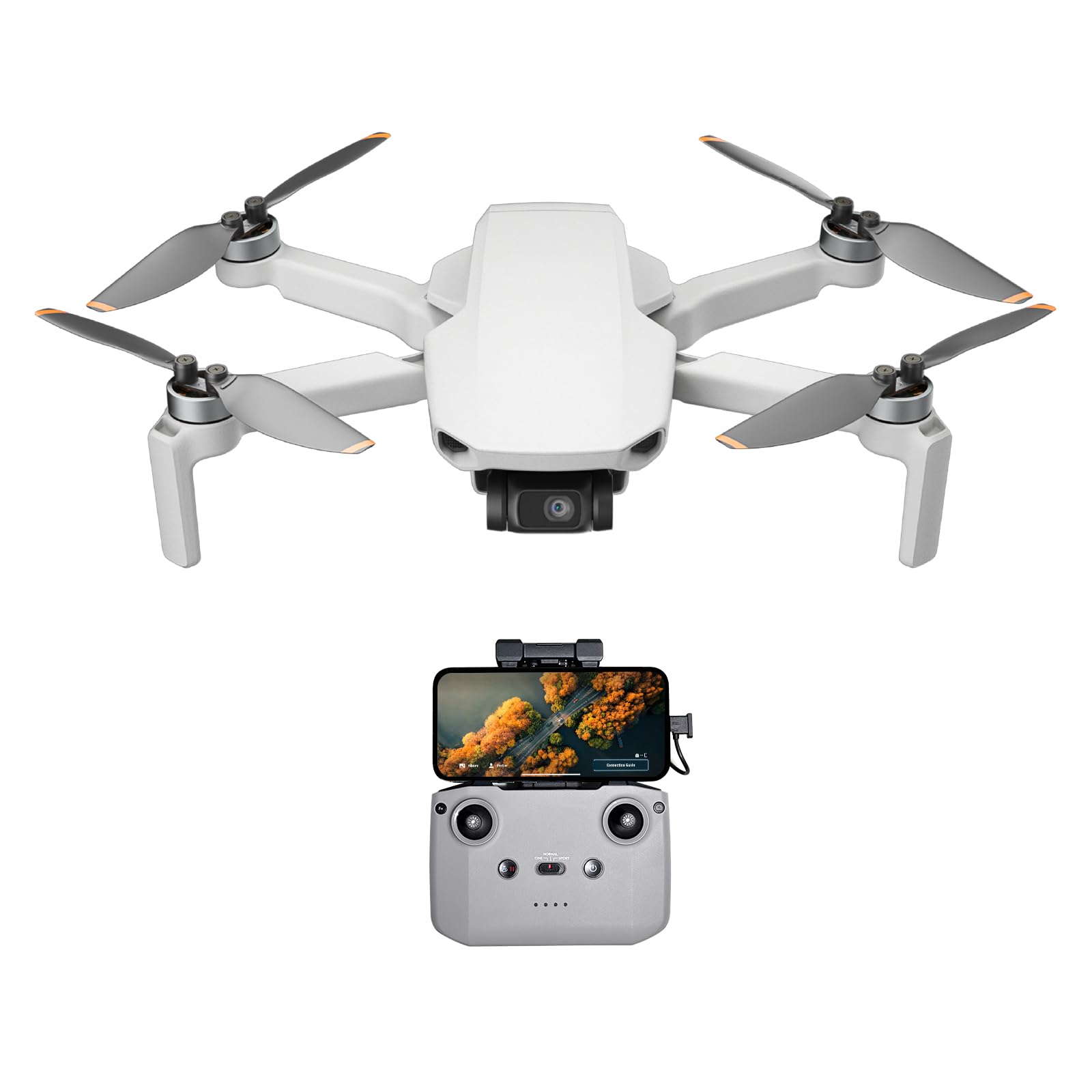
The only beginner drone here with a real 3-axis gimbal for properly cinematic, shake-free footage.
Most drones at this price use software stabilization, but the Specta Mini carries a physical 3-axis gimbal — motors that actively hold the camera level as the drone tilts and moves. The result is genuinely smooth, cinematic video that looks like it came from a pricier machine. It records 4K Ultra HD at 30fps and the gimbal keeps everything stable even in a fresh breeze, with level-5 wind resistance advertised.
The flight time is 31 minutes per full charge on a 2250mAh battery — solid but not class-leading, and reviewers point out real flights land closer to 22-24 minutes. Signal transmission is claimed at 32800ft (10km), but the honest range from owners is about 0.8 miles before the connection drops. One-tap takeoff and landing plus GPS Return-to-Home keep it beginner-friendly, and it stays under 249g so there is no FAA registration to worry about.
What wins people over is the build quality — several owners compare it directly to a DJI Mini 4K, calling it the same drone under a different name. The big caution is the app: if your phone changes and the app disappears from the store, you have no way to fly it. That is a real risk worth knowing before you commit. It is a fantastic value gimbal drone, but check the app situation for your device first.
What Shines
- True 3-axis gimbal for smooth cinematic footage
- 4K/30fps video with level-5 wind resistance
- One-tap takeoff and GPS Return-to-Home
- Under 249g, no FAA registration
What to Check
- App availability is a real risk if you change phones
- Batteries are proprietary and pricey to replace
- Real range is about 0.8 miles, not 10km
Choose this for: the smoothest video quality in this price range, thanks to the hardware gimbal that software can’t match.
Be careful if: you think you’ll switch phones soon — the companion app must be available to fly.
5. Holy Stone HS175G
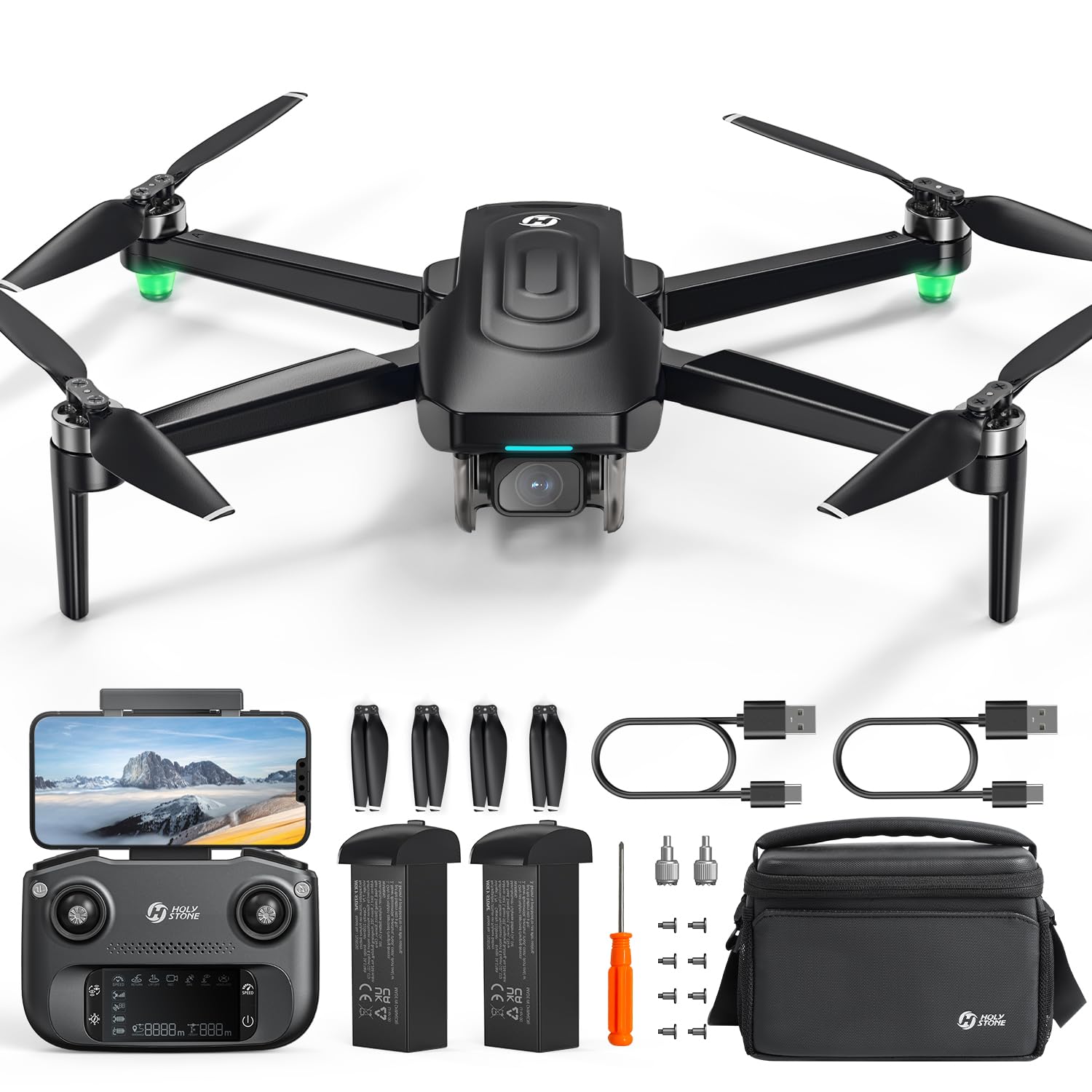
The most-discussed beginner drone for good reason — a 120° wide lens and smooth GPS-assisted flying.
Holy Stone is a name you see everywhere in this category, and the HS175G shows why. It packs a 4K EIS camera (electronic image stabilization) with a Sony CMOS sensor, a wide 120° lens, and a 90° adjustable tilt so you can angle the shot without moving the whole drone. The 5GHz FPV transmission keeps the video feed stable even in wind, which is a real plus at this level.
Two batteries give you a claimed 60 minutes of flight, with single-battery fast charging so you are not waiting long between flights. Beginner features are everywhere: Altitude Hold, Optical Flow, Headless Mode, one-key takeoff/landing, and speed adjustment. GPS auto return brings it home if it loses signal or runs low on battery, and the folding frame weighs exactly 249g to dodge FAA registration.
You get crisp pictures and a simple setup, which is why buyers call it a great first drone. The honest knock is reliability — some shoppers say motors failing or the drone flying away unexpectedly, though those are the minority. If you are a beginner who wants a feature-loaded, popular drone with a solid support team behind it, this is a strong contender, but the mixed reliability notes mean you should keep it close while you learn.
Why People Love It
- 120° wide-angle lens and 90° adjustable tilt
- 60 minutes with two batteries and fast charging
- Full beginner suite: Headless Mode, Altitude Hold, One-Key
- 5GHz FPV for stable video in wind
Consider This
- Reliability gets mixed feedback in the long run
- No physical gimbal — stabilization is software-based
- Weight sits right at 249g
Go with this if: you want a famous, beginner-focused brand with tons of flight features and a huge community behind it.
Look elsewhere if: you’re worried about long-term durability — a minority of buyers report motor issues down the road.
6. Potensic ATOM LT

Two 3000mAh batteries stretch flying to 80 minutes, outsizing most rivals in pure airtime.
If the camera resolution matters less than how long you can actually fly, the ATOM LT is your drone. Two 3000mAh batteries deliver a claimed 80 minutes of total flight — 40 minutes each — which beats most of this list. That is a significantly bigger battery capacity than the UFLYTOO LA’s 2200mAh, a 14% gap in the spec sheet that translates to noticeably longer sessions. It only flies in GPS mode, so you’ll want to launch in an open outdoor area.
The camera shoots 2.5K video at 30fps and 2560×1440 photos, using a Sony sensor with ShakeVanish 2.0 stabilization. If you were hoping for 4K, this is where it falls short of the ATOM SE above — the resolution is the trade-off for all that extra flight time. The PixSync 2.0 transmission keeps a smooth feed up to 4km (13,123ft), and it supports four satellite systems: GPS, GLONASS, Galileo, and BeiDou for precise positioning.
Owners say it performs as well as pricier DJI models in the air, with good wind resistance at level 5 and an easy beginner mode. The common complaint is the slow GPS satellite lock before takeoff — give it a minute or two. Also, charging takes about an hour and 45 minutes, so budget for that downtime unless you grab a fast charger. For pure airtime and rock-solid flight on a budget, this is the one.
The Highlights
- 80 minutes total across two 3000mAh batteries
- 4 satellite systems for precise GPS positioning
- ShakeVanish 2.0 camera stabilization
- Level-5 wind resistance
Where It Gives Ground
- Camera is 2.5K, not 4K
- Slow GPS satellite lock before takeoff
- Batteries take about 1h45m to charge
Reach for this when: you want the longest possible flight sessions and care more about flying time than 4K sharpness.
Pass on it if: 4K video is a must-have for your footage — this tops out at 2.5K.
7. Skyrover S1 Mini
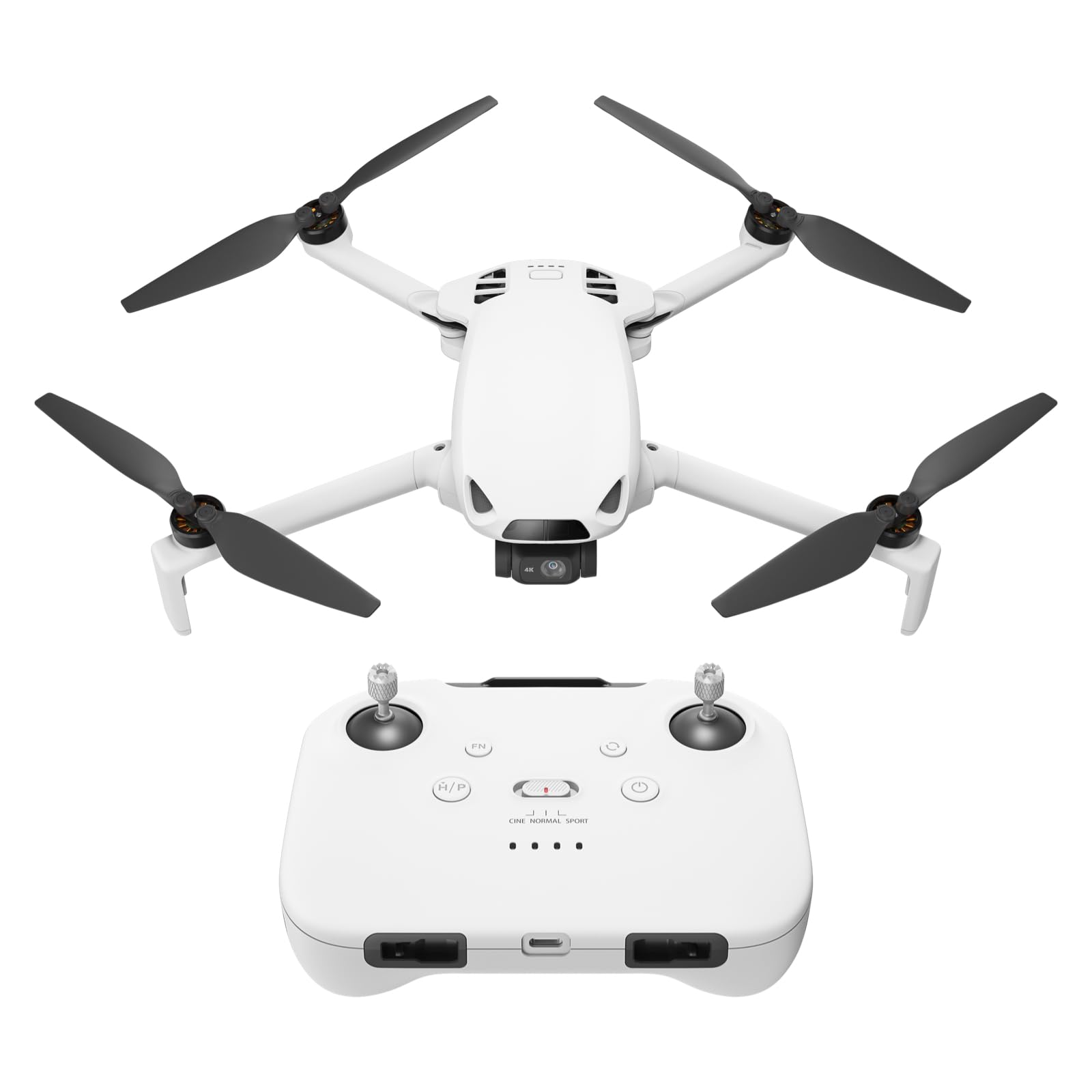
A DJI-level experience with a 3-axis gimbal, 48MP photos, and forward obstacle avoidance at a fraction of the price.
This is the premium pick that delivers a true DJI-style experience without the DJI price tag. The 1/2-inch CMOS sensor shoots 4K video at 60fps (twice the frame rate of most rivals, so motion looks extra smooth) and 48MP photos — the highest still resolution on this list, matching the Ruko and Bwine below. A mechanical 3-axis gimbal keeps everything cinematic, and forward obstacle avoidance gives beginners a real safety net against tree crashes.
Flight time hits 40 minutes per battery on a 2560mAh pack, and the transmission range is claimed at 39,000 feet (7.45 miles) with a 1080P 60Hz live view. The SmartGo app adds auto track, so the drone follows you and keeps you centered in frame, plus one-tap cinematic moves. For social media creators, there’s 2.7K vertical video with intelligent cropping — ready for TikTok and Reels straight out of the drone.
Owners call it “seriously impressed,” noting it compares to a DJI Mini 3 for less money, with rock-steady flight even in high winds. The honest limits: obstacle avoidance is only forward and downward, not 360 degrees, and the frame is a bit fragile for its weight. It weighs under 249g, so no FAA registration. If you want the closest thing to a premium drone in this budget, this is it.
What Makes It Premium
- 4K/60fps video and 48MP photos
- True 3-axis gimbal for cinematic stability
- Forward obstacle avoidance for safer flying
- 2.7K vertical video for social media
The Honest Limits
- Obstacle avoidance is front-only, not 360°
- Frame feels fragile for the weight
- Needs 32GB+ SD card for full 4K60
Choose this for: the best overall image quality and safety features in this class, rivaling machines that cost far more.
Think twice if: you’re a rough handler — the light frame rewards careful flying.
8. Ruko Drone
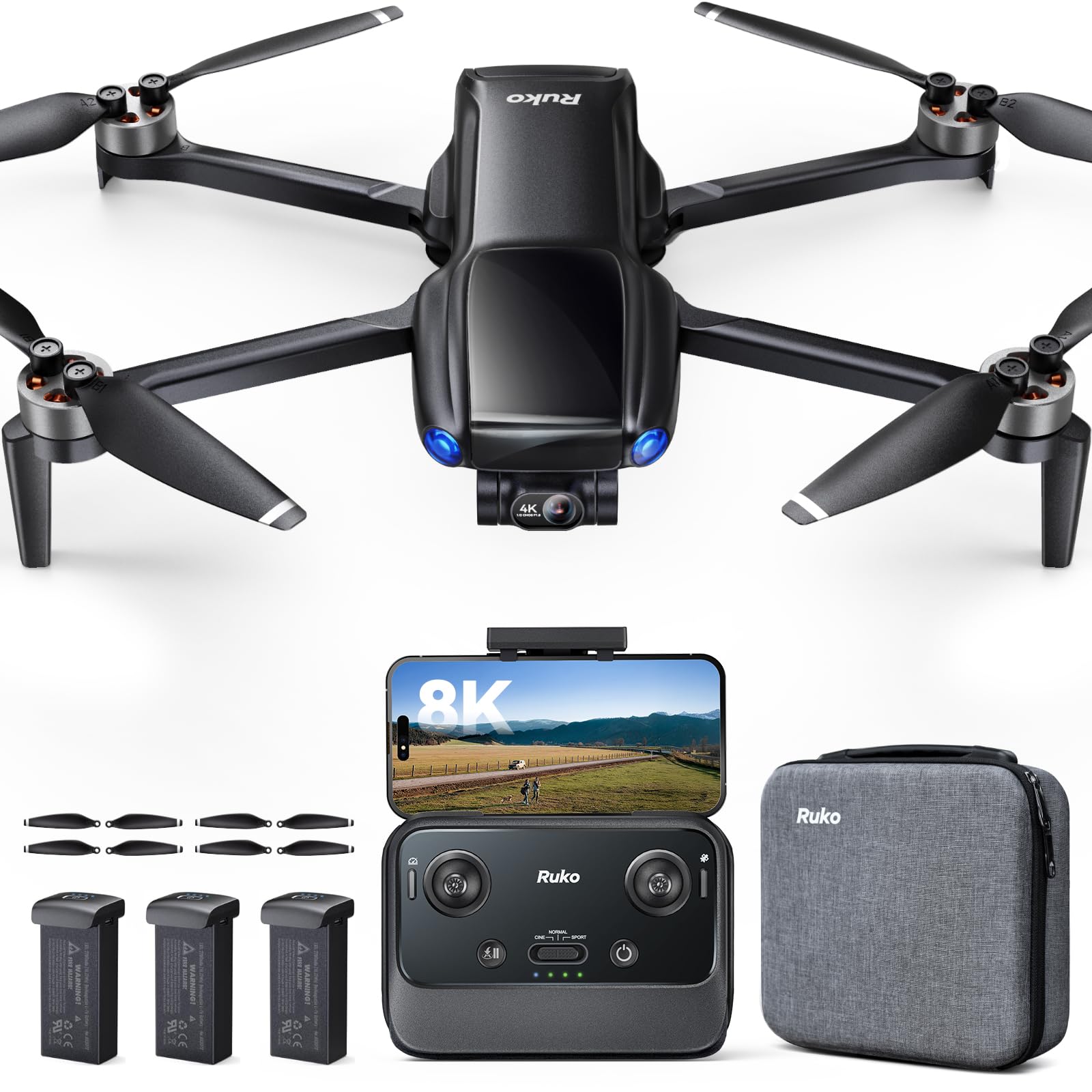
A gift-ready bundle with three batteries for 96 minutes of flight and a 48MP camera that keeps everyone happy.
This is the drone you hand to a husband, father, or tech enthusiast on a birthday — and it arrives ready to impress. The 1/2-inch 48MP CMOS sensor captures 8K photos and 4K/30fps video, with a 3-axis brushless gimbal and EIS for ultra-smooth footage. Three batteries deliver a claimed 96 minutes of total flight time (32 minutes each), which means a full afternoon of flying without being tethered to a charger.
The R2 digital transmission system gives you a clear, anti-interference video feed up to 20,000 feet (6km) away. Quadruple positioning — TOF, optical flow, barometer, and GPS — keeps the hover rock-steady, and auto return home kicks in on low power or signal loss. It weighs in at 248g, just under the 249g FAA-free line, and the carrying case makes it a true travel companion.
Owners call it exceptionally easy for beginners, with amazing picture and video quality, and note it compensates well for wind gusts up to 16 MPH. The recurring praise goes to the customer service — 24/7 support with a 30-day return and 90-day free warranty. The trade-off is that battery life gets mixed reviews in practice, so treat the 32-minute claim as a best-case number. If you want a complete, gift-ready package with strong support, this delivers.
The Good Stuff
- 96 minutes total across three batteries
- 48MP photos and 4K/30fps video
- 20,000 ft transmission range
- 24/7 support with 90-day warranty
What to Note
- Real battery life often falls short of 32 mins
- Functionality gets some mixed feedback
- Weighs in right at the 249g limit
Get this for: a ready-to-fly gift that includes everything — three batteries, case, spare parts — with top-notch support behind it.
Consider the alternative if: you need guaranteed long flights per battery, since real-world times vary.
9. Bwine F7MINI
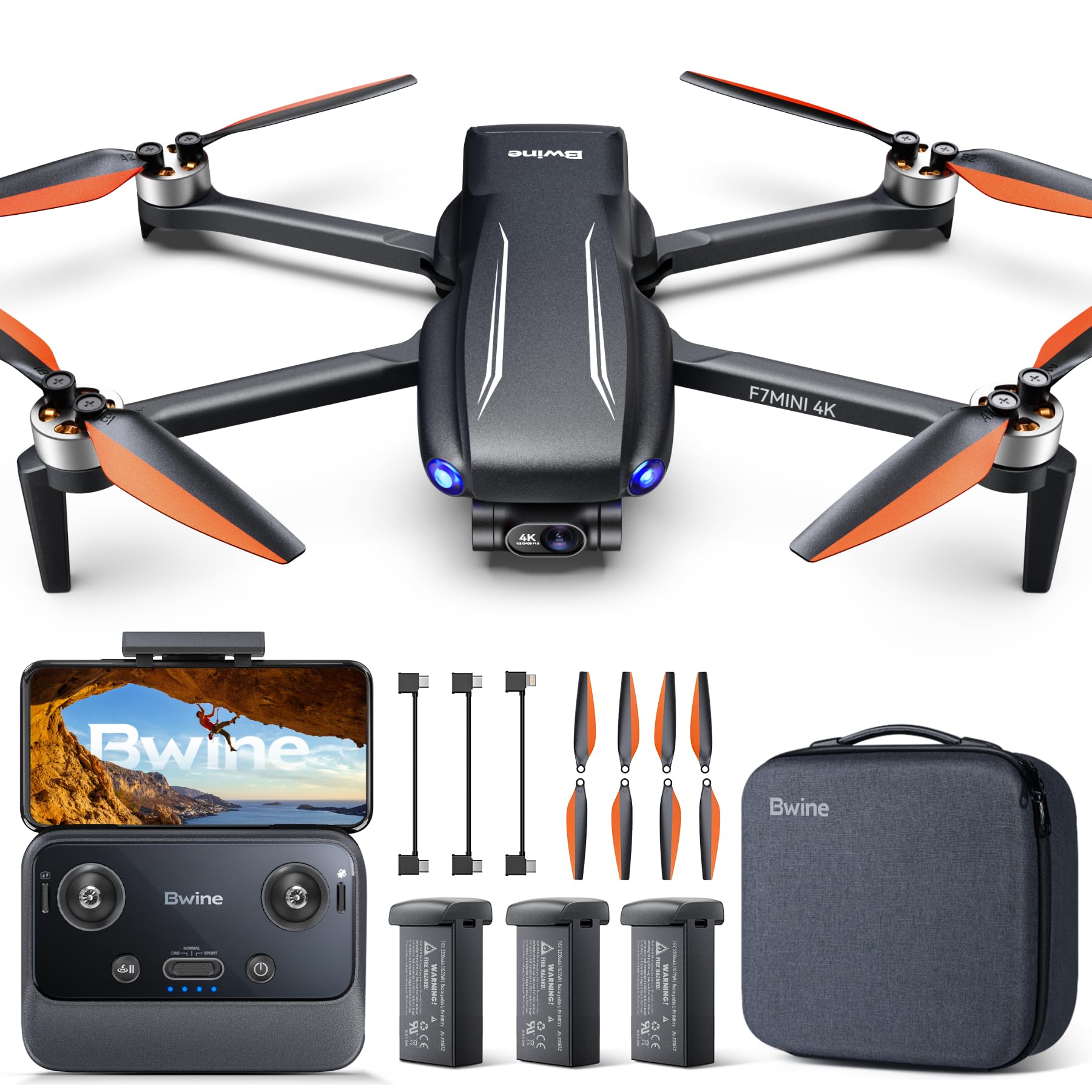
A long-range flyer with wired transmission, 48MP photos, and a 3-axis gimbal for steady shots at distance.
Range is the name of the game here. The Bwine F7MINI uses wired digital transmission that it claims is 150% more resistant to interference, delivering a zero-latency feed up to 20,000 feet (6km). That makes it the pick for farm patrols, mountain flights, and exploring big open landscapes where other drones would drop the signal. The 1/2-inch CMOS sensor with an F1.8 aperture captures 48MP photos and 4K/30fps video.
The 3-axis stabilized gimbal keeps the camera level through any tilt or rotation, which is essential for real-estate-style footage and smooth sweeping shots. Three 2200mAh batteries give you a claimed 96 minutes of total flight (32 minutes each), and they support PD 3.0 fast charging. An upgraded 1503 brushless motor pushes the top speed to 31mph with level-5 wind resistance, so blustery days won’t ground you.
You get excellent picture quality and agility that handles wind gusts well, which is why owners call it fantastic and easy to use. The smart GPS system (a satellite-based positioning feature) includes auto cruise, 0.5m accurate follow, orbit, and waypoint modes, plus a 120dB locator buzzer (a loud alarm that helps you find it) if you ever lose sight of it. The honest caveat is that battery charging gets mixed reviews — a few owners hit issues there. A 2-year warranty and lifetime firmware updates (free software improvements) add confidence.
Why It Stands Out
- 20,000 ft transmission range — best in class here
- 96 minutes total across three batteries
- 48MP photos with F1.8 aperture lens
- 120dB buzzer locator if you lose it
Keep in Mind
- Battery charging gets mixed feedback
- Video is 4K/30fps, not 60fps
- Sensitive joysticks in wind at night
Pick this for: the longest control range and the confidence to explore far-off landscapes without losing your feed.
Look elsewhere if: you want the smoothest slow-motion video — the 30fps cap limits that.
Understanding the Specs
EIS vs. 3-Axis Gimbal
EIS (electronic image stabilization) is software that digitally smooths your video by cropping the frame and countering shake. It works fine for casual clips but can struggle with fast movements. A 3-axis gimbal uses physical motors to hold the camera perfectly level, giving you genuinely cinematic footage regardless of how the drone tilts. If smooth video is your priority, a gimbal is worth the extra cost.
The 249g balance
Drones under 249 grams skip FAA registration and Remote ID requirements, which means zero paperwork before your first flight. They are also lighter and more portable, slipping into a backpack or jacket pocket. The trade-off is that lighter frames get pushed around by wind more easily — check the wind resistance rating (usually level 4 or 5) to know its limits.
GPS Return-to-Home (RTH)
This is the safety net that saves beginners from losing their drone. When the battery gets low or the signal drops, the drone automatically flies back to its takeoff point. It is a non-negotiable feature for any first drone — flying without it means you are one wrong stick movement away from a walk of shame. Look for models that also support Follow Me and Waypoint modes for extra fun.
Brushless Motors
Brushless motors are the premium choice for drones because they generate less friction, run quieter, and last far longer than brushed motors. They also deliver more power, which means better wind resistance and snappier control. Every drone on this list uses brushless motors — if you see a super-cheap drone without them, expect shorter life and weaker performance.
FAQ
Do I need FAA registration for a camera drone under 300?
What is the real flight time I should expect?
Is a 3-axis gimbal worth the extra money over EIS?
Can I use these drones indoors?
How does the claimed range compare to real-world range?
Do I need a smartphone to fly these drones?
What does the camera resolution really mean for my photos?
Are these drones good for kids?
What happens if my drone loses signal mid-flight?
Final Thoughts: The Verdict
For most people, the best camera drone under 300 is the Potensic ATOM SE because it nails the balance of 4K quality, 62 minutes of flight, and beginner-friendly controls at a price that makes sense. If you want the smoothest possible footage and don’t mind checking the app, the Skyrover S1 brings a real gimbal and 48MP photos to the table. And for maximum airtime without recharging, the Bwine F7MINI with its 96-minute flight and 20,000-foot range is the one to reach for.
How We Picked
We do not accept paid placement. Every pick is matched to a real buyer and a real use-case; we do not hands-on test units.
Sources & Methodology
Specifications: manufacturer listings and product documentation. Review insights: verified customer reviews, as of August 2026. Pricing: not shown on this page (it changes often); check the current price via the retailer link.
As an Amazon Associate, Gadgets Feed earns from qualifying purchases. This does not affect which products we feature.