
Buying a dedicated camera when your smartphone already takes decent photos feels like a luxury. But when your phone’s digital zoom turns a distant mountain into a blurry mess, or its sensor struggles to capture a well-lit portrait without aggressive noise reduction, the gap between a phone and a real camera becomes painfully obvious. A purpose-built camera unlocks an optical zoom lens, a physical shutter button, and a sensor designed from the ground up for photography, not app-switching.
I’m Min — the co-founder and writer behind Gadgets Feed. I’ve spent hundreds of hours researching the entry-level camera market, cross-referencing sensor sizes, optical zoom ranges, and battery endurance figures to separate the genuine upgrades from the repackaged webcams.
My goal is to help you find a real, reliable camera for $150 that delivers sharper images, functional zoom, and a dedicated shooting experience a phone simply cannot match.
How To Choose The Best Camera For $150
At this price tier, you’re choosing between two main architectures: a compact point-and-shoot with a dedicated optical zoom lens and a larger sensor, or a vlogging-oriented camcorder that prioritizes flexible screens and built-in accessories. Your decision should hinge on one question: do you need to zoom without losing detail, or do you need a tool for talking-head videos?
Optical Zoom is Non-Negotiable
Digital zoom simply crops and enlarges the image, reducing resolution with every step. A 4X or 6X optical zoom lens physically moves glass elements to bring subjects closer without any loss in quality. For travel, wildlife, or capturing a child’s sports event, optical zoom is the only feature that separates a camera from a phone.
Sensor Resolution vs. Marketing Megapixels
Many budget cameras advertise inflated megapixel counts through software interpolation. A true 16MP or 20MP sensor will always produce cleaner, more detailed images than a 48MP or 64MP sensor that is actually a much lower-resolution chip being scaled up. Look for “effective still resolution” in the specs — anything above 48MP on a sub-$150 camera is almost certainly interpolated.
Battery System Matters More Than You Think
Removable lithium-ion batteries, especially those with 2500mAh or higher capacity, let you swap packs for all-day shooting. Cameras powered by standard AA batteries offer convenience if you’re in a remote area without USB charging, but you will go through alkaline cells quickly — consider rechargeable NiMH AA batteries instead.
Quick Comparison
On smaller screens, swipe sideways to see the full table.
| Model | Category | Best For | Key Spec | Amazon |
|---|---|---|---|---|
| KODAK PIXPRO FZ45 | Point-and-Shoot | True optical zoom | 4X Optical Zoom | Amazon |
| Maxmango D50 | Waterproof | Underwater & adventure | 33ft Waterproof | Amazon |
| Banflower 5K 80MP | Vlogging | Large touchscreen & WiFi | 4.0″ IPS Touchscreen | Amazon |
| Lmzour 4K Vlogging | Vlogging | Face tracking kit | 330° Rotating Lens | Amazon |
| Jukanur 5K 96MP | Starter Camera | Optical zoom value | 6X Optical Zoom | Amazon |
| Demofit 5K 75MP | Social Media | WiFi sharing | WiFi Transfer | Amazon |
| ZYDIIE 4K Camcorder | Camcorder | Night vision & remote | Night Vision | Amazon |
In‑Depth Reviews
1. KODAK PIXPRO FZ45 16MP Digital Camera
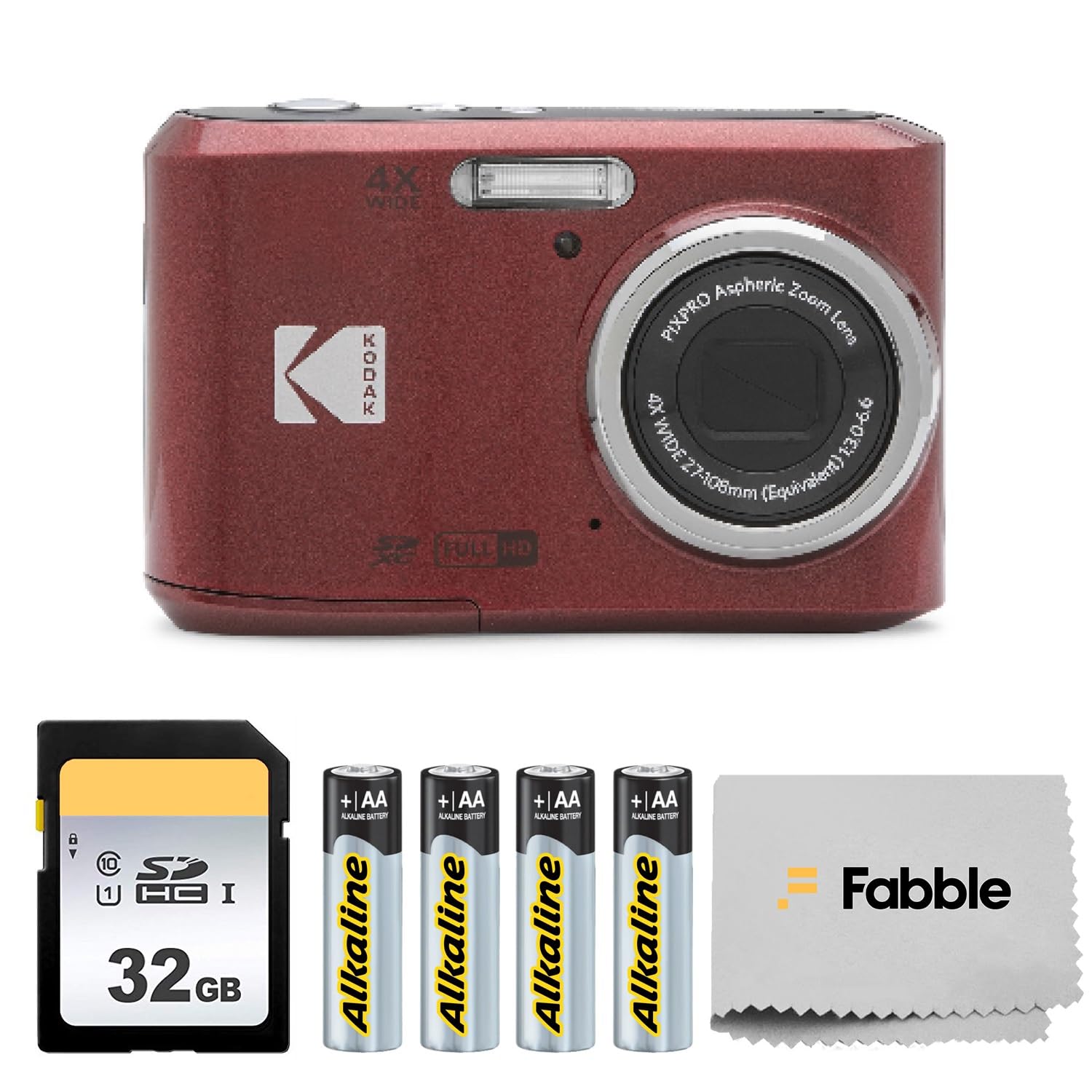
The KODAK PIXPRO FZ45 is the only camera in this roundup that delivers a genuine 4X optical zoom lens with a 27mm wide-angle starting point from a trusted brand. The 16MP sensor is refreshingly honest — no interpolated megapixel claims — and the contrast-detection autofocus locks onto subjects faster than the software-based systems found in cheaper alternatives. Daylight shots are sharp with natural color reproduction, and the built-in flash provides usable fill light indoors.
The 2.7-inch LCD screen is modest by modern standards, but its bright backlight makes framing easy even under direct sun. This camera runs on 4 AA batteries, which is a double-edged sword: you can grab alkaline cells anywhere in the world, but the battery life per set is shorter than a dedicated lithium-ion pack. The bundle includes a 32GB SD card, a wrist strap, and a cleaning cloth — everything you need to start shooting immediately.
Low-light performance is the clear trade-off here. The smaller sensor and lack of optical image stabilization mean you’ll need steady hands or a tripod for evening shots. For anyone who values real optical reach and a recognizable brand with solid support, the FZ45 earns its spot as the most practical all-rounder in this price bracket.
Why it’s great
- True 4X optical zoom preserves detail at distance
- Honest 16MP sensor without interpolation
- Universal AA battery power — easy to replace anywhere
Good to know
- Small 2.7-inch screen feels dated
- Low-light shots require a tripod or flash
- AA batteries drain faster than lithium-ion packs
2. Maxmango D50 8K Underwater Camera
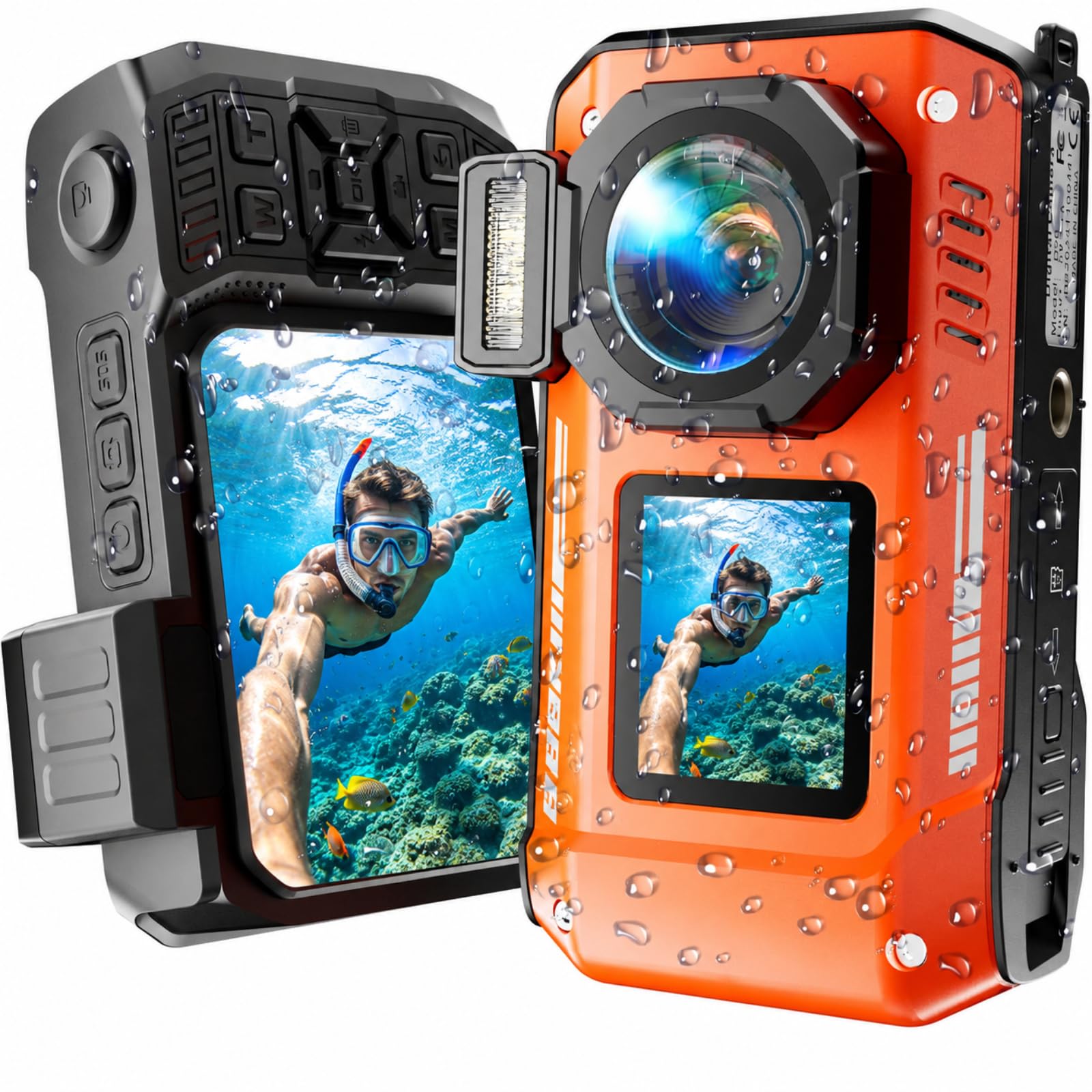
The Maxmango D50 is the only entry-level camera built specifically for water. Its sealed body is rated to 33 feet (10 meters) without needing an external housing, making it a genuine option for snorkeling, pool days, and beach trips. The 8K video resolution and 70MP photo claims are interpolated from a smaller sensor — real-world output is closer to 4K and 48MP — but still delivers vibrant colors and enough detail for social sharing and casual keepsakes.
The dual-screen design is a clever inclusion: a small front-facing screen makes selfies and group underwater shots easy to frame, while the rear screen handles standard composition. The 2500mAh built-in lithium-ion battery is one of the largest in this roundup, supporting long shooting sessions without a recharge. It also floats, which is a thoughtful touch for water use — losing a camera to the ocean floor is a real risk.
There is no optical zoom, so all reach is digital, and the autofocus struggles in murky water or very low light. The included 16GB card is smaller than the competition, and you will want to upgrade it immediately. For anyone who needs a waterproof camera without a separate case, the D50 is a category of one.
Why it’s great
- 33ft waterproof rating without extra housing
- Large 2500mAh battery for all-day trips
- Floating body protects against accidental drops
Good to know
- No optical zoom — digital zoom only
- Megapixel specs are interpolated
- Autofocus slows in low-contrast underwater scenes
3. Banflower True 5K 80MP WiFi Digital Camera
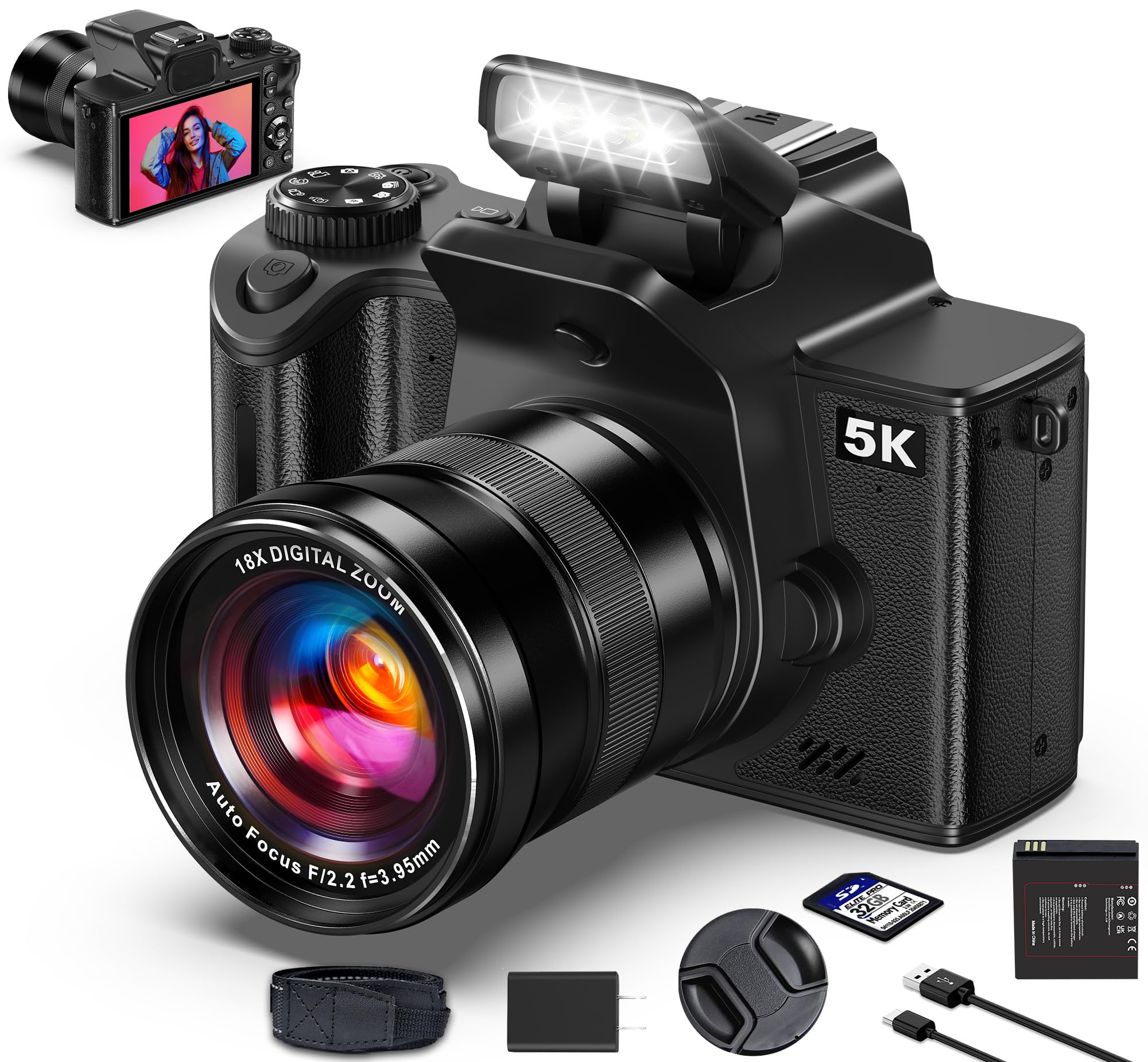
The Banflower 5K camera stands out immediately with its 4.0-inch IPS HD touchscreen — the largest display in this group. The screen makes menu navigation intuitive and doubles as a bright viewfinder for framing shots. It claims a 5K resolution and 80MP stills, but like most cameras at this level, the true sensor output is lower; the real advantage here is the 18X digital zoom and one-touch macro mode that brings you within 5cm of a subject for detailed close-ups.
Built-in WiFi allows wireless transfer of photos and videos to your phone, which is more reliable than fiddling with an SD card adapter. The camera also doubles as a webcam over USB, saving an extra purchase for live streaming or video calls. The 3000mAh removable battery is a highlight — it is the highest capacity in this roundup and supports extended shooting sessions without frequent charging.
The build quality feels solid, and the included 32GB card is enough to get started, though serious shooters will want a larger card. The lack of optical zoom is the single biggest compromise here — all reach is digital, so distant subjects lose detail. For vloggers and content creators who prioritize a big screen and wireless workflow, this is the most comfortable camera to use every day.
Why it’s great
- Large 4.0-inch IPS touchscreen for easy framing
- 3000mAh battery lasts longer than most competitors
- WiFi transfer and webcam mode add real utility
Good to know
- Digital zoom only — no optical reach
- Interpolated 80MP resolution, not native
- Touchscreen can be slow to register taps
4. Lmzour 4K Vlogging Camera with 330° Lens
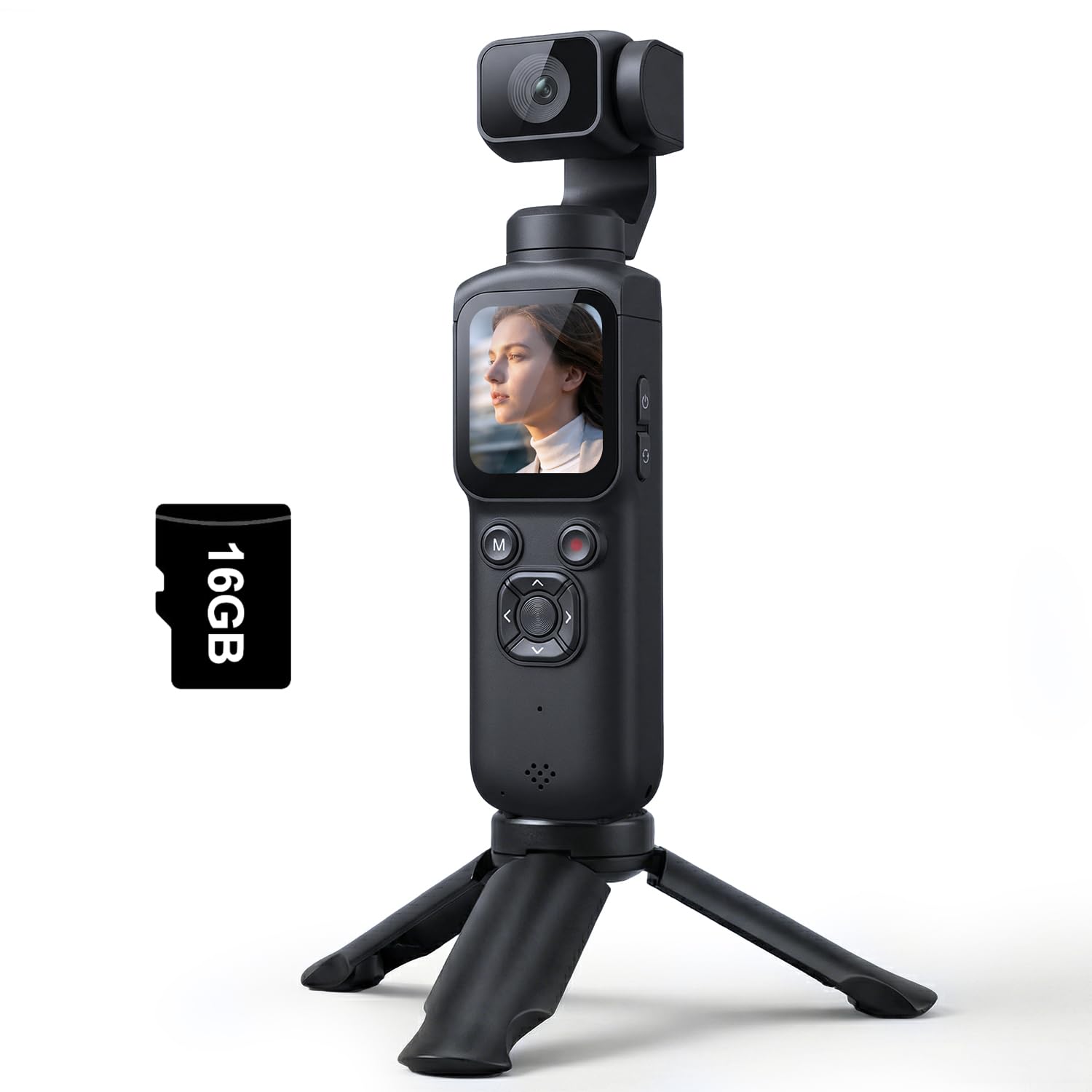
The Lmzour 4K camera is designed purely for the vlogging workflow, and its standout feature is the 330° rotating lens. Instead of flipping a screen and holding the camera at arm’s length, you simply rotate the lens to face you — the screen stays in a natural position for real-time framing. The smart face tracking works well in well-lit environments, keeping a subject centered without manual adjustment, which is a huge time-saver for solo creators.
The bundle is the most generous in this list: you get the camera, a mini tripod, a 16GB TF card, a wrist strap, and a carrying bag. For a beginner who has no accessories, this is a plug-and-play solution. The phase-detection autofocus is faster than contrast-detection systems found in similarly priced rivals, and the 79° wide-angle lens captures a broad field of view without fisheye distortion.
Battery life is the weakest point — averaging around 1.5 hours of continuous recording, which falls short of the all-day shooting some users need. The camera has no flash, so low-light indoor recording requires external light. For a first-time vlogger who wants a complete kit out of one box, the Lmzour delivers impressive polish.
Why it’s great
- Rotating lens makes self-framing effortless
- Complete kit with tripod, bag, and SD card
- Phase-detection autofocus for responsive focus
Good to know
- Only 1.5 hours of battery life per charge
- No built-in flash for low-light scenes
- 16GB card fills quickly with 4K footage
5. Jukanur 5K 96MP Digital Camera
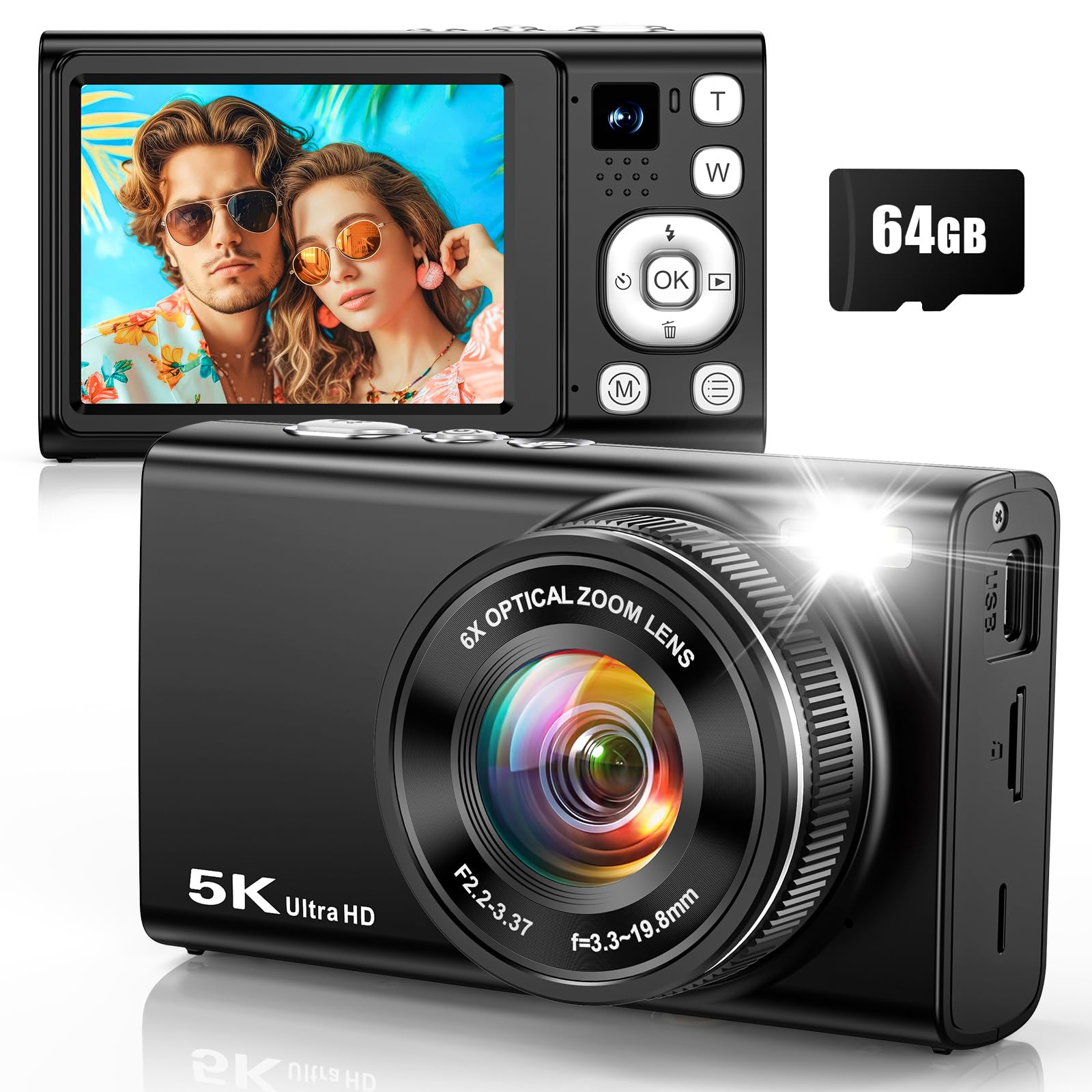
The Jukanur 5K camera is one of only two cameras in this group to offer an optical zoom lens — a 6X optical zoom, to be exact. This is a meaningful advantage over the digital-only competition, because it means you can bring distant subjects closer with zero loss of image quality. The IMX415 CMOS sensor is a legitimate imaging chip, and while the 96MP still resolution is interpolated, the 5K video (5120×2880) provides noticeably more detail than standard 4K.
The dual-lens design includes a front-facing lens for selfies and vlogging, which saves you from rotating the camera awkwardly. The bundled 64GB microSD card is the largest included memory in this roundup — enough for hours of video without needing an immediate upgrade. The built-in lithium battery is not removable, but it charges via USB-C and supports pass-through charging, so you can film while plugged in.
There is a known inconsistency in user feedback: some units report poor autofocus and battery life around 30 minutes, while others praise the image sharpness and zoom performance. This variance suggests quality control is not as tight as the KODAK or Maxmango options. If you get a good unit, the 6X optical zoom makes this the best reach-for-the-money camera available.
Why it’s great
- 6X optical zoom preserves image quality at distance
- Comes with a 64GB card — largest included storage
- IMX415 sensor delivers genuine 5K video detail
Good to know
- Quality control issues reported by some users
- Non-removable battery limits hot-swapping
- Interpolated 96MP photo resolution
6. Demofit 5K 75MP WiFi Digital Camera
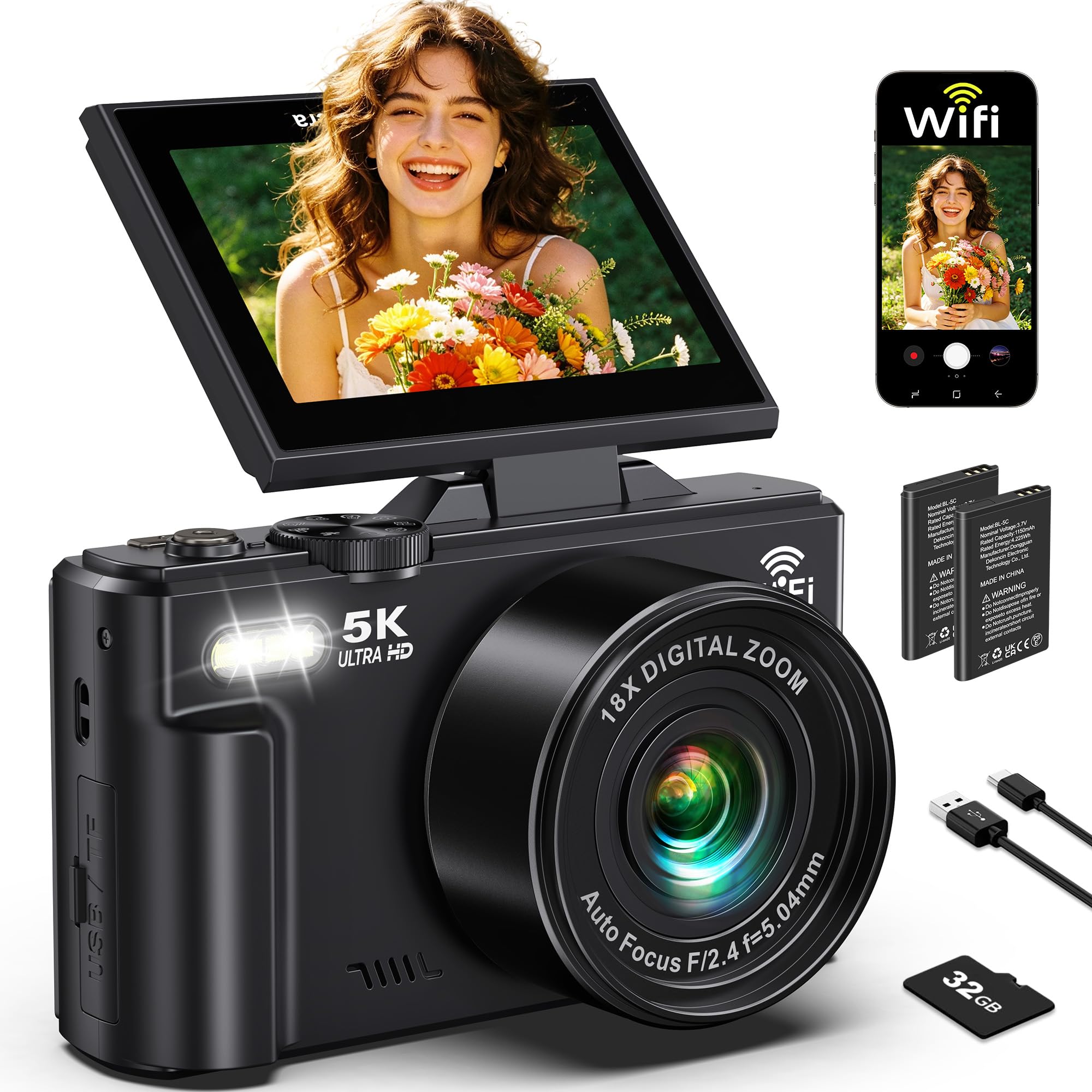
The Demofit 5K camera is built around ease of sharing. The built-in WiFi module connects directly to your phone via the companion app, letting you transfer photos and videos wirelessly in seconds — no dongles, no card readers. This is the fastest pipeline to Instagram, TikTok, or Facebook of any camera in this comparison, and for social-first creators, that convenience outweighs many spec differences.
The 3.0-inch IPS flip screen rotates 180 degrees, making it simple to frame yourself for vlogs or selfies. The 18X digital zoom and autofocus system handle everyday shots competently in good light, and the two included 1150mAh lithium-ion batteries mean you always have a charged backup ready. A 32GB microSD card is included, so the only thing you need to buy is a USB-C cable for computer transfers.
There is no optical zoom, so all reach is digital, and image quality in low light is average at best — expect noticeable grain past dusk. The built-in fill light helps indoors but is not strong enough for pitch-black environments. For someone who specializes in well-lit selfies, travel snapshots, and quick social media uploads, this camera eliminates the friction of file management.
Why it’s great
- Seamless WiFi transfer to phone for instant sharing
- 180° flip screen makes solo vlogging easy
- Two rechargeable batteries included for backup power
Good to know
- No optical zoom — digital only
- Low-light image quality is noisy
- Built-in fill light is weak in dark rooms
7. ZYDIIE 4K Video Camera Camcorder
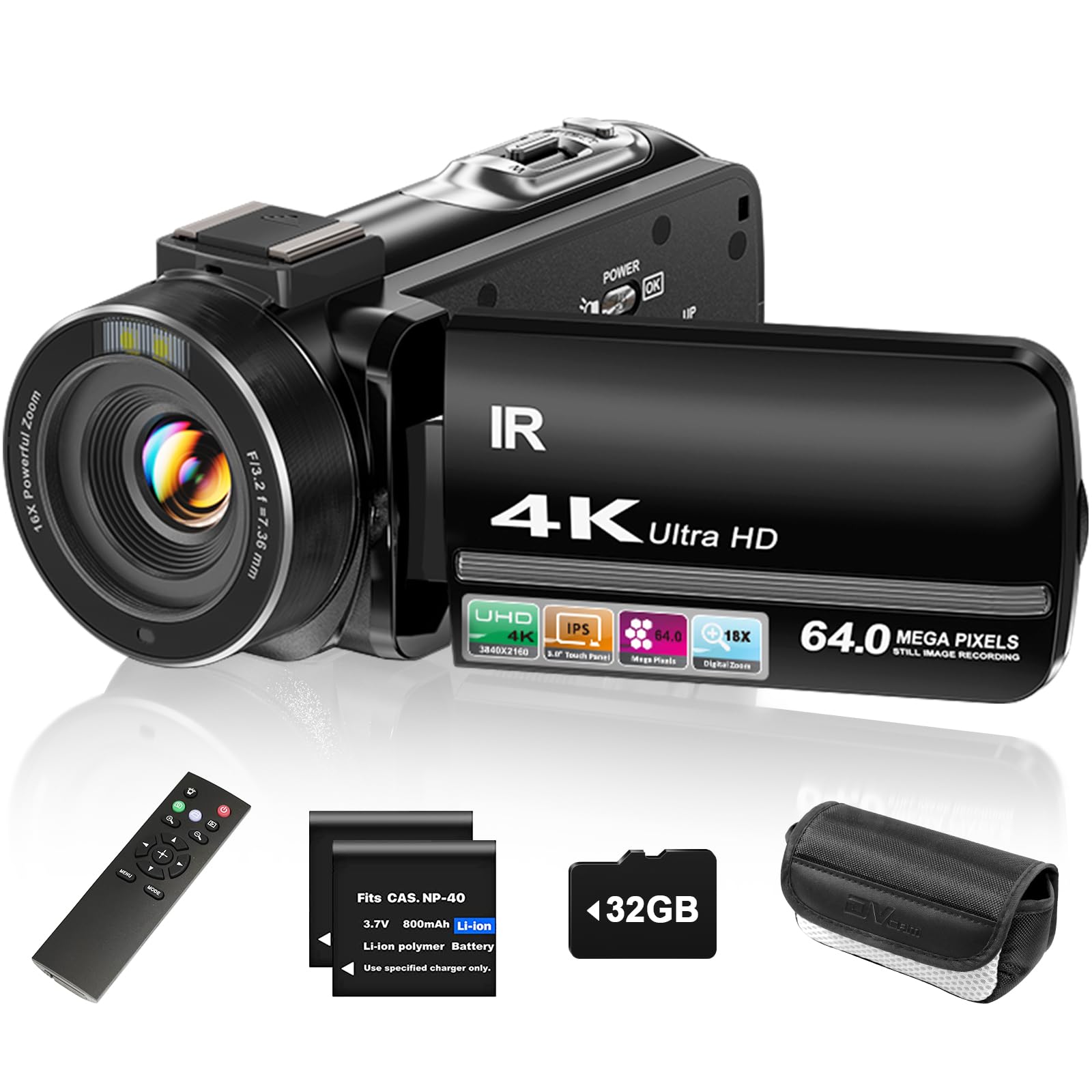
The ZYDIIE 4K Camcorder is the only device in this roundup with infrared night vision. A press of the OK button activates an IR cut filter that switches the sensor to black-and-white mode, allowing you to record in complete darkness. This feature alone makes it the go-to option for wildlife observation, security documentation, or any scenario where ambient light is unavailable.
The 3.0-inch IPS touchscreen rotates 270 degrees, giving you more angle flexibility than the standard 180-degree flip screens. The included wireless remote control lets you start and stop recording or take photos from up to 15 feet away — invaluable for group shots, solo filming, or tripod-based interviews where touching the camera would cause shake. The dual-battery system and 32GB card provide a solid foundation for long recording sessions.
Image quality in normal light is good but not great — 4K video looks sharp on a phone screen but shows compression artifacts on a larger monitor. The 18X digital zoom is purely digital and loses detail quickly past 6X. For the price, however, the combination of night vision, remote control, and a rotating touchscreen is hard to beat.
Why it’s great
- Infrared night vision works in total darkness
- Wireless remote for hands-free shooting
- 270° rotating screen for creative angles
Good to know
- Digital zoom degrades quality quickly
- Daylight sharpness is not as refined as KODAK
- Batteries are not included — must be purchased separately
FAQ
Can a sub-$150 camera take better photos than a modern smartphone?
What does “interpolated 64MP” mean on a budget camera?
Is a 4K camcorder like the ZYDIIE better for video than a point-and-shoot like the KODAK?
Final Thoughts: The Verdict
For most users, the best camera for $150 winner is the KODAK PIXPRO FZ45 because it delivers the only honest optical zoom lens in the group from a trusted brand, with a simple interface that just works. If you need waterproof capability for snorkeling and beach trips, grab the Maxmango D50. And for a beginner vlogger who wants a complete kit out of one box — tripod, bag, memory card, and a rotating lens — nothing beats the Lmzour 4K Vlogging Camera.