
Our readers keep the lights on and my morning glass full of iced black tea. As an Amazon Associate, I earn from qualifying purchases.
A documentary isn’t just a film; it’s an argument with reality, a commitment to capturing truth as it unfolds in uncontrolled environments. Your camera is the instrument that translates that volatile, unpredictable light into a narrative, and choosing the wrong one means missing the moment entirely.
I’m Min — the co-founder and writer behind Gadgets Feed. I’ve spent countless hours dissecting sensor readout speeds, codec depth, rolling shutter artifacts, and dynamic range measurements to understand exactly which imaging tools actually survive the rigors of long-form, unscripted production.
This guide cuts through the noise to deliver a tightly vetted selection of the best camera for a documentary, focusing on the concrete specs that matter when your subject won’t do a second take.
How To Choose The Best Camera For A Documentary
Selecting a camera for documentary filmmaking means prioritizing reliability, record time, and image flexibility over pixel chasing. The wrong choice will have you fumbling with menus while your subject walks away, or suffering with unusable footage from a high-contrast scene.
Internal ND Filters Are Non-Negotiable
A variable internal ND filter system allows you to maintain a wide aperture in bright sunlight without swapping external matte boxes or screw-on filters. This is critical for fast-moving documentary scenarios where you need shallow depth of field and proper exposure simultaneously. Cameras like the Blackmagic Pocket Cinema Camera 6K Pro and certain Sony FX-series bodies build this directly into the imaging path.
Codec Depth and Dynamic Range
Recording in 10-bit 4:2:2 or higher (like ProRes or Blackmagic RAW) gives you the latitude to recover crushed shadows and blown highlights in post. Documentary lighting is rarely controlled, so a camera with at least 13 stops of dynamic range allows you to shoot confidently into mixed lighting environments and retain detail where a 8-bit codec would fall apart.
Audio Inputs and Monitoring
Built-in microphones are useless for documentary interviews. You need dual XLR inputs with phantom power, headphone monitoring with proper level metering, and physical audio controls that don’t require diving into a touchscreen menu. A camera without these is a camera that will require an external audio recorder, adding another failure point to your rig.
Quick Comparison
On smaller screens, swipe sideways to see the full table.
| Model | Category | Best For | Key Spec | Amazon |
|---|---|---|---|---|
| Sony FX3 | Cinema Line | Low-light & Long Take | 15+ Stops DR, ISO 409600 | Amazon |
| Nikon Z6 III | Mirrorless | Internal 6K RAW | 6K/60p N-RAW Recording | Amazon |
| Canon EOS R5 | Mirrorless | 8K Oversampled 4K | 45MP Stacked CMOS | Amazon |
| Sony a7S III | Mirrorless | Low-light & 4K 120p | 12MP Sensor, 4:2:2 10-bit | Amazon |
| Blackmagic 6K Pro | Cinema Camera | Studio & Interview | Internal ND, 13 Stops DR | Amazon |
| Panasonic HC-X20 | Camcorder | Interview & Event | 1-inch Sensor, 20x Zoom | Amazon |
| Sony Alpha 6700 | Mirrorless | Compact 4K 120p | 26MP APS-C Sensor | Amazon |
| Sony a7 IV | Mirrorless | Versatile Hybrid | 33MP Full-frame | Amazon |
| Canon 5D Mark IV | DSLR | Photo & Video Hybrid | 30.4MP Full-frame | Amazon |
| Nikon D850 | DSLR | High Resolution Video | 45.7MP BSI Sensor | Amazon |
| Blackmagic Pocket 4K | Cinema Camera | Budget Cinema Rig | MFT Mount, 13 Stops DR | Amazon |
| Sony FDR-AX43 | Camcorder | Point-and-Shoot 4K | 20x Optical Zoom | Amazon |
| Canon VIXIA HF G70 | Camcorder | Time Stamp Recording | 20x Optical Zoom | Amazon |
In‑Depth Reviews
1. Sony FX3 Full-Frame Cinema Line Camera

The Sony FX3 is a full-frame cinema camera disguised in a compact mirrorless body, designed explicitly for long-form video work. The absence of recording time limits and the built-in fan that prevents thermal shutdown are its killer features for documentary shoots that run for hours without a cut.
The dedicated XLR handle unit provides professional-grade audio inputs directly into the body, eliminating the need for a separate field recorder. With a base ISO of 800 and a second native ISO of 12,800, you can shoot in extremely low-light environments like candlelit interviews or nighttime street scenes without introducing excessive noise.
S-Log3 gamma and S-Cinetone color science provide a filmic look straight out of camera, while the 16-bit RAW output over HDMI gives you maximum grading latitude in post. The bundled 24-70mm f/2.8 GM II lens completes this as a turnkey documentary solution.
Why it’s great
- Unlimited recording time with active cooling
- Full-frame sensor with exceptional low-light performance
- Integrated XLR audio inputs in top handle
Good to know
- High premium price point for the full kit
- No built-in high-res electronic viewfinder for stills
2. Blackmagic Pocket Cinema Camera 6K Pro

The Blackmagic Pocket Cinema Camera 6K Pro remains the gold standard for documentary filmmaking at its price tier. The 6K Super 35 sensor with 13 stops of dynamic range captures rich, filmic footage that holds up beautifully in high-contrast scenes, preserving highlight detail in bright outdoor interviews and shadow information in dim interiors.
The built-in 2, 4, and 6-stop ND filters are a lifesaver for run-and-gun shooting, allowing you to maintain a wide aperture in bright conditions without external matte box rigs. The tilting 5-inch HDR LCD screen is bright enough to use without an external monitor, and the mini XLR input provides professional audio connectivity.
Recording to Blackmagic RAW at 12-bit depth gives you extreme flexibility in post-production, and the included DaVinci Resolve Studio activation key means you can start grading immediately. The trade-off is battery life—the NP-F570 battery lasts about 45 minutes, so a multi-battery setup is required for field work.
Why it’s great
- Internal ND filter system for variable light control
- 13 stops of dynamic range for challenging lighting
- Includes DaVinci Resolve Studio for post-production
Good to know
- Battery life is short (approx. 45 minutes per cell)
- No in-body image stabilization; requires tripod or gimbal
3. Panasonic HC-X20 Professional Camcorder

The Panasonic HC-X20 is a purpose-built professional camcorder that prioritizes ease of use and ergonomic balance for long shooting days. Its 1-inch MOS sensor delivers clean 4K 60p 4:2:2 10-bit footage, and the 24.5mm wide-angle lens with 20x optical zoom provides versatile focal range without swapping lenses—ideal for documentary interviews and event coverage.
The triple manual control ring (focus, zoom, iris) gives you immediate tactile adjustments, and the 5-Axis HYBRID O.I.S. stabilization keeps footage smooth during handheld shooting. Built-in streaming protocols (Wi-Fi and Ethernet-ready) allow live broadcast scenarios, making this camera a hybrid production tool.
Professional features like face detection AF, zebra pattern, and waveform monitoring are built directly into the viewfinder and LCD. The camera records to SDXC cards in MOV, MP4, or AVCHD formats, and the XLR audio inputs accept phantom-powered microphones without adapters.
Why it’s great
- Dedicated manual zoom, focus, and iris rings
- Excellent optical zoom range for field coverage
- Professional audio inputs with phantom power
Good to know
- Smaller sensor than full-frame or Super 35 options
- Auto balance can darken image in strong light
4. Nikon Z6 III Full-Frame Mirrorless Camera

The Nikon Z6 III breaks new ground by offering internal 6K/60p N-RAW recording in a compact full-frame body. This is a remarkable value for documentary shooters who want raw flexibility without stepping up to dedicated cinema cameras. The oversampled 4K UHD footage derived from the full 6K sensor is exceptionally sharp and clean.
The electronic viewfinder sets a new benchmark with 4000 nits peak brightness and a 120 fps refresh rate, providing a clear view even in harsh midday sun. The autofocus system, powered by deep learning AI, detects subjects down to -10 EV and tracks human faces as small as 3% of the frame, making it reliable for interview setups.
The sensor’s ISO range extends to 64,000, and the body features dual memory card slots (CFexpress Type B and SD UHS-II) for backup recording. The in-body image stabilization allows reasonable handheld footage, though a gimbal is still recommended for smooth walking shots.
Why it’s great
- Internal 6K/60p 12-bit N-RAW recording
- Class-leading 4000-nit EVF brightness
- Reliable AI-driven subject detection autofocus
Good to know
- Battery life around 2 hours in video mode
- Menu system less intuitive than some competitors
5. Canon EOS R5 Mirrorless Camera

The Canon EOS R5 is a beast for documentary work that requires high-resolution capture. Its 45-megapixel stacked full-frame sensor records 8K RAW internally, which you can downsample to pristine 4K for incredible detail. The DIGIC X processor handles fast readout speeds, enabling 20 fps electronic shutter and 12 fps mechanical.
The Dual Pixel CMOS AF II system, with 1,053 AF points covering 100% of the frame, delivers reliable autofocus with subject tracking for people, animals, and vehicles. This is crucial for wildlife documentaries or fast-moving events. The in-body image stabilization provides up to 8 stops of shake correction, allowing steady handheld footage.
Early concerns about overheating during 8K recording have been largely addressed with firmware updates; in real-world documentary scenarios, 4K HQ mode provides exceptional quality without thermal issues. The RF lens mount offers access to Canon’s superb L-series glass, which is essential for professional-grade optics.
Why it’s great
- 45MP full-frame sensor with 8K RAW recording
- Excellent Dual Pixel CMOS AF with vehicle/subject tracking
- Strong in-body stabilization for handheld use
Good to know
- Battery life shorter than DSLR counterparts
- 8K recording may still have thermal limits in hot environments
6. Sony Alpha a7 IV Full-Frame Mirrorless Camera
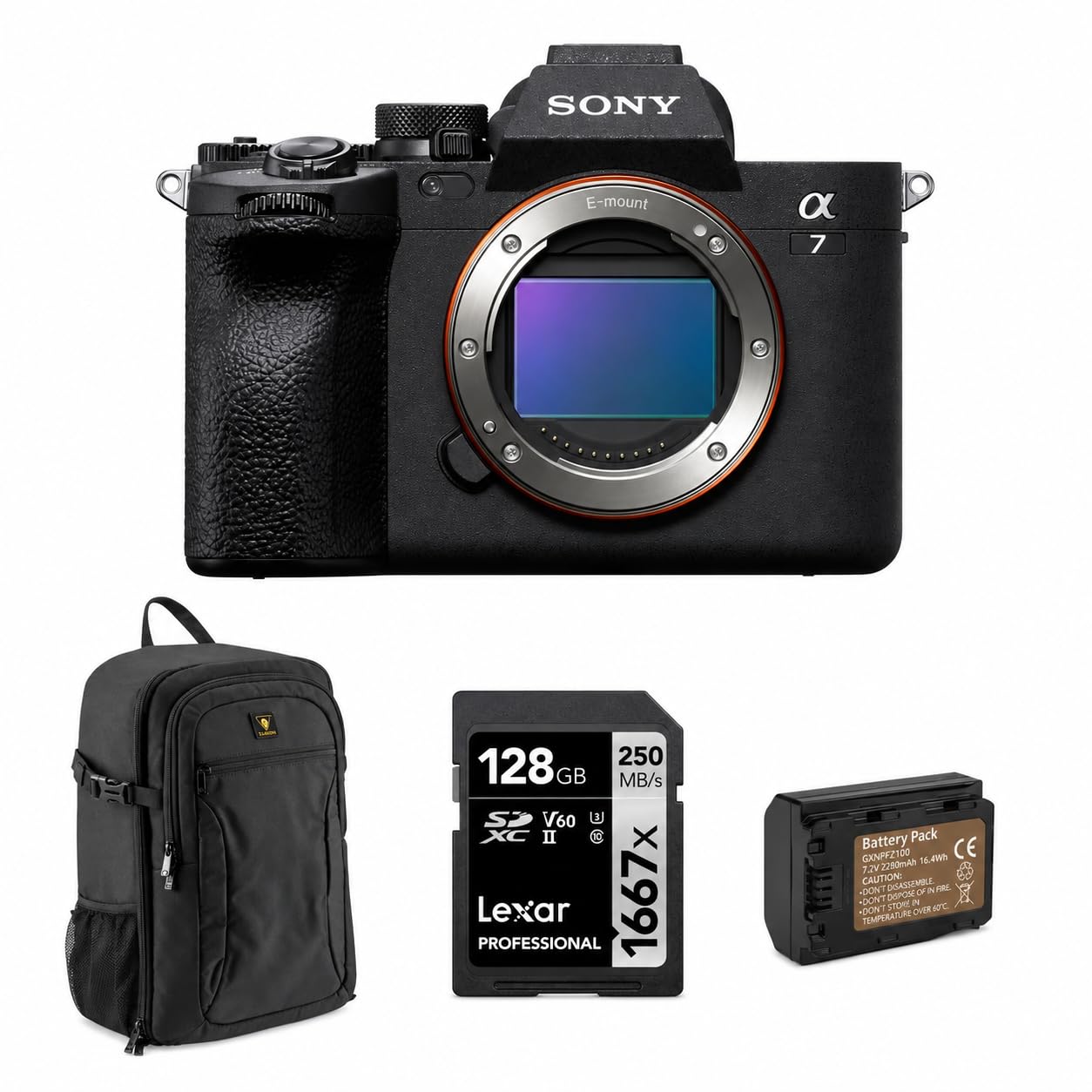
The Sony Alpha a7 IV is a well-rounded hybrid that balances still photography with video capabilities at a reasonable premium. The 33MP full-frame sensor, paired with the BIONZ XR processor, delivers sharp 4K 60p footage in 10-bit depth with S-Cinetone color science for a filmic look right out of camera.
The Fast Hybrid Autofocus system with 759 phase-detection points provides reliable Real-time Tracking for moving subjects. This is particularly useful for documentary work where you need to lock focus on an interview subject and trust the camera not to hunt. The vari-angle touchscreen LCD allows flexible positioning.
The bundled kit includes a 28-60mm lens, extra battery, 128GB memory card, and a camera backpack, making it a turnkey solution for getting started immediately. The USB-C port supports fast transfer and charging, while the headphone and microphone jacks provide standard monitoring inputs.
Why it’s great
- Excellent hybrid performance for photo and video
- Reliable Real-time Tracking autofocus system
- Comprehensive bundle for immediate field use
Good to know
- No internal RAW video recording (only S-Log)
- Menu system is complex, requires study
7. Nikon D850 FX-Format Digital SLR Camera

The Nikon D850 remains a legendary DSLR for documentary filmmakers who also require high-resolution stills. The back-side illuminated 45.7MP sensor with no optical low-pass filter delivers extraordinary detail, and the 4K UHD 24p/30p video provides clean footage with a full sensor readout (no crop).
The 153-point AF system with 99 cross-type sensors is fast and accurate in live view, and the tilting touchscreen allows waist-level or overhead framing. The D850 supports 4K and 8K time-lapse movies, which is a powerful feature for capturing environmental changes in nature documentaries.
The ergonomic grip, weather sealing, and battery life (up to 1,840 shots per charge) make it durable for long field days. Video autofocus is not as sophisticated as modern mirrorless systems, but manual focus assist features like focus peaking make it workable for cinematic shots.
Why it’s great
- Outstanding 45.7MP still resolution for hybrid work
- Tilting touchscreen for flexible framing
- Excellent battery life and weather sealing
Good to know
- Video autofocus is not as robust as mirrorless options
- No internal ND filters or stabilization
8. Canon EOS 5D Mark IV DSLR Camera
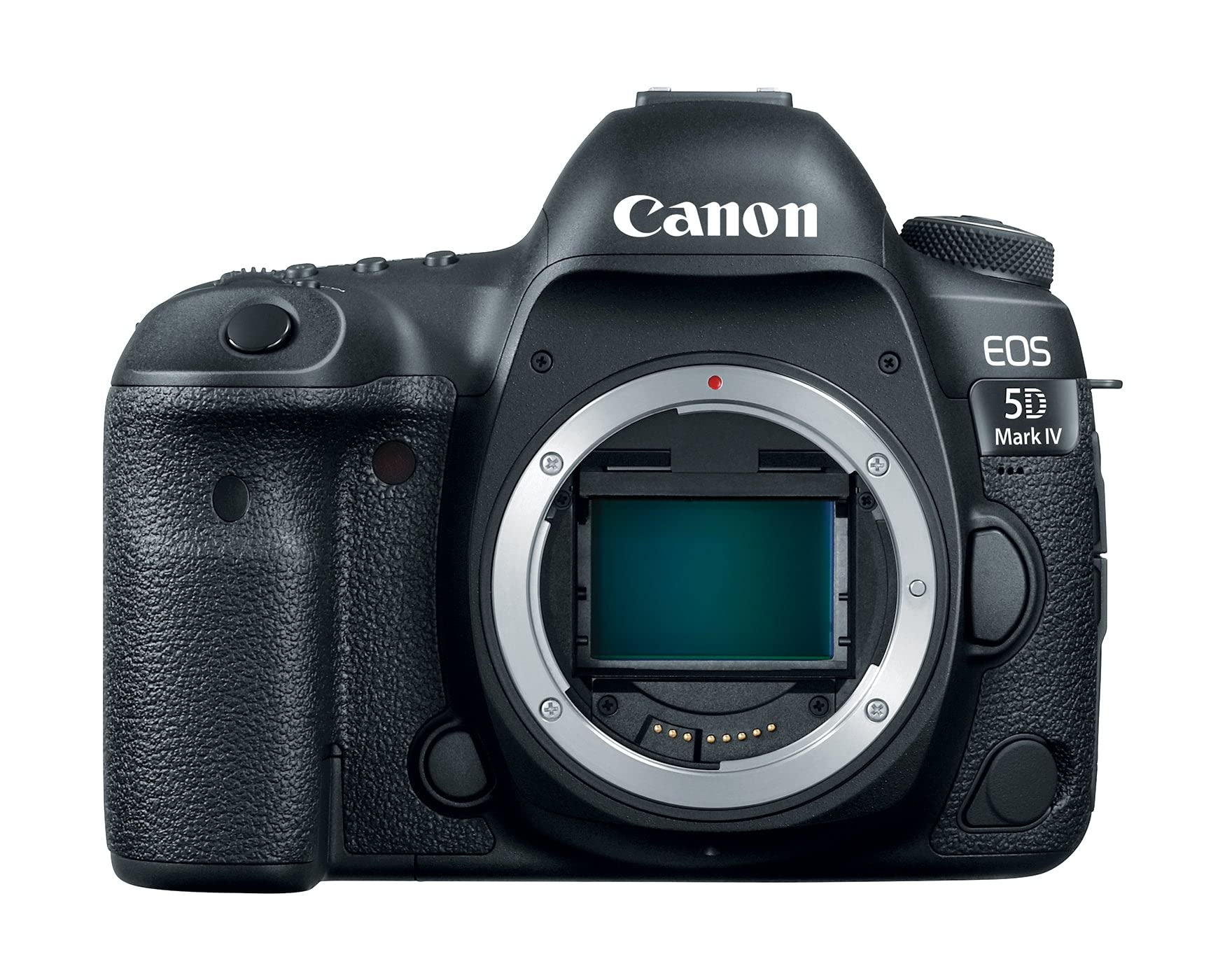
The Canon EOS 5D Mark IV is a tried-and-true workhorse for documentary teams that need a reliable DSLR body. The 30.4MP full-frame CMOS sensor delivers beautiful images with excellent dynamic range, and the DIGIC 6+ processor handles 4K Motion JPEG video at 30/24 fps.
The Dual Pixel CMOS AF provides smooth and responsive autofocus during live view shooting, which is a significant advantage over older DSLRs for video work. The touchscreen interface allows you to select focus points by tapping, making it easy to shift focus during interviews without physical buttons.
The built-in Wi-Fi enables wireless file transfer to a mobile device for quick sharing or backup. While the 4K codec (Motion JPEG) is less efficient than modern H.265 implementations, the image quality is excellent, and the large file sizes are manageable with modern SD cards.
Why it’s great
- Proven DSLR reliability for field production
- Dual Pixel CMOS AF for responsive video focusing
- Excellent dynamic range and high ISO performance
Good to know
- No built-in image stabilization
- 4K video uses less efficient Motion JPEG codec
9. Sony a7 III Mirrorless Camera with 28-70mm Lens

The Sony a7 III is a benchmark entry point into full-frame mirrorless video. The 24.2MP back-illuminated CMOS sensor offers 15 stops of dynamic range, which is outstanding for capturing high-contrast documentary scenes. The 4K video is oversampled from a 5K readout, resulting in sharp, detailed footage.
The 693 phase-detection AF points cover 93% of the sensor, providing reliable autofocus for interview subjects. The battery life is exceptional for a mirrorless camera, allowing the NP-FZ100 to last through a full day of shooting without needing a swap.
The bundled 28-70mm f/3.5-5.6 lens is a versatile starting point for documentary work, covering wide to medium telephoto ranges. The 14-bit uncompressed RAW stills and up to 10fps burst shooting make it a solid hybrid option as well.
Why it’s great
- Excellent full-frame sensor with 15-stop dynamic range
- Fast and reliable 693-point phase-detection AF
- Great battery life for long shooting days
Good to know
- No 10-bit internal recording (8-bit only)
- Kit lens is soft, benefits from upgrade
10. Sony Alpha 6700 Mirrorless Camera

The Sony Alpha 6700 packs a 26MP APS-C Exmor R sensor into a remarkably small body, making it a viable option for lightweight documentary kits. Its ability to record 4K/60p from a 6K oversampled readout, plus 4K/120p high frame rate, provides flexibility for slow-motion shots without sacrificing resolution.
The dedicated AI processor enables real-time recognition and tracking of human eyes, animal eyes, and vehicles. This makes the camera particularly strong for wildlife documentary work or run-and-gun street documentary where subject tracking needs to be immediate and reliable.
The body features 759 phase-detection AF points, in-body stabilization, and a vari-angle touchscreen. The smaller APS-C sensor means lenses are lighter and more affordable, which is a significant advantage for travel-intensive documentary projects.
Why it’s great
- AI-powered subject recognition and tracking
- 4K/120p high frame rate recording
- Compact and lightweight for travel
Good to know
- APS-C sensor has more noise in low light than full-frame
- In-body stabilization is decent but not gimbal-level
11. Blackmagic Design Pocket Cinema Camera 4K

The Blackmagic Pocket Cinema Camera 4K is a budget-friendly entry point that punches far above its weight class for documentary filmmaking. The Micro Four Thirds sensor records native 4096 x 2160 resolution with 13 stops of dynamic range, capturing detail in highlights and shadows that cameras at twice the price cannot.
The dual native ISO up to 25,600 provides usable footage in low-light environments, and the variety of recording options (SD/UHS-II, CFast 2.0, or USB-C to external SSD) gives flexibility in storage. The included DaVinci Resolve Studio activation key is a significant value-add for post-production.
The MFT lens mount opens up a vast library of affordable lenses, including vintage glass that adds character. The lack of in-body stabilization means you’ll need a tripod or gimbal for smooth handheld shots, and battery life is limited to about 30 minutes, requiring a v-mount battery solution for extended shoots.
Why it’s great
- Excellent dynamic range for the price point
- Includes DaVinci Resolve Studio software
- Lightweight, compact body for rigging
Good to know
- Very short battery life (approx. 30 minutes)
- No in-body stabilization or internal ND filters
12. Sony FDR-AX43 UHD 4K Handycam Camcorder

The Sony FDR-AX43 is a self-contained camcorder designed for point-and-shoot documentary simplicity. The Balanced Optical SteadyShot image stabilization acts like a built-in gimbal, producing smooth footage without extra rigging. The 20x optical zoom (with 30x Clear Image Zoom for 4K) provides versatile framing from wide to tight shots.
The 1/2.5-inch Exmor R CMOS sensor with BIONZ X processor delivers true 4K video with good low-light performance for its sensor size. The Fast Intelligent AF tracks focus reliably, making it easy to follow moving subjects during events or street documentaries.
The inclusion of a microphone input, HDMI output, and Wi-Fi connectivity makes this a practical tool for quick interview setups. The large NP-FV70 battery provides extended run time, and the 250x digital zoom, while mostly unnecessary, is available for extreme telephoto situations.
Why it’s great
- Excellent built-in optical stabilization for run-and-gun
- Impressive 20x optical zoom range
- Simple point-and-shoot operation with reliable auto settings
Good to know
- Smaller 1/2.5-inch sensor limits low-light quality
- No internal memory; requires an SD card
13. Canon VIXIA HF G70 Camcorder

The Canon VIXIA HF G70 fills a niche need for documentary work that requires embedded date/time metadata directly in the video file. Its On-Screen Display (OSD) “Time Stamp” recording feature embeds date, time, timecode, and other data into the original camera files—a critical feature for legal, evidentiary, or historical documentation.
The 1/2.3-inch 4K UHD CMOS sensor paired with the DIGIC DV6 image processor delivers sharp video with good color reproduction. The 20x optical zoom and advanced image stabilization make it suitable for event coverage, and the Hybrid AF system with face detection ensures subjects remain in focus.
The camera supports UVC livestreaming directly to a computer via USB, which adds live streaming capability without capture cards. Dual SD card slots provide backup recording, and the 8-blade aperture creates appealing cinematic out-of-focus highlights for interview backgrounds.
Why it’s great
- Built-in OSD time stamp and timecode embeds
- UVC livestreaming without external capture hardware
- 20x optical zoom with smooth image stabilization
Good to know
- Low-light performance is poor compared to larger sensors
- 1080p mode may exhibit autofocus jitter
FAQ
What is the most important spec for a documentary about interviews?
Do I need internal ND filters for nature documentary filming?
Final Thoughts: The Verdict
For most users, the best camera for a documentary winner is the Sony FX3 because it combines professional cinema features (internal cooling, unlimited recording, XLR audio) with a compact, gimbal-friendly form factor that works for nearly every shooting scenario. If you want internal ND filters and raw image quality at a lower budget, grab the Blackmagic Pocket Cinema Camera 6K Pro. And for a lightweight, long-zoom package that doesn’t require lens changes, nothing beats the Panasonic HC-X20.