
Our readers keep the lights on and my morning glass full of iced black tea. As an Amazon Associate, I earn from qualifying purchases.
Specs are compiled from manufacturer listings and verified buyer reviews and can change over time — please confirm the key details on the product page before buying.
Animal photography is a race against the light and the subject. You need a camera that locks focus the instant a fox glances back or a hawk lifts off — a single missed frame means a lost shot.
I’m Min — the founder and writer behind Gadgets Feed. This guide is built by comparing the manufacturers’ published specifications and the patterns across verified customer reviews, so you get each pick’s real strengths and trade-offs instead of marketing spin.
You need a body that pairs fast autofocus with a durable shutter to keep pace with wildlife, and we have broken down the top contenders to help you find the right camera for animal photography.
Our Picks at a Glance


How To Choose The Best Camera For Animal Photography
Picking a camera for animals depends on three pillars: how fast it shoots, how well it tracks a moving target, and how much light its sensor can gather when the sun drops. Every worthwhile wildlife camera excels in at least two of these.
Autofocus and Subject Detection
Your camera needs to recognize an animal and track its eye or body across the frame. Look for a camera with dedicated animal-detection algorithms and a high number of phase-detection autofocus points — these give you a better chance of keeping a bird in flight or a running deer sharp.
Continuous Shooting Speed (Frames Per Second)
A cheetah doesn’t pause for a portrait. You want a body that can fire at least 10 frames per second (fps) with continuous autofocus, so you capture the peak moment from a burst. Budget-friendly options often drop to 5-7 fps, which can miss the action entirely.
Sensor Size and Megapixels
Full-frame sensors (36x24mm) deliver cleaner images in low light, while APS-C sensors give you extra reach because of the crop factor — a 200mm lens behaves like a 320mm on an APS-C body. More megapixels let you crop later without losing detail, but only if the autofocus keeps up.
Image Stabilization
When you are handholding a long telephoto lens, in-body image stabilization (IBIS) makes a huge difference. You can shoot at slower shutter speeds and still get sharp images, which is especially useful in the dim early morning or late evening when animals are most active.
Quick Comparison
| Model | Best For | Burst Speed | AF Points | Megapixels | Amazon |
|---|---|---|---|---|---|
| Nikon D850★ Best Overall | High Resolution | 9 fps | 153 | 45.7 MP | $2,396.95$2,599.95Amazon |
| Panasonic LUMIX G9IISpeed King | Speed Demon | 60 fps | 779 | 25.2 MP | $1,497.99Amazon |
| Canon EOS R6 Mark IIBest All-Rounder | All-Rounder | 40 fps | 1,053 | 24.2 MP | $1,546.95$1,749.95Amazon |
| Canon EOS R8 | Entry Full-Frame | 40 fps | 1,053 | 24.2 MP | $1,299.00Amazon |
| Panasonic LUMIX S5IIX | Video + Photo | — | 779 | 24.2 MP | $1,997.99$2,499.99Limited time dealAmazon |
| Sony Alpha A7 III | Reliable Standard | 10 fps | 693 | 24.2 MP | $1,898.00Amazon |
| Canon EOS RP | Budget Entry | 5 fps | — | 26.2 MP | from $799.00Amazon |
| Sony RX100 VII | Pocket Travel | 20 fps | 425 | 20.1 MP | $1,498.00Amazon |
In‑Depth Reviews
1. Nikon D850 FX-Format Digital SLR Camera Body
Our pick — over 4.5★ from 750+ verified ratings; the strongest balance of quality and price.
Forty-five point seven megapixels on a backside-illuminated sensor — the D850 delivers detail few cameras can touch.
For animal portraits where you want to count every whisker, the D850’s 45.7 MP BSI sensor with no optical low-pass filter produces stunning resolution. 45.7 MP versus the Canon EOS R8’s 24.2 MP, giving you enormous cropping flexibility when a subject is far away. It shoots 9 fps with full autofocus (with the optional battery grip), which is adequate for many scenarios but falls short of the 60 fps G9II.
The 153-point phase-detection autofocus system is proven and fast, though it feels dated compared to modern mirrorless systems. The D850 also shoots 4K time-lapse and slow-motion 1080p at 120 fps. It is an SLR, so you get a bright optical viewfinder and access to Nikon’s huge F-mount lens library. Buyers specifically praise the dynamic range and color depth. The trade-off is size and weight — you are carrying a big DSLR.
Where it dominates: studio-quality resolution for wildlife stills. The D850’s high-res sensor lets you crop deeply without losing print-worthy sharpness — an edge no 24MP body matches.
Choose this if: resolution and cropping are your top priority and you do not mind a heavier DSLR body for the privilege.
skip it if: you need faster burst rates or the latest animal-detection AF — mirrorless bodies are ahead on both.
2. Panasonic LUMIX G9II Micro Four Thirds Camera
The Panasonic G9II fires off frames faster than any other body on this list — a true speed-first weapon.
You get a massive 60 fps burst shooting with continuous autofocus, and the viewfinder stays completely blackout-free while you shoot. That means you can spray a burst at a diving kingfisher and pick the single perfect frame later. The G9II is the first Lumix G-series camera with phase-detection autofocus, giving it 779 autofocus points — 779 autofocus points versus the Nikon D850’s 153 points — so tracking an erratic squirrel or a bounding deer is far more reliable.
The Micro Four Thirds sensor (25.2 megapixels) has a 2x crop factor, which means your 200mm lens behaves like a 400mm full-frame equivalent. That extra reach is a real advantage for smaller animals. Buyers report the 8.0-stop body stabilization lets them shoot handheld at surprisingly slow shutter speeds without blur. On the downside, the smaller sensor cannot match a full-frame camera’s low-light performance when the sun has fully set.
Why it wins for action
- 60 fps burst (with AFC) for split-second moments
- 779 phase-detection points cover nearly the whole frame
- 8.0-stop body stabilization for handheld telephoto shots
What to know
- Micro Four Thirds sensor has less low-light headroom
- No built-in flash; limited to hotshoe
- Only 45 ratings so far — a newer, less-proven model
Reach for it when: your priority is catching fast unpredictable wildlife and you value reach-per-dollar over ultimate low-light purity.
The one catch: if you frequently shoot in deep dusk, a full-frame body will give you cleaner files at high ISO.
3. Canon EOS R6 Mark II with RF24-105mm Lens
The R6 Mark II delivers a powerful blend of speed, stabilization, and subject detection for wildlife.
Its 24.2MP full-frame CMOS sensor and DIGIC X processor enable sharp, low-noise images even at high ISO. The Dual Pixel CMOS AF II system covers 1,053 AF zones with deep-learning animal detection, making it one of the best for tracking fur and feathers. You get up to 40 fps electronic shutter shooting with full AF tracking, easily capturing a falcon’s dive or a fox’s pounce.
In-body image stabilization (IBIS) provides up to 8 stops of correction, letting you handhold long telephotos in dim light. The R6 Mark II also shoots uncropped 4K 60p video oversampled from 6K, with Canon Log 3. Dual UHS-II SD card slots give you backup. The vari-angle touchscreen and comfortable grip make it a joy for all-day shoots. Buyers rave about the reliable autofocus and excellent build quality.
Strengths
- top-tier animal AF with deep learning
- 40 fps burst with no viewfinder blackout
- 8-stop IBIS for handheld telephoto work
Trade-offs
- Electronic shutter may have rolling shutter for fast action
- Battery life is moderate, carry spares
- RF lens ecosystem is still growing
Best for: the all-around wildlife shooter who wants top autofocus, speed, and stabilization in a durable body.
Not for: those on a tight budget — the R8 offers similar AF at lower cost, but lacks IBIS.
4. Canon EOS R8 Mirrorless Camera Body

The R8 brings Canon’s latest full-frame AF and burst speed into an affordable, lightweight package.
It matches the R6 Mark II’s 40 fps electronic shutter and 1,053 AF zones with animal detection at a much lower price. The 24.2-megapixel CMOS sensor and DIGIC X processor produce sharp, well-exposed images. The autofocus covers 100% of the frame and uses deep learning to detect animals, making it nearly as capable as the R6 Mark II for tracking fur and feathers.
At 461 grams, it is Canon’s lightest full-frame RF-mount mirrorless body — a real advantage when you are hiking to a wildlife blind. It shoots uncropped 4K at up to 60 fps oversampled from 6K. The catch is no in-body stabilization; you rely on lens-based IS only. For telephoto shooting, that means you need a stabilized lens or a monopod. Owners mention the EVF resolution (2.36 million dots) is adequate but not class-leading.
The smart buy: you get R6 Mark II AF performance and burst speed in a smaller, cheaper body. The trade-off is no IBIS and a smaller battery — plan for spare power on long shoots.
Reach for this if: your budget caps around but you still want full-frame animal AF and high-speed bursts.
Look elsewhere if: you shoot handheld with long telephotos — the lack of IBIS will cost you sharp frames in low light.
5. Panasonic LUMIX S5IIX Mirrorless Camera with 20-60mm Lens
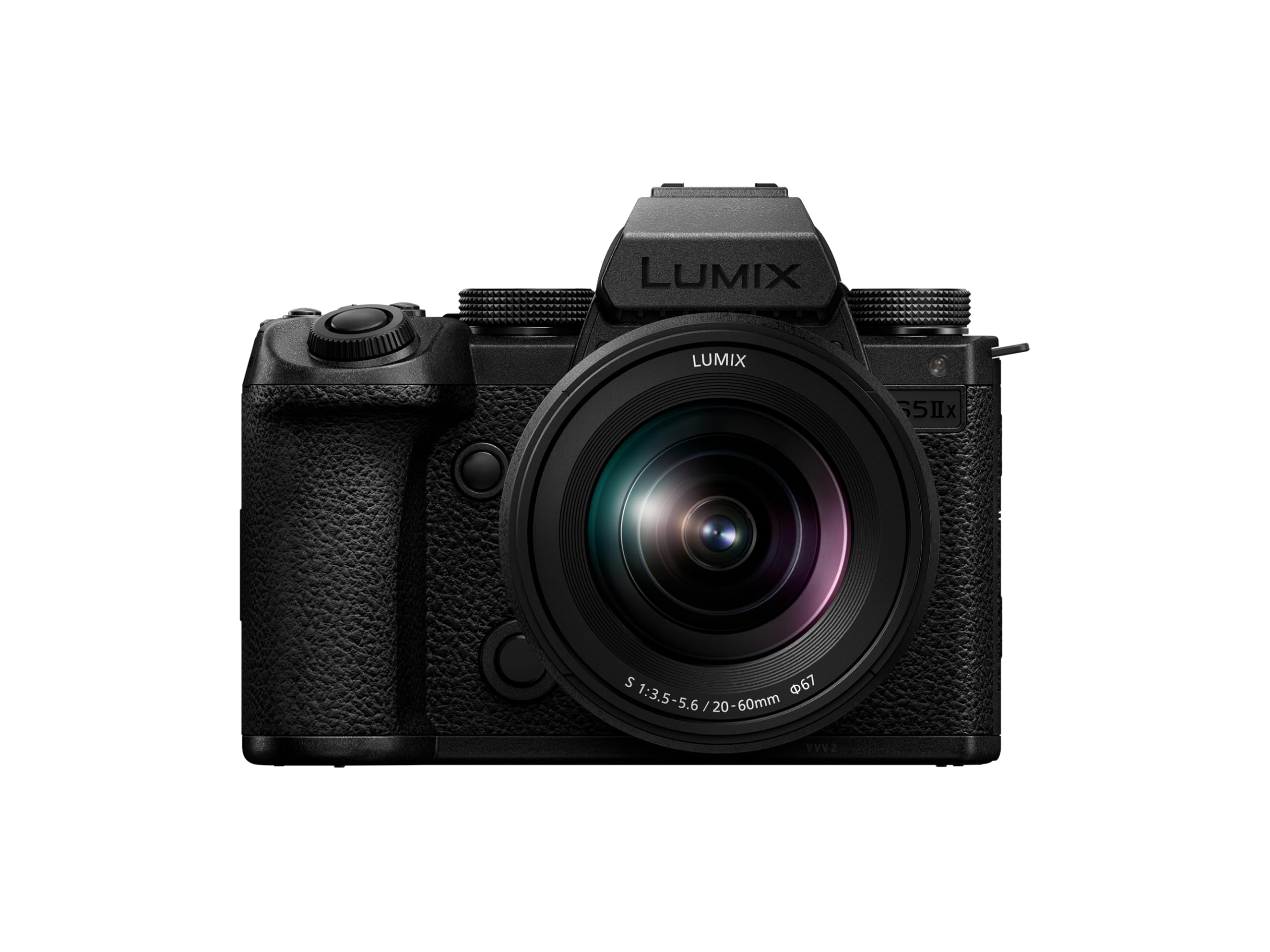
The S5IIX is a full-frame hybrid that brings Phase Hybrid AF and unlimited video recording for content creators.
It uses a 24.2-megapixel 35mm full-frame CMOS sensor with phase-detection autofocus — a first for Panasonic’s full-frame line — and 779 autofocus points. This makes tracking an animal through the frame smooth and accurate. It offers 14+ stops of dynamic range with V-Log/V-Gamut capture for rich colors in both photo and video.
A small internal fan and heat sink allow unlimited video recording, so you can film an animal behavior sequence without the camera cutting off. Active I.S. further stabilizes walking shots, useful for following subjects in the field. The kit includes a 20-60mm f/3.5-5.6 lens that focuses very close for near-macro shots. Reviewers point out the LUT function lets them apply color grades in-camera, saving post-processing time. For pure burst speed, however, it does not list a specific fps like the 60 fps G9II does.
Key strengths
- Phase Hybrid AF with 779 points for reliable focusing
- Unlimited video recording with built-in fan
- 14+ stop V-Log / V-Gamut for professional color grading
Considerations
- Kit lens is wide-to-standard (20-60mm) — not long enough for wildlife
- Burst speed not specified; likely lower than dedicated action cameras
- Newer model with only 55 ratings so far
Ideal for: the hybrid shooter who wants professional-grade video and solid stills for animal filmmaking and photography.
Not for: pure burst-rate hunters — Panasonic’s own G9II is faster for still action sequences.
6. Sony Alpha A7 III with 28-70mm Lens

The A7 III is a proven full-frame performer with excellent autofocus coverage and a massive library of lenses.
Its 24.2MP backside-illuminated full-frame sensor delivers 15 stops of dynamic range and clean images up to ISO 204,800. The hybrid AF system uses 693 phase-detection points covering 93% of the image area, plus 425 contrast-detection points, for accurate tracking of moving animals. It shoots up to 10 fps with AE/AF tracking, which is sufficient for moderate action but lags behind the 60 fps of the Panasonic G9II.
The 5-axis in-body stabilization (IBIS) keeps images steady. Sony’s E-mount lens ecosystem is one of the largest, giving you access to affordable and premium telephoto lenses alike. Buyers mention the battery life is excellent for a mirrorless camera. The included 28-70mm f/3.5-5.6 lens is a fine kit lens, but it lacks reach — you will want a 70-200mm or 100-400mm for serious animal work. The A7 III is older tech but still a very capable performer.
The reliable workhorse: massive lens selection, solid battery life, and proven image quality. It does not lead any single spec, but it leaves few gaps.
Pick this over the Canon RP because: the A7 III’s 693 AF points and 10 fps burst beat the RP’s 5 fps and less advanced AF by a wide margin.
But: if burst speed or the newest animal-detection AI matters more, look at the Panasonic G9II or Canon R6 Mark II.
7. Canon EOS RP with RF24-105mm Lens Kit

The EOS RP is the most affordable entry into full-frame mirrorless — but it asks for patience with fast animals.
You get a 26.2-megapixel full-frame CMOS sensor with Dual Pixel AF, which offers smooth and accurate focusing for stills and video. The 26.2 MP versus the Sony RX100 VII’s 20.1 MP, so you have more room to crop. At 5 fps continuous shooting, however, it is the slowest burst on this list. That makes it a difficult choice for running animals or birds in flight, where the G9II fires at 60 fps versus the RP’s 5 fps.
The included RF 24-105mm f/4-7.1 IS STM lens provides a versatile zoom range with up to 5 stops of optical image stabilization. It is a compact and lightweight kit for travel. Shoppers say the build quality feels good for the price. The RP also works as a high-quality webcam via the EOS Utility software. For patient wildlife photography in good light it can work, but its slow burst and lack of animal-specific AF modes limit it severely.
What it does well
- Affordable full-frame entry point
- 26.2 MP provides good cropping flexibility
- Compact and lightweight lens kit for travel
Where it struggles
- 5 fps burst misses fast action moments
- No dedicated animal detection AF
- Slow autofocus for erratic movement
Best for: a beginner on a tight budget who wants full-frame quality for stationary or slow-moving animals in good light.
Not for: anyone who needs to track fast wildlife — the Canon R8 or Sony A7 III offer far more capable autofocus systems.
8. Sony RX100 VII Premium Compact Camera
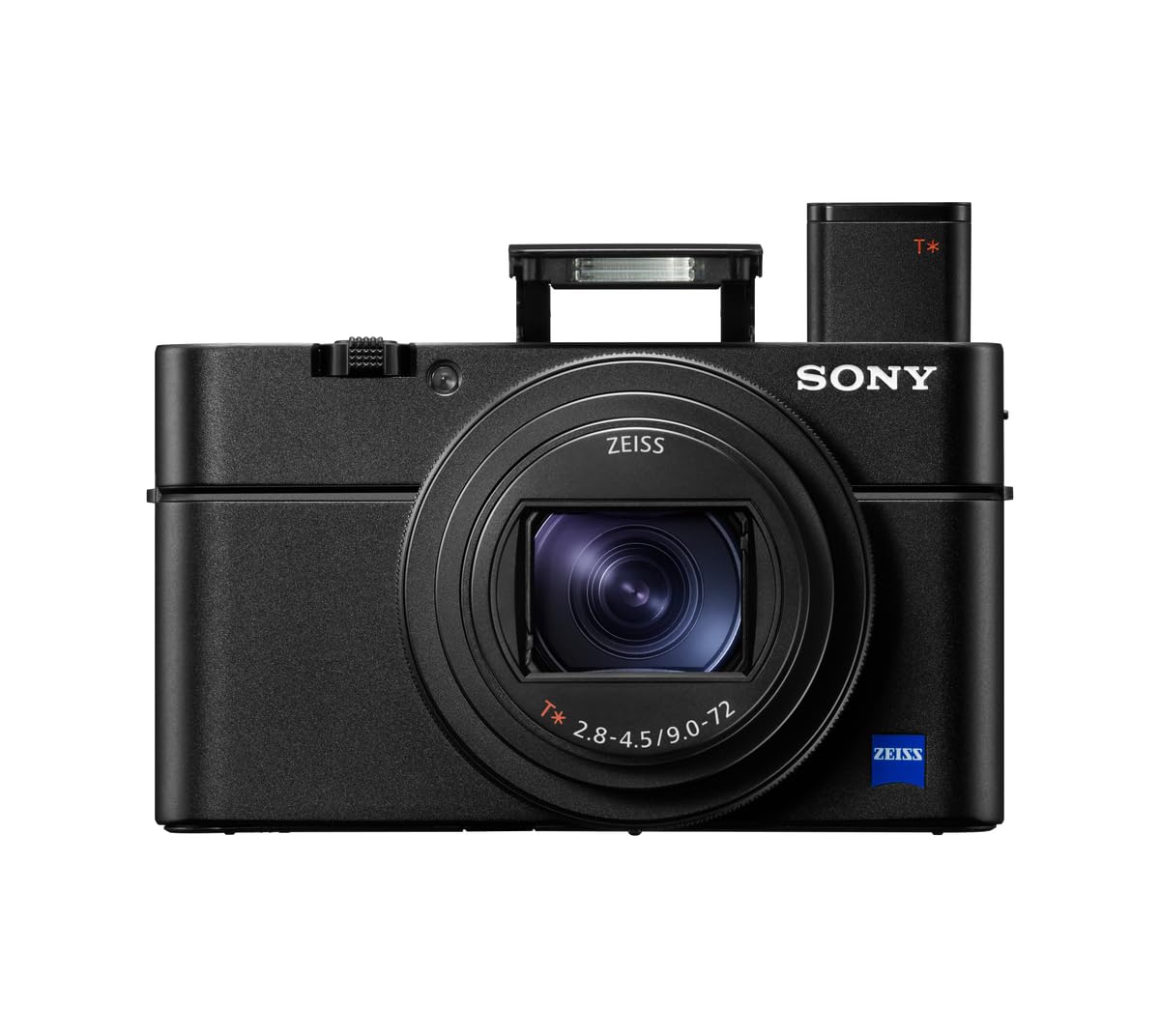
The RX100 VII slips into a jacket pocket while still delivering 20 fps burst and 4K video — a unique travel companion.
Its 20.1-megapixel 1.0-type stacked CMOS sensor and Zeiss Vario-Sonnar T* 24-200mm f/2.8-4.5 lens give you a wide-to-telephoto range in a body that fits in your palm. The 24-200mm reach is remarkable for a compact, covering both landscapes and moderate wildlife subjects. It shoots up to 20 fps with blackout-free viewing, using 60 AF/AE calculations per second — fast enough to catch a squirrel mid-leap.
The hybrid AF system uses 357 phase-detection points and 425 contrast-detection points with real-time tracking for animals (still images only). It shoots 4K video with S-Log3 and has an active mode for image stabilization. Buyers praise the built-in pop-up electronic viewfinder (XGA OLED) and the tilting LCD. The main limitation: the 1-inch sensor cannot match the low-light quality of any full-frame body, and you cannot change lenses.
What makes it special
- 24-200mm zoom range built into a pocket-sized body
- 20 fps blackout-free burst for action
- Real-time Eye AF for animals (stills)
Where it gives ground
- 1-inch sensor is more noisy than larger sensors in low light
- Non-interchangeable lens — no upgrade path
- Electronic viewfinder may feel small for some users
Ideal for: travelers or hikers who want a capable animal photography tool that takes up zero bag space.
Not for: serious wildlife enthusiasts who need maximum image quality or the flexibility of interchangeable lenses and larger sensors.
Understanding the Specs
Autofocus (AF) Points
Think of autofocus points as tiny sensors on your camera’s imaging chip that lock focus on a subject. More points means the camera can track a moving animal across more of the frame. A camera with 700+ points, like the Panasonic G9II or Canon R6 Mark II, can follow a bird’s erratic flight path much more reliably than one with 150 points. For erratic wildlife, more is almost always better.
Continuous Shooting (fps)
Measured in frames per second (fps), this tells you how many pictures a camera can take in one second while holding down the shutter. A rate of 10 fps might catch a deer’s jump, but 40 or 60 fps (like the Canon R6 Mark II or Panasonic G9II) lets you capture the exact millisecond a hawk snatches prey from the water. Higher fps is your safety net for unpredictable moments, but it also fills your memory card faster.
FAQ
Do I need a full-frame camera for animal photography?
How many frames per second is enough for wildlife?
What is the difference between phase-detection and contrast-detection autofocus?
Can I use F-mount lenses on a Nikon Z camera?
Is 20 megapixels enough for animal photography?
What does image stabilization do for animal photography?
Should I get a camera with animal subject detection?
What is the crop factor and how does it affect my lens?
How long does a camera battery last in the field?
Can I shoot 4K video for animal behavior with these cameras?
Final Thoughts: The Verdict
Across the board, the camera for animal photography winner is the Panasonic LUMIX G9II because its 60 fps burst, 779-point phase-detection AF, and 8-stop stabilization give you the best chance of capturing sharp animal action at a mid-range price. If you want the most advanced animal-detection autofocus and full-frame low-light performance, grab the Canon EOS R6 Mark II. And for the best combination of reach and speed per dollar, the standout is the Canon EOS R7.
How We Picked
We do not accept paid placement. Every pick is matched to a real buyer and a real use-case; we do not hands-on test units.
Sources & Methodology
Specifications: manufacturer listings and product documentation. Review insights: verified customer reviews, as of July 2026. Pricing: not shown on this page (it changes often); check the current price via the retailer link.
As an Amazon Associate, Gadgets Feed earns from qualifying purchases. This does not affect which products we feature.
Related Guides
Product prices and availability are accurate as of the date/time indicated and are subject to change. Any price and availability information displayed on Amazon at the time of purchase will apply to the purchase of this product. As an Amazon Associate I earn from qualifying purchases.
CERTAIN CONTENT THAT APPEARS ON THIS SITE COMES FROM AMAZON. THIS CONTENT IS PROVIDED "AS IS" AND IS SUBJECT TO CHANGE OR REMOVAL AT ANY TIME.
Amazon and the Amazon logo are trademarks of Amazon.com, Inc. or its affiliates.