
Architectural photography demands more than just a high megapixel count—it requires a sensor that resolves fine detail without distortion, a lens that keeps vertical lines straight, and a dynamic range wide enough to hold highlight and shadow detail in a single sunlit facade. The wrong camera introduces barrel distortion, chromatic aberration, or clipped highlights that ruin an otherwise perfect composition.
I’m Min — the co-founder and writer behind Gadgets Feed. I’ve spent hundreds of hours studying sensor specifications, lens diffraction limits, and dynamic range performance across camera systems to identify the models that truly serve the architectural photographer’s unique needs.
This guide examines seven capable cameras that handle the demanding geometry and exposure challenges of buildings, interiors, and urban landscapes, helping you find the right camera for architectural photography based on your budget and workflow requirements.
How To Choose The Best Camera For Architectural Photography
Architectural photography places unique demands on a camera system. The ability to keep vertical lines parallel, retain shadow detail in interiors, and resolve intricate brickwork or glass facades separates a capable body from one that will frustrate you during post-processing. Here is what to prioritize.
Sensor Dynamic Range and Resolution
Dynamic range determines how much detail you can recover from deep shadows and bright windows in a single frame. A camera with 13+ stops of dynamic range lets you pull back highlight information from blown-out skies or open shadows in a lobby without introducing noise. For large prints or heavy cropping, 30MP and above gives you the pixel depth to reframe without sacrificing detail.
Perspective Control and Lens Mount
Keeping vertical lines straight when shooting upward is the defining technical challenge of this genre. Dedicated tilt-shift lenses physically shift the optical axis to correct perspective without cropping — these are available primarily on Canon EF/RF, Nikon F/Z, and 35mm full-frame mounts. If your budget doesn’t stretch to a dedicated tilt-shift lens, a camera with high-resolution sensor and robust in-body correction tools (like the OM System’s computational features) can simulate the effect in post.
Articulated Screen and Live View Performance
When your tripod is low to the ground or positioned at an awkward angle to frame a facade, a tilting or fully articulating touchscreen saves your back. Cameras with high-resolution EVFs also help preview white balance and exposure before you fire the shutter, reducing time in Lightroom later.
Quick Comparison
On smaller screens, swipe sideways to see the full table.
| Model | Category | Best For | Key Spec | Amazon |
|---|---|---|---|---|
| Canon RF15-35mm F2.8 L | Lens (RF Mount) | Ultra-wide full-frame interiors | 15-35mm, f/2.8, 5-stop IS | Amazon |
| OM System OM-1 Mark II | Mirrorless (MFT) | Computational architecture on the go | 20MP Stacked BSI, IP53 | Amazon |
| Canon EOS 90D Bundle | DSLR (APS-C) | High-resolution APS-C on a budget | 32.5MP APS-C, 45-point AF | Amazon |
| Nikon D7500 + 18-140mm | DSLR (DX) | Versatile all-around DX starter | 20.9MP DX, 51-point AF | Amazon |
| Nikon D7500 Premium Bundle | DSLR (DX) | All-in-one kit for beginners | 20.9MP DX, ISO 1,640,000 | Amazon |
| Leica Q3 | Compact (FF) | Ultra-premium travel shooter | 60MP BSI, 28mm f/1.7 | Amazon |
| Leica Q2 | Compact (FF) | High-end street architecture | 47MP FF, 28mm f/1.7 | Amazon |
In‑Depth Reviews
1. Canon RF15-35mm F2.8 L is USM Lens

This is not a camera body — it is the lens that transforms any Canon EOS R series body into a dedicated architectural tool. The 15-35mm focal range covers the essential ultra-wide to moderate wide-angle needed for interiors and tight exterior shots. At 15mm, you capture dramatic building lines without the heavy distortion typical of cheaper wide zooms.
The L-series optics deliver edge-to-edge sharpness even wide open at f/2.8, which matters when you are shooting dimly lit lobbies without pushing ISO too high. The 5-stop optical image stabilization helps you hand-hold frames in situations where setting up a tripod is impractical, though for serious work you will still lock down to a solid tripod for perfect alignment.
The Nano USM autofocus is quick and silent, but for architecture you will likely use manual focus with focus peaking on an R-series EVF for precise control over depth of field. The minimum focus distance of 0.28m lets you get close to interesting building details while still including the surrounding context. This is a long-term investment that will outlast multiple camera bodies.
Why it’s great
- Outstanding edge-to-edge sharpness at 15mm for clean building lines
- 5-stop optical stabilization enables hand-held interior work
- Weather-sealed L-series build designed for harsh shooting conditions
Good to know
- Requires Canon EOS R body — adds cost if you don’t already own one
- Quite heavy at 840g for extended walk-around use
- No tilt-shift capability — perspective correction must be done in post
2. OM SYSTEM Olympus OM-1 Mark II

The OM-1 Mark II packs computational photography tools that are uniquely useful for architectural work. The in-camera Live ND and Live GND filters let you simulate neutral density and graduated ND effects without carrying glass filters — perfect for smoothing water reflections in front of a building or balancing a bright sky against a darker facade. The Handheld High Res Shot mode captures 50MP or 80MP composite images that resolve fine brick textures and window mullions.
The Cross Quad Pixel AF with 1,053 points gives you precise control over focus placement, but for architecture you will rely on the excellent in-body image stabilization (rated at 8 stops with compatible lenses) to shoot sharp handheld frames at low ISO in dim interiors. The IP53 weather sealing means you can continue shooting in light rain or dusty construction sites without worrying about the body.
The Micro Four Thirds system gives you access to compact, high-quality optics from Olympus and Panasonic. The 2x crop factor means a 7-14mm f/2.8 lens delivers a 14-28mm full-frame equivalent view for wide architecture shots, while the whole kit stays significantly lighter than a full-frame setup. The 20MP sensor has excellent dynamic range for its class, though you trade some high-ISO performance compared to larger sensors.
Why it’s great
- Built-in Live ND and Live GND filters eliminate filter purchase and setup time
- Handheld High Res Shot delivers 80MP composite for large architectural prints
- Extremely compact and weather-sealed for on-location flexibility
Good to know
- 20MP native resolution limits cropping flexibility compared to 30MP+ bodies
- Limited native tilt-shift lens options in Micro Four Thirds
- High ISO noise above 6400 is more pronounced than full-frame competitors
3. Canon EOS 90D Bundle

The 32.5MP APS-C sensor in the EOS 90D is the highest resolution crop-sensor sensor Canon has produced, giving you substantial pixel density for capturing fine architectural details like stone carvings, brick patterns, and window frames. The 1.6x crop factor on the included 18-135mm lens yields a 28.8-216mm full-frame equivalent, giving you both wide-angle coverage and reach for building details from a distance.
The vari-angle touchscreen LCD is a practical advantage when composing shots from a tripod at awkward angles — tilt it up to frame a cathedral spire or down for a ground-level shot of a building entrance. The 45-point all cross-type AF system is reliable, though for architecture you will likely switch to manual focus with the lens switch for deliberate depth control. The optical viewfinder is bright and gives you a clear real-time view of the scene without EVF lag.
The DIGIC 8 processor delivers solid dynamic range around 12-13 stops, giving you room to recover shadow detail in interiors and highlights in exterior shots. The 10 fps burst shooting is unnecessary for buildings but handy if you also shoot real estate events or construction progress. The bundle includes a 64GB card, spare battery, and software — enough to start shooting immediately, though the included filters and wide-angle attachment are budget-tier add-ons.
Why it’s great
- 32.5MP APS-C sensor provides excellent resolution for detailed architectural shots
- Vari-angle touchscreen simplifies tripod composition at low or high angles
- Bundle includes spare battery and memory card for extended shoots
Good to know
- Bundle add-ons like filters and wide-angle lens are low quality — upgrade separately
- APS-C crop limits field of view compared to full-frame for wide interiors
- Heavier than mirrorless alternatives when carrying throughout the workday
4. Nikon D7500 + AF-S DX 18-140mm

The D7500 uses the same 20.9MP DX sensor and EXPEED 5 processor found in the pro-level D500, delivering class-leading image quality for a crop-sensor DSLR. The native ISO range up to 51,200 gives you usable high-ISO performance for dim interior spaces without introducing heavy noise, and the 51-point autofocus system with 15 cross-type sensors provides reliable focus even in low ambient light typical of indoor architecture.
The 18-140mm kit lens covers a 27-210mm full-frame equivalent range, giving you enough width for most building scenes and enough reach for isolated architectural details. The optical VR stabilization helps in marginal light, but for critical architectural work you will want to use a tripod and the camera’s self-timer to eliminate any micro-shake. The 3.2-inch tilting LCD touchscreen is responsive and helps frame upward shots without a step stool.
Battery life is a genuine asset — the D7500 can capture over 900 shots per charge, allowing full-day shoots without carrying a spare. The weather-sealed monocoque construction handles dust and light rain, making it reliable for exterior shoots in variable conditions. The 8 fps burst rate is overkill for architecture but proves useful if you photograph construction progress or clients on site.
Why it’s great
- Excellent high-ISO performance for interiors without flash
- Battery lasts over 900 shots — reliable for all-day shoots
- Weather-sealed body handles outdoor construction environments
Good to know
- 20.9MP resolution limits cropping flexibility for large prints
- DX sensor lacks the dynamic range of full-frame for extreme contrast scenes
- Lens selection for tilt-shift is limited on DX mount
5. Nikon D7500 Premium Bundle

This bundle packages the same D7500 body with the 18-140mm lens and adds a 64GB Extreme PRO memory card, two EN-EL15 batteries, a camera bag, Corel photo software, and a variety of filter and lens accessories. The core camera-lens combination remains the same capable architecture shooter as the standalone D7500 above, but the extra battery and memory card reduce friction during long shooting sessions.
The two EN-EL15 batteries effectively double your shooting capacity to around 1,800 shots, giving you uninterrupted coverage for a full day of shooting interiors and exteriors without hunting for a power outlet. The included Corel software suite (PaintShop Pro, Video Studio, AfterShot, and Painter Essentials) provides a post-processing pipeline for RAW architectural images, letting you correct perspective and adjust exposure without purchasing Lightroom immediately.
The additional accessories — a mini LED video light, three-piece filter kit, and wide-angle/telephoto attachments — are budget-grade and will not deliver the optical quality required for serious architectural work. The bag provides basic protection but lacks the padding and divider organization a dedicated architectural kit deserves. The value lies in the camera and lens combination with the extra batteries and memory card; treat the other add-ons as disposable bonuses.
Why it’s great
- Two EN-EL15 batteries provide all-day shooting capacity without recharging
- 64GB Extreme PRO card eliminates buffer clearing delays during sequences
- Corel software suite provides RAW editing and perspective correction tools
Good to know
- Filter kit and wide-angle/telephoto attachments reduce image quality noticeably
- Camera bag is basic — consider upgrading for proper gear protection
- D7500 body and lens specs remain identical to the standalone version
6. Leica Q3 (19080) Black
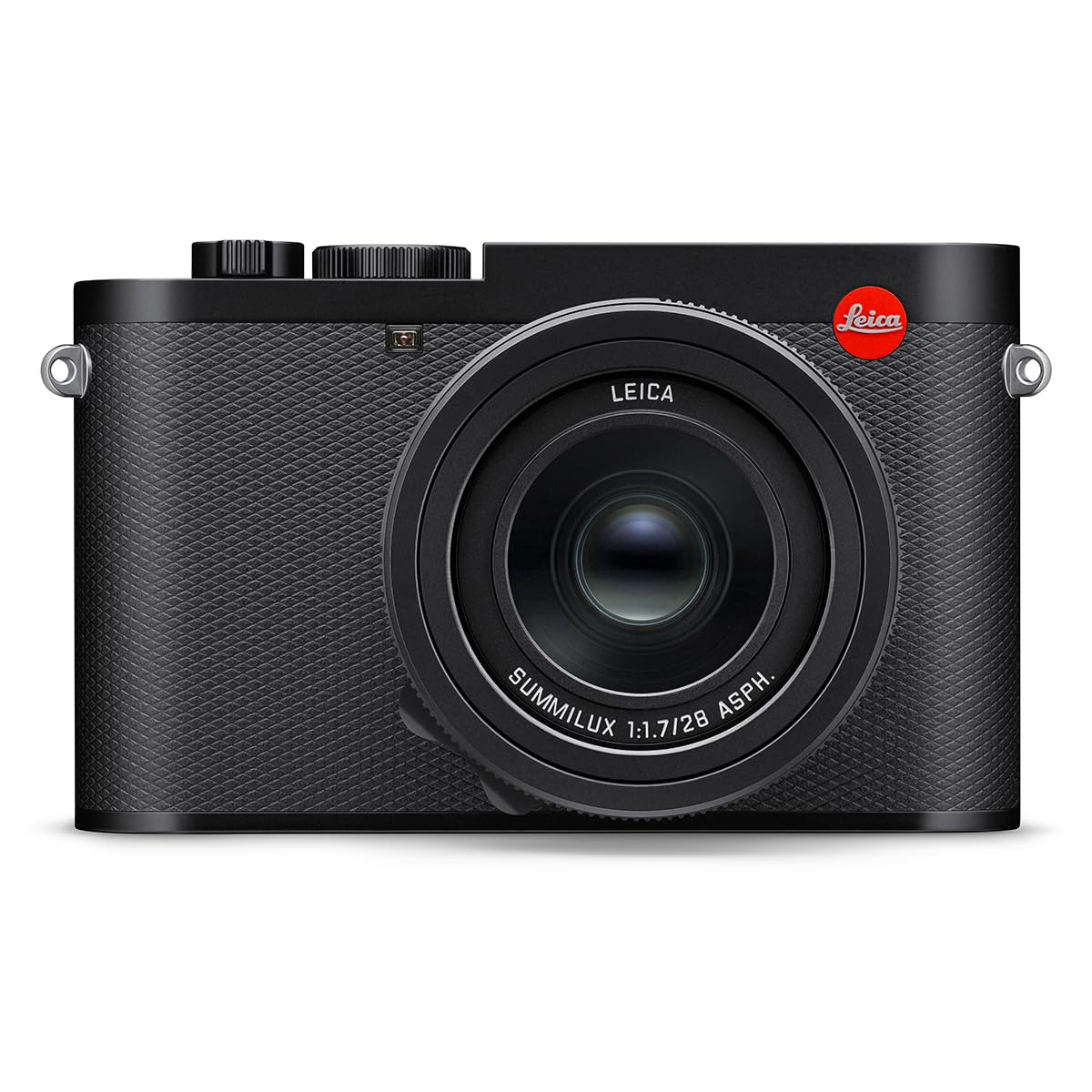
The Leica Q3’s 60MP BSI full-frame sensor with Triple Resolution Technology delivers exceptional detail for architectural shots, allowing you to crop aggressively while retaining enough resolution for large-format prints. The fixed 28mm f/1.7 Summilux lens is optically superb — sharp from corner to corner with minimal distortion, a critical quality for capturing building lines straight to the frame edge.
The triple resolution feature lets you shoot at 60MP, 36MP, or 18MP depending on your output needs, balancing file size and depth of field. The Maestro IV processor with 8GB of memory ensures snappy performance even with the massive 60MP RAW files. The hybrid autofocus combines contrast and phase detection for quick acquisition, but for precise architecture work you will appreciate the manual focus ring with tactile feedback and focus peaking through the EVF.
The digital zoom crops into the 28mm field to simulate 35mm, 50mm, and 90mm views, giving you framing flexibility without carrying additional lenses. The 28mm native angle is wide enough for most building exteriors but requires you to physically reposition for very tight interiors. The weather-sealed build and compact form factor make this an exceptional companion for location scouting and everyday architectural shooting — though the fixed lens means you cannot swap to a wider tilt-shift optic.
Why it’s great
- 60MP BSI sensor delivers extreme resolution for cropping and large prints
- Summilux 28mm f/1.7 lens is optically pristine with minimal distortion
- Compact and weather-sealed for daily carry and location scouting
Good to know
- Fixed 28mm lens cannot be swapped for a wider tilt-shift lens
- 60MP RAW files are very large — requires ample storage and processing power
- No tilt-shift or perspective control built into the lens system
7. Leica Q2 Digital Camera (19050)

The Leica Q2 shares the same 28mm f/1.7 Summilux lens as the Q3 but uses a 47MP full-frame sensor instead of the 60MP BSI unit. The resolution trade-off is marginal for most architectural printing needs — 47MP is already sufficient for 16×20 inch prints with excellent detail. The sensor produces images with the distinct Leica color science that architects and designers often prefer for portfolio presentations.
The fixed 28mm lens forces a “shoot now, crop later” workflow, which works well with the high-resolution sensor for architecture. You can capture a wide building scene and later crop to emphasize a specific elevation or detail while retaining print-worthy resolution. The camera is weather-sealed and optically stabilized, allowing hand-held shooting in many scenarios. The raw files clock in around 140MB each, demanding significant storage and processing power.
The minimalist user interface and tactile controls let you adjust aperture, shutter speed, and ISO quickly without digging through menus — useful when you need to capture changing light on a building facade. The EVF is bright and detailed, giving you an accurate preview of your exposure and white balance. As with the Q3, the lack of interchangeable lenses means you cannot mount a dedicated tilt-shift lens for in-camera perspective control, so all vertical line correction must be done in software like Capture One or Lightroom.
Why it’s great
- 47MP full-frame sensor delivers excellent detail for architectural prints
- Weather-sealed build with tactile controls for quick adjustments in the field
- Compact design makes it ideal for location scouting and daily carries
Good to know
- No interchangeable lens mount — cannot use tilt-shift lenses for perspective control
- Single battery life is shorter than DSLR alternatives for all-day shoots
- RAW files at 47MP are large and require significant post-processing hardware
FAQ
Do I need a tilt-shift lens for architectural photography or can I correct lines in post-processing?
Why is dynamic range more important than megapixels for architectural photography?
Can using a Micro Four Thirds camera work professionally for building photography?
Final Thoughts: The Verdict
For most users, the camera for architectural photography winner is the Canon RF15-35mm F2.8 L is USM Lens paired with an EOS R body because the ultra-wide coverage, sharp optics, and 5-stop stabilization handle the toughest interior and exterior lighting conditions. If you want the built-in computational features and compact travel-friendly package, grab the OM SYSTEM OM-1 Mark II. And for an ultra-premium carry-everywhere solution with unmatched resolution and lens quality, nothing beats the Leica Q3.