
A 95-mph fastball travels from the pitcher’s hand to the plate in under half a second. Capturing that split-second impact—the bat meeting the ball, the dust kicking off the base—demands a camera system built for speed, reach, and reliable autofocus. Whether you are shooting from the bleachers or the backstop, the right body and lens combination determines whether you walk away with a blurry smudge or a wall-worthy action freeze.
I’m Min — the co-founder and writer behind Gadgets Feed. I have spent hundreds of hours analyzing burst rates, autofocus tracking systems, and lens reach across multiple camera platforms to find what actually delivers consistent results in the demanding environment of a baseball diamond.
This guide breaks down the specific tools that solve the core problems of shooting baseball, from fast continuous shooting to telephoto reach in variable light. After reading this, you’ll know exactly which camera for baseball fits your budget and your position on the field.
How To Choose The Best Camera For Baseball
Shooting baseball is a unique challenge: you need enough reach to cover the outfield, fast enough shutter speed to freeze a swing, and autofocus smart enough to track a runner stealing second. Below are the critical specs that separate a keeper from a miss.
Autofocus Tracking and Subject Detection
Baseball players move unpredictably—a sudden sprint, a slide, a jump catch. You want a camera with sophisticated subject detection that can lock onto a human body, head, or eye. Systems using deep-learning algorithms, such as Canon’s Dual Pixel CMOS AF II or Sony’s Real-Time Eye AF, offer a significant advantage over older contrast-detect systems. Look for models that track moving subjects across the frame without losing lock during bursts.
Burst Rate and Buffer Depth
Frames per second (fps) is the raw speed stat, but it means nothing if the buffer fills up after two seconds. A camera that shoots 10 fps with a deep buffer (50+ RAW frames) is far more useful than one that shoots 20 fps but locks up after 15 shots. For baseball, 10 to 20 fps in electronic shutter mode is the sweet spot, allowing you to capture the exact moment of bat contact or a diving catch.
Lens Reach and Aperture
You cannot get close to the action. A full-frame equivalent focal length of at least 200mm is the baseline for infield shots from the stands; outfield action requires 300mm or more. A variable-aperture lens like f/4-5.6 is acceptable in bright daylight, but an f/2.8 constant aperture gives you the low-light performance needed for twilight games. Optical image stabilization (OIS) becomes critical at these focal lengths to keep handheld shots sharp.
Quick Comparison
On smaller screens, swipe sideways to see the full table.
| Model | Category | Best For | Key Spec | Amazon |
|---|---|---|---|---|
| Canon EOS R6 Mark II | Mirrorless | Fast action & pro tracking | 40 fps e-shutter / 24.2 MP | Amazon |
| Sony A7 IV | Mirrorless | High-res stills & video hybrid | 33 MP / 4K 60p 10-bit | Amazon |
| Nikon Z6 III | Mirrorless | Low-light & 6K internal RAW | 6K/60p N-RAW / 4000-nit EVF | Amazon |
| Sony A7 III | Mirrorless | Entry full-frame with kit lens | 24.2 MP / 693 phase-detect AF | Amazon |
| Canon EOS R8 | Mirrorless | Lightweight full-frame | 24.2 MP / 4K 60p oversampled | Amazon |
| Nikon Z50 II (kit) | Mirrorless | Compact travel + dual lens kit | 20.9 MP DX / 4K 60p | Amazon |
| Fujifilm XF70-300mm Lens | Lens | Fujifilm X-mount telephoto reach | 107-457mm equiv. / OIS 5.5-stop | Amazon |
| XbotGo Falcon | Action Cam | AI auto-tracking sports recording | 4K / dual-lens / IPX5 | Amazon |
| Insta360 X5 | 360 Camera | Immersive 360° & reframing | 8K 30fps / dual 1/1.28″ sensors | Amazon |
| DJI Osmo Action 6 | Action Cam | Wearable/sideline POV | 8K / f/2.0-f/4.0 variable aperture | Amazon |
| PTZOptics Move 4K | PTZ Camera | Live broadcast & auto-framing | 30x zoom / NDI, USB, IP output | Amazon |
In‑Depth Reviews
1. Canon EOS R6 Mark II

The R6 Mark II delivers 40 fps in electronic shutter mode with full autofocus, making it one of the fastest stills cameras available for capturing a pitch or a dive. Its Dual Pixel CMOS AF II detects heads, faces, and eyes of people, animals, and even vehicles, which translates to reliable lock-on when a runner rounds third. The 24.2-megapixel full-frame sensor handles ISO up to 102400 with surprisingly low noise, allowing you to shoot twilight games without a flash.
The in-body image stabilization (IBIS) provides up to 8 stops of correction, which is invaluable when you are handholding a telephoto lens at 300mm or more. Video shooters benefit from 6K oversampled 4K up to 60 fps with C-Log 3, plus a 6-hour continuous recording limit in Full HD. The vari-angle touchscreen makes framing easier when shooting from ground level near the backstop.
Where the R6 Mark II stumbles is the single SD card slot—a miss for professionals who need backup during a tournament. The battery life, while improved over the original R6, still requires a spare for a full day of shooting. These are minor tradeoffs for a body that otherwise checks nearly every box for baseball photography.
Why it’s great
- 40 fps electronic burst captures swing impact with precision
- Dual Pixel CMOS AF II keeps subject locked during erratic movement
- 8-stop IBIS allows sharp handheld telephoto shots
Good to know
- Single UHS-II SD card slot, no backup recording
- Battery life demands a spare for all-day shoots
2. Sony A7 IV

The Sony A7 IV packs a 33MP back-illuminated full-frame sensor that gives you room to crop into the action without sacrificing detail—critical when you’re framed tight on a batter but want a second composition of the base runner. The BIONZ XR processor drives Real-Time Eye AF for humans and animals, and in practice it sticks to a player’s helmet or face as they sprint. The 10 fps burst rate is modest compared to the Canon R6 II, but the buffer depth allows extended RAW sequences before slowing.
Video performance is equally strong: 4K 60p in 10-bit 4:2:2 with full pixel readout, plus the S-Cinetone color profile for cinematic look without grading. The 7K oversampled 4K 30p mode delivers maximum detail for highlight reels. The 693-point phase-detection AF system covers 93% of the sensor, making it very forgiving when composing off-center action.
The biggest downside for sports shooters is the crop factor in 4K 60p mode, which reduces the effective field of view. The single UHS-II SD slot is also a limitation. Otherwise, the A7 IV remains a versatile hybrid that handles the dynamic range of a sunlit infield and shadowed dugout equally well.
Why it’s great
- 33MP allows aggressive cropping without pixel peeping regret
- Real-Time Eye AF reliably tracks players in motion
- 4K 60p 10-bit video for highlight reels
Good to know
- 4K 60p mode introduces a 1.5x crop factor
- Single SD slot, no backup during critical game moments
3. Nikon Z6 III

The Z6 III brings internal 6K/60p N-RAW recording and a best-in-class electronic viewfinder with 4000-nit brightness, making it easier to compose shots in harsh sunlight—a common problem during afternoon games. The 24.5MP full-frame sensor and EXPEED 7 processor deliver autofocus detection down to -10 EV, which locks onto players even when they’re in shadow or backlit. The 299-point hybrid AF system supports subject detection for humans, animals, and vehicles.
The 5-axis IBIS is rated for 5.5 stops, and the dual card slots (CFexpress Type B + UHS-II SD) provide the redundancy that tournament shooters need. The Z6 III also supports 4K/120p for slow-motion replay of slides and pitches. Nikon’s Picture Control system lets you upload custom color profiles directly to the camera, saving time on post-processing.
Battery life is approximately two hours of continuous shooting, which feels tight compared to the Sony A7 III’s endurance. The body is also larger than the Canon R8, which may be a consideration for parents carrying gear to multiple games. Still, the Z6 III’s video and viewfinder quality set a high bar for the price.
Why it’s great
- 4000-nit EVF stays visible in bright sunlight
- 6K/60p N-RAW internal for maximum editing flexibility
- Dual card slots for game-day reliability
Good to know
- Battery lasts roughly 2 hours under heavy use
- Larger body than some competitors
4. Sony A7 III (with 28-70mm Lens)

The Sony A7 III remains a benchmark because of its 24.2MP back-illuminated full-frame sensor and 693 phase-detection autofocus points covering 93% of the frame. At 10 fps with continuous AF, it’s not the fastest on this list, but the buffer handles 177 JPEGs or 89 RAW frames before slowing—enough for an entire inning of peak action. The 15-stop dynamic range handles the high-contrast lighting of a sunny field versus the shaded dugout cap.
Battery life is exceptional, rated at 710 shots per charge, meaning you can shoot doubleheaders without swapping packs. The kit lens (28-70mm f/3.5-5.6) is adequate for general field coverage, but for baseball you will want to invest in a telephoto zoom like the Sony 70-350mm or 100-400mm. The in-body stabilization and 5-axis compensation help keep longer lenses steady during handheld bursts.
The 4K video is limited to 30 fps with full pixel readout, and the LCD touchscreen is 921k dots—lower resolution than newer models. The menu system is also famously dense. However, for the combination of full-frame image quality, long battery, and proven autofocus, the A7 III still earns its spot as a value leader.
Why it’s great
- Deep RAW buffer (89 frames) handles extended action bursts
- ~710 shot battery life for all-day tournaments
- 693-point AF covers nearly the entire sensor
Good to know
- 4K video capped at 30 fps
- Included kit lens is short for baseball; budget for a telephoto zoom
5. Canon EOS R8

The Canon EOS R8 is essentially a full-frame gateway with the autofocus internals of the R6 II but at a lower weight (461g body only). The 24.2MP sensor and DIGIC X processor deliver Dual Pixel CMOS AF II with subject detection for people, animals, and vehicles, which keeps a sliding base runner in crisp focus. It shoots uncropped 4K 60p oversampled from 6K, with Canon Log 3 for advanced color grading in post.
The 40 fps electronic shutter matches the R6 II’s burst speed, though the smaller buffer fills faster—expect around 150 JPEGs before the rate drops. The vari-angle 1.62 million-dot LCD helps when framing low-angle shots from the field’s edge. The 2.36 million-dot OLED EVF with 120 fps refresh ensures minimal blackout between frames.
Where the R8 falls short is the lack of IBIS and a single UHS-II SD slot. The LP-E17 battery is also small, rated around 500 shots or 1 hour of video. You will definitely need a spare for a full game. For a lightweight full-frame that prioritizes speed and autofocus, however, the R8 is a compelling starting point.
Why it’s great
- Lighter than many APS-C bodies at 461g
- 40 fps e-shutter with Dual Pixel AF II tracking
- Uncropped 4K 60p oversampled from 6K
Good to know
- No IBIS—relies on lens stabilization
- Small battery requires a spare for game coverage
6. Nikon Z50 II (with 16-50mm & 50-250mm Lenses)

The Nikon Z50 II is an APS-C (DX format) mirrorless that comes with two lenses covering 16-50mm and 50-250mm, giving you an equivalent reach of up to 375mm. That is enough to capture infield action from the stands and even reach the outfield with moderate cropping. The 20.9MP sensor is smaller than full-frame, but with good light it delivers lifelike color and solid dynamic range.
The autofocus system detects nine different subjects including humans, dogs, cats, birds, and vehicles. This makes it easy to track a batter or a shortstop. The built-in flash and Night Portrait mode are useful for evening games. The SnapBridge app transfers photos directly to your phone, so you can share highlights between innings.
The kit zooms have variable apertures (f/3.5-6.3) that struggle in fading light, and the APS-C sensor is visibly noisier at ISO 6400 compared to full-frame alternatives. The 11 fps burst rate is modest. However, for a parent or coach who wants a ready-to-shoot kit without buying extra lenses, the Z50 II is a neat, lightweight solution.
Why it’s great
- Dual-lens kit covers wide to 375mm (equiv.) out of the box
- Nine-subject autofocus detection for reliable tracking
- SnapBridge app for instant wireless photo sharing
Good to know
- Variable-aperture lenses struggle in low light
- APS-C sensor shows more noise at high ISO
7. Fujifilm XF70-300mm F4-5.6 R LM OIS WR
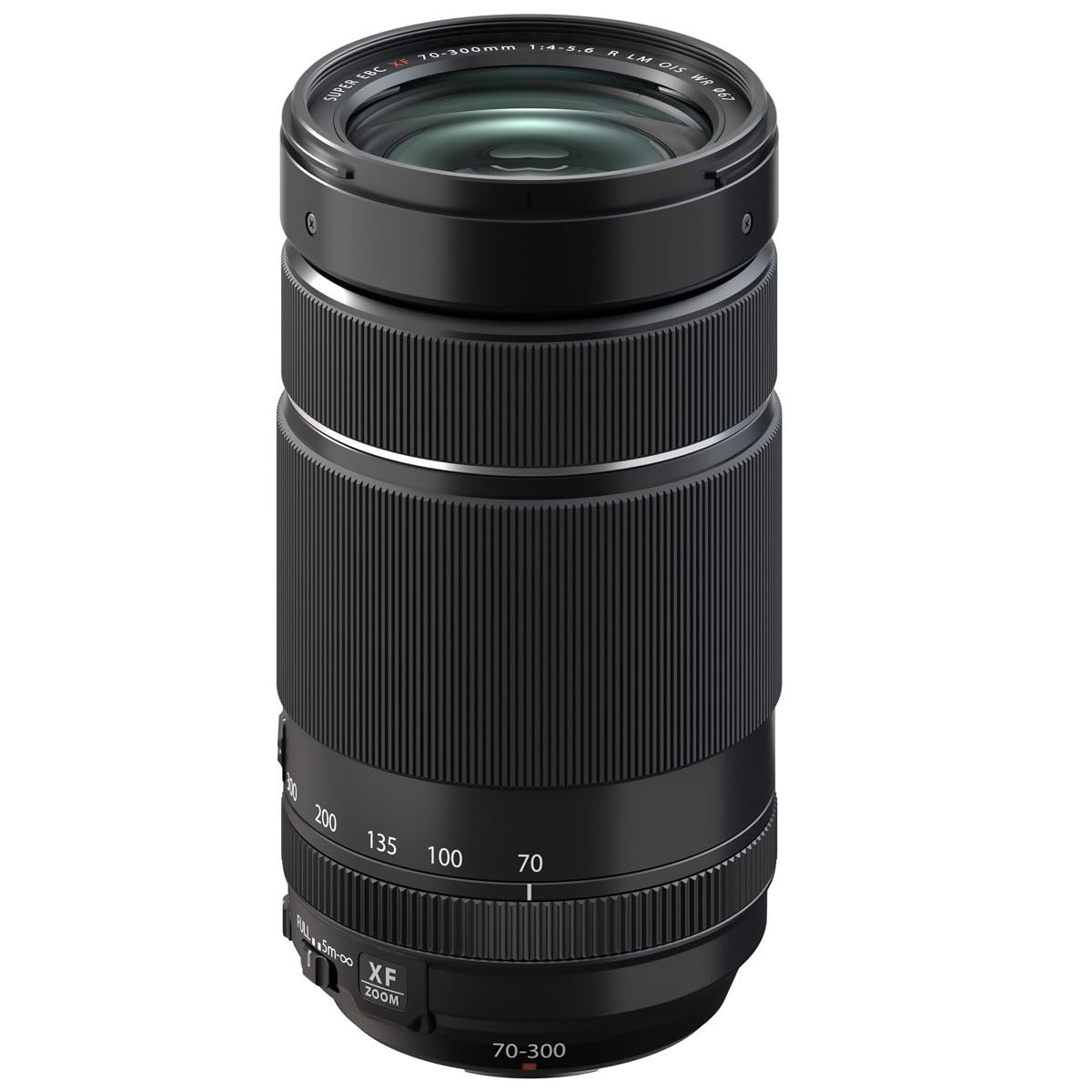
This Fujinon lens is designed for Fujifilm X-mount cameras and offers a 35mm equivalent focal range of 107-457mm, making it ideal for baseball parents using an X-T4, X-T5, or X-S10. The 5.5-stop optical image stabilization system lets you shoot at 1/60th of a second at 300mm and still get sharp results, which is a game-changer for twilight games. The lens weighs just 580g (1.3 lbs), light enough to carry on a neck strap for hours.
The linear motor autofocus is near-silent and fast enough to track base runners, and the lens accepts Fujifilm’s 1.4x and 2x teleconverters for up to 914mm equivalent range. The minimum focusing distance of 0.83m throughout the zoom range gives you 0.33x macro reproduction, which is handy for close-up detail shots of equipment or field textures. The dust and moisture-resistant build handles sideline dust or light rain.
The f/4-5.6 aperture is the main limiter—in overcast or night conditions you will push ISO higher than you’d like. It is also a lens-only purchase; you need a Fujifilm X-series body to use it. If you already own a Fujifilm camera and want the reach to cover the outfield, this is the best telephoto option.
Why it’s great
- Equivalent 457mm reach covers outfield action
- 5.5-stop OIS enables sharp handheld shooting
- Supports 1.4x/2x teleconverters for extreme reach
Good to know
- f/4-5.6 aperture requires good light or higher ISO
- Requires a Fujifilm X-mount body
8. XbotGo Falcon
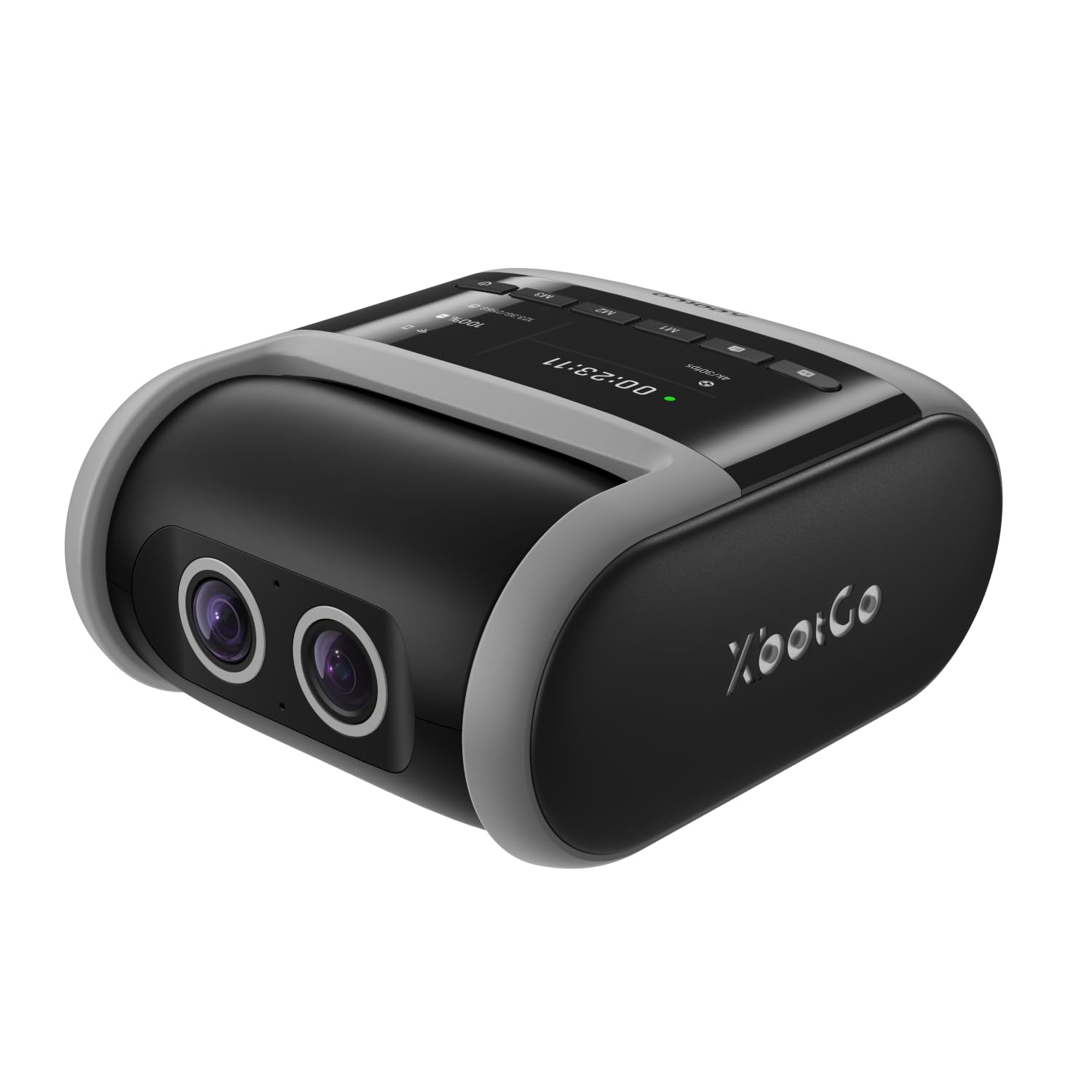
The XbotGo Falcon is a purpose-built sports tracking camera that uses an 8-core AI processor (6 TOPS) to automatically follow the ball and players during soccer, basketball, and baseball. Its dual-lens system combines a 4K recording lens with an AI-assisted lens that feeds positional data to the gimbal, keeping the action centered. This is the closest thing to having a dedicated camera operator—ideal for coaches or parents who want to focus on the game, not the camera.
The unit has a standard 1/4” tripod mount, IPX5 water resistance for sideline use, and supports instant live streaming and wireless sharing. Recording goes directly to a microSD card (not included) with no subscription required. The battery is built-in and delivers enough runtime for a standard 9-inning game of around 3 hours, supported by USB-C pass-through charging.
Some users report tracking lag during very fast directional changes, and the live streaming feature occasionally pixelates on weaker Wi-Fi networks. The camera is also heavier than a standard action cam, requiring a sturdy tripod. As a hands-free recording solution, however, the Falcon eliminates the need to manually pan or zoom during a game.
Why it’s great
- AI-driven pan/tilt auto-tracking follows the game flow
- No subscription required for tracking or streaming
- IPX5 water-resistant design for sideline use
Good to know
- Tracking can lag during rapid changes in direction
- Requires a heavy-duty tripod due to camera weight
9. Insta360 X5

The Insta360 X5 captures the entire field in one shot with its dual 1/1.28-inch sensors, recording 8K 360° video at 30 fps. This is a fundamentally different approach to baseball recording: you mount the camera behind home plate or on a center-field fence, and later reframe the footage to follow any player. The Invisible Selfie Stick effect lets you create third-person perspectives without visible support, and the InstaFrame mode outputs flat 16:9 video instantly.
The triple AI chip design improves low-light performance appreciably, reducing noise in evening games. FlowState stabilization and 360° Horizon Lock keep footage level regardless of camera orientation. The wind guard on the 4-mic array reduces background noise, making it easier to hear the crack of the bat. The replaceable lenses are a practical upgrade—if a foul ball scratches the glass, you swap it in seconds.
360° recording generates massive file sizes, requiring a fast microSD card (UHS-I U3 or better) and a capable phone or PC for editing. Battery life is rated at 208 minutes, but recording at 8K drains faster. The X5 is best for a single, fixed-position shot; it does not replace a telephoto camera for tight action frames.
Why it’s great
- Single 360° capture covers the entire diamond
- Replaceable lenses survive impacts on the field
- Wind guard improves audio clarity during key moments
Good to know
- 8K files are large and require fast storage/editing hardware
- Designed for fixed-position shooting, not portable telephoto work
10. DJI Osmo Action 6
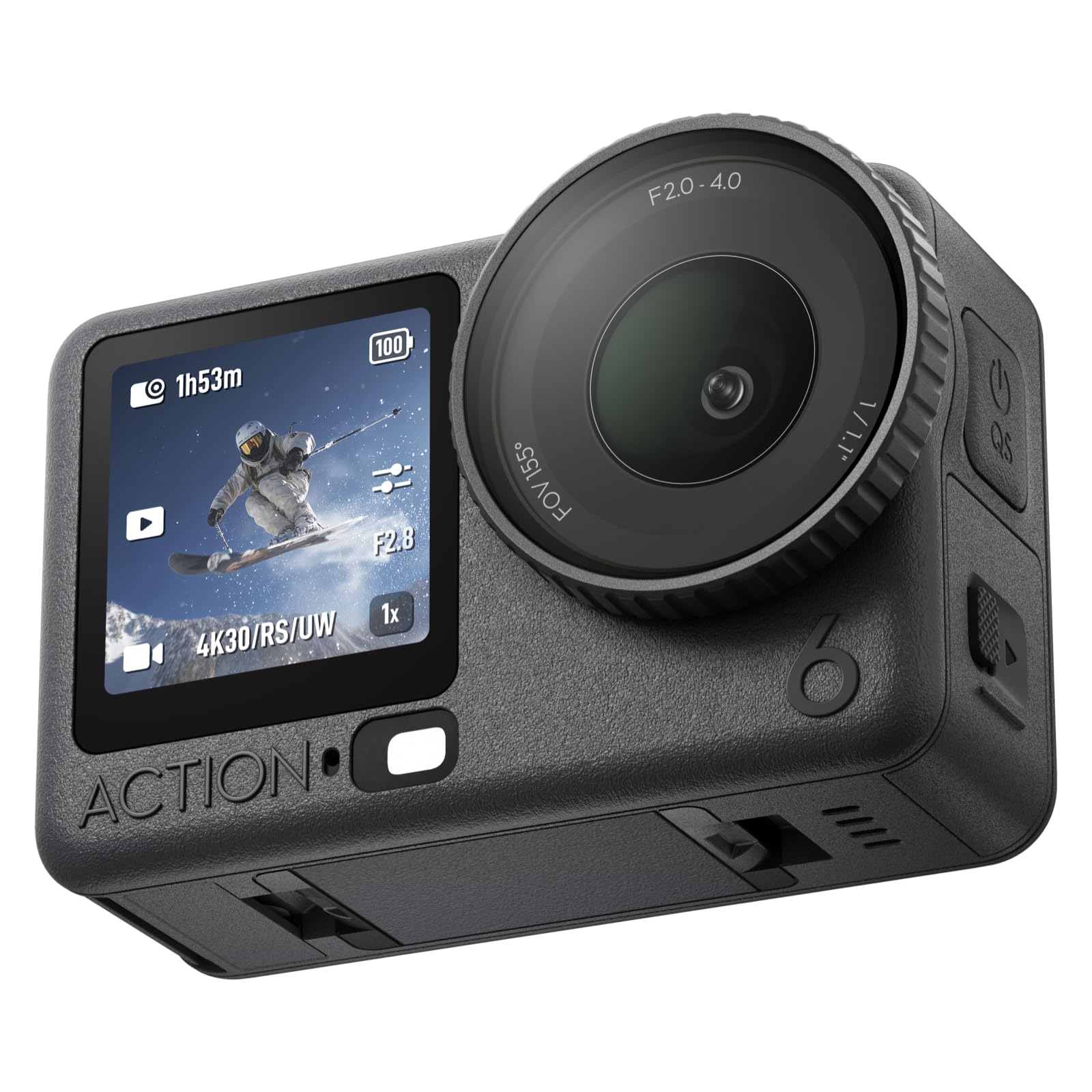
The DJI Osmo Action 6 is built for point-of-view recording—attach it to the backstop fence, mount it on a tripod near the dugout, or wear it as a chest cam during practice. Its standout feature is the variable aperture (f/2.0 to f/4.0), which adapts to changing light conditions automatically. This is useful for games that start in bright sun and end under stadium lights. The 1/1.1-inch square sensor captures 8K video with vibrant color and good dynamic range.
RockSteady 3.0 and HorizonSteady stabilization keep footage smooth even when mounted on a vibrating fence. The 4-hour battery life (in normal conditions) covers a doubleheader, and the cold-resistant design means it works in early spring games. The gesture and voice controls let you start/stop recording remotely, and the 50GB built-in storage provides backup if you run out of microSD space.
The main limitation for baseball is the fixed wide-angle lens—you cannot zoom in on a specific player. The Action 6 is great for overall field documentation or practice analysis, not for capturing tight action shots. The 20m waterproof rating is a bonus if you also shoot pool or beach sports.
Why it’s great
- Variable aperture adapts to changing daylight or stadium lights
- 4-hour battery covers extended game sessions
- 8K resolution with excellent stabilization
Good to know
- Fixed wide-angle lens lacks zoom for player close-ups
- Best suited for static mount or POV, not telephoto work
11. PTZOptics Move 4K 30x
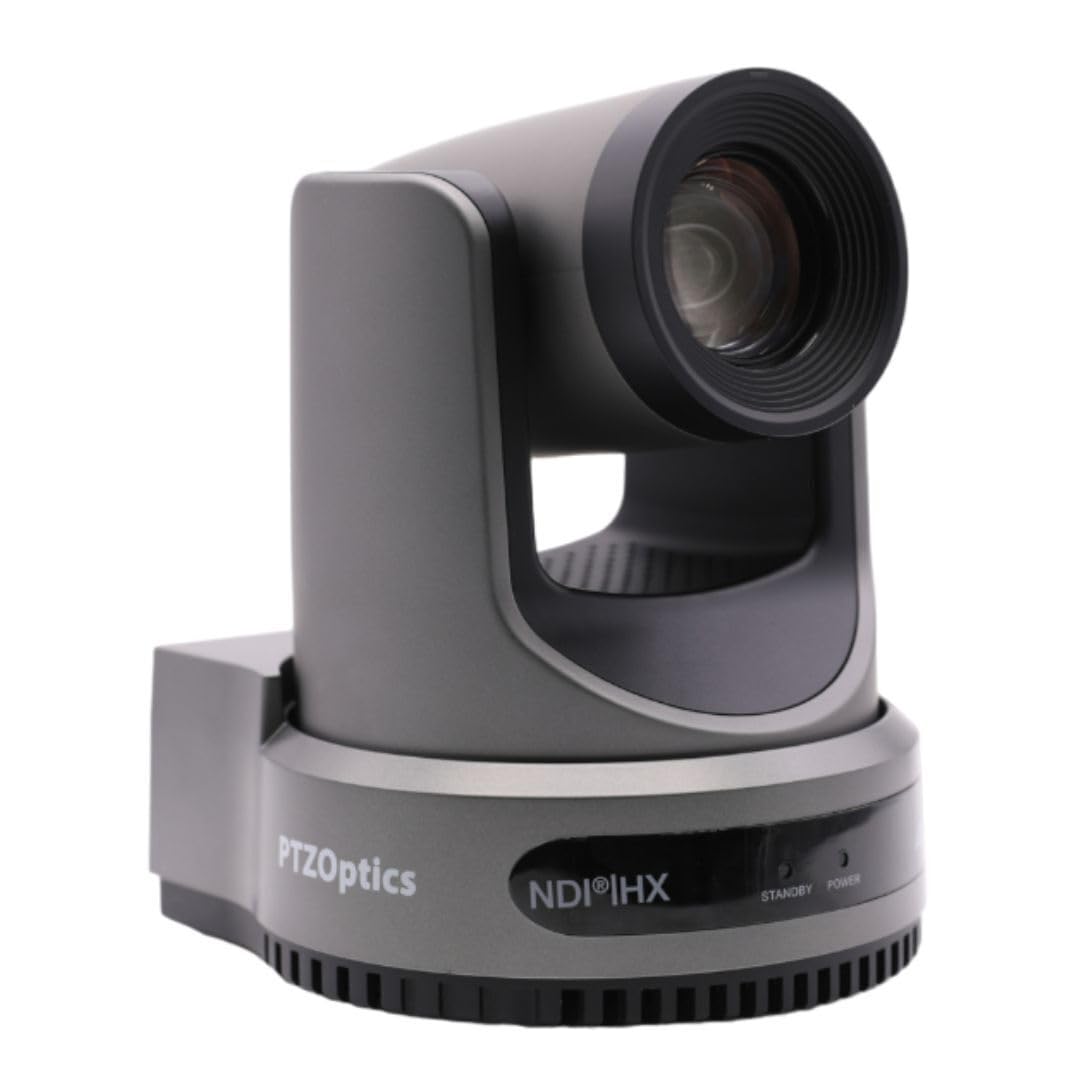
The PTZOptics Move 4K 30x is a professional pan-tilt-zoom camera designed for live streaming baseball games to YouTube, Facebook, or a team website. The 30x optical zoom reaches from home plate to the outfield wall, and the built-in auto-tracking can lock onto a single person and follow them smoothly. Simultaneous outputs via NDI, USB, and IP (plus SDI or HDMI) make integration with a live switcher straightforward.
The Sony UHD CMOS sensor delivers 4K video at 60 fps with adjustable resolutions. The built-in tally light shows when the camera is live, which is useful in multi-camera setups. Control options include IR remote, RS-232, RS-485, and a web UI, giving flexibility for an operator or automated gimbal movement.
The auto-tracking has known limitations—some users report it forgetting preset positions between sessions, and the IR remote is unintuitive. The IP admin interface has poor resolution for monitoring. For a fully manned broadcast setup, the PTZOptics is a strong value; for fully automated operation, the tracking reliability needs improvement.
Why it’s great
- 30x optical zoom reaches distant field action
- Multi-protocol output for professional live streaming
- Built-in tally light indicates live status
Good to know
- Auto-tracking may lose preset positions between sessions
- IP admin interface has poor monitoring quality
FAQ
What minimum burst rate do I need for baseball action shots?
Do I need a full-frame sensor for baseball or will APS-C suffice?
Final Thoughts: The Verdict
For most users, the camera for baseball winner is the Canon EOS R6 Mark II because its 40 fps burst, Dual Pixel AF II, and 8-stop IBIS combine to handle the speed and erratic movement of baseball better than any other body in its price range. If you want maximum cropping ability and strong hybrid video, grab the Sony A7 IV. And for a ready-to-shoot all-in-one kit that doesn’t require extra lens purchases, nothing beats the Nikon Z50 II with its dual-lens bundle.