
The toughest part of starting landscape photography isn’t finding a beautiful sunset—it’s picking the right tool to capture it without feeling overwhelmed by menus and settings you’ll never touch. A camera that forces you into a fight with its interface will kill the inspiration faster than a flat sky ever could.
I’m Min — the co-founder and writer behind Gadgets Feed. I’ve spent hundreds of hours analyzing sensor specs, dynamic range charts, and real-world sample galleries to find the mirrorless and DSLR bodies that genuinely serve a beginner who wants to shoot mountains, forests, and coastlines.
Whether you are looking for a compact mirrorless with film simulations or a full-frame powerhouse for that golden-hour light, this guide narrows down the best camera for beginner landscape photography for your specific goals and budget.
How To Choose The Best Camera For Beginner Landscape Photography
Landscape photography rewards technical precision, not marketing buzzwords. The sensor size, dynamic range, and stabilization system matter far more than the latest autofocus gimmick when your subject is a mountain that isn’t moving. Beginners should prioritize a camera body that offers a forgiving learning curve, good battery life for day-long hikes, and a lens mount with affordable wide-angle options.
Sensor Size and Dynamic Range
A larger sensor captures more light, which directly translates to cleaner shadows and smoother tonal transitions in sunrise or sunset scenes. APS-C sensors (found in the Canon EOS R10, Sony a6400, and Fujifilm X-T30 III) hit a sweet spot, offering excellent dynamic range at a budget-friendly price. Full-frame sensors (Canon EOS RP, Sony a7 III) pull even more detail from deep shadows, but the body cost climbs quickly. Micro Four Thirds sensors (Panasonic G85, OM System E-M10 Mark IV) trade a stop of dynamic range for a drastically smaller and lighter kit—ideal for a hiker.
In-Body Image Stabilization (IBIS)
Handheld shooting at dawn or dusk—when landscape light is best—often demands shutter speeds slower than the rule of reciprocity. IBIS compensates for your hand shake by shifting the sensor, allowing you to shoot at 1/4th of a second or slower without a tripod. The Panasonic G85 and OM System E-M10 Mark IV offer class-leading 5-axis IBIS, while the Sony a7 III’s 5-axis system gives you about 5 stops of leeway. This spec alone can save a sunrise shot when you left your tripod in the car.
Quick Comparison
On smaller screens, swipe sideways to see the full table.
| Model | Category | Best For | Key Spec | Amazon |
|---|---|---|---|---|
| Canon EOS R10 | Mirrorless | Best Overall Balance | 24.2MP APS-C / 15fps | Amazon |
| Sony a7 III | Full-Frame | Best Dynamic Range | 24.2MP Full-Frame / 693 AF | Amazon |
| Canon EOS RP | Full-Frame | Entry-Level Full-Frame | 26.2MP Full-Frame / 4779 AF | Amazon |
| Panasonic S5IIX | Full-Frame | Best Hybrid Value | 24.2MP Full-Frame / Phase AF | Amazon |
| FUJIFILM X-T30 III | Mirrorless | Best Film Simulations | 26.1MP APS-C / 425 AF | Amazon |
| Sony a6400 | Mirrorless | Best Autofocus Speed | 24.2MP APS-C / 425 AF | Amazon |
| Nikon D7500 | DSLR | Best DSLR Option | 20.9MP APS-C / 51 AF | Amazon |
| Canon T7 Bundle | DSLR | Best Complete Kit | 24.1MP APS-C / 9 AF | Amazon |
| OM System E-M10 IV | Mirrorless | Best Compact Size | 20MP MFT / 5-Axis IBIS | Amazon |
| Panasonic G85 | Mirrorless | Best Weather Sealed IBIS | 16MP MFT / Dual IS 2 | Amazon |
| Canon EOS R100 | Mirrorless | Most Affordable | 24.1MP APS-C / 143 AF | Amazon |
In‑Depth Reviews
1. Canon EOS R10 RF-S18-150mm F3.5-6.3 IS STM Lens Kit

Canon’s R10 combines a 24.2MP APS-C CMOS sensor with the DIGIC X processor—the same engine found in the pro-level R3—delivering class-leading image quality and snappy subject detection. For a beginner landscape shooter, this means sharp tree branches at 100% zoom and reliable auto-exposure when the light shifts behind a cloud. The RF-S 18-150mm lens covers a 35mm-equivalent range of roughly 29–240mm, giving you wide-angle for sweeping vistas and enough telephoto reach to compress distant mountain ridges.
The R10’s high-speed continuous shooting at up to 15 fps is overkill for static landscapes, but the deep buffer and fast AF come in handy for handheld panoramas or capturing an animal crossing the frame. The 2.36m-dot electronic viewfinder offers a bright, lag-free composition preview in bright sunlight—critical for framing in the field without squinting at a rear screen. You also get UHS-II SD card support for faster write speeds when shooting bracketed exposures for HDR merges.
The all-day LP-E17 battery is rated for roughly 430 shots, which is average for this class, and the body is weather-sealed against light drizzle. The kit lens is optically stabilized with up to 4.5 stops of shake correction, so you can push the shutter down to 1/15th handheld at the wide end. Pair this with a budget-friendly RF-S 10-18mm for true ultra-wide landscape work, and you have a system that will grow with you for years.
Why it’s great
- Fast DIGIC X processor with excellent shadow recovery
- Kit lens (18-150mm) offers incredible zoom range for travel
- 15fps burst and subject tracking ensure sharp captures in dynamic light
Good to know
- Battery life is average; carry at least one spare for a full day out
- No in-body image stabilization relies on lens stabilization
2. Sony a7 III Full-Frame Mirrorless with 28-70mm Lens

The Sony a7 III is the camera that redefined what a full-frame mirrorless could cost. Its 24.2MP back-illuminated Exmor R sensor delivers 15 stops of dynamic range, which means you can underexpose a sunset foreground to preserve the sky’s color banding and still pull the shadows up cleanly in post without noise. For landscape photographers who pixel-peep, this dynamic range headroom is the single most valuable spec on paper.
The 693-point phase-detection AF covers 93% of the sensor area. Although autofocus is rarely a headache with static scenes, the speed and accuracy become invaluable when shooting hand-held at wide apertures in low twilight or when using focus stacking for hyperfocal sharpness across the whole frame. The 5-axis in-body stabilization gives about 5 stops of compensation, letting you shoot a 1-second exposure of a flowing waterfall without a tripod.
Battery life is outstanding at roughly 710 shots per charge—you can leave a spare at home for a day hike. The 28-70mm kit lens is optically decent but slow at f/3.5-5.6; investing in a wide prime like the Sony 20mm f/1.8 will unlock the sensor’s true potential. The body is weather-sealed and feels solid without being heavy, making it a durable companion for unpredictable weather on the trail. The menu system is sprawling, but once configured, you rarely need to dig.
Why it’s great
- 15-stop dynamic range recovers deep shadows cleanly
- Excellent battery life for all-day shoots
- 5-axis IBIS allows handheld long exposures
Good to know
- Kit lens is soft at the edges; budget for a better lens
- Menu system is complex for beginners
3. Canon EOS RP Full-Frame with RF24-105mm F4-7.1 IS STM Lens

The Canon EOS RP is the lightest and most compact full-frame mirrorless on this list, weighing just 485g with the battery. For a beginner who wants full-frame dynamic range without hauling a heavy DSLR up a mountain trail, the RP is a compelling entry point. Its 26.2MP sensor produces richly graded JPEGs straight out of camera with Canon’s famous color science, meaning you can share landscapes to social media with minimal editing.
The RF 24-105mm F4-7.1 IS STM kit lens includes up to 5 stops of optical stabilization, which works in tandem with the lens to deliver crisp handheld shots at the wide end. The 0.5x macro capability at the telephoto end is a bonus for capturing foreground textures like mossy rocks or autumn leaves—details that add depth to a landscape composition. The Dual Pixel CMOS AF covers 88% x 100% of the frame and is snappy enough for quick focus-and-recompose in the field.
Battery life is the main compromise: the LP-E17 pack is rated for about 250 shots, so two extra batteries are essential if you plan a sunrise-to-sunset session. The 4K video has a 1.7x crop and lacks Dual Pixel AF, but for a beginner still focusing on stills, that trade-off is acceptable. The RF lens ecosystem is expanding fast, with the RF 16mm f/2.8 being an affordable ultra-wide option that pairs beautifully with this body for landscape work.
Why it’s great
- Ultra-light full-frame body for easy hiking carry
- Excellent out-of-camera JPEG colors
- RF 24-105mm offers versatile zoom with macro capability
Good to know
- Battery life is poor; carry multiple spares
- 4K video has a heavy crop
4. Panasonic LUMIX S5IIX with 20-60mm & 50mm Lenses
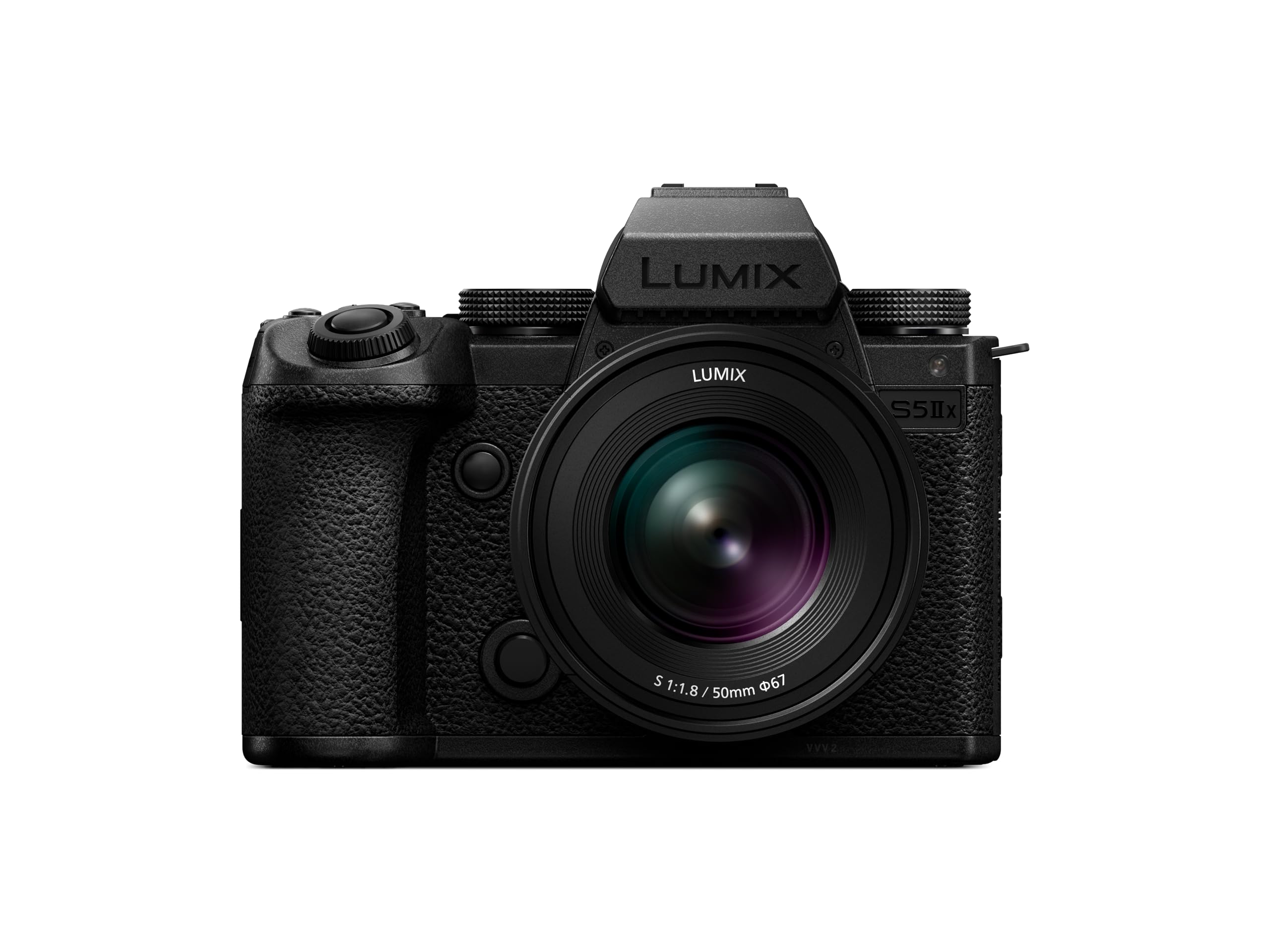
The Panasonic S5IIX is the most future-proof beginner landscape camera on this list. It pairs a 24.2MP full-frame sensor with phase-detection autofocus—Panasonic’s long-awaited fix for the DFD pulsing issue. The dual native ISO up to 6400 means clean shadows in astrophotography scenes, and the 14+ stop V-Log/V-Gamut capture gives you pro-grade grading latitude when you are ready to edit RAW files.
The bundle includes two lenses: the 20-60mm f/3.5-5.6 zoom and the 50mm f/1.8 prime. The 20-60mm starts at a true 20mm wide angle, giving you a 20mm equivalent of 20mm on the full-frame sensor—wider than most kit lenses. The 50mm f/1.8 is a sharp, fast aperture lens for low-light and detail shots, offering excellent bokeh for compressing layers in a valley scene. The 5-axis Active I.S. is top-tier, smoothing out handheld walking shots and making it easy to stabilize a hyperlapse.
Unlimited video recording and a built-in cooling fan mean you can shoot 6K ProRes or 5.8K footage without overheating. If you ever want to create time-lapses or behind-the-scenes video alongside your stills, this body handles it effortlessly. The body is fully weather-sealed with a magnesium alloy frame, so a splash of ocean spray or a dust gust on the trail won’t faze it. The L-Mount alliance offers increasing lens options from Sigma and Leica.
Why it’s great
- Dual lens kit (20-60mm & 50mm f/1.8) covers wide to portrait
- Phase-detect AF eliminates past Panasonic pulsing issues
- Active I.S. and cooling fan for unlimited video
Good to know
- Premium price point for a beginner
- L-Mount lens selection not as broad as Sony E or Canon RF
5. FUJIFILM X-T30 III Mirrorless with XC13-33mm Lens
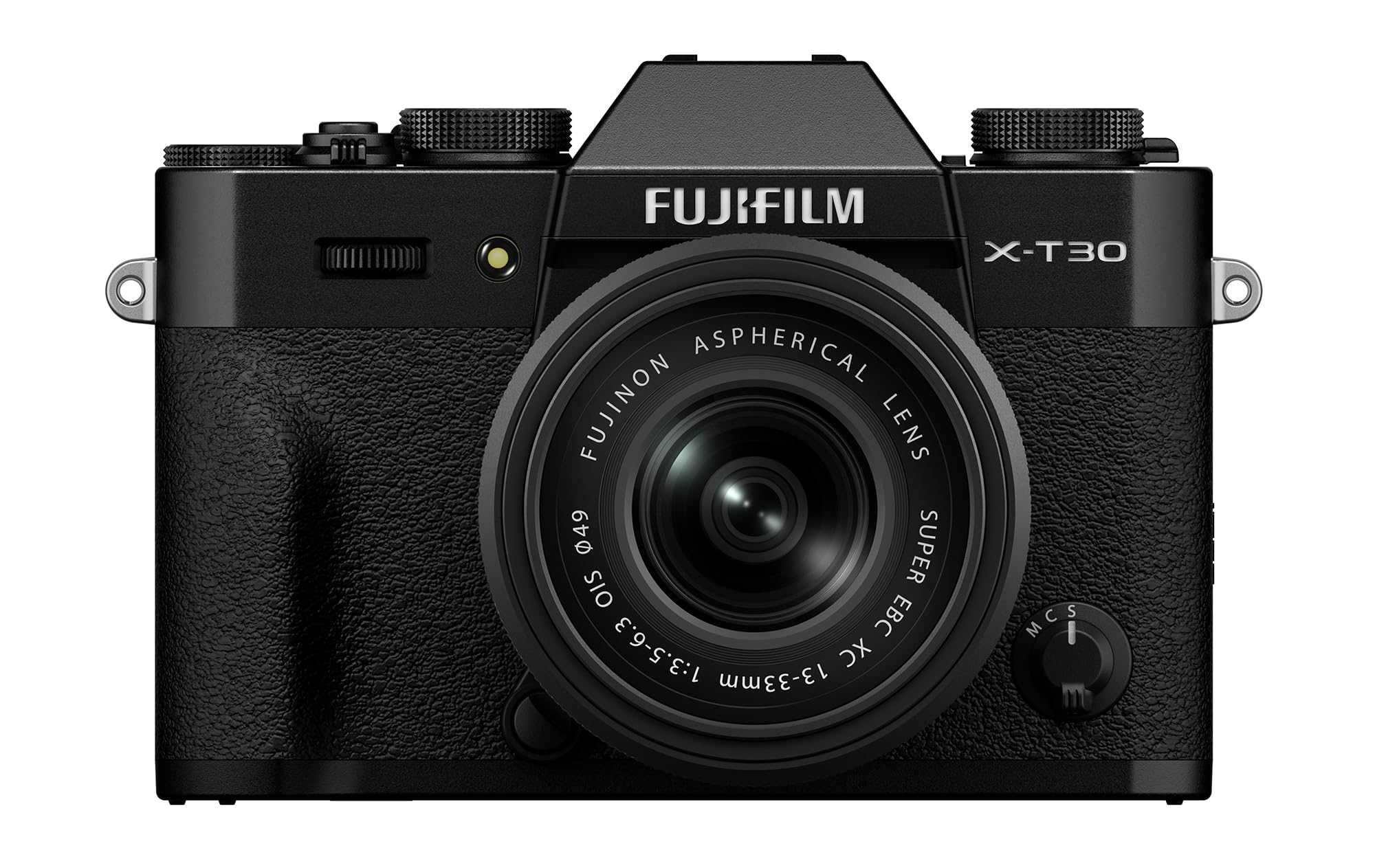
The FUJIFILM X-T30 III brings the magic of film simulations to the landscape world. With 20 built-in Film Simulation modes, including Velvia for punchy sunsets and Classic Chrome for muted earth tones, you can shoot JPEGs that require zero post-processing. The 26.1MP X-Trans CMOS 4 sensor (back-illuminated) eliminates the need for an optical low-pass filter, resolving fine detail like distant tree branches and rock textures exceptionally well.
The AI-powered subject detection autofocus is a huge leap for Fujifilm’s entry-level body. The 425 phase-detect points cover the frame densely, and the system can lock onto landscape elements like a specific rock formation when you tap the rear screen. The kit lens is the XC 13-33mm f/3.5-6.3 OIS, which provides a 35mm equivalent of 19.5-50mm—a solid wide-angle to standard range for environmental shots. The OIS helps stabilize the frame when shooting handheld in fading light.
The body is compact and retro-styled, measuring only 118.4 x 82.8 x 46.8mm, making it one of the smallest cameras on this list. The lack of in-body stabilization means you must rely on lens OIS or a tripod for slower shutter speeds. It also lacks a dedicated battery charger—the battery charges in-camera via USB-C, which is slower. If the Fujifilm color science calls to you, this is the most affordable entry point for landscape work.
Why it’s great
- 20 Film Simulations produce gorgeous JPEGs straight out of camera
- AI subject detection locks focus quickly
- Extremely compact body for travel and hiking
Good to know
- No in-body stabilization; use a tripod for sharp landscapes
- Battery life is limited; buy spares
6. Sony a6400 Mirrorless with 16-50mm Lens & Accessory Bundle

The Sony a6400 is a 24.2MP APS-C mirrorless body with the fastest autofocus system in its class: 425 phase-detect points and Real-time Eye AF for humans and animals. While landscape scenes don’t demand super-fast tracking, the autofocus speed means you can quickly recompose and lock focus on a foreground element like a wildflower or a distant peak without hunting. The 0.02-second acquisition time is instantaneous.
The included 16-50mm f/3.5-5.6 OSS retractable kit lens is compact and offers a 24-75mm full-frame equivalent range, which covers wide-angle to short telephoto for isolating details like a ridgeline. The bundle from the retailer adds a 64GB SD card, a spare battery and charger, a tripod, and a video editing software suite—everything a beginner needs to start shooting the same day the box arrives. The flip screen tilts 180 degrees upward, which helps for low-angle compositions on the forest floor.
The 2.36m-dot OLED viewfinder is bright and clear, though it fills the frame with useful shooting info. The body is dust and moisture resistant, but you should still be cautious in heavy rain. The a6400 lacks in-body stabilization, so the OSS in the kit lens only stabilizes at wide focal lengths. For serious landscape work, pairing it with the Sony 10-18mm f/4 or the Sigma 16mm f/1.4 will dramatically improve your image quality and framing options.
Why it’s great
- Lightning-fast 425-point phase-detect autofocus
- Bundle includes tripod, spare battery, and editing software
- Compact and portable for day hikes
Good to know
- No in-body image stabilization
- Kit lens is optically modest; budget for a wider lens
7. Nikon D7500 DSLR with AF-S DX NIKKOR 18-140mm

The Nikon D7500 is a powerful DSLR that borrows the image sensor and metering system from Nikon’s pro D500 camera. The 20.9MP APS-C sensor with EXPEED 5 processor delivers excellent dynamic range and low-noise files up to ISO 6400, making it a capable tool for twilight and dawn landscapes. The 51-point AF system with 15 cross-type sensors offers reliable tracking for moving subjects, but its real strength is the fast, phase-detect lock for static scenes.
The bundled AF-S DX NIKKOR 18-140mm f/3.5-5.6G ED VR lens is a workhorse for landscape shooters. The 18-140mm range (27-210mm full-frame equivalent) covers everything from wide-angle valleys to compressed telephoto mountain details. The Vibration Reduction (VR) provides about 4 stops of shake correction, allowing handheld shooting in lower light. The lens is sharp across the frame when stopped down to f/8, which is the sweet spot for maximizing depth of field.
The D7500’s optical viewfinder gives you a clear, real-time view without any electronic delay or blackout, which some landscape purists still prefer over EVFs. The 3.2-inch tilting touchscreen adds versatility for overhead or ground-level shots. The body is weather-sealed and robust, with a deep grip that feels secure during long treks. Battery life is fantastic at roughly 950 shots per charge. It’s an older model, but for a beginner who prefers an OVF, it remains a top-tier option.
Why it’s great
- Class-leading dynamic range for an APS-C sensor
- Versatile 18-140mm lens covers wide to telephoto
- Optical viewfinder with no blackout
Good to know
- Bulkier and heavier than mirrorless alternatives
- Single SD slot; live view AF is slower
8. Canon T7 EOS Rebel DSLR Double Zoom Lens Bundle
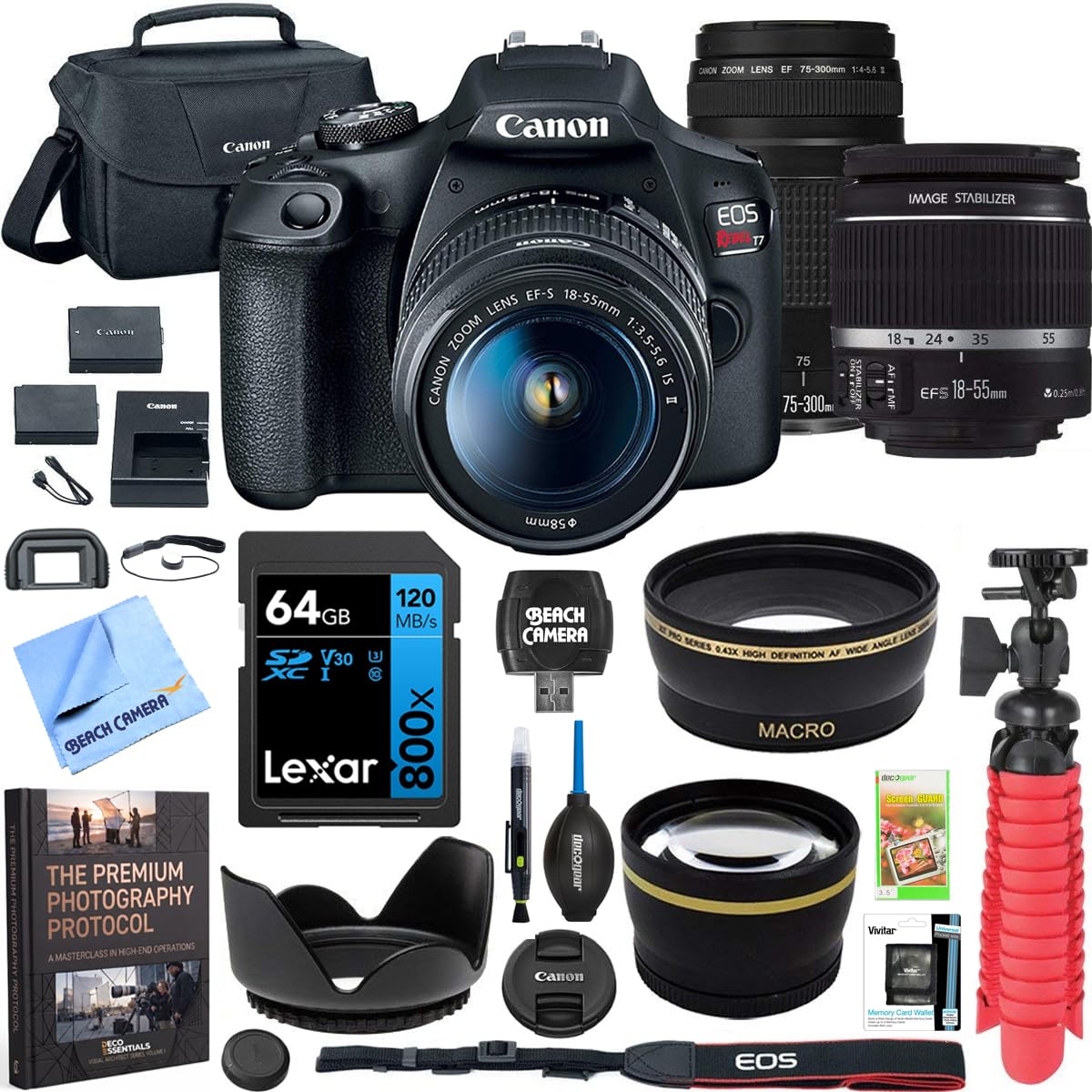
The Canon T7 DSLR bundle is the easiest way to get a complete system out of the box. It includes the 24.1MP APS-C body, an 18-55mm IS II lens for wide landscapes, and a 75-300mm III telephoto lens for compressing distant objects like mountains or city skylines. The DIGIC 4+ processor is older, but for a beginner shooting JPEGs and basic RAW edits, it delivers clean images with Canon’s characteristic color rendering.
The bundle also includes a tripod, a camera bag, a 64GB SD card, a cleaning kit, replacement battery, and a set of 58mm accessory lenses (wide-angle and telephoto converters). While the accessory lenses are not optically perfect, they provide a cheap way to experiment with different focal lengths before investing in quality glass. The 9-point AF system is basic, but for static landscapes it’s perfectly adequate—you’ll be using live view or manual focus for precision anyway.
The T7’s 3fps continuous shooting is slow, but that is irrelevant for landscapes. The 3-inch 920k-dot LCD is usable for reviewing shots, and built-in Wi-Fi helps with quick transfers to your phone. The main downside is the battery drain: some customers report the LP-E10 pack depleting quickly, so a spare is a good idea. The camera is bulky relative to mirrorless options, but if you want a full kit with no extra shopping, this is the most cost-effective route.
Why it’s great
- Comes with two zoom lenses for wide and telephoto coverage
- Full accessory bundle is ready out of the box
- Simple menus for absolute beginners
Good to know
- Battery life is inconsistent; some units drain fast
- Autofocus system is limited to 9 points
9. OM SYSTEM Olympus E-M10 Mark IV Silver with 14-42mm EZ

The OM SYSTEM E-M10 Mark IV is the most portable interchangeable-lens camera on this list, weighing only 383g with battery and card. The 20MP Micro Four Thirds sensor may be smaller than APS-C, but the 5-axis in-body image stabilization offers up to 4.5 stops of compensation. This means you can handhold a 1-second exposure of a calm lake or misty forest without any blur—something much larger cameras with similar IBIS often cannot do.
The bundled M.Zuiko 14-42mm f/3.5-5.6 EZ pancake lens collapses down to 22.5mm thick, making the entire kit small enough to slip into a jacket pocket or a small sling bag. The 28-84mm full-frame equivalent covers standard landscape and portrait lengths. The 121-point contrast-detect autofocus is fast enough for stationary scenes, and the flip-down monitor with selfie mode is a fun addition for vlogging or group shots at the scenic point.
The body features 16 Art Filters (31 total variations), including the new Instant Film filter for nostalgic tones. For a beginner, these filters can produce shareable images without editing. The downside is the 4K video max is 30fps with a 1.1x crop, but video is not your focus here. The built-in pop-up flash can serve as a fill-light for foreground detail. If you value the smallest possible kit with tripod-free stabilization, this is your camera.
Why it’s great
- Palm-sized body with 4.5-stop IBIS
- Retractable kit lens makes it truly pocketable
- Creative Art Filters for instant sharing
Good to know
- Smaller sensor means less dynamic range than APS-C
- No external charger; charging is via camera USB
10. Panasonic LUMIX G85 4K Mirrorless with 12-60mm Power O.I.S.

The Panasonic LUMIX G85 is a rugged Micro Four Thirds body with a dust/splash-proof magnesium alloy frame and the legendary Dual I.S. 2 system. The 16MP sensor is designed without a low-pass filter, giving a 10% boost in resolving power that makes fine details like pine needles or distant cliffs appear sharper. The in-body 5-axis stabilization works in tandem with the lens OIS to produce smooth handheld footage and sharp photos down to 1/8th of a second.
The bundled 12-60mm f/3.5-5.6 Power O.I.S. lens offers a 24-120mm full-frame equivalent, covering wide-angle to mid-telephoto—the ideal range for most landscape scenarios. The 49-point contrast-detect AF is accurate and performs well in good light, though it hunts more in low contrast scenes compared to phase-detect systems. The viewfinder is a 2.36M-dot OLED that remains clear even in bright sunlight, and the 3-inch tilting touchscreen is useful for low-angle compositions.
The G85 also excels at 4K video with no recording time limit, and the 4K Photo mode lets you extract 8MP stills from video at 30fps—a creative tool for capturing a wave’s peak or a bird in flight. The battery life is rated at about 330 shots, which is average but acceptable when paired with a spare. The Micro Four Thirds lens system is one of the most extensive available, with affordable wide-angle options like the Panasonic 9mm f/1.7 or Olympus 12mm f/2.
Why it’s great
- Weather-sealed body for harsh outdoor conditions
- Dual I.S. 2 provides incredible handheld stabilization
- 4K Photo mode captures fleeting moments
Good to know
- Autofocus hunts in low-contrast light
- Sensor is only 16MP; less cropping flexibility
11. Canon EOS R100 Mirrorless with RF-S18-45mm F4.5-6.3 IS STM

The Canon EOS R100 is the smallest and lightest camera in the EOS R series, weighing just 356g with battery. It features a 24.1MP APS-C CMOS sensor paired with the DIGIC 8 processor, delivering excellent image quality for its price point. The RF-S 18-45mm f/4.5-6.3 IS STM kit lens provides a 29-72mm full-frame equivalent, covering wide landscapes to standard compressions with built-in optical stabilization.
The Dual Pixel CMOS AF with 143 zones includes eye and face detection for humans and animals, making it easy to keep a hiker or a deer in focus. Continuous shooting at 6.5fps (One-Shot AF) is sufficient for capturing moving clouds or a cascading waterfall. The camera also records 4K video at 24fps and Full HD at 60fps, so you can create time-lapses or moving panoramas. The design is simple, with intuitive buttons and a clear menu system that beginners will appreciate.
The 2.36M-dot electronic viewfinder is bright and offers 100% coverage. The rear 3-inch 1.04M-dot LCD is sharp for review and composition, though it is fixed (not articulating). The lack of IBIS means you rely on lens stabilization or a tripod for long exposures. The LP-E17 battery lasts around 430 shots, which is good for a full day of guided shooting. If you need the lowest-cost entry to the Canon RF system with solid quality, the R100 is the clear choice.
Why it’s great
- High-quality 24.1MP APS-C imaging at a low entry price
- Dual Pixel CMOS AF with eye/animal detection
- Lightest EOS R body for effortless carry
Good to know
- Fixed rear screen limits low/high-angle shooting
- No in-body stabilization; requires tripod for sharp low-light shots
FAQ
What lens is best for landscape photography on a budget?
Do I need a full-frame camera for good landscape photos?
Why is a tripod important for landscape photography?
Final Thoughts: The Verdict
For most beginners, the best camera for beginner landscape photography is the Canon EOS R10 because its DIGIC X processor, 24.2MP sensor, and versatile 18-150mm kit lens offer the best balance of image quality and ease of use without overwhelming new shooters. If you want maximum dynamic range for post-processing flexibility, grab the Sony a7 III. And for the smallest hiking-friendly kit with incredible stabilisation, nothing beats the OM SYSTEM Olympus E-M10 Mark IV.