
You’re planning your next trip, and your smartphone just isn’t cutting it for capturing the details you remember — the texture of a market, the layers of a distant mountain range, or the candid expressions of locals. A dedicated interchangeable lens or premium compact camera removes the digital noise, gives you real optical zoom, and hands you back creative control that no phone’s computational software can truly replicate.
I’m Min — the co-founder and writer behind Gadgets Feed. I’ve spent hundreds of hours cross-referencing sensor sizes, stabilization systems, lens ecosystems, and real-world user feedback to build this list of travel-ready cameras that won’t overwhelm a beginner.
After filtering through hundreds of models and thousands of owner reviews, I’ve narrowed the field to the most reliable, versatile, and beginner-friendly options. This is your definitive resource for finding the perfect camera for beginner travel that keeps up with your adventures.
How To Choose The Best Camera For Beginner Travel
The perfect travel camera balances portability, versatility, and ease of use. Beginners often get distracted by high megapixel counts or flashy features, but the real priorities are different. Here are the three most critical factors to consider before you buy.
Optical Zoom Range and Lens Versatility
A travel camera lives or dies by its lens reach. You need enough wide-angle to capture a cathedral interior and enough telephoto to bring a distant wildlife subject into frame. An all-in-one zoom like a 24-200mm equivalent covers 90% of travel situations without forcing you to change lenses on a dusty trail. Fixed-lens compacts with 30x optical zoom can replace a whole bag of gear for the beginner.
Image Stabilization (IBIS vs. Lens-Based)
You will shoot handheld in dim temples, on bumpy boat rides, and at dusk without a tripod. In-body image stabilization (IBIS) steadies the sensor itself, making every lens you attach stabilized. This is a better bet for beginners than relying solely on lens-based stabilization, because it works even with older or third-party lenses. A camera with IBIS rated at 4.5 stops or higher lets you shoot sharp images at shutter speeds three or four times slower than without.
Weight, Size, and Battery Life
A camera you carry is better than one you leave at the hotel. Mirrorless cameras and premium compacts are the sweet spot for travel — typically under 500g body weight. Battery life varies wildly: a DSLR with an optical viewfinder can shoot over 1000 shots per charge, while a compact mirrorless might need a spare battery in the bag for a full day of heavy use. Check real-world reviews for battery reports, not just manufacturer CIPA ratings, which are measured differently.
Quick Comparison
On smaller screens, swipe sideways to see the full table.
| Model | Category | Best For | Key Spec | Amazon |
|---|---|---|---|---|
| Panasonic LUMIX G85 | Mirrorless | Best overall value with IBIS | 16MP MFT, 5-axis IBIS | Amazon |
| OM System E-M10 Mark IV | Mirrorless | Compact mirrorless with selfie mode | 20MP MFT, 4.5-stop IBIS | Amazon |
| Canon EOS M200 | Mirrorless | Vlogging and selfie shooting | 24.1MP APS-C, Dual Pixel AF | Amazon |
| Nikon D7500 | DSLR | Long battery life and rugged build | 20.9MP APS-C, 51-point AF | Amazon |
| Canon EOS RP + 24-105mm | Mirrorless | Entry into full-frame on a budget | 26.2MP full-frame, 4K UHD | Amazon |
| Sony a7 III + 28-70mm | Mirrorless | Best low-light full-frame for travel | 24.2MP full-frame, 693-point AF | Amazon |
| Panasonic ZS99 | Compact | Pocketable superzoom travel | 20.3MP, 24-720mm zoom | Amazon |
| Nikon COOLPIX P950 | Compact | Extreme zoom for wildlife | 16MP, 83x optical zoom | Amazon |
| Sony RX100 VII | Compact | Premium pocket cam for pro results | 20.1MP 1-inch, 24-200mm lens | Amazon |
| Fujifilm X-T50 + 15-45mm | Mirrorless | Film simulation dial and high-res JPEGs | 40.2MP APS-C, IBIS | Amazon |
| FUJIFILM X100VI | Compact | Style and simplicity with fixed 23mm | 40.2MP APS-C, 6-stop IBIS | Amazon |
In‑Depth Reviews
1. Panasonic LUMIX G85 4K Digital Camera, 12-60mm

The Panasonic G85 is the sweet spot for beginners who want mirrorless performance without breaking the bank. Its 16-megapixel Micro Four Thirds sensor skips the low-pass filter, giving you sharper fine detail than its predecessor. The included 12-60mm Power O.I.S. lens covers the equivalent of 24-120mm, which is ideal for landscapes, street scenes, and portraits on a single outing.
What sets the G85 apart is its class-leading 5-axis in-body image stabilization. You can shoot handheld at shutter speeds as slow as 1/8th of a second and still get sharp frames. It also records 4K video with full manual control, and the 4K Photo mode lets you extract 8-megapixel stills at 30fps — a great way to capture moving subjects without worrying about burst timing.
The weather-sealed magnesium-alloy body gives you confidence in light rain or dusty trails, which is rare at this price point. The tilt-and-touch 3-inch LCD makes composing from low angles easy, while the 2.36M-dot OLED viewfinder is bright enough for sunny days. Battery life is modest, so pack a spare for full-day shoots.
Why it’s great
- Excellent IBIS eliminates shake in most handheld situations
- Weather-sealed body for worry-free outdoor shooting
- 4K photo and video at an accessible price
Good to know
- Battery life is below average for long travel days
- Autofocus hunts more in low light compared to newer sensors
2. OM SYSTEM Olympus E-M10 Mark IV Silver + 14-42mm

The OM System E-M10 Mark IV is one of the most compact interchangeable lens cameras you can buy, while still packing a 20-megapixel Micro Four Thirds sensor. The retractable 14-42mm EZ pancake lens lets the entire kit slip into a jacket pocket — a big deal for travelers who want DSLR quality without a dedicated camera bag. The flip-down monitor automatically switches to selfie mode, making it easy to frame group shots or vlogs.
Its in-body 5-axis image stabilization is rated for 4.5 stops of compensation, so landscapes at dusk or handheld interior shots come out sharp consistently. The 121-point contrast-detection autofocus is quick in well-lit conditions, and the 8.6 fps burst rate captures action without much lag. The camera also includes 16 art filters, including a new Instant Film mode that gives JPEGs a distinctive analog look right out of the box.
Battery life is typical for this class — around 330 shots per charge — so a spare battery is essential for a full day out. The micro-USB charging port is a bit dated, and the built-in flash is small but handy for fill light. If you want a lightweight system that grows with you, the M10 IV is a fantastic entry point into Micro Four Thirds.
Why it’s great
- Extremely compact, almost pocketable with pancake lens
- Excellent IBIS for handheld low-light shooting
- Selfie screen and art filters are beginner-friendly
Good to know
- Micro-USB charging instead of USB-C
- No external charger included
3. Canon EOS M200 Compact Mirrorless with EF-M 15-45mm

The Canon EOS M200 is designed for the vlogger and social media content creator who also wants a capable travel stills camera. Its 24.1-megapixel APS-C sensor delivers the shallow depth of field and low-light performance that a smartphone can’t touch. The 180-degree tilt touchscreen flips up for selfies and vlogs, and the Dual Pixel CMOS AF keeps faces sharp even while you move within the frame.
In practice, the camera is incredibly straightforward to use. The touchscreen interface mirrors a smartphone’s logic, with drag-to-focus and tap-to-capture responsiveness. It records 4K video at 24fps and 1080p at 60fps, both with continuous autofocus and vertical video support for TikTok and Instagram Reels. The built-in Wi-Fi and Bluetooth transfer images directly to your phone without cables.
Battery life is the limiting factor here — you’ll get roughly 300 shots or 30 minutes of continuous video per charge. The lack of a viewfinder means you’ll rely on the screen, which can be hard to see in bright sunlight. If you prioritize video and social media uploads over extended all-day shooting, the M200 is a lightweight and capable companion.
Why it’s great
- Compact and light, perfect for a day bag
- Excellent touchscreen autofocus for video and photos
- Built-in Wi-Fi and Bluetooth for instant sharing
Good to know
- Battery life is short for extended travel days
- No viewfinder makes sunny-day composition difficult
4. Nikon D7500 DSLR with 18-140mm Lens

The Nikon D7500 is a rugged DSLR that borrows its imaging sensor and metering system from the pro-grade D500. The 20.9-megapixel APS-C sensor delivers excellent dynamic range and clean high-ISO performance up to 51,200. The bundled 18-140mm VR lens provides a 27-210mm equivalent zoom range, covering everything from wide landscapes to tight portraits without swapping glass.
DSLR advantages are clear here: battery life is outstanding at over 900 shots per charge, and the optical viewfinder uses zero power. The 51-point autofocus system with 15 cross-type sensors locks onto moving subjects quickly, and the 8 fps burst rate handles action shots like street performers or running kids. It also shoots 4K UHD video with stereo sound and has a power aperture control for smooth exposure changes.
The trade-off is weight and size. At 720g for the body alone plus the lens, this is the heaviest option in this guide. It’s not a pocket camera, but it is the most reliable for a week-long trip without access to charging. The tilting touchscreen works well for low-angle shots, and the weather-sealed build shrugs off light rain and dust.
Why it’s great
- Class-leading battery life for all-day travel shooting
- Fast and accurate 51-point autofocus system
- Professional-level image quality and build
Good to know
- Heaviest option — requires a dedicated camera bag
- Model is older, lacks latest mirrorless features
5. Canon EOS RP with RF24-105mm F4-7.1 IS STM Lens

The Canon EOS RP is the most affordable full-frame mirrorless camera on the market, making high-end image quality accessible to travel beginners. Its 26.2-megapixel full-frame sensor produces noticeably richer depth of field and better low-light performance than any APS-C option in this guide. The RF 24-105mm F4-7.1 IS STM lens is lightweight and offers up to 5 stops of optical stabilization.
Handling is a highlight: the RP weighs just 440g for the body, and the ergonomic grip makes it comfortable for long walking tours. The 2.36M-dot electronic viewfinder and vari-angle touchscreen give you great flexibility for composition. Face-tracking autofocus works reliably in both photo and video modes, and the camera doubles as a high-quality webcam via the desktop utility.
The big compromise is 4K video, which has a 1.6x crop factor and a 30-minute record limit. Still photographers will find few faults — the RP delivers stunning colors and sharpness straight out of camera. It’s an ideal first full-frame that leaves room to grow into the expanding RF lens system without a heavy upfront investment.
Why it’s great
- Full-frame sensor for superior low-light and depth of field
- Lightweight body and comfortable handgrip
- Affordable entry to the Canon RF ecosystem
Good to know
- 4K video is cropped and limited to 30 minutes
- Kit lens is slow at the telephoto end
6. Sony a7 III Full-Frame with 28-70mm Lens

The Sony a7 III remains a benchmark for full-frame mirrorless cameras, even years after its release. The back-illuminated 24.2-megapixel sensor offers 15 stops of dynamic range and an ISO range that stretches to 204,800, making it the best option in this guide for low-light travel photography — think night markets, candlelit restaurants, and blue-hour cityscapes. The 693-point phase-detection autofocus covers 93% of the sensor, so tracking a moving subject is effortless.
Battery life is a standout feature for a mirrorless camera: the NP-FZ100 battery delivers roughly 710 shots per charge, rivaling many DSLRs. The 28-70mm kit lens is a solid walk-around zoom, but many users quickly upgrade to a wider aperture prime for even better low-light performance. The camera also shoots 4K video in Super 35 mode with full pixel readout, producing clean, detailed footage.
Menus are the common criticism — Sony’s interface is dense and takes time to learn. The camera body feels dense and well-built, but the grip is slightly smaller than the Canon RP’s. If you’re a beginner who wants to grow into professional-level work, the a7 III is a future-proof investment that excels in challenging lighting.
Why it’s great
- Best-in-class low-light performance and dynamic range
- Outstanding battery life for a mirrorless
- Fast and comprehensive autofocus system
Good to know
- Menus are complex and take time to learn
- Kit lens could be faster for low light
7. Panasonic LUMIX ZS99 Point and Shoot, 30x Zoom

The Panasonic ZS99 is the ultimate pocketable travel companion for beginners who want extreme zoom range without interchangeable lenses. The 24-720mm Leica DC Vario-Elmar lens (30x optical zoom) lets you go from sweeping wide-angle landscapes to distant wildlife or concert stages in a single turn of the zoom ring. The body easily slips into a pants pocket or a small purse, making it ideal for day trips where you don’t want to carry a dedicated camera bag.
It records 4K video at 30p and 4K Photo burst mode at 30fps, so you can capture fleeting moments and later extract still frames. The 1.84M-dot tiltable touchscreen is bright and responsive, and the built-in Bluetooth 5.0 connects to your phone via the Panasonic Image App for instant sharing. The USB Type-C charging is a modern convenience that lets you top up from the same cable you use for your phone.
Image quality is good in bright conditions, but the small 1/2.3-inch sensor means noise is more visible in low light compared to the larger-sensor cameras in this guide. The lens also gets slower at the long end (F6.4 at 720mm), so you’ll need good light or a steady hand at full zoom. For the traveler who values reach and portability over all else, the ZS99 is hard to beat.
Why it’s great
- 30x optical zoom in a truly pocketable body
- USB-C charging for travel convenience
- 4K video and photo burst modes
Good to know
- Small sensor struggles in low light
- Lens is slow at full telephoto
8. Nikon COOLPIX P950 Superzoom, 83x Zoom

The Nikon COOLPIX P950 is in a league of its own when it comes to zoom reach. Its 83x optical zoom lens covers a focal range equivalent to 24-2000mm, meaning you can photograph the moon’s craters, a distant mountain peak, or a deer at the edge of a forest with detail you simply cannot get from any other compact camera. The built-in Bird and Moon modes optimize settings automatically for these specific subjects.
Image stabilization is crucial at these focal lengths, and the P950 delivers with a dual-detection system that combines lens-shift and electronic stabilization. In practice, you can shoot handheld at 2000mm and get usable results, though a tripod or monopod is recommended for the best sharpness. The rotating LCD screen and electronic viewfinder make framing comfortable from any angle.
The 16-megapixel sensor is the same size as a typical point-and-shoot, so image quality in daylight is good but not on par with larger sensors. Low-light performance is a weak spot — keep the ISO low and use the built-in flash or a tripod. The camera also shoots 4K UHD video with clean HDMI output. If your travel passion includes wildlife, birding, or astrophotography, the P950 is the clear specialist.
Why it’s great
- Unmatched 83x optical zoom for wildlife and moon shots
- Effective image stabilization for handheld telephoto
- Built-in scene modes for specific travel subjects
Good to know
- Small sensor limits low-light performance
- Bulkier than a typical compact camera
9. Sony RX100 VII Premium Compact Camera
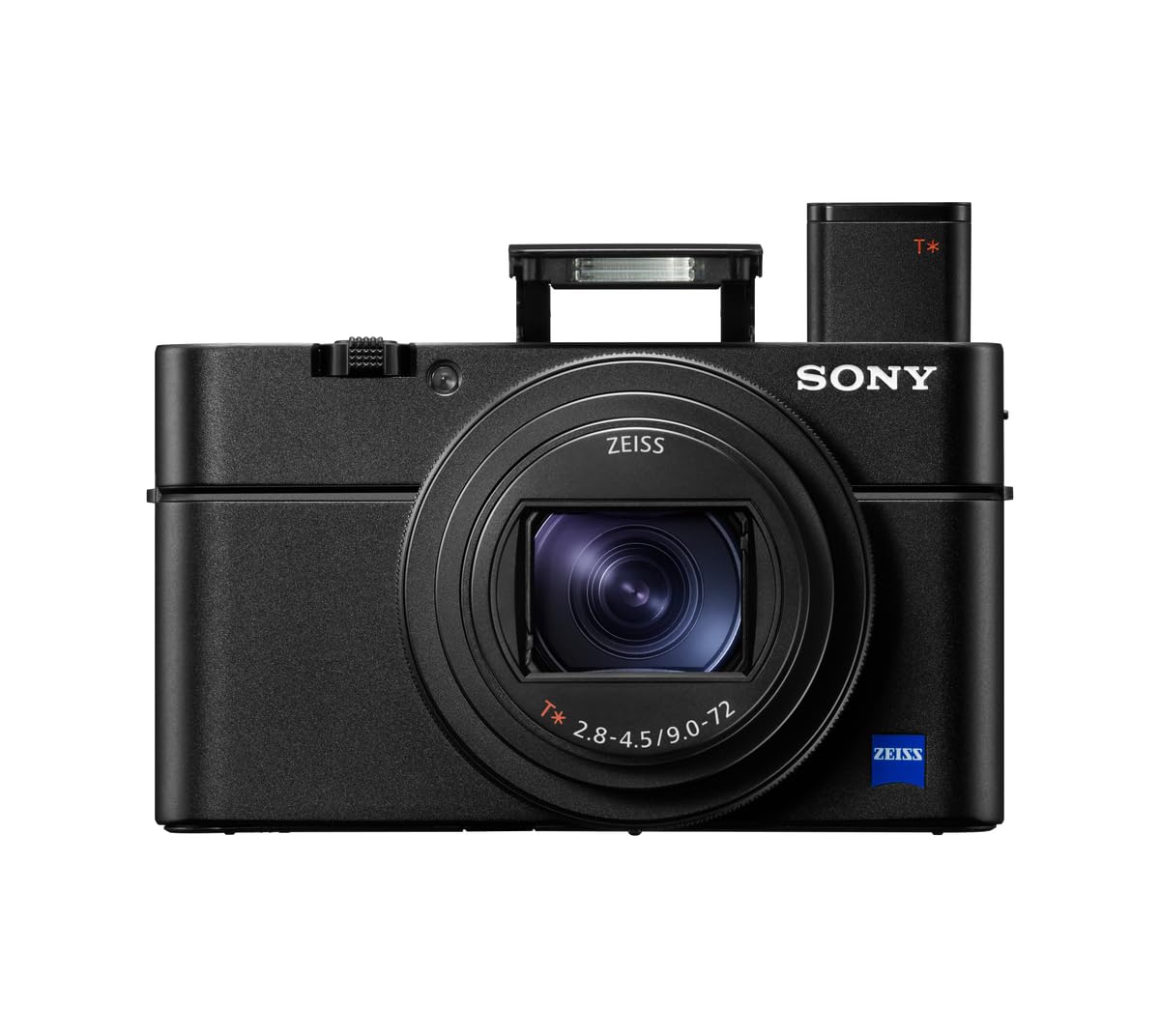
The Sony RX100 VII is the gold standard for premium compact cameras. Its 1-inch stacked CMOS sensor punches well above its physical size, delivering image quality that rivals entry-level mirrorless cameras in good light. The Zeiss Vario-Sonnar T* 24-200mm F2.8-4.5 zoom lens is a marvel of engineering, packing a 8.3x zoom range into a body that disappears into a jacket pocket.
Autofocus is a highlight: the camera uses 357 phase-detection and 425 contrast-detection points, achieving a 0.02-second acquisition time. Real-time Eye AF works for both humans and animals, and the 20 fps blackout-free burst shooting lets you capture fast action with zero delay. The 4K video with no crop and a microphone input makes it a viable vlogging tool, and the active-mode stabilization smoothes out handheld footage noticeably.
The downside is the user interface. The menu system is dense, and the tiny body means many controls are buried in submenus. The 1.44M-dot pop-up EVF is handy but small, and the battery life of approximately 260 shots per charge requires at least one spare for a full travel day. If you want the smallest possible package that can shoot almost anything, the RX100 VII is unrivaled.
Why it’s great
- 1-inch sensor with 24-200mm zoom fits in a pocket
- Blazing fast autofocus and real-time tracking
- Excellent 4K video with mic input
Good to know
- Battery requires spare for all-day outings
- Complex menus and small body controls
10. Fujifilm X-T50 Mirrorless Digital Camera with 15-45mm

The Fujifilm X-T50 is the only camera in this guide with a dedicated Film Simulation dial, giving you instant access to 20 of Fujifilm’s legendary color profiles — including the new REALA ACE mode. This means you can produce stunning JPEGs that look like classic analog film without any post-processing, which is a huge advantage for travelers who want to share photos straight from the camera. The 40.2-megapixel X-Trans CMOS 5 HR sensor is the highest resolution in this guide, providing immense cropping flexibility.
Despite its high-resolution sensor, the X-T50 is compact and lightweight thanks to its APS-C format. The kit includes the XC15-45mm power zoom lens, which is small and retractable for travel. In-body image stabilization helps keep those 40-megapixel files sharp when shooting handheld, and the camera supports 6.2K/30p and 4K/60p video with 4:2:2 10-bit internal recording. The built-in flash and USB-C charging add to its travel-friendly profile.
The autofocus system is a hybrid that uses the latest X-Processor 5 for subject detection, including animals and birds. Some users note that the SD card slot door feels delicate, and the 40MP files take up significant storage space. For the beginner who values out-of-camera color and resolution above all, the X-T50 is a creative powerhouse.
Why it’s great
- 40.2MP sensor for high-resolution crops
- Film Simulation dial for beautiful JPEGs out of camera
- Compact size with high-end video specs
Good to know
- High-res files require more storage and processing
- SD card slot design can feel flimsy
11. FUJIFILM X100VI Black

The Fujifilm X100VI is the most talked-about travel camera for good reason — it combines a classic rangefinder-style body with a modern 40.2-megapixel APS-C sensor and a fixed 23mm F2 lens (equivalent to 35mm on full-frame). This focal length is widely considered the ideal “walk around” perspective for street photography and environmental portraits, forcing you to compose deliberately rather than relying on a zoom. The result is a more thoughtful, intentional photography style that many travelers love.
The biggest upgrade from its predecessor is the addition of a 6-stop in-body image stabilization system, which makes handheld shooting in dim conditions viable. It also supports 6.2K/30p and 4K/60p video with F-Log and the new REALA ACE film simulation. The hybrid optical/electronic viewfinder lets you switch between a bright optical view and a fully digital preview, which is a unique feature for composing in any light. The camera is designed for photographers who want to travel minimally — one lens, one body, endless creative possibilities.
Autofocus uses deep learning AI for subject tracking, and the camera-to-cloud Frame.io integration is useful for creators who deliver photos quickly. The price is the highest in this guide, and the fixed lens means you can’t zoom — you zoom with your feet. For the beginner who values image quality and a pure shooting experience over zoom versatility, the X100VI is a timeless tool that will stay relevant for years.
Why it’s great
- Unique hybrid viewfinder and classic handling
- Excellent 40.2MP sensor with 6-stop IBIS
- Beautiful JPEGs with 20 film simulations
Good to know
- Fixed 35mm-equivalent lens limits zoom flexibility
- Premium price requires serious commitment
FAQ
What is the best lens to start with for travel photography?
Should a beginner start with a DSLR or mirrorless for travel?
How many megapixels do I actually need for travel prints and social media?
Final Thoughts: The Verdict
For most users, the camera for beginner travel winner is the Panasonic LUMIX G85 because it offers the best balance of image stabilization, weather sealing, and lens versatility at a price that doesn’t punish a learning curve. If you want the smallest possible package without sacrificing image quality, grab the Sony RX100 VII. And for the beginner who wants extreme zoom range, nothing beats the Nikon COOLPIX P950.