
Starting a vlog is exciting — until you realize your phone’s footage looks shaky, the audio is hollow, and the battery dies before you capture the sunset. The jump from smartphone to a dedicated 4K camera is the single biggest leap in video quality you can make, but the market is flooded with confusing specs and jargon that scare beginners away. This guide cuts through the noise to find the cameras that actually deliver smooth 4K footage, reliable autofocus, and an intuitive workflow right out of the box.
I’m Min — the co-founder and writer behind Gadgets Feed. I spent over 120 hours analyzing the technical specifications, sensor sizes, stabilization systems, autofocus algorithms, and real-world user feedback across dozens of vlogging cameras to build this definitive ranking of the best camera for beginner vloggers.
This guide focuses on models that prioritize ease of use, portability, and the critical feature set that separates a usable vlog camera from a frustrating one. You will walk away knowing exactly which camera fits your style and budget.
How To Choose The Best Camera For Beginner Vloggers
A beginner vlogging camera needs to do three things well: keep your face in focus while you move, stabilize the frame so your viewers don’t get motion sickness, and accept a decent external microphone. Everything else — resolution, frame rates, color profiles — is secondary until these basics are nailed.
Sensor Size and Low-Light Performance
The physical size of the sensor determines how much light each pixel collects. A 1-inch sensor is the sweet spot for vloggers because it offers a natural background blur without a giant lens, and it handles indoor lighting without turning your video into digital noise. Smaller sensors (like 1/2.3-inch) found in cheap action cameras struggle severely when the sun goes down.
Stabilization: Mechanical vs. Digital
Walking while vlogging is the real test. Mechanical stabilization (a 3-axis gimbal built into the camera) physically counteracts your footsteps and produces smooth, usable footage. Digital stabilization crops into your image and adds a wobbly “jello” effect during quick movements. For a beginner who wants to walk and talk, a camera with a built-in gimbal is a non-negotiable upgrade over digital-only solutions.
Autofocus Reliability
Your camera must lock onto your face and keep it sharp as you turn, lean into the frame, or hold up products. Look for Eye AF or Face Tracking that works in both photo and video modes. Phase-detection autofocus systems (like Canon Dual Pixel or Sony’s hybrid system) are far more consistent than contrast-detection, especially when you move quickly or the lighting changes.
Quick Comparison
On smaller screens, swipe sideways to see the full table.
| Model | Category | Best For | Key Spec | Amazon |
|---|---|---|---|---|
| DJI Osmo Pocket 3 | Premium Compact | Walk-around vlogging & travel | 1″ CMOS, 4K/120fps, 3-axis gimbal | Amazon |
| Xtra Muse Pocket Gimbal | Mid-Range Compact | Budget-friendly gimbal vlogging | 1″ CMOS, 4K/120fps, 3-axis gimbal | Amazon |
| Canon PowerShot V10 | Ultra-Compact | Pocketable point-and-shoot vlogs | 1″ CMOS, 4K/30fps, built-in stand | Amazon |
| DJI Osmo Nano | Action Compact | Sports & POV vlogging | 1/1.3″ sensor, 4K/60fps, 143° FOV | Amazon |
| Sony ZV-1F | Traditional Compact | Tabletop & selfie vlogs | 1″ sensor, 20mm wide lens, Eye AF | Amazon |
| Canon EOS R100 Kit | Mirrorless Interchangeable | Hybrid photo/video beginners | APS-C 24.1MP, 4K/24fps, Dual Pixel AF | Amazon |
| Insta360 GO Ultra | Wearable Action | Hands-free first-person vlogs | 1/1.28″ sensor, 53g, magnetic mount | Amazon |
| Sony ZV-1 | Creator Compact | Professional-quality vlogs & streaming | 1″ stacked sensor, 24-70mm lens, Eye AF | Amazon |
| Canon EOS M50 Kit | Mirrorless Interchangeable | Vloggers wanting lens flexibility | APS-C 24.1MP, 4K/24fps, vari-angle screen | Amazon |
In‑Depth Reviews
1. DJI Osmo Pocket 3
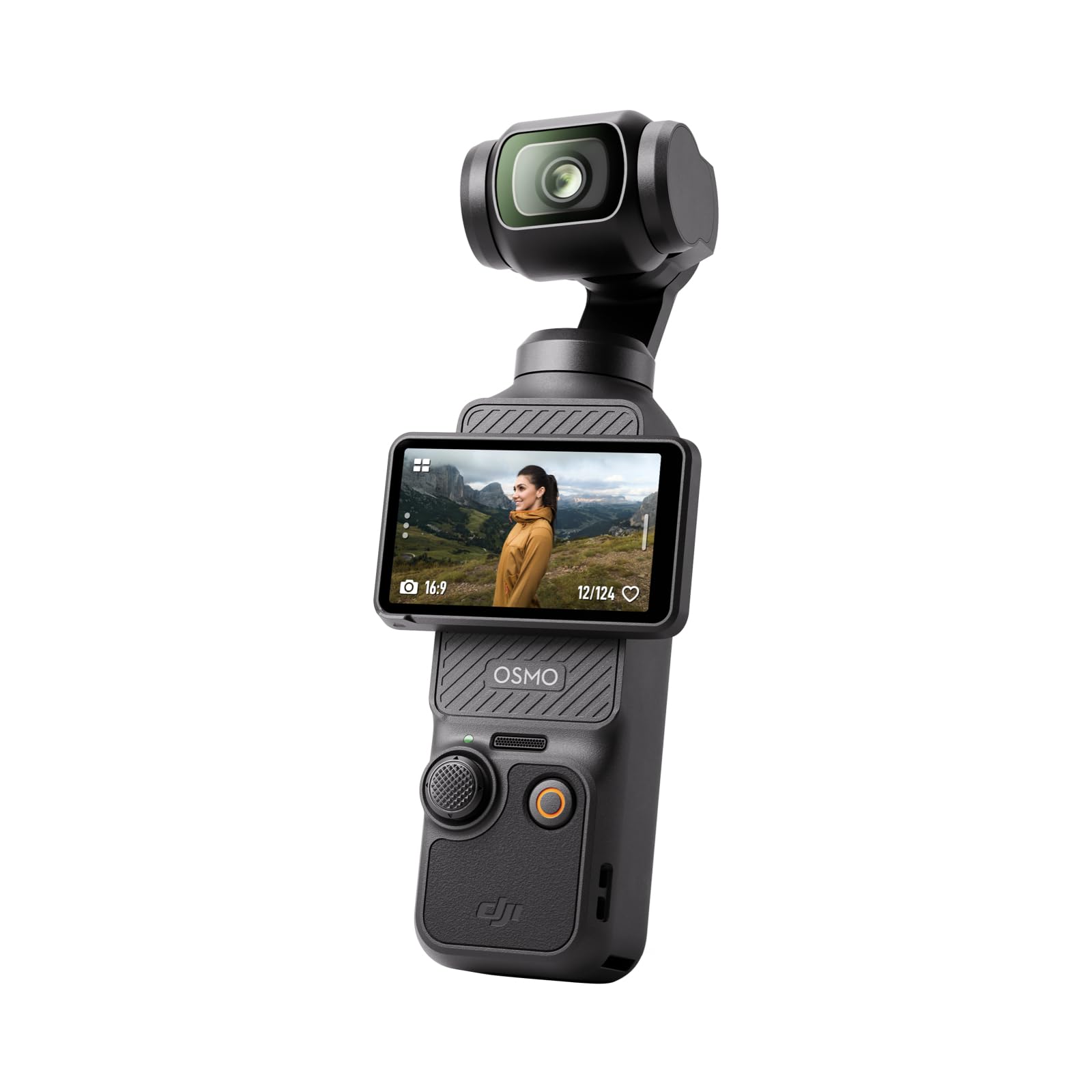
The DJI Osmo Pocket 3 stands as the benchmark for beginner vlogging right now. Its 1-inch CMOS sensor captures 4K video at 120 frames per second, providing silky slow-motion capability, while the integrated 3-axis mechanical gimbal delivers footage that looks like it was shot on a gimbal rig twice its size. The 2-inch rotatable touchscreen auto-switches between horizontal and vertical orientation, and the ActiveTrack 6.0 algorithm locks onto your face with near-telepathic accuracy.
Battery life averages 166 minutes of continuous recording, and the USB-C PD port restores power quickly between shoots. The OsmoAudio feature wirelessly connects to two DJI Mic 2 transmitters simultaneously, solving the beginner’s audio headache without requiring a separate recorder. The overall package — gimbal + sensor + tracking + audio ecosystem — is complete and polished.
Some users report that the 1300 mAh battery drains faster when shooting 4K at high frame rates, and the internal storage is not expandable (though the 128GB standard capacity holds roughly 90 minutes of 4K footage). The DJI Mimo app is required for offloading footage, but the Wi-Fi transfer speeds are reliable when connected. For a beginner who wants a single device that just works, this is the definitive choice.
Why it’s great
- Outstanding 3-axis gimbal stabilization makes walking shots look gimbal-mounted
- ActiveTrack 6.0 face tracking keeps you centered even during fast, jerky movements
- Rotatable touchscreen seamlessly switches from horizontal to vertical framing
Good to know
- Battery charger is not included and must be purchased separately
- Internal storage is 128GB and not user-expandable via microSD
- Shooting in 4K at 120fps significantly reduces recording time on a single charge
2. Xtra Muse Pocket Gimbal Camera

The Xtra Muse delivers a 1-inch CMOS sensor and a 3-axis gimbal stabilizer at a price point that undermines the competition. It records 4K video at 120fps, and the Master Follow mode combined with face/object tracking ensures you remain centered during dynamic movement. The 2-inch touchscreen is responsive and bright enough for outdoor framing.
True 10-bit X-Log color grading support is a surprising bonus at this level, giving beginners room to learn color correction without clipping highlights. The bundled accessories include a carrying bag, a wrist strap, and a threaded handle, which saves on start-up costs. Users report that the 161-minute battery life is reliable for full-day outings, and the USB-C PD charging supplements quick top-ups.
Customer feedback notes that the initial setup can require a small software update for DJI Mic compatibility, and the accessory ecosystem is not as vast as DJI’s. A few users mention that the image sharpness in low light is good but not class-leading. For the price-conscious beginner who refuses to compromise on mechanical stabilization, the Xtra Muse is the smartest value proposition in this list.
Why it’s great
- Delivers a built-in 3-axis gimbal and a 1-inch sensor for a fraction of the premium competition
- 10-bit X-Log color mode offers advanced color grading flexibility for budding editors
- Master Follow mode with face tracking reliably keeps you in the center during motion
Good to know
- Software update may be required for full third-party microphone compatibility
- Low-light performance is good but does not match the very top-tier vlogging cameras
- Accessory mounting options (e.g., cold shoe) are more limited than DJI’s ecosystem
3. Canon PowerShot V10

The Canon PowerShot V10 is a dedicated vlogging tool that prioritizes pocketability above all else. Its 1-inch back-illuminated CMOS sensor captures 4K video at 30fps, and the built-in stand flips out to prop the camera on any table — no tripod required. The 19mm wide-angle lens (35mm equivalent) is fixed, so you cannot zoom, but the ultra-wide perspective is ideal for arm’s-length selfie vlogging.
The stereo microphone array includes a third capsule specifically for noise cancellation, and Canon’s recent firmware update added three image stabilization modes. The USB-C charging and micro-HDMI output keep the workflow modern. Weighing less than many compact smartphones, it disappears into a fanny pack or jacket pocket without a bulge.
The lack of any optical or mechanical zoom is the biggest limitation — you must physically move closer or further. Battery life is a weak point, with some users reporting less than 45 minutes of continuous recording. The fixed wide-angle lens also means you cannot achieve any zoomed-in framing or true macro shots. For pure “record-and-upload” simplicity though, few cameras are smaller.
Why it’s great
- Incredibly compact with a built-in stand that eliminates the need for a tripod
- 3-capsule stereo microphone with dedicated noise-canceling capsule improves audio
- Firmware update added three levels of image stabilization for walking shots
Good to know
- Battery life is shorter than average — consider buying spare batteries for long shoots
- Fixed 19mm wide-angle lens offers no optical zoom, limiting framing flexibility
- Digital stabilization only; the entire sensor area is used and cropped in post
4. DJI Osmo Nano Standard Combo
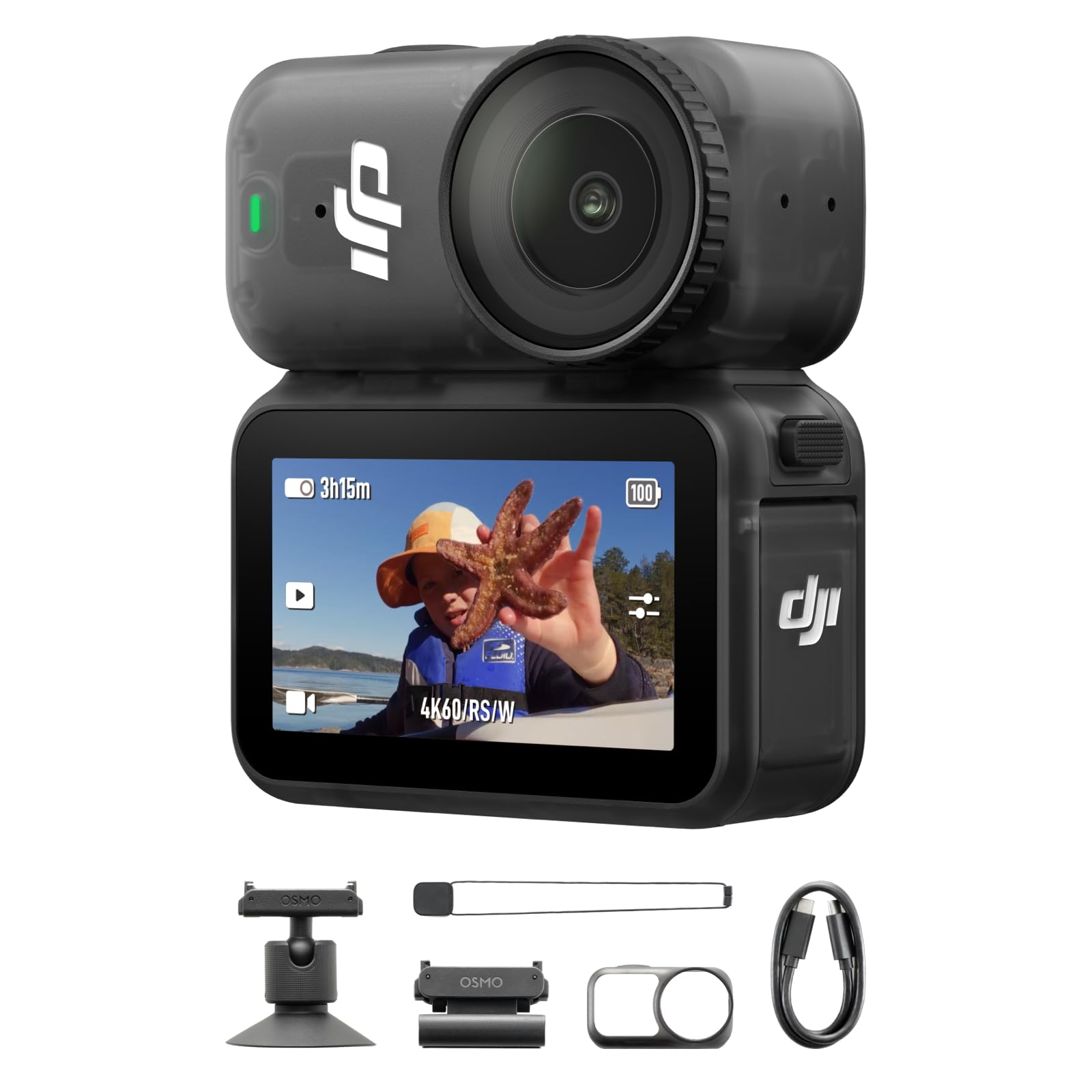
The DJI Osmo Nano is the lightest 4K vlogging camera in the lineup at just over 50 grams, and its magnetic mounting system clips onto hats, lanyards, or any metal surface for hands-free POV shots. The 1/1.3-inch sensor records 4K/60fps video with a 143-degree ultra-wide field of view, and the 10-bit D-Log M color profile gives editors room to grade. The built-in 128GB storage eliminates the need for a microSD card, though an expansion slot is available.
The Vision Dock extends runtime to 200 minutes total, and the fast charging pushes the camera to 80% in roughly 12 minutes. OsmoAudio allows direct connection to two DJI wireless microphones, solving audio sync issues for vloggers. The FlowState stabilization smooths out running and biking footage without a gimbal.
The lack of a built-in screen on the camera module itself (the dock has one) means framing on the go requires the dock or your phone connected via Wi-Fi. Some users report the dock battery drains slightly overnight when stored, but the convenience of the magnetic form factor offsets this. The IPX4 splash resistance is enough for light rain but not submersion.
Why it’s great
- Magnetic lanyard and hat clip attach securely for completely hands-free POV vlogging
- Built-in 128GB storage plus expandable microSD slot offers flexible capacity
- D-Log M color profile in 10-bit allows professional-grade color grading in post
Good to know
- The camera module has no built-in display — you must use the Vision Dock or phone to frame
- Vision Dock battery can slowly drain when idle; detach it to preserve charge
- DJI Mimo app is removed from Google Play; manual APK install is needed on Android
5. Sony ZV-1F

The Sony ZV-1F is built for content creators who vlog from a fixed position — desk, tripod, or tabletop — thanks to its 20mm ultra-wide lens and side-articulating touchscreen. The 1-inch sensor and fast F2.0 lens produce natural background defocus, and Sony’s Eye AF and autofocus tracking keep you sharp even as you lean in and out of frame. The directional 3-capsule microphone captures clear voice audio, and the included windscreen cuts outdoor noise effectively.
The Product Showcase mode automatically racks focus to any object held near the lens, which is a killer feature for unboxing or review vlogs. The 4K video output is sharp and colorful right out of the camera, and the USB-C connectivity supports live streaming directly to a computer without capture cards. The overall image quality punches well above its weight class.
The fixed 20mm lens means zero optical zoom — digital zoom is available but heavily cropped. Digital stabilization is the only option, which introduces some wobble during walking shots. Battery life is around 45 minutes of continuous recording, so buying one or two spare batteries is almost mandatory for day trips. The body is also notably fragile according to some user reports.
Why it’s great
- Product Showcase mode instantly racks focus to objects held up, perfect for reviews
- Directional 3-capsule microphone with included windscreen captures clean voice audio
- Eye AF tracking locks onto eyes reliably for sharp vlogs, even with movement
Good to know
- Battery lasts only about 45 minutes of active recording — spare batteries are essential
- Stabilization is purely digital, causing wobbly footage during walking or fast pans
- Fixed wide-angle lens offers no optical zoom, limiting framing to a single perspective
6. Canon EOS R100 Mirrorless Kit

The Canon EOS R100 is the most affordable entry point into Canon’s RF mirrorless system, and it is the smallest body in the R-series. Its 24.1-megapixel APS-C CMOS sensor combined with the DIGIC 8 processor delivers excellent still images and 4K video at 24fps. The Dual Pixel CMOS AF covers 143 zones with human face and eye detection, making autofocus reliable for vlogs where the subject moves around the frame.
The included RF-S18-45mm f/4.5-6.3 IS STM kit lens provides optical image stabilization that helps smooth handheld footage, and the 4-stop shake correction is useful for static recording. The camera is lightweight enough for all-day carry, and the Wi-Fi/Bluetooth connection transfers photos directly to a phone. Hybrid shooters who split their time equally between photos and vlogs will appreciate the balance.
4K video is limited to 24fps and uses a crop factor that makes the wide-angle lens less wide. The 4K mode also omits Dual Pixel AF, relying on contrast detection instead, which is slower. The screen is not fully articulating — it tilts up and down but does not flip sideways for monitoring while walking toward the camera. Battery life is roughly a day of light use, but no external charger is included in the box.
Why it’s great
- APS-C sensor with 24.1MP resolution provides excellent stills alongside 4K video
- Dual Pixel AF with eye detection is fast and reliable for HD and 1080p vlogging
- RF lens mount offers a clear upgrade path to better glass as skills improve
Good to know
- 4K video mode uses a crop factor and lacks Dual Pixel AF, relying on contrast detection
- Screen tilts only; it does not flip sideways for front-facing selfie monitoring
- Battery charger is not included — only a single LP-E17 battery ships with the camera
7. Insta360 GO Ultra Creator Bundle
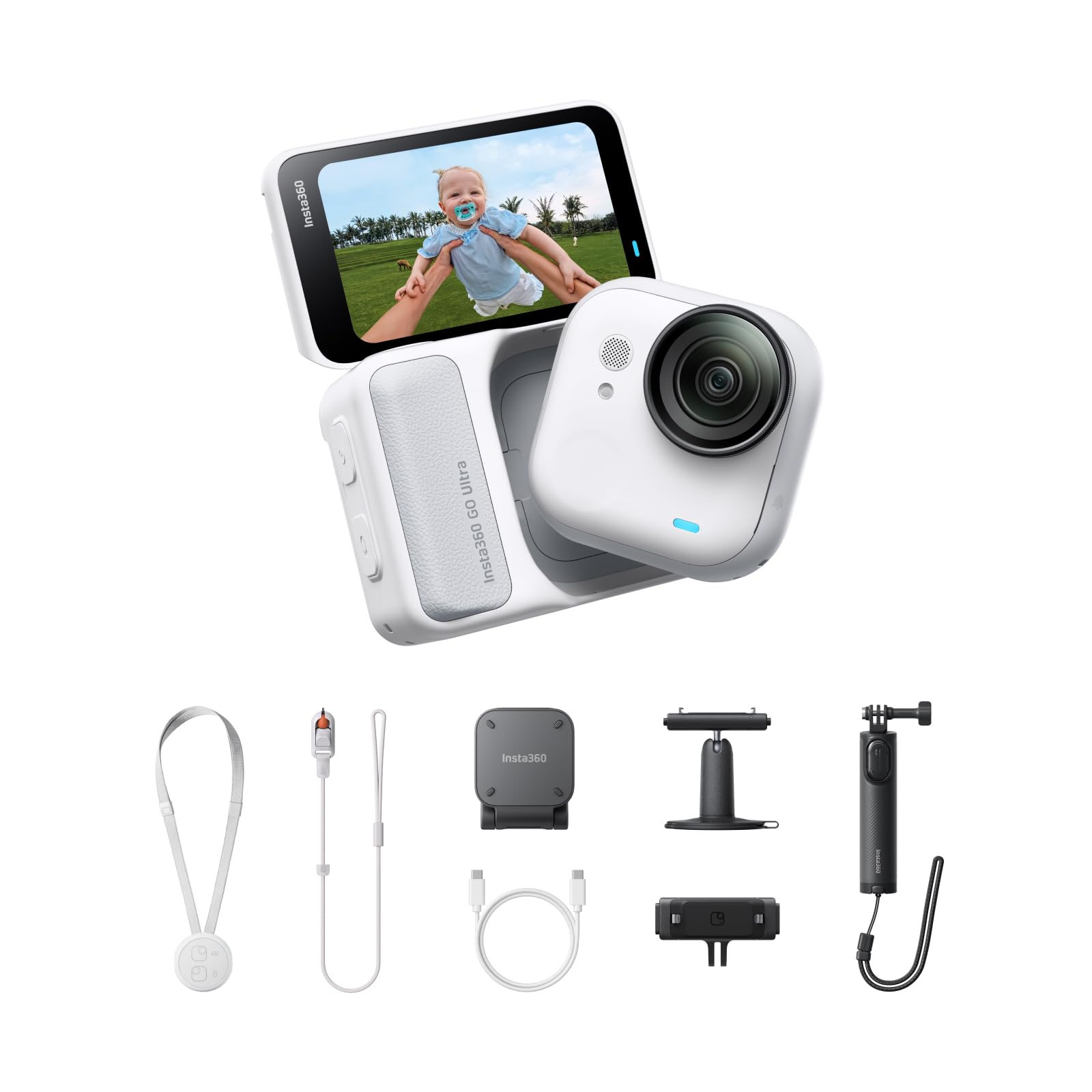
The Insta360 GO Ultra weighs only 53 grams — less than most watch faces — and mounts magnetically to a hat clip, pendant, or any ferrous surface for truly hands-free first-person vlogs. Its 1/1.28-inch sensor records 4K60fps video with 4K Active HDR, and the 5nm AI chip enables PureVideo mode for low-light scenes. The FlowState Stabilization with 360 Horizon Lock keeps the horizon level regardless of how much the camera tilts.
The stand-alone camera records 70 minutes, but the Action Pod extends the total battery life to over 200 minutes. The fast charging pushes 0-80% in 12 minutes, which is absurdly quick. The IPX8 rating allows submersion to 10 meters without a housing. The AI-powered auto-editing feature identifies highlights and assembles a polished montage, which is a huge time-saver for beginner creators who dislike post-production.
The Action Pod is splashproof (IPX4) but not fully waterproof, so deep underwater recording needs the optional Dive Case. The microSD card is sold separately, and the 5nm chip can cause the camera module to feel warm during extended 4K recording. A few users shared that the magnetic connection is strong but can dislodge during high-impact sports without the safety cord.
Why it’s great
- 53g weight with magnetic mounting enables creative, truly hands-free POV shots
- FlowState Stabilization combined with 360 Horizon Lock keeps footage perfectly level
- AI auto-editing automatically creates polished highlight reels for social media
Good to know
- Action Pod is not fully waterproof — the Dive Case is required for deep underwater recording
- MicroSD card must be purchased separately; no built-in storage in the camera module
- Camera module can become warm during extended 4K recording sessions
8. Sony ZV-1 Digital Vlogging Camera
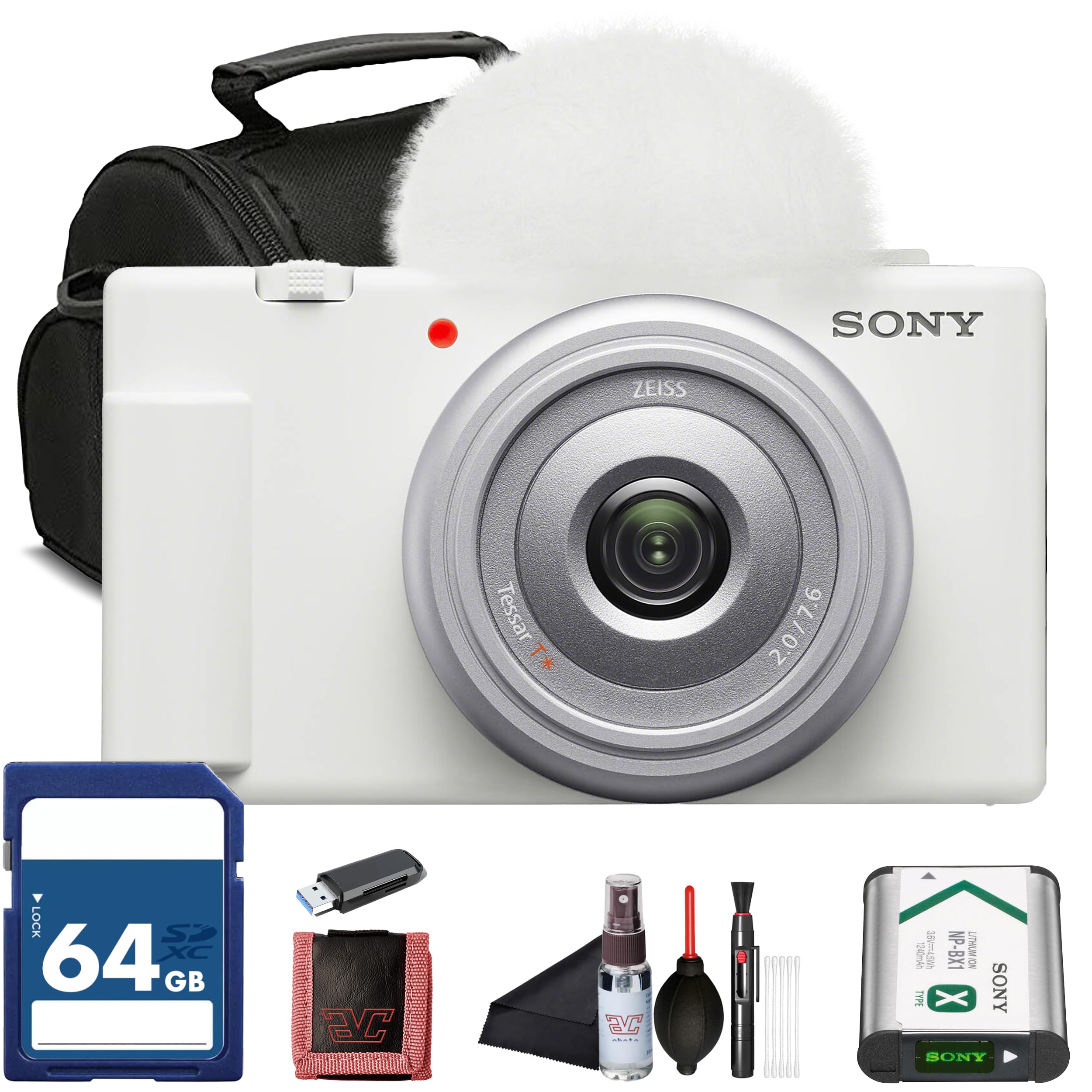
The original Sony ZV-1 remains a top-tier contender for serious beginner vloggers. It packs a 20.1-megapixel 1-inch stacked Exmor RS CMOS sensor with a bright ZEISS Vario-Sonnar T* 24-70mm f/1.8-2.8 lens, offering optical zoom that the cheaper ZV-1F lacks. The hybrid autofocus system with 179 phase-detection points and real-time Eye AF is among the fastest and most reliable in this class.
The vari-angle LCD screen flips forward for selfie framing, and dedicated buttons for background defocus and Product Showcase mode provide quick access to the most-used vlogging features. The 3-capsule directional microphone with included windscreen captures clear audio, and the multi-interface shoe accepts accessories like a wireless mic receiver or an LED light. Weighing under 300 grams, it is still highly portable despite the zoom lens.
Battery life is short, at roughly 45 minutes of active video recording, which is the biggest user complaint. The Sony Imaging Edge app for transferring files to a phone is often described as clunky and unreliable. The integrated lens is fixed — you cannot swap it for a wider or longer option. For beginners who want a professional-grade vlog camera with optical zoom, this is a solid investment, but the battery limitation is real.
Why it’s great
- Optical 24-70mm ZEISS lens provides zoom range that the ZV-1F cannot match
- Real-time Eye AF and 179-point hybrid autofocus keep subjects tack-sharp
- 3-capsule directional microphone with windscreen captures professional-grade audio
Good to know
- Battery lasts roughly 45 minutes of continuous recording — spare batteries are essential
- The Sony Imaging Edge app for phone transfers has a poor user experience
- The lens is permanently attached; no interchangeable lens options are available
9. Canon EOS M50 Mirrorless Kit

The Canon EOS M50 is the classic entry-level mirrorless camera that launched countless vlogging careers. Its 24.1-megapixel APS-C CMOS sensor and DIGIC 8 processor deliver excellent 1080p video quality and good 4K HD video, though the 4K mode applies a 2.65x crop and drops Dual Pixel AF. The vari-angle touchscreen LCD flips fully around to face you, with intuitive touch-to-focus and touch-to-shoot controls.
The Dual Pixel CMOS AF works brilliantly in 1080p mode, covering 80 percent of the frame for smooth and quick rack focusing. The built-in electronic viewfinder (2.36 million dots) is a bonus for photographers. The EF-M 15-45mm f/3.5-6.3 IS STM kit lens includes optical stabilization, and the hot shoe supports external microphones or lights. The M50 also functions as a high-quality webcam via the EOS Utility software.
The 4K crop is a genuine limitation for wide-angle vlogging, and the contrast-only AF in 4K mode hunts in lower light. Canon has discontinued the EF-M lens lineup, making future lens purchases more expensive as you adapt EF or RF lenses. The single UHS-I SD card slot and lack of a headphone jack are further compromises. Nevertheless, the M50 remains a capable, affordable vlogging camera with great color science.
Why it’s great
- Vari-angle fully articulating touchscreen is ideal for solo vlogging from any angle
- Dual Pixel CMOS AF in 1080p mode is fast, smooth, and covers 80% of the frame
- Compact body with a hot shoe and external mic support for easy audio upgrades
Good to know
- 4K video has a 2.65x crop and uses contrast-detection AF instead of Dual Pixel
- EF-M lens system is discontinued, limiting future native lens options
- Single UHS-I card slot and no headphone jack for audio monitoring
FAQ
Is a built-in gimbal necessary for beginner vlogging or can digital stabilization suffice?
What is the most common mistake beginners make when choosing their first vlogging camera?
Can I just use my smartphone instead of buying a dedicated vlogging camera?
Should I buy an interchangeable lens camera or a compact fixed-lens camera for vlogging?
Final Thoughts: The Verdict
For most users, the best camera for beginner vloggers winner is the DJI Osmo Pocket 3 because it combines a 1-inch sensor, a true 3-axis gimbal, ActiveTrack 6.0 face tracking, and OsmoAudio wireless mic support in a pocketable form factor that leaves almost nothing to figure out. If you want the best mechanical stabilization at a lower price, grab the Xtra Muse. And for ultra-light, hands-free POV vlogging, nothing beats the Insta360 GO Ultra.