
Our readers keep the lights on and my morning glass full of iced black tea. As an Amazon Associate, I earn from qualifying purchases.
Specs are compiled from manufacturer listings and verified buyer reviews and can change over time — please confirm the key details on the product page before buying.
The biggest decision for a content creator isn’t which brand to trust—it’s which sensor size and video spec actually match the content you make every day. Whether you’re filming talking-head videos for YouTube, chasing b-roll for Instagram Reels, or shooting client work that demands 4K, this guide cuts through the noise to the cameras that genuinely earn their place in a creator’s bag. You’ll see exactly where a pocket gimbal camera stops and a full-frame workhorse begins, so you don’t overpay for specs you’ll never use.
I’m Min — the founder and writer behind Gadgets Feed. This guide is built by comparing the manufacturers’ published specifications and the patterns across verified customer reviews, so you get each pick’s real strengths and trade-offs instead of marketing spin.
From the 8K resolution of the Canon EOS R5 to the vlogging-first DJI Osmo Pocket 3, these are the models that keep showing up in creators’ kits for a reason. Read on to find the camera for content creators that matches your workflow, your skill level, and your budget.
Our Picks at a Glance

How To Choose The Best Camera For Content Creators
Before you compare megapixel counts, figure out your dominant use case. A creator who films sit-down vlogs needs reliable autofocus and a flip-out screen. A creator who films travel b-roll needs stabilization and portability. A hybrid shooter needs a camera that excels at both stills and video.
Match the sensor to your lighting reality
Full-frame sensors (like those in the Canon R5 or Sony A7 IV) capture dramatically more light than smaller APS-C or 1-inch sensors. If you film in controlled studio lighting, a smaller sensor saves you money. If you shoot in natural light, cafés, or golden hour, the low-light advantage of full-frame is worth the premium.
Video specs that actually matter
Look for 4K resolution at minimum, and check if it’s uncropped. 10-bit color depth (which records over a billion colors) is essential for color grading. If you shoot slow-motion, check the frame rate—4K at 60fps or 120fps gives you that cinematic smoothness. Some cameras advertise 8K, but ask yourself if your editing computer can handle those massive files.
Quick Comparison
| Model | Best For | Sensor | Video | Stabilization | Amazon |
|---|---|---|---|---|---|
| Canon EOS R5★ Best Overall | 8K Hybrid Pros | 45MP Full-Frame | 8K RAW | In-Body | Amazon |
| Canon EOS Rebel T7Budget Champion | Budget Beginners | 24.1MP APS-C | 1080p | None (Lens) | Amazon |
| DJI Osmo Pocket 3Vlog Ready | Vlog Mobility | 1″ CMOS | 4K/120fps | 3-Axis Gimbal | Amazon |
| Nikon Z 30 | Entry Vlogging | 20.9MP APS-C | 4K/30p | None (Lens) | Amazon |
| Sony ZV-E10 II | Creator Value | 26MP APS-C | 4K/60p | None (Lens) | Amazon |
| Canon EOS R8 | Lightweight Full-Frame | 24.2MP Full-Frame | 4K/60p | None (Lens) | Amazon |
| Nikon Z5 II | Low-Light Hybrid | 24.5MP Full-Frame | 4K/60p | 5-Axis In-Body | Amazon |
| Panasonic LUMIX S9 | Social Media Color | Full-Frame | 6K | None | Amazon |
| Sony Alpha 7 IV | Reliable Hybrid | 33MP Full-Frame | 4K/60p | In-Body | Amazon |
| Panasonic LUMIX S5II | Unlimited Recording | 24.2MP Full-Frame | 4K Unlimited | Active I.S. | Amazon |
| Panasonic LUMIX S5IIX | Pro Video Rig | 24.2MP Full-Frame | 6K Open Gate | Active I.S. | Amazon |
In-Depth Reviews
1. Canon EOS R5 Mirrorless Camera
Our pick — over 4.5★ from 750+ verified ratings; the strongest balance of quality and price.
The hybrid benchmark that shoots 8K RAW and still nails a bird’s eye in flight.
The R5 sets the benchmark for full-frame hybrids, and its 45MP sensor and 8K RAW video justify that status. It packs a 45-megapixel full-frame CMOS sensor that produces images with enormous detail, and it records 8K RAW video—a resolution gap of 2.0x over the 4K of a pocket camera like the DJI Osmo Pocket 3. If your clients demand the headroom to crop deep into a frame or punch in to 4K from an 8K timeline, no other body here matches it.
Autofocus is the second headline. The Dual Pixel phase detection system with eye/face tracking is fast enough for wildlife and sports, and the mechanical shutter rips through 12 frames per second. That speed, combined with the high-resolution sensor, is why the review consensus lands on image quality as the thing owners praise most—by a wide margin over every other aspect. That performance earns it a 4.7-star rating from hundreds of owners, the highest of any hybrid here.
If your income depends on the image, the Canon R5 is the ceiling—but it’s an investment, and some owners find the cost hard to justify unless you’re a professional hybrid shooter. Battery life runs shorter than DSLR standards, and the electronic shutter fills memory cards fast. Still, you get in-body stabilization (a system that steadies the sensor to reduce shake) that works with adapted EF lenses, and its color science is widely described as class-leading. Buyers report the trade-off is real: you pay more, but you get the image quality that pays you back.
Winner’s circle: The highest-rated camera here at 4.7 stars, and the one owners call a true flagship hybrid for both photo and video.
The cost of entry: It’s a premium investment, and owners note shorter battery life; carry spares for long shoots.
2. Canon EOS Rebel T7 DSLR Bundle
A complete beginner kit that proves you don’t need mirrorless tech to start creating.
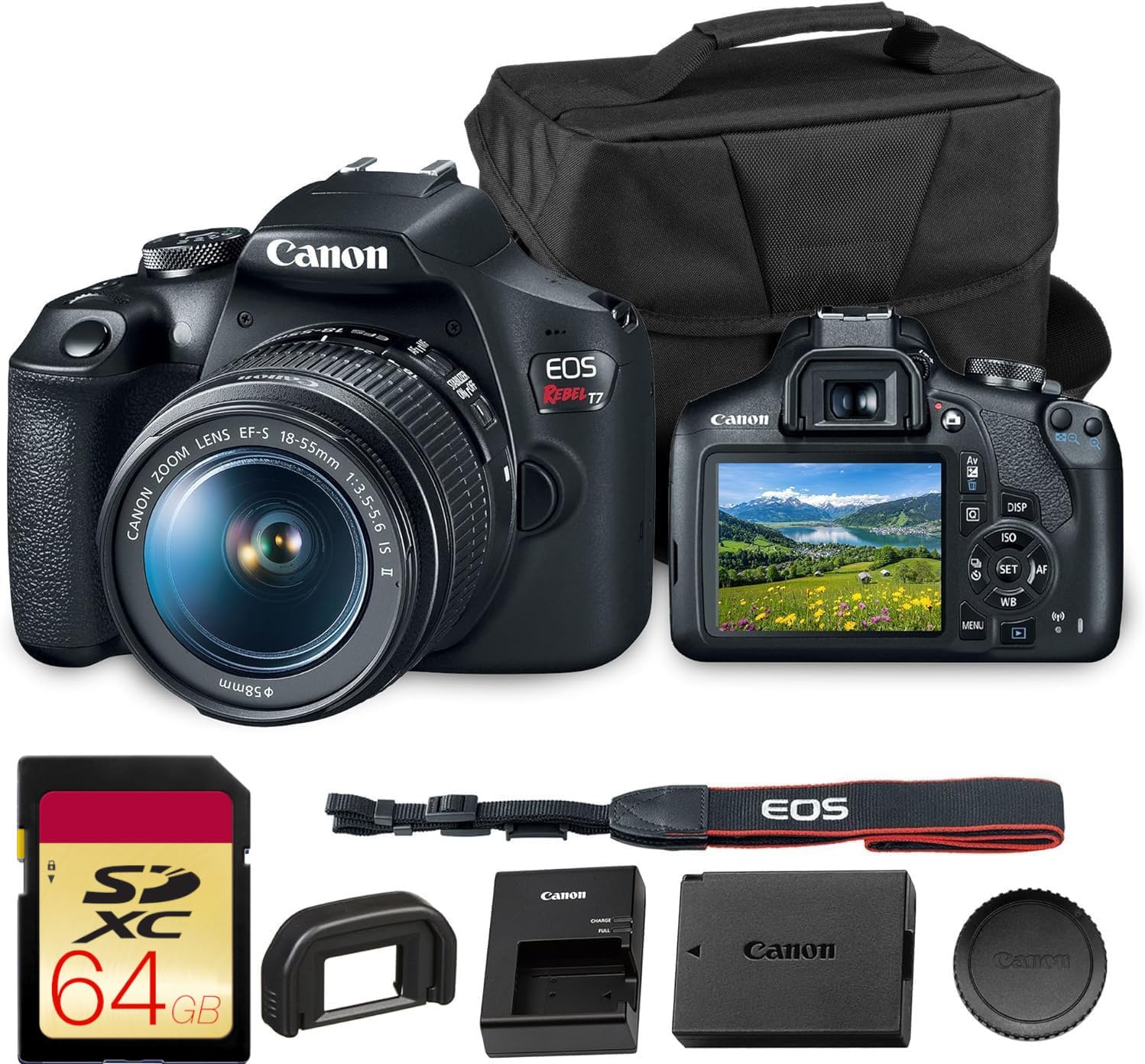
The Rebel T7 bundle is the entry point that includes everything—the 24.1-megapixel APS-C DSLR, the 18-55mm lens, a 64GB memory card, a shoulder bag, and a rechargeable battery. For someone picking up a camera for the first time, that’s the whole kit ready to shoot from the start. Built-in Wi-Fi and NFC transfer photos to your phone with no connection issues, per buyer reports.
Its 24.1-megapixel APS-C sensor matches full-frame resolution but on a smaller, more affordable chip. What matters is the DIGIC 4+ image processor keeps operation snappy and noise low for a camera at this level. The optical viewfinder and 3.0-inch LCD are simple to navigate, which is why ease of use is a consistent theme in owner feedback.
The honest limit is video: it records 1080p, not 4K, so if your primary output is cinematic 4K footage, this isn’t the tool. But for photography-first creators, family vlogs, or learning the craft, it’s a proven starting point. The bundle’s value lies in its praised image quality, proving Canon’s reliability at a budget price.
Starter’s edge: A full kit with a lens, bag, and card that gets a beginner shooting on day one, with praised image quality.
The limitation: Video tops out at 1080p; 4K-focused creators will outgrow it quickly.
3. DJI Osmo Pocket 3 Creator Combo
A pocket-sized gimbal camera that makes shaky walking shots a thing of the past.
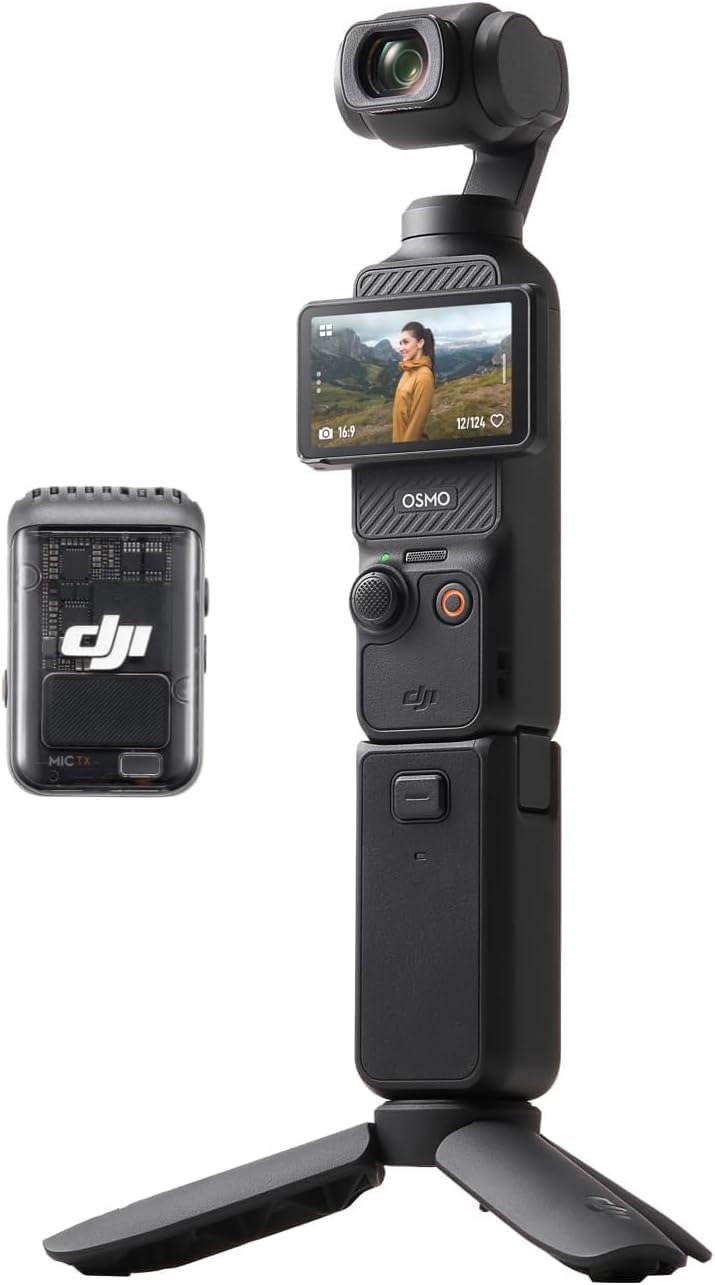
The Osmo Pocket 3 is the creator camera that prioritizes mobility above all else. Its 1-inch CMOS sensor records 4K resolution at 120fps, giving you smooth slow-motion that larger cameras struggle to match without expensive rigs. But the real star is the built-in 3-axis mechanical stabilization—owners describe the footage as buttery smooth even while dancing or chasing pets, which is why stabilization is a top-praised feature.
The Creator Combo sweetens the deal with the DJI Mic 2 transmitter, a battery handle, and a mini tripod. That microphone is the difference between audio you can use and audio you have to fix. The 2-inch touch screen rotates for horizontal or vertical shooting, and ActiveTrack 6.0 keeps you center-frame even as you move. Owners consistently praise its portability, noting it fits securely in a jacket pocket.
Compared to the 8K Canon R5, this is a 2.0x resolution gap in video—4K versus 8K—but that’s not the point. This camera is for solo creators who shoot on the move and want a gimbal-stable image without carrying a full rig. The trade-off is a small sensor that can’t match full-frame low-light performance, and its 9.4-megapixel effective still resolution means it’s video-first. For TikTok, Reels, and travel vlogs, it’s the most fun you’ll have filming.
Why creators love it
- 3-axis gimbal kills shake without extra gear
- 4K/120fps for smooth slow-motion clips
- Included DJI Mic 2 upgrades audio instantly
- Rotating screen for vertical or horizontal video
Who should think twice
- Small 1-inch sensor limits low-light quality
- 9.4MP stills won’t replace a real photo camera
4. Nikon Z 30 with Creator’s Kit

A lightweight mirrorless with a red REC lamp so you always know when you’re live.
The Z 30 is Nikon’s answer to the vlogging camera, built around a 20.9-megapixel APS-C CMOS sensor and the EXPEED 6 processor. Its ISO 100-51200 range keeps noise low indoors and at night, a strong claim for this class. The Creator’s Kit bundles a RODE VideoMicro microphone and a SmallRig tripod grip, which are exactly the accessories a solo creator needs.
Autofocus is where Nikon leans in. The Auto Area AF mode automatically repositions focus when you hold an object up to the camera—perfect for product reviews—and Eye-Detection AF locks onto people, dogs, and cats. The vari-angle touch screen is designed for selfie-style shooting, letting you tap to change focus and brightness.
The creator-focused design includes a red REC lamp that confirms recording, over 2 hours of recording time, and live streaming up to 4K/30p through the HDMI port. However, one owner reported the camera shutting down after about 10 minutes of 4K/30p recording due to heat, and there’s no setting to disable the auto-shutdown. If long-form 4K is your main output, that’s a risk to note; for short clips and vlogs, it’s a solid, light choice.
Creator toolkit: Comes with a RODE mic and tripod grip, plus eye-detection autofocus that tracks pets and people.
Heat caveat: Long 4K recording sessions may trigger auto-shutdown; keep clips short or drop to 1080p.
5. Sony ZV-E10 II Creator Camera

The interchangeable-lens vlogger that swaps lenses to fit your shoot.
The ZV-E10 II pairs a 26-megapixel APS-C Exmor R CMOS sensor with the E PZ 16-50mm OSS II lens for a camera that understands a creator’s need for flexibility. Its sensor is roughly ten times larger than a smartphone’s, delivering shallow depth of field and cleaner, more professional footage. The kit lens has Optical SteadyShot stabilization to smooth out handheld clip.
The autofocus system is the reason to buy this over a basic vlogging camera. Real-time Eye AF recognizes faces and eyes of humans, animals, and birds, and Real-time Tracking keeps the subject locked as it moves across the frame. The 759 autofocus points cover the sensor densely, and the Creative Look function offers 10 in-camera presets so you can skip color grading for quick social uploads.
It shoots up to 60fps in 4K and 120fps in Full HD with a 5x slow-motion S&Q mode. The flip-out vari-angle LCD is essential for solo recording. However, owners note the battery life is a mixed bag—some report dead batteries—and it lacks an electronic viewfinder. It’s a common thread that this is best for creators who prioritize autofocus and lens options over viewfinder shooting and marathon battery sessions.
Creator-first build: Real-time Eye AF for humans and animals, plus 10 in-camera color presets for fast social uploads.
Power note: Battery life gets mixed feedback; keep a USB power bank handy for long shoots.
6. Canon EOS R8 Mirrorless Camera

Canon’s lightest full-frame that borrows the internals of a far pricier model.
The R8 is the budget door into Canon’s full-frame RF mount, and it’s an unusually good one. It shares the 24.2-megapixel full-frame CMOS sensor (a light-capturing chip that delivers high detail), Dual Pixel AF II (a fast autofocus system that tracks subjects), and video capabilities of the higher-tier R6 Mark II, which is why owners call it the “R6 Mark II without the price.” It shoots uncropped 4K at up to 60fps, oversampled from 6K, so your footage has extra sharpness and detail—meaning you can crop in post without losing clarity.
The 1,053 AF zones with deep learning subject detection recognize people, animals, and vehicles—including aircraft, trains, and horses. For a content creator, autofocus this reliable means fewer retakes. It also has UVC/UAC support, so it works as a high-quality webcam for streaming. Owners praise its low-light performance, noting it captures clean images in dimly lit environments that would challenge smaller sensors.
The catch is in the corners. It has a single SD card slot, a smaller battery, and no IBIS (in-body image stabilization), so you’ll want a stabilized lens or a tripod for shaky handheld work. But its weight is a constant positive in reviews—it’s the lightest full-frame Canon makes, making it a dream for travel. For a creator stepping up from APS-C, it’s a huge leap in image quality for the money.
The full-frame leap
- Outstanding low-light image quality
- 4K/60p uncropped, oversampled from 6K
- Canon’s lightest full-frame body
- Webcam and streaming via UVC/UAC
The budget trade-offs
- Single SD card slot
- Smaller battery life
- No in-body stabilization
7. Nikon Z5 II Full-Frame Camera
A full-frame with 7.5 stops of stabilization and autofocus that works in near darkness.
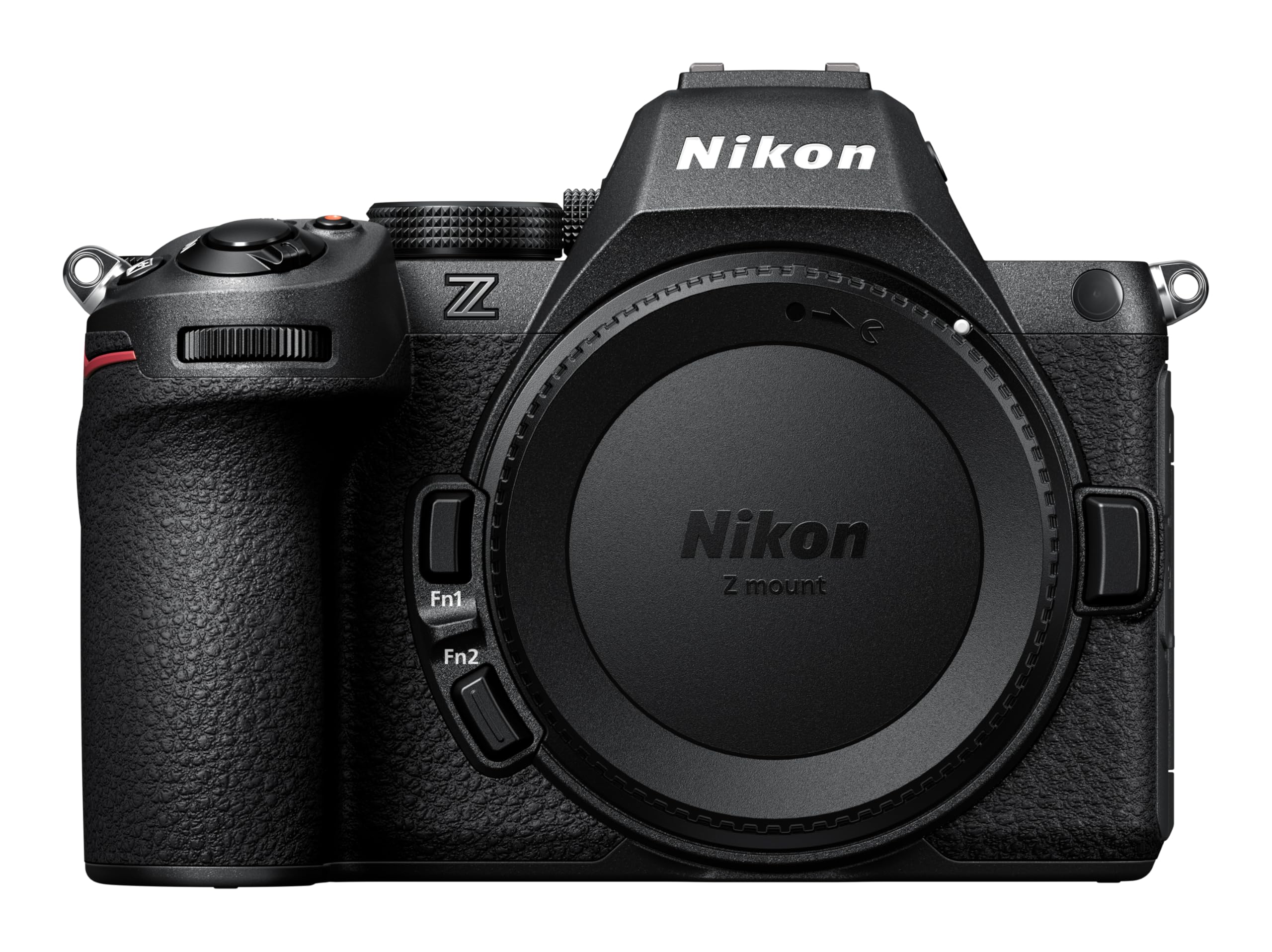
The Z5 II is Nikon’s newly-upgraded entry into full-frame, pairing a 24.5-megapixel BSI-CMOS FX-format sensor with the EXPEED 7 processing engine. That combo powers high-speed shooting up to 30fps and, more importantly for creators, autofocus that works down to -10EV—effectively near-total darkness. If you film candlelit scenes or nighttime city b-roll, this camera locks focus where others hunt.
Its 5-axis in-body image stabilization delivers up to 7.5 stops of shake correction, so you can confidently shoot handheld in situations that would normally demand a tripod. The autofocus automatically detects 9 subject types—people, birds, dogs, cats, cars, bicycles, motorcycles, trains, and airplanes—which is an impressive spread for a hybrid shooter. The electronic viewfinder is bright, at 3000 nits, which helps when shooting outdoors in sunlight.
For video, it captures 4K/60p and even records 12-bit N-RAW internally, a pro-grade codec you’d usually need a more expensive body to get. Owners upgrading from a D7500 describe it as a great step up, and Nikon’s SnapBridge transfers photos wirelessly to your phone. The main consideration is that it’s body-only here, so you’ll need to budget for a Z-mount lens. But the build quality and ergonomics win consistent praise.
Dark-arts specialist: AF down to -10EV and 7.5 stops of stabilization make it a low-light champion.
Kit note: Sold body-only, so factor in a Z-mount lens when budgeting.
8. Panasonic LUMIX S9 Creator Camera

A compact full-frame that bakes your color grade into the footage, not the edit suite.
The LUMIX S9 is a full-frame camera designed for creators who want that polished, graded look straight out of camera. Its headline feature, REAL TIME LUT, applies signature color presets directly in-camera, so you can preview and apply professional color grades as you shoot. For social media creators who don’t have time for heavy post-production, this is a genuine workflow shifter.
The full-frame sensor delivers excellent low-light quality, and the included 20-60mm F3.5-5.6 L-mount lens covers wide-angle to short telephoto. Owners praise its sharpness and say the camera produces vibrant photos. It also records 6K video, which gives you room to crop or reframe in post. The ultra-fast Wi-Fi transfer pushes shots straight to your phone’s photo library for instant sharing.
The trade-offs are physical. There’s no built-in viewfinder, which owners note makes bright sunlight shooting tricky, and no IBIS, so handheld video can get shaky. But if your content lives on Instagram, TikTok, or YouTube and you want to skip color grading, the S9’s compact size and in-camera LUTs make it a compelling package. It’s about speed and style, and it delivers both.
Grade-and-go: REAL TIME LUT applies pro color presets in-camera, eliminating the editing bottleneck.
Viewfinder gap: No EVF and no IBIS; bright sunlight and handheld video are its weak spots.
9. Sony Alpha 7 IV Full-Frame

The 33-megapixel hybrid that owners call a near-perfect balance of stills and video.
The Alpha 7 IV defines the modern hybrid category, pairing a 33-megapixel full-frame Exmor R back-illuminated CMOS sensor (a chip that captures more light for better low-light shots) with the BIONZ XR processing engine that’s 8x more powerful than its predecessor. That resolution sits between the 24-26MP of most rivals and the 45MP of the Canon R5, giving you a balance for heavy cropping in photos without the massive file sizes of 8K video—so you can crop tight on a subject and still have plenty of detail left.
For video, it delivers up to 4K 60p in 10-bit 4:2:2 with full pixel readout, and 7K oversampling for 4K 30p with no pixel binning. That means sharper, more detailed footage with better color grading headroom. The S-Cinetone color profile is a favorite for its natural skin tones, and the 693-point phase-detect autofocus with Real-time Eye AF locks onto eyes reliably, even in tricky lighting.
The in-body stabilization is effective, and owners praise the camera’s versatility with switchable photo and video modes. A common note is that the battery delivers over 2,000 shots per charge—the strongest battery claim in this list. The 33-megapixel sensor captures detail that owners describe as stunning, and the menu system is highly customizable. It’s the safe, reliable, professional choice for a serious hybrid creator.
The all-rounder: 33MP stills and 4K/60p 10-bit video make it the most versatile hybrid on this list.
Learning curve: The sheer amount of customization can feel overwhelming for complete beginners.
10. Panasonic LUMIX S5II Camera

A compact hybrid with a built-in fan to keep recording when others overheat.
The S5II is Panasonic’s answer to the hybrid camera, and its defining feature is unlimited video recording. A heat dispersion mechanism combining a small fan and high-efficiency heat sink means you can record 4:2:2 10-bit video without the thermal shutdown that plagues other hybrids. For interviewers, podcasters, or anyone recording long-form content, this is a practical lifesaver.
It pairs a 24.2-megapixel full-frame CMOS sensor with the Phase Hybrid Autofocus system, which delivers fast, accurate subject detection and tracking even in adverse lighting. The Active I.S. stabilization is designed specifically to smooth out walking shots, so you can get gimbal-like footage without the gimbal. Owners consistently praise its stabilization and call it a pro-level camera for the price.
The included 20-60mm F3.5-5.6 L-mount lens is a strong kit lens that gives a cinematic look straight from the start. Owners note it’s light and discreet, with an easy learning curve and packed features. The catch is battery life—owners say it’s poor and recommend a battery grip for full-day shoots. But for a creator who needs unlimited recording and excellent stabilization, the S5II is a standout value.
The pro-level wins
- Unlimited 4:2:2 10-bit recording with fan cooling
- Active I.S. smooths walking shots
- Fast Phase Hybrid Autofocus
- Cinematic 20-60mm kit lens included
The everyday gripes
- Battery life is short; plan for spares
- Square design can scratch easily
11. Panasonic LUMIX S5IIX Camera
The video-first full-frame that records ProRes to an SSD and never stops for heat.
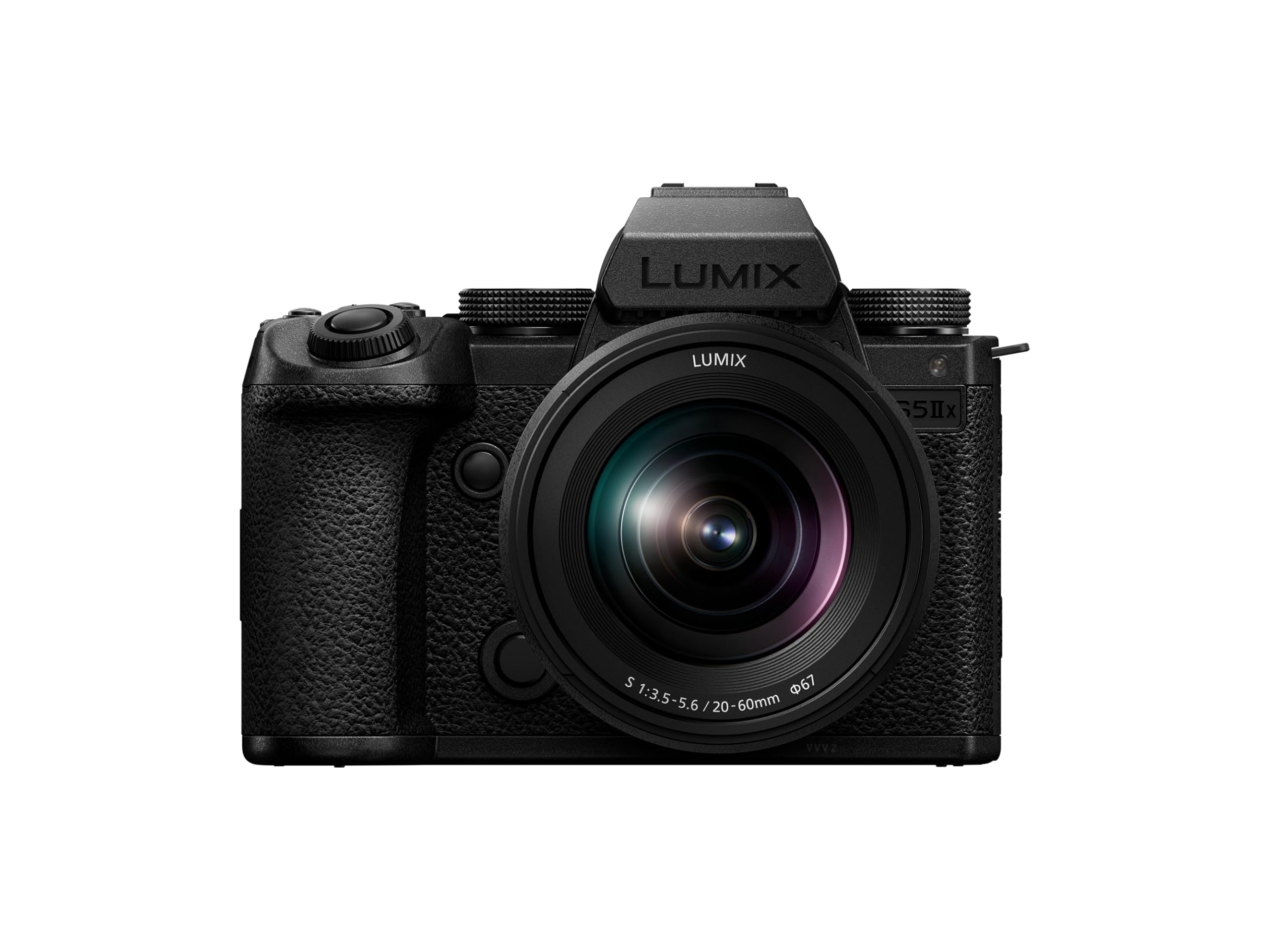
The S5IIX is the video specialist of the LUMIX lineup, built for creators who need pro-grade codecs without the cinema camera price. It records 6K 30p Open Gate video—using the full sensor area, which gives you flexibility to crop to any aspect ratio in post. Its standout feature is recording ProRes and ALL-Intra to an external SSD via USB-C, a workflow that keeps file sizes manageable and edits fast.
It shares the 24.2-megapixel full-frame sensor and Phase Hybrid Autofocus with the S5II, but adds the all-black aesthetic and those advanced video features. Owners rave about the autofocus, describing it as finally nailing the subject tracking that Panasonic was known for struggling with. The Active I.S. stabilization is described as gimbal-like, which is high praise for handheld footage.
The built-in fan means no overheating even in extreme conditions—one owner converted after their Sony A7 IV overheated in 110°F outdoor heat while the S5IIX didn’t blink at 104°F. The recurring complaint is battery life, which drains fast, and the camera is on the heavier side. But for a filmmaker who wants internal ProRes, 6K Open Gate, and unlimited recording, this is the top-tier pick on the list.
Filmmaker’s pick: Internal ProRes, 6K Open Gate, and fan-cooled unlimited recording make it the most video-capable here.
The battery tax: Expect fast drain; buy backup batteries or a USB-C power source for full shoots.
Understanding the Specs
Sensor Size and Megapixels
Full-frame sensors are the same size as 35mm film, making them the largest and best at gathering light. APS-C sensors are smaller, which makes cameras lighter and cheaper. A 1-inch sensor, found in pocket cameras, is smaller still. More megapixels give you more detail to crop, but a 24-megapixel full-frame will usually beat a 45-megapixel smartphone sensor in low light because of its physical size. For video, megapixels matter less than how the sensor reads out pixels (oversampling like the R8’s 6K-to-4K produces extra sharpness).
Video Resolution and Frame Rates
4K is the current standard for online content, offering four times the detail of 1080p. 8K offers double the resolution of 4K (a 2.0x gap), giving you huge cropping power but massive files that need a powerful computer. Frame rate (fps) controls motion smoothness: 24fps looks cinematic, 60fps is smoother for action, and 120fps lets you create slow motion. 10-bit color records over a billion colors versus 16 million in 8-bit, which is critical for color grading. Some cameras shoot ‘Open Gate’ (like the S5IIX), using the full sensor for flexible cropping.
Autofocus Systems
Phase Detection AF is faster and more accurate for tracking moving subjects, while Contrast Detection AF hunts more slowly. Modern cameras use ‘hybrid’ systems combining both. The killer feature for creators is Eye AF, which locks onto eyes of humans and animals. This matters hugely for solo creators who film themselves—the camera keeps you in focus as you move. Subject detection (people, vehicles, birds) uses AI to track specific objects. More autofocus points generally means denser coverage of the frame, though the algorithm matters just as much.
Stabilization
In-Body Image Stabilization (IBIS) physically moves the sensor to counteract camera shake, and is the most effective type. 5-axis IBIS corrects pitch, yaw, and roll. ‘Stops’ of stabilization (like the Z5 II’s 7.5 stops) measure how many shutter speeds slower you can shoot handheld. Lens-based stabilization (like the ZV-E10 II’s OSS) works only with compatible lenses. Some cameras, like the DJI Osmo Pocket 3, have a physical 3-axis gimbal built-in, which gives the smoothest results for walking shots. For a creator, good stabilization means no tripod needed for many shots.
FAQ
What is the best camera for a beginner content creator?
Is 8K video worth it for a content creator?
What does IBIS mean and why does it matter?
Is the DJI Osmo Pocket 3 a good camera for professional content?
What is the difference between the LUMIX S5II and S5IIX?
Does a 24-megapixel camera have enough resolution for professional work?
Which camera has the best autofocus for tracking moving subjects?
Do I need a full-frame camera for content creation?
How long can I record 4K video before the camera overheats?
What is the best budget camera for content creation?
Which camera is better for a full-time YouTuber?
Is the Canon EOS R5 good for video or photography?
Final Thoughts: The Verdict
If you want one dependable pick, the camera for content creators winner is the Canon EOS R5 because it’s the complete hybrid package—8K video, 45-megapixel photos, and a 4.7-star rating that outranks every other body here. If you want a compact vlogging camera with gimbal-stable footage, grab the DJI Osmo Pocket 3. And for unlimited video recording without overheating, the Panasonic LUMIX S5II is the one to reach for.
How We Picked
We do not accept paid placement. Every pick is matched to a real buyer and a real use-case; we do not hands-on test units.
Sources & Methodology
Specifications: manufacturer listings and product documentation. Review insights: verified customer reviews, as of August 2026. Pricing: not shown on this page (it changes often); check the current price via the retailer link.
As an Amazon Associate, Gadgets Feed earns from qualifying purchases. This does not affect which products we feature.