
Our readers keep the lights on and my morning glass full of iced black tea. As an Amazon Associate, I earn from qualifying purchases.
Specs are compiled from manufacturer listings and verified buyer reviews and can change over time — please confirm the key details on the product page before buying.
Your camera choice determines your footage’s low-light performance, stability, and editing flexibility. It shapes how your videos handle low light, handheld motion, and menu navigation. Match the sensor size and stabilization system to your shooting style, not the highest spec on paper.
I’m Min — the founder and writer behind Gadgets Feed. This guide is built by comparing the manufacturers’ published specifications and the patterns across verified customer reviews, so you get each pick’s real strengths and trade-offs instead of marketing spin.
From pocket gimbals to full-frame cinema bodies, these are the most reliable tools for the job, so here is your straight answer on the best camera for filming that money can buy today, without the jargon.
Our Picks at a Glance


How To Choose The Best Camera For Filming
The best camera matches your shooting style, whether that’s vlogging, interviews, or narrative work. You need to balance three core elements: the sensor’s ability to capture light, the stabilization’s ability to keep your shots steady, and the codec’s ability to preserve detail for editing.
Sensor Size and Low Light
When you shoot in low light, a larger sensor captures more light, so your footage stays cleaner and less grainy. Full-frame models in this guide handle dim scenes well, but pocket cameras with smaller 1-inch sensors are easier to carry—though they will show more noise (grain) in dark settings.
Stabilization Systems
Handheld shooters should prioritize in-body or gimbal stabilization. In-body image stabilization (IBIS) shifts the sensor to counteract your hand movements, while gimbal-based systems physically mount the camera on a motorized arm to keep it level during motion. Choose based on whether you prefer a compact setup or a larger camera with a built-in sensor shift.
Video Codecs and Color
Professional cameras record in flat color profiles like Log, which preserve more detail in highlights and shadows for color grading later. The file formats matter too—RAW gives you the most flexibility but requires massive storage, while compressed formats like H.265 are easier on your hard drive but harder for older computers to process.
Quick Comparison
| Model | Best For | Sensor | Video Resolution | Stabilization | Amazon |
|---|---|---|---|---|---|
| Sony a6400★ Best Overall | Travel & Vlogging | APS-C | 4K | None (Lens-based) | Amazon |
| Xtra MuseBest Value | Action Smoothness | 1-inch CMOS | 4K/120fps | 3-Axis Gimbal | Amazon |
| OBSBOT Tail AirStreaming Star | Live Streaming | 1/1.8″ CMOS | 4K | Digital | Amazon |
| Nikon D3200 | Budget Beginners | DX (APS-C) | Full HD 1080p | VR Lens | Amazon |
| Nikon D5200 | Entry-Level Hybrid | DX (APS-C) | Full HD 1080p | VR Lens | Amazon |
| Panasonic G85 | Handheld Hybrid | Micro Four Thirds | 4K | 5-Axis IBIS | Amazon |
| BMPCC 4K | Cinematic Indie | 4/3″ Sensor | 4K/60fps | None | Amazon |
| Sony a7 III | Low-Light Hybrid | Full-Frame | 4K | None (Lens-based) | Amazon |
| Canon 5D Mark IV | Professional DSLR | Full-Frame | 4K | None | Amazon |
| BMPCC 6K | High-Res Cinema | Super 35 | 6K/50fps | None | Amazon |
| Canon EOS R5 | Hybrid Flagship | Full-Frame | 8K | IBIS | Amazon |
In-Depth Reviews
1. Sony Alpha a6400
Our pick — over 4.5★ from 600+ verified ratings; the strongest balance of quality and price.
The compact travel companion that never misses focus.
This Sony mirrorless body is the pick for creators who want speed and portability in one package. Its 0.02-second autofocus keeps subjects locked during fast handheld movement. Combined with the 24.2MP sensor and a flip-up touchscreen, it is a natural fit for vloggers who need to see themselves while recording.
425 phase-detection points cover 84% of the sensor for reliable face and object tracking. It shoots 11fps stills, but the 4K video quality is what buyers consistently praise as crisp. The E-mount system also gives you access to a huge library of lenses, which is a strong reason to grow into this platform over time.
What wins people over is the camera quality, with image quality a close second in the reviews. The trade-off appears in usability, as the touchscreen is not the most responsive, and the battery life is average at best. Be prepared to learn a steep menu system and to rely on audio levels rather than a headphone jack when monitoring sound.
Why It Leads
- Fastest autofocus in its class
- Compact and lightweight for travel
- Wide lens ecosystem
Where It Trips Up
- No headphone jack for audio monitoring
- Average battery life
- Menus have a steep learning curve
Reach for this if: you want a do-it-all compact body that captures sharp 4K and tracks subjects flawlessly for travel or vlogging.
Look elsewhere if: you need reliable headphone monitoring or plan to shoot long events without carrying spare batteries.
2. Xtra Muse Pocket Camera
A pocket-sized gimbal that delivers gimbal-grade smoothness.
If you want smooth, shake-free footage without spending a fortune, the Xtra Muse fits in any bag and packs a 1-inch CMOS sensor (a light-capturing chip) and 4K resolution at 120fps (ultra-high-definition video at 120 frames per second). Its built-in 3-axis gimbal (a motorized stabilizer) mechanically steadies your shots, so you can run, dance, or hike without the shake ruining your footage. It directly challenges pricier pocket gimbals, delivering near-identical results without the brand markup.
The 2-inch touchscreen makes framing easy, switching between horizontal and vertical with a tap, something social media creators will love. Its face and object tracking keeps you centered in the frame even when you move, and the fast focusing handles quick scene changes smoothly. Buyers consistently note the quality is surprisingly good for the price, making it a strong value play.
Battery life and microphone connectivity show up as mixed in owner feedback, so it pays to have a spare power source for long shoots. The 161-minute average battery life is decent for a pocket cam, but heavy 4K recording will drain it faster. For a beginner vlogger or a travel filmmaker wanting smooth footage without a separate rig, this is the easiest path to professional-looking results.
Standout feature: the 3-axis gimbal turns shaky handheld footage into smooth cinematic motion, something rare at this price point.
Honest catch: battery life is decent but not exceptional, and wired mic setups may need a compatible adapter to work cleanly.
Best for: new vloggers and travel creators who want smooth, sharp 4K without carrying a separate stabilizer rig.
Think twice if: you record long events or rely on a professional external microphone that needs a full-size jack.
3. OBSBOT Tail Air
The tiny PTZ that turns any room into a broadcast studio.
The OBSBOT Tail Air is a pan-tilt-zoom streaming camera that fits in the palm of your hand, smaller than a cola can, yet it rotates 320° horizontally and 180° vertically. If you stream to YouTube, Twitch, or a church service, this camera’s AI tracking follows humans, animals, and objects automatically, so you never have to babysit the framing. Its built-in AI tracking is the headline feature, letting you move freely while the camera stays locked on you.
It offers multiple connection paths including Micro HDMI, USB-C, Ethernet, and wireless, with support for streaming protocols like RTMP and RTSP. The f/1.8 maximum aperture helps in lower light, and the digital zoom extends to 4x if you need a closer shot. Buyers praise the image quality and crisp broadcast output, making it a serious tool for content creators wanting a multi-camera setup.
The reliability is the most-discussed aspect, with feedback split on tracking and connectivity consistency. Some buyers report flawless tracking, while others struggle with setup. It is note the NDI license key is a separate purchase, which adds cost if you plan to use that feature, and any firmware update requires a U3 micro SD card.
Who it suits: streamers and church or worship teams who need automated camera movement and hands-free tracking.
Who it doesn’t: filmmakers who need high-bitrate cinematic color and manual lens control, as this is a webcam-style PTZ.
Reach for this if: you want a plug-and-play streaming camera with gesture control and AI tracking for a solo creator setup.
Look elsewhere if: you need a raw recording cinema camera or you are not prepared to troubleshoot occasional connectivity quirks.
4. Nikon D3200

The classic DSLR that proves you don’t need 4K to learn.
The Nikon D3200 is the entry-level workhorse that has taught a generation of filmmakers the basics. It pairs a 24.2MP DX-format CMOS sensor with the EXPEED III image processor, delivering Full HD 1080p video with one-touch recording. While it lacks the 4K resolution of newer cameras, its image sensor rivals much pricier models, making it an incredible value for a first camera.
It comes with an 18-55mm zoom lens featuring Vibration Reduction, which helps steady your handheld shots. The wide ISO sensitivity range keeps it usable in varied lighting, and owners mention the battery lasts for hundreds of photos per event day. For a budget videographer, this is the most accessible entry point into a real interchangeable-lens system with a massive lens selection.
The autofocus is the most mixed aspect, as it is contrast and phase detection based without the speed of modern mirrorless systems. The video is only 1080p, so if you need 4K you will outgrow this quickly. But for learning composition, manual exposure, and the fundamentals of filmmaking, this Nikon is an unbeatable starting point.
Core strength: an affordable DSLR with a superb sensor that delivers crisp stills and solid 1080p video for beginners.
The learning curve: autofocus and video features are dated, so this suits those ready to learn manual control.
Best for: students and first-time buyers who want a cheap, durable camera to learn on before committing to 4K gear.
skip it if: you already shoot 4K or need fast autofocus for action-heavy video projects.
5. Nikon D5200

A step up in autofocus with a screen that flips for tricky angles.
For overhead or low-angle shots, the Nikon D5200’s 3-inch vari-angle monitor (a screen that tilts and swivels) lets you frame easily without contorting. Its 24.1MP DX-format CMOS sensor (a crop-sensor chip) and EXPEED 3 processor (image-processing engine) match the D3200’s quality, but add a more sturdy 39-point autofocus system (39 focus points for sharper tracking). The 5fps continuous shooting (five frames per second) helps you capture action without missing a beat.
It is sold with the same 18-55mm VR kit lens, giving you vibration reduction from the start. Owners highlight the sharp focus points and the clean interface, with many choosing it over the newer D5300 for its intuitive handling. The JPG quality straight out of camera is praised, though RAW color accuracy is less true to life.
Autofocus remains a mixed point, as it works well but older screw-drive lenses won’t autofocus on this body. The built-in flash is also on the weak side, so natural light or an external flash is preferable. For beginners progressing to more advanced shooting, this Nikon offers a sweet balance of features and simplicity.
What stands out: the flip-out screen plus a 39-point AF system gives you creative framing and more reliable focus than the D3200.
What holds it back: video is still 1080p, and the kit lens is adequate but not exceptional for low light.
Reach for this if: you want a beginner-friendly DSLR with a flexible screen for self-shooting and varied angles.
Think twice if: you need 4K recording or plan to use older non-AF-S Nikkor lenses without manual focus.
6. Panasonic LUMIX G85

The hybrid that steadies your 4K without a gimbal.
The Panasonic G85 is a mirrorless camera built around class-leading 5-axis in-body image stabilization that works in both photos and video, including 4K recording. This dual stabilization combines the sensor shift with the lens’s optical stabilizer, letting you shoot crisp handheld footage even in low light. It comes with a 12-60mm lens that offers a versatile 24-120mm equivalent range, making it a great all-rounder.
The 16-megapixel Micro Four Thirds sensor uses no low-pass filter, giving a near 10 percent boost in fine detail over standard sensors. Its 3-inch touchscreen LCD tilts for optimal angles, and the eye-level OLED viewfinder with 2360K dots is bright and clear. Buyers call it the price/performance king of the entry and mid-level mirrorless market, praising its value for video.
The autofocus is a mixed bag, being quick for stills but occasionally sluggish in low light or during 4K recording. It lacks a headphone jack for audio monitoring, which might bother serious sound recordists. But the lightweight build and weather-sealed lens make it a dependable travel and run-and-gun companion.
Built For Smoothness
- Outstanding 5-axis IBIS for handheld shots
- Compact and weather-sealed kit lens
- 4K video with a tilt-and-touch LCD
Built With Limits
- Autofocus can lag in low light or 4K
- No headphone jack for monitoring
Best for: hybrid shooters who want smooth handheld 4K without investing in a separate gimbal rig.
Look elsewhere if: you need responsive autofocus for fast-moving action or professional audio monitoring.
7. Blackmagic Pocket Cinema Camera 4K

The indie filmmaker’s gateway to true cinema-grade color.
The Blackmagic Pocket Cinema Camera 4K is a purpose-built video camera that delivers studio-quality footage at a fraction of cinema camera prices. Its 4/3″ sensor records a native resolution of 4096 x 2160 with 13 stops of dynamic range, capturing highlight and shadow detail that consumer cameras simply can’t. Dual gain ISO up to 25,600 keeps noise low even when you are shooting in challenging light.
It records to SD/UHS-II and CFast 2.0 cards, or directly to external SSD storage via USB-C, which buyers love for its low-cost, high-capacity recording options. The multi-function handgrip puts essential controls at your fingertips, and the bright 5″ LCD removes the need for an external monitor. You also get a free DaVinci Resolve Studio activation key for professional color grading.
Buyers praise the professional-level image and video quality, calling it a perfect fit for documentaries, narrative films, and church livestreams. The catch is that it has no continuous autofocus and no in-body stabilization, meaning you’ll need to pull focus manually and rig it on a tripod or gimbal for smooth shots. The battery life lasts only about 30 minutes, so budget for a power solution.
Why it matters: the 13 stops of dynamic range and RAW recording give you the color flexibility of a professional cinema camera.
Real limitation: without autofocus or IBIS, this demands a learning curve and proper rigging for stable, sharp footage.
Reach for this if: you are serious about cinematic storytelling and want to color grade your footage like a pro.
pass on it if: you want a point-and-shoot autofocus experience or plan to do a lot of handheld vlogging.
8. Sony Alpha a7 III

Full-frame brilliance that turns night into a playground.
The Sony a7 III is a full-frame mirrorless camera that excels in low-light conditions, featuring a 24.2MP back-illuminated sensor with 15-stop dynamic range. Its ISO range extends from 50 to 204,800, allowing you to shoot in near darkness without excessive noise. The 693 phase-detection autofocus points cover 93% of the image area, giving you reliable focus even in dim settings.
It shoots 4K video internally and offers up to 10fps continuous shooting with silent or mechanical shutter. The included 28-70mm lens is a solid starter, though owners note it is sharp during the day but struggles in low light, prompting an upgrade to faster glass. Battery life is a highlight, with many owners not needing a spare for a full day of shooting.
Buyers consistently praise the image quality and autofocus performance, with eye AF being especially impressive for portraits and run-and-gun shooting. The menu system is dense and complex, which can be a hurdle for beginners. It is a versatile hybrid that suits both photography and video, though it lacks the internal stabilization of some rivals.
Standout spec: the 15-stop dynamic range and ISO 204,800 ceiling make this the go-to for low-light and night filming.
Honest hurdle: the menu is famously complex, so plan to spend time customizing the buttons to your workflow.
Best for: hybrid shooters who work in low light and want a full-frame sensor with excellent autofocus on a budget.
Think twice if: you prefer simple menus or need in-body image stabilization for handheld video.
9. Canon EOS 5D Mark IV
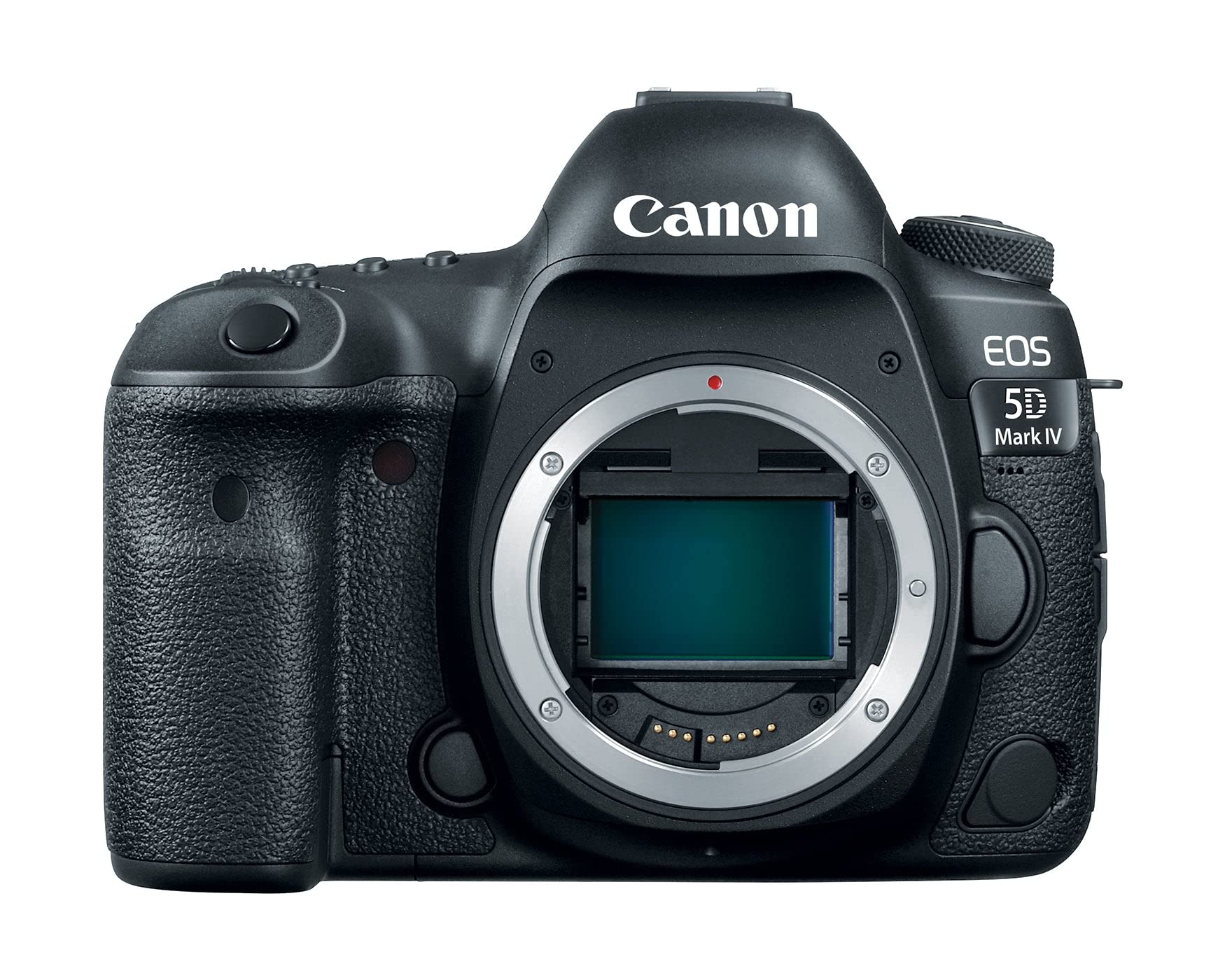
The DSLR that professionals still trust for any shoot.
The Canon EOS 5D Mark IV is a full-frame DSLR with a 30.4-megapixel CMOS sensor and a DIGIC 6+ image processor that handles nearly any lighting condition. It is a true workhorse for professional photographers and videographers, offering 4K Motion JPEG video at 30 or 24 frames per second. The Dual Pixel CMOS AF delivers smooth, responsive focus during video shooting, a huge advantage for solo operators.
It reaches up to 7.0fps continuous shooting and has an ISO range of 100-32000, expandable to 50-102400, which makes it reliable when the light drops. The full touchscreen LCD lets you select AF areas by touch, and built-in Wi-Fi allows quick file transfer to your phone. Owners praise the autofocus for flawlessly tracking moving subjects in servo mode.
The image quality is the standout, with buyers calling it a standout in low light and suitable for acceptable images up to ISO 16000. The catch is the fixed LCD screen, which does not articulate like some rivals, and the 4K Motion JPEG files are massive compared to modern formats. Ergonomics are perfect for long shoots, and it remains a top choice for weddings, portraits, and commercial work.
Why pros love it: the 30.4MP full-frame sensor plus Dual Pixel AF and a huge lens ecosystem make it endlessly versatile.
Where it shows age: 4K uses bulky Motion JPEG files, and the screen doesn’t flip out for self-shooting or awkward angles.
Reach for this if: you want a proven professional DSLR for paid work, events, and high-ISO reliability.
Look elsewhere if: you need an articulating screen or want more efficient 4K file sizes for editing.
10. Blackmagic Pocket Cinema Camera 6K
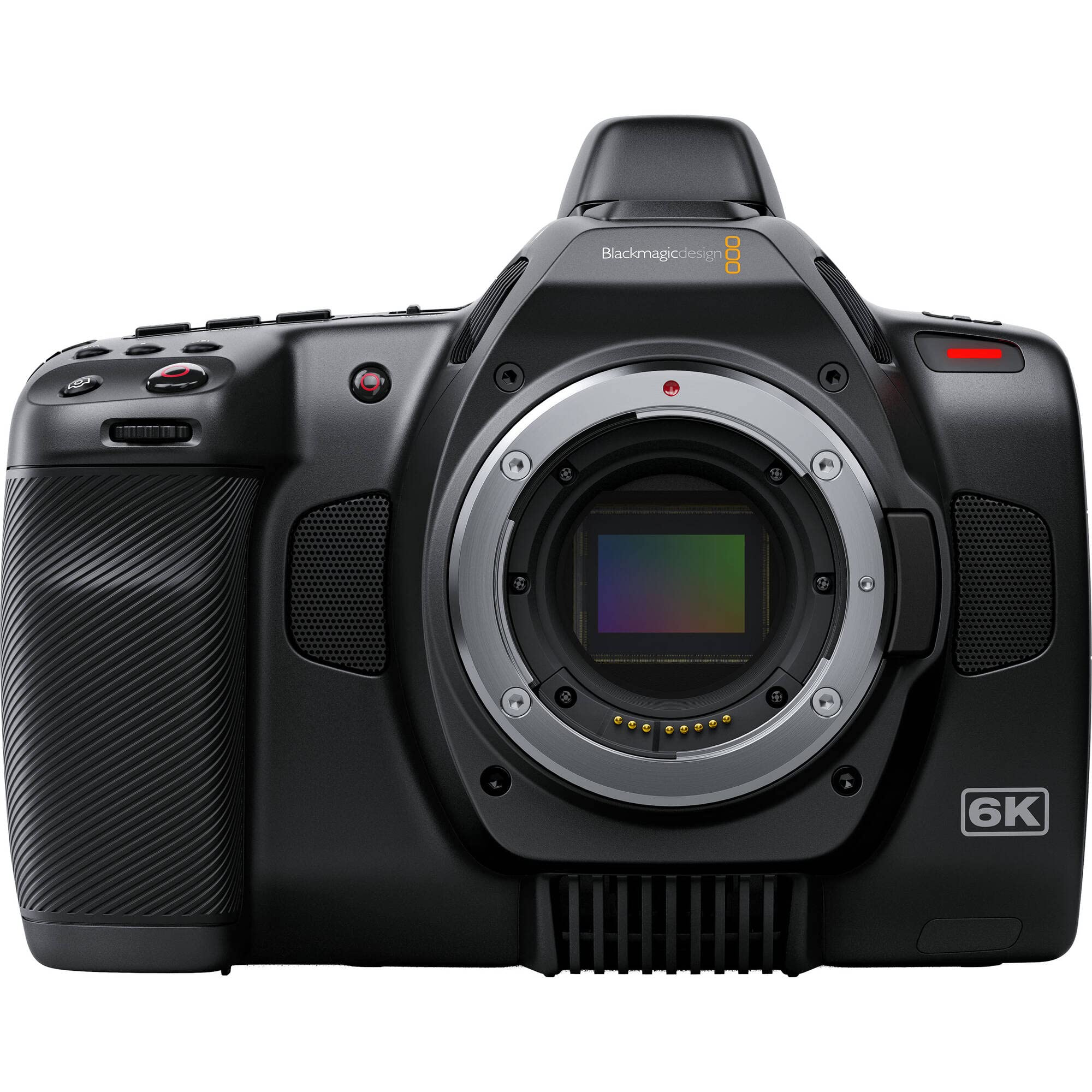
The 6K behemoth that gives you room to crop and reframe.
The Blackmagic Pocket Cinema Camera 6K steps up the resolution game with an effective Super 35 sensor that records 6K footage at up to 50fps. It uses a Canon EF lens mount, which means you can use a vast library of affordable, high-quality EF glass without an adapter. The camera records full 6K resolution, giving you incredible flexibility to crop, reframe, and stabilize in post without losing sharpness.
It shoots 6K at 6144 x 3456, and can scale down to 4K DCI or Ultra HD at up to 60fps for more standard workflows. Owners who came from the 4K version swear by the improved low-light performance with color grading, though they warn that zoom lenses can produce soft images, making sharp prime lenses essential. The 5-inch LCD is bright for framing, but some find it unreliable in direct sunlight and recommend an external monitor.
The value is a recurring theme in reviews, with buyers calling it a great deal that rivals much more expensive cinema cameras. Like its 4K sibling, it has no autofocus and no image stabilization, so manual focus is a must. It is best for filmmakers who have a set of EF lenses and want the highest possible resolution for their budget.
The headline number: 6K resolution at up to 50fps gives you more cropping power and detail than any camera near its price.
The practical catch: manual focus only, and you’ll want sharp prime lenses and an external monitor for reliable work.
Best for: indie filmmakers and content creators who own Canon EF lenses and want maximal resolution for post-production.
it’s not for you if: you need autofocus or plan to shoot run-and-gun events without a dedicated focus puller.
11. Canon EOS R5

The future-proof hybrid that shoots 8K and tracks any eye.
The Canon EOS R5 is the flagship mirrorless hybrid that sets a new standard for both stills and video. It captures stunning 8K RAW video and 4K up to 120fps internally, with autofocus, making it the ultimate tool for filmmakers who want to deliver the highest resolution content. Its 45-megapixel full-frame CMOS sensor paired with the DIGIC X processor delivers exceptional detail, dynamic range, and color science that Canon is known for.
The autofocus is phenomenally fast and accurate, with eye detection that can lock onto birds and wildlife or specific players in a group. The in-body image stabilization is a standout, allowing handheld shooting at iso 100 that would normally require ISO 6400 on older bodies. It shoots at up to 12fps with the mechanical shutter and up to 20fps with the electronic shutter, albeit with shorter bursts.
Buyers call it a true beast and a big upgrade from the 5D Mark IV, with the eye AF being the standout feature that makes capturing moving subjects easy. The 8K video is cinematic, though the files are massive, and owners mention occasional freezing issues during sessions that firmware updates have mostly resolved. The price is premium, but for pros and serious hybrid shooters, it is considered worth it.
The defining spec: 8K RAW video plus 45MP stills make it the single most versatile camera for hybrid creators.
The honest trade-off: it is expensive, and high-res modes generate huge files that demand a powerful editing computer.
Reach for this if: you are a professional or serious hybrid shooter who wants the best of both stills and video in one body.
Look elsewhere if: you are on a tighter budget or don’t need the massive resolution and file sizes of 8K.
Understanding the Specs
Sensor Size
The sensor is the light-gathering heart of your camera, and its physical size determines low-light performance and depth of field. Full-frame sensors are the largest and best in dim conditions, while APS-C and Micro Four Thirds offer a balance of quality and size, and 1-inch sensors prioritize portability above all.
Image Stabilization
Stabilization is what keeps your footage smooth when you shoot without a tripod. In-body image stabilization (IBIS) shifts the sensor to counter movement, while lens-based stabilization uses moving elements inside the lens. A gimbal physically mounts the camera on a motorized arm, which is different from internal systems.
FAQ
Is 4K video necessary for a filming camera?
What does in-body image stabilization do for filming?
Can I use my smartphone as an external microphone?
What is the best sensor size for low-light filming?
What is the difference between a DSLR and a mirrorless camera?
That is a key difference, but what about battery life between mirrorless and DSLR cameras?
Which camera is best for a beginner filmmaker?
How important is a log profile for color grading?
Final Thoughts: The Verdict
For most people, the camera for filming winner is the Sony a6400 because it blends blazing-fast autofocus, compact size, and sharp 4K into a body that grows with your skills. If you want smooth handheld shots without buying extra gear, grab the Xtra Muse with its built-in gimbal. And for cinematic RAW recording on a serious budget, the Blackmagic Pocket Cinema 4K is the one to reach for.
How We Picked
We do not accept paid placement. Every pick is matched to a real buyer and a real use-case; we do not hands-on test units.
Sources & Methodology
Specifications: manufacturer listings and product documentation. Review insights: verified customer reviews, as of July 2026. Pricing: not shown on this page (it changes often); check the current price via the retailer link.
As an Amazon Associate, Gadgets Feed earns from qualifying purchases. This does not affect which products we feature.