
Our readers keep the lights on and my morning glass full of iced black tea. As an Amazon Associate, I earn from qualifying purchases.
Specs are compiled from manufacturer listings and verified buyer reviews and can change over time — please confirm the key details on the product page before buying.
Making food look as good as it tastes is the whole game. Whether you are shooting for a menu, a blog, or social media, you need a camera that captures texture, color, and detail without fighting you. The wrong body can make a perfect dish look flat or blurry, but the right one turns a simple plate into a visual story.
I’m Min — the founder and writer behind Gadgets Feed. This guide is built by comparing the manufacturers’ published specifications and the patterns across verified customer reviews, so you get each pick’s real strengths and trade-offs instead of marketing spin.
From crispy edges to creamy sauces, the details matter, and this guide to the best camera for food photography walks you through eleven models that deliver the depth and sharpness your shots deserve.
Quick Picks
- Nikon Z 5 — Best Overall
- Canon EOS R50 — Flexible Starter
- OM SYSTEM Olympus E-M10 Mark IV — Value King
- Sony a7 III — Low-Light Leader
- Panasonic LUMIX S9 — Social-First Shooter
- Panasonic LUMIX S5II — Hybrid Powerhouse
- Canon EOS R5 — Detail Obsessed
- Canon EOS 5D Mark IV — DSLR Workhorse
- Sony Alpha 7 IV — Resolution Bump
- Nikon D7500 — Traditional DSLR
- Nikon COOLPIX P1000 — Ultra-Zoom Bridge
How To Choose The Best Camera For Food Photography
Choosing a camera for food photography is different from picking one for landscapes or portraits. You are usually indoors, working with available or off-camera light, and you need to capture fine texture and color. Here are the core specs that matter for this specific job.
Sensor Size and Megapixels
More megapixels give you more room to crop and recompose the shot without losing crispness. A full-frame sensor (like the 24.3MP or 33MP sensors in several picks below) also performs better in dim restaurant or kitchen light, keeping noise low. Smaller Micro Four Thirds sensors are more compact but may struggle in very low light — though the OM SYSTEM E-M10 Mark IV proves you can still get excellent results with good stabilization.
Image Stabilization
In-body image stabilization (IBIS) is a huge advantage for food photography. It lets you shoot at slower shutter speeds without a tripod, turning a handheld dinner-plate shot into a sharp image. The Panasonic LUMIX S5II, for example, uses Active I.S. to smooth out small movements. Without IBIS, you either need a tripod or a faster (and more expensive) lens.
Autofocus Performance
Food photography often involves small subjects — a single basil leaf, a drizzle of sauce, a sprinkle of salt. A camera with accurate autofocus points and eye-tracking for people is less critical here, but you still want fast, reliable contrast or phase-detection AF that locks onto the plate reliably. Models like the Sony a7 III with 693 phase-detection points give you room for precise placement.
Quick Comparison
| Model | Best For | Megapixels | Autofocus Points | IBIS | Amazon |
|---|---|---|---|---|---|
| OM SYSTEM E-M10 Mark IV | Compact & portable | 20 MP | 121 | Yes, 5-Axis | $699.99$899.99Amazon |
| Canon EOS R50 | Beginner versatility | — | 99 | No | $849.99Amazon |
| Nikon Z 5 | Value full-frame | 24.3 MP | 273 | Yes, 5-Axis | $896.95$1,146.95Ends inAmazon |
| Nikon D7500 | Traditional DSLR feel | 20.9 MP | 51 | No (VR lens) | $996.95Amazon |
| Panasonic LUMIX S9 | Social media sharing | — | 255 | Yes | $1,397.99Amazon |
| Sony a7 III | Low-light mastery | 24.2 MP | 693 (phase) / 425 (contrast) | Yes | $1,598.00Amazon |
| Panasonic LUMIX S5II | Hybrid pro work | 24.2 MP | — | Yes, Active I.S. | $1,797.99$2,299.99Limited time dealAmazon |
| Canon EOS 5D Mark IV | Professional stills | 30.4 MP | — | No | $1,799.00$2,498.01Ends inAmazon |
| Nikon COOLPIX P1000 | Extreme zoom reach | 16 MP | 100 | Yes, Dual Detect | $1,799.00$1,899.00Amazon |
| Sony Alpha 7 IV | High-resolution hybrid | 33 MP | 693 | Yes | $1,998.00Amazon |
| Canon EOS R5 | Incredible detail & video | 45 MP | — | Yes | $2,599.00$3,298.01Ends inAmazon |
In‑Depth Reviews
1. Nikon Z 5

The full-frame starter that brings pro sharpness to every plate.
The Nikon Z 5 gives you a 24.3MP full-frame sensor in a body that is Nikon’s most compact mirrorless design. That full-frame sensor makes a real difference for food photography: you get better separation between the dish and the background, and the camera handles low-light table scenes without struggling. It also has a 5-axis in-body stabilization system — buyers report that the IBIS allows 1/9s handheld, so you can shoot a dimly lit dinner plate without a tripod and still get a sharp result.
Autofocus covers 273 points with both phase and contrast detection, a large jump from the 51-point system on the Nikon D7500 below. The Z 5 also offers Eye-Detection AF that locks onto people and animals, but when you shift your gaze to a bowl of soup, the reliable face-tracking keeps the person holding the plate in focus if you want that candid look. You get two SD card slots, which owners mention is a lifesaver for commissioned work. The 14-bit bit depth also preserves subtle color gradients, so the red of a tomato or the gold of a pastry crust comes out vibrant and smooth.
Compared to the Canon EOS R50, the Nikon Z 5 delivers the depth-of-field control that food bloggers crave. The R50 has a smaller APS-C sensor and no in-body stabilizer, making it harder to blur backgrounds and shoot in low light. The Z 5 is the pick for anyone ready to step into full-frame without spending flagship money.
Shoot-ready pair: The Z 5 with a 24.3MP sensor and 5-axis IBIS means you can pair it with a legacy macro lens (like the Tokina 100mm f/2.8 via an FTZ adapter) and get tack-sharp close-ups of food details — buyers mention using this exact setup.
Reach for this if… you want full-frame sharpness and stabilization at a price that undercuts much of the competition.
Look elsewhere if… you need ultra-fast burst rates for action cooking shots — the continuous shooting speed is more relaxed.
2. Canon EOS R50
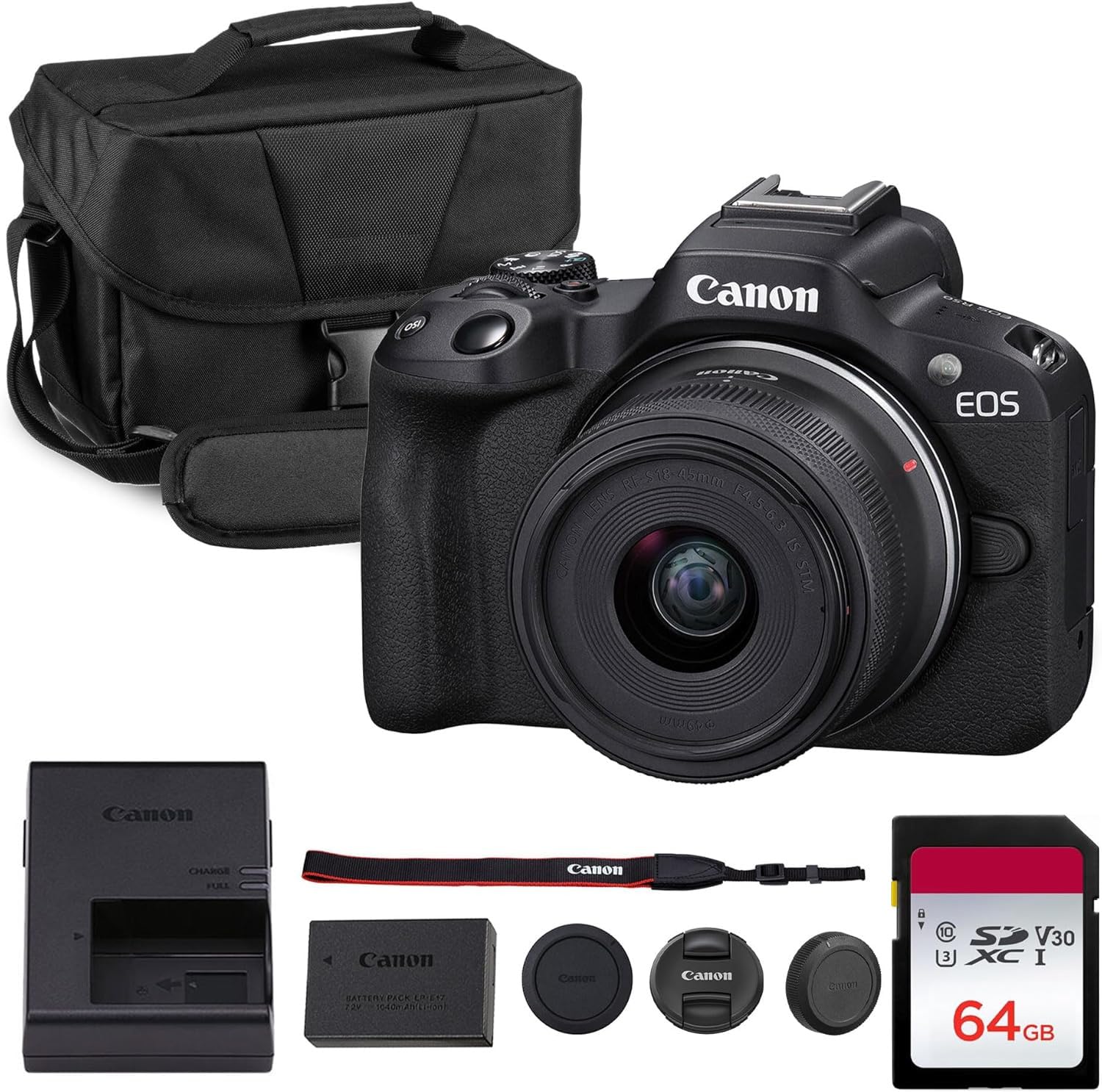
A lightweight APS-C kit that gets you started without the heavy learning curve.
The Canon EOS R50 is built for beginners who want to move beyond a phone camera. It uses an APS-C sensor with Canon’s Dual Pixel CMOS AF II system (99 autofocus points) that locks onto subjects quickly. For food photography, the 18–45mm kit lens covers wide-to-standard angles, letting you capture both the full table spread and close-ups of a single dish. The R50 records oversampled 4K video, which is handy if you also want to shoot cooking reels or B-roll for a blog.
Reviewers call it a “great camera for beginners” but note two clear trade-offs: it lacks an in-body stabilizer, so you will need a steady hand or a tripod for sharp low-light shots of a steak dinner, and the buffer fills quickly during continuous shooting. The vari-angle touchscreen helps you compose overhead flat-lay shots of a breakfast bowl by tilting the screen toward you. The Creative Assist mode is useful when you want to adjust color and mood in-camera without diving into manual settings.
Compared to the OM SYSTEM E-M10 Mark IV, the EOS R50 has a larger APS-C sensor that gives you slightly better background blur potential, but the Olympus has in-body stabilization, which matters when you shoot natural-light food indoors. The R50 is a good entry point if you prioritize ease of use and video over stabilization.
Why it works
- Fast, reliable Dual Pixel AF for locking onto dishes quickly
- Oversampled 4K video for food video content
- Lightweight and comfortable for handheld shooting
Where it falls short
- Lacks in-body image stabilization, so low-light handheld shots can blur
- Buffer fills quickly in burst mode, limiting continuous action shots
Starter recommendation: The EOS R50 is a smart, portable choice for a beginner who plans to shoot stills and video in good light.
skip it if… you shoot primarily in dim restaurants or need IBIS for long handheld exposures.
3. OM SYSTEM Olympus E-M10 Mark IV

A compact Micro Four Thirds body that packs stabilization into a jacket pocket.
The OM SYSTEM E-M10 Mark IV is the smallest camera on this list that still gives you interchangeable lenses and real image stabilization. It uses a 20 MP Live MOS sensor with 121 contrast-detection autofocus points.
The standout feature is the 5-axis in-body stabilization rated at 4.5 shutter speed steps of compensation. One buyer wrote that “image stabilization enables 1-second handheld exposures,” which means you can photograph a candlelit dinner setting without a tripod. The flip-down monitor doubles as a selfie screen, which is less useful for food but handy for table shots at an angle. The 16 Art Filters (including Instant Film) offer a quick way to change the mood of a shot without editing later. Aperture opens from F3.5–F5.6 on the kit lens, which is fine for well-lit scenes but less ideal for low-light plates.
Unlike the Panasonic LUMIX S9, the E-M10 has a built-in flash and a hotshoe for accessories, giving you more lighting options. However, it lacks USB-C charging and uses an older app for wireless transfer, which buyers mention is slow. For the price, you get a capable, lightweight tool that delivers excellent image quality for its size.
Pocketable performer: The E-M10 Mark IV with its 20 MP sensor and 5-axis stabilization is a rare combination of portability and capability — the body and kit lens together are light enough to carry in a jacket.
Ideal for… food photographers who want to travel light and shoot handheld in natural light.
Not for… shooters needing deep background blur (the Micro Four Thirds sensor inherently has more depth of field than full-frame).
4. Sony a7 III

The benchmark full-frame mirrorless that mastered low-light food shots years ago.
The Sony a7 III remains a standard-setter in its class, even after several years on the market. Its 24.2MP Exmor R CMOS sensor (back-illuminated for better light sensitivity) offers 15-stop dynamic range and an ISO range up to 204,800. For food photography, that means you can shoot a richly sauced dish in a dim corner of a restaurant without turning the image into a noisy mess. The 693 phase-detection points cover 93% of the image sensor, making focus fast and reliable on nearly any part of the frame.
Reviewers call the autofocus “fast” and the image quality “incredible.” The mechanical shutter fires at up to 10fps with AE/AF tracking, which is more than enough for capturing the moment hot sauce hits the pan. Its battery life is surprisingly good — one reviewer noted they initially thought about getting a spare battery, but for moderate use it didn’t feel essential. The kit lens (28-70mm f/3.5-5.6) is decent for starting, but you will want a faster prime or a macro lens for detail shots of food texture.
Compared to the Panasonic LUMIX S5II, the a7 III has a much larger autofocus coverage area and slightly better battery life, but the S5II has more advanced video stabilization and unlimited recording. For a photographer focused purely on food stills, the a7 III is a safer, proven choice.
Stills powerhouse: The a7 III’s 24.2MP full-frame sensor and 693 AF points create a reliable, proven platform for low-light food images that need sharp focus and rich color.
Best for… food photographers who shoot in varied light and want fast, reliable autofocus.
Consider its age: The menu system is less intuitive than newer models, but once set up, it delivers results that still compete with cameras costing more.
5. Panasonic LUMIX S9
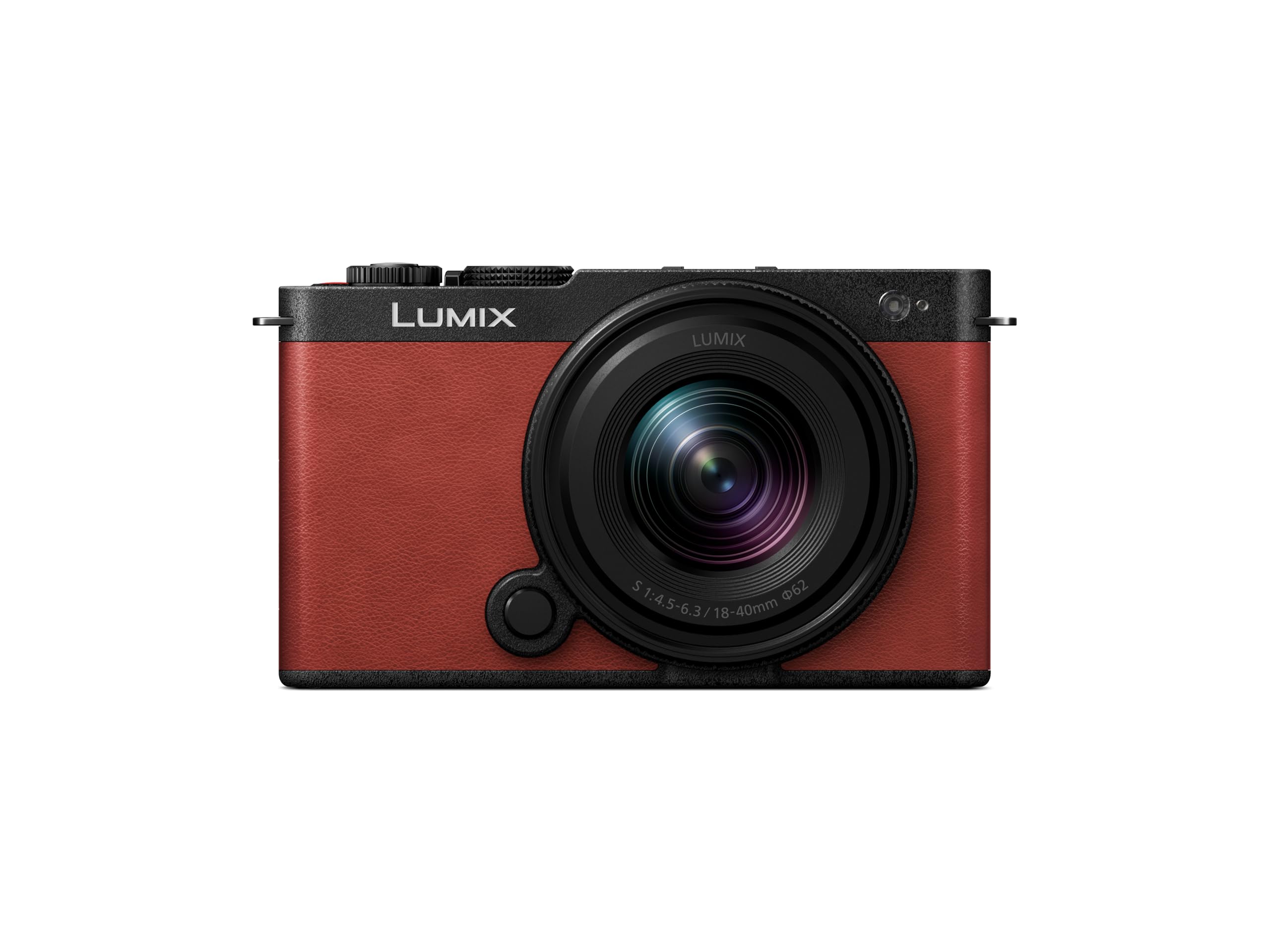
A tiny full-frame camera built for fast sharing of table shots.
The Panasonic LUMIX S9 prioritizes portability and instant connectivity. It is a full-frame mirrorless body that is smaller than most others in this class, with a compact S 18-40mm F4.5-6.3 lens. The standout feature is the LUMIX Lab app, which transfers images to your phone’s photo library over an ultra-fast Wi-Fi connection — ideal if you want to post a plated dish to social media seconds after shooting. The camera uses a 255-point Depth From Defocus autofocus system, which is generally snappy for still life subjects.
Buyers are split. Many love the sharp photos, solid dynamic range, and excellent in-body stabilization. One reviewer called it “one of the best full-frame cameras for the price.” However, there are notable omissions: no hotshoe and no built-in flash, which means you cannot attach an external flash or trigger a studio strobe directly. One buyer called this out specifically, noting the “cold shoe only — no flash capability.” The lack of an electronic viewfinder (EVF) also means you rely entirely on the rear screen for composition. For a strict food photographer who uses natural light or continuous LED panels, these omissions may not matter.
Compared to the Sony Alpha 7 IV, the S9 is substantially smaller and better for on-the-go sharing, but it has less dynamic range and no hotshoe. It is a niche tool for a specific workflow. If you shoot food in a well-lit café and want a file on your phone within seconds, this is a strong contender.
Strengths
- Ultra-fast file transfer to smartphone via LUMIX Lab app
- Compact full-frame body with good IBIS
- Open Gate video for flexible framing across social platforms
Limitations
- No hotshoe or built-in flash
- No EVF, making bright-sun composition difficult
- Expands lens system cost over time
Made for… food content creators who prioritize instant phone sharing and compact size over flash compatibility.
Not for… photographers who need off-camera flash or prefer composing through a viewfinder.
6. Panasonic LUMIX S5II
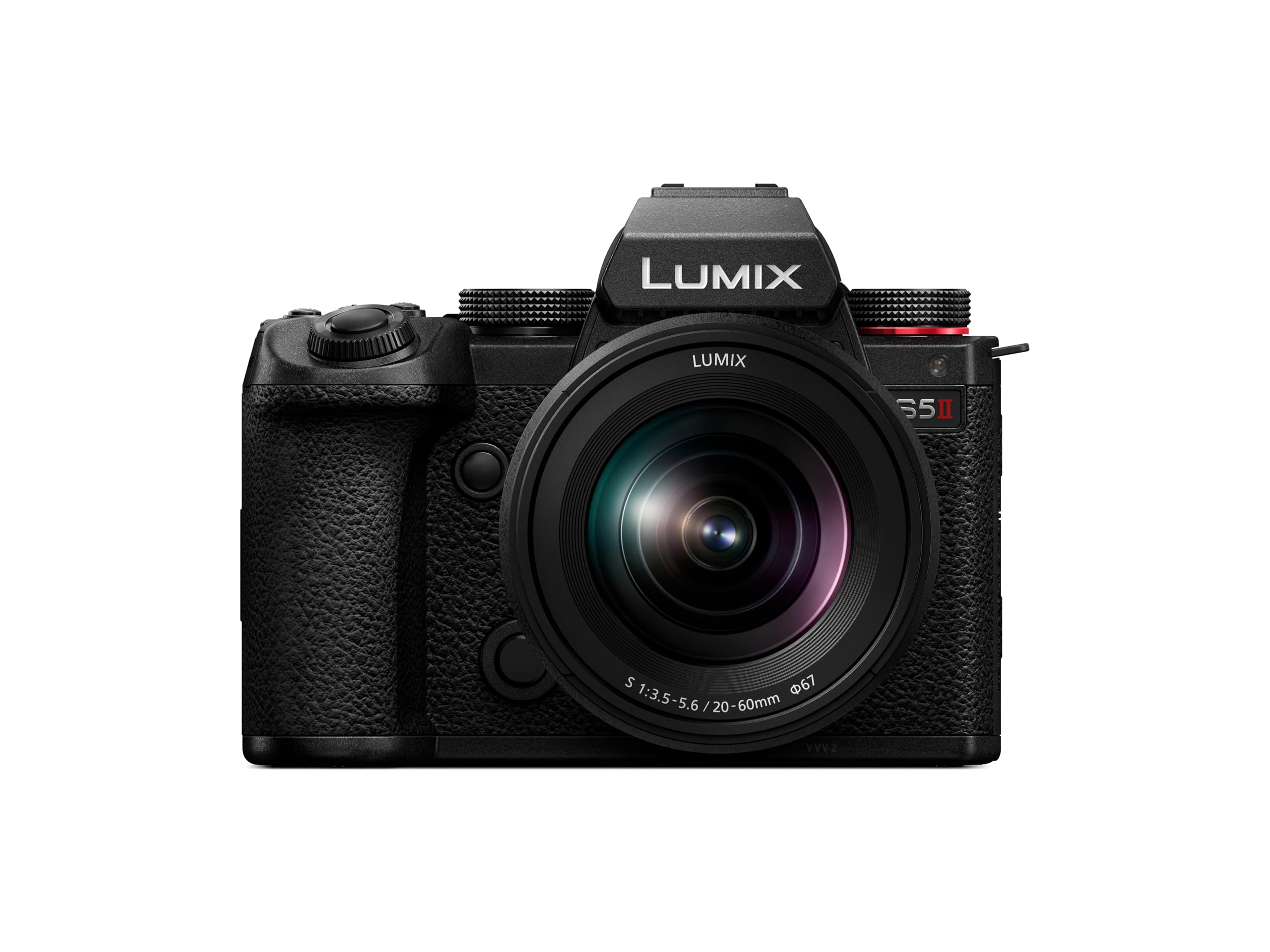
The hybrid that goes all-in on stabilization and video quality.
The Panasonic LUMIX S5II is a 24.2MP full-frame camera designed for high-performance hybrid work. For food photography, two features matter most: the Phase Hybrid Autofocus, which delivers fast, accurate subject detection even in low contrast (a common scenario when shooting a monochrome bowl of oatmeal), and the Active I.S. technology, which enhances stabilization during video recording. If you shoot vertical cooking reels or hand-hold a plate for an overhead shot, the stabilization keeps the frame locked.
Customers note the “excellent autofocus and image stabilization for handheld use.” The S5II also offers 14+ stop V-Log/V-Gamut capture for high dynamic range and REAL TIME LUT for in-camera color grading — useful if you want a consistent “look” for a food series without post-processing every image. It records unlimited 4:2:2 10-bit video thanks to an internal heat-dispersion fan. One buyer praised the kit lens for producing a “soft cinematic look” capable of client-grade work.
The trade-off is battery life. Several reviews mention the battery does not last as long as some competitors, and the high ISO performance falls apart above 51200. But for most indoor food shooting at moderate ISOs, the S5II delivers a near-professional toolkit in a compact body.
Stabilization king: The Active I.S. system on the S5II is the strongest among hybrid cameras here, letting you pull off smooth handheld pans over a table spread.
Best for… food creators shooting both stills and video who need advanced stabilization and color grading in-camera.
A weakness: Poor battery life means you will want a spare for a full day of shooting.
7. Canon EOS R5

The 45MP sensor that reveals every bubble and crumb in your dish.
The Canon EOS R5 is the resolution champion here at 45 megapixels. For a food photographer, that means significant cropping flexibility: you can shoot a wide overhead shot of a table full of dishes and later crop into a single appetizer to check the tiny details — the flake on a croissant, the tiny seed on a bun — without losing visible sharpness. The DIGIC X processor powers a mechanical shutter up to 12fps and an electronic silent shutter up to 20fps. The in-body stabilization is a standout, with one reviewer noting they could “handhold at ISO 100 using an adapted 24-70 f2.8 ii indoors,” where with their previous 5D Mark IV they needed ISO 6400.
Autofocus uses phase detection and Canon’s Eye/Face Detection, which buyers describe as “blazing fast and insanely accurate.” Even if you are shooting a plate of food that is not moving, the shallow depth of field from a fast lens demands precise focus, and the R5 delivers that. The EVF is large, bright, and sharp — reviewers appreciate the ability to see exposure and depth of field before pressing the shutter. It records 8K video, though mostly that is overkill for food content. Buyers emphasize that the overheating concerns are “way overblown” in real-world use with proper settings.
Compared to the Sony Alpha 7 IV (33MP), the Canon R5 offers 12 more megapixels, faster burst rates, and better video specs. But it costs more, and you need to invest in Canon RF glass to get the full benefit. For a pro who needs magazine-level detail and the ability to crop, the R5 is the best tool in this roundup.
Resolution monster: The 45MP sensor combined with IBIS means you can pull off ultra-high-detail shots of food at moderate shutter speeds handheld — a rare combination.
Ideal for… professionals or serious enthusiasts who need extreme detail, cropping flexibility, and the best autofocus Canon has to offer.
Consider the cost: The body plus RF lenses represent a significant investment. If you rarely crop, the 33MP Alpha 7 IV or 24.3MP Z 5 offer better value.
8. Canon EOS 5D Mark IV
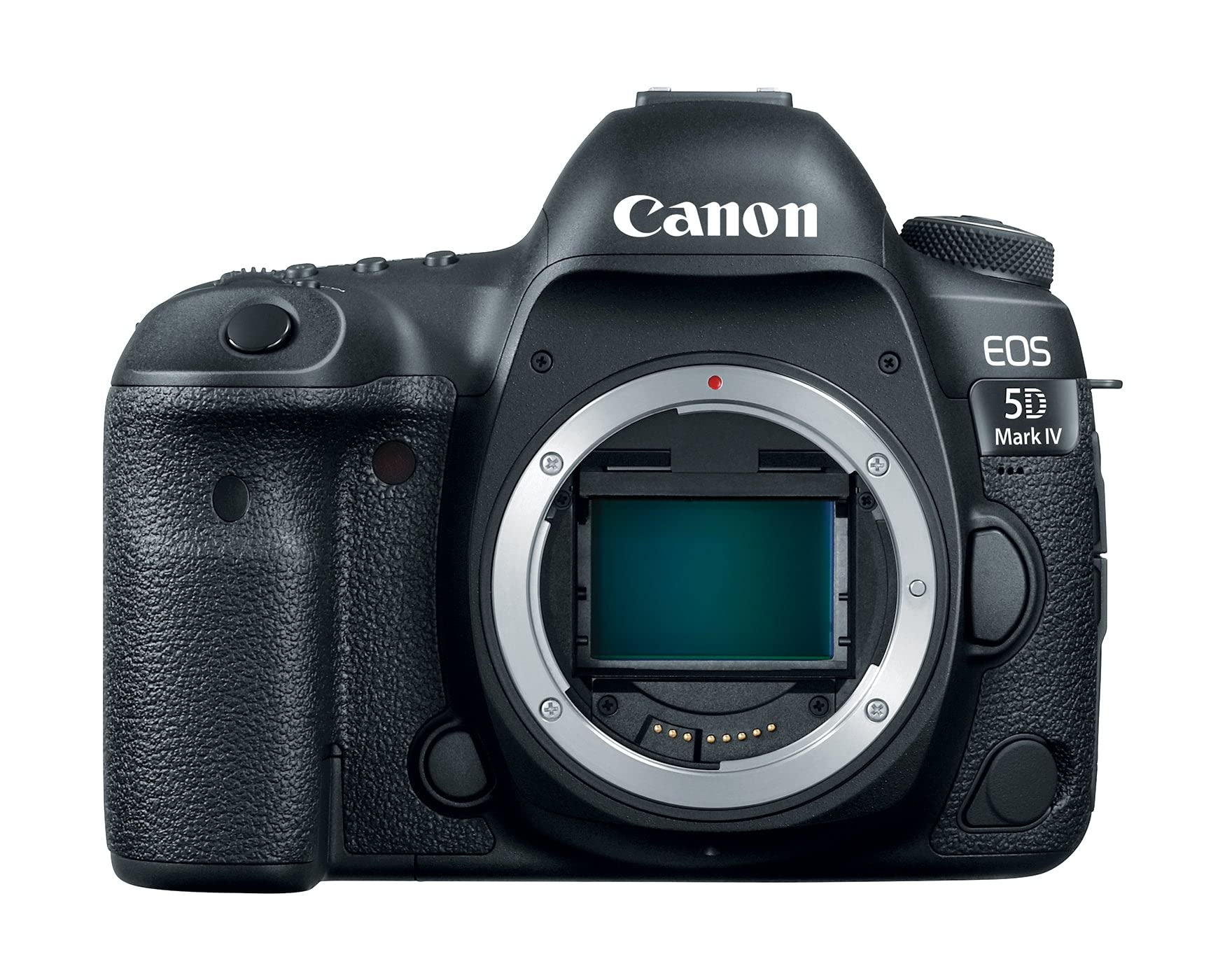
A classic DSLR that still delivers professional detail for tabletop work.
The Canon EOS 5D Mark IV is a DSLR, not a mirrorless body, and that matters for some photographers. The optical viewfinder gives you a direct, lag-free view of your scene, and the full-frame 30.4MP CMOS sensor delivers plenty of resolution for cropping into food details. The DIGIC 6+ processor allows continuous shooting up to 7fps, and the Dual Pixel CMOS AF provides fast, smooth autofocus during live view — useful when composing a plate from a tricky angle using the touchscreen.
Buyers consistently praise the dynamic range and noise performance. One reviewer described its “stellar dynamic range and noise performance” and noted they could “easily recover shadows” in post-processing. The ISO range expands from 100 to 102,400, making it a strong performer in low-light restaurants. The 61-point AF system is fast and accurate, and the built-in Wi-Fi allows quick image transfer to a phone for social sharing. Reviewers love the battery life — lasting days on standby and a full day on one battery. The LCD monitor is a fixed touchscreen, which some wish was articulating like the 6D II, but it is responsive and clear.
Compared to the Nikon D7500, the 5D Mark IV has a full-frame sensor (30.4MP vs 20.9MP), significantly better high-ISO performance, and more advanced autofocus. However, it is heavier and does not have in-body stabilization. For a traditionalist who prefers an optical viewfinder and has Canon L lenses, the 5D Mark IV is still a formidable tool for food work.
Why it endures
- 30.4MP full-frame sensor for detailed food shots
- Excellent battery life — lasts a full day of shooting
- Dual Pixel CMOS AF for smooth live-view focusing
What shows its age
- No in-body stabilization
- Fixed LCD monitor makes overhead flat-lays less convenient
A solid DSLR: The 5D Mark IV is the choice for a photographer committed to the Canon EF ecosystem and who values optical viewfinder immersion and massive battery life.
Not for… those who need a fold-out screen for overhead flat-lay shots or prefer the compactness of mirrorless.
9. Sony Alpha 7 IV

The 33MP sensor that splits the difference between resolution and file manageability.
The Sony Alpha 7 IV is a refined version of the a7 III, replacing that 24.2MP sensor with a new 33MP Exmor R back-illuminated CMOS sensor. That is roughly 37% more pixels, which gives you more freedom to crop a wide shot of a table into a focused frame on a single dish. The BIONZ XR processor is 8x more powerful than the previous generation, handling the data from that sensor without lag. Autofocus uses 693 phase-detection points with real-time Eye AF, which buyers describe as “incredibly accurate.” For food, the subject tracking is overkill — a mushroom does not move — but the autofocus is reliable in tricky backlight situations common in food styling.
The dynamic range is excellent, and the S-Cinetone profile adds a pleasing color science to video. Reviewers call the build quality “fantastic” and note the intuitive controls are easier to adapt to from other brands. The battery life is strong — one reviewer took over 2,000 shots on a single charge. Dual card slots (one CFexpress Type A, one SD) give you backup or overflow options. The 4K 60fps 10-bit video is a bonus for anyone filming cooking technique or plating sequences.
Compared to the Canon EOS R5, the Alpha 7 IV costs less and still offers 33MP, but you lose some detail and burst speed. Compared to the original a7 III, you get more resolution and better color profiles, but the older a7 III still holds up well for pure stills work.
Refined all-rounder: The Alpha 7 IV takes everything that made the a7 III a classic and upgrades the sensor, processor, and color science for a step up in image quality.
Ideal for… a hybrid shooter who wants high-resolution stills for food and 4K video for content, with strong battery life.
One caveat: The crop at 120fps video modes is limiting, but for 4K 60fps you get full-frame readout.
10. Nikon D7500

A rugged APS-C DSLR with a versatile kit zoom for everyday food shooting.
The Nikon D7500 is a 20.9MP DSLR with an APS-C sensor and a 51-point autofocus system using 15 cross-type sensors. That is significantly fewer points than the 273 on the Nikon Z 5 (a 5.4x gap), but for still-life food photography the D7500’s phase detection is fast and accurate when you have decent light. The included AF-S DX NIKKOR 18-140mm f/3.5-5.6G ED VR lens is a wide-range zoom that is sharp at all focal lengths, according to buyers. It covers from wide-angle table shots to short telephoto for isolating a plate.
Reviewers appreciate the “fast accurate autofocus” and the ability to shoot at up to 8fps, which is useful for capturing the exact moment cheese melts or sauce drips. One buyer mentioned that “quick burst shots captured fast-moving dog,” which speaks to the camera’s reliable AF tracking in good light. The 3.2-inch tilting touchscreen LCD helps with angled compositions. The battery life is a highlight — a single charge lasts long enough for a full day of food shoots without worrying about power. It records 4K UHD video at 30fps with power aperture control.
Compared to the OM SYSTEM E-M10 Mark IV, the Nikon D7500 has a larger APS-C sensor for shallower depth of field, but it lacks in-body stabilization and is heavier. The 18-140mm kit lens gives more reach than the Olympus’s 14-42mm zoom, making it more versatile for different table setups.
Strengths
- Sharply versatile 18-140mm VR kit lens
- Excellent battery life for all-day shoots
- Fast burst rate (8fps) for capturing action shots
Weaknesses
- No in-body stabilization (relies on lens VR)
- Heavier and bulkier than mirrorless alternatives
Best for… a traditionalist who loves the optical viewfinder, needs long battery life, and wants a single versatile zoom lens for tabletop and restaurant shooting.
pass on it if… you prefer the compact size and in-body stabilization of a modern mirrorless system.
11. Nikon COOLPIX P1000
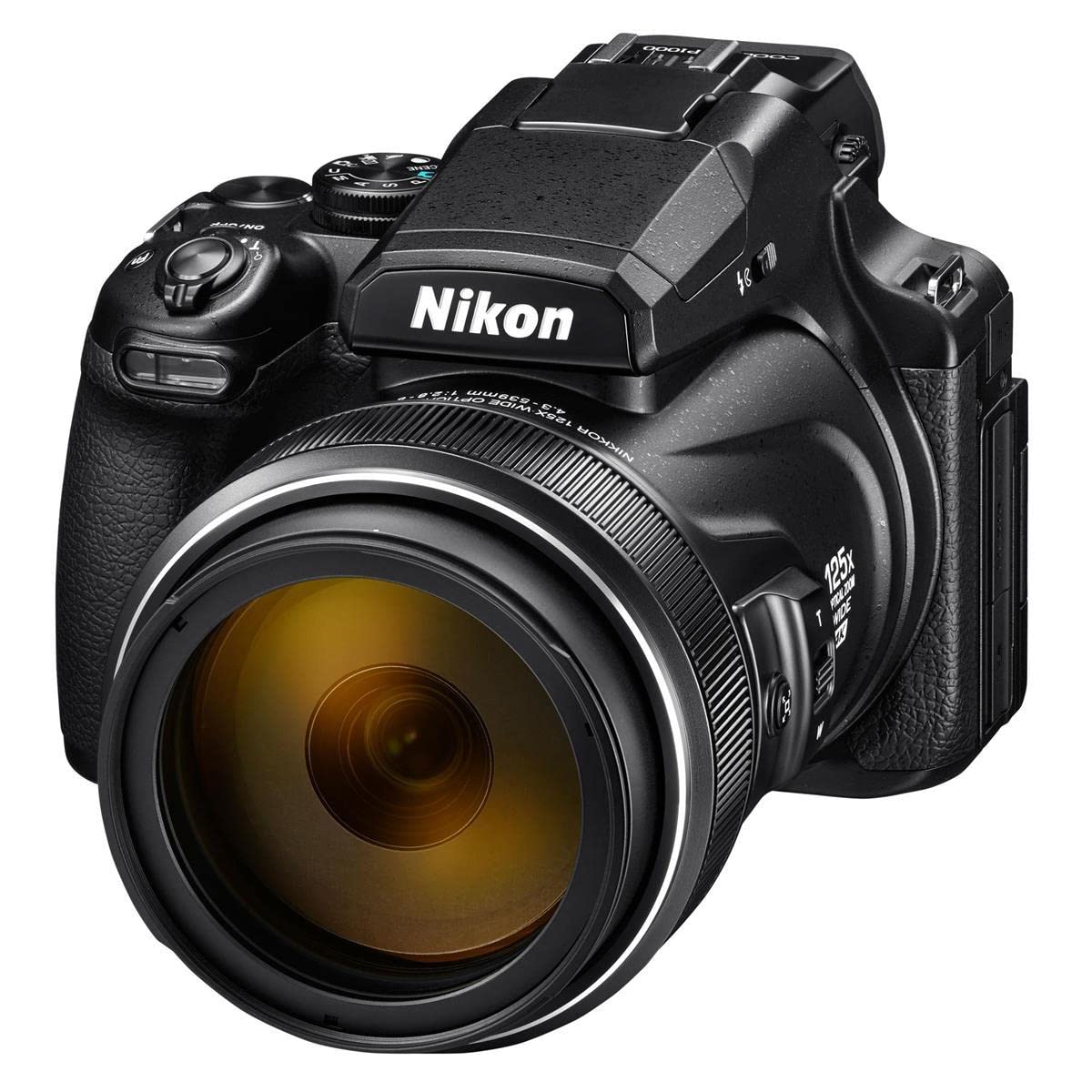
A 125x bridge zoom that reaches across the table and into the kitchen across the street.
The Nikon COOLPIX P1000 is an outlier here: a 16MP bridge camera with a 125x optical zoom (24–3000mm equivalent). It is not a food photography specialist, but it has an interesting angle for certain food work. The extreme zoom lets you shoot a plate from across a crowded table or capture the detail of a pizza being tossed from 20 feet away without moving. The dual detect image stabilization helps keep things sharp at those long focal lengths, though reviewers point out a tripod becomes essential at the 3000mm end.
Buyers call it “phenomenal zoom” and an “excellent superzoom.” However, the small 1/2.3-inch sensor limits image quality in low light, and the maximum aperture closes to F8.0 at the telephoto end. For most food photography — which is done in available or controlled light at moderate distances — this is the wrong tool. The P1000 is heavy, weighs awkwardly, and the autofocus struggles at extreme zoom, according to owners. It also uses a contrast-detection autofocus system with 100 points, which is slower than phase detection.
Compared to the Nikon D7500, the P1000 has a much smaller sensor and fewer megapixels (16 MP vs 20.9 MP), making it a poor choice for low-light restaurant shots. Its place here is for the rare food photographer who also needs a superzoom for other subjects, or who wants to shoot food from unusual distances.
Zoom novelty: The 125x zoom is class-leading, but the small sensor and aperture limitations make it a niche tool for food photography in good light only.
Consider it if… you also need an extreme superzoom for wildlife or travel and want one all-in-one body.
Not for… low-light food shots or any application where detail and shallow depth of field are priorities.
Understanding the Specs
Sensor Size (Full-Frame vs APS-C vs Micro Four Thirds)
A larger sensor captures more light, giving you better performance in dim restaurants and more control over background blur. Full-frame sensors (like the 24.3MP in the Nikon Z 5) let you throw the background out of focus so the plate really pops. APS-C sensors (like the Canon EOS R50) are a middle ground — good quality but less blur potential. Micro Four Thirds (like the OM SYSTEM E-M10 Mark IV) produces the most depth of field, which can be useful for keeping the whole dish sharp but makes shallow-depth-of-field shots harder without a fast lens.
In-Body Image Stabilization (IBIS)
IBIS physically moves the sensor to counteract your hand shake. For food photography, it is the feature that lets you shoot at 1/9s or 1/2s speeds handheld, turning a dimly lit table into a sharp image without a tripod. Cameras without IBIS (like the Canon EOS R50) rely on lens-based stabilization or require a tripod for slow shutters. The OM SYSTEM E-M10 Mark IV shoppers say it enables 1-second handheld exposures, proving IBIS can be a standout even on smaller sensors.
FAQ
Is a full-frame camera necessary for food photography?
How many megapixels do I need for food photography?
Do I need a special macro lens for food photography?
What is the most important lens for food photography?
Which camera is best for low-light food photography?
Do I need a flash for food photography?
Can I start with a kit lens for food photography?
What does IBIS (in-body image stabilization) do for food shots?
Which camera has the best autofocus for food photography?
How important is video for a food photography camera?
Final Thoughts: The Verdict
For most people looking for a best camera for food photography, the winner is the Nikon Z 5 because it gives you a 24.3MP full-frame sensor, 5-axis IBIS for handheld shots, and 273 autofocus points at a price that undercuts many rivals. If you want to travel light with a pocketable camera that still has stabilization and interchangeable lenses, grab the OM SYSTEM E-M10 Mark IV. And for those who need extreme detail for cropping and the most advanced autofocus, the standout is the Canon EOS R5.
How We Picked
We do not accept paid placement. Every pick is matched to a real buyer and a real use-case; we do not hands-on test units.
Sources & Methodology
Specifications: manufacturer listings and product documentation. Review insights: verified customer reviews, as of July 2026. Pricing: not shown on this page (it changes often); check the current price via the retailer link.
As an Amazon Associate, Gadgets Feed earns from qualifying purchases. This does not affect which products we feature.
Product prices and availability are accurate as of the date/time indicated and are subject to change. Any price and availability information displayed on Amazon at the time of purchase will apply to the purchase of this product. As an Amazon Associate I earn from qualifying purchases.
CERTAIN CONTENT THAT APPEARS ON THIS SITE COMES FROM AMAZON. THIS CONTENT IS PROVIDED "AS IS" AND IS SUBJECT TO CHANGE OR REMOVAL AT ANY TIME.
Amazon and the Amazon logo are trademarks of Amazon.com, Inc. or its affiliates.