
Our readers keep the lights on and my morning glass full of iced black tea. As an Amazon Associate, I earn from qualifying purchases.
A scouting camera that delivers blurry night shots, dies after three rainy days, or fails to capture the buck that walked right past the sensor is worse than no camera at all — it’s a false sense of security during precious scouting time. Serious hunters need a rig that sees in the dark, triggers before the animal leaves the frame, and survives a season strapped to an oak tree without demanding a weekly battery swap.
I’m Min — the co-founder and writer behind Gadgets Feed. I’ve combed through hundreds of hours of field-test data, cross-referenced customer reliability reports, and compared sensor sensitivity, trigger latency, and night-vision range to separate the cameras that actually perform from those that just look good on the spec sheet.
Whether you are scouting public land before season or monitoring a food plot deep in the woods, this guide breaks down the specs that matter so you can invest in the right camera for hunting without wasting money on gear that won’t last.
How To Choose The Best Camera For Hunting
Choosing the wrong camera means spending weekends swapping batteries, uploading fuzzy pictures, or missing the animal entirely. Focus on four factors to narrow the field: trigger latency, night-vision type, power strategy, and connectivity needs.
Trigger Speed & Multi-Sensor Layout
A slow trigger turns a trophy buck into an empty frame. Look for sub-0.3-second trigger speeds — models with side PIR sensors dramatically reduce missed shots when an animal crosses diagonally. The best units use three sensors to minimize the blind spot directly in front of the camera, capturing motion that cheaper single-sensor cams miss entirely.
No-Glow vs. Low-Glow Night Vision
No-glow (940nm) infrared LEDs are invisible to deer and human eyes, making them ideal for high-pressure hunting areas where animals learn to avoid white or red glow. Low-glow (850nm) LEDs cast a faint red light but produce brighter, more detailed images at extended ranges. For pure stealth, insist on no-glow; for maximum clarity at 100+ feet, low-glow delivers.
Cellular, WiFi, or Dumb Camera
Cellular cameras send images directly to your phone via LTE — perfect for remote properties you cannot check daily, but they require a monthly plan and strong signal. WiFi-only cameras let you see images on the spot from 50–75 feet away, useful during setup and retrieval. Non-cellular, non-WiFi cameras (often called dumb cameras) keep costs low, battery life high, and require manual SD card checks. Pick the model that matches how often you visit your hunting area.
Power Strategy & Weather Sealing
AA-powered cameras are simple but eat through alkalines in cold weather — lithium AAs are essential for winter deployments. Solar integration or external battery packs extend field life dramatically, especially for cellular models that draw more current. An IP66 rating is the baseline for rain and snow; IP67 or higher is better for cameras placed near water or in dense, humid cover.
Quick Comparison
On smaller screens, swipe sideways to see the full table.
| Model | Category | Best For | Key Spec | Amazon |
|---|---|---|---|---|
| GardePro E5S 2-Pack | Non-Cellular | Battery-Efficient Scouting | 0.1s trigger, 3 PIR sensors | Amazon |
| TACTACAM Reveal X PRO | Cellular | Instant Photo Alerts | Verizon & AT&T dual SIM | Amazon |
| TACTACAM Reveal Pro 3.0 | Cellular | 4K Stills & GPS Tracking | 4K photos, built-in GPS | Amazon |
| SPYPOINT Flex-M Solar Bundle | Cellular + Solar | Off-Grid Self-Sufficiency | Solar panel included, free 100 photos/mo | Amazon |
| XTU 4K 64MP Solar | WiFi + Solar | On-Site App Viewing | 4K video, built-in WiFi (49ft) | Amazon |
| Meidase P70 2-Pack | Non-Cellular | Budget Two-Camera Setup | 64MP stills, 0.1s trigger | Amazon |
| TOPDON TS004 Thermal | Thermal Monocular | Active Night Scanning | 256×192 IR, 410m detection | Amazon |
In‑Depth Reviews
1. GardePro E5S 2-Pack
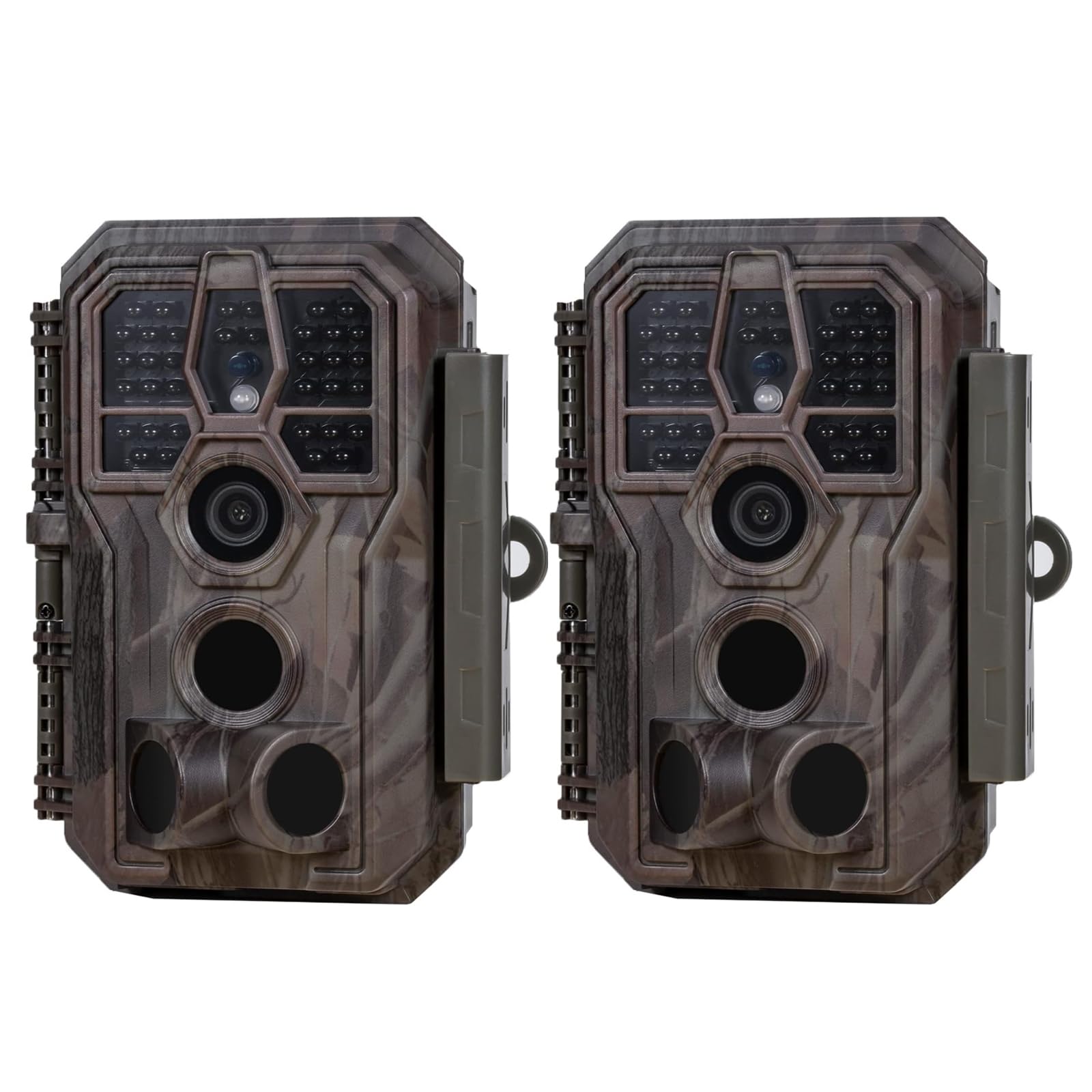
The GardePro E5S 2-Pack is the most balanced trail camera on this list because it nails the three specs that matter most: a 0.1-second trigger speed backed by three PIR sensors, 64MP stills with true 1296p video, and a power-efficient non-cellular design that lets eight AA lithium batteries run all season. The three-sensor layout catches animals approaching from an angle, eliminating the dead zone that plagues single-sensor cams.
At an IP66 rating, the E5S handles heavy rain and snow without fogging the lens. Users report crisp daytime colors and clean no-glow IR images at 100 feet, with lithium batteries holding charge through months of summer heat and winter cold. The lack of WiFi or cellular means zero failed uploads and no subscription fees — you simply grab the SD card whenever you check the property.
GardePro’s customer support earns consistent praise, with buyers noting quick replacement units for the rare defect. The only minor complaint is a crackling microphone on some video recordings, but the still images and overall reliability make this the top pick for hunters who want maximum performance without monthly bills.
Why it’s great
- Three PIR sensors provide 0.1s side-triggering, minimizing missed shots
- Excellent battery efficiency — lithium AAs last an entire season
- Weather-sealed IP66 housing survives outdoor extremes
Good to know
- No cellular or WiFi — requires manual SD card retrieval
- Microphone audio can sound crackly on some units
2. TACTACAM Reveal Pro 3.0
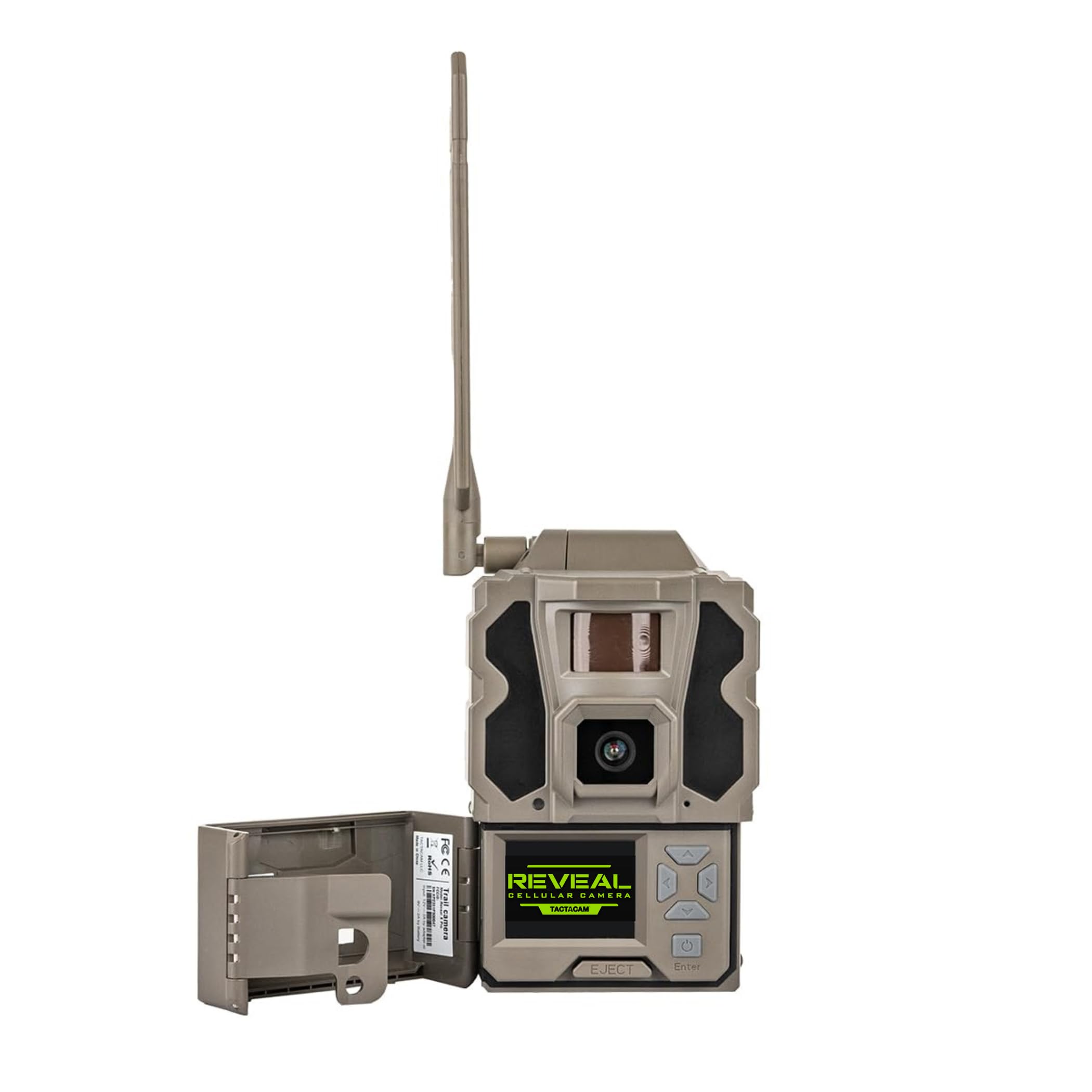
The Reveal Pro 3.0 is TACTACAM’s mid-tier cellular camera that punches well above its price class by delivering 4K still images, 1080p motion-activated video, and a built-in GPS that maps camera locations directly inside the app. The no-glow IR flash captures crisp nighttime images without alerting deer, and the improved sensor array reduces false triggers from blowing grass or passing cars.
Cellular connectivity auto-connects to either Verizon or AT&T — the camera includes both SIMs and selects the stronger signal automatically. The app sends instant alerts with thumbnail images, allowing you to decide whether to retrieve the full HD photo from the SD card remotely. The 2-inch LCD screen and live WiFi aiming feature let you fine-tune camera position during setup without pulling the SD card.
Battery life depends heavily on the power source — owners strongly recommend pairing with TACTACAM’s lithium battery cartridge or solar panel, as 12 AA batteries drain quickly with frequent cellular uploads. The monthly subscription (-/month) adds an ongoing cost, but for hunters monitoring multiple remote properties, the convenience of real-time photo alerts and integrated GPS theft recovery justifies the premium.
Why it’s great
- Built-in GPS tracks camera location and logs activity maps
- Selects best carrier (Verizon or AT&T) automatically
- 4K stills with excellent daytime and IR night clarity
Good to know
- Requires monthly cellular plan for remote image delivery
- Battery drain is high — accessory solar or battery pack recommended
3. SPYPOINT Flex-M Solar Bundle

The SPYPOINT Flex-M Solar Bundle solves the two biggest problems with cellular cameras: power management and recurring cost. The bundle includes a compact SPLB-10 solar panel and heavy-duty mounting arm, keeping the internal battery topped off indefinitely in sunny conditions. SPYPOINT also offers the only free photo transmission plan in the industry — 100 photos monthly with no subscription fee.
Image quality tops out at 28MP stills and 720p video with sound, which is lower resolution than the GardePro or TACTACAM options, but the trade-off enables faster uploads and lower data usage. The Buck Tracker AI inside the app filters images by species, saving you from scrolling through hundreds of pictures of swaying branches. The IP65 water resistance rating is adequate for rain and snow, though less rugged than IP66-rated competitors.
One clear downside is the requirement for a separate rechargeable battery pack — the camera will not operate on standard AA batteries alone, adding an immediate accessory cost. Owners in extreme cold have reported occasional failures below the recommended temperature range. Still, for hunters who want solar-powered, subscription-free cellular monitoring, the Flex-M bundle delivers unmatched value.
Why it’s great
- Includes solar panel and mounting hardware in the box
- Free 100-photo monthly cellular plan with no contract
- Buck Tracker AI filters photos by species automatically
Good to know
- Requires rechargeable battery pack — not included
- Photos are 28MP/720p, lower than direct competitors
4. TACTACAM Reveal X PRO
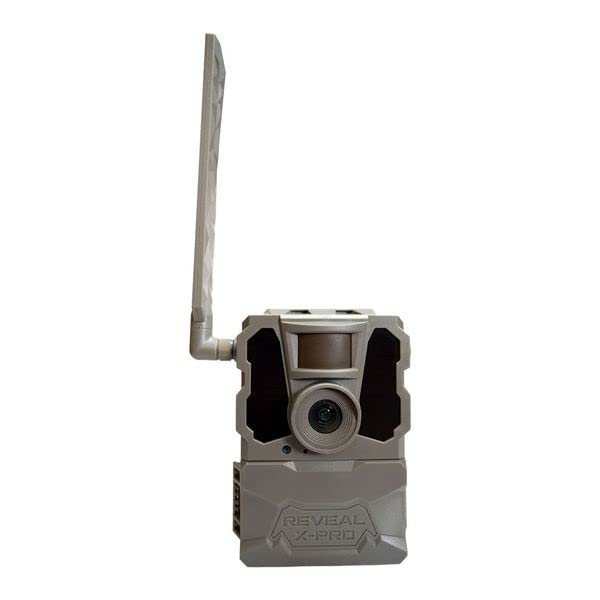
The Reveal X PRO is the previous-generation workhorse from TACTACAM that still holds its own against newer models. It combines Verizon and AT&T SIM cards in one tray, allowing you to switch carriers based on coverage without ordering new hardware. The built-in LCD screen lets you review photos and tweak settings on the tree without needing a phone or laptop.
Image output is 16MP photos and 720p HD video — not as sharp as the Pro 3.0, but the HYBRID mode balances fast delivery with respectable battery life. The 96-foot no-glow IR flash and detection range is generous for a mid-range cellular cam, and the integrated GPS tracking provides theft recovery if the camera walks off. Users consistently report that the X PRO sends alerts within three minutes of triggering, even in marginal signal areas.
The biggest caveat is battery appetite: 12 AA batteries are required, and most owners end up buying the TACTACAM lithium battery cartridge and solar panel within the first month. The monthly plan costs -, and HD photo uploads require an additional /50-photo add-on. For hunters who need reliable cellular alerts without breaking the bank on camera hardware, the Reveal X PRO is a proven, field-tested choice.
Why it’s great
- Dual Verizon/AT&T SIMs let you pick the strongest carrier
- Built-in LCD screen for on-tree photo review
- 96-foot no-glow detection range captures wide trails
Good to know
- Requires 12 AA batteries — drain is high without solar
- HD photo uploads cost extra beyond the base plan
5. XTU 4K 64MP Solar Trail Camera
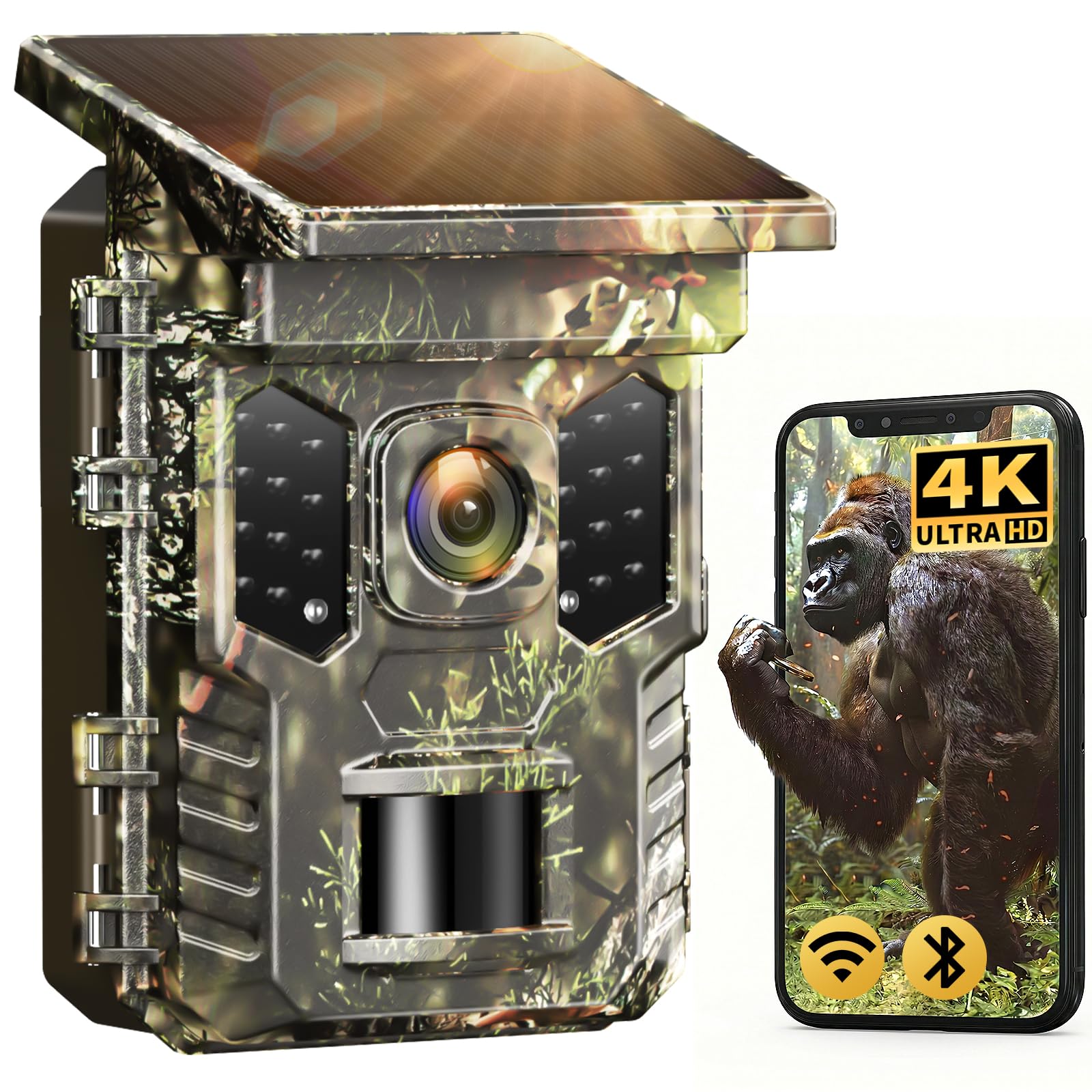
The XTU 4K 64MP Solar Camera bridges the gap between dumb cameras and full cellular units by offering on-site WiFi connectivity for downloading images and video directly to your phone via the TrailCamGO app. With no home WiFi or monthly fees required, you walk within 49 feet of the camera and pull down 4K video clips and 64MP stills instantly — perfect for hunters who check their cameras weekly and want high-resolution files without cellular compression.
The integrated solar panel keeps the internal battery topped up, while a USB-C port and DC 6V input offer backup charging options. The 0.2-second trigger speed with 70-foot detection range captures fast-moving deer reliably, and the IP66 waterproof housing has proven durable in heavy rain and summer heat. Users praise the bright daytime colors and smooth 4K video at 30 fps.
Quality control is the weakest link — a handful of buyers received units that would not take photos or repeatedly demanded SD card reformatting, suggesting inconsistent manufacturing batches. The WiFi range is limited to line of sight at about 75 feet, and the app experience receives mixed reviews for occasional pairing failures. For hunters who prioritize local high-res downloads over remote cellular access, the XTU delivers strong specs at a reasonable price, but inspect the unit promptly after arrival.
Why it’s great
- 64MP stills and true 4K video with smooth 30fps recording
- Solar panel extends field life with no recurring fees
- On-site WiFi downloads full-res files without cellular compression
Good to know
- WiFi range limited to 49–75 feet line of sight
- Quality control issues reported — test unit immediately
6. Meidase P70 2-Pack
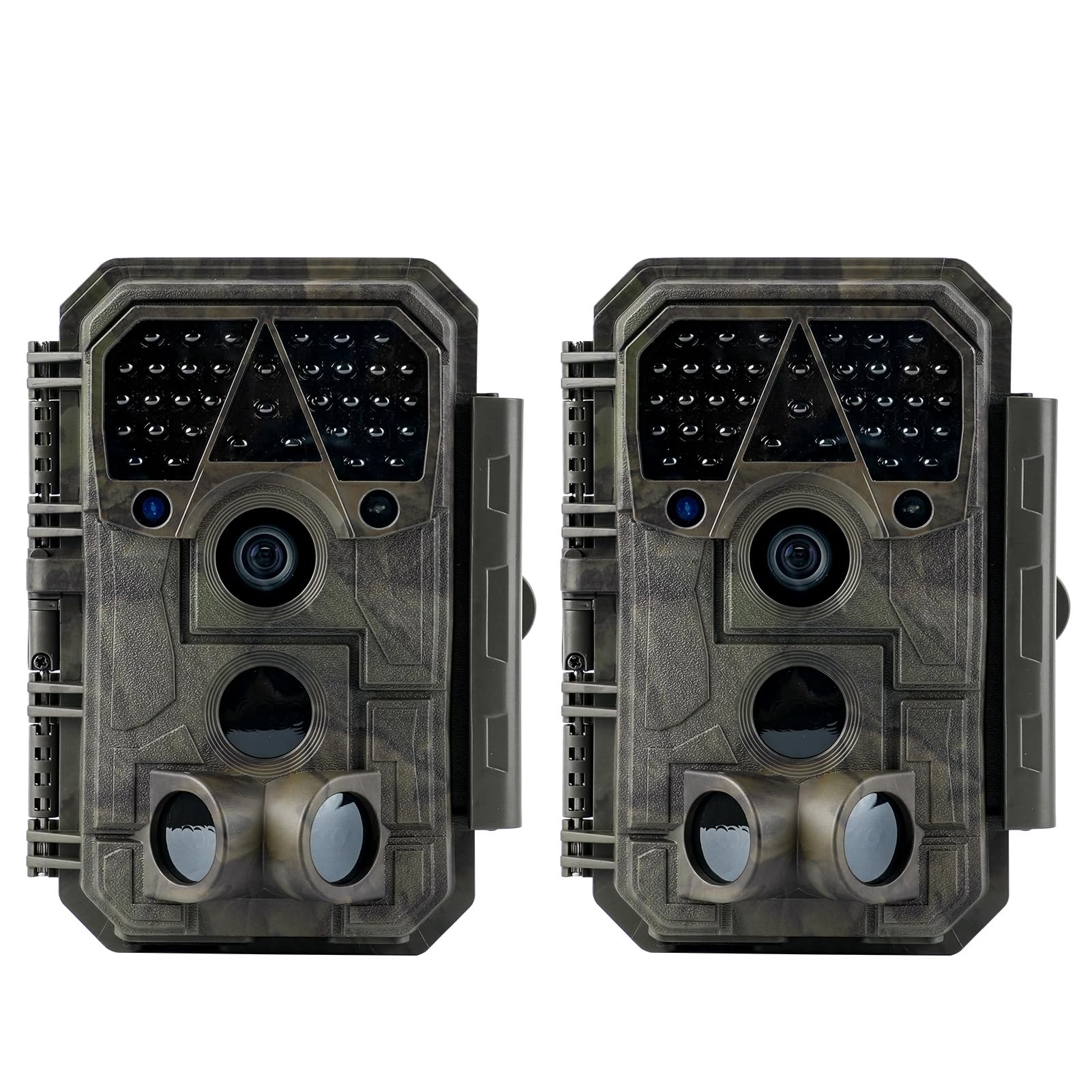
The Meidase P70 2-Pack is the entry-level two-camera bundle for hunters covering multiple pinch points on a budget. Each unit captures 64MP stills and 1296p HD video using H.264 compression, which keeps file sizes small and playback smooth on any device. The 0.1-second trigger speed, enabled by two additional side sensors, catches deer moving diagonally — a feature rarely seen at this price point.
Night vision relies on 940nm no-glow IR LEDs paired with an f/1.6 aperture lens, delivering bright 100-foot illumination that does not spook game. The 2.4-inch color display and simple button menu make setup straightforward without a smartphone. Users report excellent performance in Florida heat, thunderstorms, and high humidity, with lithium batteries lasting three weeks even under heavy trigger activity (1,000+ events per day).
The trade-offs are typical of budget cameras: daytime video can appear slightly blurry on fast-moving subjects, and the camera resets the calendar/time display after every battery change, requiring reconfiguration. The 2-pack pricing makes this an ideal starter set for new hunters or for placing cameras in high-theft areas where losing one is less painful. Just budget for 16 AA batteries and 2 SD cards, which are not included.
Why it’s great
- Two cameras for the price of one — covers more ground
- No-glow 940nm IR prevents spooking game at night
- Side PIR sensors reduce missed diagonal animal movement
Good to know
- Daytime video blurs on fast-moving subjects
- Clock/time resets after each battery swap
7. TOPDON TS004 Thermal Monocular
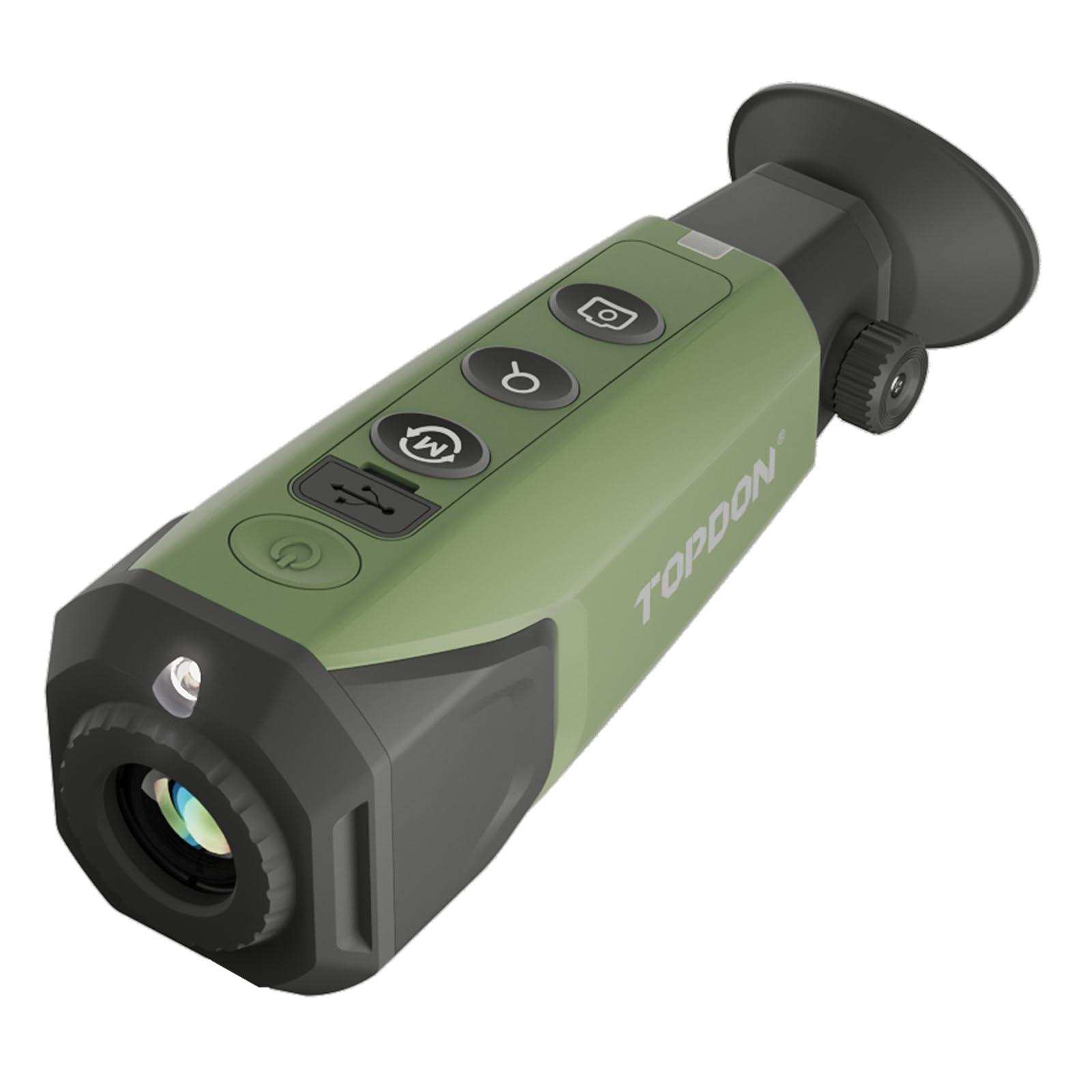
The TOPDON TS004 is not a trail camera you strap to a tree — it is a handheld thermal monocular for active scouting, tracking wounded game, and scanning fields after dark. Its 256×192 IR sensor with a 50Hz refresh rate delivers smooth, continuous thermal video, detecting body heat signatures out to 410 meters. The 13mm lens penetrates fog and thick brush, revealing deer bedded down or coyotes moving through cover that night vision cannot pick up.
A 5000mAh battery provides up to 11 hours of continuous run time, and the IP67 waterproof rating (submersible to 1 meter for 30 minutes) makes it genuinely field-rugged. The TopInfrared app connects via Bluetooth for live viewing and recording on your phone, with image capture and video recording available even in offline mode. Users report spotting coyotes at 200+ yards and identifying individual birds at 50 yards with the bird-watching mode.
The digital zoom degrades image detail quickly past 2x, so this is not a long-range identification tool. The eye cup lacks a proximity sensor, meaning the bright green power light stays on and can compromise stealth in complete darkness. For hunters who primarily use trail cameras but need a thermal tool for blood trailing or night recon, the TS004 is a compact, affordable entry into thermal optics that rivals units costing twice as much.
Why it’s great
- 11-hour battery life from a single 5000mAh charge
- Detects heat signatures at 410 meters through fog and brush
- IP67 waterproof — survives drops and submersion
Good to know
- Digital zoom becomes grainy beyond 2x magnification
- Bright power light compromises stealth in dark conditions
FAQ
Should I buy a cellular or non-cellular trail camera for hunting?
Can I use rechargeable AA batteries in cold-weather trail cameras?
Does higher megapixel count mean better trail camera images?
Final Thoughts: The Verdict
For most users, the best camera for hunting is the GardePro E5S 2-Pack because its three-sensor 0.1-second trigger, no-glow IR, and IP66 toughness deliver pro-level reliability without a monthly fee. If you need real-time image alerts sent to your phone, grab the TACTACAM Reveal Pro 3.0 for its 4K stills and built-in GPS. And for active thermal scouting after dark, nothing beats the TOPDON TS004 Thermal Monocular.