
Independent filmmaking demands a tool that balances narrative ambition with a budget that doesn’t break the bank. The wrong camera introduces friction — poor dynamic range, unreliable autofocus, or codecs that choke your editing workflow. Finding a body that delivers the latitude for grading, the low-light sensitivity for available-light scenes, and the longevity to stay relevant across multiple projects is the difference between capturing a vision and fighting your gear.
I’m Min — the co-founder and writer behind Gadgets Feed. I’ve spent hundreds of hours analyzing sensor readout speeds, bit rates, rolling shutter artifacts, and stabilization systems across the entire mirrorless and cinema camera market to isolate the bodies that genuinely serve the indie workflow.
Whether you’re shooting a narrative short, a documentary, or commercial work, the single most important investment you can make is choosing the right camera for independent filmmakers that prioritizes codec flexibility, dynamic range, and robust build quality over flashy features.
How To Choose The Best Camera For Independent Filmmakers
Independent filmmakers often face the difficult trade-off between high-end cinema features and practical budget constraints. The right camera must deliver professional-grade footage, reliable ergonomics for long shoots, and a robust ecosystem of affordable lenses and accessories. Understanding the core specs that directly impact your final image is the first step to making an informed choice.
Dynamic Range and Color Science
Dynamic range determines how many stops of detail your sensor can capture from the darkest shadows to the brightest highlights. For indie filmmaking, a minimum of 13 stops is the gold standard — anything less will clip highlights or crush shadows in practical lighting situations. Camera color science, like S-Cinetone or V-Log, also dictates how much you can manipulate the image in post without introducing banding or noise.
Codec and Recording Options
10-bit 4:2:2 internal recording is non-negotiable for serious color grading. Codecs like Blackmagic RAW, Apple ProRes, or 4:2:2 XF-AVC offer the flexibility to push exposure, recover highlights, and apply LUTs without visible blockiness. The ability to record to affordable media (SD UHS-II) or external SSDs via USB-C is a major advantage for indie productions managing storage budgets.
Stabilization and Audio Integration
In-body image stabilization (IBIS) or gyro-based stabilization reduces the need for expensive gimbals on run-and-gun shoots. For audio, built-in XLR inputs with phantom power eliminate the need for external recorders, keeping the rig compact while maintaining professional sound. Autofocus reliability — especially eye-tracking for subjects moving off-axis — is critical when you’re working alone or with a minimal crew.
Quick Comparison
On smaller screens, swipe sideways to see the full table.
| Model | Category | Best For | Key Spec | Amazon |
|---|---|---|---|---|
| Sony FX3 | Cinema Full-Frame | Cinematic Narrative + Low Light | 4K 120p 10-bit 4:2:2, 15+ stops DR | Amazon |
| Canon EOS R5 | Hybrid Full-Frame | 8K/4K Hybrid Work | 45MP, 8K RAW, 4K 120fps, 1053 AF points | Amazon |
| Blackmagic 6K Pro | Cinema S35 | Narrative/Commercial Color Grading | 6144×3456, 13 stops DR, 6K BRAW | Amazon |
| Panasonic Lumix S5II | Hybrid Full-Frame | Handheld Documentary + V-Log | 24.2MP, 6K 30p Open Gate, Active I.S. | Amazon |
| Canon XA60 | Pro Camcorder | Long-Form Recording + Streaming | 4K UHD 160Mbps, 20x optical zoom, XLR | Amazon |
| Nikon D850 | DSLR High-Res | High Res Stills + Occasional Video | 45.7MP, 4K timelapse, 153 AF points | Amazon |
| Canon EOS 5D Mark IV | DSLR Full-Frame | Stills-First Hybrid Work | 30.4MP, 4K Motion JPEG, Dual Pixel AF | Amazon |
| Sony a7 III | Hybrid Full-Frame | Entry-Level Indie Video | 24.2MP BSI, 693 AF points, 10fps | Amazon |
| Blackmagic Pocket 4K | Cinema MFT | Budget Narrative + DaVinci Workflow | 4096×2160, 13 stops DR, Dual ISO | Amazon |
| Sony FDR-AX43 | Consumer Camcorder | Event/Church/Simple Recording | 4K 30p, 20x zoom, Balanced OIS | Amazon |
| FUJIFILM X-T30 III | APS-C Mirrorless | Photo-First w/ Film Sims | 26.1MP, 425 AF points, 4K 30p | Amazon |
| Nikon Z 5 | Entry FF Mirrorless | Budget Full-Frame Stills | 24.3MP, 4K 30p, IBIS, 2x SD slots | Amazon |
| Canon EOS R50 Kit | Entry APS-C | Beginner Hybrid Kit | 24.2MP, Dual Pixel AF, 4K 30p | Amazon |
In‑Depth Reviews
1. Sony Alpha FX3 ILME-FX3

The Sony FX3 is built from the ground up for cinema work. Its full-frame 12MP sensor delivers 15+ stops of dynamic range, and the S-Cinetone color science inherited from the VENICE provides an immediately filmic look with minimal grading. The built-in cooling fan enables uninterrupted 4K 60p 10-bit 4:2:2 recording — a critical advantage on long interview or documentary shoots where overheating kills other mirrorless bodies.
The cage-free design includes 1/4-20 mounting points and a detachable XLR top handle, giving you professional dual-channel audio without adding external recorder bulk. Autofocus uses 627 phase-detection points with reliable eye-tracking for subjects moving unpredictably, while the electronic shutter eliminates rolling shutter banding issues under LED lights. The only real limitation is the lack of built-in ND filters, requiring matte box or variable ND solutions on exterior shoots.
For an independent filmmaker prioritizing a compact, reliable cinema tool, the FX3 offers a rare combination of Netflix-approved image quality and practical ergonomics that keeps the rig small enough for seat-back spray or tight gimbal work. It handles a 15-stop latitude in real-world conditions better than any competitor at this tier.
Why it’s great
- 15+ stops dynamic range with S-Cinetone — minimal grading needed for a cinematic look.
- Built-in cooling fan for unlimited 4K 60p 10-bit 4:2:2 recording in all climates.
- XLR top handle with professional audio inputs eliminates external recorder complexity.
Good to know
- No built-in ND filters; external variable ND or matte box is required for daylight shoots.
- 12MP sensor limits still photography resolution for hybrid shooters.
- Battery life is adequate but requires multiple spare NP-FZ100 packs for a full production day.
2. Canon EOS R5

The Canon EOS R5 is a high-resolution hybrid that pushes into cinema territory with 8K RAW internal recording and 4K HQ up to 120fps. Its 45MP stacked BSI sensor delivers exceptional low-light performance and dynamic range, while the 1,053-point Dual Pixel CMOS AF with subject tracking covers nearly 100% of the frame. For an indie filmmaker who also needs serious stills capability, this is the most versatile single body available.
The in-body stabilization (IBIS) works in synergy with RF lenses to deliver handheld footage that often eliminates the need for a gimbal in controlled walking shots. The 4K 120fps at 10-bit 4:2:2 internal is ideal for slow-motion narrative work, and the 8K mode provides massive oversampling flexibility for cropping and reframing in post. However, the battery life (approximately 650 shots CIPA) is typical for mirrorless and requires spares for a full day of video production.
The overheating concerns from launch have been largely overblown in real-world use, though heavy 8K recording in warm environments can trigger thermal limits. For most narrative and commercial work at 4K HQ, the R5 runs reliably. The RF lens ecosystem is expensive, but adapted EF glass works exceptionally well via the Control Ring Adapter, keeping budget lens options open.
Why it’s great
- 8K RAW and 4K 120fps internal recording provide unmatched oversampling and slow-motion flexibility.
- IBIS with Dual Pixel AF covers entire frame — reliable subject tracking for moving talent.
- 45MP stills resolution makes it a true hybrid for filmmakers who also shoot high-res photography.
Good to know
- High-resolution video can trigger thermal limits; best used at 4K HQ for extended takes.
- RF lenses are premium-priced; the full ecosystem investment is significant.
- Battery life is limited; spare NP-FZ100 packs are essential for a production day.
3. Blackmagic Design Pocket Cinema Camera 6K Pro

The Blackmagic Pocket Cinema Camera 6K Pro is the reference standard for indie filmmakers who prioritize color science. Its Super 35 sensor records 6K Blackmagic RAW at up to 50fps or 4K DCI at 120fps, with 13 stops of dynamic range that handles highlights and shadows with exceptional smoothness. The built-in 2/4/6-stop ND filters are a game-changer for exterior shooting, allowing you to maintain shallow depth of field without screwing on glass.
The 5-inch tilting HDR LCD is bright enough for outdoor monitoring, and the EF lens mount unlocks access to a vast library of affordable cinema lenses (like Rokinon Cine DS) and vintage glass. The included DaVinci Resolve Studio license means your entire workflow — from dailies to final color grade — lives in one ecosystem. The dual gain ISO up to 25,600 keeps noise under control in practical low-light narrative scenes, though the sensor is noisier at pixel level than full-frame alternatives.
Battery life remains the biggest practical challenge; a single NP-F570 lasts roughly 30-45 minutes of recording, so a powered rig with external V-mount or NP-F batteries is essential for a full shoot day. The lack of continuous autofocus and IBIS means the 6K Pro demands a tripod, gimbal, or careful handheld technique — but for the image quality per dollar, it remains unmatched.
Why it’s great
- 13 stops of dynamic range and 6K Blackmagic RAW deliver industry-leading color grading flexibility.
- Built-in 2/4/6-stop ND filters eliminate the need for screw-on NDs on exterior shoots.
- DaVinci Resolve Studio license included — full post-production workflow from one ecosystem.
Good to know
- No in-body stabilization or continuous autofocus; requires gimbal or tripod for stable footage.
- Battery life is short (30-45 min); external battery solutions are necessary for production.
- Sensor is noisier at high ISO compared to full-frame alternatives; needs good lighting for clean 6K.
4. Panasonic Lumix S5II
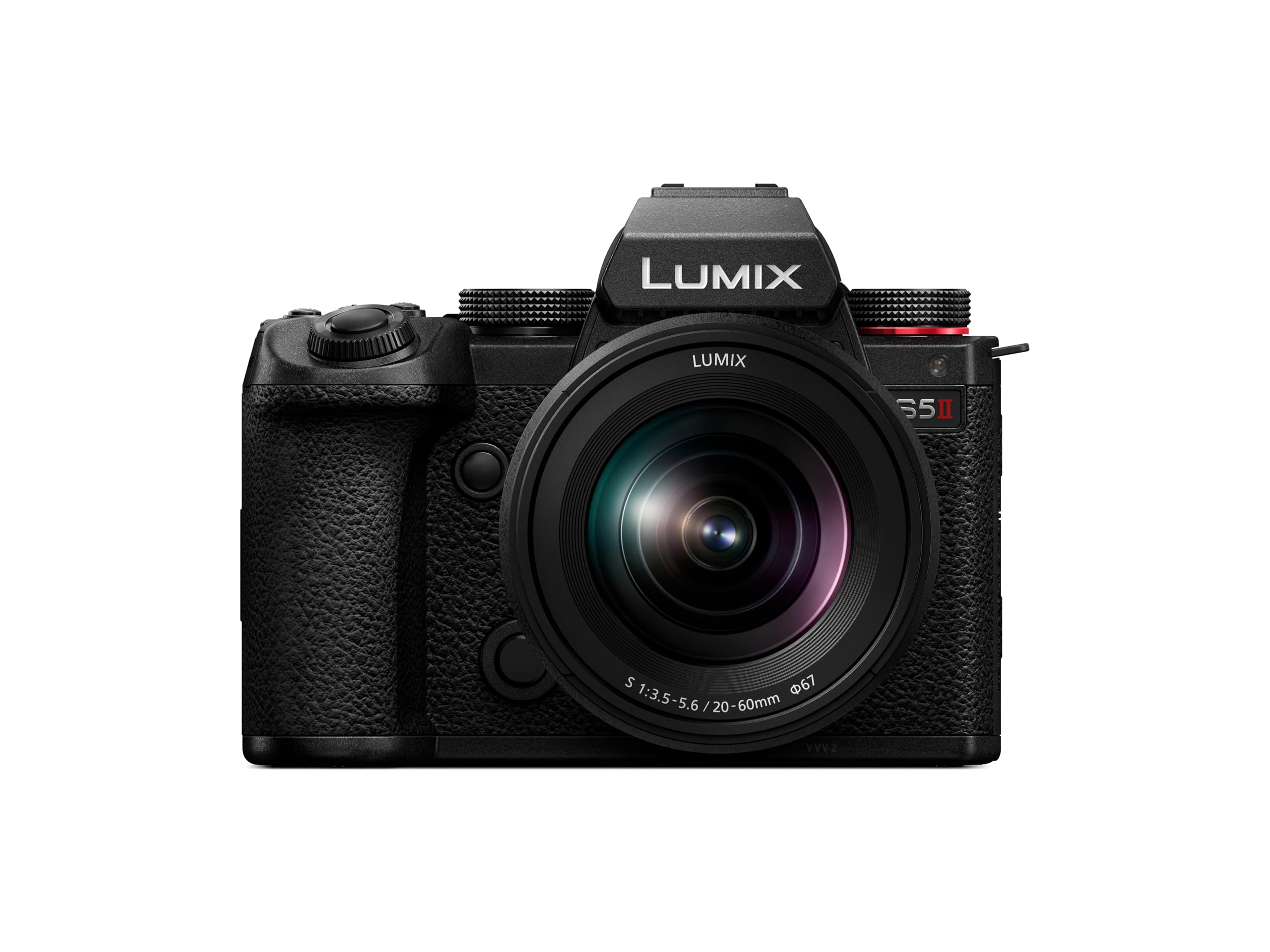
The Panasonic Lumix S5II brought Phase Hybrid AF to the L-mount ecosystem, solving the autofocus hesitation that plagued earlier S-series bodies. It records 6K 30p Open Gate (3:2 aspect) and 4K 60p 10-bit 4:2:2, with V-Log/V-Gamut providing 14+ stops of dynamic range for serious color grading. The new Active I.S. (Image Stabilization) is class-leading for handheld walking shots — reducing gimbal dependency for documentary work.
The heat dispersion mechanism with a built-in fan enables unlimited 4K recording, which is critical for long-form content like interviews or live events. The L-mount ecosystem now includes affordable Sigma and Panasonic lenses, and the body is compact enough for travel while maintaining a deep handgrip suitable for all-day handheld shooting. The 20-60mm kit lens provides a useful wide-to-standard range for establishing shots and run-and-gun work.
The S5II’s primary weaknesses are battery life — slightly shorter than the competition at around 50 minutes of continuous 4K recording — and the lack of built-in ND filters. The menu system is intuitive for those familiar with Panasonic, but new users may need time to navigate the extensive video options. For the hybrid filmmaker who needs reliable AF, stabilization, and color depth, the S5II is a compelling mid-range workhorse.
Why it’s great
- Phase Hybrid AF finally delivers reliable continuous tracking for video on L-mount.
- Active I.S. stabilizes handheld walking shots effectively, reducing gimbal requirement.
- Unlimited 4K 10-bit recording with V-Log and 14+ stops dynamic range for professional grading.
Good to know
- Battery life is modest; a spare pack is essential for a full production day.
- No built-in ND filters; external variable ND solutions needed for daylight shoots.
- Menu system is feature-rich but can be dense for new Panasonic users.
5. Canon XA60 Professional UHD 4K Camcorder

The Canon XA60 is a dedicated pro camcorder built for reliability over long recording sessions. It records 4K UHD at 160Mbps in XF-AVC or MP4, with a 1/2.3-inch CMOS sensor and DIGIC DV6 processor that deliver accurate Canon color science. The 20x optical zoom lens offers exceptional versatility — from wide establishing shots to tight close-ups — without needing to swap glass, which is invaluable for documentary and event work.
The detachable handle integrates two XLR terminals with 4-channel linear PCM audio, allowing professional condenser mics or line-level feeds from a soundboard. The 3.5-inch touchscreen LCD and tilting OLED EVF make monitoring flexible in variable light conditions. Dual SD card slots support relay and simultaneous recording, ensuring no gap in coverage during critical moments like interviews or ceremonies.
The XA60’s primary limitation is sensor size — the 1/2.3-inch chip can struggle in low light compared to larger sensor mirrorless cameras, and the built-in mic is inadequate for musical performances. However, for run-and-gun documentary, education, corporate video, and long-form recording where stability and audio input matter more than shallow depth of field, this is a highly capable tool.
Why it’s great
- 20x optical zoom provides incredible focal range flexibility without lens swaps.
- Dual XLR terminals with 4-channel audio make professional sound integration simple.
- Dual SD card slots with relay recording ensure continuity during long shoots.
Good to know
- 1/2.3-inch sensor limits low-light performance compared to full-frame mirrorless options.
- Onboard mic is inadequate for musical performance; external mics through XLR are recommended.
- Single review noted grainy video in all settings; may require good lighting for clean 4K.
6. Nikon D850

The Nikon D850 is widely regarded as the finest DSLR ever made, and for good reason. Its 45.7MP back-side illuminated full-frame sensor delivers extraordinary resolution, outstanding dynamic range, and virtually no risk of moiré. It shoots up to 9 fps with full autofocus performance, records 4K Ultra HD video with full pixel readout, and offers slow motion up to 120 fps at 1080p — all in a rugged, weather-sealed body.
The tilting touchscreen is highly practical for low-angle shots, and the focus shift shooting mode is invaluable for product and macro work. Battery performance is phenomenal for a body of this resolution — a single EN-EL15b can last through a full day of mixed shooting. For the independent filmmaker who also needs a world-class stills camera for marketing materials, BTS, or commercial photography, the D850 is the ultimate hybrid.
The D850’s video autofocus is poor in continuous mode — manual focus is strongly recommended for serious video work. The hybrid slot system (one XQD + one SD) can be confusing, and high-speed SD cards are absolutely necessary for smooth 4K recording. Heavy RAW files from 45.7MP demand substantial storage and processing power. It remains a benchmark in 2025 for photographers who occasionally need video, not the reverse.
Why it’s great
- 45.7MP BSI sensor rivals medium format for resolution and dynamic range.
- Excellent battery life can last through a full day of hybrid shooting.
- 4K timelapse and 120fps slow motion provide unique creative video capabilities.
Good to know
- Video autofocus is poor; manual focus is recommended for serious cinematography.
- One XQD + one SD slot; high-speed cards required for 4K.
- Large RAW files demand substantial storage and processing power.
7. Canon EOS 5D Mark IV
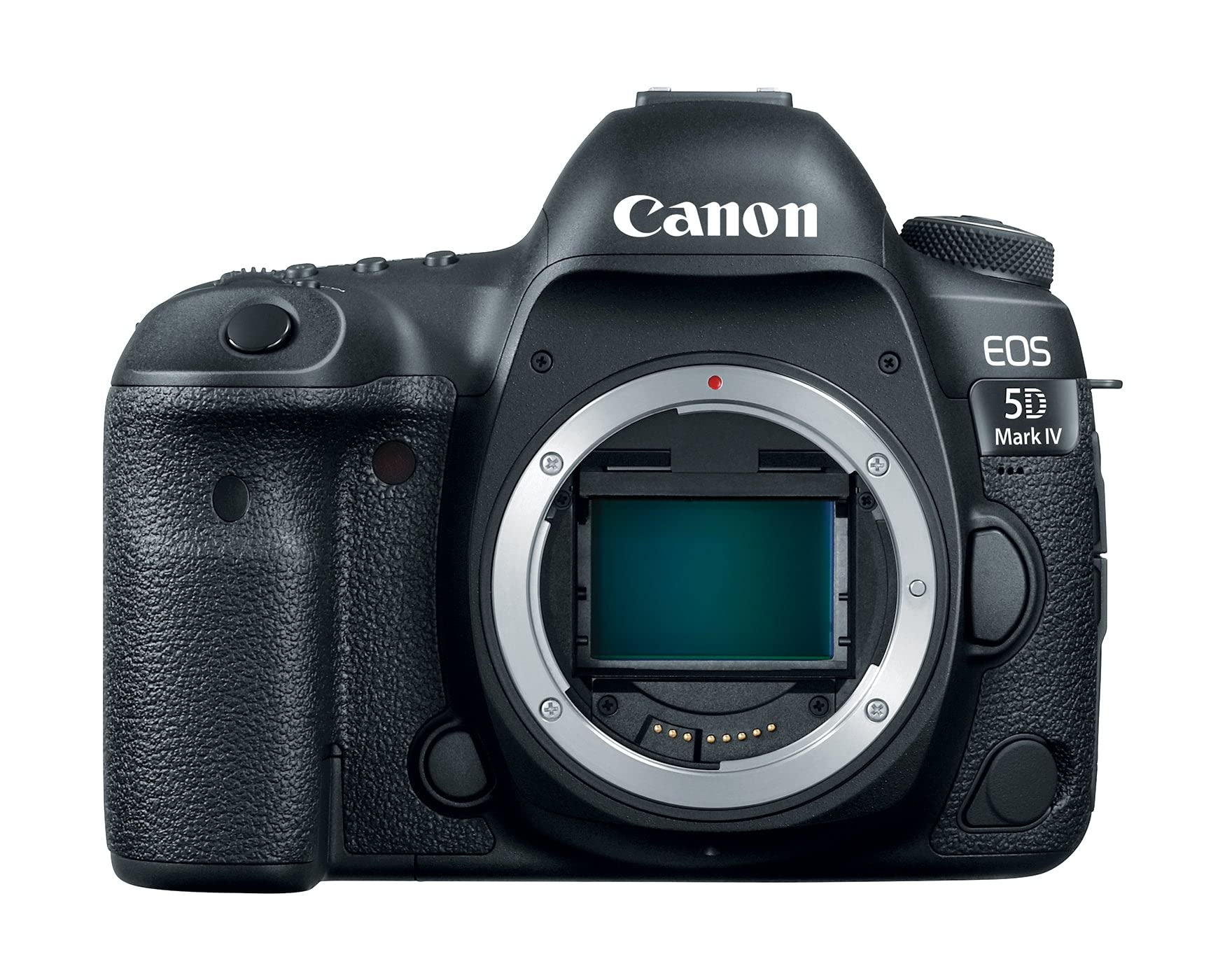
The Canon EOS 5D Mark IV remains a reliable workhorse that balances stills and video performance for professionals who prefer an optical viewfinder. Its 30.4MP full-frame CMOS sensor paired with the DIGIC 6+ processor delivers fast continuous shooting up to 7fps, an ISO range expandable to 50-102400, and 4K Motion JPEG video at 30 or 24fps. The Dual Pixel CMOS AF is smooth and responsive in video mode, and the touchscreen LCD makes selecting focus points intuitive.
The built-in Wi-Fi and GPS functionality are useful for location-based documentary work and quick file sharing. The weather-sealed magnesium alloy body is built to withstand challenging environments, and the battery life is excellent — a single LP-E6N can last through a full day of mixed shooting. The Canon EF lens ecosystem is one of the largest and most affordable in the world, keeping lens costs manageable for indie productions.
The 4K Motion JPEG codec is the camera’s main limitation — producing massive files that are impractical for most workflows. The 4K crop factor (1.74x) makes wide-angle shooting difficult in crop mode, and the 30MP resolution is lower than competitors like the D850. For filmmakers focused on stills who occasionally need competent 4K video in a proven, durable system, the 5D Mark IV is still a valid choice.
Why it’s great
- Dual Pixel CMOS AF provides smooth, reliable autofocus during video recording.
- Weather-sealed magnesium alloy body built for demanding environments.
- Excellent battery life supports a full day of mixed shooting.
Good to know
- 4K Motion JPEG files are enormous and impractical for most pipelines.
- 4K recording has a 1.74x crop factor, limiting wide-angle capabilities.
- 30MP sensor is lower resolution than competitors like the Nikon D850.
8. Sony a7 III

The Sony a7 III is the camera that democratized full-frame mirrorless video. Its 24.2MP BSI Exmor R sensor provides 15-stop dynamic range, 14-bit uncompressed RAW, and an ISO range up to 204,800. The 693-phase-detection and 425-contrast AF points cover 93% of the frame, delivering reliable tracking for interview subjects and slow-moving talent. It shoots 4K with full pixel readout and no pixel binning, providing exceptionally clean footage.
The battery life is class-leading — the NP-FZ100 can power through a full day of shooting with continuous recording, which is rare for mirrorless cameras. The 28-70mm kit lens is a decent starting point, but upgrading to a faster prime like the Sigma 24mm f/1.4 Art immediately transforms low-light performance and depth of field control. The S-Log profile offers good grading flexibility, and the 8-bit codec handles well in well-lit conditions.
The a7 III’s video limitations are noticeable in 2025: no 10-bit internal recording, no 4K 60p, no flip-out screen, and a menu system that is famously cumbersome to navigate. The rolling shutter performance is average compared to stacked sensor cameras. For budget-conscious filmmakers stepping into full-frame video for the first time, the a7 III offers incredible value and an established lens ecosystem that grows with you.
Why it’s great
- 15-stop dynamic range and full-pixel readout 4K produce clean, flexible footage.
- 693-point AF system covers 93% of frame for reliable subject tracking.
- Best-in-class battery life for a full-frame mirrorless — supports a full production day.
Good to know
- 8-bit internal recording limits color grading flexibility compared to 10-bit competitors.
- No 4K 60p or flip-out selfie screen — designed for rear-button shooting only.
- Menu system is famously complex; takes time to learn customization.
9. Blackmagic Design Pocket Cinema Camera 4K

The Blackmagic Pocket Cinema Camera 4K is the camera that put cinema-grade image quality within reach of independent filmmakers. Its 4/3-inch sensor records a native 4096×2160 DCI 4K resolution with 13 stops of dynamic range and dual gain ISO up to 25,600. The MFT lens mount opens up a world of affordable glass — including vintage lenses that add character to narrative work — and the included DaVinci Resolve Studio license provides the full color grading suite from day one.
The camera records to SD/UHS-II, CFast 2.0, or external SSD via USB-C, giving you a flexible media strategy where affordable Samsung T5 SSDs can serve as primary recording media. The 5-inch LCD display is bright and detailed, eliminating the need for an external monitor for most run-and-gun setups. For documentary and narrative work where manual focus and careful framing are the norm, the Pocket 4K delivers image quality that punches far above its price point.
The Pocket 4K has no IBIS, no continuous autofocus, and poor battery life (~30 minutes from a single LP-E6). The screen is difficult to see in direct sunlight, and the large 1080p crop factor is limiting. It requires a rig — cage, gimbal or tripod, external batteries — to function as a production tool. This is a cinema camera, not a content creator’s point-and-shoot.
Why it’s great
- 13 stops of dynamic range and 12-bit Blackmagic RAW provide professional grading latitude.
- Records to external USB-C SSDs — affordable media costs compared to CFast.
- DaVinci Resolve Studio license included — complete post-production workflow included.
Good to know
- No IBIS or continuous autofocus; requires stabilization gear for handheld use.
- Battery life is extremely short (~30 min); external power solution is necessary.
- Screen is difficult to view in sunlight; an external monitor is recommended for outdoor shoots.
10. Sony FDR-AX43

The Sony FDR-AX43 is a straightforward 4K camcorder designed for event recording, educational content, and family documentation. It features a 1/2.5-inch Exmor R CMOS sensor with 20x optical zoom and Balanced Optical SteadyShot image stabilization — effectively a built-in gimbal that provides smooth footage at moderate zoom levels. The 26.8mm wide-angle Zeiss Vario-Sonnar T lens captures group shots comfortably.
The Fast Intelligent AF tracks subjects reliably for talking heads and moving subjects, and the microphone input allows external lavaliers for better audio quality. The Highlight Movie Maker feature automatically creates highlight reels, which can save editorial time for non-narrative projects. The large NP-FV70 battery provides extended recording time, and the camera can be charged while in use via USB/DC power.
The AX43 is not a cinema camera. Its 1/2.5-inch sensor produces shallow depth of field only at maximum telephoto, and the automatic exposure can be jerky during lighting changes. The camcorder form factor is less flexible for narrative work that requires lens swaps or precise focus pulling. For event recordists and educators who need a reliable, simple point-and-shoot 4K camera, the AX43 does its job well.
Why it’s great
- Balanced Optical SteadyShot provides gimbal-like stabilization for walking shots.
- 20x optical zoom covers wide to long telephoto without lens changes.
- Powered USB-C charging while recording enables uninterrupted long-form capture.
Good to know
- Small sensor limits shallow depth of field and low-light performance.
- No raw recording or log profile — limited color grading flexibility.
- Battery protrudes from the back, making the camera less compact for gimbal or selfie stick use.
11. FUJIFILM X-T30 III
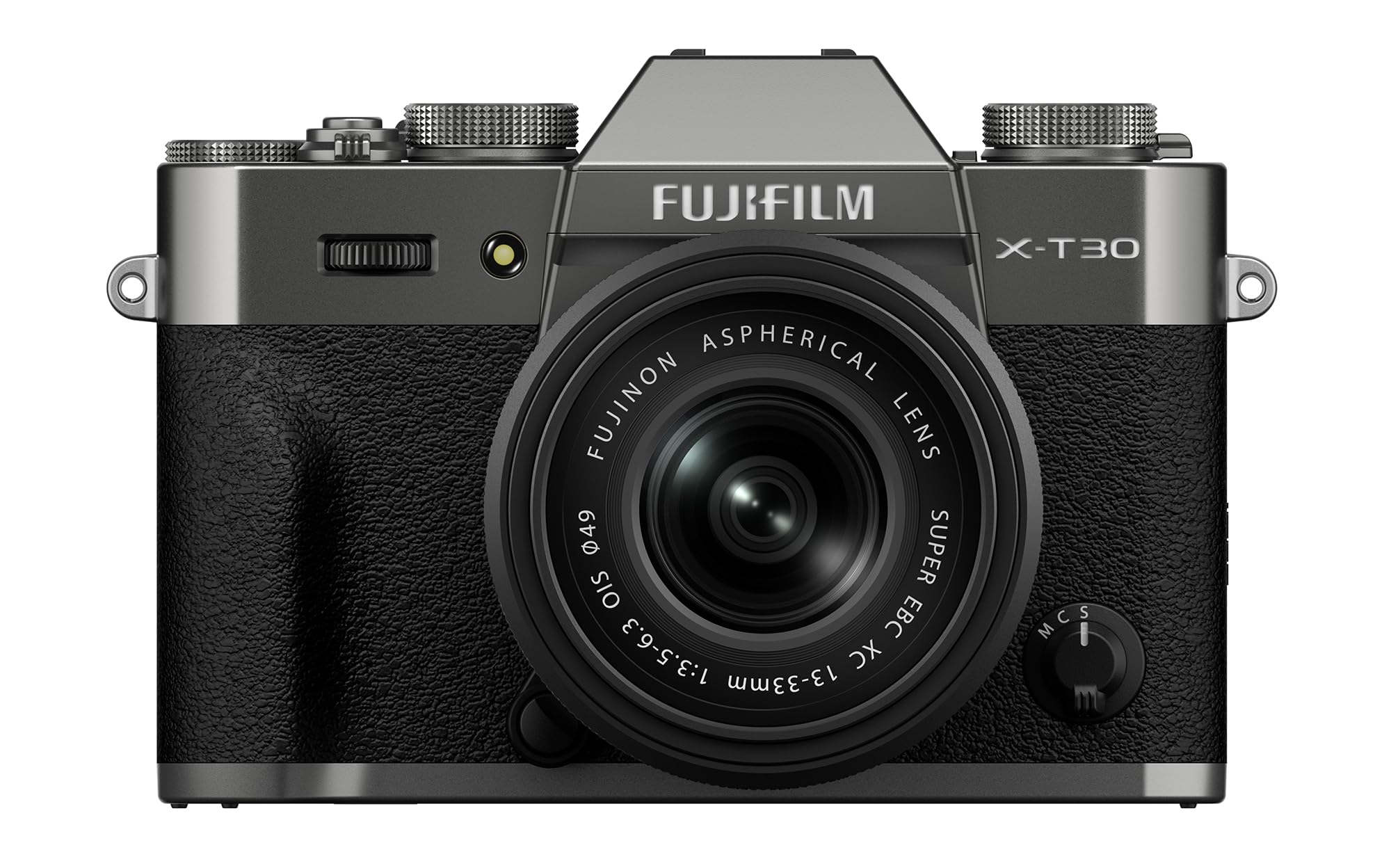
The FUJIFILM X-T30 III is a compact APS-C mirrorless camera that appeals to filmmakers who love the classic film simulation look. Its 26.1MP X-Trans CMOS 4 sensor delivers excellent image quality with minimal noise through ISO 6400, and the 425-point phase-detection autofocus with AI-powered subject detection keeps moving subjects sharp. The 20 built-in Film Simulations (like Astia and Classic Negative) provide unique looks straight out of camera, reducing grading time.
The body is remarkably compact — genuinely pocketable with a small prime — and the retro design with dedicated dials gives it intuitive control that makes shooting feel deliberate. The 13-33mm kit lens (equivalent to 20-50mm full-frame) is a versatile starting point for establishing shots and run-and-gun work. The 4K 30p video is clean, though limited to 8-bit, which restricts grading flexibility compared to 10-bit competitors.
The X-T30 III lacks in-body stabilization, which requires steady handheld technique or a gimbal. Battery life is modest (~380 shots CIPA), and there’s no built-in charger — you must charge via USB-C or buy an external charger. The video capabilities are competent for short-form content and social media but lack the codec depth needed for serious color grading in narrative filmmaking. It’s a brilliant photo camera with capable video, not a dedicated cinema tool.
Why it’s great
- 20 Film Simulations provide unique looks straight out of camera, saving grading time.
- Compact body with intuitive retro controls is genuinely pocketable with a small prime.
- AI-powered subject detection autofocus is fast and accurate for moving subjects.
Good to know
- No in-body stabilization; requires steady technique or gimbal for smooth video.
- Video is 8-bit — limited grading flexibility compared to 10-bit BRAW or ProRes.
- Battery life is modest; spare batteries are essential for a full day.
12. Nikon Z 5

The Nikon Z 5 brings full-frame image quality to a compact, lightweight body at an accessible price point. Its 24.3MP CMOS sensor delivers sharp details, vibrant colors, and good low-light performance, while the 5-axis in-body image stabilization enables handheld shots at shutter speeds as slow as 1/9s. The 273-point hybrid AF system with Eye-Detection AF works reliably for people and pets, making it a solid choice for interview-style video and portraits.
The two SD card slots are a lifesaver for commissioned work, providing instant backup during client shoots. The weather-sealed build is comfortable for extended use, and the EVF is clear and responsive. Battery life is excellent for a mirrorless camera — the EN-EL15c often lasts through a full day of shooting. For filmmakers who also need a highly capable stills camera, the Z 5 is a balanced entry point into the Nikon Z ecosystem.
The Z 5’s video capabilities are limited to 4K 30p with a significant 1.7x crop factor that makes wide-angle shooting difficult. It does not shoot 10-bit video internally, which limits color grading flexibility. The autofocus is solid for slow-moving subjects but can struggle with fast action or erratic movement. This is a stills-first camera that does competent video, not a cinema tool.
Why it’s great
- Full-frame sensor with IBIS enables sharp handheld shots in low light.
- Two SD card slots provide critical redundancy for client work.
- Excellent battery life for a mirrorless — supports a full day of mixed shooting.
Good to know
- 4K video has a 1.7x crop factor, limiting wide-angle options for filmmaking.
- Internal video is limited to 8-bit; less grading flexibility than 10-bit competition.
- Autofocus struggles with fast or erratic subject movement; not ideal for action.
13. Canon EOS R50 with Dual Lens Kit
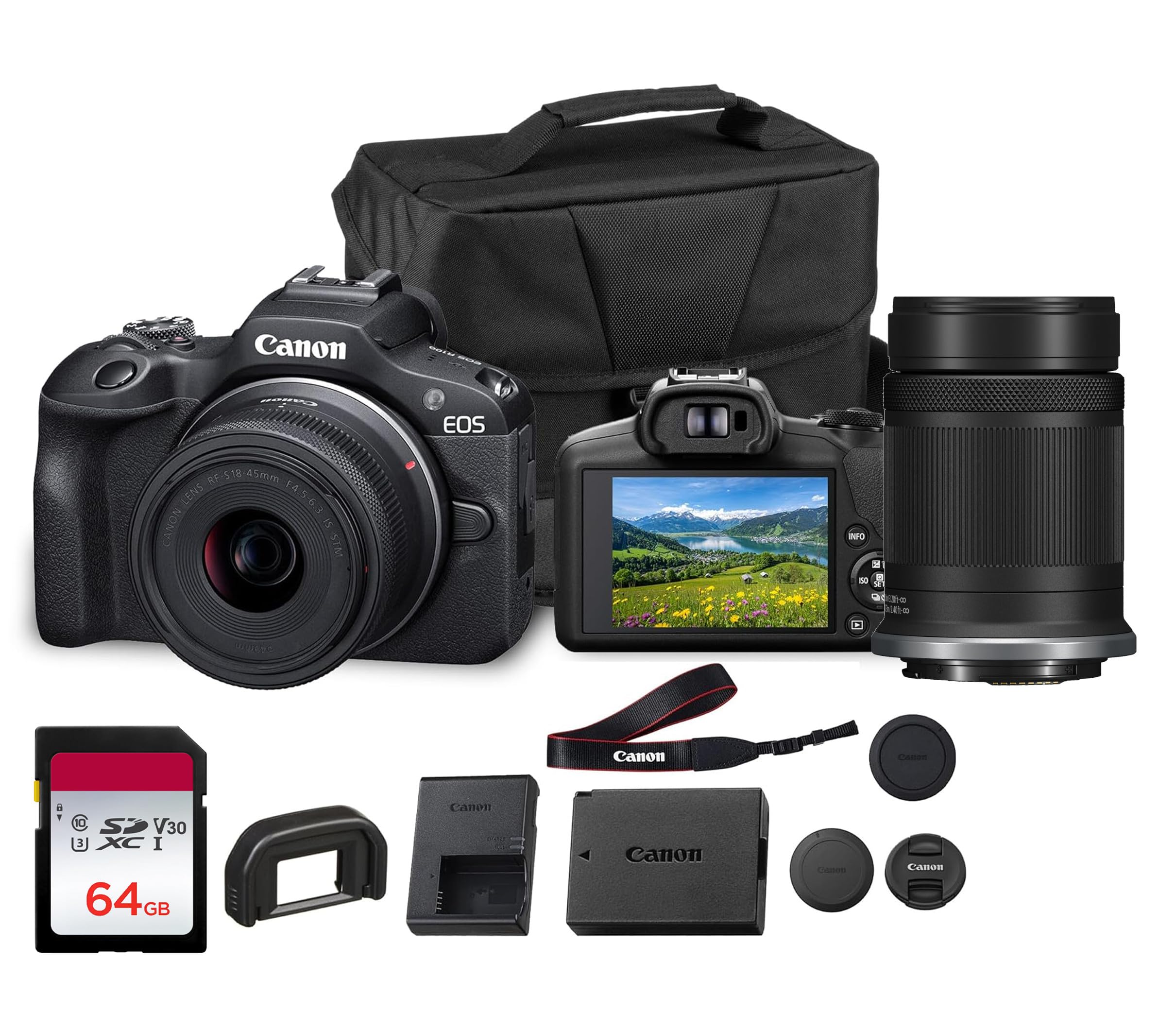
The Canon EOS R50 is a compact APS-C mirrorless camera designed for content creators and beginner filmmakers. Its 24.2MP CMOS sensor with Dual Pixel CMOS AF provides fast, reliable autofocus that tracks eyes and faces during video recording. The body is extremely lightweight and easy to handle for long handheld shoots, and the included dual lens kit (18-45mm f/4.5-6.3 IS STM + 55-210mm f/5-7.1 IS STM) covers a versatile focal range from wide-angle to telephoto.
The RF-S mount is part of Canon’s growing RF ecosystem, giving you a clear upgrade path to faster lenses and full-frame bodies as your skills develop. The kit includes a shoulder bag and 64GB memory card, making it a true out-of-box solution for someone starting their filmmaking journey. The 4K 30p video with the Dual Pixel AF system produces clean footage for YouTube, short films, and social media content.
The R50’s limitations will become apparent as you advance: the kit lenses are slow (f/6.3 at telephoto), the 8-bit video codec limits color grading, and there is no in-body stabilization — you must rely on lens-based IS or a gimbal. The lack of a headphone jack makes audio monitoring difficult without additional adapters. For the absolute beginner who needs everything in one package, this is a fantastic starting point.
Why it’s great
- Dual Pixel CMOS AF provides reliable eye-tracking autofocus for beginner filmmakers.
- Lightweight body — comfortable for long handheld shooting sessions.
- Complete kit with two zoom lenses, bag, and memory card offers great starting value.
Good to know
- Kit lenses are slow (f/6.3 at telephoto); upgrading to faster primes improves low-light performance.
- 8-bit video limits color grading flexibility compared to 10-bit competition.
- No headphone jack or in-body stabilization; requires external monitoring and gimbal for advanced work.
FAQ
Does my indie film camera need internal ND filters?
Why is 10-bit 4:2:2 video essential for color grading?
How do I choose between a Super 35 sensor and a full-frame sensor for indie filmmaking?
Do I need XLR audio inputs for filmmaking, or is a 3.5mm jack enough?
Final Thoughts: The Verdict
For most users, the camera for independent filmmakers winner is the Sony FX3 because its combination of 15+ stops of dynamic range, S-Cinetone color science, built-in cooling for unlimited 4K 60p 10-bit recording, and XLR top handle delivers a complete cinema workflow in a compact, gimbal-friendly body. If you want maximum post-production control with 6K Blackmagic RAW and built-in ND filters, grab the Blackmagic Pocket Cinema Camera 6K Pro. And for the best value hybrid that balances V-Log grading, Phase Hybrid AF, and class-leading stabilization, nothing beats the Panasonic Lumix S5II.