
Camera shopping for social media is a minefield of megapixel myths and YouTube hype. Your phone is great for quick stories, but when your brand demands reliable autofocus, consistent color science, and a sensor that handles mixed lighting without looking like a mess, you need a real interchangeable-lens system. The wrong choice means soft focus on product shots and noisy video in your studio.
I’m Min — the co-founder and writer behind Gadgets Feed. For this guide, I analyzed hours of spec sheets and market research across the sub- mirrorless market to find the bodies that serve creators building a career, not just a feed.
After combing through imaging sensor performance, autofocus tracking systems, and real-world battery trade-offs, here is my curated list of the top nine options that cover everything from compact vlogging rigs to cinema-grade bodies — the definitive camera for influencers.
How To Choose The Best Camera For Influencers
The perfect influencer camera isn’t the one with the highest resolution; it’s the one whose autofocus, sound, and color profile let you create with minimal friction. Here are the three non-negotiable factors to weigh before you hit “add to cart.”
Autofocus Reliability and Subject Tracking
For solo creators, a camera’s ability to lock onto your eye and stay there is the single most important video feature. Look for Dual Pixel CMOS AF (Canon), Real-time Eye AF (Sony), or Deep-Learning AF (Nikon) that can track a face even when you turn to show a product. Budget-friendly cameras that rely on slow contrast-detect AF will produce frustratingly soft footage during movement.
Sensor Size and Low-Light Performance
APS-C sensors (found in the Sony ZV-E10 and Canon R50 V) offer a great balance of depth-of-field control and affordability. Full-frame sensors (Nikon Z6 III) and Super 35 sensors (Sony FX30) deliver cleaner footage at higher ISOs, which matters for dusk shoots or dimly lit rooms. Don’t chase megapixels if you’re primarily shooting video — oversampled 4K from a 6K sensor is more valuable than a stills-only 45MP sensor.
Integrated Audio and Accessory Ecosystem
Bad audio ruins a video quicker than bad video. A standard 3.5mm mic jack is the bare minimum. Cameras with a dedicated microphone input, headphone monitoring, and multi-function shoe (like the Canon R10’s kit) save you from having to rig an external recorder. Similarly, check if the camera can charge via USB-C while shooting — essential for long livestreams or studio sessions.
Quick Comparison
On smaller screens, swipe sideways to see the full table.
| Model | Category | Best For | Key Spec | Amazon |
|---|---|---|---|---|
| Canon EOS R10 Creator Kit | Mirrorless | All-in-one vlogging | 30fps electronic shutter | Amazon |
| Nikon RED Z Cinema | Cinema | Raw cinematic video | 6K R3D (REDCODE RAW) | Amazon |
| Nikon Z6 III | Full-Frame | Hybrid photo/video work | 6K/60p Internal N-RAW | Amazon |
| Fujifilm X100VI | Compact | Everyday carry & stills | 40.2MP X-Trans CMOS 5 HR | Amazon |
| Sony FX30 Cinema Line | Cinema | Dedicated video production | Dual Base ISO & S-Cinetone | Amazon |
| Canon EOS R50 V | Mirrorless | Entry-level vlogging | 24.2MP APS-C + DIGIC X | Amazon |
| Blackmagic Pocket 6K | Cinema | High-end filmmaking | 6K EF Lens Mount | Amazon |
| Sony ZV-E10 | Vlog | Best value vlogging | 24.2MP APS-C + BIONZ X | Amazon |
| Panasonic LUMIX G97 | Mirrorless | Budget IBIS system | 5-stop 5-axis Dual I.S.2 | Amazon |
In‑Depth Reviews
1. Sony FX30 Cinema Line

The Sony FX30 is a dedicated cinema camera in a compact body, designed for creators who need professional color science without stepping up to a full-frame budget. Its Super 35 sensor oversamples 6K to produce 4K footage with exceptional sharpness and a wide 14+ stop dynamic range, giving you the latitude to grade footage without banding.
What sets the FX30 apart from hybrid cameras is the inclusion of Cine EI Quick and Cine EI Log shooting modes, which allow you to expose for highlights and shadows as a cinematographer would. The Dual Base ISO ensures clean images at ISO 800 and ISO 2500, making it one of the best low-light performers in the APS-C class.
Critically, the active cooling system prevents overheating during long takes, a feature missing from most stills-hybrids. The autofocus is identical to Sony’s full-frame lineup, offering reliable eye-tracking for moving subjects. You’ll want external batteries for all-day shoots, as the standard NP-F battery lasts roughly 1-2 hours of continuous recording.
Why it’s great
- Superb S-Cinetone color science delivers a cinematic look straight from the camera
- Dual Base ISO and 14+ stops of dynamic range offer exceptional low-light performance
- Active cooling prevents overheating, allowing for non-stop recording
Good to know
- Battery life is limited to about 1-2 hours of video recording
- It is a video-first camera; stills capability is secondary
2. Nikon Z6 III

The Nikon Z6 III offers a rare combination for hybrid shooters: full-frame sensor performance and internal 6K/60p N-RAW recording. This makes it an outstanding choice for influencers who need to capture high-quality photos during the day and switch to video production at night, without losing resolution or dynamic range.
Its standout feature is the best-in-class EVF, which hits 4000 nits brightness and a 120 fps refresh rate. When you’re shooting outside in harsh sunlight, this electronic viewfinder remains clear and lag-free, a massive upgrade over most competitors in this price tier. The autofocus system uses deep learning to detect subjects as small as 3% of the frame.
Battery life is serviceable at around 2 hours of video, and the menu system, while powerful, requires time to master. The Z6 III’s 24-megapixel full-frame sensor delivers excellent stills, and the in-body image stabilization provides 5 stops of compensation, making handheld walking shots smooth enough for social media.
Why it’s great
- 6K/60p internal N-RAW provides enormous flexibility in post-production
- 4000-nit, 120 fps EVF is the brightest and smoothest at this price
- Excellent hybrid performance for both high-res stills and video
Good to know
- Menu system is complex and has a learning curve
- Battery life is average for full-frame; plan for spare batteries
3. Canon EOS R10 Creator Kit
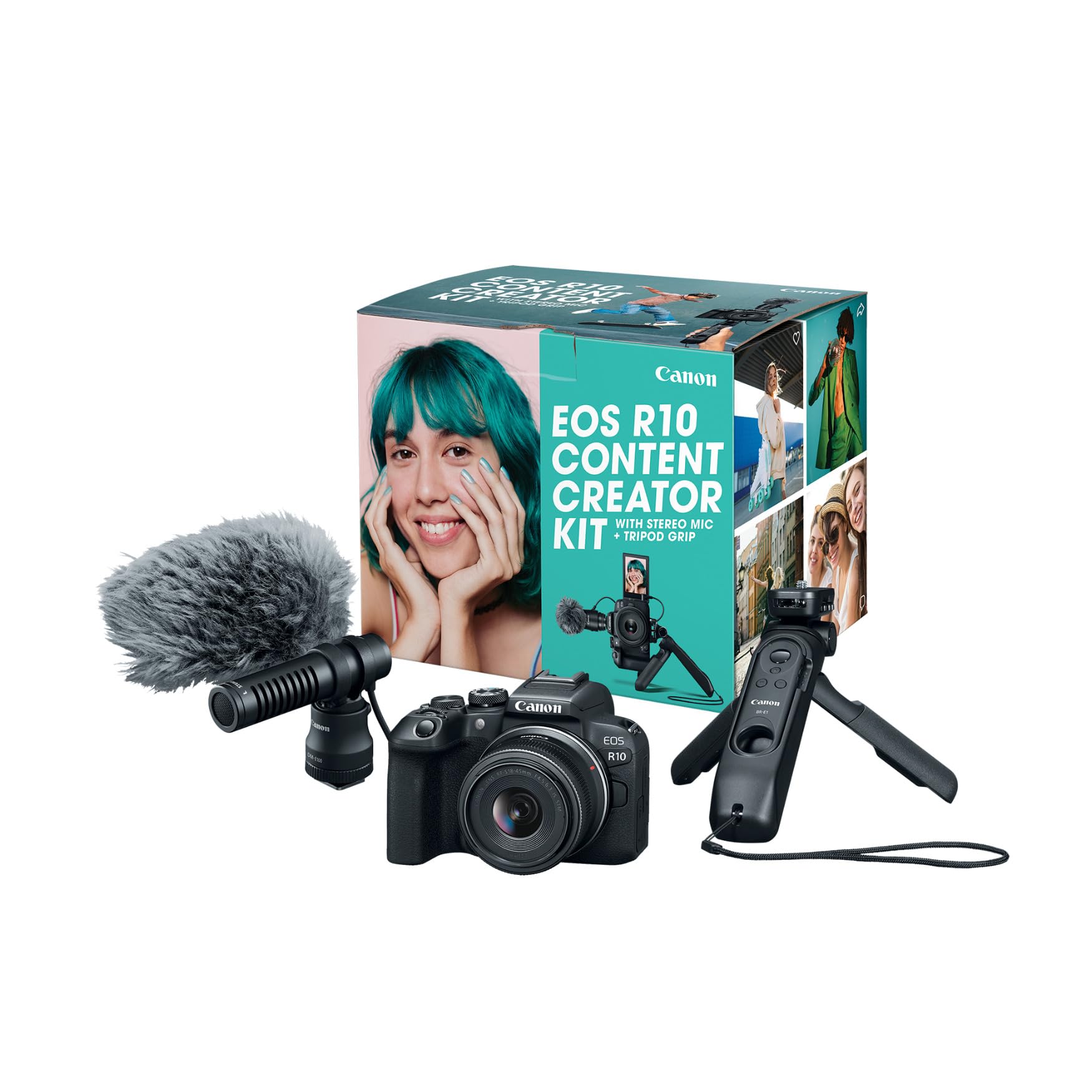
The Canon EOS R10 Creator Kit is designed for influencers who want an all-in-one solution right out of the box. The kit includes the camera body, an 18-45mm lens, a stereo microphone, and a tripod grip, removing the guesswork for creators just stepping into interchangeable-lens systems. The 24.2-megapixel CMOS sensor and DIGIC X processor deliver strong 4K video and high-speed shooting.
Its most impressive spec is the electronic shutter capable of 30 fps, which is exceptionally fast for its price tier. This is ideal for capturing expressions, movements, or product shots in motion without missing a frame. The Dual Pixel CMOS AF with subject detection inherited from the EOS R3 keeps your eye locked in focus during vlogs or interviews.
The one trade-off is the kit lens, which lacks image stabilization and is best used on a tripod for video. The included tripod remote is also confusingly designed. Nonetheless, for a creator starting a channel who needs everything at once, this kit represents incredible value.
Why it’s great
- Complete kit with microphone and tripod means you’re ready to shoot immediately
- 30fps electronic shutter captures fast action with ease
- Excellent Dual Pixel CMOS AF inherited from Canon’s pro bodies
Good to know
- Kit lens is mediocre; consider upgrading to a faster prime later
- No in-body stabilization; walking shots require a gimbal
4. Sony ZV-E10
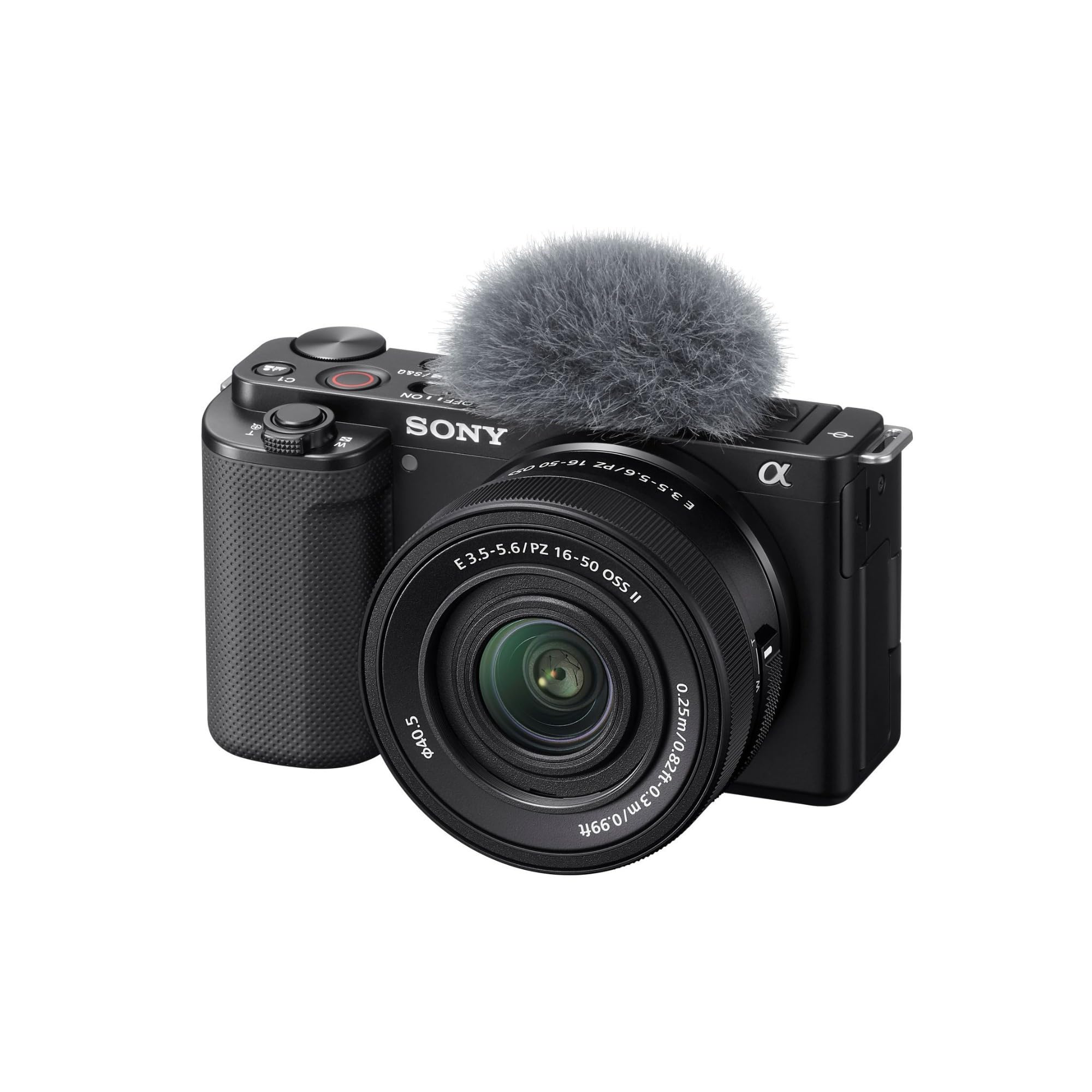
The Sony ZV-E10 is the go-to APS-C vlogging camera for creators who prioritize video features and an established lens ecosystem. Its 24.2MP Exmor CMOS sensor oversamples 4K from 6K with full pixel readout, producing exceptionally sharp video without the moire or aliasing that plagues cheaper cameras.
The Product Showcase Setting is a killer feature for influencers reviewing items — it instantly transitions focus from your face to an object you hold up, then back to your face when you lower it. The Background Defocus button provides a one-touch blur effect, making any background look cinematic without manual aperture adjustments. With 425 phase-detection autofocus points, subject tracking is fast and reliable.
The kit lens (16-50mm F3.5-5.6) is compact and adequate for starting out, but you’ll want to invest in a fast prime for indoor shoots. The ZV-E10 supports livestreaming via a single USB cable, making it a versatile tool for a multi-platform content creator.
Why it’s great
- Product Showcase auto-focus transition is a time-saver for review videos
- 4K oversampled from 6K delivers crisp, detailed video
- Easy USB-C livestreaming without extra hardware
Good to know
- Kit lens is average; invest in a wide-angle prime for better low light
- Build quality is plastic; feels less premium than Canon alternatives
5. Canon EOS R50 V
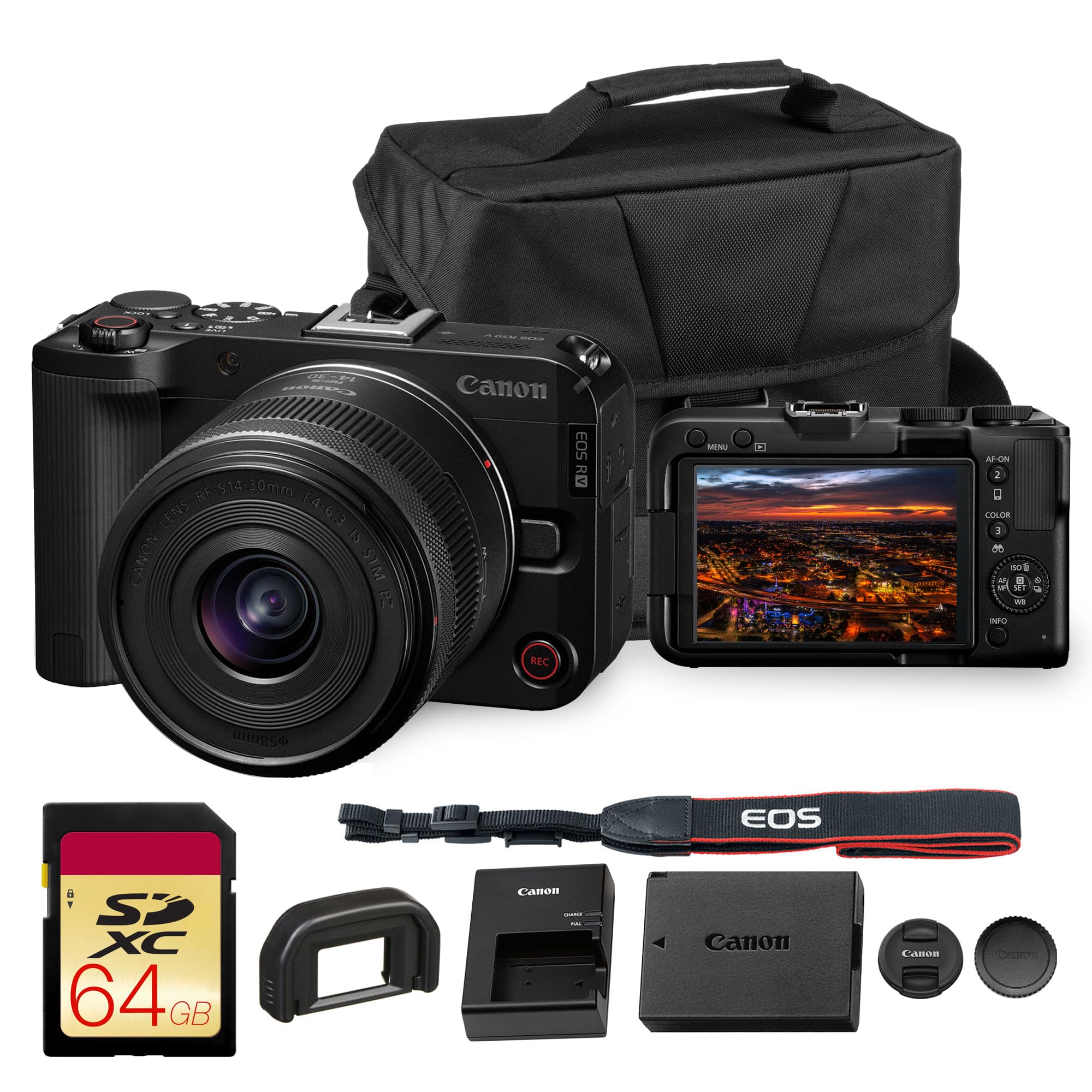
The Canon EOS R50 V is a lightweight, creator-focused camera designed for vlogging on the go. Its fully articulating flip screen allows you to monitor yourself while recording, and a dedicated vertical video mode ensures your content is optimized for TikTok and Instagram Reels without cropping in post.
Inside, the 24.2MP APS-C sensor paired with the DIGIC X processor offers fast Dual Pixel CMOS AF with eye tracking. The included 14-30mm f/4-6.3 RF-S lens gives a wide-angle perspective ideal for vlogging, with built-in image stabilization to smooth out handshake. The camera also supports 4K at 30p and Full HD at 120p for slow-motion clips.
The main compromise is the lack of in-body stabilization, which means you’re relying solely on the lens’ optical stabilizer. For walking shots or dynamic movement, an external gimbal will be necessary.
Why it’s great
- Fully articulating flip screen and vertical video mode are perfect for social media creators
- Extremely lightweight and portable; ideal for travel vlogging
- Canon’s Dual Pixel CMOS AF is fast and reliable for face tracking
Good to know
- No in-body stabilization; smooth walking shots require a gimbal
- Small body can make the grip feel cramped for larger hands
6. Nikon RED Z Cinema (ZR)

The Nikon RED Z Cinema is a collaboration that puts RED’s legendary color science into a compact, lightweight body weighing just 1.18 lbs. For influencers who need the highest grade of video possible, the ZR records 6K REDCODE RAW (R3D) footage, providing the same post-production flexibility as professional RED cinema rigs.
Its 32-bit float audio recording is a breakthrough for solo creators — you can capture audio from external microphones without worrying about clipping or setting levels; the dynamic range is so wide that quiet and loud sounds are recorded cleanly. The 4-inch DCI-P3 monitor is bright and color-accurate, making it easy to judge exposure on set.
The ZR is a video-first cinema camera, so it lacks many stills features and has a complex workflow. It also demands high-capacity CFexpress Type B cards and a dedicated workflow for editing R3D files. It is not a casual walk-around camera; it’s a production tool for creating premium content.
Why it’s great
- RED color science and 6K R3D RAW provide unmatched color grading flexibility
- 32-bit float audio eliminates the need for manual level-setting in noisy environments
- Extremely lightweight for a cinema camera; easy to rig for gimbal use
Good to know
- Dedicated video camera; no hybrid stills capability
- Requires fast CFexpress cards and a powerful editing workstation
7. Fujifilm X100VI

The Fujifilm X100VI is a fixed-lens compact camera that has achieved cult status for its beautiful design and incredible out-of-camera JPEGs. It packs a 40.2MP X-Trans CMOS 5 HR sensor and a 23mm f/2 lens (35mm equivalent), delivering stunning image quality for stills-oriented creators who want a unique aesthetic.
The 20 Film Simulation modes, including the new REALA ACE, allow you to apply vintage looks to your images without post-processing. The addition of 6-stop in-body image stabilization is a massive upgrade over the previous X100V, making it possible to shoot sharp stills in low light without a tripod. The hybrid optical/electronic viewfinder is a joy to use.
However, the X100VI is a terrible choice if your primary focus is video. Its 6.2K video capability exists, but its fixed lens and demanding autofocus system make it inferior to any interchangeable-lens camera for vlogging. This is a camera for creators who depend on stunning social photography as their primary content.
Why it’s great
- Unmatched out-of-camera JPEG colors with 20 Film Simulation modes
- 40.2MP sensor resolves incredible detail in a compact body
- 6-stop IBIS enables handheld low-light stills
Good to know
- Fixed 23mm lens offers no zoom; framing is limited
- Video capabilities are subpar compared to dedicated mirrorless rivals
8. Blackmagic Pocket Cinema Camera 6K
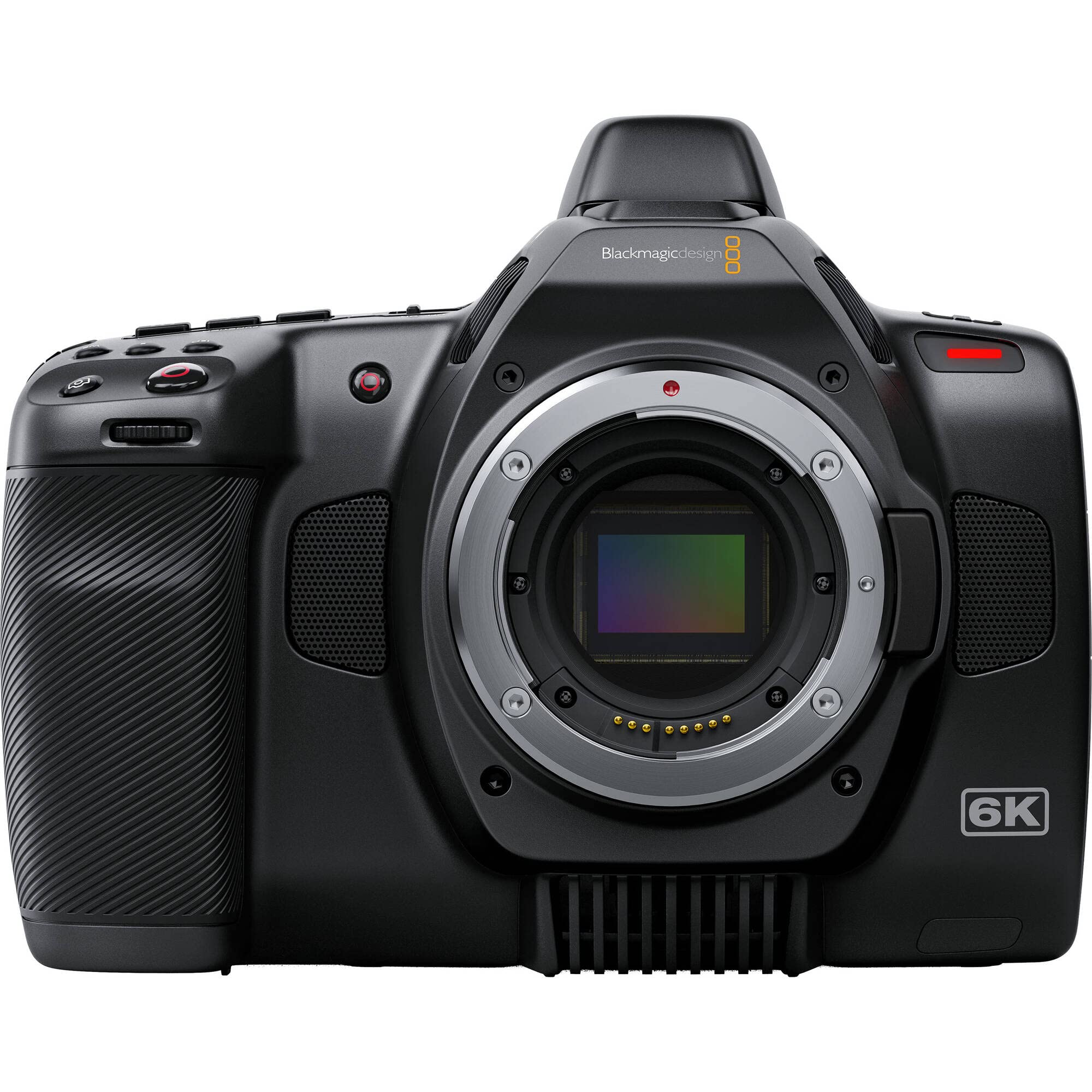
The Blackmagic Pocket Cinema Camera 6K is a staple in the indie filmmaking community, and for good reason. It records up to 6K RAW onto standard SD cards or external SSDs, providing a post-production workflow that rivals cameras costing many times more. For influencers creating high-production-value content, this is a serious tool.
The Super 35 sensor offers a wide dynamic range and excellent color science, and the Canon EF lens mount gives access to an enormous selection of affordable, high-quality glass. The built-in DaVinci Resolve integration means you can start editing and color grading immediately without additional software costs.
Battery life is the Pocket 6K’s weakest link. Most users rig this camera with an external monitor and a V-mount battery plate, which adds bulk. It is not a grab-and-go camera, but the image quality is phenomenal for the price.
Why it’s great
- Records 6K RAW to affordable SD cards; workflow is editor-friendly
- Canon EF mount offers a vast and budget-friendly lens ecosystem
- Includes DaVinci Resolve for professional color grading
Good to know
- Battery life is extremely poor; external battery solution is almost mandatory
- No built-in autofocus performance comparable to Sony or Canon hybrids
9. Panasonic LUMIX G97
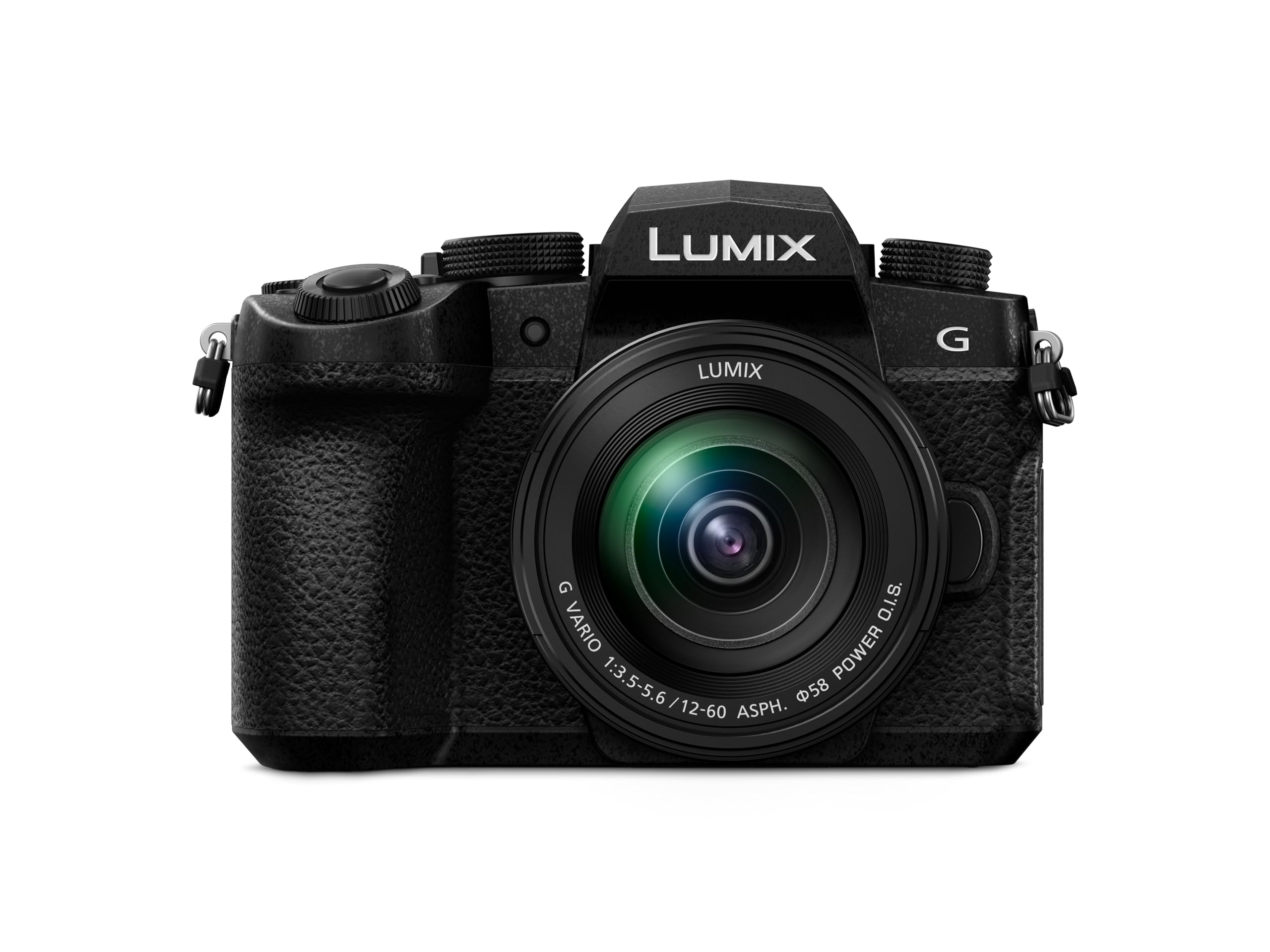
The Panasonic LUMIX G97 is a Micro Four Thirds camera that punches well above its weight, particularly for creators on a budget who refuse to compromise on stabilization. Its 5-axis Dual I.S.2 system provides up to 5 stops of shake correction, making it one of the best options for smooth handheld video at this price.
It includes 12 stops of V-Log L, allowing you to capture a flat color profile for professional grading. The 1,840k-dot free-angle LCD and 2,360k-dot OLED viewfinder make framing easy even in bright light. The body feels solid with a magnesium-alloy construction and has intuitive controls for shutter speed, ISO, and white balance.
The 20-megapixel sensor is noticeably smaller than APS-C and full-frame competitors, which means less natural background blur and weaker low-light performance. The kit lens is sharp, but you’ll want to pair it with a fast prime like the 25mm f/1.7 for indoor shoots. It’s an excellent entry-level hybrid for creators focused on photo and video basics.
Why it’s great
- 5-axis IBIS provides professional-grade stabilization at a budget price
- 12 stops of V-Log L for flexible color grading in post
- Intuitive ergonomics with a magnesium-alloy build
Good to know
- Micro Four Thirds sensor limits low-light performance and bokeh compared to APS-C
- Battery life is average; 4K recording drains it quickly
FAQ
Is a full-frame camera necessary for influencer content?
Why do influencers prefer cameras with a flip-out screen?
What is the benefit of V-Log or S-Log for influencers?
Does a higher megapixel count guarantee better video quality?
Final Thoughts: The Verdict
For most users, the camera for influencers winner is the Sony FX30 Cinema Line because it offers professional S-Cinetone color, dual base ISO, and active cooling without jumping to a full-frame budget. If you want a compact hybrid with excellent stills capability, grab the Nikon Z6 III. And for a complete, ready-to-shoot kit with a microphone and tripod, nothing beats the Canon EOS R10 Creator Kit.