
Every photographer eventually hits the wall where the available light dips, the shutter speed slows to a crawl, and the images coming out of the viewfinder look like mud. Shooting in low light isn’t just about cranking up the ISO — it’s about finding a camera that understands how to balance sensor sensitivity, noise reduction, and lens speed to produce a usable image when the sun isn’t cooperating. The difference between a keeper and a throwaway in dim conditions comes down to specific hardware choices that most casual buyers overlook.
I’m Min — the co-founder and writer behind Gadgets Feed.
This guide breaks down the technical trade-offs and real-world performance of the best full-frame, mirrorless, and cinema options available today to help you identify the right camera for low light that matches your shooting style and budget.
How To Choose The Best Camera For Low Light
Not every camera can handle dim environments equally. The factors that matter most when the light drops are sensor architecture, stabilization, and autofocus reliability — specs that don’t always appear on the front of the box.
Sensor Size and Pixel Pitch
Full-frame sensors collect more photons per pixel than smaller APS-C or Micro Four Thirds sensors, which directly translates to cleaner images at higher ISO settings. A back-side illuminated (BSI) sensor further improves light capture by repositioning the wiring layer behind the photodiodes. Larger individual pixels also reduce noise, so a 24MP full-frame sensor often outperforms a 45MP sensor in extreme darkness.
IBIS and Dual Stabilization
In-body image stabilization lets you shoot at shutter speeds two to five stops slower than handheld without a tripod. This allows you to keep ISO lower and maintain detail. Cameras that combine IBIS with optically stabilized lenses offer the best chance at sharp shots when the sun is gone.
Autofocus in Dim Light
Phase-detection AF with a high number of coverage points is generally more reliable in low contrast than pure contrast detection. Some systems include dedicated low-light AF capabilities that lock focus down to -6 EV, which is essential for shooting indoors or at night without hunting.
Quick Comparison
On smaller screens, swipe sideways to see the full table.
| Model | Category | Best For | Key Spec | Amazon |
|---|---|---|---|---|
| Nikon Z 6II | Full-Frame Mirrorless | Hybrid Photo/Video | 24.5MP BSI Sensor | Amazon |
| Sony a7 III | Full-Frame Mirrorless | Reliable All-Rounder | 693 Phase-Detect AF Points | Amazon |
| Sony Alpha 7 IV | Full-Frame Mirrorless | Hybrid Pro | 33MP BSI, 15-Stop DR | Amazon |
| Canon EOS R5 | Full-Frame Mirrorless | High-Resolution & 8K | 45MP Stacked CMOS | Amazon |
| Nikon Z 7II | Full-Frame Mirrorless | Ultra-High Resolution | 45.7MP BSI Sensor | Amazon |
| Canon EOS 5D Mark IV | DSLR | Optical Viewfinder Low Light | 30.4MP, ISO 50-102400 | Amazon |
| Fujifilm X100VI | APS-C Fixed Lens | Street & Travel | 6-Stop IBIS, f/2 Lens | Amazon |
| Fujifilm X-T30 III | APS-C Mirrorless | Compact Everyday | AI Subject Detection AF | Amazon |
| Panasonic LUMIX G85 | Micro Four Thirds | IBIS + Stabilized Kit Lens | 5-Axis Dual IBIS | Amazon |
| Panasonic LUMIX FZ80D | Digital Superzoom | Extreme Zoom Reach | 60x Optical Zoom | Amazon |
| Blackmagic Cinema Camera 6K | Cinema Camera | Professional Video | 13 Stops DR, Dual ISO | Amazon |
In‑Depth Reviews
1. Nikon Z 6II

The Nikon Z 6II hits a sweet spot that few cameras manage: a 24.5MP back-side illuminated full-frame sensor that prioritizes light gathering over raw pixel count. In real-world dim conditions, this sensor produces noticeably cleaner images at ISO 6400 and above than many higher-resolution competitors, with noise that resolves as fine grain rather than ugly blotches. The dual EXPEED 6 processors help buffer clearing and reduce rolling shutter, which matters when you’re shooting handheld in a dark venue.
The five-axis in-body stabilization is rated for up to five stops of correction, which means you can reliably shoot at 1/15th of a second with a standard zoom and still walk away with sharp frames. The 273-point phase-detect autofocus system includes low-light sensitivity down to -4.5 EV, so it locks onto subjects in near darkness without the annoying hunting behavior common on older mirrorless designs. The hybrid viewfinder offers a smooth transition between EVF and optical simulation, reducing eye strain during long night shoots.
Dual card slots (CFexpress/XQD plus UHS-II SD) provide flexibility for backup or overflow, and the USB-C port supports constant power during extended livestreams or timelapses. The body is weather-sealed and comfortable for all-day carry, though the battery life of roughly 410 shots per charge means you’ll want a spare for all-night events. For the vast majority of low-light shooters — wedding, event, night street, or indoor sports — this is the most balanced, capable option available at its tier.
Why it’s great
- Excellent high-ISO performance with minimal noise up to ISO 12800
- 5-axis IBIS delivers sharp handheld shots at slow shutter speeds
- Dual card slots for redundancy and dual processors for speed
Good to know
- Battery life is average — expect to carry a spare for all-day shoots
- AF tracking can occasionally lose fast-moving subjects in very low contrast
2. Sony a7 III

The Sony a7 III remains a reference point for low-light full-frame performance years after its release, thanks to its 24.2MP back-illuminated Exmor R sensor and the BIONZ X processing engine. The sensor delivers a native ISO range that extends from 100 to 51200 and can be expanded to 204800, with noise staying remarkably controlled through 6400. The 15-stop dynamic range at base ISO allows serious shadow recovery in post without introducing heavy banding, a critical capability when exposing for highlights in mixed-lighting scenes.
The 693-point phase-detection system covers roughly 93% of the frame, and Sony’s Real-time Eye AF for both humans and animals works reliably in dim bars, concert venues, and indoor family gatherings. The 5-axis in-body stabilization provides up to 5.5 stops of shake compensation, and the NP-FZ100 battery delivers an industry-leading 710-shot CIPA rating — you can shoot an entire evening event on a single charge without worrying about the indicator dropping to zero. The body is compact and lightweight at 650g with battery and card, making it easy to pair with fast primes like the 35mm f/1.8 or the 85mm f/1.8.
The kit lens is a 28-70mm f/3.5-5.6, which is serviceable for daytime walkaround use but too slow for serious low-light work — budget for a wider-aperture prime or zoom to unlock the sensor’s full potential. The menu system is dense and occasionally unintuitive, though the recent firmware updates have improved the custom button mapping. If you want the best dollar-to-noise ratio on the full-frame market, this is still the benchmark.
Why it’s great
- Industry-leading battery life for all-night shooting without swapping packs
- 693-point AF with real-time Eye AF locks onto subjects in low light
- BSI sensor produces clean files with wide dynamic range for shadow recovery
Good to know
- Kit lens is f/3.5-5.6 — upgrade to a fast prime for real low-light gains
- Menu system is deep and not beginner-friendly without customization
3. Sony Alpha 7 IV

The Sony Alpha 7 IV steps up the resolution to 33MP while retaining the back-illuminated architecture that keeps high-ISO noise in check. The BIONZ XR processor is eight times more powerful than the previous generation, enabling real-time tracking and 10-bit 4:2:2 internal recording with clean up to ISO 12800. The 7K oversampled 4K 30p mode uses full-pixel readout without binning, delivering exceptional sharpness and color depth even when the lights are dimmed to stage-level darkness.
The 759-point phase-detection system covers the entire sensor area, and the Real-time Eye AF for people, animals, and birds has been refined to function down to -4 EV. The 5-axis IBIS works with the gyro sensor to correct up to 5.5 stops of shake, making it possible to shoot 1/8th second handheld with a wide prime and still pull a sharp frame. The body includes dual card slots (CFexpress Type A and UHS-II SD), an articulating touchscreen, and a redesigned menu that is noticeably clearer than the a7 III’s layout. The S-Cinetone color profile gives video shooters a filmic look straight out of camera without heavy grading.
At 658g, it is slightly heavier than the a7 III but still very manageable for extended handheld work. The 4K 60p mode uses a 1.5x crop, which reduces the effective field of view for wide-angle shooters and forces a lens speed penalty for equivalent framing. For hybrid shooters who split time evenly between stills and video in unpredictable lighting, this is a top-tier choice that doesn’t sacrifice either discipline.
Why it’s great
- 33MP BSI sensor balances resolution with high-ISO cleanliness
- 10-bit 4:2:2 internal recording with clean low-light video up to ISO 12800
- 759-point AF system locks onto subjects in near darkness
Good to know
- 4K 60p uses a 1.5x crop that limits wide-angle options
- CFexpress Type A cards are expensive compared to standard SD
4. Canon EOS R5

The Canon EOS R5 uses a 45-megapixel stacked, back-side illuminated full-frame CMOS sensor paired with the DIGIC X processor to deliver noise performance that is exceptional for a camera in this resolution class. High-ISO images are clean up to ISO 6400 and remain very usable at 12800, with noise that resembles fine grain rather than chroma smearing. The stacked architecture also enables a readout speed fast enough for blackout-free 20 fps electronic shutter shooting, which is a rare combination at this pixel density.
The Dual Pixel CMOS AF II system uses 1053 AF points covering the entire sensor area, with deep-learning-based subject detection that tracks people, animals, and vehicles. The Eye Control AF allows you to select a focus point simply by looking at it through the EVF, which is genuinely useful for fast-paced composition in dark environments where traditional joystick navigation is slow. The 5-axis IBIS provides up to 8 stops of stabilization with compatible RF lenses, making the R5 one of the most effective handheld low-light cameras ever produced — you can shoot 1/2 second frames with a stabilized lens and get pixel-sharp results.
The ability to record 8K RAW internally and 4K up to 120 fps opens up serious post-production flexibility for video shooters, though the camera can overheat during extended high-resolution recording in hot ambient conditions. The body is weather-sealed with a deep grip that feels natural with heavy telephoto lenses, but battery life is roughly 650 shots per charge, which is acceptable rather than exceptional. For pro stills and video shooters who need both high resolution and reliable low-light performance in a single body, the R5 is a legitimate powerhouse.
Why it’s great
- 8-stop IBIS allows incredibly slow handheld shutter speeds without blur
- 45MP stacked BSI sensor delivers clean files up to ISO 12800
- Eye Control AF for instant subject selection in the dark
Good to know
- Extended 8K recording may trigger thermal limits in warm weather
- Battery life is moderate — stock up on LP-E6NH packs for all-day shoots
5. Nikon Z 7II

The Nikon Z 7II packs a 45.7-megapixel back-side illuminated sensor that shares the same class-leading low-noise characteristics of the Z 6II but at a significantly higher resolution. The BSI architecture helps maintain clean files at higher ISOs than one might expect from this pixel pitch — you can comfortably shoot at ISO 6400 and still have enough detail for large prints or heavy crops. The dual EXPEED 6 processors improve buffer depth by 3.3x over the original Z 7, allowing you to shoot at 10 fps for longer bursts before the buffer fills.
The 493-point phase-detection system covers 90% of the frame horizontally and vertical, with improved low-light sensitivity down to -3 EV. The 5-axis IBIS provides up to 5 stops of stabilization, which is particularly useful when shooting high-resolution files where any micro-jitter becomes visible at 100%. The built-in intervalometer and timelapse mode with exposure smoothing produce flicker-free sequences, and the two-axis tilt touchscreen makes composition from awkward angles easier. Dual card slots offer CFexpress/XQD and UHS-II SD compatibility, giving you flexibility for different workflows.
The native Z mount is the widest full-frame mirrorless mount, which allows Nikon to design lenses with less optical correction required and better light transmission across the frame. Battery life is rated at roughly 420 shots, which is below average for this class — the optional vertical battery grip can help extend runtime during long shoots. For landscape, architecture, and studio photographers who need maximum resolution without sacrificing low-light capability, the Z 7II is a refined, capable tool.
Why it’s great
- 45.7MP BSI sensor provides high resolution with clean high-ISO noise
- Dual card slots with CFexpress and SD for flexible storage
- 5-axis IBIS helps stabilize high-res shots in dim conditions
Good to know
- Battery life is short — budget for spare batteries or the grip
- AF tracking can be less sticky than Sony’s for fast erratic subjects
6. Canon EOS 5D Mark IV
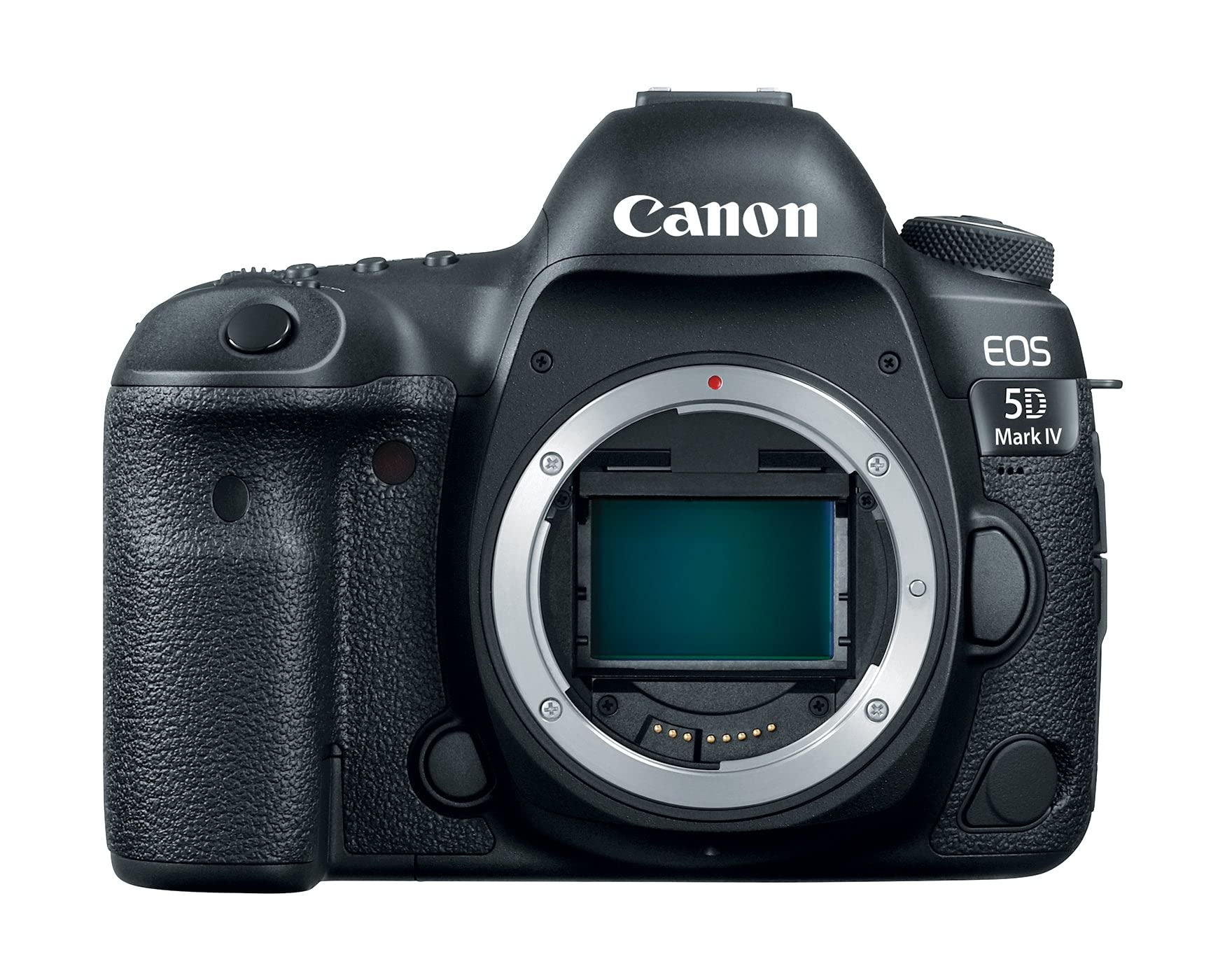
The Canon EOS 5D Mark IV represents the pinnacle of DSLR low-light engineering, using a 30.4-megapixel full-frame CMOS sensor with the DIGIC 6+ processor to produce excellent results up to ISO 6400 and very good results at ISO 12800. The 61-point AF system — all cross-type — performs superbly in dim conditions thanks to the dedicated AF sensor separate from the imaging sensor, a design advantage DSLRs hold over early mirrorless systems. The dynamic range shows a significant improvement over the 5D Mark III, allowing shadow recovery of up to three stops at base ISO without visible banding.
The 7 fps continuous shooting is modest by modern mirrorless standards, but the optical viewfinder offers zero lag and a clear view of the subject even in very low light — something EVFs still struggle with. The built-in Wi-Fi and NFC allow quick file transfer to a smartphone for social sharing, and the touchscreen LCD is responsive for menu navigation and image review. The body is built like a tank with full weather sealing, and the battery life of roughly 900 shots per charge ensures you never think about power during an event.
The 4K video recording is limited to Motion JPEG at up to 30p with a 1.7x crop, which is a significant limitation for serious video work. The 5D Mark IV also lacks in-body stabilization, so you must rely on stabilized lenses or a tripod for sharp handheld shots at slow shutter speeds. For photographers who prefer an optical viewfinder and need a bulletproof DSLR for low-light event and wedding work, the 5D Mark IV remains a compelling, proven choice.
Why it’s great
- Optical viewfinder shows a clear, lag-free view in very dim conditions
- 61-point cross-type AF performs reliably in low contrast
- Outstanding battery life — 900 shots per charge for all-day shoots
Good to know
- No in-body stabilization — you need IS lenses for handheld low light
- 4K video has a 1.7x crop and uses Motion JPEG compression
7. Fujifilm X100VI

The Fujifilm X100VI is the sixth generation of the iconic fixed-lens compact, and for 2024, it gains a 40.2-megapixel X-Trans CMOS 5 HR sensor and — for the first time in the series — in-body image stabilization rated at up to 6 stops. The combination of the fixed 23mm f/2 lens (35mm equivalent) and the IBIS allows you to handhold this camera in conditions that would force an unstabilized APS-C camera onto a tripod. The fast f/2 aperture, while not the fastest prime available, collects enough light to keep ISO moderate in dim street and interior settings.
The hybrid viewfinder is a standout feature: you can switch instantly between an optical direct view for zero-lag composition and an electronic view for precise framing and exposure preview. The 20 internal Film Simulation modes process JPEGs in-camera with color and contrast curves that dramatically reduce the need for post-processing — a genuine advantage when you’re shooting fast in changing light and need shareable results immediately. The AI-powered subject detection autofocus improves lock-on speed for faces and eyes in low-light situations over the previous generation.
The fixed 23mm lens means you cannot zoom or swap lenses, which is either a creative constraint that sharpens your eye or a limitation depending on your shooting style. The autofocus motors in the lens sometimes lag behind the speed of the new AF algorithms, particularly in continuous tracking scenarios. The rear screen also lacks the full tilt articulation found on the X-T series. For street photographers, travel shooters, and everyday carry enthusiasts who want a compact companion that excels in dim conditions straight out of the box, the X100VI is an exceptional tool.
Why it’s great
- 6-stop IBIS allows sharp handheld shots in very dim conditions
- Hybrid OVF/EVF provides zero-lag composition and exposure preview
- Film Simulations produce excellent JPEGs with minimal editing
Good to know
- Fixed 23mm f/2 lens limits creative flexibility — no zoom
- Autofocus motor in the lens can struggle with continuous tracking
8. Fujifilm X-T30 III
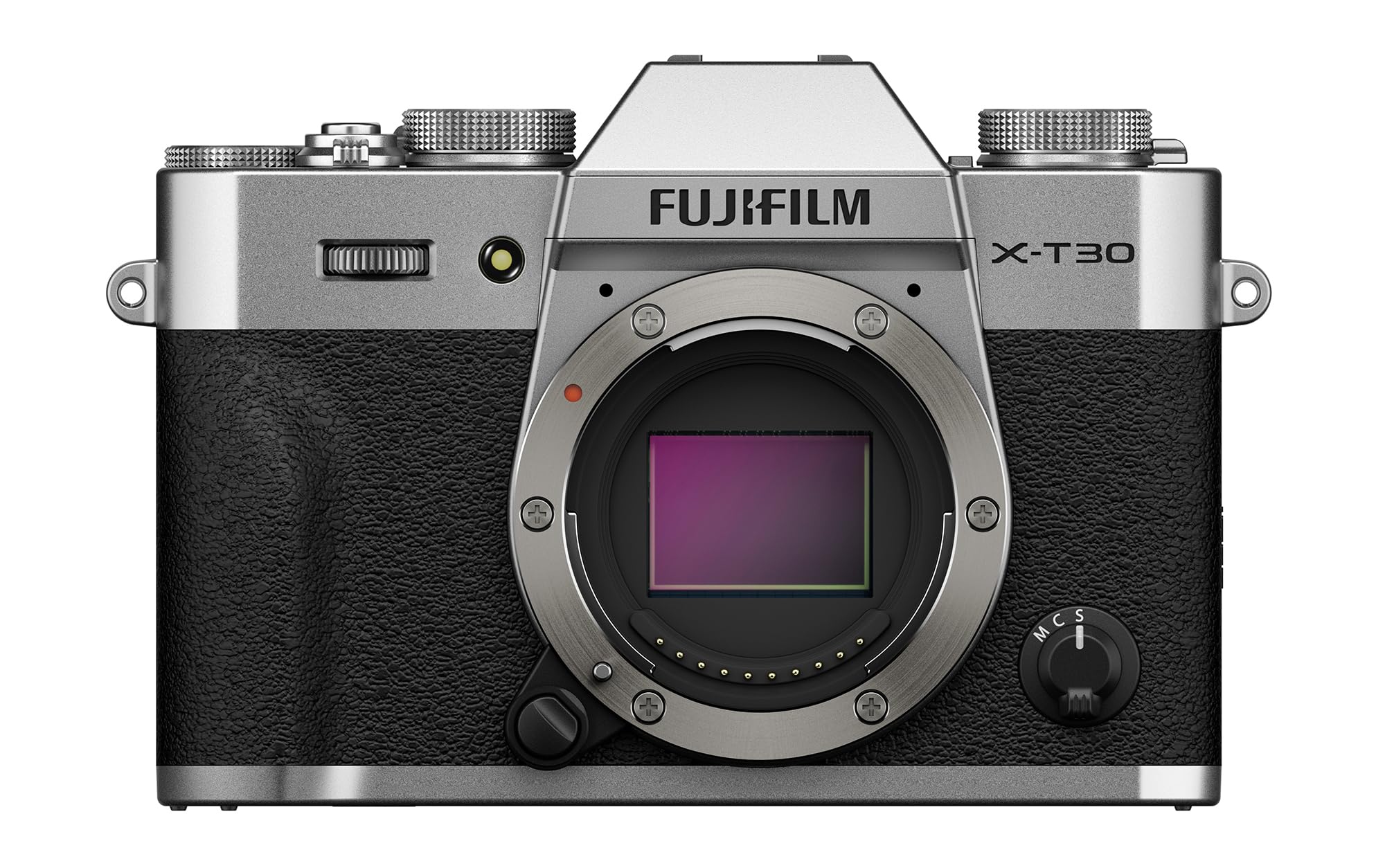
The Fujifilm X-T30 III packs a 26.1-megapixel X-Trans CMOS 4 sensor with an AI-powered subject detection autofocus system that can recognize faces, eyes, animals, birds, cars, and airplanes in real-time. The sensor’s back-illuminated architecture and Fujifilm’s color science produce clean files at ISO 3200 and very usable files at ISO 6400, which is impressive for an APS-C sensor. The camera includes 20 Film Simulation modes that emulate classic Fujifilm films, giving you a distinct look without post-processing that works remarkably well in warm interior and golden-hour lighting.
The body is remarkably compact, weighing only 378g including battery and card, making it one of the most portable interchangeable-lens cameras with serious low-light capability. The 3-inch tilting LCD provides flexible composition angles for low or high shooting positions. The camera does not include in-body stabilization, so you must rely on optically stabilized lenses or higher shutter speeds to avoid camera shake in dim conditions. The included FUJINON XC13-33mm F3.5-6.3 OIS kit lens is a capable all-arounder but is slow — pairing the camera with a fast prime like the XF 35mm f/2 will dramatically improve its low-light performance.
The electronic viewfinder has a respectable 2.36 million dots and refreshes smoothly, though it can show slight lag in very low contrast conditions. The top-plate dials offer a tactile, analog shooting experience that many enthusiasts prefer over menu-heavy modern designs. For beginners or experienced shooters who want a lightweight second body for travel and walkaround use in moderate low light, the X-T30 III is a fun, capable, and affordable entry point.
Why it’s great
- AI-powered subject detection AF recognizes faces and animals reliably in dim light
- Lightweight and compact — easy to carry for extended periods
- Film Simulations deliver beautiful straight-out-of-camera JPEGs in warm light
Good to know
- No in-body stabilization — invest in stabilized or fast-aperture lenses
- Kit lens is f/3.5-6.3 — upgrade to a prime for serious low-light work
9. Panasonic LUMIX G85

The Panasonic LUMIX G85 is built around a class-leading 5-axis dual image stabilization system that combines in-body stabilization with optically stabilized lenses to produce up to 5 stops of shake correction — a critical feature for a Micro Four Thirds sensor that has a higher native noise floor than APS-C or full-frame. The 16MP sensor lacks a low-pass filter, which boosts fine detail resolving power by nearly 10% and helps the camera punch above its pixel count in good light. In dim conditions, the IBIS allows you to shoot at 1/8th of a second handheld with the kit 12-60mm lens, keeping ISO low and image quality high.
The body features a magnesium alloy chassis with weather sealing that rivals mid-range full-frame cameras, and the ergonomic grip is deep enough for comfortable all-day shooting with larger lenses. The 2.36M-dot OLED live viewfinder is clear and responsive, and the rear 3-inch tilt touch LCD provides intuitive focus point selection and menu navigation. The camera records 4K QFHD video at 30p and includes Panasonic’s 4K Photo mode, which lets you extract 8MP stills from 4K video at 30 fps.
Autofocus uses contrast detection, which can hunt in very low contrast situations — the G85 lacks phase-detection, so continuous AF in dim conditions is not as reliable as newer mirrorless systems. The Micro Four Thirds sensor also means you’ll need to use wider aperture lenses (like the f/1.7 primes) to match the low-light performance of larger sensor cameras. For video shooters, event documentarians, and budget-conscious users who prioritize stabilization and weather sealing above raw sensor size, the G85 remains an excellent value.
Why it’s great
- 5-axis dual IBIS allows incredibly slow handheld shutter speeds
- Weather-sealed magnesium alloy body for demanding environments
- 4K Photo mode for extracting stills from fast-paced dim events
Good to know
- Contrast-detection AF can struggle in very low contrast environments
- Micro Four Thirds sensor requires fast lenses for serious low-light work
10. Panasonic LUMIX FZ80D

The Panasonic LUMIX FZ80D is a 60x superzoom bridge camera that reaches an equivalent 20-1200mm, making it the only camera on this list that can bring distant subjects into frame without carrying multiple lenses. The 18.1MP 1/2.3-inch sensor is small by modern standards and produces noticeable noise above ISO 800, so true low-light performance is this camera’s weakest attribute. The f/2.8-5.9 aperture range is relatively fast at the wide end for a superzoom, but narrows significantly as you zoom, forcing you to raise ISO to maintain shutter speed in dim conditions.
The POWER O.I.S. stabilization system does a good job of steadying the frame at the telephoto end, and the 2.36M-dot electronic viewfinder is bright enough to compose even in moderate low light. The camera supports 4K video recording and the 4K Photo mode for extracting 8MP stills from video, which is useful for capturing fast wildlife moments. The Post Focus feature allows you to select the focus point after the shot is taken, a handy tool when dealing with moving subjects in unpredictable lighting.
Customer reviews consistently note that the camera is excellent in bright conditions for its zoom reach and price, but it “sucks in low light” and images look “grainy even at low ISO.” The interface is also reported as non-intuitive, and the battery drains quickly when the zoom is used frequently. For beginners and travelers who prioritize extreme zoom reach above all else and primarily shoot in good light, the FZ80D offers unmatched value — but serious low-light shooters should look at the larger-sensor options above.
Why it’s great
- 60x optical zoom provides incredible reach for wildlife and travel in good light
- POWER O.I.S. helps stabilize handheld shots at the telephoto end
- Very affordable entry into long-range photography
Good to know
- Small sensor struggles with noise above ISO 800 — not ideal for dim conditions
- Battery life is poor when using zoom extensively
11. Blackmagic Cinema Camera 6K

The Blackmagic Cinema Camera 6K features a full-frame sensor with a native resolution of 6048 x 4032 pixels and an L-Mount for Leica, Panasonic, and Sigma lenses. The sensor delivers 13 stops of dynamic range, and the dual native ISO design (400 and 3200) keeps gain and noise minimized across a wide range of lighting — shooting at ISO 3200 produces grain that behaves like film stock rather than the chroma splatter typical of consumer sensors. The built-in optical low-pass filter reduces moire while preserving fine detail for clean footage even in mixed dim environments.
The camera records 12-bit Blackmagic RAW internally to CFexpress Type B cards or external SSDs via USB-C, providing maximum latitude for color grading in post. The 5-inch HDR LCD display has a 1500-nit brightness rating, which makes it one of the most visible screens for outdoor shooting in bright conditions and provides a clear view of exposure in the dark. The body is built from a lightweight carbon fiber polycarbonate composite that keeps the weight manageable at roughly 1.3kg with a basic lens, and the included DaVinci Resolve Studio activation code means you have a full color grading suite ready to use out of the box.
The cinema camera form factor means it is not designed for casual stills — it lacks a traditional viewfinder and is awkward for handheld photography. The battery life is also short, and the camera does not include a battery in the box, so you’ll need to buy NP-F570 packs and a charger separately. This camera is for dedicated videographers and filmmakers who need maximum dynamic range and color flexibility in challenging lighting, and it delivers that in spades.
Why it’s great
- Dual native ISO up to 25,600 provides clean, film-like grain in dim conditions
- 13 stops of dynamic range for deep shadow and highlight recovery
- 12-bit Blackmagic RAW recorded internally for maximum grading flexibility
Good to know
- Not designed for still photography — no viewfinder, awkward for handheld photos
- Battery is not included — factor the cost of NP-F570 packs into your budget
FAQ
Is a full-frame sensor always better than APS-C for low light?
How do I know if a camera’s autofocus is good enough for dim conditions?
Does optical image stabilization in the lens replace the need for IBIS?
Final Thoughts: The Verdict
For most users, the camera for low light winner is the Nikon Z 6II because it offers the most balanced combination of a clean 24MP full-frame BSI sensor, reliable 5-axis IBIS, and a proven autofocus system that locks onto subjects in near darkness without the premium price of higher-end bodies. If you need the absolute best autofocus tracking and long battery life, grab the Sony a7 III. And for pure video with maximum dynamic range and color grading flexibility in dim conditions, nothing beats the Blackmagic Cinema Camera 6K.