
Capturing the fleeting early days of a newborn requires a camera that handles low indoor light, detects tiny facial features, and shoots silently to avoid startling a sleeping baby. The right body and lens combination makes the difference between a sharp, emotive portrait and a missed moment filled with motion blur.
I’m Min — the co-founder and writer behind Gadgets Feed. My research process for this guide involved cross-referencing hundreds of verified user experiences and technical spec sheets, specifically analyzing autofocus point coverage, sensor dynamic range, and continuous shooting speeds relevant to portraiture in low-light nursery environments.
After evaluating the market, this curated list of the best options reveals a clear winner for families and professionals alike with camera for newborn photography.
How To Choose The Best Camera For Newborn Photography
The wrong camera will struggle to lock focus on a baby’s closed eyes, produce noisy images in dimly lit rooms, or emit a loud shutter click that wakes your subject. Focusing on the right specs from the start saves you from missed shots and post-processing headaches.
Sensor Size and Low Light Performance
Newborn sessions almost always happen indoors with soft, diffused light. A larger sensor, ideally full-frame or APS-C, collects more light and allows you to keep ISO lower than a smartphone or micro four thirds sensor could manage. This translates directly to smoother skin tones and less noise in shadows.
Autofocus System and Eye Detection
Babies move unpredictably. A camera with dense phase-detection autofocus points and reliable eye detection for humans ensures the focus lands on the newborn’s eyes, not on the blanket or nose. Systems with at least 273 AF points and real-time eye tracking offer the most consistent results.
Silent Shutter and Build Quality
The mechanical shutter of a DSLR can be loud enough to startle a sleeping infant. A camera with an electronic silent shutter mode is a must-have feature. Additionally, weather sealing and a robust build matter less for studio work, but a comfortable grip for long handheld sessions still makes a difference.
Quick Comparison
On smaller screens, swipe sideways to see the full table.
| Model | Category | Best For | Key Spec | Amazon |
|---|---|---|---|---|
| Sony a7 III | Full-Frame Mirrorless | Pro-Level Hybrid | 693 PDAF Points | Amazon |
| Nikon Z 6II | Full-Frame Mirrorless | Low Light Stills | 273 AF Points | Amazon |
| Canon EOS R5 | Full-Frame Mirrorless | Maximum Resolution | 45 MP Sensor | Amazon |
| Sony Alpha 7 IV | Full-Frame Mirrorless | Latest Generation | 33 MP Sensor | Amazon |
| Panasonic S5IIX | Full-Frame Mirrorless | Video Hybrid | 779 PDAF Points | Amazon |
| Nikon D850 | DSLR | High Resolution DSLR | 45.7 MP BSI | Amazon |
| Canon EOS RP | Full-Frame Mirrorless | Entry Full-Frame | 24.2 MP Sensor | Amazon |
| Fujifilm X-M5 | APS-C Mirrorless | Compact Color Science | 26.1 MP APS-C | Amazon |
| OM SYSTEM E-M10 IV | Micro Four Thirds | Portable & Light | 20 MP Sensor | Amazon |
| Panasonic LUMIX G85 | Micro Four Thirds | Stabilization Value | 5-Axis IBIS | Amazon |
| Canon EOS Rebel T7 | Entry DSLR | Budget Starter Kit | 9-Point AF | Amazon |
In‑Depth Reviews
1. Sony a7 III Full-Frame Mirrorless Camera

The Sony a7 III remains a benchmark in the full-frame mirrorless segment, and its strengths align perfectly with newborn portraiture. The 24.2MP back-illuminated sensor delivers excellent dynamic range, allowing you to recover shadow detail from dimly lit nurseries without introducing noise. With 693 phase-detection points covering 93% of the frame, eye autofocus locks onto a baby’s face quickly even when they are swaddled and partially obscured.
Silent shooting is available via the electronic shutter, which operates without any noise that could disturb a sleeping infant. The 15-stop dynamic range handles highlight clipping on white blankets and shadow depth under crib canopies equally well. Real-time Eye AF for humans tracks the baby reliably as they shift position in your arms or on a posing beanbag.
Battery life on the a7 III is impressive, with the NP-FZ100 rated for around 710 shots per charge — critical for long newborn sessions where you cannot stop to swap batteries. The kit lens (28-70mm f/3.5-5.6) is a capable starting point, but upgrading to a fast prime like a 35mm f/1.8 or 50mm f/1.8 dramatically improves low-light performance and background separation for intimate portraits.
Why it’s great
- 693-point phase-detection AF covers almost the entire frame
- Excellent high ISO performance for dim indoor light
- Silent electronic shutter prevents waking the baby
Good to know
- Menu system is dense and requires initial setup time
- Kit lens aperture is slow for very low light
2. Nikon Z 6II Full-Frame Mirrorless Camera

The Nikon Z 6II pairs a 24.5MP backside-illuminated sensor with a powerful Expeed 6 dual processor, delivering clean files up to ISO 6400 with minimal noise — exactly what you need for indoor newborn setups using natural window light. The 273-point hybrid AF system includes reliable eye-detection for humans, ensuring the focus falls on the baby’s eyes even when they are in a drowsy, half-closed state.
In-body stabilization rated at 5 stops allows you to shoot at slower shutter speeds like 1/60s without introducing camera shake, which is helpful when you are working without a tripod around the nursery. The electronic front-curtain shutter and silent shooting options keep the noise floor low, preserving a calm environment for the session.
Dual card slots (CFexpress/XQD and UHS-II SD) give backup redundancy for paid sessions. The Z 6II also accepts the vertical battery grip, extending its endurance for all-day family and newborn shoots. Pair it with the NIKKOR Z 50mm f/1.8 S for sharp, creamy portraits with natural skin tone rendering.
Why it’s great
- Excellent low-light performance with BSI sensor
- 5-axis IBIS for steady handheld shooting
- Dual card slots for professional backup
Good to know
- Native Z lens library is smaller than F-mount
- Screen does not flip forward for self-filming
3. Canon EOS R5 Mirrorless Camera

The Canon EOS R5 is a resolution monster with its 45MP stacked CMOS sensor, giving you enormous cropping flexibility when composing tight newborn portraits you cannot physically achieve due to space constraints. The Dual Pixel CMOS AF II system uses 1,053 AF points covering 100% of the frame, with deep-learning based eye detection that tracks babies even when they turn their head or are partially covered.
The silent electronic shutter runs at up to 20 fps, so you can capture the brief, adorable micro-expressions without any shutter noise. In-body stabilization rated at 8 stops provides rock-steady handheld shots at shutter speeds as low as 1/2s, which eliminates motion blur in the gentle breathing rhythm of a sleeping newborn.
The 45MP resolution also gives you the ability to produce large prints or detailed crops of tiny features like eyelashes and fingernails. The RF mount ecosystem includes exceptional portrait primes like the RF 50mm f/1.2L and RF 85mm f/1.2L, which render skin tones with beautiful color science and smooth bokeh.
Why it’s great
- 45MP sensor allows heavy cropping for detail shots
- Full coverage AF with deep learning eye tracking
- 8-stop IBIS for incredibly steady handheld shots
Good to know
- 8K video recording can trigger thermal management
- Body-only purchase requires RF lens investment
4. Sony Alpha 7 IV Full-frame Mirrorless Camera

The Sony Alpha 7 IV upgrades the a7 formula with a 33MP full-frame Exmor R sensor and the BIONZ XR processor, offering improved color science and real-time Eye AF that is more refined than the previous generation. The autofocus system benefits from 693 phase-detection points and deeper learning algorithms that recognize faces even when the baby is partially swaddled or lying on their side.
The fully articulating 3-inch touchscreen allows you to compose from high angles over a crib or low angles at floor level without contorting your body. The electronic shutter provides completely silent operation, which is indispensable for maintaining a peaceful atmosphere. Soft skin tones and smooth tonal transitions are a hallmark of the a7 IV’s image processing.
The 33MP sensor gives you a meaningful resolution bump over the a7 III while maintaining manageable file sizes. The 10-bit 4:2:2 internal recording is a bonus if you want to capture family videos alongside stills. Pairing with a Sigma 35mm f/1.4 DG DN Art lens provides the sharpness and shallow depth of field ideal for newborn head-to-toe portraits.
Why it’s great
- 33MP sensor balances resolution and file size
- Fully articulating screen for creative angles
- Improved real-time Eye AF tracks faces accurately
Good to know
- 4K 60p uses a slight Super 35mm crop
- Menu system still inherited from the a7 III lineage
5. Panasonic LUMIX S5IIX Mirrorless Camera
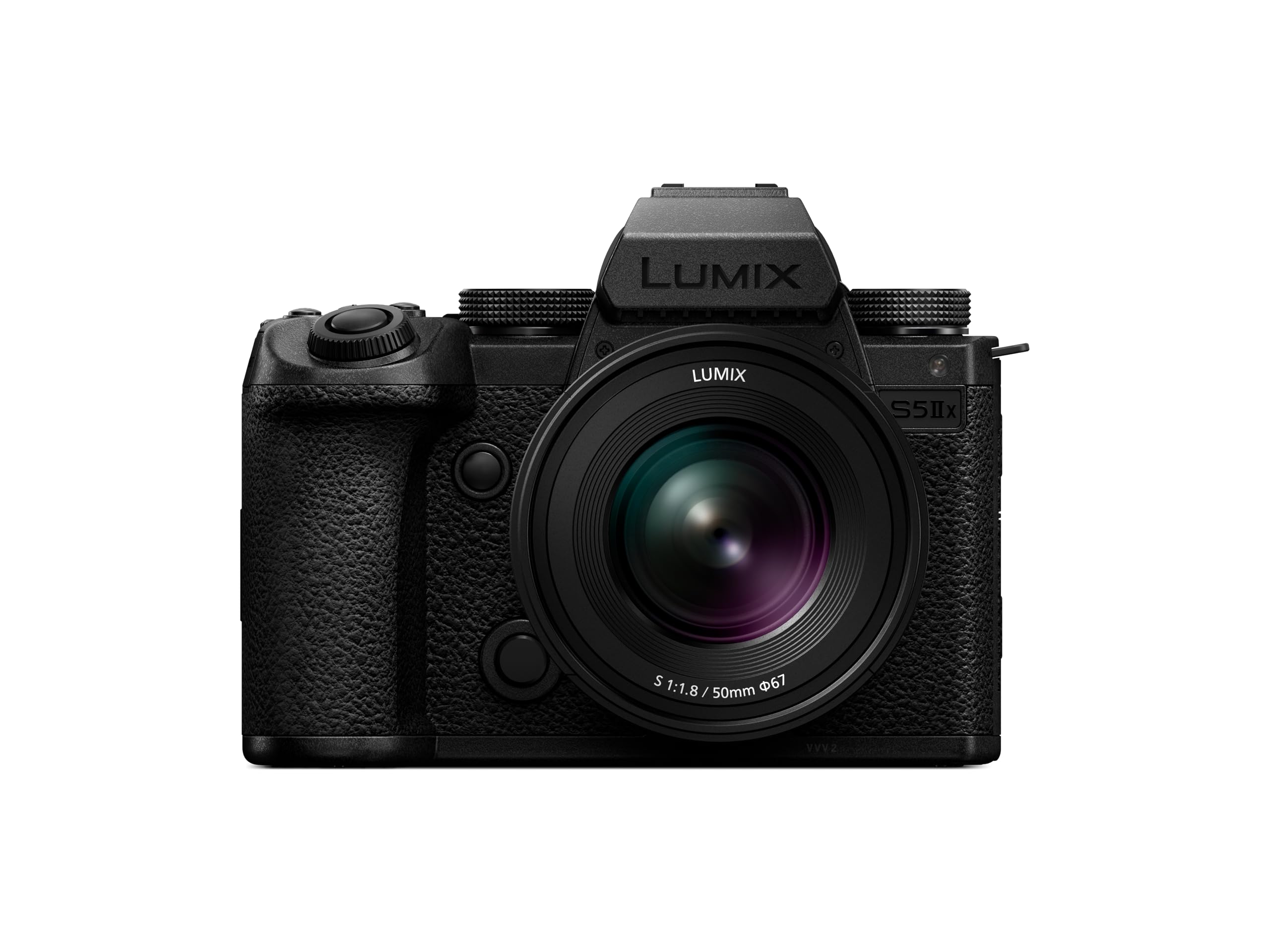
The Panasonic LUMIX S5IIX marks a major turning point for the L-mount system by introducing phase-detection autofocus with 779 points, solving the contrast-detection limitations of earlier Panasonic bodies. For newborn work, this means reliable eye detection that stays locked during subtle movements. The 24.2MP full-frame sensor delivers deep, natural color reproduction with 14+ stops of dynamic range.
The Active I.S. system provides exceptional stabilization for handheld shooting, allowing you to move fluidly around a sleeping baby without a gimbal. The kit bundles both a 20-60mm f/3.5-5.6 lens and a 50mm f/1.8 prime, giving you a fast aperture option for creamy bokeh portraits out of the box.
Unlimited video recording via the heat-dispersal fan system makes this a strong hybrid choice if you also want to document the newborn session with 4K footage. The compact full-frame body is lighter than many competing bodies, reducing fatigue during prolonged sessions. The L-mount alliance continues to expand the lens selection with excellent portrait options from Sigma and Panasonic.
Why it’s great
- Phase detection autofocus with 779 points
- Comes with both a zoom and a fast 50mm prime
- Internal fan allows unlimited 4K recording
Good to know
- L-mount lens selection is still maturing
- Price positions it at the high end of mid-range
6. Nikon D850 FX-Format Digital SLR Camera

The Nikon D850 remains one of the most capable DSLRs ever built, and its 45.7MP backside-illuminated sensor delivers a resolution level that allows you to print life-sized newborn portraits with eyelash detail visible from arm’s length. The 153-point AF system with 99 cross-type sensors provides accurate phase-detection focus even in the dim light of a nursery.
The tilting touchscreen helps you compose shots from waist level or high above a bassinet. Focus shift shooting is a unique feature for focus-stacking in product shots, but for newborn work, the silent shutter mode is more directly useful, though it is not completely silent like an electronic shutter would be in a mirrorless camera.
ISO 64 base sensitivity delivers the cleanest files of any camera on this list, with exceptionally fine detail and no noise. The D850 also records 4K UHD video at 30p and slow motion at 120fps in 1080p. It is a heavier body than its mirrorless contemporaries, but the optical viewfinder and robust ergonomics appeal to photographers who prefer a traditional shooting experience.
Why it’s great
- 45.7MP BSI sensor offers unmatched resolution
- ISO 64 base sensitivity for ultra clean files
- Optical viewfinder with intuitive physical controls
Good to know
- Heavier than mirrorless alternatives
- No silent electronic shutter; mechanical is audible
7. Canon EOS RP Full-Frame Mirrorless Camera

The Canon EOS RP is the lightest and most affordable full-frame mirrorless entry point, weighing only 485 grams body-only. The 26.2MP sensor, while not the newest, still produces pleasing color and excellent dynamic range that outclasses any APS-C body in its price range. The Dual Pixel CMOS AF with 4,779 selectable AF positions provides smooth and accurate focusing across the entire frame.
The RF 24-105mm f/4-7.1 IS STM kit lens includes optical image stabilization up to 5 stops, and when coupled with the lens’s 24mm wide end, you can capture environmental portraits showing the newborn in context of the nursery. The 0.4x maximum magnification at 105mm is useful for close-up detail shots of tiny hands and feet.
The fully articulated touchscreen makes it easy to shoot from non-standard angles without gymnastics. Eye AF works reliably in single-shot mode for stationary babies. Battery life with the LP-E17 is modest, so it is wise to carry a spare for longer sessions. This is the simplest path to full-frame sensor benefits without pushing into premium pricing.
Why it’s great
- Lightest full-frame body reduces session fatigue
- Dual Pixel AF is fast and smooth
- Articulating screen for creative angles
Good to know
- Kit lens has a slow variable aperture
- Battery life is shorter than competitors
8. Fujifilm X-M5 Mirrorless Digital Camera

The Fujifilm X-M5 crams a 26.1MP X-Trans CMOS 4 sensor and the X-Processor 5 engine into an exceptionally small body, making it the most portable option on this list that still delivers professional-grade skin tones. The film simulation modes, particularly Classic Chrome and Astia Soft, produce beautiful, soft pastel skin tones that require minimal editing for newborn galleries.
The 121-point hybrid autofocus system includes AI-based subject detection for people, and it locks onto a baby’s face reliably even in the soft, diffused lighting of a nursery. The XC15-45mm f/3.5-5.6 OIS PZ kit lens provides optical stabilization and a power zoom that is quiet enough not to disturb the baby during video clips.
The 3-inch articulating touchscreen allows low-angle composition. The lack of a built-in flash is not a problem for newborn work, as you should never use direct flash on a newborn’s eyes. The compact body slips into a diaper bag easily, making it the best choice for parents who want a dedicated camera that is always on hand.
Why it’s great
- Film simulations produce beautiful skin tones unedited
- Extremely compact for on-the-go carrying
- AI subject detection works well in soft light
Good to know
- No built-in flash, but direct flash is not recommended
- Screen mechanism feels slightly flimsy when flipped out
9. OM SYSTEM Olympus E-M10 Mark IV

The OM SYSTEM Olympus E-M10 Mark IV is a tiny Micro Four Thirds body that offers an in-body 5-axis image stabilization system capable of 4.5 stops of compensation, allowing you to shoot sharp handheld images at shutter speeds that would be impossible without stabilization. The 20MP Live MOS sensor produces detailed files that benefit from the compact M.Zuiko lens ecosystem.
The flip-down monitor enables dedicated selfie mode, which is useful for family photos that include the newborn with both parents. The 121-point contrast-detection AF system is snappy in good light, though it can hunt slightly in very low light. The kit lens is the collapsing 14-42mm f/3.5-5.6 EZ pancake zoom, which lets the camera fit into a jacket pocket.
16 Art Filters including Instant Film give creative in-camera options for those who want finished JPEGs without editing. The camera is an excellent option for parents who want better quality than a smartphone but prioritize a lightweight, portable form factor over absolute sensor performance.
Why it’s great
- 4.5-stop IBIS steadies handheld candid shots
- Extremely compact with collapsing kit lens
- In-camera art filters offer creative JPEG options
Good to know
- 20MP sensor is smaller than APS-C or full-frame
- Contrast-detection AF hunts in dim light
10. Panasonic LUMIX G85 Mirrorless Camera

The Panasonic LUMIX G85 is a mirrorless Micro Four Thirds camera that punches above its weight in stabilization, offering class-leading 5-axis in-body stabilization that combines with optical stabilization in the lens for smooth handheld video and sharp stills. The 16MP sensor lacks a low-pass filter, which enhances fine detail resolving power for crisp newborn features.
The splash-proof and dust-proof magnesium alloy body provides peace of mind when carrying the camera around the house. The OLED live viewfinder with 2.36 million dots offers a clear view for manual focus adjustments. The 49-point contrast-detection AF system is supplemented by Depth from Defocus technology for speed, though it is not as decisive as phase-detection systems in lower light levels.
4K video recording is accessible with the 4K Photo mode, which extracts 8MP stills from video clips at 30fps — this can be useful for catching the exact moment of a baby’s subtle smile. The tilt-and-touch 3-inch LCD screen is bright for outdoor use as well. The G85 is a workhorse for those who value stabilization and build quality over maximum sensor resolution.
Why it’s great
- Dual IS 2 provides exceptional stabilization
- Weather-sealed magnesium alloy body
- 4K Photo mode captures fleeting moments
Good to know
- 16MP sensor is lower resolution than competitors
- AF hunts in very dim lighting conditions
11. Canon EOS Rebel T7 DSLR Bundle
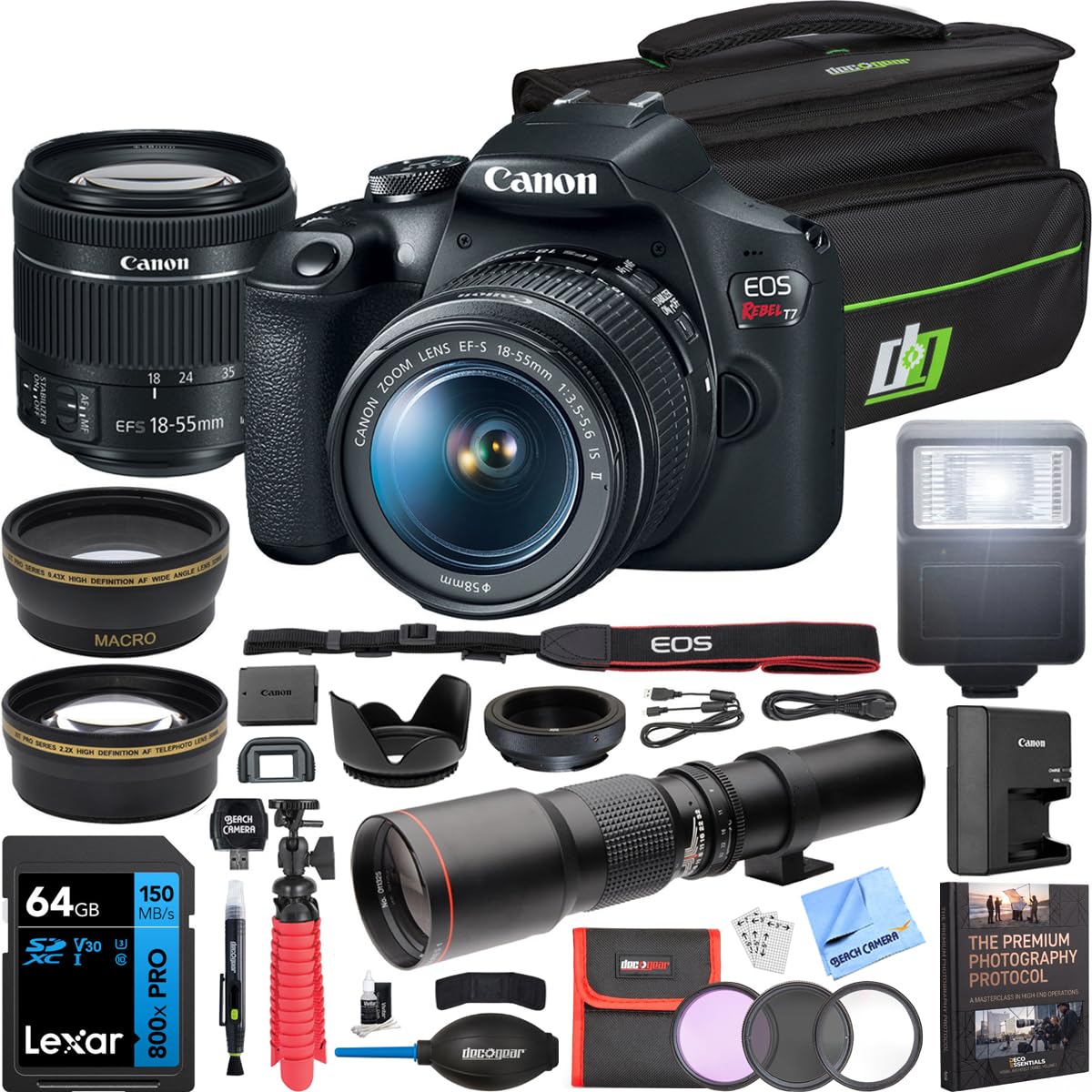
The Canon EOS Rebel T7 is an entry-level DSLR that provides a genuine step up from smartphone photography for a fraction of the price of mirrorless bodies. The 24.1MP APS-C sensor with DIGIC 4+ processor yields decent image quality in good window light. The 9-point AF system is basic but functional, though it requires you to practice focus-and-recompose for off-center baby portraits.
This 13-piece bundle includes a 500mm preset telephoto lens, a camera bag, a 64GB Lexar PRO memory card, tripods, filter kits, and a flash, giving you a wide variety of accessories to experiment with as you learn. The 18-55mm IS II kit lens includes image stabilization, which is helpful for reducing blur from hand shake at slower shutter speeds.
The optical viewfinder provides a direct optical path that some photographers still prefer, and the 3.0-inch LCD with 920,000 dots is sufficient for reviewing shots. The camera’s compatibility with the entire Canon EF and EF-S lens ecosystem means you can upgrade to a 50mm f/1.8 STM for better low-light portraits later. It is the most budget-friendly way to enter the world of interchangeable-lens newborn photography.
Why it’s great
- Affordable entry into interchangeable-lens photography
- Extensive bundle with memory, bag, and accessories
- Compatible with Canon’s huge EF lens library
Good to know
- 9-point AF system is outdated for fast-moving babies
- Optical viewfinder, not electronic, so no preview of exposure
FAQ
Is a full-frame camera necessary for newborn photography?
What is the best lens to pair with a newborn photography camera?
Should I avoid using flash on a newborn?
Why does silent shooting matter for newborn photography?
Final Thoughts: The Verdict
For most users, the camera for newborn photography winner is the Sony a7 III because its 693-point phase-detection autofocus, silent electronic shutter, and excellent low-light performance hit the sweet spot for professional-quality portraits without the premium cost of newer bodies. If you want maximum resolution and cropping flexibility for extreme detail shots, grab the Canon EOS R5. And for the most portable, always-ready option with stunning film simulations, nothing beats the Fujifilm X-M5.