
Outdoor photography punishes gear. A single rain shower, a dusty trail, or a sudden drop from a rocky ledge can permanently ruin an unprotected camera. The difference between a keeper shot and a missed opportunity often comes down to a camera’s weather sealing, battery endurance in cold conditions, and the lens’s ability to pull in detail from half a mile away. Smartphone cameras have improved dramatically, but they still can’t match the optical reach, rugged build, or raw sensor performance required for serious landscape, wildlife, and adventure photography.
I’m Min — the co-founder and writer behind Gadgets Feed. For this guide, I spent countless hours cross-referencing sensor sizes, burst rates, weather resistance ratings, and optical zoom ranges across dozens of models to identify the specific cameras that actually survive and perform in outdoor conditions. Every pick here was vetted for build toughness, battery performance in the field, and image quality beyond what a phone can produce.
Whether you are scaling a mountain or wading into a stream, the right tool makes all the difference. This is the definitive resource built around the best camera for outdoor photography, covering everything from compact rugged point-and-shoots to full-frame mirrorless powerhouses.
How To Choose The Best Camera For Outdoor Photography
Outdoor photography is a constant negotiation between portability, durability, and image quality. A camera that weighs four pounds with a super-telephoto lens will produce incredible wildlife shots, but you might leave it at the trailhead. Conversely, a pocket-sized action camera is easy to carry but lacks the sensor size to capture layered landscapes at dawn. Understanding the trade-offs between these factors is the first step to finding your match.
Weather Sealing and Build Toughness
A camera that fails in a drizzle is useless outdoors. Look for explicit weather-sealing specifications — magnesium alloy bodies and rubber gaskets around battery doors, lens mounts, and port covers. For extreme environments like rainforests, beaches, or alpine conditions, consider cameras with an IP rating or specific waterproofing down to a certain depth. Entry-level cameras often skip sealing entirely, while mid-range and premium bodies typically protect against dust and moisture.
Optical Reach and Lens Versatility
Outdoor subjects are rarely at a comfortable distance. A lens that offers at least 200mm equivalent reach is valuable for wildlife, while a wide-angle end around 24mm is better for sweeping landscapes. Bridge cameras with fixed superzoom lenses (60x or more) provide exceptional reach without changing glass, but they use smaller sensors that struggle in low light. Interchangeable lens systems give you the freedom to swap between an ultrawide for landscapes and a telephoto for distant birds, but require carrying extra glass.
Battery Endurance and Power Management
Cold temperatures drain lithium-ion batteries rapidly. Cameras rated for 800 to over 1,000 shots per charge provide a safety margin for full-day shoots. Mirrorless cameras generally have shorter battery life than DSLRs because the electronic viewfinder and sensor are always active. Many outdoor photographers carry two or three spare batteries and use a power bank with USB-C charging in the field. Some modern bodies support USB power delivery, allowing you to shoot while tethered to a battery pack.
Sensor Size and Low-Light Performance
Sensor size directly controls how much light the camera captures. Full-frame sensors (35.6 x 23.8 mm) deliver the best dynamic range and low-light performance, making them ideal for dawn/dusk shooting. APS-C sensors offer a good balance of quality and compactness, while 1-inch and smaller sensors are common in superzoom and action cameras. If you shoot in deep forest shade or at twilight, prioritize a larger sensor over extreme zoom reach.
Quick Comparison
On smaller screens, swipe sideways to see the full table.
| Model | Category | Best For | Key Spec | Amazon |
|---|---|---|---|---|
| Sony a7 III | Full-Frame Mirrorless | All-around full-frame performance | 24.2MP BSI sensor, 693 AF points | Amazon |
| Canon EOS R6 Mark II | Full-Frame Mirrorless | High-speed action and wildlife | 40 fps electronic shutter, 24.2MP | Amazon |
| Canon EOS RP | Full-Frame Mirrorless | Entry-level full-frame for travel | RF 24-105mm kit lens, 26.2MP | Amazon |
| Nikon Z 5 | Full-Frame Mirrorless | Compact full-frame with IBIS | 24.3MP, 5-axis IBIS, dual SD | Amazon |
| Sony Alpha 6700 | APS-C Mirrorless | Hybrid photo/video with AI AF | 26MP, 4K 120p, AI processor | Amazon |
| Nikon D7500 | DSLR | Rugged DSLR with long battery | 20.9MP, 51-point AF, 8 fps | Amazon |
| Panasonic LUMIX G97 | Micro Four Thirds | Lightweight compact system | 20MP, 5-axis IBIS, 4K 30p | Amazon |
| OM System E-M10 Mark IV | Micro Four Thirds | Pocketable retro mirrorless | 20MP, 4.5-stop IBIS, flip-down screen | Amazon |
| Panasonic LUMIX FZ80D | Bridge Superzoom | Extreme zoom on a budget | 60x optical zoom, 20-1200mm | Amazon |
| OM System Tough TG-7 | Rugged Compact | Waterproof and shockproof use | Waterproof 15m, F2.0 lens | Amazon |
| DJI Osmo Action 6 | Action Camera | 8K POV action and vlogging | 1/1.1″ sensor, variable aperture | Amazon |
In‑Depth Reviews
1. Sony a7 III Full-Frame Mirrorless

The Sony a7 III remains one of the most well-rounded full-frame bodies for outdoor photography because its 24.2MP back-illuminated sensor delivers exceptional dynamic range across 15 stops, and the 693 phase-detection AF points cover 93 percent of the frame. That combination means you can shoot a backlit landscape at golden hour and still pull detail from both the sky and the foreground shadows without excessive noise. The mechanical shutter fires at 10 fps with full AF tracking, making it fast enough for moving wildlife like deer bounding across a meadow.
The kit includes a 28-70mm f/3.5-5.6 lens that is reliable for general outdoor walkaround use, though its maximum aperture limits low-light performance. The body is weather-sealed against dust and moisture, which pairs well when you are shooting near salt spray or in light rain. Battery life is class-leading at roughly 710 shots per charge using the NP-FZ100 cell, so a single battery can easily last through a long sunrise-to-sunset outing without requiring a swap.
Users upgrading from entry-level DSLRs frequently cite the autofocus speed and low-light capability as the most transformative improvements. The menus are dense and take some time to learn, but the image quality out of camera — especially in RAW — gives you enormous latitude to recover highlights and shadows during editing. The in-body image stabilization is effective enough to shoot handheld at shutter speeds that would have required a tripod a decade ago.
Why it’s great
- Excellent dynamic range for high-contrast outdoor scenes
- Fast and accurate AF system with wide coverage
- Exceptional battery life for full-day field shooting
Good to know
- Kit lens aperture is limiting in low light
- Menu system is complex and takes time to master
2. Canon EOS R6 Mark II

The Canon EOS R6 Mark II is built for speed, offering a 24.2MP full-frame CMOS sensor paired with the DIGIC X processor that enables up to 40 fps electronic shutter shooting. For outdoor photographers who shoot birds in flight, running dogs, or fast-moving cyclists, the electronic shutter with pre-shooting captures up to 30 fps, ensuring you never miss the peak moment. The Dual Pixel CMOS AF II system uses deep learning to detect people, animals, vehicles, and even aircraft, with 1,053 AF zones covering 100 percent of the frame.
The body is weather-sealed with a magnesium alloy chassis, making it well-suited for dusty trails and light precipitation. Battery life with the LP-E6NH pack is sufficient for a full day of mixed shooting, and the camera supports USB power delivery for extended field sessions. The ISO range expands to 204,800, so shooting in dense forest understory or at dusk is viable without resorting to a flash or tripod.
User reports consistently highlight the camera’s dual-role capability as both a stills and video workhorse. The 4K 60p oversampled footage is sharp, and the internal stabilization smooths out handheld pans. The only trade-off is that the body alone is relatively compact, so large telephoto lenses can feel front-heavy without a grip extension. This is a fantastic choice if your outdoor photography frequently includes fast action in variable lighting.
Why it’s great
- Incredible 40 fps burst for fast wildlife action
- Deep-learning subject detection across multiple animal types
- Strong weather sealing and durable build
Good to know
- Electronic shutter can cause rolling shutter with fast panning
- Requires larger RF lenses for telephoto reach
3. Canon EOS RP + RF 24-105mm

The Canon EOS RP is the most affordable path to a full-frame sensor in a mirrorless body, and it weighs only 1.07 pounds body-only, making it genuinely comfortable for long mountain hikes. The 26.2MP sensor paired with the RF 24-105mm f/4-7.1 IS STM kit lens gives you a versatile zoom range from wide landscape to medium telephoto, with optical image stabilization rated at up to 5 stops. That stabilization is a big deal when you are shooting handheld at dusk and need to keep shutter speeds slow without introducing blur.
The Dual Pixel CMOS AF system delivers snappy autofocus with face and eye detection for both humans and animals, which works reliably for outdoor portrait and travel photography. The 2,360K-dot electronic viewfinder is bright and clear, even in strong sunlight, reducing the need to rely on the rear screen. Battery life is moderate at about 250 shots per charge with the standard LP-E17 pack, so carrying at least one spare is recommended for full-day hiking trips.
Long-time Canon DSLR users appreciate the familiar menu layout and the ability to adapt EF/EF-S lenses with a simple adapter. The RP is not designed for high-speed action — its 5 fps burst is modest — but for landscapes, travel, and general outdoor exploration, the image quality from that full-frame sensor is a significant step up from any APS-C body at this budget tier. The RF 24-105mm lens is soft at the edges when wide open, but stopping down to f/8 improves center sharpness significantly.
Why it’s great
- Lightest full-frame mirrorless body for easy packing
- Versatile 24-105mm zoom range covers most outdoor subjects
- Canon color science produces beautiful outdoor tones
Good to know
- Battery life is below average; carry spares
- Burst rate is too slow for fast wildlife action
4. Nikon Z 5

The Nikon Z 5 delivers full-frame image quality in Nikon’s most compact Z-series body, weighing only 1.34 pounds with the battery and memory card. The 24.3MP sensor produces sharp, lifelike details with the characteristic Nikon color profile that many landscape photographers prefer. The 5-axis in-body image stabilization provides up to 5 stops of compensation, which allows you to shoot handheld at shutter speeds as slow as 1/9 second in a pinch, effectively eliminating the need for a tripod in many dawn and dusk scenarios.
The 273-point hybrid AF system includes eye-detection for people, dogs, and cats, which locks onto subjects reliably during hikes and outdoor portrait sessions. The electronic viewfinder has a crisp 3.6M-dot resolution, making composition in bright outdoor conditions comfortable. A key feature for outdoor professionals is the dual UHS-II SD card slots, providing instant backup for commissioned work so no single card failure can ruin your entire shoot.
Users who transition from Nikon DSLRs report that the Z 5’s ergonomics and button layout feel immediately familiar, and the FTZ adapter allows seamless use of F-mount lenses. The body lacks a fully articulated screen, which makes it less ideal for vlogging but completely fine for traditional stills shooting. Battery life is excellent for a mirrorless full-frame body, often lasting a full day of moderate shooting. The Z 5 is a superb choice if you want full-frame quality without the size and weight penalty of a DSLR.
Why it’s great
- Excellent IBIS for handheld low-light landscapes
- Dual SD slots provide backup for field work
- Compact and lightweight for full-frame
Good to know
- No fully articulated screen for vlogging
- Burst rate is modest at 4.5 fps
5. Sony Alpha 6700

The Sony Alpha 6700 is arguably the most advanced APS-C camera on the market, combining a 26MP back-illuminated Exmor R sensor with a dedicated AI processor that powers real-time subject recognition. The AI processor allows the camera to recognize not just people and animals, but also birds, insects, cars, and trains — making it incredibly capable for wildlife and outdoor sports. The 759 phase-detection AF points cover nearly the entire frame, ensuring that a running subject stays locked even as it moves toward a cluttered background.
Video shooters will appreciate the 4K 60p recording oversampled from 6K, delivering exceptional sharpness with 4:2:2 10-bit color depth for advanced color grading. The high frame rate 4K 120p mode is perfect for slowing down fast outdoor action like a mountain biker cresting a ridge or a wave crashing on a shoreline. The body is compact at only 1.1 pounds, and the 3-inch vari-angle LCD makes framing from low angles or above your head much easier when shooting on uneven terrain.
Users consistently praise the autofocus performance as the best in class for APS-C, with the AI tracking holding onto subjects that would easily confuse earlier systems. The main drawback is that the small body can feel cramped with larger telephoto lenses, and some users note that the in-body stabilization, while decent, is not quite sufficient to replace a gimbal for smooth handheld video. For a lightweight outdoor hybrid system that excels at both stills and video, the a6700 is a top contender.
Why it’s great
- Best-in-class AI autofocus for wildlife tracking
- 6K oversampled 4K video with 10-bit color
- Compact body is easy to pack on long hikes
Good to know
- Small grip makes balancing large lenses awkward
- IBIS is good but not gimbal-smooth for video
6. Nikon D7500 + 18-140mm

The Nikon D7500 is a rugged DSLR that borrows its 20.9MP sensor, image processor, and metering system from the pro-grade D500, giving it class-leading image quality and ISO performance for an APS-C body. The 51-point AF system with 15 cross-type sensors and group-area AF is fast and accurate, keeping up with birds in flight and running animals at up to 8 fps. The 3.2-inch tilting LCD is touch-sensitive, which makes navigating menus and reviewing shots on the trail intuitive.
The kit lens is the AF-S DX NIKKOR 18-140mm f/3.5-5.6G ED VR, which provides a 27-210mm equivalent range that covers wide landscapes to medium wildlife. The VR (Vibration Reduction) gives you about 4 stops of stabilization, so handheld shooting at the telephoto end is much more forgiving. The body is weather-resistant with a magnesium alloy chassis, and the battery life is exceptional — a single EN-EL15a battery can easily last 950 shots, making it one of the best options for multi-day backcountry trips without access to charging.
Users coming from entry-level DSLRs report the D7500 is a noticeable step up in build quality, speed, and image clarity. The 18-140mm lens is praised for its flexibility across many outdoor scenarios, though the variable aperture loses light as you zoom. The D7500 has no headphone jack for video monitoring, but for stills-focused outdoor photographers who want a durable, proven DSLR with a massive lens library, this remains a compelling choice even years after its release.
Why it’s great
- Outstanding battery life for extended field use
- Weather-sealed magnesium alloy build is rugged
- Excellent image quality derived from pro D500
Good to know
- Single SD card slot (no backup)
- Bulky compared to mirrorless alternatives
7. Panasonic LUMIX G97 + 12-60mm
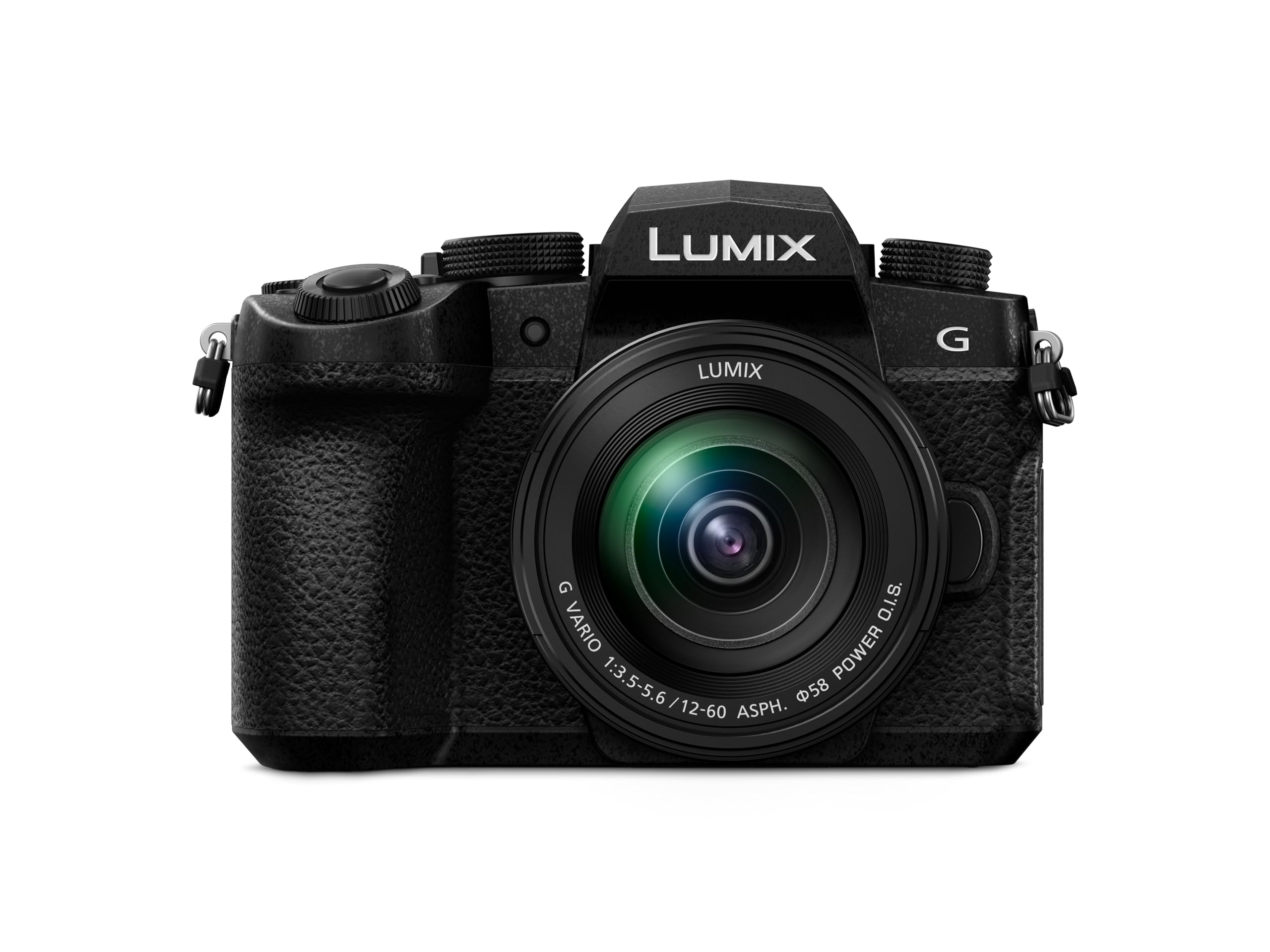
The Panasonic LUMIX G97 is a compact Micro Four Thirds camera that packs a 20MP sensor, 5-axis Dual I.S.2 stabilization rated at 5 stops, and a versatile 12-60mm f/3.5-5.6 kit lens (24-120mm equivalent). The smaller MFT sensor means the camera body and lenses are significantly lighter than APS-C or full-frame systems, making it a natural fit for backpackers and hikers who count every ounce. The 1,840K-dot free-angle LCD and 2,360K-dot OLED Live View Finder are both bright and easy to use in direct sunlight.
The G97 includes V-Log L with 12 stops of dynamic range, enabling serious color grading for outdoor video projects. The Live View Composite Mode is a standout feature for outdoor night shooting — it allows you to capture star trails or light-painted scenes by combining exposures in real time without overexposing the foreground. The USB-C port supports power delivery, so a compact power bank can keep the camera running through a full night of timelapse shooting.
Users note that the body feels well-built with a magnesium alloy front panel and deep grip, despite its small size. The kit lens is impressively sharp across the zoom range for a bundled optic. The main caveat is the contrast-detect autofocus, which is fast and reliable in most outdoor situations but can hunt slightly in very low contrast scenes like a foggy meadow. For any photographer who prioritizes lightweight portability without sacrificing image quality, the G97 is a fantastic value.
Why it’s great
- Very lightweight kit for long-distance hiking
- Live View Composite is great for star trail capture
- USB-C power delivery for extended outings
Good to know
- Contrast-detect AF can struggle in low contrast
- Smaller sensor means less background blur than larger formats
8. OM System E-M10 Mark IV

The OM System (formerly Olympus) E-M10 Mark IV is a compact Micro Four Thirds camera that offers exceptional image stabilization for its size, with 5-axis IBIS rated at 4.5 stops of compensation. The 20MP Live MOS sensor produces clean, detailed images that look excellent on a laptop screen, and the 14-42mm f/3.5-5.6 EZ pancake kit lens makes the entire package small enough to slip into a jacket pocket. This is one of the few interchangeable lens cameras that you can genuinely bring on a day hike without feeling like you are carrying dedicated camera gear.
The flip-down monitor activates a dedicated selfie mode automatically, which is useful for solo hikers documenting their own adventures. The camera includes 16 Art Filters with 31 variations, including an Instant Film style that adds a nostalgic look without post-processing. The in-camera panorama stitching works seamlessly for wide mountain vistas, and the autofocus is quick and accurate for a contrast-detect system in well-lit outdoor conditions.
Users frequently mention that the E-M10 Mark IV is the perfect camera for beginners who want better image quality than a phone without the complexity and weight of a full-size system. The body is sturdy despite its small size, with a metal chassis and leather-like texture that looks retro. The main trade-offs are the lack of USB-C charging (it uses a proprietary charger) and a slower burst rate compared to higher-end OM System bodies. For everyday outdoor walkaround shooting, it is hard to beat the portability.
Why it’s great
- Amazing portability with pancake lens
- Excellent IBIS for such a compact body
- Flip-down selfie mode is great for solo adventurers
Good to know
- No USB-C charging; uses proprietary charger
- Burst rate is slower than higher-end MFT bodies
9. Panasonic LUMIX FZ80D

The Panasonic LUMIX FZ80D is a bridge camera that delivers a 60x optical zoom lens with a 35mm equivalent range of 20-1200mm, putting extreme telephoto reach into a single lightweight package that weighs only 1.4 pounds. For outdoor photographers who need to photograph distant wildlife or capture details on a mountain face, this zoom range is unmatched by interchangeable lens cameras at a similar budget level. The Power O.I.S. (Optical Image Stabilizer) actively suppresses hand-shake vibration at the telephoto end, which is critical when shooting at 1200mm handheld.
The 2,360K-dot large LVF (Live View Finder) with 0.74x magnification provides a clear, glare-free view even in bright sunlight, solving one of the biggest frustrations of outdoor shooting with small-sensor cameras. The 4K Photo mode allows you to extract 8MP stills from 4K burst video, effectively giving you a high-speed capture option for fast-moving subjects like birds taking flight. The Post Focus feature lets you touch to select the focus point after shooting, which is surprisingly useful for macro nature shots where depth of field is razor thin.
Users love the FZ80D for light travel and situations where changing lenses is impractical, such as on a kayaking trip or a long hike. The small sensor is the limiting factor — image quality degrades noticeably above ISO 800, and low-light scenes come out grainy. This camera is best used in good light, where the stabilization and zoom range allow you to get shots that would be impossible with a phone. It is the ideal budget-friendly superzoom for daylight outdoor photography.
Why it’s great
- Incredible 60x zoom range for wildlife and distant subjects
- Extremely lightweight for its reach
- Post Focus and 4K Photo add useful flexibility
Good to know
- Small sensor struggles in low light above ISO 800
- No WiFi for easy image transfer
10. OM System Tough TG-7

The OM System Tough TG-7 is built to survive environments that would destroy almost any other camera. It is waterproof to 15 meters (50 feet) without a housing, shockproof from 2.1 meters (7 feet), crushproof to 100 kgf (220 lbf), freezeproof down to -10°C (14°F), and includes an anti-fog coating on the lens. For outdoor photographers who regularly shoot in rain, snow, mud, or underwater, this is the most durable camera you can buy at this price. The F2.0 maximum aperture lens lets in more light than typical compact zoom lenses, improving performance in darker forest or underwater conditions.
The variable macro system is a standout feature, with four dedicated macro modes including a microscope mode that lets you capture subjects as close as 1 centimeter from the end of the lens. Combined with the included underwater modes (including underwater microscope and underwater HDR), this camera is exceptional for documenting small creatures, tide pool life, and textural details on outdoor adventures. The 4K movie mode records at 30 fps, and the 120 fps high-speed recording captures slow-motion action.
Users who own the TG-7 consistently report that it delivers satisfying images in bright conditions and excels as a grab-and-go camera for the outdoors. The 12MP sensor is lower resolution than modern phones, but the optical zoom (4x) and dedicated underwater lens port deliver results that phones simply cannot replicate underwater. The main trade-off is that the small sensor produces noisy images in low light, and the camera’s menu system requires some learning to access all the specialized modes. It is not a replacement for a full-size camera, but it is the best camera for wet, dusty, or rugged outdoor conditions.
Why it’s great
- Extremely rugged — waterproof, shockproof, freezeproof
- Excellent macro and underwater shooting modes
- F2.0 aperture is bright for a compact zoom
Good to know
- 12MP sensor is lower resolution than modern flagships
- Small sensor struggles in low light
11. DJI Osmo Action 6 Enhanced Combo
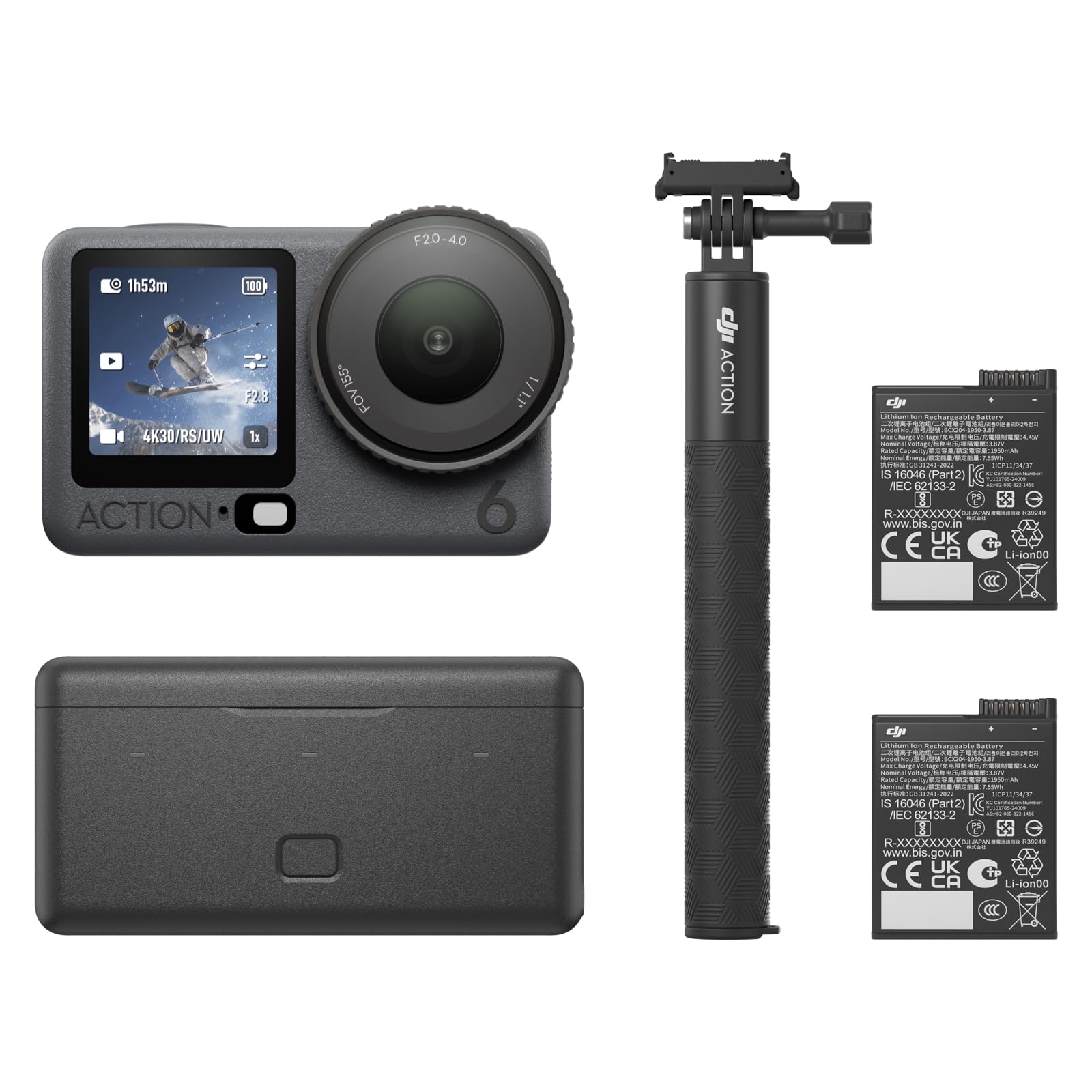
The DJI Osmo Action 6 brings a large 1/1.1-inch square sensor and a variable aperture (f/2.0 to f/4.0) to the action camera category, delivering 8K video resolution and substantially improved low-light performance compared to previous models. The variable aperture is a first for action cameras — it adapts to lighting conditions automatically, keeping the image bright in dim forest light and stopping down to maintain sharpness in bright alpine sun. The Enhanced Combo includes two Extreme Battery Plus packs (1,950 mAh each), providing up to 4 hours of total recording time, which is critical for long outdoor adventures where recharging is not an option.
The 360° HorizonSteady stabilization corrects roll-axis rotation up to full 360 degrees, keeping the horizon level even when the camera is rotated during mounting or handling. This is incredibly useful for mountain biking, skiing, or any activity where the camera twists and turns. The body is waterproof to 20 meters without a housing, so you can take it snorkeling or river-wading without any additional protection. It also includes 50 GB of built-in storage, allowing you to start shooting immediately without a memory card.
User feedback highlights the exceptional video quality, rock-solid stabilization, and intuitive dual-screen design that makes it easy to frame yourself for vlogs. The weak internal microphone is the main downside — wind noise is noticeable outdoors, and DJI recommends connecting an external microphone via the accessory port for clean audio. The Osmo Action 6 is not the best camera for traditional stills photography, but for mountaineers, kayakers, and skiers who need a rugged point-of-view camera with professional-level video, it is the top choice.
Why it’s great
- Variable aperture and large sensor improve low-light video
- 360° HorizonSteady keeps footage level in any orientation
- Waterproof to 20m without a housing
Good to know
- Internal microphone is weak outdoors
- 8K resolution requires high-end editing hardware
FAQ
Do I need a full-frame camera for great outdoor photos?
How important is weather sealing for hiking and camping?
Should I buy a bridge superzoom or a mirrorless camera for wildlife?
Can I use my phone instead of a dedicated camera for outdoor photography?
Final Thoughts: The Verdict
For most users, the best camera for outdoor photography winner is the Sony a7 III because it delivers full-frame image quality, excellent battery life, and rugged weather sealing in a balanced package that suits landscapes, wildlife, and travel alike. If you want the best action tracking for birds and fast-moving subjects, grab the Canon EOS R6 Mark II with its 40 fps burst and deep-learning autofocus. And for the lightest possible full-frame system that still packs in-body stabilization and dual SD slots, nothing beats the Nikon Z 5.