
Our readers keep the lights on and my morning glass full of iced black tea. As an Amazon Associate, I earn from qualifying purchases.
Specs are compiled from manufacturer listings and verified buyer reviews and can change over time — please confirm the key details on the product page before buying.
The first decision for any social media creator is whether a dedicated camera is worth the upgrade from a phone. A dedicated camera delivers larger sensors for natural background blur, interchangeable lenses for real zoom, and physical stabilization that avoids the cropped, soft look of phone digital stabilization. This guide compares mirrorless hybrids, pocket gimbals, and action cams to match your actual shooting style.
I’m Min — the founder and writer behind Gadgets Feed. This guide is built by comparing the manufacturers’ published specifications and the patterns across verified customer reviews, so you get each pick’s real strengths and trade-offs instead of marketing spin.
From 4K pocket gimbals to full-frame hybrids, these picks earn their place in your gear bag. This is the definitive rundown of the best camera for social media creators who want footage that looks intentional.
Our Picks at a Glance


How To Choose The Best Camera For Social Media
Start by identifying your primary content type before comparing specs. A pocket gimbal that fits in a jacket is perfect for daily vlogs, but it cannot match the shallow depth-of-field of a full-frame hybrid for cinematic product shots. Choose the camera category that fits your content, then use specs to narrow down the model.
Sensor Size and Depth of Field
Sensor size is the primary driver of that premium, shallow depth-of-field look. A 1-inch sensor (found in many pocket cams) performs well, but an APS-C or full-frame sensor is several times larger, letting you blur the background behind you for a professional feel. Bigger sensors also handle low-light scenes with less noise.
Stabilization: Gimbal vs. In-Body
Unstable footage instantly looks unprofessional. Pocket cameras use a physical 3-axis gimbal to keep the shot level while you walk. Larger mirrorless bodies often rely on in-body stabilization, which steadies the sensor itself. Both beat a phone’s digital stabilization, which crops into the image and can look soft.
Autofocus That You Can Trust
Racking focus manually while talking to the lens is a recipe for out-of-focus clips. Look for face and eye detection that locks onto you even as you move. The best systems track people, pets, and products so you stay sharp whether you are dancing, spinning, or holding an item up to the camera.
Quick Comparison
| Model | Best For | Sensor | Max Video | Battery Life | Amazon |
|---|---|---|---|---|---|
| Sony Alpha 7 IV★ Best Overall | Pro Hybrid Shoots | Full-Frame 33MP | 4K 60p | 2000+ shots | Amazon |
| Xtra MuseBudget Pro | Budget Pocket Video | 1-inch CMOS | 4K 120fps | 161 minutes | Amazon |
| DJI Osmo Pocket 3Pocket Icon | Travel Vlogging | 1-inch CMOS | 4K 120fps | 166 minutes | Amazon |
| GoPro HERO13 Black | Action & Waterproof | 1/1.9-inch | 5.3K60 | 1.5 hours | Amazon |
| Panasonic LUMIX G100 | Beginner Hybrids | Micro Four Thirds | 4K 30p | — | Amazon |
| Nikon Z 30 | Compact Creator Kit | APS-C 20.9MP | 4K 30p | 2 hours | Amazon |
| Sony ZV-E10 II | Vlogging with Lenses | APS-C 26MP | 4K 60p | — | Amazon |
| Canon EOS R8 | Entry Full-Frame | Full-Frame 24.2MP | 4K 60p | — | Amazon |
| Nikon Z50 II | Color Preset Shooters | APS-C 20.9MP | 4K UHD 60p | — | Amazon |
| Canon EOS R7 | Wildlife & Sports | APS-C 32.5MP | 4K Video | — | Amazon |
| Panasonic LUMIX S9 | Travel & Style | Full-Frame | — | — | Amazon |
In-Depth Reviews
1. Sony Alpha 7 IV
Our pick — over 4.5★ from 750+ verified ratings; the strongest balance of quality and price.
Shoot professional-looking video and photos with full-frame quality, then get them to your phone instantly—no bulky camera bag required.
If your social channels include polished stills and cinematic video, this is the endgame body. The 33-megapixel full-frame Exmor R back-illuminated CMOS sensor gives you that creamy, blurred background that separates pro content from phone clips. Owners consistently put build quality and image quality at the top of the praise list, calling it a top-tier device that takes amazing pictures.
You get up to 4K 60p 10-bit 4:2:2 video with full pixel readout, meaning the footage uses the whole sensor for incredible detail. The 7K oversampling on 4K 30p adds even more sharpness. The 693-point autofocus system with face and eye tracking keeps you locked in focus, and the S-Cinetone color profile delivers beautiful tones straight out of camera. Buyers report the battery handles 2000+ shots per charge, and the dual card slots mean you can back up every clip as you record.
The flip side is the learning curve. The menus are deep and the customization is vast, so beginners may feel overwhelmed at first. Some owners note performance hiccups, including rare overheating in demanding conditions. It is a premium investment, but for creators who want one camera to do everything at a professional level, it is remarkably versatile.
Owner-Approved Core: The 78 owners highlighting quality set the tone here — this is a body that feels reliable in the hand and delivers on trust.
Ideal for hybrid pros: If you sell a lifestyle where photos and video are equally important, this body handles both flawlessly.
Expect a learning curve: The sheer depth of settings is a lot if you are used to auto-mode phones — block out time to learn the menus.
2. Xtra Muse
A pocket-sized 4K gimbal camera that brings cinematic motion without the flagship price tag.
The Xtra Muse packs a 1-inch CMOS sensor capable of 4K resolution at 120fps — smooth slow-motion that looks expensive. Owners are quick to point out the image quality is the headline feature, with video quality close behind. Its 3-axis gimbal stabilizer keeps dancing, running, or hiking footage steady, which is the whole point of a pocket camera.
The 2-inch touch screen flips between horizontal and vertical shooting, so you can frame for YouTube and then instantly switch to TikTok or Reels. True 10-bit X-Log color modes capture up to one billion colors for flexible post-production, which is ideal for sunrises and sunsets. It runs for 161 minutes per charge, so a full day of shooting is feasible. The bundle includes a carrying bag, wrist strap, and a handle with a 1/4″ thread.
The reviewer community is split though. Some vacation shooters hit repeated overheating and SD card errors, even with a new SanDisk Extreme PRO, especially when recording 4K60. That makes it a risk for capturing irreplaceable moments on a long trip. The gimbal and portability win people over, but its reliability in sustained 4K is the weak spot to weigh.
What Gets the Likes
- Smooth gimbal footage that rivals more expensive pocket cams
- True 10-bit color for grading sunsets and city lights
- Slips into a purse or jacket for grab-and-go vlogs
Watch the Heat
- Repeated overheating at 4K60 reported during long shoots
- SD card errors can interrupt recording even with premium cards
- Battery drains fast if you shoot 4K all day
Grab it for weekend vlogs: If you are a casual creator moving up from a phone, the stabilization and color science are a revelation.
Skip it for a once-in-a-lifetime trip: If you cannot risk a shutdown, the DJI below is worth the premium for reliability.
3. DJI Osmo Pocket 3
The pocket camera that redefined vlogging with award-level 4K and easy stabilization.
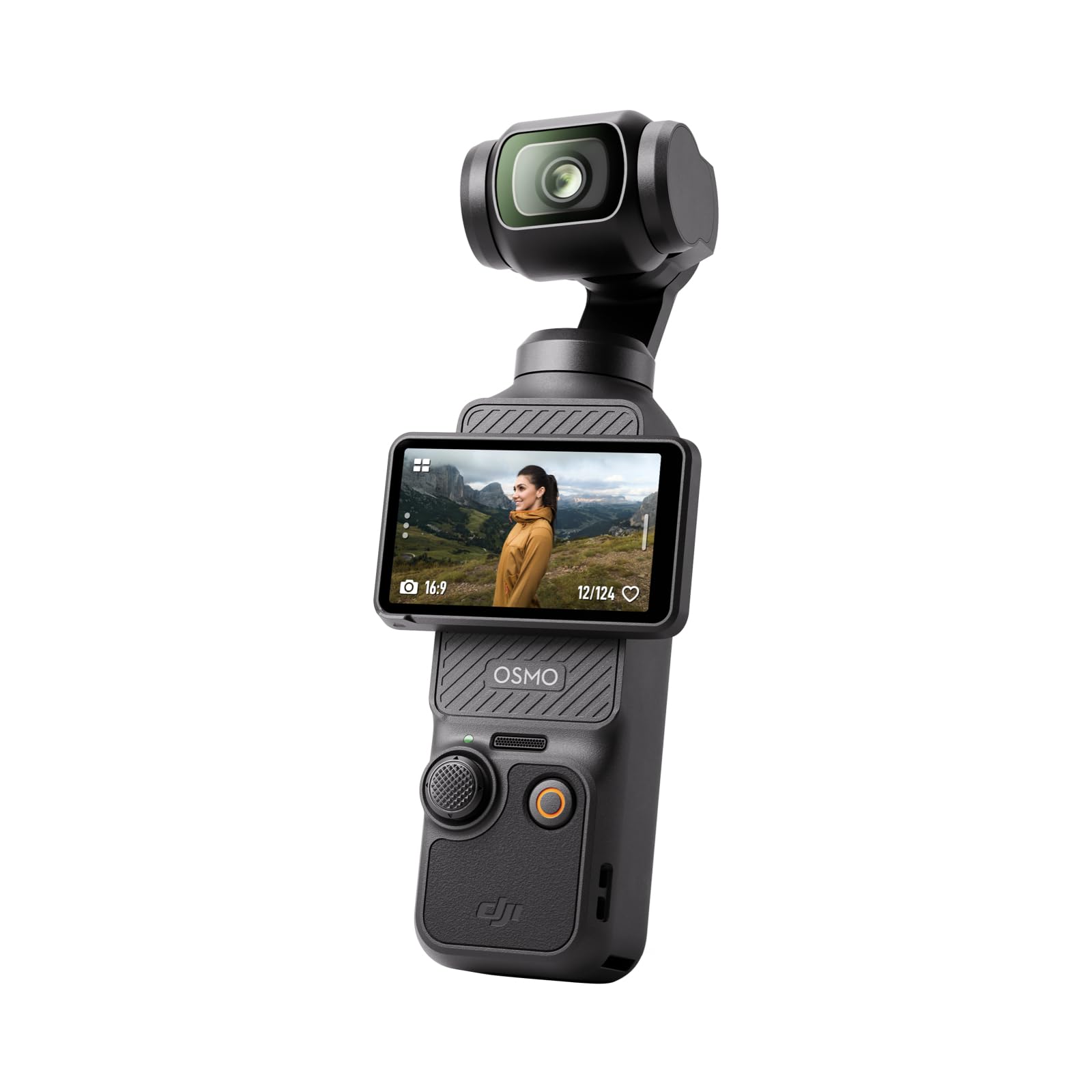
The DJI Osmo Pocket 3 combines a 1-inch CMOS sensor with 4K recording at 120fps to deliver footage that owners describe as cinematic and gorgeous. The 2-inch touch screen rotates for both horizontal and vertical shooting, making it incredibly easy to switch from YouTube to Reels. Its compact size is the defining trait — it slides into a sweater pocket and is ready instantly.
The advanced 3-axis mechanical stabilization handles dancing, chasing pets, or hiking without a shaky frame. ActiveTrack 6.0 keeps you center-frame even when you jump, dance, or spin in front of a tripod. Stereo recording captures crisp audio, and DJI OsmoAudio connects directly to two DJI Mic 2 transmitters for high-quality wireless sound. The battery lasts 166 minutes, a slight edge over the Xtra Muse at 161 minutes, giving you a bit more runtime on a busy shoot day.
It has real drawbacks. You must register the camera before your fifth use, or it locks up. The companion app can be finicky to install, and the battery drains faster than expected during setup. The included case leaves the bottom and back exposed. Yet for creators who want professional-looking footage without a full camera bag, the ease of use and image quality justify these trade-offs.
Owner Verdict: Reviewers consistently call this the go-to tool for travel and everyday content creation — praising the clean colors and quick horizontal and vertical modes for social media.
Perfect for travel vloggers: If you want cinematic quality without a big rig, this is the highest-rated pocket option by a wide margin.
Heads up on activation: The mandatory registration and app install before fifth use is annoying — do it right from the start.
4. GoPro HERO13 Black

The action camera that takes your social feed from the skate park to the ocean floor.
If your content is about movement, the GoPro HERO13 Black is the tool. It shoots up to 5.3K60 video, with options for 4K120 and 2.7K240 for 8x slow-motion playback. The HyperSmooth 6.0 stabilization with AutoBoost and 360 Horizon Lock keeps footage level and steady even in extreme conditions, reducing cropping and distortion. Owners rate the quality highly, and the durability is a standout for outdoor adventures.
The camera is waterproof up to 33′ without a housing, making it perfect for snorkeling, mountain biking, or capturing water slides — scenarios owners literally describe using it for. The 1900mAh Enduro battery provides up to 1.5 hours of 5.3K video recording, and Bluetooth audio connectivity lets you connect wireless mics or headphones for better sound capture. Wi-Fi 6 support speeds up file transfers, and the 27MP photos deliver crisp stills.
This bundle adds a 50-in-1 accessory kit and a 64GB microSDXC card, so you have mounts and storage from the start. Some note that a few accessories feel cheap, and the value is seen as mixed by some owners. But as the review pages put it: “GoPro is great.” It is the right pick for creators who film the action rather than just talk about it.
Built for the Rough Stuff: Quality and durability dominate owner feedback, with specific praise for taking it snorkeling and down water slides already.
Pick this for active content: If your social channels document sports, travel, or outdoor pursuits, this waterproof rugged body is the standard.
Consider your lighting: In low light, the smaller 1/1.9-inch sensor is not as clean as the larger 1-inch and APS-C options.
5. Panasonic LUMIX G100

A tiny interchangeable-lens camera that grows its skills right alongside your own.
The LUMIX G100 captures life in 4K photo and video, but its real trick is versatility for a beginner stepping up from a phone. It shoots 4K at 24p and 30p, and includes a frame marker feature that displays guidelines for social media aspect ratios — so you can compose for a 9:16 Reel while filming in 16:9. The Micro Four Thirds system means you can swap in any LUMIX lens as your style evolves.
Its advanced 360-degree microphone with tracking audio auto-adjusts to record clearly inside or outside, in crowds, or during one-on-one conversations. The kit includes both a 12-32mm and a 45-150mm lens, giving you a wide-angle for selfies and a zoom for reach. A tilting touchscreen and improved electronic viewfinder make framing easy, and it is lightweight enough for one-handed recording. You can even use it as a webcam for livestreams and interviews.
The catch is the manual focus. Some owners find the focus wheel response poor and hard to judge, which makes precise manual focusing frustrating. It is designed to specialize in portability and ease, not advanced all-round shooting, so serious photographers may hit its limits. For a beginner who wants to learn and grow, though, the size and dual-lens value are compelling.
Beginner-Focused Design: Owners moving from smartphones love the compact size and natural colors, calling it an ideal carry-everyday camera.
Right for new creators: If you want to learn composition and lens swapping without a heavy full-frame body, this dual-lens kit is a low-pressure start.
Not for manual focus fans: If you prefer precise manual control, the focus wheel response here may leave you wanting more.
6. Nikon Z 30

A compact creator kit that keeps you in focus even when you hold a product up to the lens.
The Nikon Z 30 is built specifically for vloggers, with a 20.9MP CMOS sensor and EXPEED 6 image processing that keep image quality clean without noise, even indoors or at night. Its standard sensitivity range of ISO 100-51200 means you can shoot in dim coffee shops and still get usable footage. The camera is genuinely light, making it easy to hold for long talking-head sessions.
The autofocus is where it shines for product creators. In Auto Area AF mode, the focus automatically repositions when you hold something up to the camera, so a product demo stays sharp without fiddling. Eye-Detection AF maintains focus on the eyes of people, dogs, and cats while tracking them, and the Vari-angle screen lets you tap to change focus and adjust brightness. A red REC lamp always shows you are recording, and the camera streams up to 1080/60p or 4K/30p through the HDMI port.
This Creator’s Kit bundles the RODE VideoMicro Microphone II and a SmallRig Tripod Grip, giving you audio and stability from the start. The listing can be confusing though — it includes only the 16-50mm lens, not a dual-lens kit, and no charger is included. Long-form 4K recording can also be a concern, as some report overheating after roughly 10 minutes in 4K without active cooling.
Creator-Specific Features: The auto-repositioning focus for product holds and face detection for pets make this a strong pick for demo and lifestyle content.
Built for product demos: If you review gadgets or show items to camera, the focus behavior is a genuine workflow win.
Read the listing carefully: This bundle has one lens, not two — and plan to buy a charger separately.
7. Sony ZV-E10 II

An interchangeable-lens vlogging powerhouse with a sensor ten times larger than your phone’s.
The Sony ZV-E10 II is designed for creators who want beautiful, professional-looking images with the flexibility to change lenses. Its APS-C back-illuminated Exmor R CMOS sensor has approximately 26 megapixels — roughly ten times bigger than the average smartphone sensor and three times bigger than a premium 1-inch compact sensor. That size difference is what delivers high resolution and intricate detail with natural background blur.
The 759-point autofocus system with Real-time Eye AF recognizes faces and eyes of humans, animals, and birds with high precision. Real-time Tracking keeps focus locked as subjects move around the frame. This kit includes the versatile E PZ 16-50mm F3.5-5.6 OSS II power zoom lens with Optical SteadyShot image stabilization for smooth footage. The Creative Look function offers 10 presets for expressive moods straight in-camera, and the S&Q mode captures up to 120 fps in Full HD for 5x slow motion.
Owners praise the compact size, sharp 4K video, and reliable autofocus. The trade-off is ergonomics and reliability. There is no viewfinder, which bothers some photographers, and the battery life is mediocre, so spares are a real need. More concerning, some owners mention overheating that shuts the camera off after 10-15 minutes of intermittent 4K recording, even with the LCD open and a high-temperature setting enabled. For short social clips it is excellent, but long sessions require planning.
Creator-First Features
- Real-time Eye AF tracks humans, animals, and birds precisely
- Creative Look presets for expressive in-camera color
- Compact body that is smaller than a traditional DSLR
Know the Limits
- No built-in viewfinder for stills shooting
- Overheating after 10-15 minutes of 4K reported
- Mediocre battery life means carrying spares
Best for short-form creators: If you shoot Reels and TikToks in bursts, the autofocus and color science are fantastic.
Reach for something else for long streams: If you film hour-long sessions, the heat management here will frustrate you.
8. Canon EOS R8

Canon’s lightest full-frame body brings professional low-light power to the creator market.
The Canon EOS R8 is the entry point to full-frame photography without the weight or cost of Canon’s top-tier bodies. It packs a 24.2 million pixel CMOS sensor with a DIGIC X Image Processor, delivering high image quality with improved resolution at low ISO and low noise at high ISO speeds. Owners consistently praise the low-light performance, noting a phenomenal upgrade from older DSLRs thanks to the much larger sensor.
The Dual Pixel CMOS AF II covers up to 100% x 100% of the frame with 1,053 AF zones and automatic subject detection of people, animals, and vehicles — now including aircraft, trains, and horses. It shoots uncropped 4K video at up to 60 fps, oversampled from 6K for stunning detail. Full HD high-frame-rate recording reaches 180 fps for slow motion, and Canon Log 3 or HDR PQ gives you professional color grading flexibility. The UVC/UAC support means it works as a webcam for streaming.
The camera body is genuinely light, making it easy to handle for long shoots, and the vari-angle LCD touchscreen helps with self-recording. The recurring trade-off is the small battery. Owners note the battery life is short and there is only a single card slot, so you cannot back up while recording. Some also report 4K60 overheating after roughly 30 minutes of continuous recording. These are real limits, but for a full-frame hybrid at this price point, the image quality is considered exceptional.
Full-Frame Value: Owners describe it as a great entry-level full-frame camera with R6II internals, fast autofocus, and superb image quality in a lightweight body.
Step up if you crave low-light power: If your content lives in evening scenes or dim interiors, this sensor is transformative versus a crop body.
Budget for extra batteries: The short battery life is the main practical gripe — spares are non-negotiable for a day out.
9. Nikon Z50 II

A dual-lens mirrorless setup that dials in your aesthetic with the press of a button.
The Nikon Z50 II is built for creators who want a distinct look without spending hours in editing software. Its headline feature is the Picture Control button, which cycles through 31 built-in presets designed to make photos and videos stand out instantly. You can create and save your own presets or download bespoke ones from Nikon Imaging Cloud, and you see the effect in real time as you shoot. Owners specifically praise the beautiful shots and sharp kit lenses.
Under the hood, a 20.9-megapixel DX format (APS-C) sensor is several times larger than a typical smartphone sensor, capturing lifelike colors from dawn to dusk. The autofocus automatically detects and tracks nine distinct subjects — people, dogs, cats, birds, and vehicles — with dedicated bird and airplane modes for even greater accuracy. It records 4K UHD/60p video with in-camera 120p slow-motion in Full HD, plus built-in electronic VR and a product review mode for showing items to the camera.
This kit includes two NIKKOR Z DX lenses: a 16-50mm f/3.5-6.3 VR and a 50-250mm f/4.5-6.3 VR, both with image stabilization. The built-in flash and Night Portrait mode help balance photos indoors and at night. The vast majority of owners are happy, though a few report autofocus stopping after several weeks of use. If you want a camera that makes your feed look intentionally styled, the Z50 II’s preset system is a huge time-saver.
Style at Lightning Speed: Owners repeatedly note the improved autofocus speed, lightweight carry, and how the two sharp kit lenses improve image quality.
Made for aesthetic-first creators: If you love presets and want to share wirelessly to your phone in seconds, this is a fantastic, portable fit.
Note the camera size: It is compact for a mirrorless, but it is not pocket-sized like the gimbal cameras earlier in this list.
10. Canon EOS R7

The high-speed APS-C body that freezes wildlife, sports, and fast-moving content with ease.
For creators whose social feeds are full of motion, the Canon EOS R7 is the specialist. Its 32.5-megapixel APS-C CMOS sensor delivers powerful telephoto reach — the crop factor effectively extends your lenses, making distant subjects appear closer. Owners call it the best APS-C model, with amazing picture quality for landscape and portrait shots, and they rave about the fast frame rate. It is a hybrid camera that vloggers and action shooters both rely on.
The Dual Pixel CMOS AF II technology uses up to 651 AF zones and covers approximately 100% width and height of the frame. This makes it easy to capture crisp images of sports, animals, or cars. High-speed shooting hits 15 fps with the mechanical shutter and 30 fps with the electronic shutter, plus RAW Burst Mode with a 1/2-second pre-shooting buffer. The 5-axis In-body Image Stabilization keeps your footage shake-free, even in low light conditions, which is a major advantage over some competitors.
It records professional-grade 4K video with Movie Servo AF, and delivers a recording time of over 30 minutes. The included LP-E6NH battery pack continues capturing on the go, and customers note the battery life exceeds expectations. The autofocus receives mixed feedback though — while generally praised for speed, a few note issues with focus in low-light conditions. It is also smaller and lighter than a full-frame body, fitting conveniently into a camera bag for adventures.
Reach and Speed: Owners highlight the blazing-fast autofocus and high burst rate ideal for wildlife, calling it a beast of a camera and a great value for the feature set.
Great for sports and wildlife pages: If you shoot action content, the crop reach and 30 fps electronic shutter are exactly what you need.
Expect mixed low-light AF: In very dim conditions, some owners see the focus hunt more than they would like.
11. Panasonic LUMIX S9
A full-frame camera that treats your phone as part of the workflow, not an afterthought.
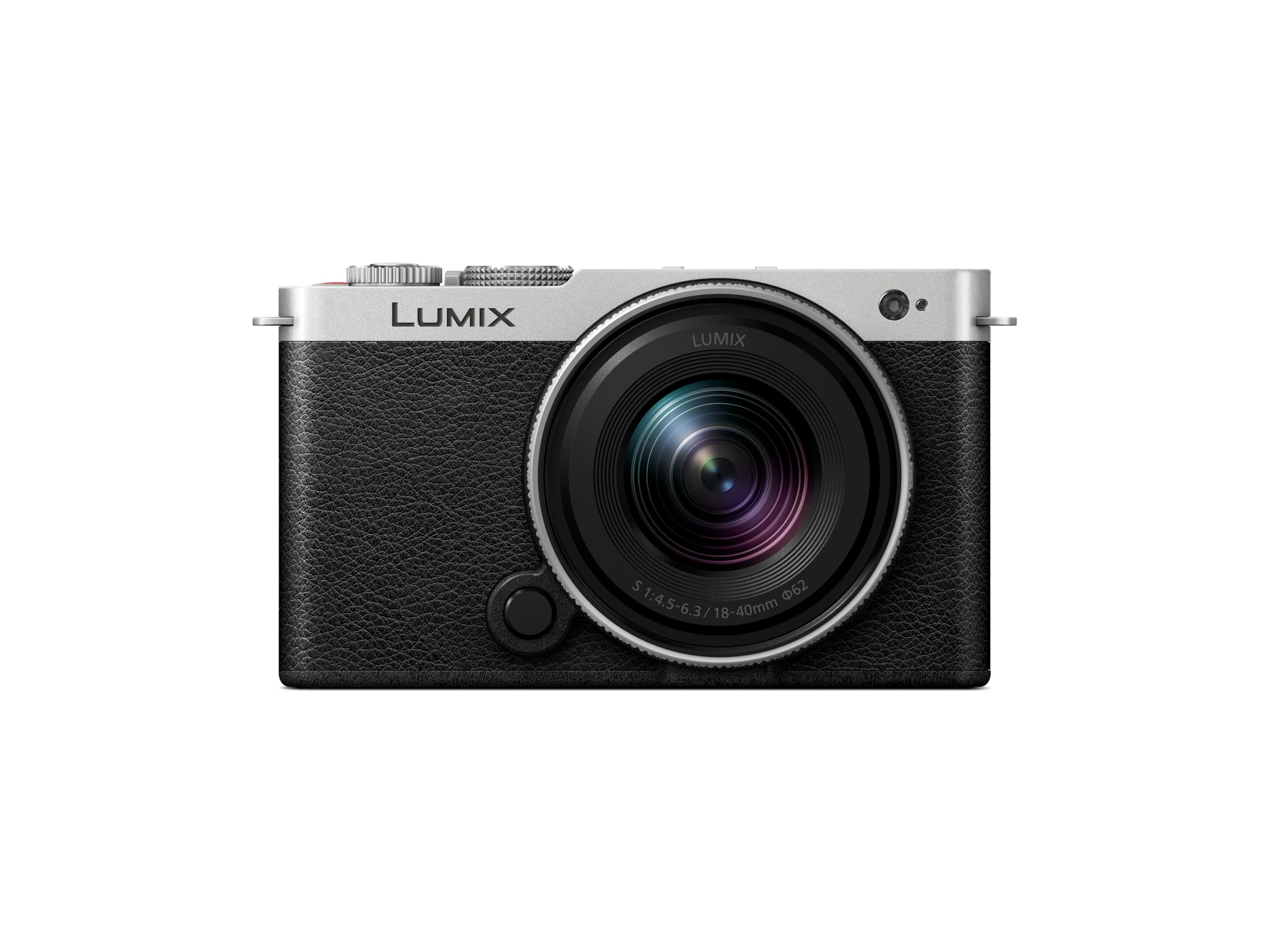
The Panasonic LUMIX S9 is designed around one idea: making full-frame quality easy to share. Its defining feature is the fast connection and transfer to your smartphone via LUMIX Lab and an ultra-fast Wi-Fi connection. Every shot appears in your phone’s photo library for quick sharing, which removes the biggest friction point of using a “real” camera for social media. Owners describe it as a Point and Shoot Masterpiece for anyone.
It includes an Open Gate recording mode that lets you get all the aspect ratios from one shot, with helpful multiple frame markers on screen. You can frame once and then crop for Instagram, TikTok, or YouTube without re-shooting. The full-frame sensor delivers professional results even in low-light conditions, and the compact S 18-40mm F4.5-6.3 lens is built for travel. It is a genuinely small full-frame body that fits in a day bag.
The S9’s simplicity is also its limitation. There is no built-in flash and no hotshoe, so you cannot attach a flash either — a real surprise at its price point. Some owners find the camera almost unusable without an added grip. But for creators who rely on natural light and want a compact full-frame sensor with instant phone transfer, the LUMIX Lab app and LUT color features are the standout draw.
Share-First Design: Owners love the LUT feature for easy color grading and the solid dynamic range, with sharp images that punch well above the setup’s size.
For travelers on the go: If you want full-frame depth of field (the blurred-background look) but need shots on your phone fast, this camera’s workflow gets you there quicker than the [Other Pick]—just be ready for the registration step.
Check your flash needs: With no flash and no hotshoe, low-light indoor shooting relies entirely on the sensor and wider lenses.
Understanding the Specs
Sensor Size: 1-Inch vs APS-C vs Full-Frame
This is the core of image quality. A 1-inch sensor is what you find in DJI and Xtra Muse pocket cams — great for video, but limited in low light and background blur. APS-C sensors, like in the Nikon Z 30 and Sony ZV-E10 II, are several times larger and handle dim scenes better. Full-frame sensors, like in the Sony A7 IV and Canon EOS R8, are the largest and produce the shallow depth-of-field look that separates pro content from phone clips.
Frame Rates and Slow Motion
The number before “fps” (frames per second) tells you how smooth motion looks. Standard video is 30p or 60p, but high frame rates like 120fps let you slow footage down to 25% speed without it looking jerky. The Xtra Muse and DJI Osmo Pocket 3 both hit 4K at 120fps, giving you smooth slow motion for that cinematic feel, while the GoPro HERO13 reaches 2.7K240 for even slower 8x playback.
FAQ
Why should I buy a dedicated camera when my phone is already good?
What does a gimbal actually do for my vlogs?
What is the difference between 4K30 and 4K120 video?
Which camera transfers files to my phone the fastest?
Is a full-frame camera necessary for social media content?
How do I keep my camera from overheating during 4K recording?
Can I use these cameras as webcams for streaming?
What does the “10-bit color” spec mean for my videos?
What is the best camera for vertical video for TikTok and Reels?
Final Thoughts: The Verdict
The best camera for social media depends entirely on your shooting style, but the crowd favorite is the DJI Osmo Pocket 3 — it delivers cinematic 4K with easy stabilization in a pocket-sized body. If you need professional reach for sports and wildlife, grab the Canon EOS R7. And for full-frame low-light power without the bulk, the Canon EOS R8 is the one to reach for.
How We Picked
We do not accept paid placement. Every pick is matched to a real buyer and a real use-case; we do not hands-on test units.
Sources & Methodology
Specifications: manufacturer listings and product documentation. Review insights: verified customer reviews, as of September 2026. Pricing: not shown on this page (it changes often); check the current price via the retailer link.
As an Amazon Associate, Gadgets Feed earns from qualifying purchases. This does not affect which products we feature.