
A teenager’s phone camera is always there, but it rarely inspires real curiosity about composition, light, or storytelling. Handing a budding creator a dedicated camera changes the game — not because the specs are higher, but because the act of framing a shot through a real viewfinder or flipping a screen to vlog demands intention. The best choice balances image quality with durability, keeps operation simple enough to avoid frustration, and offers room to grow without overwhelming a beginner.
I’m Min — the co-founder and writer behind Gadgets Feed. I’ve spent hundreds of hours researching beginner-friendly cameras, cross-referencing real customer experiences with technical spec sheets, and understanding which features truly matter for a teenager’s first serious camera purchase rather than what marketing suggests.
After filtering through raw user feedback and comparing every key metric from sensor size to battery endurance, I’ve assembled a focused list of the best camera for teenager that prioritizes ease of use, real-world durability, and creative potential without demanding a professional budget.
How To Choose The Best Camera For Teenager
The right camera for a teenager sits at the intersection of simplicity, portability, and image quality. You want a device that feels intuitive straight out of the box — no steep learning curve — but still offers manual controls or creative modes when curiosity strikes. Below are the three most critical factors to weigh before buying.
Sensor Size and Low-Light Performance
A larger sensor captures more light, which directly translates to better photos indoors, at dusk, or in dimly lit rooms. For a teenager, a 1-inch CMOS sensor (found in pocket gimbal cameras) or an APS-C sensor (found in entry-level DSLRs) delivers a massive leap over smartphone sensors. Even a quality 16MP CMOS sensor in a compact point-and-shoot handles evening gatherings and indoor sports with noticeably less grain than a phone’s computational processing can fake.
Optical Zoom vs. Digital Zoom
Digital zoom crops into the image and destroys detail — a trap many first-time buyers fall into. Optical zoom, like the 5x zoom on a Kodak PIXPRO or the 16x digital zoom on a camcorder, physically adjusts the lens to bring subjects closer without losing resolution. For a teen attending concerts, capturing wildlife on a hike, or filming distant action on the soccer field, optical zoom is non-negotiable. Anything less than 3x optical zoom should be a dealbreaker for any serious use beyond selfies.
Battery Life and Accessory Bundles
A camera that dies after an hour of light use is a frustration no teenager needs. Look for models that offer at least two hours of continuous recording or 200+ still shots per charge. Bundles that include a spare battery, memory card, tripod, and carrying case dramatically lower the total cost of ownership — a critical consideration when the camera is a gift. A 64GB or 128GB memory card is the sweet spot: enough storage for several days of casual shooting without needing to offload files constantly.
Quick Comparison
On smaller screens, swipe sideways to see the full table.
| Model | Category | Best For | Key Spec | Amazon |
|---|---|---|---|---|
| Canon EOS Rebel T7 | DSLR | Learning photography fundamentals | 24.1MP APS-C Sensor | Amazon |
| Insta360 GO Ultra Creator Bundle | Action Camera | Hands-free POV and sports vlogging | 53g Weight, 200 Min Battery | Amazon |
| Xtra Muse | Gimbal Camera | Buttery-smooth 4K vlogging | 1-inch CMOS, 4K/120fps | Amazon |
| NBDDIGITAL 8K Camera | Compact | All-in-one kit for aspiring YouTubers | 8K Video, 64GB Card Included | Amazon |
| SJCAM C400 | Travel Action Cam | All-day outdoor recording | 7-Hour Battery, 128GB Card | Amazon |
| MWIRB 8K Camcorder | Camcorder | Budget-friendly video with night vision | 8K Resolution, 18x Digital Zoom | Amazon |
| Kodak PIXPRO FZ55 (Blue) | Point-and-Shoot | Nostalgic digital aesthetic on a budget | 16MP Sensor, 5x Optical Zoom | Amazon |
| Kodak PIXPRO FZ55 (Black) | Point-and-Shoot | Reliable everyday photos | 16MP Sensor, 5x Optical Zoom | Amazon |
| Crxythmenon 4K Gimbal | Vlogging Camera | Stabilized vlogging on a tight budget | 330° Rotating Lens, 75MP | Amazon |
In‑Depth Reviews
1. Canon EOS Rebel T7 DSLR Camera EF-S 18-55mm f/3.5-5.6 is II Lens Kit

The Canon EOS Rebel T7 is the gold standard for a teenager serious about learning photography. Its 24.1-megapixel APS-C sensor captures sharp, detailed images that outclass any smartphone, and the included 18-55mm kit lens offers enough versatility for portraits, landscapes, and everyday snapshots. The optical viewfinder — a feature absent from most compact cameras — teaches proper framing and composition without the distraction of a live digital preview.
Built-in Wi-Fi and NFC make transferring photos to a phone effortless, so teens can edit and post to social media within seconds. The 9-point autofocus system is dated by modern mirrorless standards, but it’s more than capable for portraits and still subjects, and the AI Servo AF tracks slow-moving targets reasonably well. Battery life is excellent, routinely delivering over 500 shots per charge.
The main trade-off is size: it’s bulkier than a point-and-shoot or action camera, so a teen needs to be willing to carry a backpack or sling. No memory card is included, so budget an extra –20 for a 64GB SD card. As a first interchangeable-lens camera, the Rebel T7 provides a genuine photographic education without overwhelming a beginner.
Why it’s great
- APS-C sensor delivers professional-grade image quality
- Optical viewfinder teaches real photography skills
- Excellent battery life for all-day shooting
- Wi-Fi and NFC make sharing seamless
Good to know
- Bulkier than compact options — needs a bag
- SD card not included in the box
- Autofocus system feels dated in 2024
2. Insta360 GO Ultra Creator Bundle
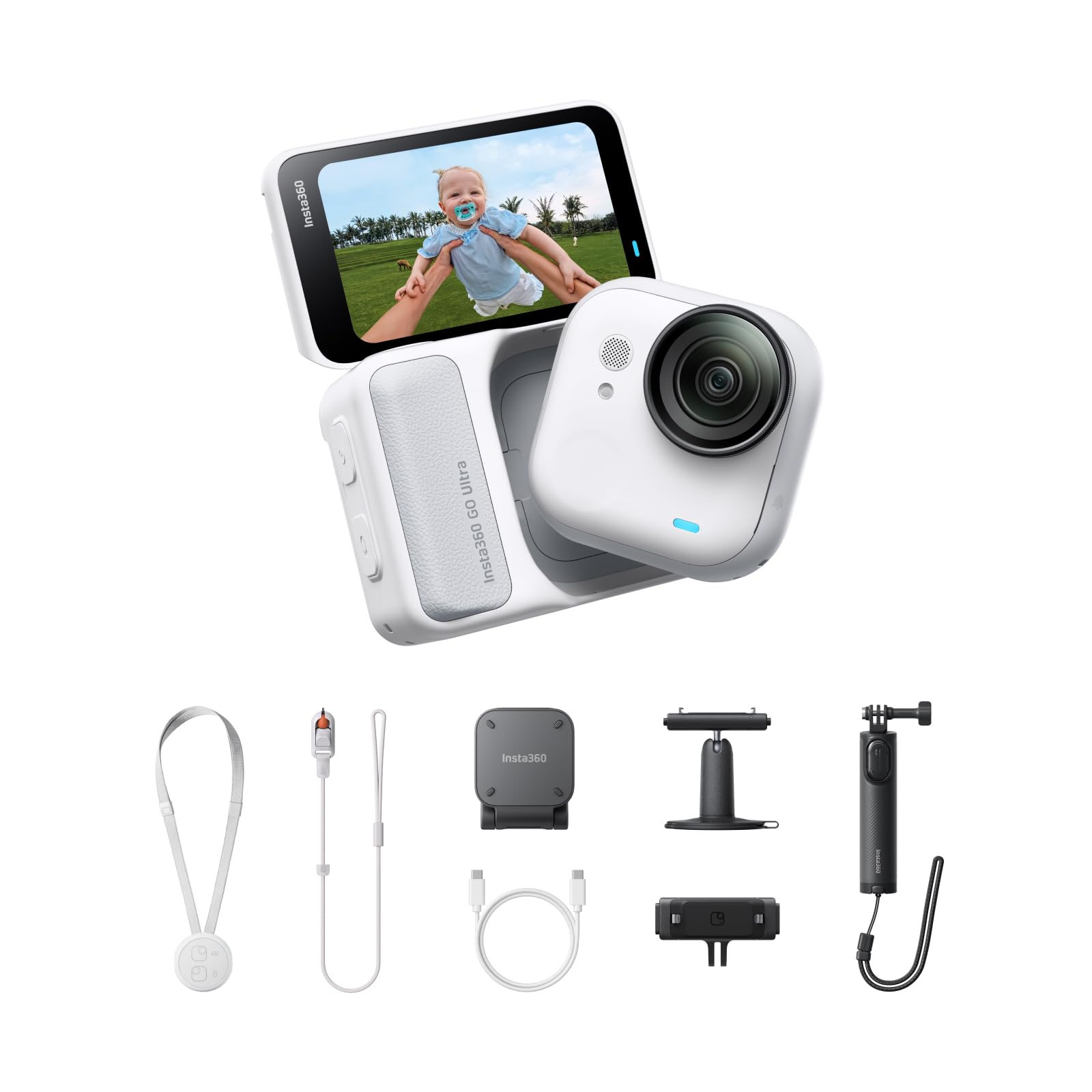
The Insta360 GO Ultra Creator Bundle is a marvel of miniaturization. Weighing just 53 grams — roughly the same as a watch — this camera attaches magnetically to clothing, clips onto a cap brim, or mounts on bike handlebars for true hands-free first-person footage. The 1/1.28-inch sensor and 5nm AI chip produce vibrant 4K video at 60fps, and the 4K Active HDR mode handles high-contrast outdoor scenes with impressive dynamic range.
The magnetic ecosystem is the real game-changer for active teens. A pendant mount worn under a shirt lets them capture POV footage of skateboard tricks, mountain bike rides, or day-to-day vlogs without holding anything. FlowState stabilization and 360 Horizon Lock keep footage smooth even during running or jumping, and the IPX8 waterproof rating means it can survive drops in pools or puddles up to 33 feet deep.
The trade-off is battery life — 70 minutes from the standalone camera, extendable to 200 minutes with the Action Pod. The proprietary magnetic charging system is fast (0–80% in 12 minutes) but requires carrying the Pod for full-day outings. Teens already invested in the TikTok/Instagram Shorts format will love the AI auto-editing feature that instantly generates shareable highlight reels.
Why it’s great
- Ultra-lightweight 53g magnetic design
- 4K Active HDR with excellent stabilization
- AI auto-editing for instant social media clips
- IPX8 waterproof to 33ft
Good to know
- 70-minute standalone battery needs the Pod for longer shoots
- MicroSD card not included
- Action Pod is only splashproof, not fully waterproof
3. Xtra Muse Vlogging Camera with 1” CMOS & 4K/120fps

The Xtra Muse packs a 1-inch CMOS sensor and a built-in 3-axis gimbal stabilizer into a pocket-friendly body, making it the most compelling alternative to the DJI Pocket 3 for under . The 4K video at 120fps is buttery smooth, and the slow-motion capabilities capture action and expression in a way that standard 30fps vlogging cameras cannot match. Face and object tracking work reliably, keeping the subject centered even when the camera is mounted on a tripod for hands-free recording.
The 2-inch touchscreen is responsive and simple enough for a beginner to navigate, while the true 10-bit X-Log color mode offers serious post-production flexibility for teens interested in color grading. The gimbal stabilizer eliminates the need for a separate gimbal accessory — a huge win for portability and setup time. Battery life averages 161 minutes, which covers most shooting sessions.
Low-light performance is solid thanks to the larger sensor, but it’s not on par with a full-frame DSLR. The lack of a built-in hot shoe means external lighting requires a cold shoe adapter. For a teen focused on vlogging, dance content, or travel videos, the Xtra Muse delivers professional-grade smoothness in a package that fits in a jacket pocket.
Why it’s great
- Built-in 3-axis gimbal for silky-smooth footage
- 1-inch CMOS sensor for excellent low-light performance
- 4K/120fps slow-motion video
- Reliable face and object tracking
Good to know
- No built-in hot shoe for external flash
- Battery at 161 minutes — pack a power bank for long days
- Requires a MicroSD card (not included)
4. NBDDIGITAL 8K 64MP Digital Camera with 180° Flip Screen
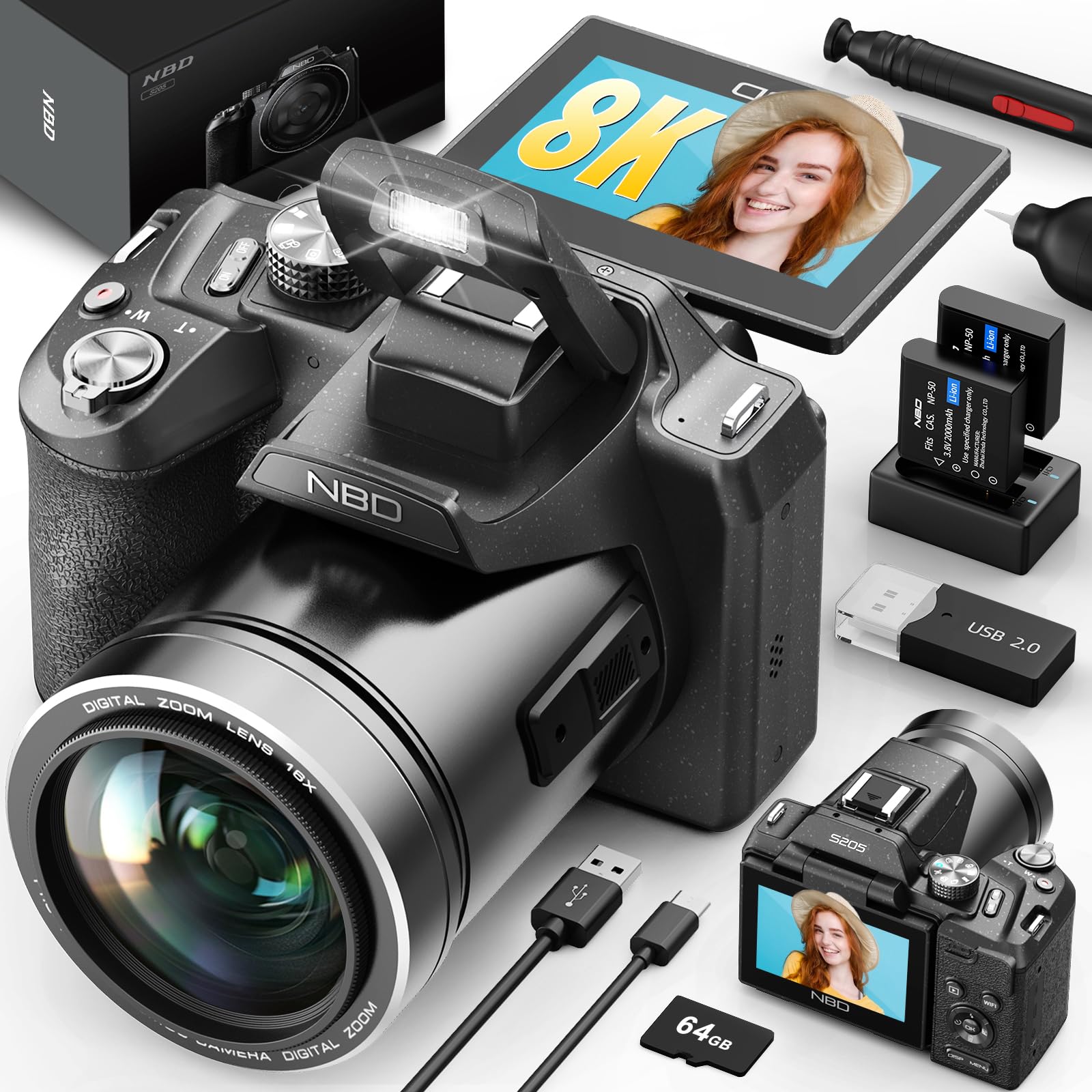
The NBDDIGITAL 8K Camera is an all-in-one starter kit designed for the video-obsessed teen. It records up to 8K resolution (with options for 5K/30fps or 4K/60fps) and captures 64MP stills — specs that sound impressive on paper and produce shareable content for YouTube and TikTok. The 180-degree flip screen is a clear sign this camera was built for vloggers who need to frame themselves while recording.
The bundle includes two 2000mAh batteries, a 64GB TF card, and a micro HDMI cable, so a teen can start shooting immediately without buying extra accessories. The 16x digital zoom is useful for framing distant subjects, though it’s digital rather than optical, so image quality drops at max zoom. The hot shoe supports an external flash, and the USB/Wi-Fi connectivity makes file transfer straightforward.
Image stabilization is present but not gimbal-level — expect minor shakiness during walking footage. The macro lens thread had some quality inconsistency reported by users. For a teen on a strict budget who wants the most features packed into one box, this kit delivers phenomenal value, especially if they prioritize video over still photography.
Why it’s great
- Generous bundle includes 2 batteries and 64GB card
- 8K video and 64MP stills for budget-conscious creators
- 180° flip screen perfect for vlogging
- Hot shoe supports external flash
Good to know
- 16x digital zoom reduces image quality at max range
- Stabilization is adequate but not gimbal-smooth
- Macro lens threading quality reported as rough
5. SJCAM C400 4K Travel Vlogging Camera with 128GB Card
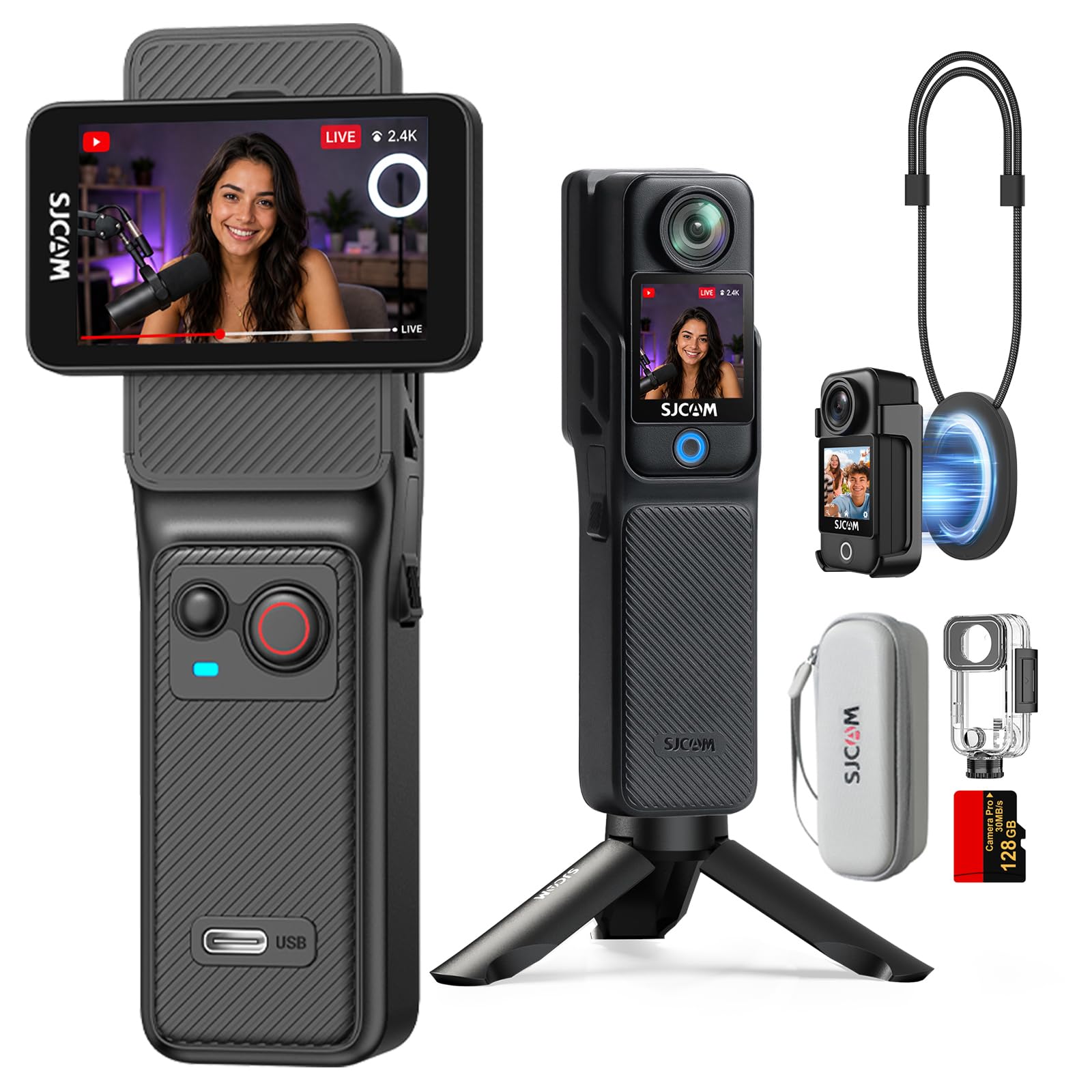
The SJCAM C400 is built for the teen who wants to film all day without worrying about battery life. A single charge delivers up to 7 hours of continuous 4K recording — an extraordinary runtime that outpaces almost every camera in this price range. The 154-degree distortion-free wide-angle lens captures immersive landscapes and group shots, and the f/2.0 aperture handles low-light conditions better than most sub- action cameras.
Six-axis electronic image stabilization and horizon correction keep footage smooth during action shots, whether biking, running, or filming handheld. The 2.29-inch touchscreen is responsive, and the 5G WiFi module enables fast file transfer to a phone for immediate editing and posting. The bundled 128GB memory card means no immediate need for additional storage.
The primary limitation is the lack of an external microphone jack — a dealbreaker for teens serious about audio quality. Built-in audio is decent for casual use, but wind noise and ambient sound are noticeable without a dead cat. The C400 is also not waterproof without a separate housing, so it’s not suitable for underwater filming beyond splashes.
Why it’s great
- Exceptional 7-hour battery life for all-day recording
- 154° wide-angle lens with f/2.0 aperture
- 6-axis EIS and horizon correction for stable action shots
- 128GB card included in the bundle
Good to know
- No external microphone jack
- Not waterproof without a separate housing
- Built-in audio is average in windy conditions
6. MWIRB 8K Video Camera Camcorder with Night Vision
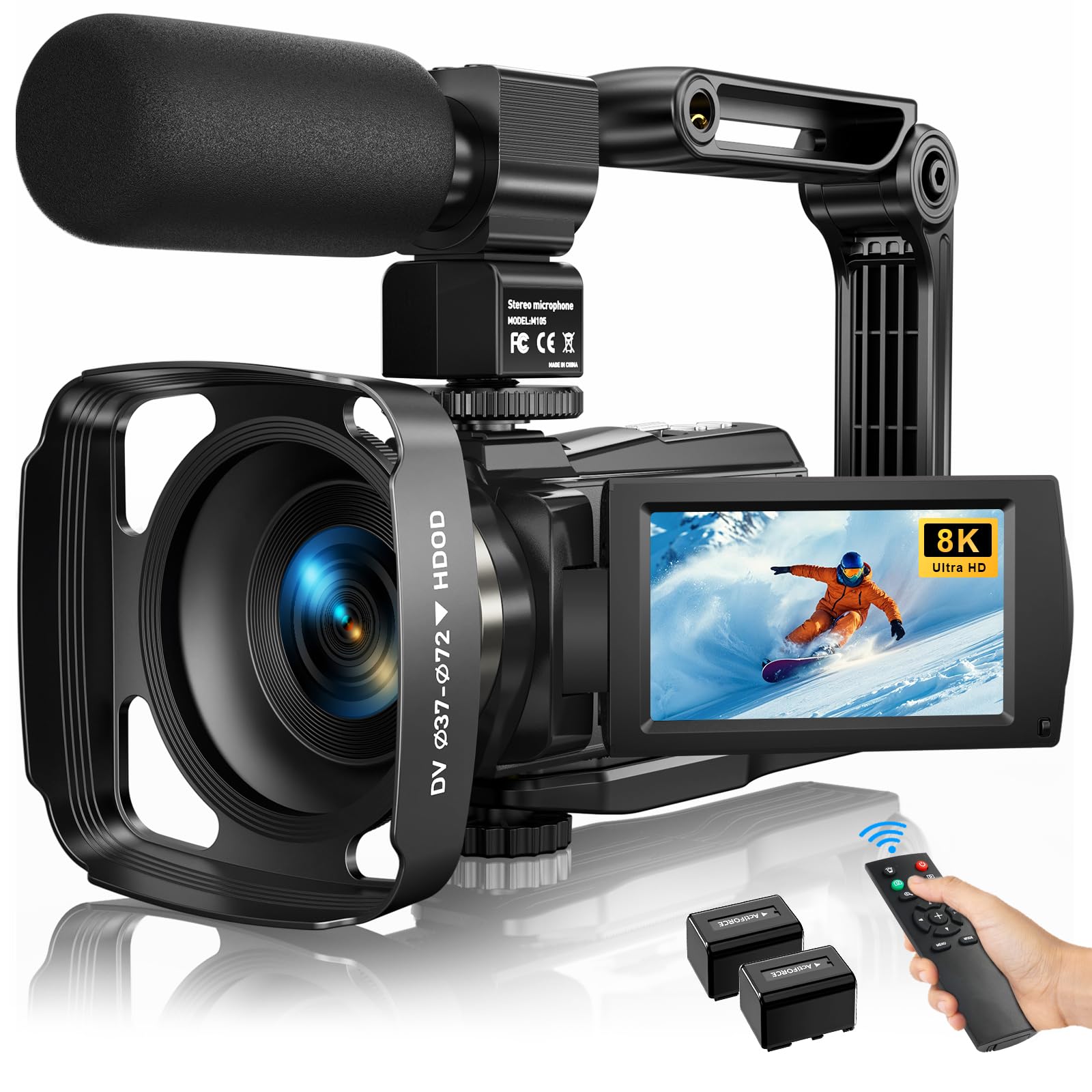
The MWIRB 8K Camcorder brings a feature list that rivals cameras costing three times as much, including infrared night vision, a 3-inch 270-degree rotatable touchscreen, and an external X-Y stereo microphone. The 8K video recording (at 15fps) is more marketing than practical use — stick to 4K at 30fps or 1080p at 60fps for smooth, watchable footage. The 88MP still photos are heavily interpolated but produce decent results in good light.
The 6-axis anti-shake technology stabilizes handheld walking footage, and the 18x digital zoom is usable up to about 10x before image degradation becomes noticeable. The included remote control lets teens start and stop recording from a distance, which is handy for group videos or tripod-mounted interviews. The camcorder also doubles as a webcam via USB, making it useful for school projects or live streaming.
The bundled accessories — external microphone, handheld stabilizer, lens hood, two batteries, and a carrying bag — represent genuine value. Battery life is average at around 90 minutes per charge, thankfully mitigated by the second battery. The menu system can be slightly unintuitive, but teens comfortable with smartphone cameras will adapt within an hour.
Why it’s great
- Infrared night vision for dark-environment filming
- Comprehensive accessory bundle included
- 270-degree rotatable touchscreen for self-recording
- Functions as a USB webcam
Good to know
- 8K recording limited to 15fps — stick to 4K for real use
- 88MP stills are interpolated, not true resolution
- Menu system has a learning curve
7. Kodak PIXPRO FZ55 Digital Camera (Blue)

The Kodak PIXPRO FZ55 in Blue is the camera that TikTok trends are built on. Its 16MP CMOS sensor and 5x optical zoom produce the slightly soft, color-saturated aesthetic that Gen Z has collectively decided is cooler than ultra-sharp smartphone images. The 28mm wide-angle lens is wide enough for group selfies and scenic backgrounds, and the 1080p Full HD video is sufficient for casual clips.
The 2.7-inch LCD screen is small by modern standards, but it keeps the camera compact — smaller than most phones — and encourages the intentional shooting that defines the “digital camera” revival. The rechargeable Li-Ion battery delivers about 200 shots per charge, which is solid for a device this size. It accepts SD, SDHC, and SDXC cards up to 512GB, so storage is never a concern.
The autofocus can hunt in low light, and there’s no image stabilization beyond digital cropping. This camera rewards good lighting and steady hands. For a teen who wants the Y2K aesthetic without the complexity of a DSLR, the FZ55 is the perfect pocket companion. The blue color variant in particular has become a recognizable style statement among young creators.
Why it’s great
- Trendy Y2K aesthetic popular on social media
- True 5x optical zoom for distant subjects
- Ultra-portable size fits any pocket
- Accepts up to 512GB SD cards
Good to know
- Autofocus struggles in dim environments
- No optical image stabilization
- 1080p video only, no 4K
8. Kodak PIXPRO FZ55-BK 16MP Digital Camera (Black)

The black variant of the Kodak PIXPRO FZ55 offers the same core hardware as its blue sibling — a 16MP CMOS sensor, 5x optical zoom, and 1080p video — at a slightly more accessible price point. For parents looking for a no-fuss camera that delivers reliable results without any vlogging-specific features, this is the entry-level workhorse. The 28mm wide-angle lens handles group shots better than most smartphone ultrawide cameras.
The interface is refreshingly simple: a mode dial on top and basic playback controls mean a teenager can be taking great photos within minutes of unboxing. It’s lightweight at roughly 170 grams with the battery, making it easy to carry to school events, sleepovers, or vacations without complaint. The 2.7-inch LCD is bright enough for outdoor use in all but direct sunlight.
Reviews consistently praise its sharp picture quality relative to the price point, though it lacks any advanced features like Wi-Fi, touchscreen, or user-selectable aperture. The lack of a USB-C charging port (it uses a proprietary AC adapter) is an inconvenience. For the teen who simply wants a dedicated camera to document life without distraction, the black Kodak PIXPRO FZ55 is the most straightforward recommendation.
Why it’s great
- Simplest interface — learnable in minutes
- 5x optical zoom beats smartphone digital zoom
- Very lightweight and pocketable
- Proven reliability from positive user feedback
Good to know
- No Wi-Fi for wireless transfers
- Proprietary AC adapter, not USB-C
- No aperture priority or manual mode
9. Crxythmenon 4K Vlogging Camera with 330° Rotating Lens
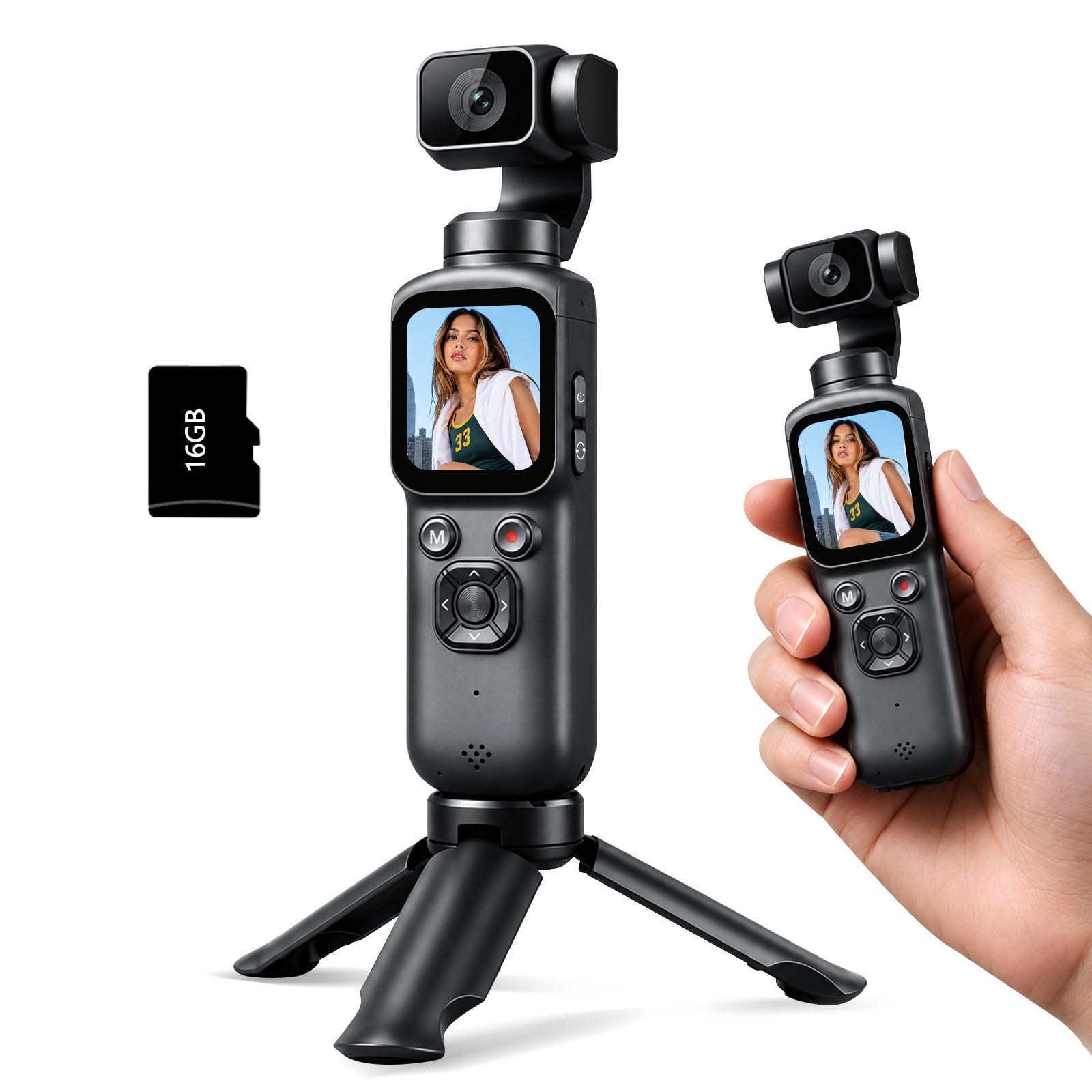
The Crxythmenon 4K Vlogging Camera proves that a sub- camera can still be genuinely useful for a teenager dipping their toes into content creation. The standout feature is the 330-degree rotating gimbal lens — a mechanical rotating design that allows smooth panning shots and creative angles without a separate gimbal. The 75MP still photos and 4K video are interpolated, but in good lighting, the results are shareable and look fine on social media.
Face tracking works surprisingly well, automatically keeping the subject centered even during walking shots. The WiFi connectivity enables preview and file transfer to a smartphone, and the included tripod, 16GB memory card, and cleaning kit mean the box contains everything a beginner needs. The lightweight build (roughly 200 grams) makes it comfortable to hold for extended recording sessions.
The trade-offs are noticeable: the touchscreen is small and not the most responsive, audio quality from the built-in microphone is mediocre, and the 4K claims are capped at 15fps — realistic video should be shot at 1080p. The plastic construction feels less durable than a Kodak PIXPRO or Canon T7. For a very budget-conscious purchase or a first camera that tests a teen’s interest before committing to a more expensive model, the Crxythmenon offers genuine value.
Why it’s great
- 330° rotating lens enables creative angles and smooth pans
- Complete bundle includes tripod and 16GB card
- Face tracking keeps subject in frame automatically
- WiFi transfer to phone for instant sharing
Good to know
- 4K video limited to 15fps — shoot in 1080p for real use
- Plastic build feels less durable than competitors
- Built-in microphone audio quality is average
FAQ
Is a DSLR too complicated for a 14-year-old beginning photography?
How many megapixels does a teenager really need for social media?
Should I buy a camera that includes an SD card and tripod?
What is the difference between an action camera and a vlogging camera for a teen?
Why do teenagers prefer the Kodak PIXPRO FZ55 over more advanced cameras?
Final Thoughts: The Verdict
For most users, the best camera for teenager winner is the Canon EOS Rebel T7 because the APS-C sensor and optical viewfinder teach real photography skills that transfer to any future camera, all while producing images that rival professional gear. If you want pocket-ready, gimbal-smooth vlogging, grab the Xtra Muse with its 1-inch CMOS and 4K/120fps slow motion. And for the teen who lives on a skateboard or mountain bike, nothing beats the Insta360 GO Ultra Creator Bundle for lightweight, wearable, magnetic POV filming that makes every edit effortless.