
Our readers keep the lights on and my morning glass full of iced black tea. As an Amazon Associate, I earn from qualifying purchases.
Specs are compiled from manufacturer listings and verified buyer reviews and can change over time — please confirm the key details on the product page before buying.
Choosing a travel camera is the art of compromise. You need something small enough to slip into a daypack, yet powerful enough to capture a sunset temple, a bustling market, or a spontaneous street performance without looking like a blurry mess. The real trick is knowing which trade-off is worth making — whether you prioritize zoom range, low-light performance, or ruggedness — so you stop reaching for your phone and start taking photos you actually want to print.
I’m Min — the founder and writer behind Gadgets Feed. This guide is built by comparing the manufacturers’ published specifications and the patterns across verified customer reviews, so you get each pick’s real strengths and trade-offs instead of marketing spin.
After breaking down the specs and real-world feedback, we have narrowed down the field to the models that genuinely earn their spot as the best camera for travel in 2025.
Our Picks at a Glance


How To Choose The Best Camera For Travel
Picking the right travel camera is about matching a set of physical attributes to the way you actually move through the world. You are balancing portability, image quality, and durability — and one size definitely does not fit all.
Sensor Size and Low-Light Performance
The sensor is the heart of the camera. A larger 1-inch or APS-C sensor captures more light, which means cleaner shots in dim temples, evening streets, or candlelit dinners. A smaller sensor, like the one in most phones, struggles once the sun goes down. If you shoot a lot at dusk or indoors, prioritize a larger sensor over extra megapixels.
Optical Zoom vs Digital Zoom
Optical zoom uses the lens to magnify the scene and keeps the image sharp. Digital zoom simply crops and enlarges the pixels, which ruins quality. For travel, a lens with at least 3x to 5x optical zoom gives you flexibility for landscapes and portraits. If you shoot wildlife or sports, look for 10x to 30x optical zoom.
Stabilization (IBIS vs Lens-Based)
In-Body Image Stabilization (IBIS) steadies the sensor itself, which means any lens you attach benefits from the anti-shake effect. This is especially useful for handheld night shots or walking video. Some cameras rely on lens-based stabilization, which only works with that specific kit lens. IBIS is the gold standard for travel.
Weather Sealing and Build
A camera that is waterproof, dustproof, or crushproof can go places a normal camera cannot. If your travel involves the beach, rainforest, snow, or hiking, a rugged body like the OM System Tough TG-7 is a no-brainer. For most urban trips, a weather-sealed mirrorless body with a sealed lens is enough.
Quick Comparison
| Model | Best For | Sensor | Zoom Range | Stabilization | Amazon |
|---|---|---|---|---|---|
| DJI Osmo Pocket 3★ Best Overall | Vloggers on the move | 1-inch CMOS | Fixed wide | 3-Axis Mechanical | $439.00$499.00Amazon |
| Canon PowerShot V10Compact Vlogger | Ultra-portable vlogging | 1-inch CMOS | Fixed 19mm wide | IS On/Enhanced | $379.00$479.00Limited time dealAmazon |
| OM System Tough TG-7Rugged Explorer | Rugged adventures | 1/2.3-inch CMOS | 4x Optical | None | $549.99$649.99Amazon |
| Panasonic LUMIX ZS99 | Superzoom flexibility | 1/2.3-inch CMOS | 30x Optical (24-720mm) | 5-Axis HYBRID O.I.S. | $697.99Amazon |
| OM System E-M10 Mark IV | Stylish mirrorless starter | 20MP Micro Four Thirds | 3x Optical (kit lens) | 5-Axis IBIS | $699.99$899.99Amazon |
| Nikon Z 30 | Content creators | 20MP APS-C | 16-50mm kit lens | Lens-based VR | $896.95Amazon |
| Sony Alpha a6400 | Speed and autofocus | 24.2MP APS-C | E-mount (lens sold separately) | None (lens-based) | $855.00$999.99Amazon |
| Nikon Z 50 | Two-lens versatility | 20.9MP APS-C | 16-50mm + 50-250mm kit | None (lens-based) | $1,090.75$1,346.95Amazon |
| Canon EOS RP | Full-frame entry | 26.2MP Full-Frame | 24-105mm kit lens | Lens-based IS (5 stops) | from $799.00Amazon |
| Sony RX100 VII | Pocketable powerhouse | 20.1MP 1-inch Stacked CMOS | 8x Optical (24-200mm) | Active Mode (4K video) | $1,498.00Amazon |
| Fujifilm X100VI | Street photography lovers | 40.2MP X-Trans CMOS 5 HR | Fixed 23mm (35mm equiv.) | 5-axis IBIS (6 stops) | $2,319.95Amazon |
In‑Depth Reviews
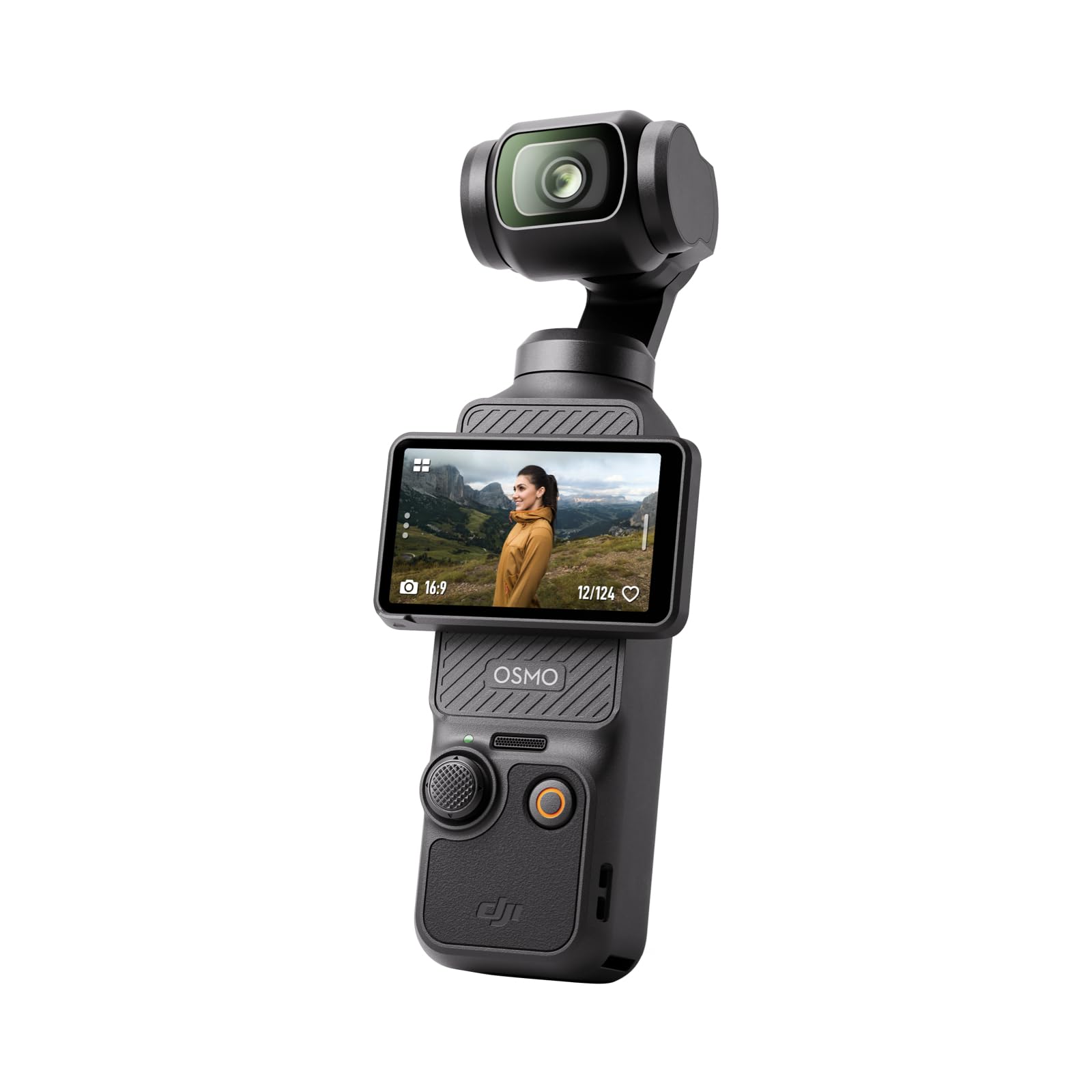
1. DJI Osmo Pocket 3
Our pick — 4.5★ from 3,000+ verified ratings; the strongest balance of quality and price.
The pocket-sized creator tool that kills shaky vlog footage for good.
This camera solves the number one travel-video problem — jittery handheld footage — with a 3-axis mechanical gimbal that keeps your walking shots smooth without any digital cropping. You get a 1-inch CMOS sensor that shoots 4K at 120fps, which means you can pull buttery-slow-motion clips from action scenes. The 2-inch rotatable touchscreen flips for horizontal or vertical shooting, so you never need to choose between YouTube and TikTok layouts on the fly. Buyers report the battery lasts full sightseeing days, which is a rare compliment for a compact camera.
It also supports D-Log M and 10-bit color depth, letting you record up to one billion colors for professional-grade grading in post. The ActiveTrack 6.0 keeps you center-frame even when you set it on a tripod and move around. Unlike the Sony RX100 VII, the Osmo Pocket 3 is built specifically for video-first travel creators who prioritize stabilization over zoom range.
The trade-off is the fixed wide lens — you cannot zoom in on distant subjects, so it is not the pick for wildlife or concert seats. If your travel is about capturing the scene around you, not far-away details, this is the most capable tool you can slip into a jacket pocket.
Why it wins for travel
- 3-axis gimbal eliminates the need for a tripod in most walking shots
- 166-minute battery life covers full-day sightseeing without recharge
- 10-bit color and D-Log M allow serious post-production flexibility
The single limitation
- Fixed wide-angle lens means no zoom for distant subjects
- Not waterproof — rain or splash requires a separate housing
Reach for this if: you shoot mostly video while walking through cities, markets, or nature trails and want gimbal-smooth clips without extra gear.
Look elsewhere if: you need optical zoom for wildlife, sports, or distant landmarks.
2. Canon PowerShot V10
The vlogging camera that fits inside your fanny pack.
With a 15.2-megapixel 1-inch back-illuminated CMOS sensor, this camera is designed for one job — recording yourself in front of interesting places. The retractable front-facing screen and built-in stand let you set it on a table and start talking without a tripod. The fixed 19mm wide-angle lens is equivalent to a 35mm camera, so selfies include plenty of background without you having to hold the camera at arm’s length.
The camera records 8-bit 4K video at up to 30fps with three stabilization modes after the latest firmware update. One reviewer tried using this for B-roll footage for their clinic, and while the video quality was excellent, the camera got hot quickly and turned itself off within a few minutes. That is a real concern if you record long clips in warm climates. However, other travelers report it worked perfectly for a trip to Italy, fitting easily into a fanny pack for spontaneous street shooting.
The key compromise is no zoom at all — you frame everything by walking closer or further away. If your travel style is run-and-gun vlogging where you just want to capture yourself in front of cool scenery, this is a solid mid-range choice. For photo-first travelers, the lack of zoom feels restrictive.
Strengths
- Built-in stand folds forward or backward for hands-free shooting
- Stereo mics with a third mic for noise cancellation
- USB-C charging and compact design fit any bag pocket
Weaknesses
- No optical zoom at all (fixed 19mm wide lens only)
- Overheating during extended 4K recording in warm conditions
Buy it if: you want the smallest possible vlogging setup with decent low-light quality and don’t mind zero zoom.
skip it if: you plan to vlog for more than 15 minutes at a time or need any telephoto reach.
3. OM System OLYMPUS Tough TG-7 Red
The underwater companion that survives drops, dust, and freezing temps.
This camera is built for environments that would destroy any other travel camera. It is waterproof to 15 meters (50 feet), shockproof from 2.1 meters (7 feet), crushproof to 100 kilogram-force (220 pound-force), and freezeproof down to -10°C (14°F). That means you can take it snorkeling, drop it on a rocky trail, or leave it in a cold car overnight without worry. The F2.0 lens and 4x optical zoom give you flexibility, and the variable macro system can focus from just 1 centimeter (from the end of the lens) for extreme close-ups of sand details or coral.
However, it only has 9 autofocus points, which lags behind the Canon V10’s 49 points. One buyer who used the camera in salt water said the buttons (specifically the zoom toggle) got slightly stuck and needed a fresh-water rinse afterward. That is standard care for any underwater camera, but note if you switch modes frequently while in the water.
Low-light performance is not this camera’s strength — the small sensor matches what a flagship phone can do after dark. But for bright-day snorkeling, rainy hikes, or dusty desert trails, there is no more durable travel camera in this price bracket.
What makes it unique
- Waterproof to 15 meters without any housing
- Crushproof to 220 pound-force and freezeproof to -10°C
- Variable macro system captures from 1 centimeter away
Where it falls short
- Small sensor limits low-light quality to phone-level results
- Buttons can stick if not rinsed after saltwater use
Ideal for: snorkelers, hikers, climbers, and anyone who needs a camera that can get wet, dropped, or dirty without breaking.
Not for: evening street photography, concerts, or anyone who cares about shallow depth of field.
4. Panasonic LUMIX TZ/ZS99

A 30x Leica zoom that turns distant landmarks into detailed shots.
The single feature that defines this camera is the 24-720mm LEICA lens with 30x optical zoom, which brings mountain peaks, wildlife, and concert stages right into your frame. You get a tiltable 1,840k-dot touchscreen for low-angle shots, and the 5-Axis HYBRID O.I.S. helps keep those long-telephoto frames steady when shooting handheld. The 12-bit depth gives you good tonal range for a compact camera, and built-in Bluetooth v5.0 with a dedicated Send Image button makes sharing to your phone quick.
One reviewer noted the camera takes better photos than the Sony SX 740, and while it has less zoom than that model, it is easier to use and less expensive. Another buyer mentioned the autofocus can be poor in some situations, and the LCD screen is hard to read in direct daylight. The lens aperture runs from F3.3 at wide to F6.4 at full telephoto, so low-light performance at maximum zoom will be limited — a trade-off for the reach.
If your travel is about variety — landscapes one minute, a distant bird the next — this camera gives you a 30x range that no interchangeable-lens kit can match at this size and weight.
The standout advantage
- 30x Leica optical zoom (24-720mm) covers every scenario from wide to tele
- 5-Axis Hybrid O.I.S. helps keep telephoto shots steady
- Bluetooth v5.0 and dedicated Send Image button for quick sharing
The noticeable shortfall
- Only 1 autofocus point makes it slower to lock on moving subjects
- Low-light handheld results are nearly unusable according to some reviews
Go for this if: you need serious reach — wildlife, sports, or far-away architecture — without carrying a massive telephoto lens.
Avoid it if: you shoot mainly in low light or need fast autofocus for moving subjects.
5. OM System Olympus E-M10 Mark IV

A compact mirrorless that brings IBIS and retro style to your travels.
This camera packs a 20MP Live MOS sensor with 5-axis in-body image stabilization that compensates for 4.5 shutter speed steps — enough to shoot handheld in dim cathedrals or museums without motion blur. The 121 contrast-detection autofocus points are a step up from the 9 points on the Tough TG-7, giving you more reliable focus for everyday travel snapshots. The flip-down monitor with a dedicated selfie mode makes it easy to frame yourself in front of a backdrop.
Buyers praise the compact size for a mirrorless camera, noting that paired with the 14-42mm EZ pancake lens, it fits in a jacket pocket. The 16 Art Filters (including a new Instant Film mode) add a fun, nostalgic feel straight out of camera without editing. On the downside, the charger is not included (USB charging only) and the app-based WiFi transfer is slow compared to modern standards.
If you are upgrading from a phone and want real background blur (depth-of-field control) and better shots in dim light, this camera gives you that without the weight of a DSLR (a large, interchangeable-lens camera). It is a strong middle ground between pocket-friendly size and serious image quality.
Why it makes sense
- 5-axis IBIS gives you 4.5 stops of shake compensation for handheld night shots
- 121 autofocus points are responsive for everyday travel subjects
- Art filters and flip-down screen make it fun for selfies and creative shots
The catch
- No external charger included; relies on in-camera USB charging
- WiFi transfer via the OI Share app is slow, per multiple reviews
Perfect for: the photographer who wants interchangeable lenses and IBIS in a lightweight, everyday carry body.
Get something else if: you need fast wireless transfers or plan to shoot a lot of video.
6. Nikon Z 30

Nikon’s most compact mirrorless, designed for creators who want pro-level video.
This Nikon body is built around a 20MP APS-C sensor with 209 autofocus points, covering contrast, hybrid, and phase-detection systems for fast and accurate focusing. The eye-tracking autofocus works for people and pets, which is a huge help when you are filming kids running through a market or a street dog following you. The 14-bit depth gives you more editing latitude than the 12-bit cameras in this list, and the camera records unlimited 4K video with no overheating (a common pain point in the Canon PowerShot V10, as reviewers noted).
You get a flip-out touchscreen selfie monitor and a built-in stereo microphone with adjustable sensitivity. It also works as a plug-and-play webcam over USB-C for Full HD 60p streaming, making it useful for live content creation on the road. One long-time Nikon shooter called it a lightweight alternative to their D810, praising the sharp Z-mount lenses. The main omission is a viewfinder — you frame everything on the rear screen, which can be tough in bright sunlight.
If your travel involves creating content — YouTube, Instagram, live streaming — this is the most camera for your money in terms of video features and lens ecosystem.
Why creators love it
- Unlimited 4K video recording with no overheating reported
- 209 autofocus points with eye tracking for people and pets
- USB-C streaming at Full HD 60p without extra software
The missing feature
- No electronic viewfinder — composing in bright daylight is harder
- Kit lens aperture range (F3.5-F6.3) limits low-light reach
Designed for: vloggers, streamers, and content creators who need a compact body with reliable video features.
Not for you if: you prefer an eye-level viewfinder or shoot mainly in very dim conditions.
7. Sony Alpha a6400

The 0.02-second autofocus that locks onto any subject in an instant.
This Sony body is famous for its lightning-fast real-time eye autofocus and object tracking, which works over 425 phase-detection and 425 contrast-detection points covering 84% of the sensor. The 24.2MP APS-C sensor delivers 14-bit color depth for rich editing room, and the 11fps continuous shooting grabs multiple frames per second of fast-moving subjects. The 180-degree flip-up touchscreen makes it vlog-friendly, though the touchscreen quality itself is not great, according to some reviews.
It does not have in-body stabilization, so you rely on stabilized lenses for smooth video. The 4K footage has a noticeable rolling shutter effect, which can warp fast-moving objects. One buyer mentioned a greenish color cast straight out of camera, requiring some post-processing. However, the battery life is solid, and the Sony E-mount ecosystem offers hundreds of lenses for future upgrades.
For travel photographers who shoot action — kids playing, animals moving, street moments that last a second — the a6400’s autofocus speed is the best in this mid-range bracket.
The speed advantage
- 0.02-second autofocus is the fastest in this class for action shots
- 425 phase-detection points cover 84% of the sensor area
- Extensive Sony E-mount lens library for future upgrades
The compromises
- No in-body stabilization — all anti-shake depends on the lens
- 4K video has significant rolling shutter, limiting action filming
Best for: photographers who prioritize autofocus speed for capturing fast-moving subjects and who plan to invest in Sony’s lens ecosystem.
Skip it: if you shoot mostly handheld video and rely on in-body stabilization.
8. Nikon Z 50

A two-lens travel kit that covers wide to telephoto in one bag.
The Z 50 bundle gives you a 16-50mm zoom and a 50-250mm telephoto zoom, covering the equivalent of a 24-375mm range when you consider the DX crop. The 20.9MP APS-C sensor with 14-bit depth and 209 autofocus points (contrast and phase detection) delivers excellent image quality and reliable focus. The first DX-format Nikon mirrorless to use a 55mm mount, it benefits from the sharp Z-mount lens lineup. The flip-down LCD screen works for selfies and vlogging.
Reviewers praise the fantastic kit lenses for their sharpness and the small overall package. One owner reported the lack of a wide DX Z-mount prime lens and the absence of in-body stabilization — you rely on lens-based VR. This means the telephoto lens needs steady hands at the long end, and switching to third-party or adapted F-mount lenses requires the FTZ adapter (sold separately).
For a photographer who wants a complete travel kit from wide to telephoto without swapping bodies, this two-lens bundle is a solid value proposition.
What the kit delivers
- Two-lens bundle covers wide (16-50mm) to telephoto (50-250mm) for versatile travel
- 20.9MP sensor with 209 autofocus points for sharp results
- Flip-down LCD screen for selfies and vlogging
The limits
- No in-body stabilization; relies on lens VR only
- Limited DX Z-mount lens selection (no wide primes from Nikon)
Ideal for: the traveler who wants one bag with a wide-to-telephoto range and doesn’t plan to swap lenses often.
Not right if: you need in-body stabilization or want a full set of ultra-wide and prime lenses.
9. Canon EOS RP

The most affordable entry into full-frame mirrorless travel photography.
The kit lens is the RF24-105mm F4-7.1 IS STM, which gives you optical stabilization up to 5 stops and a flexible zoom range for landscapes and portraits. The 4K UHD video capture means it pulls double duty for stills and video.
Buyers who upgraded from a crop-sensor camera report seeing noticeably more detail and depth in their photos — a visible difference in image quality. The autofocus is fast and quiet for its class, and the vari-angle touchscreen makes composing from low or high angles easy. The main complaint is battery life, which is rated lower than some APS-C competitors, and the absence of in-body stabilization (you get it only via the lens).
If you have been shooting on a phone or an older DSLR and want the image quality leap that full-frame offers without the weight penalty, this is the most accessible entry point.
Why full-frame matters here
- Full-frame sensor gives superior low-light performance and depth of field control
- RF24-105mm lens with 5-stop stabilization covers most travel scenarios
- Compact and lightweight body for a full-frame system
The trade-offs
- No in-body image stabilization — lens IS only
- Battery life is modest; a spare is recommended for longer days
The move for: anyone ready to step up to full-frame image quality without the bulk and cost of pro-level bodies.
Look elsewhere if: you need a long battery life for all-day shooting without charging.
10. Sony RX100 VII
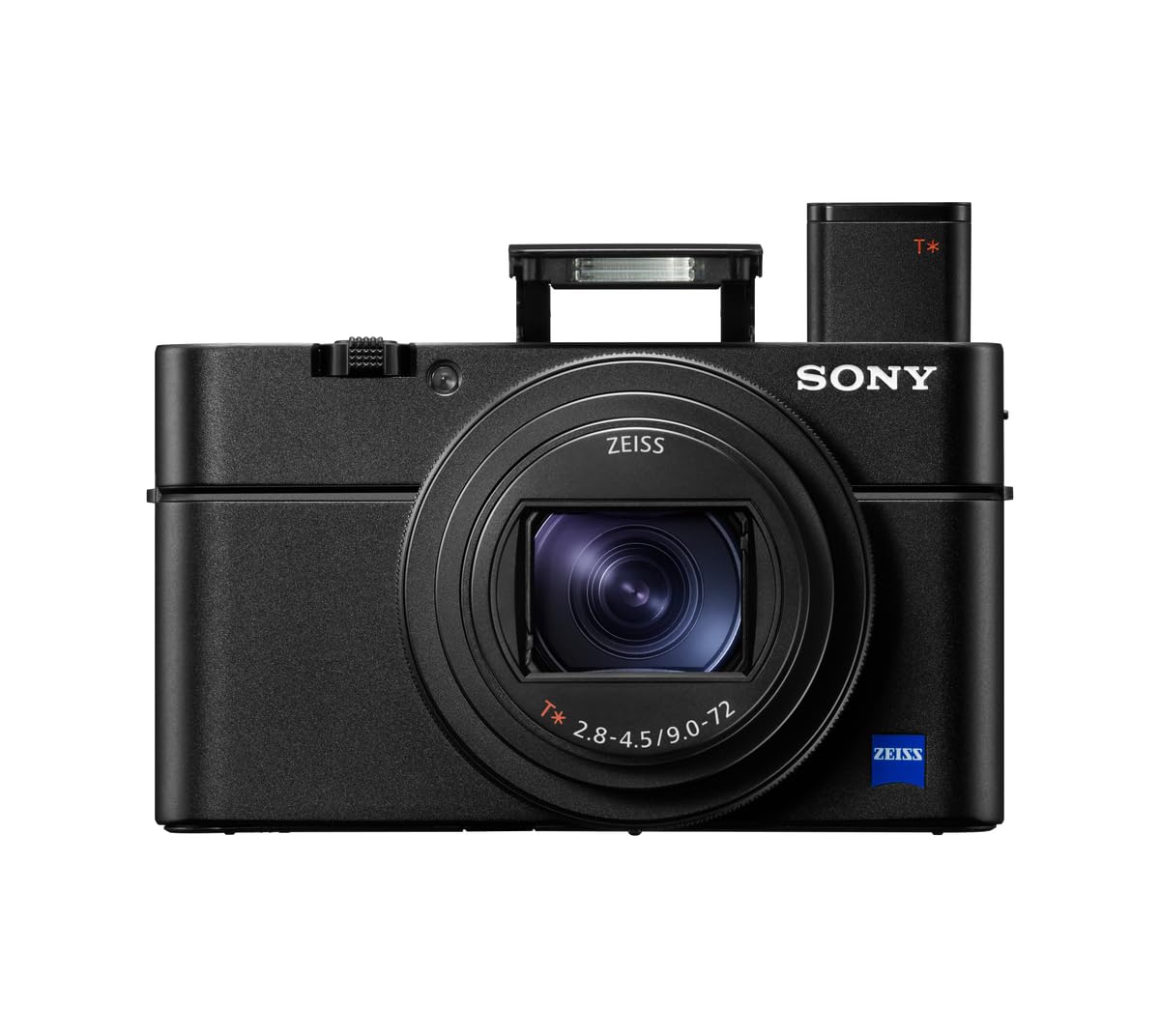
A 24-200mm zoom and 20fps burst in a jacket-pocket body.
You get an 8x optical zoom (24-200mm equivalent, meaning it goes from wide-angle to a decent telephoto) in a body that slips into a jeans pocket. The 20.1MP 1-inch stacked CMOS sensor (a light-capturing chip larger than a phone’s) uses 425 phase-detection AF points and 425 contrast-detection AF points to lock focus as fast as mirrorless cameras (cameras with interchangeable lenses). It shoots at 20fps (frames per second) with no blackout, using up to 60 times per second AF/AE calculations, so you can track moving subjects without losing sight of them — faster than most interchangeable-lens cameras in this guide. For video, it records 4K with S-Log3 (a flat color profile for easier editing) and Active Mode stabilization to keep handheld clips smoother. Owners mention the autofocus is especially reliable for fast-moving subjects like kids or pets.
Reviewers mention the build quality is exceptional but the small body makes the controls tight, and the lack of a grip makes it slippery. One customer observed it performed well at -45°F and the pop-up viewfinder is a lifesaver for bright-day shooting. The omnibus menu system is complex, and the missing accessories (no charger, no manual) feel cheap for the premium price. The question one reviewer posed — whether it cancels the need for a full-frame camera — is a valid thought for travel.
For travelers who want one camera that does nearly everything — wide to telephoto, fast burst, 4K video — and fits in a pocket, this is the most capable compact camera made.
The pocket superpower
- 24-200mm zoom in a true pocket-sized body
- 20fps blackout-free burst shooting with 60/sec AF calculations
- 425 phase-detection AF points for fast subject acquisition
What holds it back
- Slippery body requires an aftermarket grip for one-handed shooting
- No weather sealing — careful in rain or dust
Made for: the traveler who demands maximal zoom and burst speed in the smallest possible package.
Pass on this if: you want weather sealing, simple menus, or a body that works well with large hands.
11. Fujifilm X100VI

A fixed-lens legend with 40 megapixels and film simulations that kill editing.
The X100VI is a cult classic for a reason. Its 40.2MP X-Trans CMOS 5 HR sensor and 5-axis in-body image stabilization (good for up to 6 stops) let you shoot handheld in very low light. The fixed 23mm F2 lens (35mm equivalent) forces you to compose intentionally, and the 20 Film Simulation modes — including the new REALA ACE — produce stunning JPEGs straight out of camera, so you rarely need post-processing. The hybrid viewfinder switches between optical and electronic, giving you a choice between a classic rangefinder-style view or a full-data electronic display.
Buyers rave about the tactile dials and the out-of-camera colors (Velvia, Classic Chrome, Nostalgic Neg.). The built-in 4-stop ND filter is useful for achieving natural motion blur in daylight video or long exposures. However, the autofocus is inconsistent in some conditions, and the video quality is notably weaker than what an iPhone can produce, per reviewers. Battery life is short, and the rear screen tilt is limited compared to the X-T series.
If travel for you means wandering city streets, capturing people and light, and you want a camera that feels like a tool (not a gadget), the X100VI is an inspiring companion that produces gallery-ready images with minimal effort.
What makes it special
- 40.2MP sensor with 6-stop IBIS delivers incredible detail and handheld low-light capability
- 20 film simulations produce stunning JPEGs with no editing needed
- Built-in 4-stop ND filter enables natural motion blur in bright daylight
The honest trade-offs
- Fixed 35mm-equivalent lens means no zoom at all
- Autofocus is inconsistent per reviews, and video quality lags behind modern phones
Right for you if: you love the art of composing with a single focal length and want the most character-rich, portable camera for street and travel photography.
Wrong pick if: you need versatile zoom range, consistent video quality, or long battery life.
Understanding the Specs
Sensor Size and Image Quality
The sensor is the light-capturing surface inside the camera. A larger sensor, like APS-C or full-frame, collects more light in dim conditions, which means cleaner images with less digital grain. A 1-inch sensor is a middle ground — bigger than a phone’s sensor, smaller than a mirrorless camera’s. For travel, a larger sensor is your best friend for after-dark shooting, but it usually means a larger camera body, so you balance quality with pocketability.
Image Stabilization (IBIS vs OIS)
Stabilization counters the natural shake in your hands. In-Body Image Stabilization (IBIS) moves the sensor to compensate, so any lens you attach gets steadied. Optical Image Stabilization (OIS) lives in the lens itself and only works with that lens. IBIS is generally better for travel because you can use small, unstabilized lenses and still get sharp shots at slow shutter speeds. Cameras without stabilization force you to shoot faster or use a tripod to avoid blur.
Optical Zoom vs Digital Zoom
Optical zoom physically moves the lens elements to magnify the scene, preserving image quality at every focal length. Digital zoom simply crops into the center of the sensor and enlarges the pixels, which makes the image look lower quality. When a camera lists a 30x zoom, it means 30x optical zoom, which is the number you want. Any digital zoom number should be ignored for serious shooting.
Autofocus Points
Autofocus (AF) points are small sensors on the camera’s imaging chip that detect contrast or phase differences to lock focus onto a subject. More points give the camera better coverage across the frame and make it easier to track moving subjects. For travel, more AF points mean fasterfocus on a person walking through a crowd or a bird flying past. However, the quality of the AF system matters more than the number — a camera with 425 good points outperforms one with 1000 poorly implemented ones.
FAQ
What camera spec matters most for travel photography?
Is a point-and-shoot camera better than a phone for travel?
How much zoom do I really need for travel?
Is 4K video necessary in a travel camera?
Do I need a waterproof camera for travel?
What is the difference between IBIS and lens stabilization?
Will a travel camera fit in my pocket?
How many megapixels do I need for travel photos?
What is a good battery life for a travel camera?
Can I use a travel camera for vlogging?
Final Thoughts: The Verdict
For the majority of shoppers, the camera for travel winner is the DJI Osmo Pocket 3 because its built-in gimbal, 4K/120fps video, and 166-minute battery cover the highest-priority travel pain point: smooth, easy footage without extra gear.
If you want a pocketable powerhouse with an 8x zoom range, grab the Sony RX100 VII. And for an adventure-proof option that survives water, drops, and extreme cold, the OM System Tough TG-7 is your only real choice in this list.
How We Picked
We do not accept paid placement. Every pick is matched to a real buyer and a real use-case; we do not hands-on test units.
Sources & Methodology
Specifications: manufacturer listings and product documentation. Review insights: verified customer reviews, as of July 2026. Pricing: not shown on this page (it changes often); check the current price via the retailer link.
As an Amazon Associate, Gadgets Feed earns from qualifying purchases. This does not affect which products we feature.
Related Guides
Product prices and availability are accurate as of the date/time indicated and are subject to change. Any price and availability information displayed on Amazon at the time of purchase will apply to the purchase of this product. As an Amazon Associate I earn from qualifying purchases.
CERTAIN CONTENT THAT APPEARS ON THIS SITE COMES FROM AMAZON. THIS CONTENT IS PROVIDED "AS IS" AND IS SUBJECT TO CHANGE OR REMOVAL AT ANY TIME.
Amazon and the Amazon logo are trademarks of Amazon.com, Inc. or its affiliates.