
Spotting an unidentified aerial phenomenon demands more than just pointing a phone camera at the night sky. You need a device that can resolve distant, fast-moving, or heat-emitting objects against the pitch-black backdrop of the atmosphere, often at extreme range or under near-zero light conditions. The wrong gear renders your entire observation session useless.
I’m Min — the co-founder and writer behind Gadgets Feed. I’ve spent hundreds of hours cross-referencing sensor resolutions, optical zoom capabilities, thermal imaging specs, and low-light sensor performance to separate the gear that actually delivers usable footage from the marketing hype that leaves you with grainy blobs.
This guide distills everything into a clear verdict on the best camera for ufo hunting by matching the right technology stack — thermal, night vision, or superzoom — to your specific observation needs and budget.
How To Choose The Best Camera For UFO Hunting
Selecting the right tool for sky-watch operations is an exercise in matching your primary detection method to the environment and target. You will choose between thermal, digital night vision, superzoom, and hybrid systems — each with distinct strengths. The wrong choice means missing a target that was there all along.
Thermal vs. Night Vision: Which Detection Method Wins?
Thermal cameras detect heat signatures, making them essential for picking up objects that emit heat but no visible light — a common characteristic of UAPs. Night vision devices amplify ambient light; they are superior for seeing shape and form in near-darkness but fail completely if an object generates zero light. Serious hunters often prefer a dual-spectrum unit that offers both on a single device.
Why Optical Zoom Trumps Digital Zoom for Distant Objects
A camera’s ability to resolve a small target at hundreds or thousands of feet depends on true optical magnification. Digital zoom simply crops and enlarges pixels, destroying detail. For UFO hunting, an optical zoom of at least 40x is the baseline for useful long-range footage. A superzoom bridge camera like the Nikon P1000 offers an unmatched 125x optical reach that digital-only devices cannot match.
Sensor Sensitivity and Frame Rate for Fast-Moving Targets
Low-light sensor sensitivity — measured in lux or millilux — determines how little light the camera needs to produce a usable image. A rating of 0.002 lux or lower is critical for moonless nights. Combined with a frame rate of at least 25 Hz in thermal mode or 30 fps in video mode, this ensures you capture movement without stutter, preventing critical split-second phenomena from becoming a blur.
Quick Comparison
On smaller screens, swipe sideways to see the full table.
| Model | Category | Best For | Key Spec | Amazon |
|---|---|---|---|---|
| AGM ObservIR LRF | Dual-Spectrum Binoculars | Hybrid thermal & optical detection | 256×192 thermal + 4K optical + laser rangefinder | Amazon |
| Nikon COOLPIX P1000 | Superzoom Bridge Camera | Extreme optical magnification | 125x optical zoom (24-3000mm) | Amazon |
| DWARFLAB Dwarf 3 | Smart Telescope | Auto-tracking deep-space objects | 4K auto-tracking, dual lens | Amazon |
| ZWO Seestar S30 | Smart Telescope/Camera | Automated astrophotography | Dual-lens, built-in light pollution filter | Amazon |
| SIONYX Aurora Black | Digital Night Vision Camera | Full-color night vision recording | 2 millilux starlight sensor | Amazon |
| F2VW Thermal Camera | Thermal Imaging Camera | Thermal detection with visual overlay | 256×192 resolution, Super Resolution to 640×480 | Amazon |
| HF256 Thermal Camera | Thermal Imaging Camera | Budget thermal detection | 256×192 resolution, Super Resolution to 320×240 | Amazon |
| VisioGear NTX1 | Night Vision Binoculars | Entry-level night vision recording | 4K video via STARVIS 2, 3940ft range | Amazon |
| AKASO Seemor-200 | Night Vision Binoculars | Affordable night vision with AI-ISP | AI-ISP full color, 3280ft range, 16x digital zoom | Amazon |
In‑Depth Reviews
1. AGM Global Vision ObservIR LRF
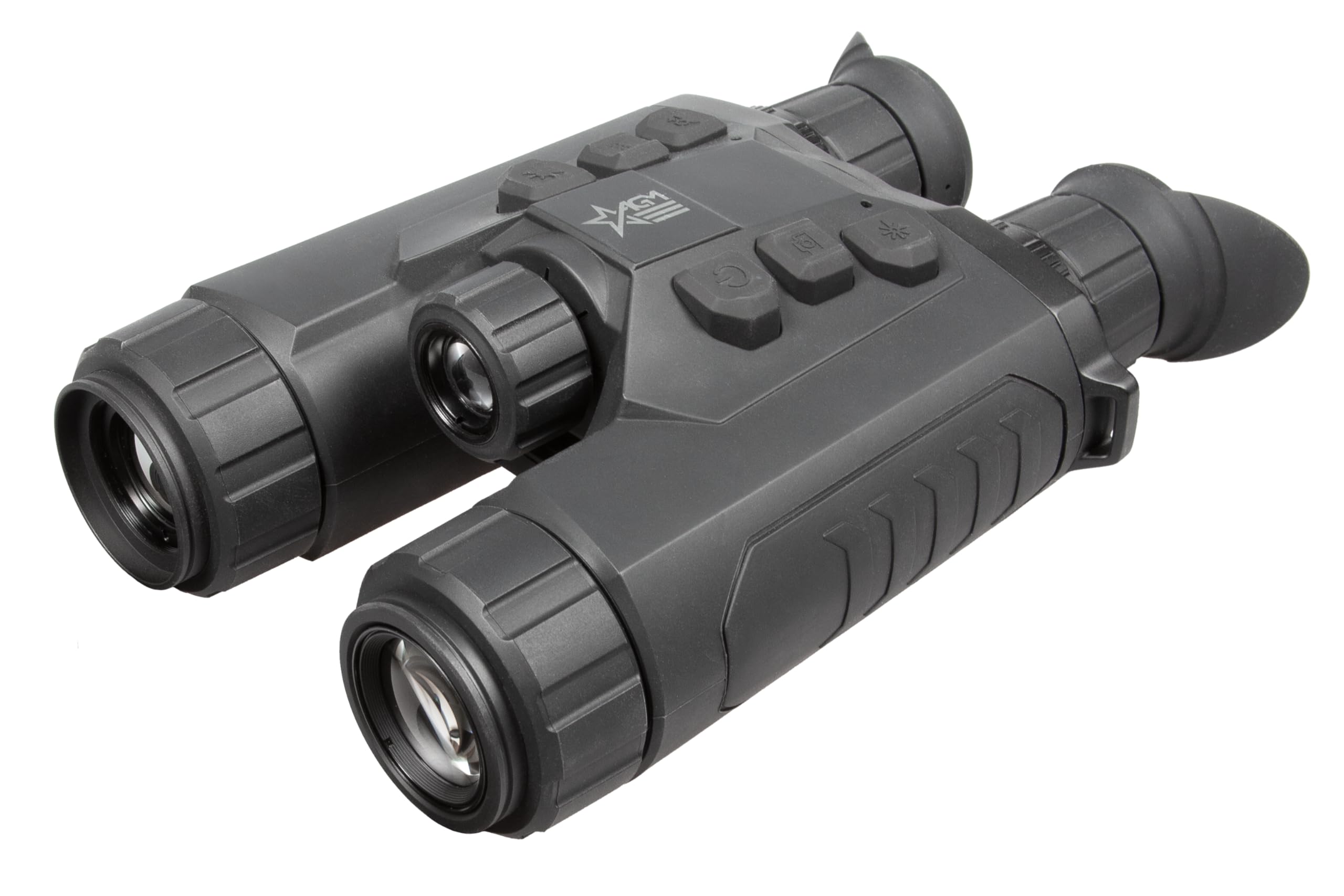
The AGM ObservIR LRF is the ultimate dual-spectrum hunter’s tool. It pairs a 256×192 VOx thermal sensor with a 3840×2160 ultra-low-light CMOS optical channel, all packed into a rugged IP67 binocular body. A built-in laser rangefinder reaches 1000 meters, letting you instantly log the distance to a target the moment it appears on the display.
Switching between thermal and digital night vision is seamless, which is critical when an object emits heat but no visible light — you find it instantly on thermal then identify it with the 4K optical channel. The 1920×1080 OLED display renders these feeds crisply, and you can store hours of evidence on the 64 GB internal memory. GPS coordinates are embedded into every recorded file.
Battery life hits 8 hours of continuous use with USB-C power flexibility, so a long vigil won’t leave you blind. The combination of thermal detection, high-resolution optical identification, and precise range measurement in a single package justifies its investment for serious field researchers.
Why it’s great
- Dual-spectrum: thermal detection + 4K optical ID in one unit
- Integrated 1000m laser rangefinder for target distance logging
- IP67 waterproof, durable for all-weather field work
Good to know
- Premium-tier investment beyond entry-level budgets
- Thermal resolution is 256×192, lower than dedicated high-end thermal units
2. Nikon COOLPIX P1000
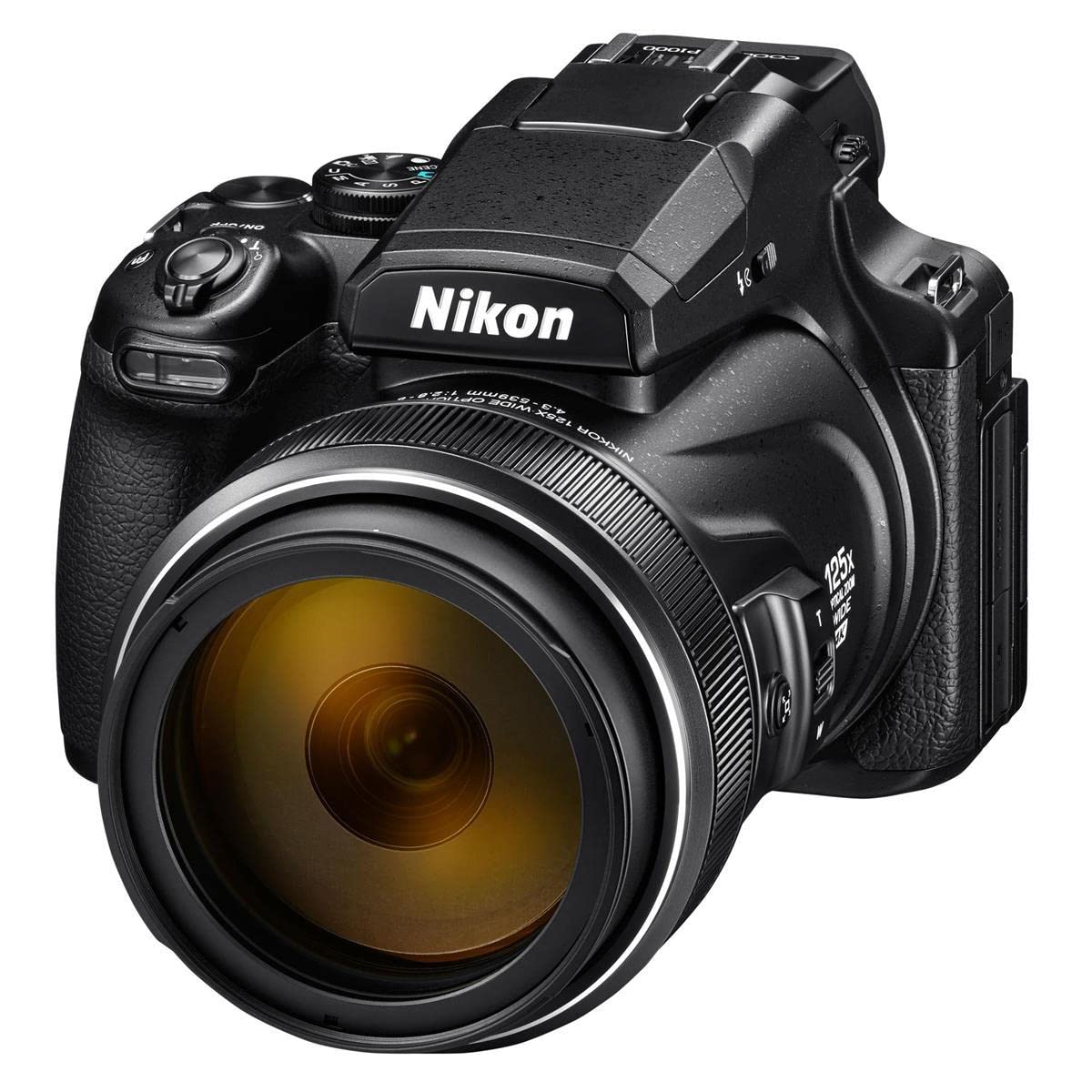
The Nikon P1000 holds the crown for optical zoom power with an incredible 125x lens — equivalent to 24-3000mm. For UFO hunting, that means being able to resolve a small dot in the sky that other cameras cannot even register. The Dual Detect Optical Vibration Reduction is critical for keeping that massive telephoto end steady.
It records 4K Ultra HD video, so your observations are captured at a resolution suitable for frame-by-frame analysis. The rotating LCD screen helps you frame objects at awkward overhead angles. Full manual controls let you tweak ISO, shutter speed, and aperture to adapt to the rapidly changing light of dusk and night. The hot shoe allows an external microphone for noting environmental audio.
Be aware that the small 1/2.3-inch sensor means low-light performance has limits — past 1500mm, atmospheric shimmer and wind degrade image quality, and a sturdy tripod is mandatory. But for sheer optical reach, nothing in this guide gets you closer to a distant object.
Why it’s great
- Unmatched 125x optical zoom brings distant objects into view
- 4K video capture for detailed forensic analysis
- Full manual controls for precise exposure management
Good to know
- Small sensor struggles in extreme low-light conditions
- Heavy at 3.3 lbs; requires tripod for stability at max zoom
3. DWARFLAB Dwarf 3 Smart Telescope
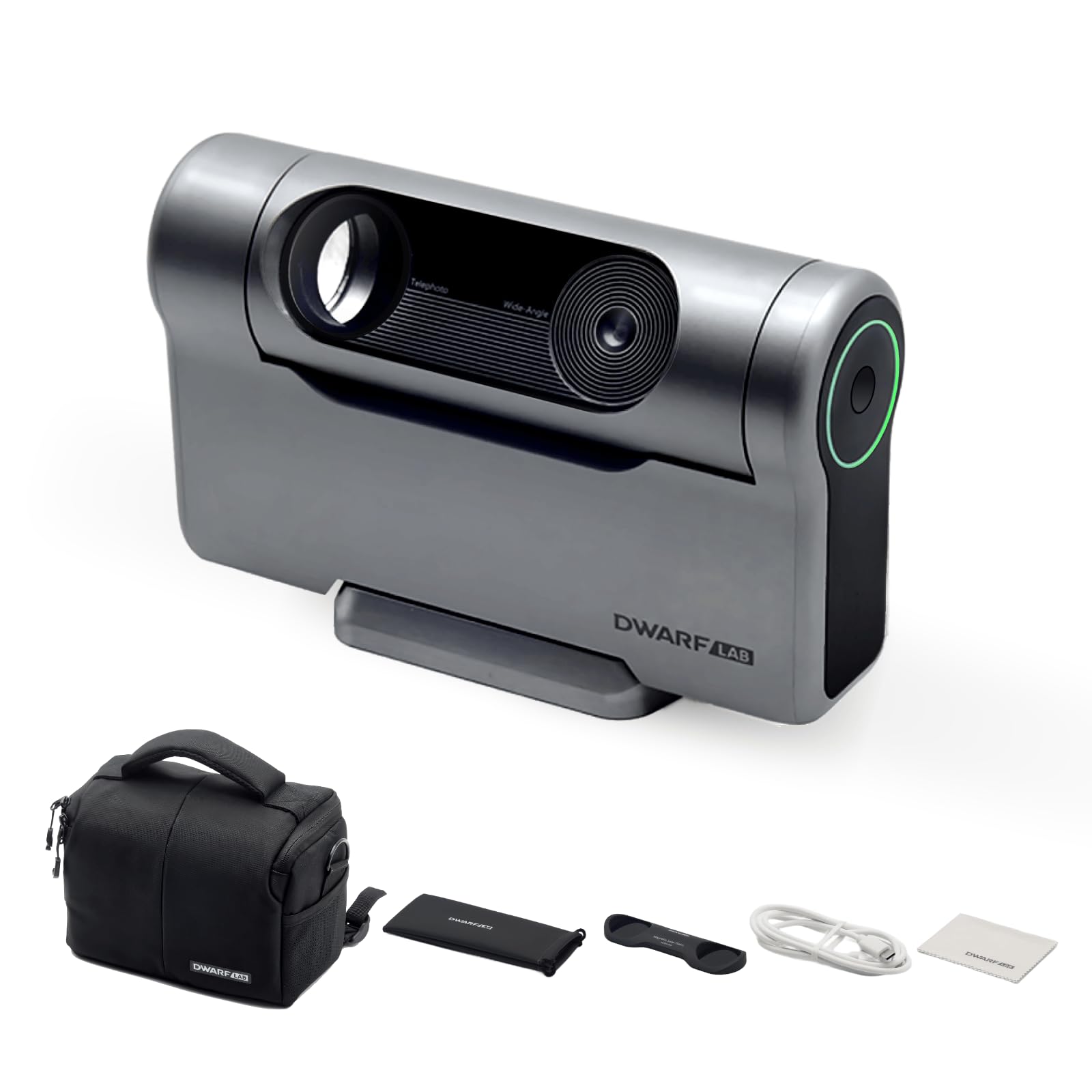
The Dwarf 3 redefines portable smart tracking at just 3 lb. Its dual-lens system combines a telephoto for deep-space objects and a wide-angle for capturing the entire sky context, which helps you see a target before zooming in. The 4K auto-tracking system locks onto and follows moving objects, a massive advantage for a UAP or a satellite that does not stay still.
Cloud-powered image processing through the DWARFLAB app handles stacking and denoising on your phone, eliminating the need for a laptop in the field. EQ mode for equatorial tracking is standard, boosting accuracy for long-duration sky patrols. The compact form factor slides into any backpack, letting you deploy it instantly.
Setup takes under two minutes, making it beginner-friendly without sacrificing depth. The app can occasionally have connection hiccups, but the viewing results speak for themselves, with users capturing galaxies and nebulae under heavy light pollution.
Why it’s great
- 4K auto-tracking follows moving targets automatically
- Ultra-light 3 lb design for effortless portability
- Cloud app processing eliminates need for a laptop
Good to know
- App connectivity can occasionally be glitchy
- Best results rely on a stable tripod (sold separately)
4. ZWO Seestar S30 Smart Telescope
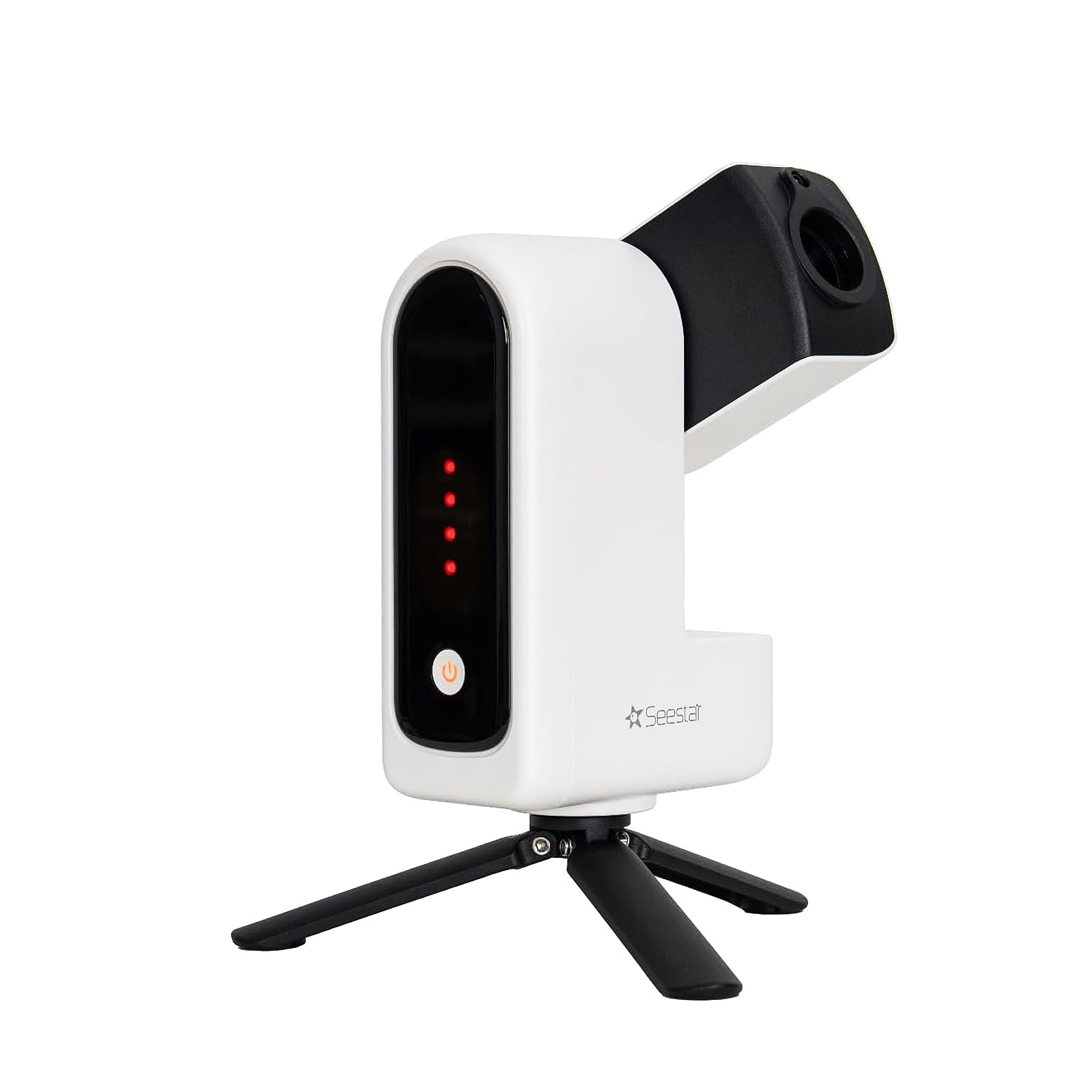
The Seestar S30 is a fully automated smart telescope that handles finding, tracking, and shooting with one tap. It weighs only 3.6 lb and packs a dual-lens system: a telephoto for deep-sky objects and a wide-angle for nightscapes. The internal light pollution filter uses dual-band passes to let only nebula light through, making it functional even in suburban skies.
Three shooting modes — Stargazing, Scenery, and Solar System — cover your bases. The Plan Mode allows you to schedule multiple targets across a session, while Mosaic Mode stitches adjacent sky patches for a wide field of view. Automated internal stacking creates clean images without manual post-processing.
It is less suited for terrestrial wildlife or scenery detail, and the 30mm objective lens limits total light gathering compared to larger telescopes. But as a set-and-forget system for automated sky surveillance, it is remarkably effective for its size.
Why it’s great
- Fully automatic star-finding and tracking via app
- Dual-band light pollution filter works from light-polluted areas
- Mosaic Mode and Plan Mode for automated multi-target sessions
Good to know
- 30mm objective lens limits total light gathering
- Scenery mode not ideal for wildlife observation
5. SIONYX Aurora Black

The SIONYX Aurora Black is a dedicated digital night vision camera that captures full-color footage under near-moonless starlight at 2 millilux. That means you see the actual colors of the sky and objects instead of the green phosphor of traditional night vision. A man-sized target is identifiable at 150 meters, giving a solid operational range for UFO observation.
The IP67 rating means it survives rain, dust, and even submersion up to three feet — field conditions won’t stop this unit. Wi-Fi streaming via the mobile app lets you share a live feed with a partner or monitor from a phone. The kit includes a 32 GB MicroSD card, hard case, and an adjustable IR illuminator for zero-light scenarios, though the sensor works best with ambient light.
It records at 720p HD resolution, which is lower than 4K options, but the trade-off for full-color night vision in a compact, rugged body is unique. The app is not the most polished, and the IR illuminator can be overpowering at close range, but this camera is the go-to for color night evidence.
Why it’s great
- Full-color night vision at 2 millilux starlight sensitivity
- IP67 waterproof and shock-resistant for rugged outdoor use
- Wi-Fi streaming for live observation sharing
Good to know
- Records at 720p HD, not 4K resolution
- App interface is basic compared to competitors
6. HSFTOOLS F2VW Thermal Camera

The F2VW combines a 256×192 VOx thermal detector with a 2MP visual camera, providing four image modes: Visual, Thermal, Fusion, and Picture-in-Picture. The Live AI Super Resolution algorithm enhances thermal feed to 640×480 in real-time, making heat signatures much more defined — critical when you are trying to discern the shape of a warm anomaly against a cold sky backdrop.
Wi-Fi connectivity lets you offload images to a smartphone for immediate analysis. The IntellFault AI scene detection automatically flags suspicious temperature zones. A wide temperature range from -4°F to 1022°F means it is not limited by ambient extremes. The 25 Hz frame rate ensures smooth panning as you sweep the horizon.
It weighs 2.12 lb and fits in the included carrying case. The visual overlay is particularly useful for proving that a thermal signature corresponds to a real physical object, not a sensor artifact.
Why it’s great
- AI Super Resolution bumps thermal to 640×480 clarity
- Dual camera with Fusion mode links heat to visual detail
- Wi-Fi sharing for quick mobile analysis in the field
Good to know
- Visual camera is 2MP, not high-resolution
- Scope is for close-to-mid range, not extreme telephoto
7. HSFTOOLS HF256 Thermal Camera

The HF256 is the entry point for thermal imaging without sacrificing essential performance. Its 256×192 VOx detector has a thermal sensitivity below 40 mK, catching temperature differentials as small as 0.04°C — a massive help when trying to detect a warm object against the cold night sky. The Snapshot Super Resolution algorithm boosts still images to 320×240 for better detail.
With a 25 Hz frame rate, the 3.2-inch LCD screen delivers smooth live video. The wide temperature range from -4°F to 1022°F and the ability to set high/low alarms means you can configure it to alert on any thermal anomaly automatically. The IP54 rating and 6.6 ft drop test rating make it field-ready for rugged terrain.
Battery life pushes to 6 hours on a charge, and the 16 GB internal storage holds roughly 90,000 images. A standard tripod hole at the base keeps it stable during long recording sessions. As a dedicated thermal tool, it does not offer a visual camera overlay, but its price makes thermal detection accessible.
Why it’s great
- Exceptional 0.04°C thermal sensitivity for subtle heat detection
- 6 hours continuous battery for extended night sessions
- Compact, IP54 rated, and survives 6.6 ft drops
Good to know
- No visual camera overlay for mixed-mode viewing
- Screen can freeze momentarily during rapid temperature shifts
8. VisioGear NTX1 Night Thunder X1
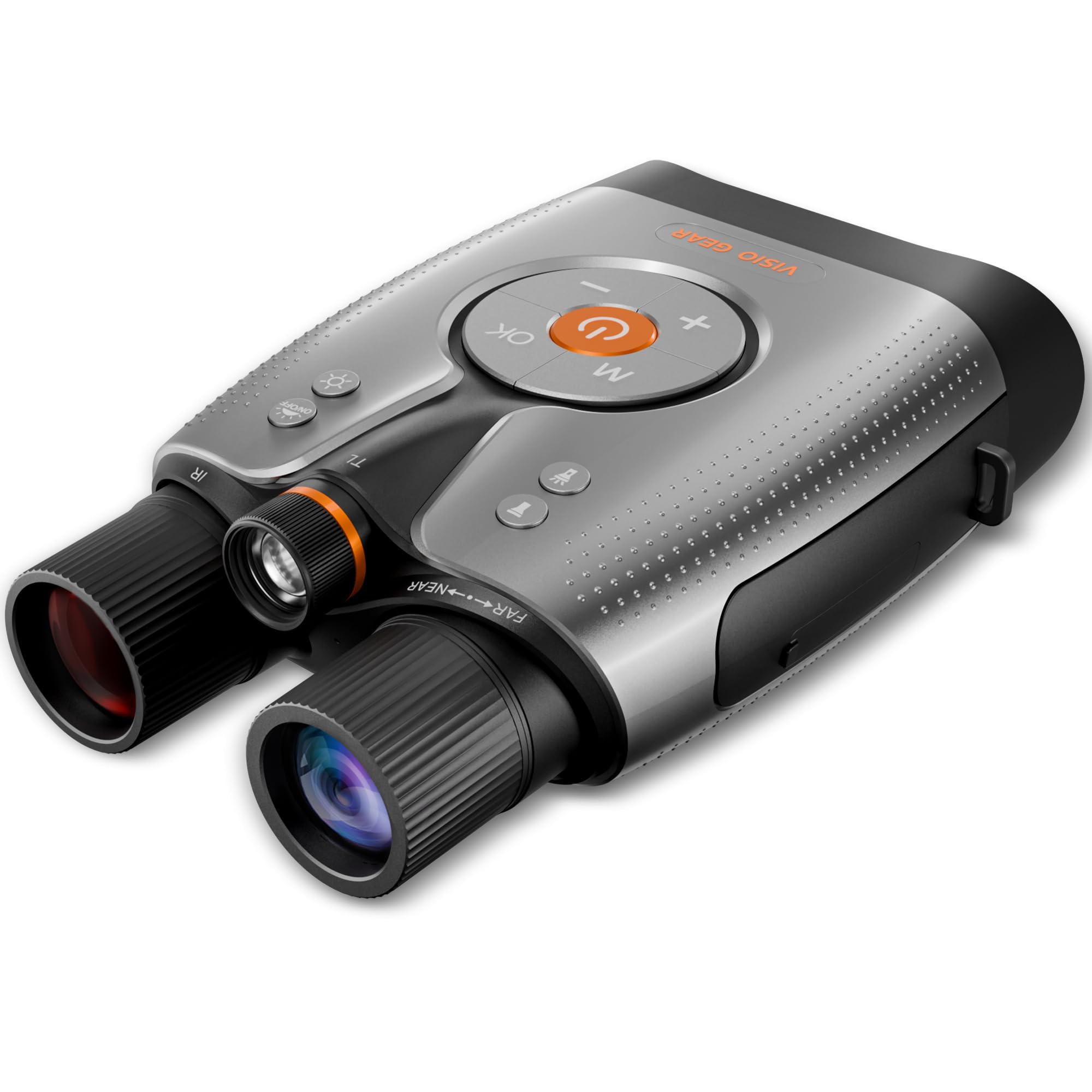
The VisioGear NTX1 brings True 4K video recording to a night vision binocular at a budget-friendly entry point. The STARVIS 2 sensor and 52MP still capture deliver bright imagery, while the 850nm infrared illuminator with 4 power levels enables viewing in complete darkness. The stated 3940-foot range is optimistic for usable detail, but at mid-range it performs solidly.
The AI Color+ mode attempts to produce full-color video in low light. A built-in 5000mAh battery runs up to 18 hours without IR and 10 hours with it active. The unit is IP67 waterproof, so it withstands wet weather. WiFi and app connectivity allow live streaming and sharing. It also includes a 64GB SD card out of the box.
A 1-star review flags inconsistent quality control — some units have a missing SD card or finicky operation. The focus ring is sensitive, and the foam case is tight. For a budget entry into 4K night vision binoculars, it offers a compelling feature set if your unit passes inspection.
Why it’s great
- True 4K video with STARVIS 2 sensor captures detailed footage
- 5000mAh battery for 10+ hours of operation
- IP67 waterproof and includes 64GB storage card
Good to know
- Quality control can be inconsistent between units
- Focus ring is overly sensitive, requiring careful turning
9. AKASO Seemor-200

The AKASO Seemor-200 is a budget-conscious night vision binocular that uses AI-ISP technology to reconstruct full color in low-light conditions with 99% color accuracy, according to the manufacturer. The 16x digital zoom can reach up to 3280 feet, though at max digital zoom the detail degrades noticeably. Seven IR modes let you tune the display to your conditions.
It is IPX5 waterproof and weighs under 500g, making it truly portable. The dual-battery system with included charger provides up to 8 hours of continuous use. Both top and bottom 1/4-inch nuts allow tripod or helmet strap mounting. The built-in 6-axis gyroscope and compass help maintain orientation during sky sweeps.
One critical review notes that the image is grainy at extreme distances and the device is best considered a mid-range tool rather than a professional unit. For the price, it delivers functional night vision with color capability that works in dark conditions, but do not expect military-grade clarity at 3000 feet.
Why it’s great
- AI-ISP provides useful full-color night vision in low light
- Dual hot-swappable batteries for extended sessions
- Lightweight under 500g with tripod and helmet mounts
Good to know
- Digital zoom quality degrades significantly at maximum magnification
- Image can be grainy beyond a few tens of feet in minimal light
FAQ
Can I use a standard DSLR for UFO hunting?
What is the minimum useful zoom for identifying a distant object?
Is thermal imaging better than night vision for UAP detection?
Why do I need a tripod for a camera used in UFO hunting?
Does higher frame rate matter for capturing fast-moving phenomena?
Final Thoughts: The Verdict
For most users, the best camera for ufo hunting winner is the AGM Global Vision ObservIR LRF because it fuses thermal detection with 4K optical identification and a laser rangefinder in a single rugged field unit. If you want unmatched optical reach for resolving distant objects in high detail, grab the Nikon COOLPIX P1000. And for an entry-level thermal entry point that proves the concept without breaking the bank, nothing beats the HSFTOOLS HF256 Thermal Camera.