
Choosing a dedicated video-recording camera in 4K means navigating sensor sizes, codec support, and recording limits that separate consumer clips from professional-grade footage. The wrong choice — like a hybrid camera overheating during a long interview or a camcorder with no log profile — can instantly undo months of planning.
I’m Min — the co-founder and writer behind Gadgets Feed. I’ve spent countless hours analyzing sensor readout speeds, bit rates, and lens mount ecosystems to separate the reliable 4K video tools from the marketing hype.
This guide breaks down the best options across dedicated camcorders, cinema cameras, and mirrorless hybrids, helping you find the best camera for video recording 4k that fits your workflow and budget.
How To Choose The Best Camera For Video Recording 4K
Selecting the right 4K video camera requires more than just checking a resolution box. You need to understand how your shooting environment — controlled studio, run-and-gun documentary, or live event — dictates the sensor, codec, and form factor that will serve you best.
Sensor Size and Readout Speed
Full-frame sensors offer the shallowest depth of field and best high-ISO performance, but Super 35 (APS-C) sensors typically provide faster readout speeds that reduce rolling shutter artifacts. A 1-inch sensor, found in dedicated camcorders like the Panasonic HC-X20, delivers a deeper depth of field useful for uncut news or event coverage where quick rack-focus adjustments are impractical.
Internal Codecs and Bit Rates
10-bit 4:2:2 recording at 4K gives you far more latitude for color grading than 8-bit 4:2:0. Cameras offering ProRes or Blackmagic RAW internally (like the Pocket Cinema Camera series) save time in post but require faster storage. For long-form work, a camera with H.265 recording and active cooling (like the Panasonic S5IIX) means unlimited record times without overheating.
Autofocus and Stabilization
Phase-detect autofocus with eye/face tracking, as seen in Sony’s FX30 and A7 IV, is critical for solo shooters who cannot pull focus manually. In-body stabilization (IBIS) eliminates the need for a gimbal in many walking shots, but dedicated camcorders rely on optical stabilization that cannot replace sensor-shift IBIS for smooth handheld movement.
Quick Comparison
On smaller screens, swipe sideways to see the full table.
| Model | Category | Best For | Key Spec | Amazon |
|---|---|---|---|---|
| Blackmagic Pocket Cinema Camera 4K | Cinema Camera | Narrative / Doc Work | Micro Four Thirds, 13 stops DR, ProRes/RAW | Amazon |
| Sony FX30 | Mirrorless Cinema | Solo Creators / Indie | Super 35, 6K oversampled 4K, Dual ISO | Amazon |
| Canon EOS R5 | Hybrid Mirrorless | Hybrid Photo/Video | Full-frame 45MP, 8K RAW, Dual Pixel AF | Amazon |
| Sony A7 IV | Hybrid Mirrorless | Versatile Hybrid Use | 33MP Full-frame, 4K 60p 10-bit, S-Cinetone | Amazon |
| Blackmagic Pocket 6K G2 | Cinema Camera | EF Lens Users / Cinema | Super 35, 6K native, 13 stops DR | Amazon |
| Panasonic S5IIX | Mirrorless Cinema | Unlimited Recording / Streaming | Full-frame 24.2MP, 5.8K ProRes, Phase AF | Amazon |
| Panasonic HC-X20 | Professional Camcorder | Events / News / Interviews | 1-inch sensor, 20x optical zoom, XLR inputs | Amazon |
| Canon VIXIA HF G70 | Consumer Camcorder | Family / Run-and-Gun | 1/2.3-inch, 20x zoom, Time Stamp recording | Amazon |
| Sony A7R IV | Photo-First Hybrid | High-Res Stills / Occasional Video | 61MP Full-frame, 4K 30p 8-bit, 15-stop DR | Amazon |
| Canon EOS 2000D / Rebel T7 Bundle | Entry-Level DSLR | Learning Photography / 1080p Video | APS-C 24.1MP, 1080p max, no mic input | Amazon |
| Nikon D5 | Pro DSLR | Sports / Photojournalism | FX 20.8MP, 4K 30p, 153-pt AF, 12 fps | Amazon |
In‑Depth Reviews
1. Blackmagic Design Pocket Cinema Camera 4K

The Blackmagic Pocket 4K remains the benchmark for affordable cinema cameras thanks to its 13-stop dynamic range and dual native ISO up to 25,600. The 4/3-inch sensor paired with an active MFT mount gives you access to a vast array of native and adapted lenses, while the 5-inch LCD eliminates the need for an external monitor in most scenarios.
Recording to SD/UHS-II, CFast 2.0, or external SSD via USB-C means media costs stay low, and the included DaVinci Resolve Studio license covers post-production color grading. The camera records 12-bit Blackmagic RAW or Apple ProRes up to 4K DCI, giving editors maximum flexibility.
The trade-offs are significant: battery life is roughly 30 minutes on a single LP-E6, there is no in-body stabilization, and the screen is nearly unusable in direct sunlight. This is not a vlogging camera — it is a tool for narrative, documentary, and interview setups where a tripod or gimbal is standard.
Why it’s great
- True cinema-grade dynamic range at a mid-range price
- Records to affordable external SSD via USB-C
- DaVinci Resolve Studio included
Good to know
- Battery lasts only ~30 minutes
- No IBIS or continuous autofocus
- LCD is dim in outdoor light (~250 nits)
2. SONY Cinema Line FX30 Super 35 Camera

The FX30 brings Sony’s Cinema Line tools — S-Cinetone, Cine EI, and user LUT embedding — into a Super 35 body that delivers roughly 90% of the FX3’s performance at half the cost. The 20.1 MP sensor oversamples 6K to produce exceptionally sharp 4K footage with minimal moiré, while the dual base ISO (640 and 2500) keeps noise low across varied lighting.
The 495 phase-detection autofocus points with Real-time Eye AF for humans and animals make this a viable single-operator camera for fast-moving subjects. Active cooling via an internal fan prevents overheating during long takes, and the dual SD card slots provide redundancy for paid work.
Battery life from the NP-FZ100 runs roughly 1–2 hours of actual recording, so an external USB-C power bank is recommended for all-day shoots. The APS-C crop can be an advantage for telephoto reach with full-frame lenses, but wide-angle shooters need native Super 35 glass.
Why it’s great
- Cinema Line color science and S-Cinetone out of the box
- Fast, reliable phase-detect autofocus
- Active cooling removes recording time limits
Good to know
- Battery life demands external power for extended shoots
- Super 35 sensor not ideal for ultra-shallow depth-of-field fans
- No built-in ND filter
3. Canon EOS R5 Mirrorless Camera (Body Only)

The EOS R5 delivers a staggering 8K RAW internal recording alongside a 45MP full-frame sensor, making it the highest-resolution hybrid camera on this list. The DIGIC X processor enables 4K up to 120 fps for smooth slow-motion, and the Dual Pixel CMOS AF II with 1,053 points provides near-flawless subject tracking across people, animals, and vehicles.
In-body stabilization rated at up to 8 stops means many handheld shots that would require a gimbal are now possible with adapted EF lenses. The EVF is among the best in class — bright, sharp, and with minimal blackout at 12 fps mechanical shutter.
The overheating concerns around 8K recording are real but overblown for most users — 4K HQ mode (oversampled from 8K) offers plenty of detail without thermal issues. The RF lens mount requires an adapter for EF glass, and battery life around 650 shots per charge is average for a high-res mirrorless body.
Why it’s great
- 8K internal RAW and 4K 120 fps in one body
- Industry-leading Dual Pixel AF II with eye tracking
- 8-stop IBIS for handheld shooting
Good to know
- Overheating limits extended 8K recording sessions
- RF lens ecosystem still growing; adapter needed for EF
- High file sizes demand fast storage and a powerful PC
4. Sony Alpha 7 IV Full-Frame Mirrorless with 28-70mm Lens

The A7 IV strikes a careful balance between stills and video, offering 7K oversampled 4K at 30p and full-pixel readout 4K 60p with 10-bit 4:2:2 color depth. The 33MP Exmor R sensor paired with the BIONZ XR processor delivers fast readout speeds and S-Cinetone color science for a filmic look straight from the camera.
The 759-point phase-detection AF system with Real-time Eye Tracking covers almost the entire frame, making subject acquisition effortless even during complex movement. The fully articulating touchscreen and improved menu structure address long-standing complaints about Sony’s interface.
The included 28-70mm f/3.5-5.6 kit lens is functional for learning but optically slow; upgrading to a faster zoom or prime unlocks the sensor’s full low-light and bokeh potential. The camera also has a single UHS-II SD slot and a slower UHS-I slot, which can bottleneck high-bitrate recording.
Why it’s great
- 7K oversampled 4K delivers exceptional sharpness
- 10-bit 4:2:2 internal recording with S-Cinetone
- Excellent full-frame autofocus with eye detection
Good to know
- Kit lens is slow; a better lens is needed for real performance
- Mixed-speed SD card slots can bottleneck recording
- 4K 60p has a slight crop
5. Blackmagic Design Pocket Cinema Camera 6K G2

Building on the Pocket 4K, the 6K G2 steps up to a Super 35 sensor with an active Canon EF mount, allowing native use of one of the largest lens ecosystems in the world. The 6144 x 3456 native resolution gives you room to reframe in post or output to 4K with genuine oversampling, while the 13 stops of dynamic range match the Pocket 4K’s excellent highlight handling.
The redesigned body includes a tiltable 5-inch LCD, making low-angle and high-angle shots significantly easier than the fixed screen of the original Pocket 6K. Recording options include 12-bit Blackmagic RAW and ProRes across the full resolution range, with SSD recording via USB-C keeping media costs low.
Battery endurance remains the weak point — the included NP-F570 lasts roughly 60 minutes, making a V-mount battery plate or external USB-C power essential for serious shoots. The camera also lacks any built-in stabilization and relies on manual focus, so gimbal and follow-focus accessories are nearly mandatory for moving shots.
Why it’s great
- Native Canon EF mount with Super 35 sensor
- Tiltable 5-inch LCD improves shooting ergonomics
- 12-bit Blackmagic RAW with SSD recording
Good to know
- ~60-minute battery life demands external power
- No IBIS or continuous autofocus
- Large file sizes require fast storage and a strong computer
6. Panasonic LUMIX S5IIX Mirrorless Camera with 20-60mm + 50mm Lenses
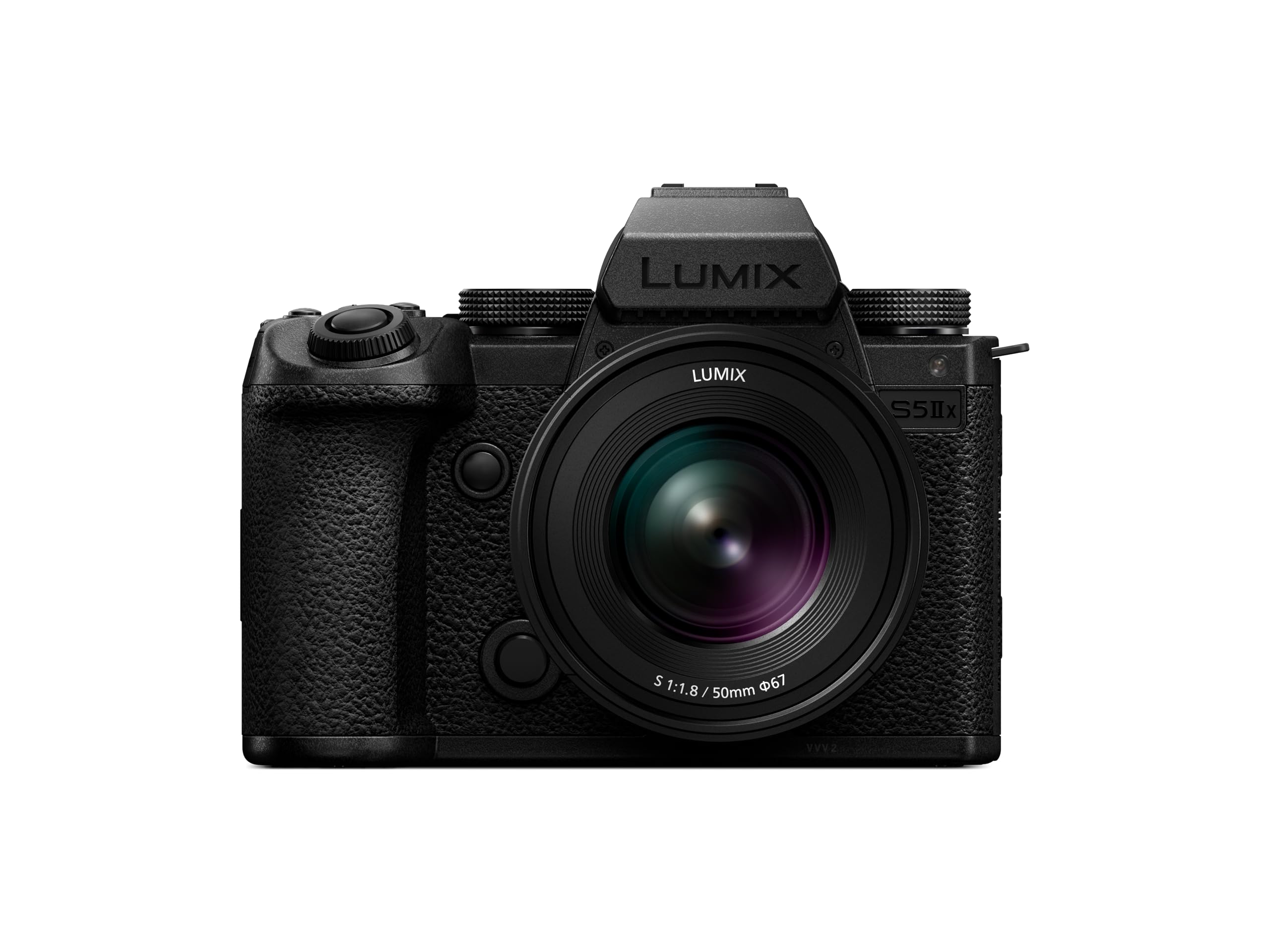
The S5IIX is Panasonic’s answer to the hybrid-cinema market, combining a 24.2MP full-frame sensor with phase-detect autofocus — a first for the LUMIX S series. It offers unlimited 5.8K ProRes internal recording and 6K open-gate recording thanks to an active cooling fan, eliminating the recording time limits that plague many mirrorless rivals.
The dual kit includes the 20-60mm f/3.5-5.6 zoom and a 50mm f/1.8 prime, giving you both a versatile wide-to-standard range and a fast standard lens for low-light work. Video-specific features include 14+ stops of V-Log/V-Gamut, waveform monitoring, and wired/wireless IP streaming capabilities.
The Active I.S. system provides gimbal-like stabilization for walking shots, though it does introduce a slight crop in the most aggressive mode. The L-mount alliance offers fewer native lens options than Sony E or Canon RF, but Sigma and Panasonic continue to expand the lineup.
Why it’s great
- Unlimited 5.8K ProRes and 6K open-gate recording
- Phase-detect autofocus finally arrives on LUMIX S
- Excellent Active I.S. for handheld work
Good to know
- L-mount lens ecosystem smaller than Sony/Canon
- Aggressive Active I.S. crops the frame
- No built-in ND filter
7. Panasonic HC-X20 Professional 4K Camcorder

The HC-X20 is a true professional camcorder designed for news, events, and interview-style shoots where a mirrorless camera’s limitations — overheating, recording limits, and slow zoom — become liabilities. The 1-inch 15MP MOS sensor delivers 4K 60p recording in HEVC or MP4, while the 20x optical zoom (24.5mm wide-angle to 490mm telephoto) covers virtually any run-and-gun scenario without changing lenses.
The camcorder includes dual XLR inputs with phantom power for professional microphones, a triple manual ring for independent focus/zoom/iris control, and wired remote support. The 5-axis HYBRID O.I.S. stabilization keeps shots steady even at the telephoto end, and the built-in Wi-Fi enables live streaming via Ethernet (with a USB-LAN adapter) or direct Wi-Fi.
The auto exposure system can underexpose in high-contrast scenes, requiring manual intervention to retain highlight detail. The 1-inch sensor also cannot match Super 35 or full-frame cameras for shallow depth of field or extreme low-light performance, but for documentary and event work, the convenience and reliability outweigh those trade-offs.
Why it’s great
- 20x optical zoom eliminates lens swapping in the field
- Dual XLR inputs with professional audio control
- 5-axis stabilization for steady telephoto shots
Good to know
- Auto exposure can underexpose in high-contrast light
- Shallow depth of field limited compared to larger sensors
- HDMI output limited to 1080p during live streaming
8. Canon VIXIA HF G70 Camcorder

The HF G70 is a purpose-built 4K camcorder for family events, travel, and content creators who want point-and-shoot simplicity without sacrificing video quality. The 1/2.3-inch CMOS sensor paired with Canon’s DIGIC DV6 processor records crisp 4K UHD at 30 fps, while the 20x optical zoom with advanced image stabilization provides steady footage across a wide range of distances.
A unique feature for this class is the On-Screen Display Time Stamp recording, embedding date, time, and timecode directly into the video file — invaluable for legal, archival, or educational use. The camera also supports UVC livestreaming in 1080p, making it a viable webcam for presentations and live talks.
Low-light performance is the main weak point: above ISO 4, gain introduces noticeable softness, and at ISO 10, the image becomes mushy. The autofocus can also show a subtle background jitter in 4K mode. For brightly lit outdoor events, however, the HF G70 is a reliable, user-friendly option.
Why it’s great
- Dedicated camcorder ergonomics with 20x optical zoom
- Time Stamp recording for archival/legal applications
- UVC livestreaming in 1080p
Good to know
- Poor low-light performance beyond ISO 4 gain
- Autofocus exhibits jitter in 4K mode
- HDMI output limited to 1080p, not 4K
9. Sony α7R IV Full-frame Mirrorless

With a 61MP back-illuminated Exmor R sensor, the A7R IV is designed for stills photographers who occasionally shoot video. The 4K recording comes from a full-pixel readout in Super 35mm crop mode at 30p, but the output is limited to 8-bit 4:2:0 — a significant downgrade from the 10-bit options found on the A7 IV and FX30.
The 567 phase-detection AF points and Real-time Eye AF provide class-leading autofocus performance for both humans and animals, and the 15-stop dynamic range in stills gives you incredible latitude for exposure adjustments. The 5.76-million-dot OLED EVF is one of the sharpest available, and the 5.5-stop IBIS helps stabilize framing during handheld video shots.
The 8-bit video limitation means color grading is restrictive, and the lack of 4K 60p is a notable absence for a camera at this level. The massive 61MP files also demand a fast computer and generous storage. This is the right choice only if your primary work is high-resolution photography with occasional video needs.
Why it’s great
- World-class 61MP resolution with outstanding detail
- Fast and accurate Real-time Eye AF
- 5.5-stop IBIS for stabilized handheld video
Good to know
- 4K video limited to 8-bit 4:2:0 at 30p
- No 4K 60p or 10-bit internal recording
- Massive file sizes slow down post-production
10. Canon EOS 2000D / Rebel T7 DSLR Bundle

The Rebel T7 bundle is included here as a clear admission: it is not a 4K video camera. The 24.1MP APS-C sensor tops out at 1080p, and it lacks an external microphone input, making it unsuitable for anyone serious about video sound quality. So why mention it? For the absolute beginner who wants to learn photography fundamentals — aperture, shutter speed, and ISO — on a full Canon kit with a tripod, case, and extra lenses included, this bundle represents the lowest-cost entry point.
The built-in Wi-Fi and NFC allow basic wireless image sharing, and the optical viewfinder provides a true DSLR experience for learning composition. The included 18-55mm, wide-angle, and telephoto lenses give you a taste of different focal lengths without additional investment.
If your primary goal is 4K video recording, skip this entirely and look at the Blackmagic Pocket 4K or a used Sony A6100. This bundle is strictly for first-time photographers who want to understand exposure before moving to a mirrorless or cinema camera.
Why it’s great
- Complete starter kit with multiple lenses and accessories
- Optical viewfinder for learning classic DSLR technique
- Wi-Fi/NFC for easy image transfer
Good to know
- No 4K video — maximum 1080p
- No external microphone input
- Renewed condition; accessories may vary
11. Nikon D5 20.8 MP FX-Format Digital SLR (CF Version)

The Nikon D5 is a professional DSLR built for speed: 12 fps continuous shooting with full AF/AE tracking, a 153-point AF system that locks onto subjects in near-total darkness, and a native ISO of 102,400 that extends to an absurd 3,280,000. Its 20.8MP FX-format sensor prioritizes high-ISO performance over resolution, making it a staple for sports and press photographers.
For video, the D5 records 4K UHD at 30 fps, but it is limited to 8-bit 4:2:0 and lacks the advanced video tools — waveforms, focus peaking, log profiles — that modern mirrorless cameras offer. The optical viewfinder provides zero-lag composition for stills, but video capture relies on live view, which drains the battery faster.
In 2025, the D5 is a specialist tool for photographers who need bulletproof ergonomics, the fastest autofocus in extreme low light, and the ability to rattle off 200 raw frames in a single burst. For dedicated 4K video work, a Sony FX30 or Blackmagic Pocket 6K G2 offers far more flexible codec and color grading options at a lower weight.
Why it’s great
- 153-point AF system performs in near-dark conditions
- 12 fps burst with full AF/AE tracking
- Built like a tank; pro-level weather sealing
Good to know
- 4K video limited to 8-bit 4:2:0 with no log profile
- DSLR form factor not optimized for video use
- Heavy and large compared to modern mirrorless options
FAQ
Why does my 4K camera overheat after 20 minutes of recording?
What is the difference between 4K UHD and 4K DCI for video?
Should I choose a camcorder or a mirrorless camera for 4K video?
Final Thoughts: The Verdict
For most users, the best camera for video recording 4k winner is the Sony FX30 because it blends Cinema Line color science, reliable phase-detect autofocus, active cooling, and a Super 35 sensor that oversamples 6K to 4K — all at a price that undercuts full-frame rivals by a wide margin. If you want uncompromised 10-bit gradability and DaVinci Resolve workflow, grab the Blackmagic Pocket Cinema Camera 4K. And for unlimited recording, ProRes internal, and streaming in a full-frame body, nothing beats the Panasonic LUMIX S5IIX.