
Getting that timeless, analog look from a digital sensor or actual film requires more than just a filter—it demands a camera engineered with specific color science, sensor character, and lens rendering. Whether you crave the grain of a 35mm frame or the nostalgic JPEG recipes from a mirrorless body, the hardware you choose dictates the final image.
I’m Min — the co-founder and writer behind Gadgets Feed. I’ve spent countless hours dissecting sensor specifications, film simulation engines, and lens mount compatibility to identify which bodies genuinely deliver a period-accurate look without requiring heavy post-processing.
This guide evaluates nine distinct options that can truly deliver authentic images, and after extensive research, I’ve curated the definitive list of the best camera for vintage photos to match your creative style and budget.
How To Choose The Best Camera For Vintage Photos
Choosing the right tool for a nostalgic aesthetic involves more than just picking a camera that looks old. You need to consider the sensor’s color science, the availability of in-camera film profiles, and whether you prefer the tactile ritual of film or the convenience of digital processing that nails the look every time.
Film Simulations vs. Real Film
The biggest fork in the road is deciding between a digital camera with advanced film simulation modes—like Fujifilm’s lineup that mimics Classic Chrome, Velvia, and Acros—and an actual analog 35mm body like the Pentax K1000. Digital simulations offer consistency and instant results, while real film delivers organic grain and a chemical color depth that is difficult to replicate perfectly.
Sensor Size and Character
APS-C sensors (found in most Fujifilm and Canon RF-S models) often produce a slightly deeper depth of field and a unique texture that resembles classic 35mm film stock. Full-frame sensors, like the 60MP BSI CMOS in the Leica Q3, provide extreme resolution and dynamic range, which can be dialed back with film presets but may lack the inherent “imperfection” of vintage glass.
Lens Flexibility and Fixed Optics
A camera with interchangeable lenses (like the Nikon Z fc or Fujifilm X-T50) allows you to adapt vintage manual glass, adding authentic optical flaws like flaring and soft corners. Fixed-lens cameras, such as the Fujifilm X100VI with its 23mm f/2 or the Leica Q2 with its 28mm f/1.7, force you to compose within a classic focal length, which fosters the deliberate shooting style of a bygone era.
Quick Comparison
On smaller screens, swipe sideways to see the full table.
| Model | Category | Best For | Key Spec | Amazon |
|---|---|---|---|---|
| Fujifilm X100VI | Premium Compact | Daily street & travel vintage JPEGs | 23mm f/2 fixed lens, 20 Film Sims | Amazon |
| Fujifilm X-T50 | Premium ILC | High-resolution vintage with lens swaps | 40.2MP Sensor, Dedicated Film Dial | Amazon |
| Leica Q3 | Ultimate Luxury | Full-frame 60MP vintage character | 60MP BSI CMOS, 28mm f/1.7 | Amazon |
| Nikon Z fc | Retro ILC | Nostalgic design with modern lens mount | 20.9MP DX, Analog Dials | Amazon |
| Fujifilm X-M5 | Compact Film Sim | Ultra-portable body with 20 film sims | 26.1MP X-Trans 4, 6K Video | Amazon |
| Fujifilm X Half | Novice Compact | 35mm film simulation on a budget | 17MP JPEG, 2-in-1 mode | Amazon |
| Canon EOS R100 | Entry Mirrorless | Learning vintage composition with digital ease | 24.1MP APS-C, 4K Video | Amazon |
| Pentax K1000 | Analog Classic | Pure manual 35mm film photography | Mechanical Only, 50mm f/2 | Amazon |
| Leica Q2 | Premium Full-Frame | Weather-sealed 28mm luxury shooter | 47MP, Summilux 28mm f/1.7 | Amazon |
In‑Depth Reviews
1. Fujifilm X100VI Digital Camera

The X100VI is the gold standard for vintage photo purists who refuse to compromise on image quality. Its 40.2MP X-Trans CMOS 5 HR sensor paired with the fixed 23mm f/2 lens delivers stunning detail and the shallow depth of field reminiscent of classic rangefinder work. The 20 Film Simulation modes, including the new REALA ACE, produce JPEGs that look like they were developed in a darkroom.
In-body image stabilization rated up to 6 stops allows you to shoot in dim interiors without pushing your ISO into noisy territory. This is a massive upgrade over the X100V, making the X100VI the most capable everyday carry camera for capturing the mood of a bygone era with modern reliability.
The 4-stop internal ND filter is a lifesaver for shooting wide open in bright sunlight, allowing you to maintain a shallow depth of field without overexposure. The tactile dials for shutter speed and ISO encourage a slow, deliberate shooting process that is central to the vintage aesthetic.
Why it’s great
- Outstanding JPEG color science with 20 film simulations
- Effective 6-stop IBIS for low-light vintage stills
- Solid build with intuitive retro dials
Good to know
- Fixed 23mm lens limits framing versatility
- Battery life is shorter than some mirrorless rivals
- Autofocus can hunt in very low contrast scenes
2. Fujifilm X-T50 Mirrorless Digital Camera Body

The X-T50 is the ultimate hybrid for photographers who want the highest resolution vintage sensor combined with lens versatility. Its dedicated Film Simulation dial sits right on the top plate, letting you switch between Classic Chrome and Acros without diving into menus. The 40.2MP sensor provides immense cropping flexibility, preserving the texture of vintage glass.
Unlike the X100VI, the X-T50 uses the X-mount, meaning you can adapt classic Pentax, Olympus, or Leica lenses to achieve specific optical character. The 6.2K/30P video capability also allows you to record moving images with the same film look, using GRAIN EFFECT mode to add organic noise to your footage.
The camera is lightweight and compact, but the high-resolution sensor demands sharp glass to resolve its full potential. Pairing it with a vintage prime lens can sometimes produce softer corners, but many photographers appreciate that authentic imperfection. The SD card slot placement is awkward but forgivable given the overall performance.
Why it’s great
- Exceptional 40.2MP sensor with rich color depth
- Physical dial for 20 film simulations
- IBIS sensor-shift stabilization for sharp handheld shots
Good to know
- High learning curve for non-Fuji beginners
- Not weather-sealed like higher-end X-series
- Large RAW files require fast storage and backup
3. Leica Q3 Compact Digital Camera
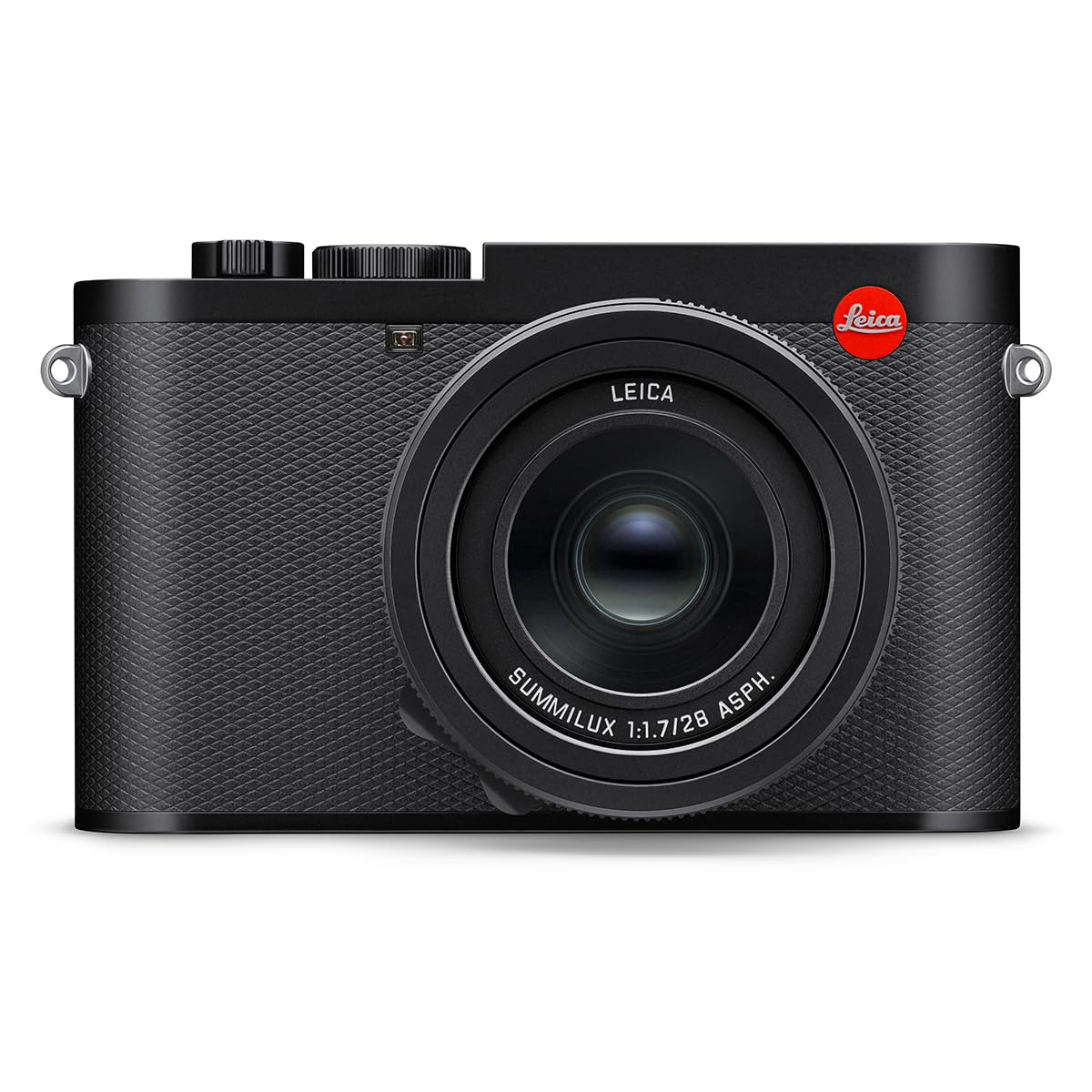
The Leica Q3 is the pinnacle of full-frame compact cameras, offering a native 60MP BSI CMOS sensor and a Summilux 28mm f/1.7 ASPH lens that delivers unmatched sharpness. Its Triple Resolution Technology allows you to shoot at 60MP, 36MP, or 18MP, enabling you to simulate the grain structure of lower-ISO film stocks by downsampling.
Hybrid autofocus combines contrast and phase detection with reliable tracking, making it easy to capture spontaneous street scenes with that Leica “pop.” The Maestro IV processor backed by 8GB of memory ensures snappy operation even when saving massive 60MP RAW files.
The flip-out touchscreen is versatile for waist-level shooting, which is a classic street photography stance. However, the lens is fixed at 28mm—you must use digital zoom to frame tighter, which tops out at 90mm. The build quality is exquisite, making it a heirloom piece, but the price is a serious barrier for most enthusiasts.
Why it’s great
- World-class 60MP full-frame sensor and lens
- Triple Resolution for adjustable grain character
- Weather-sealed construction for all-conditions shooting
Good to know
- Extremely high cost limits accessibility
- Fixed 28mm lens with no optical zoom range
- Battery and charger sold separately
4. Nikon Z fc with 16-50mm Zoom Lens

The Nikon Z fc is a masterclass in retro design fused with modern Z-mount performance. Its top-plate dials for shutter speed, ISO, and exposure compensation are precisely clicky, offering a tactile experience that mirrors shooting on a classic Nikon FM. The 20.9MP DX sensor paired with the EXPEED 6 engine delivers vivid colors straight out of the camera.
One standout feature is the compatibility with F-mount lenses via the FTZ adapter. You can mount a vintage 50mm f/1.4 AI-S lens and get the exact optical character of the 1980s, complete with flare and chromatic aberration. The vari-angle touchscreen makes it vlogger-friendly, but the retro aesthetic is the primary draw.
The kit 16-50mm zoom is decent for general use, but the magic happens when you pair the body with adapted glass. The SnapBridge app provides seamless wireless transfer, though some users report occasional connectivity hiccups. The camera feels solid and durable, with a battery that lasts a full day of shooting.
Why it’s great
- Beautiful retro design with genuine analog controls
- Compatible with classic F-mount glass via adapter
- Excellent image quality and color performance
Good to know
- Wireless transfer can be unreliable
- Kit lens is basic and modest in aperture
- Body material feels fine but not premium metal
5. Fujifilm X-M5 Mirrorless Digital Camera Kit

The X-M5 is the smallest and lightest X-series body at just 12.5 ounces, making it an ideal pocket companion for vintage-style photography. It packs the same 26.1MP X-Trans 4 sensor found in the X100V, which is renowned for its film-like color rendering and low-light performance. The 20 film simulations are directly accessible via a top dial, letting you switch from Velvia to Acros instantly.
This camera supports 6K video recording, allowing you to capture cinematic footage with the same film simulations. The absence of a viewfinder might bother purists who prefer eye-level composition, but the 180-degree flip screen is excellent for waist-level street shots. The X-Processor 5 ensures snappy autofocus and quick menu navigation.
The included XC15-45mm power zoom lens is compact but the motorized zoom can feel sluggish. The X-M5 is best used with a pancake prime lens to maintain its pocketable size. It is a fantastic entry point for getting the Fuji color science without the weight or cost of a higher-tier model.
Why it’s great
- Extremely compact and lightweight travel body
- Excellent film simulation dial for quick access
- 6K video with Fuji color profiles
Good to know
- No built-in viewfinder
- Kit power zoom lens is slow and plastic-feeling
- Digital only image stabilization
6. Fujifilm X Half Premium Compact Camera

The X Half is a niche compact that simulates the experience of a 35mm half-frame film camera. It captures 17MP JPEG images with a 3:4 aspect ratio, and its “Film Camera mode” emulates the advance lever and winding noise of an analog body. The built-in 26 analog-inspired film and filter options provide creative flexibility without any editing.
This camera is designed for fun, casual shooting rather than professional work. Its 2-in-1 mode combines stills and video, giving you a unique creative edge. It can print directly to a compatible instax printer or share via the dedicated app, making it a social-friendly device for instant gratification.
The quality is constrained by a 1-inch sensor and a fixed lens that struggles in low light, producing grain at ISO 1600. The viewfinder is slightly off-center, and the autofocus can be slow. It is a novelty camera that delivers the film feel without the cost of developing rolls, but it won’t replace a serious ILC.
Why it’s great
- Unique half-frame film simulation with winding sound
- Very compact and pocketable design
- Direct printing to instax and phone app sharing
Good to know
- Image quality is poor in low light
- Autofocus hunts and software feels laggy
- Off-center viewfinder alignment is awkward
7. Canon EOS R100 Mirrorless Camera Kit

The EOS R100 serves as a budget-friendly entry point into mirrorless vintage photography. Its 24.1MP APS-C sensor and DIGIC 8 processor deliver clean images with pleasant skin tones, though its color science is more neutral compared to Fuji’s film simulations. To achieve a vintage look, you will need to rely on Canon’s Picture Styles or post-processing.
Dual Pixel CMOS AF with 143 zones provides reliable face and eye detection, making it easy to focus on subjects. The camera shoots 4K video at 24 fps and Full HD at 60 fps, giving you flexibility for vintage-style video projects. The compact body is lightweight and easy to handle for beginners learning composition.
It lacks the tactile retro dials found on other cameras in this roundup, and the menu system is more modern than nostalgic. This camera is best suited for beginners who want to learn photography fundamentals with the option to apply vintage presets later, rather than getting the look straight out of the box.
Why it’s great
- Very affordable entry into mirrorless system
- Strong Dual Pixel AF for reliable focus
- Compact and lightweight for travel
Good to know
- No built-in film simulation modes for vintage look
- No charger included in the box
- Video limitations at 4K (24 fps only)
8. Pentax K1000 Manual Focus SLR Film Camera

The Pentax K1000 is the ultimate expression of analog photography. This fully mechanical SLR requires no batteries for operation—only a single LR44 for the light meter. The included 50mm f/2 prime lens provides a natural field of view that delivers the classic look of 35mm film, with beautiful depth of field control and organic grain.
You set aperture, shutter speed, and focus manually, which forces a deliberate, slow shooting style that is the heart of vintage photography. The K-mount is compatible with a wide range of vintage lenses from the 1970s and 1980s, allowing you to dial in specific optical characteristics. The built-in light meter is always on, helping you achieve proper exposure.
This is a renewed camera, meaning its condition can vary. Some units have reported broken light meters or mirror damage, so buying from a reputable seller with a return policy is critical. It requires film and developing costs, making it a more expensive long-term hobby than digital, but the results are irreplaceable.
Why it’s great
- Authentic fully mechanical film experience
- Excellent 50mm f/2 prime lens included
- Simple, durable design that lasts decades
Good to know
- Renewed units can have mechanical issues
- Ongoing cost of film and development
- No autofocus or auto-exposure modes
9. Leica Q2 Digital Camera

The Leica Q2 is a legendary compact full-frame camera with a 47MP sensor and a Summilux 28mm f/1.7 ASPH lens. Its image quality is superb, with excellent detail retention and a distinct color science that has a slightly more vintage tonal curve than the Q3. The camera is weather-sealed and built like a tank, suitable for all-conditions street photography.
The minimalist user interface with intuitive physical controls makes it fast to operate. User profiles allow you to switch between color and black-and-white settings instantly, mimicking the look of Tri-X film or Kodachrome. The 28mm wide angle forces you to get close to your subjects, creating a dynamic, in-the-moment perspective.
It lacks the high-resolution screen and some modern connectivity of the Q3, but many photographers prefer the Q2 for its slightly more organic image rendering. The price is very high for a fixed-lens camera, and RAW files at ~140MB require heavy storage. It is a serious investment for the vintage aesthetic.
Why it’s great
- Superb 47MP full-frame image quality
- Weather-sealed for worry-free outdoor use
- Intuitive physical controls and fast operation
Good to know
- Very high price for a fixed-lens camera
- Large RAW files require significant storage
- Limited ports and accessory connectivity
FAQ
Can a digital camera truly replicate the look of 35mm film?
Is a full-frame sensor better than APS-C for vintage photos?
What is the best focal length for vintage-style street photography?
Do I need manual controls to get a vintage look from a camera?
Final Thoughts: The Verdict
For most users, the best camera for vintage photos winner is the Fujifilm X100VI because it balances a versatile 23mm f/2 lens, a dedicated film simulation dial with 20 modes, and a compact design that you will actually carry every day. If you want the ultimate in resolution and lens adaptability, grab the Fujifilm X-T50. And for the purest analog experience with real 35mm film, nothing beats the Pentax K1000.