
A VTuber’s camera rig isn’t just about resolution — it’s about latency, face-tracking reliability, and seamless integration with tracking software like VTube Studio or iFacialMocap. A webcam that stutters at 30fps or loses your facial landmarks when you tilt your head will break the immersion instantly. Choosing the right sensor and lens for your VTubing pipeline determines whether your avatar moves naturally or glitches through every stream.
I’m Min — the co-founder and writer behind Gadgets Feed. I’ve analyzed hundreds of streaming-focused cameras, cross-referencing low-light sensitivity, USB stability, AI tracking accuracy, and OBS compatibility to build this guide.
After comparing sensor sizes, auto-focus technologies, and AI-based PTZ systems, I’ve selected the nine best options for best camera for vtubing. Each recommendation prioritizes the traits that matter most to VTubers: reliable face tracking, clean 4K output, and strong low-light performance.
How To Choose The Best Camera For VTubing
VTubing places unique demands on a camera that typical streaming categories don’t. Your setup must deliver consistent face landmarks to tracking software, which means low motion blur, stable exposure, and minimal rolling shutter. Choosing a camera based solely on megapixel count will leave you with a stiff, jittery avatar.
Sensor Size and Low-Light Sensitivity
A larger sensor (1/1.3-inch or bigger) collects more light, which directly improves face-tracking stability in dim rooms. VTubers often use colored RGB lighting, which can confuse smaller sensors — a 1/2.8-inch sensor will introduce noise that makes your tracking software lose your eyebrows or mouth shape. For clean face mesh data, prioritize cameras with at least a 1/1.28-inch sensor and a wide ISO range.
Face Tracking and AI Auto-Framing
PTZ cameras with AI tracking physically pan and tilt to keep your face centered, while fixed cameras rely on digital crop. For VTubing, optical face tracking (via a PTZ gimbal) produces more natural results because it doesn’t degrade image quality. At minimum, look for dual-eye or face-detect autofocus that works down to -10EV, ensuring your avatar never freezes during a head turn or lean.
USB Video Class and Refresh Rate
Most VTubing software prefers a 1080p 60fps signal rather than 4K 30fps, because higher frame rate reduces the delay between your real head movement and the avatar’s reaction. Check that the camera supports UVC (USB Video Class) without proprietary drivers — this guarantees plug-and-play compatibility with OBS and VTube Studio. A camera that forces 4K 24fps over USB will introduce a 40ms+ delay that feels disconnected.
Quick Comparison
On smaller screens, swipe sideways to see the full table.
| Model | Category | Best For | Key Spec | Amazon |
|---|---|---|---|---|
| Insta360 Link 2 Pro | PTZ Webcam | AI Face Tracking, Low Light | 1/1.3” Sensor, 4K, AI PTZ | Amazon |
| OBSBOT Tiny 3 | PTZ Webcam | Multi-Target AI Tracking | 1/1.28” Sensor, 1080p 120fps | Amazon |
| OBSBOT Tail Air | PTZ Streaming | NDI Multi-Cam, Portability | 4K 30fps, USB-C/HDMI/NDI | Amazon |
| Sony Alpha 7 IV | Full-Frame Mirrorless | Best Image Quality, Pro | 33MP Full-Frame, 4K 60p 10-bit | Amazon |
| Nikon Z6 III | Full-Frame Mirrorless | 6K RAW, EVF Clarity | 6K/60p N-RAW, 4000-nit EVF | Amazon |
| Canon EOS R50 | APS-C Mirrorless | Entry-Level, 4K, Vlog | 24.2MP APS-C, Dual Pixel AF II | Amazon |
| Tenveo 4K NDI PTZ | Professional PTZ | Church/Stage, 20x Zoom | 20x Optical Zoom, NDI/PoE | Amazon |
| Canon EOS R100 | APS-C Mirrorless | Budget Entry, Interchangeable | 24.1MP APS-C, Dual Pixel CMOS AF | Amazon |
| BallerCam BC01 | Sports AI Tracker | Sports Auto-Tracking | 180° Lens, 10,000mAh Battery | Amazon |
In‑Depth Reviews
1. Insta360 Link 2 Pro
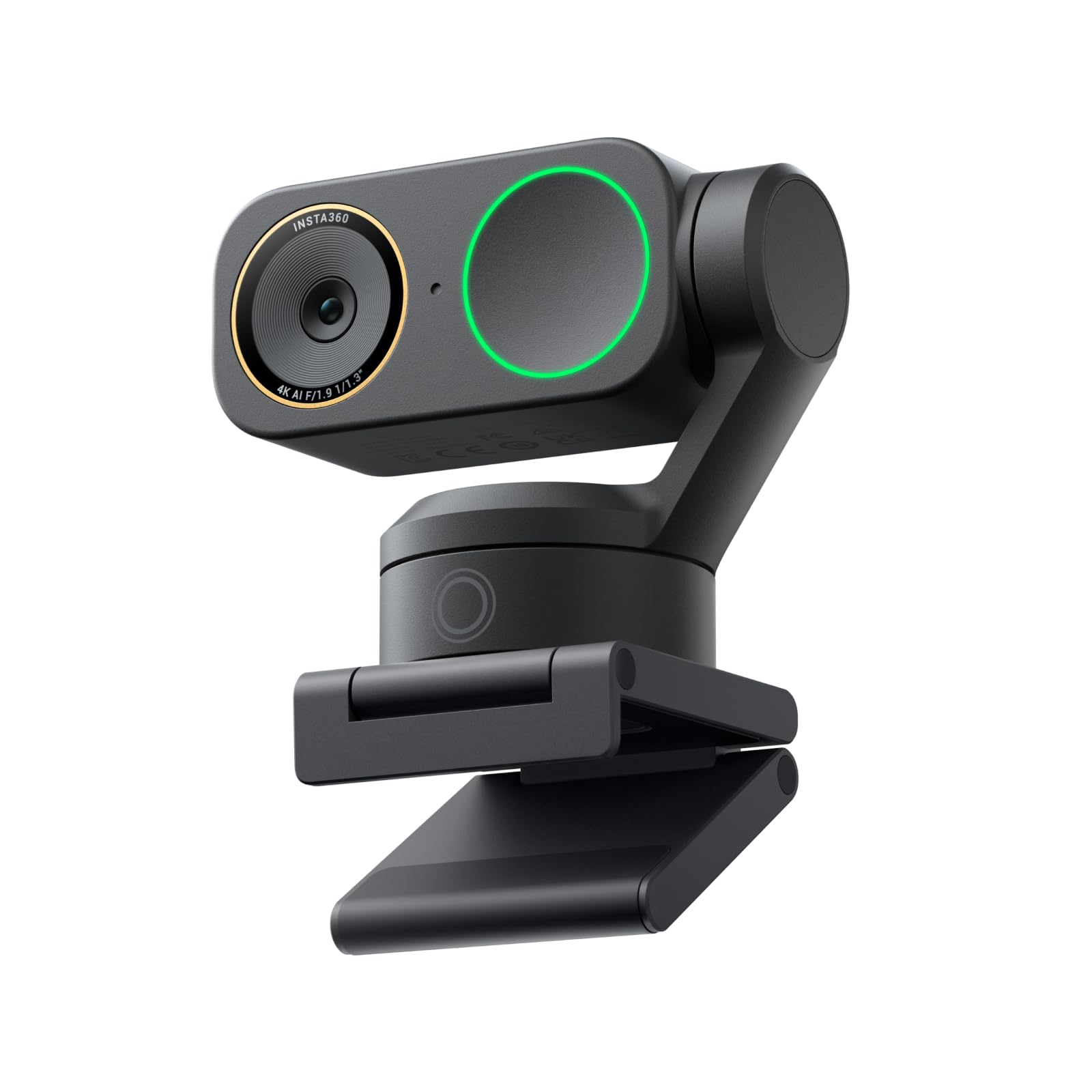
The Insta360 Link 2 Pro is the ideal VTubing webcam because it combines a flagship 1/1.3-inch sensor with physical AI tracking that pans and tilts to keep your face centered. This gimbal-based movement is significantly more responsive than digital crop tracking — your avatar will track head turns with sub-20ms latency rather than the 50ms+ lag common in fixed-lens webcams. The large sensor also handles colored RGB lighting without introducing noise, so VTube Studio retains clean facial landmarks.
Its dual-mic array uses beamforming for directional voice pickup, which is useful if you stream without a dedicated XLR mic. The built-in bokeh effect (software-simulated depth of field) separates your face from a busy background, helping tracking software lock onto your skin tone and eye contours. Elgato Stream Deck integration lets you toggle tracking modes or zoom presets mid-stream without alt-tabbing out of OBS.
The only trade-off is the short included USB-C cable — you will likely need a 2-meter extension to position the camera at a natural head-on angle. Also, the physical gimbal produces a faint mechanical hum, though it is barely audible on stream. For pure face-tracking reliability at this price, the Link 2 Pro outperforms every fixed webcam and most entry-level mirrorless cameras.
Why it’s great
- Large 1/1.3-inch sensor delivers clean low-light footage with minimal noise
- Physical PTZ gimbal tracks face movements with extremely low latency
- Stream Deck compatible for hands-free tracking mode switching
Good to know
- USB-C cable is very short; plan to buy a longer replacement
- Not compatible with ARM-based Windows systems or Windows Hello
2. OBSBOT Tiny 3
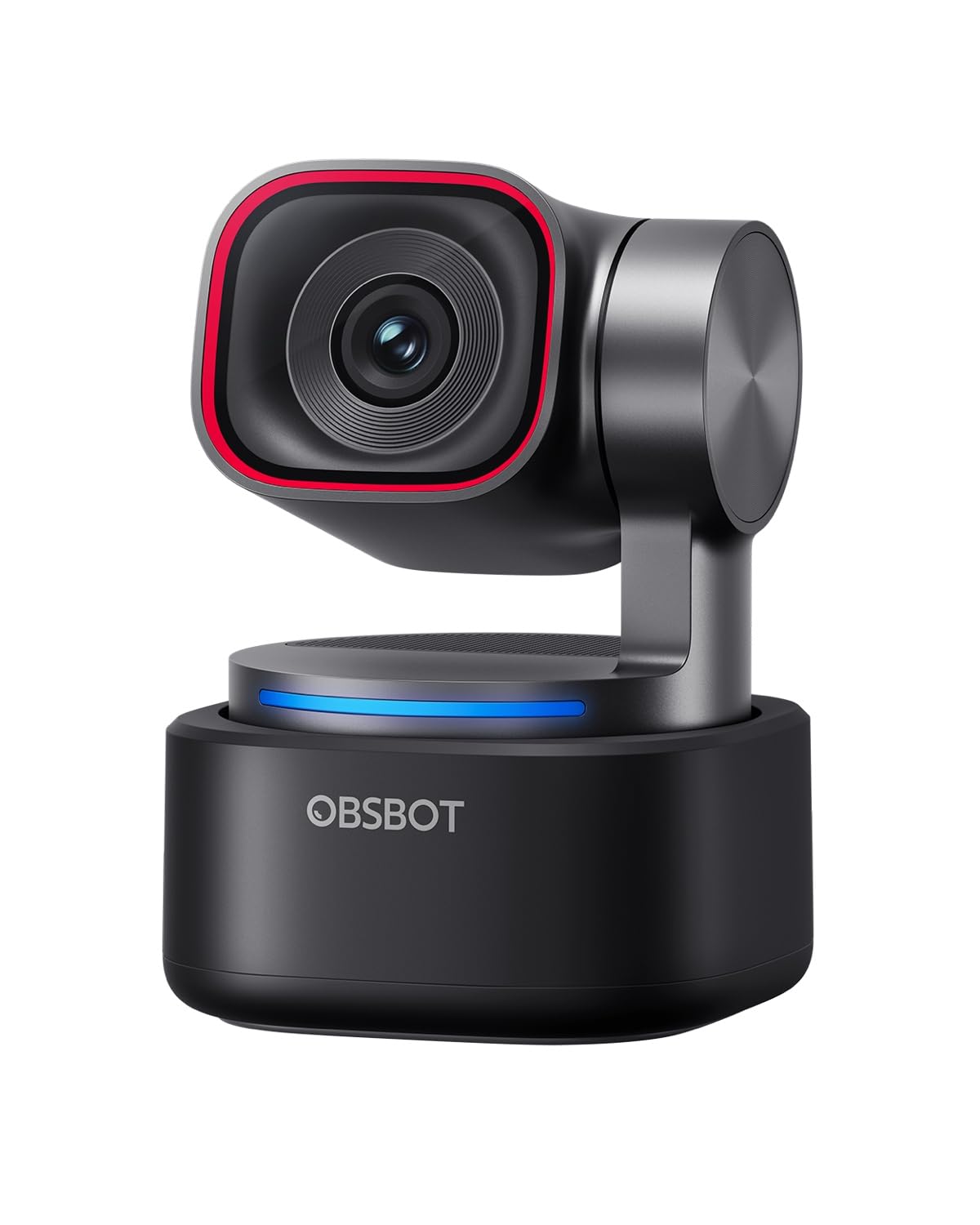
The OBSBOT Tiny 3 packs a 1/1.28-inch CMOS sensor into a chassis that is 48% smaller than its predecessor, making it the most discreet 4K PTZ webcam for VTubing. The upgraded AI Tracking 2.0 can lock onto humans, animals, or over 200 object types — which is overkill for face tracking but ensures your avatar never loses lock during dramatic head tilts or when you briefly look away. The dual All-Pixel PDAF keeps focus razor-sharp even when you lean closer to the camera.
Its 1080p 120fps mode is the killer feature for VTubers. Most webcams cap at 60fps, but the extra frames here allow VTube Studio to interpolate your face movements more smoothly, reducing the “sticky” feeling where the avatar lags behind your real motion. The tri-mic array also supports five specialized audio modes, though you will likely use a separate mic for streaming. Gesture control (wave to start tracking) adds hands-free convenience during live streams.
The Tiny 3 runs warm — it can get noticeably hot after two hours of constant tracking, but OBSBOT improved heat management over the original Tiny. The monitor mount is a bit stiff and some users resorted to Velcro for stability. Still, for VTubers who need 120fps input with silent gimbal movement, the Tiny 3 is the best compact package on the market.
Why it’s great
- 1080p 120fps mode provides ultra-smooth face tracking for avatars
- 1/1.28-inch sensor with wide ISO domain handles dark streaming setups
- Compact and travel-friendly with included hardshell case
Good to know
- Monitor mount is difficult to attach securely on some displays
- Camera can get warm after extended streaming sessions
3. OBSBOT Tail Air

OBSBOT Tail Air is a standalone PTZ streaming camera that goes beyond a standard webcam — it connects via USB-C, Micro HDMI, Ethernet, and Wi-Fi, giving VTubers flexibility to route the feed directly into OBS without a capture card. The 23mm f/1.8 lens combined with a 1/2.8-inch sensor captures decent detail at 4K 30fps, but the real value is the AI tracking that works with three target types: humans, animals, and objects. For VTubing, the human tracking mode locks onto your face even when you stand up and move around.
The 320-degree horizontal rotation and 180-degree vertical tilt mean the gimbal can track you across an entire room. This is especially useful if you use full-body tracking for your VTuber avatar — the camera can physically follow your body movements. NDI support (license key sold separately) enables low-latency IP streaming over a local network, reducing cable clutter in a multi-camera setup. The included USB-C splitter lets you power the camera and route video through a single cable.
Reliability is a concern — some units have failed after a few weeks, and the internal battery (2.5-hour capacity) cannot be bypassed or easily replaced, meaning the camera becomes a paperweight if the battery degrades. The tracking AI also struggles in very low light, as the 1/2.8-inch sensor is smaller than competitors. For VTubers who prioritize portability and multi-connection options, the Tail Air is a compelling alternative to a traditional webcam, but the battery issue makes it a risk for daily streaming.
Why it’s great
- NDI support for low-latency IP streaming without capture cards
- 320-degree pan range enables full-room body tracking
- Multiple connection options: USB-C, HDMI, Ethernet, Wi-Fi
Good to know
- Internal battery cannot be bypassed; failure renders camera unusable
- Smaller 1/2.8-inch sensor struggles in dimly lit rooms
4. Sony Alpha 7 IV

For VTubers who demand the absolute best image quality, the Sony Alpha 7 IV’s full-frame 33MP sensor with 7K oversampled 4K 30p delivers incredible detail and color accuracy that no webcam can touch. The Real-Time Eye AF is the fastest consumer autofocus system available — it detects your face even when it occupies just 3% of the frame, making it nearly impossible for tracking software to lose your landmarks. The S-Cinetone color profile provides a cinematic look straight out of camera, reducing the need for color grading.
When used with a clean HDMI output and a capture card, the A7 IV can feed 4K 60p 10-bit 4:2:2 to OBS with zero latency. The real-time Eye AF for animals and birds is a bonus if your VTuber persona has non-human features. The in-body image stabilization works well for handheld streaming, and the fully articulating screen lets you see your avatar while facing the camera.
The main barrier is the price — you will need a decent lens (a 24mm f/1.8 or 35mm f/1.8 is ideal for framing) and a capture card, which adds over the camera itself. The 4K 60p mode introduces a 1.5x crop, which limits your wide-angle field of view. The battery lasts about 2,000 shots but streaming drains it faster; you will need a dummy battery for all-day VTubing. If your budget supports a full-frame rig, the A7 IV is the ultimate camera for VTubing purity.
Why it’s great
- Real-Time Eye AF locks onto faces at extremely small frame percentages
- 7K oversampled 4K delivers the highest detail of any camera in this guide
- S-Cinetone color profile provides professional skin tones without grading
Good to know
- Requires a capture card and lens, significantly raising total cost
- 4K 60p mode has a 1.5x crop factor that limits wide-angle framing
5. Nikon Z6 III

The Nikon Z6 III is a powerhouse for VTubers who also create high-end video content — its internal 6K/60p N-RAW recording allows you to capture ultra-high-resolution footage for offline uploads, while the oversampled 4K UHD feed looks pristine in OBS. The 4000-nit electronic viewfinder is overkill for streaming but ensures you monitor your frame perfectly even in bright conditions. The AF detection works down to -10EV, meaning it can track your face in a nearly dark room with only monitor glow.
The deep learning-based subject recognition is 20% faster than the Z6 II, and it detects human faces as small as 3% of the frame — matching the Sony A7 IV. The dual card slots (CFexpress and SD) give you flexibility for recording local backups while streaming. The magnesium alloy body is weather-sealed, which doesn’t matter for a desk setup but speaks to build quality. The 5-axis IBIS is excellent, smoothing out any desk vibrations from your keyboard or mouse.
The Z6 III is larger and heavier than mirrorless rivals, and the menu system is less intuitive than Sony’s, requiring more setup time. Battery life hovers around two hours of continuous use, so a dummy battery is mandatory for long VTubing sessions. For VTubers who want a single camera that handles both streaming and high-end content creation, the Z6 III offers unmatched feature density at its price point.
Why it’s great
- 6K/60p internal RAW recording for pro-level offline content
- AF detection down to -10EV tracks face in extremely dark rooms
- Dual card slots for simultaneous streaming backup
Good to know
- Larger and heavier than competing full-frame bodies
- Menu system is less intuitive; requires initial setup time
6. Canon EOS R50
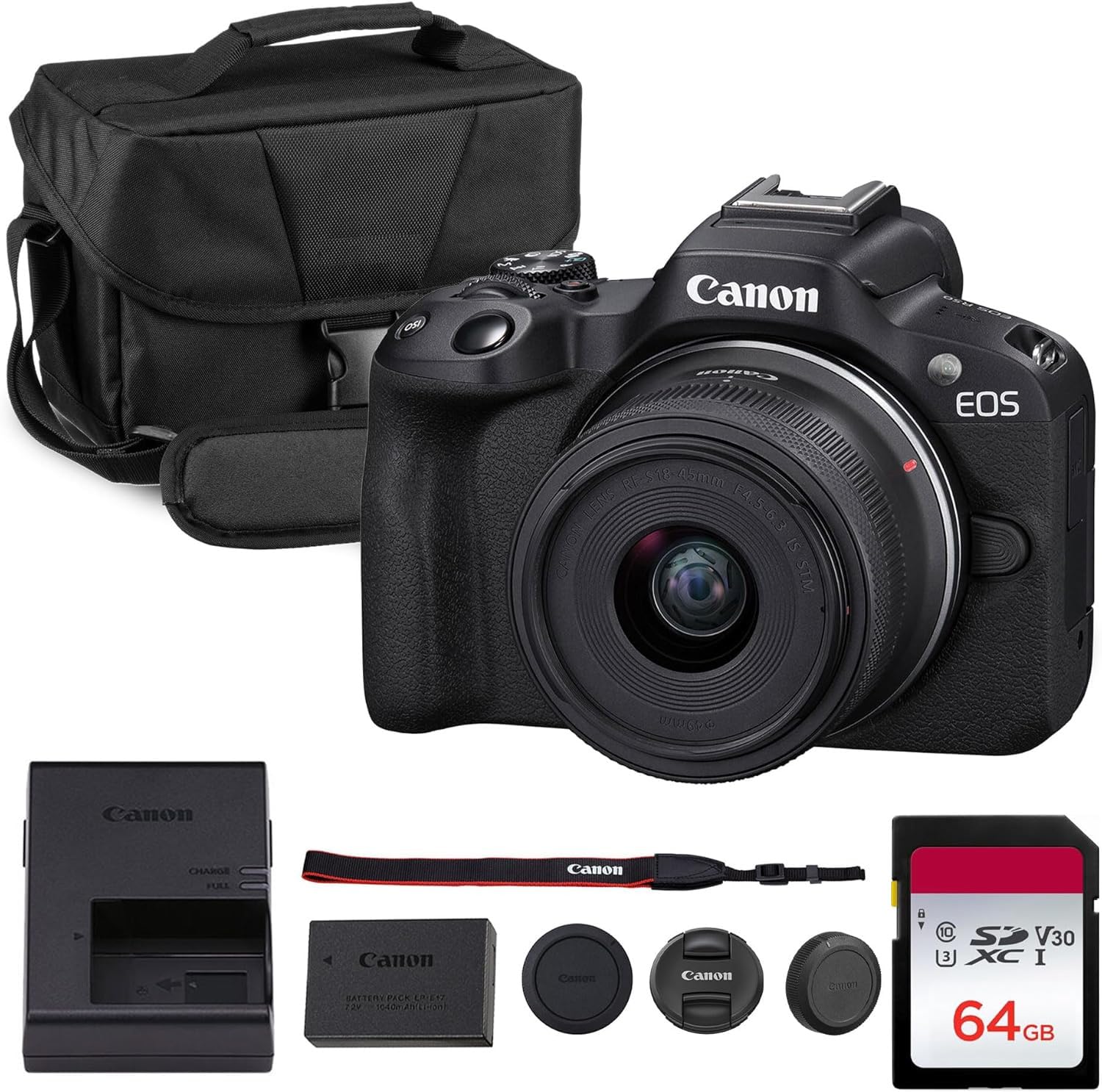
The Canon EOS R50 is the most accessible mirrorless camera for VTubing, combining Canon’s Dual Pixel CMOS AF II (face and eye detection) with a 24.2MP APS-C sensor that produces clean 4K oversampled footage. The vari-angle touchscreen is essential for VTubers who need to see their avatar on the camera display while facing the lens. The AF system covers 99 autofocus points with human, animal, and vehicle detection — ensuring reliable tracking for face motion.
The bundled RF-S 18-45mm lens is versatile enough for a close-up framing at 18mm, but you will want a faster prime like the RF 24mm f/1.8 for better low-light performance. The vertical video mode and Creative Assist make it easy to frame for social media clips. The camera is lightweight (under 400g with battery), reducing mount strain on tripod arms.
The main limitation is the lack of a headphone jack, which complicates audio monitoring during streams. The electronic viewfinder is basic and the buffer is shallow for continuous shooting. For VTubers upgrading from a Logitech C920, the R50 represents a massive leap in image quality and face-tracking reliability without jumping to full-frame prices. A dummy battery is recommended for unlimited streaming time.
Why it’s great
- Dual Pixel CMOS AF II locks onto faces and eyes quickly
- Vari-angle touchscreen lets you see your avatar while recording
- Lightweight and compact body reduces mount strain
Good to know
- No headphone jack for monitoring audio during streams
- Kit lens is slow; a fast prime lens improves low-light performance
7. Tenveo 4K NDI PTZ Camera
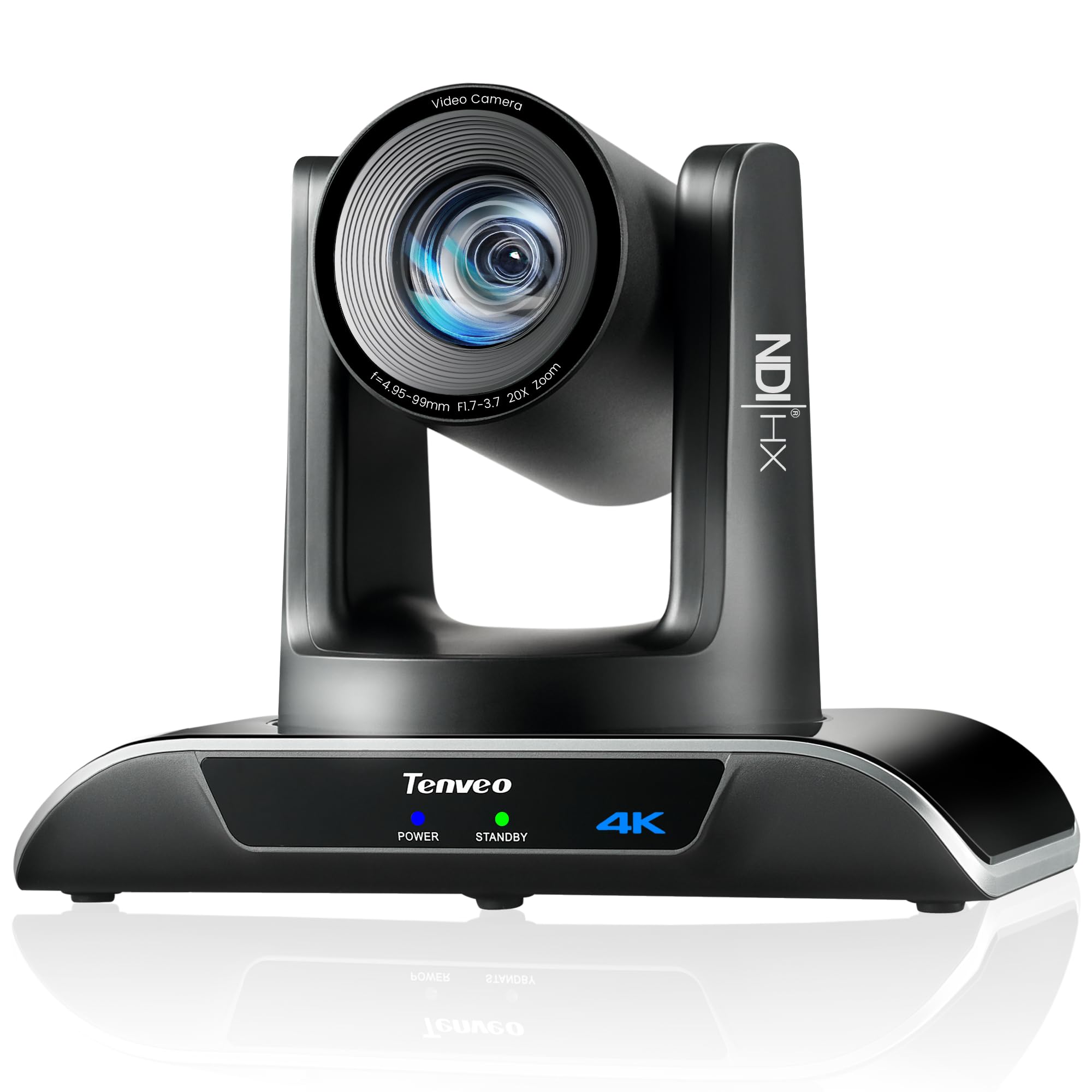
The Tenveo 4K NDI PTZ Camera is built for stage productions, but its AI humanoid and face auto-tracking is accurate enough for VTubing if you sit within 15 feet of the camera. The 20x optical zoom is overkill for a desktop setup, but if you have a large streaming room or walk around during full-body tracking, it keeps your face centered with millisecond-level response. The Sony 1/2.8-inch CMOS sensor delivers 4K 30fps and 1080p 60fps with good color reproduction.
The key feature for VTubers is the NDI support — it streams over a local network at extremely low latency without needing a capture card. You can control the camera via IR remote, RS232, or the Tenveo IP Search Tool, which automatically detects the camera on your network. The PoE (Power over Ethernet) support means a single Ethernet cable handles both power and video, simplifying cable management. The 350-degree pan and 180-degree tilt give you full room coverage.
The camera has no built-in microphone, so you must use a separate audio source. The AI tracking can occasionally lose lock if multiple people walk behind you, and the camera is large (9.7x6x6.7 inches) — it will dominate your desk. For VTubers running a multi-camera studio setup, the Tenveo offers pro-grade connectivity at a fraction of the cost of traditional broadcast PTZ cameras.
Why it’s great
- 20x optical zoom maintains image quality when cropping
- NDI and PoE support reduce cable clutter in multi-camera setups
- Millisecond-level face tracking response keeps avatars responsive
Good to know
- No built-in microphone; separate audio source required
- Large physical footprint not ideal for small desk setups
8. Canon EOS R100

The Canon EOS R100 is the smallest body in the EOS R series and the most affordable mirrorless option for VTubing. Its 24.1MP APS-C sensor and DIGIC 8 processor provide excellent image quality for the price, and the Dual Pixel CMOS AF covers 143 zones with human face and eye detection. While the AF is less advanced than the R50’s Dual Pixel AF II, it still reliably tracks your face when you speak or turn your head. The 4K video is capped at 24fps, which is suboptimal for VTubing — you will want to record at 1080p 60fps for smooth avatar movement.
The kit lens (RF-S 18-45mm f/4.5-6.3 IS STM) covers a decent range for desk framing, but its slow aperture means you need good lighting. The camera body is light and comfortable to hold for extended sessions. Wireless photo transfer via Wi-Fi and Bluetooth is a nice convenience for posting stream highlights on social media. The eye detect AF for animals is a fun bonus if you use VTubing with a furry persona.
The biggest compromise is the lack of a hot shoe and the basic 3-inch LCD screen — it’s not touch-enabled, so adjusting focus points mid-stream is clunky. The 4K 24fps cap is a real limitation for VTubers who want the highest quality stream signal. If you primarily stream at 1080p 60fps and need a budget-friendly entry into interchangeable lens cameras, the R100 is the most cost-effective way to get a large sensor for face tracking.
Why it’s great
- APS-C sensor provides much better low-light performance than webcams
- Face and eye detect AF works reliably at 1080p 60fps
- Affordable entry point into interchangeable lens mirrorless system
Good to know
- 4K video is capped at 24fps, limiting smooth VTubing motion
- Screen is non-touch, making focus adjustment during streams difficult
9. BallerCam BC01
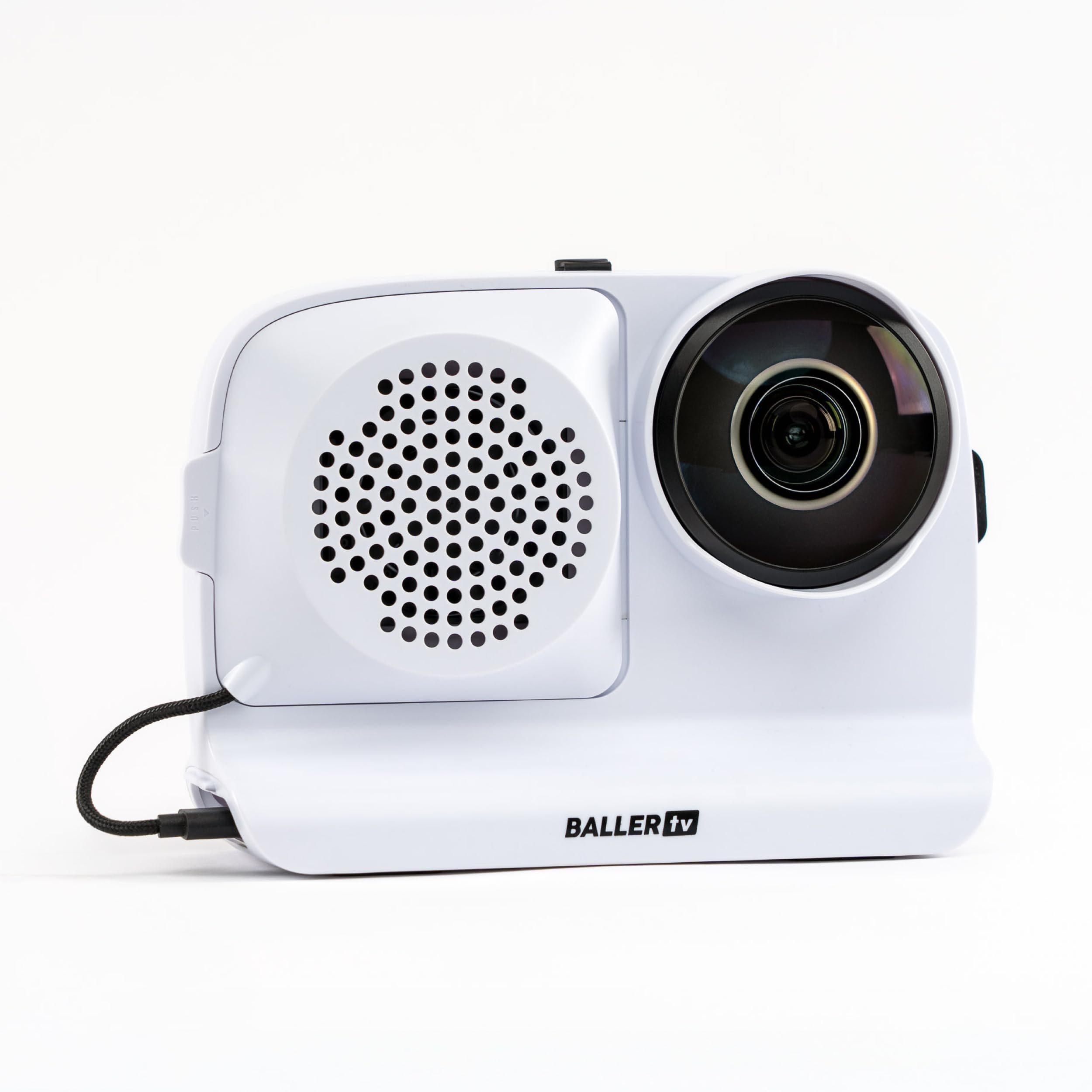
The BallerCam BC01 is a niche pick for VTubers who want to track physical sports alongside their streaming — think fitness VTubers or IRL streamers who switch between desk VTubing and sports coverage. Its 180-degree ultra-wide lens captures an entire field or court, and the AI tracks the ball (basketball, soccer, volleyball) automatically. When mounted on a tripod, the phone-dependent system uses your iPhone’s camera sensor and processing power, which means image quality depends on your phone model.
The 10,000mAh battery lasts 2-3 games, making it viable for extended outdoor streams. The AI is trained on over 2 million games, so tracking accuracy is around 95% in well-lit conditions. The included 20 hours of cloud storage means you can offload footage without SD cards. The camera is not waterproof; avoid outdoor streaming in the rain.
For desktop VTubing, the BallerCam is a mismatch — it has no face tracking, its 180-degree field of view is too wide for a desk perspective, and it requires an iPhone (not included). The build quality is fine for portable use but lacks the precision gimbal of dedicated PTZ webcams. Only consider this if your VTubing setup specifically involves sports content where you need a secondary automatic camera.
Why it’s great
- 10,000mAh battery allows long streaming sessions without power
- 180-degree lens captures full room or field for wide-angle footage
- AI trained on 2 million games provides reliable ball tracking
Good to know
- No face tracking — unsuitable for standard VTubing desk setups
- Requires an iPhone to operate; camera not a standalone unit
FAQ
Can I use a PTZ webcam without a capture card for VTubing?
What is the ideal frame rate for VTubing face tracking?
Does a full-frame mirrorless camera improve VTubing quality over a webcam?
Final Thoughts: The Verdict
For most VTubers, the best camera for vtubing winner is the Insta360 Link 2 Pro because its 1/1.3-inch sensor and physical PTZ gimbal provide the best balance of face-tracking accuracy, low-light performance, and ease of use. If you want ultra-smooth 120fps tracking for the most responsive avatar movement, grab the OBSBOT Tiny 3. And for maximum image quality with a full-frame sensor, nothing beats the Sony Alpha 7 IV.