
The line between a dedicated video rig and a stills camera has all but disappeared, but most “hybrid” cameras still lean heavily in one direction, leaving you with a compromise somewhere in the workflow. A true camera hybrid needs to deliver high-quality stills without shortchanging video specs like bit depth, frame rate, and codec support, and the market now offers serious options from Canon, Sony, Nikon, Panasonic, and Blackmagic at several tiers of investment.
I’m Min — the co-founder and writer behind Gadgets Feed. I’ve spent hundreds of hours analyzing sensor specifications, codec support, autofocus systems, and ergonomic trade-offs across the current hybrid camera landscape to find the models that genuinely pull double duty without forcing you to buy a second body.
This guide breaks down the best full-frame and Super 35 options for shooters who need both photo clarity and cinema-grade video. Whether you need 8K internal recording or a compact gimbal-friendly body, the right camera hybrid depends on your lens ecosystem and workflow priorities.
How To Choose The Best Camera Hybrid
Hybrid cameras are judged on their ability to satisfy two masters: the photographer who needs fast burst rates and accurate autofocus, and the videographer who demands clean 10-bit color, high bitrates, and reliable codecs. Ignoring one side of the equation leads to a frustrating dual-rig setup. The key decisions revolve around sensor format, autofocus system, stabilization, and recording limits.
Sensor Size and Resolution
Full-frame sensors (35.6×23.8mm) dominate the hybrid space because they offer shallow depth-of-field, better high-ISO performance, and flexibility across both stills and video. Super 35 sensors (roughly APS-C size), used in the Blackmagic Pocket Cinema Cameras, sacrifice some low-light ceiling but gain native lens coverage from the vast EF mount ecosystem and generate less rolling shutter during fast panning. A 45-megapixel sensor like the one in the Canon EOS R5 lets you crop stills heavily, but the 8K video readout demands massive processing power and storage bandwidth. A 24-megapixel sensor, by contrast, oversamples 4K more efficiently and keeps file sizes manageable for long shoots.
Autofocus Reliability
Phase-detection autofocus with deep-learning subject tracking is non-negotiable for hybrid work. Contrast-detect systems hunt too much for reliable video autofocus during moving interviews or run-and-gun coverage. The best systems — Sony’s Real-time Eye AF, Canon’s Dual Pixel CMOS AF, and Nikon’s Deep Learning AF — offer human and animal eye detection that works down to -6 EV or darker. Some Panasonic models historically relied on contrast-detect, but the S5II introduced Phase Hybrid AF, which finally brings the LUMIX line into competitive territory for hybrid shooters who want dependable AF without manual focus gear.
Recording Limits and Heat Management
Unlimited recording in 4K 10-bit 4:2:2 is the benchmark for professional hybrid use. Cameras that overheat after 20-30 minutes of internal 4K 60p recording (especially at higher bitrates) are not reliable for long interviews or event coverage. Active cooling — like the internal fan in the Panasonic S5II and the Blackmagic Pocket bodies — guarantees you hit record and stay there. The Canon EOS R5 historically faced overheating concerns with 8K internal recording, but real-world firmware updates and external recording over HDMI have mitigated this for most users. Check whether the camera imposes time limits per clip (the 29:59 limit common in consumer bodies) and whether those limits apply at every resolution and frame rate.
Quick Comparison
On smaller screens, swipe sideways to see the full table.
| Model | Category | Best For | Key Spec | Amazon |
|---|---|---|---|---|
| Canon EOS R5 | Full-Frame | High-res stills & 8K video | 45MP, 8K RAW, 20 fps | Amazon |
| Nikon Z6 III | Full-Frame | 6K internal RAW & fast action | 24.5MP, 6K/60p N-RAW, 4000-nit EVF | Amazon |
| Sony Alpha 7 IV | Full-Frame | Reliable hybrid with S-Cinetone | 33MP, 4K 60p 10-bit, 693 AF points | Amazon |
| Panasonic S5II | Full-Frame | Unlimited 4:2:2 with active cooling | 24.2MP, 6K 30p Open Gate, Phase Hybrid AF | Amazon |
| Blackmagic 6K Pro | Super 35 | Cinema-grade color with built-in ND | 6K, 13 stops DR, Interchangeable ND | Amazon |
| Sony a7 III | Full-Frame | Budget-friendly full-frame hybrid | 24.2MP, 4K 30p, 693 AF points | Amazon |
| Nikon Z6II | Full-Frame | Dual card slot reliability | 24.5MP, 4K 60p, Dual card slots | Amazon |
| Canon EOS RP Kit | Full-Frame | Lightweight entry-level hybrid | 26.2MP, 4K 24p, RF 24-105mm | Amazon |
| Blackmagic Pocket 4K | MFT Cinema | Budget cinema camera with RAW | 4/3”, 13 stops DR, Blackmagic RAW | Amazon |
| Insta360 Luna Ultra | Gimbal Compact | Vlogging with gimbal stabilization | 8K, 1” sensor, 3-axis gimbal | Amazon |
| Panasonic LUMIX ZS99 | Compact Travel | Pocket telephoto zoom | 24-720mm, 30x zoom, 4K 30p | Amazon |
In‑Depth Reviews
1. Canon EOS R5

The Canon EOS R5 remains the most complete single-body hybrid when you need both extreme stills resolution and high-end video capabilities. The stacked backside-illuminated 45-megapixel full-frame sensor delivers phenomenal detail, 14 stops of dynamic range, and low noise up to ISO 51200. The DIGIC X processor powers 8K RAW internal recording and 4K up to 120fps, making it technically the most video-capable stills camera in this lineup.
Autofocus performance is exceptional. The Dual Pixel CMOS AF II with 1,053 AF points covering almost 100% of the frame handles subject tracking via deep learning for people, animals, and vehicles. Real-world reviews consistently praise the lightning-fast Eye/Face AF during both photo and video work. The built-in IBIS provides around 5 stops of stabilization, meaning many B-roll shots can be captured handheld without a gimbal.
Overheating concerns during 8K recording have been overblown in firmware updates — most users find it manageable for real-world shoots. Battery life sits around 650 shots per charge, which is lower than some full-frame competitors, but the CIPA figures are acceptable for a body of this class. The RF lens ecosystem, combined with EF adapter compatibility, gives you access to Canon’s entire optical history.
Why it’s great
- 45MP sensor with 14-bit RAW and 8K internal recording
- Dual Pixel AF with 1053 points and vehicle/animal detection
- IBIS effective for handheld video without a gimbal
Good to know
- Battery life around 650 shots; requires spares for long shoots
- 8K recording can trigger thermal limits after extended use
- Premium price point reflecting the highest resolution in class
2. Nikon Z6 III

The Nikon Z6 III brings 6K/60p internal N-RAW recording into a full-frame body that also delivers excellent stills performance. The 24.5-megapixel BSI sensor offers dual-gain ISO up to 64000, with an extended range to 204800, making it a legitimate low-light workhorse. The oversampled 4K UHD from 6K readout produces exceptionally detailed footage with minimal aliasing, and the 4K/120p slow-motion option gives video editors flexibility without dropping resolution.
The viewfinder is genuinely class-leading. At 5760k-dot resolution with a maximum brightness of 4000 nits, it remains clear and vibrant even under harsh sunlight. The 120fps refresh rate eliminates blackout during high-speed continuous shooting, and the expansion to DCI-P3 color gamut means what you see through the EVF accurately represents final colors. Autofocus uses Nikon’s Deep Learning technology with detection down to -10 EV, and the system is roughly 20% faster than the Z6II, with the ability to detect human faces as small as three percent of the frame.
In-body stabilization is effective enough to replace a gimbal for most social media projects and walking shots. The dual card slot accommodates CFexpress Type B, XQD, and standard SD cards, offering flexibility for different storage budgets. Battery life averages around two hours of continuous video use, which is moderate — plan for extra batteries on full shoot days.
Why it’s great
- 6K/60p N-RAW internal recording with oversampled 4K
- Best-in-class EVF with 4000-nit brightness and DCI-P3 color
- AF tracking down to -10 EV with deep learning subject detection
Good to know
- Battery lasts roughly 2 hours of video use
- Autofocus can sometimes hunt at night in very low light
- Nikon Z lens ecosystem is growing but smaller than Sony/Canon
3. Sony Alpha 7 IV

The Sony Alpha 7 IV hits the sweet spot between stills resolution and video capability with its 33-megapixel Exmor R back-illuminated full-frame sensor and BIONZ XR processing engine. It shoots 4K 60p in 10-bit 4:2:2 with full pixel readout, and the 7K oversampled 4K 30p delivers remarkably clean footage with no pixel binning. The S-Cinetone color profile, borrowed from Sony’s cinema line, gives videographers a filmic look straight out of camera without extensive grading.
Autofocus is the strongest pillar of this camera. The 693 phase-detection points with Real-time Eye AF for humans and animals work accurately even in low light, and the improved grip and menu system resolve complaints from earlier Sony generations. The 33MP sensor provides enough resolution for heavy crops in stills while still oversampling 4K cleanly — it’s a rare diagonal resolution that benefits both disciplines.
Battery life is excellent for a mirrorless hybrid, often exceeding 2000 stills per charge in real-world use. The dual card slots accept CFexpress Type A and SDXC, giving fast write speeds alongside affordable backup options. The articulating screen works well for vlogging and low-angle video. The main trade-off is a 1.5x crop in 4K 60p, which limits wide-angle choices at that frame rate unless you have dedicated glass.
Why it’s great
- 33MP with 7K oversampled 4K and 10-bit internal recording
- Reliable Real-time Eye AF for people and animals
- S-Cinetone color profile delivers filmic in-camera color
Good to know
- 4K 60p applies a 1.5x crop factor
- Full-frame readout is limited at higher frame rates
- Menu system is better but still deeper than some competitors
4. Panasonic LUMIX S5II
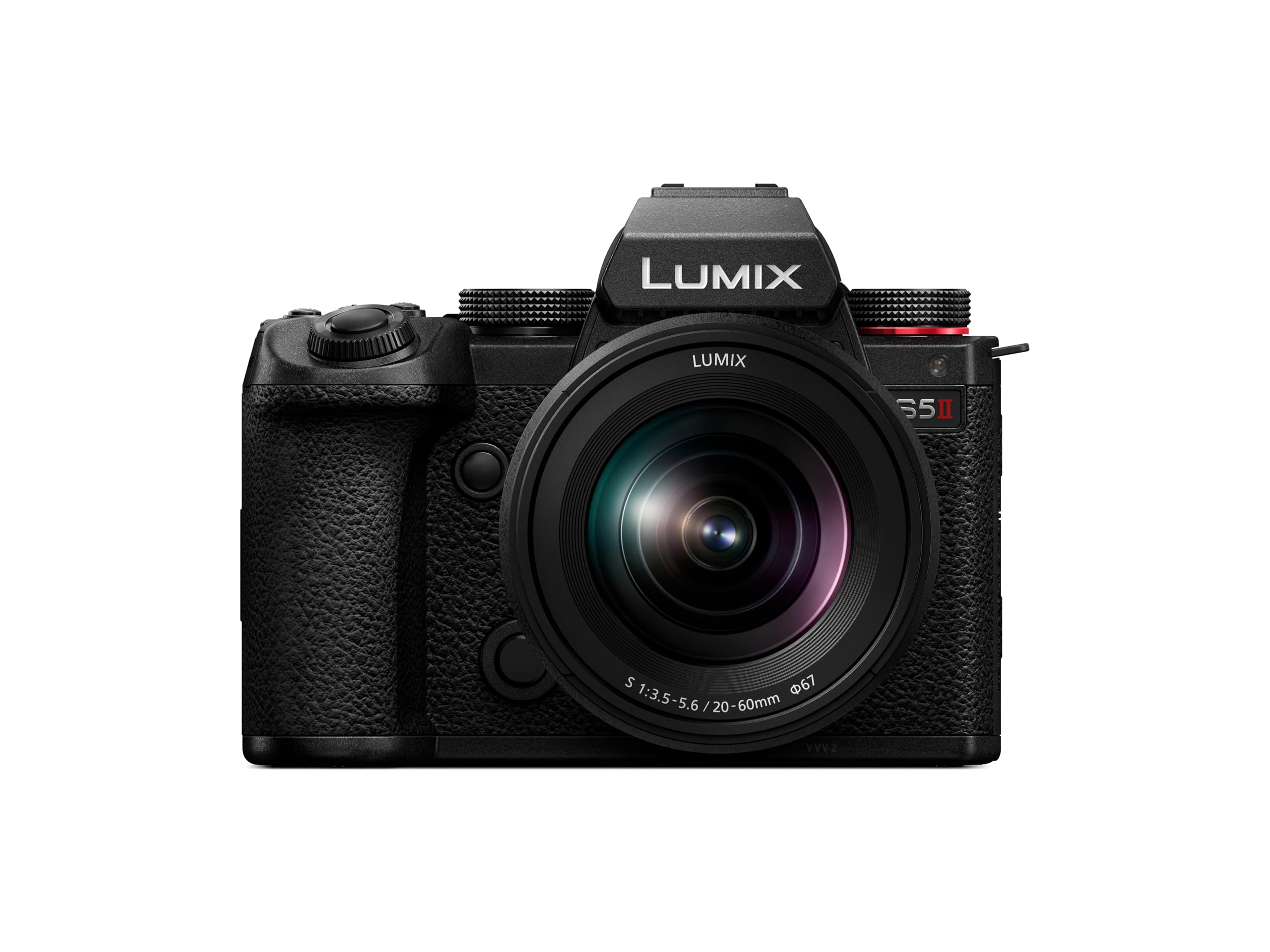
The Panasonic S5II is the camera that finally solved the autofocus complaint that held LUMIX bodies back from hybrid respectability. The Phase Hybrid AF system combines phase detection with Panasonic’s existing contrast-detect intelligence, delivering reliable subject tracking for weddings, events, and run-and-gun filmmaking. The 24.2-megapixel full-frame sensor with 14+ stops of V-Log/V-Gamut capture gives colorists flexibility matching with Varicam or other Lumix workflows.
The Active I.S. technology is genuinely impressive for handheld walking shots. Combined with the internal fan and heatsink, this camera achieves unlimited 4:2:2 10-bit recording in 6K 30p Open Gate or 4K 60p without thermal throttling. The REAL TIME LUT feature lets you apply LUTs in-camera for both photo and video grading, which speeds up client approval workflows considerably.
The kit lens — the 20-60mm F3.5-5.6 — is a versatile starter zoom for hybrid work. Build quality feels dense and professional, with weather sealing that handles light rain. The L-mount alliance gives access to Leica, Sigma, and Panasonic lenses. Battery life is average — expect around 400 stills per charge — but USB-C charging means you can power from a power bank.
Why it’s great
- Phase Hybrid AF finally competitive with Sony/Canon
- Unlimited 6K Open Gate recording with active cooling
- Active I.S. supports handheld walking footage
Good to know
- Battery life falls short of Sony a7 IV’s endurance
- No built-in flash; hotshoe only
- Lens selection smaller than Sony/Canon ecosystems
5. Blackmagic Pocket Cinema Camera 6K Pro

The Blackmagic Pocket Cinema Camera 6K Pro is a dedicated cinema camera that also doubles as a hybrid body, with the main focus on video. The Super 35 sensor captures 6144 x 3456 resolution natively, providing 13 stops of dynamic range with dual-gain ISO up to 25600. The active EF mount means you can use Canon EF and EF-S lenses natively — a massive ecosystem of affordable and high-end glass — without an adapter.
The built-in 2, 4, and 6-stop ND filters make outdoor shooting seamless, which is a critical feature for cinema work that would otherwise require matte boxes or screw-on NDs. The camera records to SD/UHS-II and CFast 2.0 cards or directly to external SSD via USB-C, keeping media costs lower than many raw-recording competitors. Blackmagic RAW at 12-bit gives you maximum grading latitude in DaVinci Resolve, which comes included with the camera.
The adjustable tilt 5-inch HDR LCD is bright enough for outdoor composition and large enough to serve as a monitor. However, this is not a camera you slip into a pocket — it demands a tripod, cage, or gimbal for proper use. The auto exposure system is manual by design, meaning no auto ISO, so this fits best when you’re controlling exposure yourself. Battery life using the included NP-F570 is around 45-60 minutes, so multiple batteries or external power is expected for serious shoots.
Why it’s great
- 6K Super 35 sensor with 13 stops of dynamic range
- Built-in 2/4/6 stop ND filters for outdoor control
- Blackmagic RAW 12-bit with free DaVinci Resolve Studio
Good to know
- No auto ISO during auto exposure; manual control required
- NP-F570 battery lasts only 45-60 minutes in use
- Heavier and larger than full-frame mirrorless hybrids
6. Sony a7 III

The Sony a7 III, though from an earlier generation, remains a powerful entry point into full-frame hybrid work. The 24.2-megapixel back-illuminated sensor with 15 stops of dynamic range and up to ISO 204800 delivers images that still compete with many newer cameras. The 693 phase-detection and 425 contrast AF points cover 93% of the sensor, making autofocus fast and accurate for both stills and video.
In video, the a7 III shoots 4K 30p from the full sensor width with 10-bit output via HDMI, and it offers 1080p slow-mo up to 120fps. The S&Q mode is quick to access, and the battery life is exceptional — around 710 stills per charge, which translates to satisfyingly long video recording sessions on a single battery. The kit lens (SEL2870, 28-70mm F3.5-5.6) is adequate for starting, but the camera’s real value emerges when pairing it with fast primes or Sigma Art glass via adapted mounts.
The main limitations for hybrid use are the lack of 10-bit internal recording and the older menu system, which can feel labyrinthine compared to the a7 IV or the Canon R5. The micro USB port instead of USB-C is a minor annoyance, but the camera’s overall build quality, reliability, and massive used lens ecosystem make it a strong budget-friendly hybrid choice.
Why it’s great
- 24.2MP BSI sensor with 15 stops dynamic range
- 693-point AF with excellent consistency and tracking
- Exceptional battery life for a mirrorless body
Good to know
- Internal recording limited to 8-bit; 10-bit only over HDMI
- Menu system is older and less intuitive than newer models
- No USB-C charging; uses micro USB
7. Nikon Z6II

The Nikon Z6II is the camera to consider if you value dual card slots and reliable performance in a compact full-frame body. The 24.5-megapixel BSI sensor paired with dual EXPEED 6 processors delivers excellent low-light results with ISO up to 51200, and the 14fps continuous shooting with AE/AF tracking captures fast action confidently. The native Z-mount produces sharp results with minimal chromatic aberration, and the wide 55mm mount diameter allows for impressive lens designs.
Video capabilities include 4K UHD 60p using full pixel readout, which yields oversampled 4K footage with minimal aliasing. The camera is compatible with the growing NIKKOR Z lens lineup as well as over 360 F-mount NIKKOR lenses via the FTZ adapter. The built-in IBIS delivers around 5 stops of stabilization, making handheld video feasible for run-and-gun scenarios.
Autofocus has improved over the original Z6, with subject detection that handles people and animals well. Battery life is acceptable, and USB-C constant power and charging support makes it suitable for timelapses and livestreams. The main hybrid limitation is that the screen does not flip forward for self-vlogging, requiring an external monitor for solo creators.
Why it’s great
- Dual card slots (CFexpress/XQD + SD) for backup
- Excellent low-light performance up to ISO 51200
- Built-in IBIS with 5 stops of shake reduction
Good to know
- Screen doesn’t tilt forward for self-filming
- Focus tracking can lose subjects in fast action
- Limited Z native lens selection compared to Sony/Canon
8. Canon EOS RP Kit

The Canon EOS RP, when paired with the RF 24-105mm F4-7.1 IS STM lens, offers the lightest full-frame hybrid kit available at this entry-level price point. The 26.2-megapixel sensor and DIGIC 8 processor produce clean stills with very good color science, and the Dual Pixel CMOS AF — even if not the latest generation — provides snappy phase-detection autofocus that works well for most hybrid use cases.
The kit lens delivers a versatile 24-105mm zoom range with 5 stops of optical image stabilization, which helps keep handheld video footage steady. The camera body is compact enough for travel and comfortable for vlogging, and it supports EF/EF-S lenses via the adapter, making it a practical gateway into Canon’s RF ecosystem. The EOS Utility Webcam Beta Software turns it into a high-quality webcam for streaming, adding value if you need that function.
The main video limitation is 4K capture only at 24p with a significant crop factor, and the 1080p mode is where the camera shines for video work. The battery life is moderate — around 250 stills per charge — so a spare battery is recommended for longer shoots. This kit makes sense if you want to enter full-frame hybrid territory without a heavy investment, especially for travel and content creation where weight and size matter.
Why it’s great
- Lightest full-frame mirrorless kit for travel
- Dual Pixel AF with good face detection for video
- RF ecosystem compatible with EF lenses via adapter
Good to know
- 4K mode has heavy crop and limited to 24p
- Battery life is modest; carry spares
- Kit lens is relatively slow at F4-7.1
9. Blackmagic Pocket Cinema Camera 4K

The Blackmagic Pocket Cinema Camera 4K is the most affordable gateway into true cinema-grade RAW recording, offering a 4/3” sensor with native 4096 x 2160 resolution, 13 stops of dynamic range, and dual-gain ISO up to 25600. The active Micro Four Thirds mount provides access to a huge ecosystem of compact lenses, including speedboosters that adapt full-frame glass with a focal multiplier.
Recording to SD/UHS-II, CFast 2.0, or external SSD via USB-C gives you flexible media options without paying premium media prices. The camera comes bundled with DaVinci Resolve Studio, which together with Blackmagic RAW or Apple ProRes support, provides a complete post-production pipeline out of the box. The 5-inch LCD touchscreen is bright enough for most studio settings, though it can be difficult to see in direct sunlight.
The main hybrid trade-off is the near-complete lack of photography features. This is a video-first device with no viewfinder, no continuous autofocus, no image stabilization, and a battery life of around 30 minutes. It’s best paired with a tripod, gimbal, or cage setup, and a V-mount battery plate for extended shoots. It’s a cinema camera that can also take video, not a true hybrid — but if your primary output is video, the image quality per dollar is unmatched.
Why it’s great
- 13 stops of dynamic range with Blackmagic RAW 12-bit
- Records to SSD via USB-C for cheap media
- Includes full DaVinci Resolve Studio license
Good to know
- Battery life is around 30 minutes per charge
- No IBIS, no continuous AF, no viewfinder
- Sunlight visibility of the LCD is poor
10. Insta360 Luna Ultra
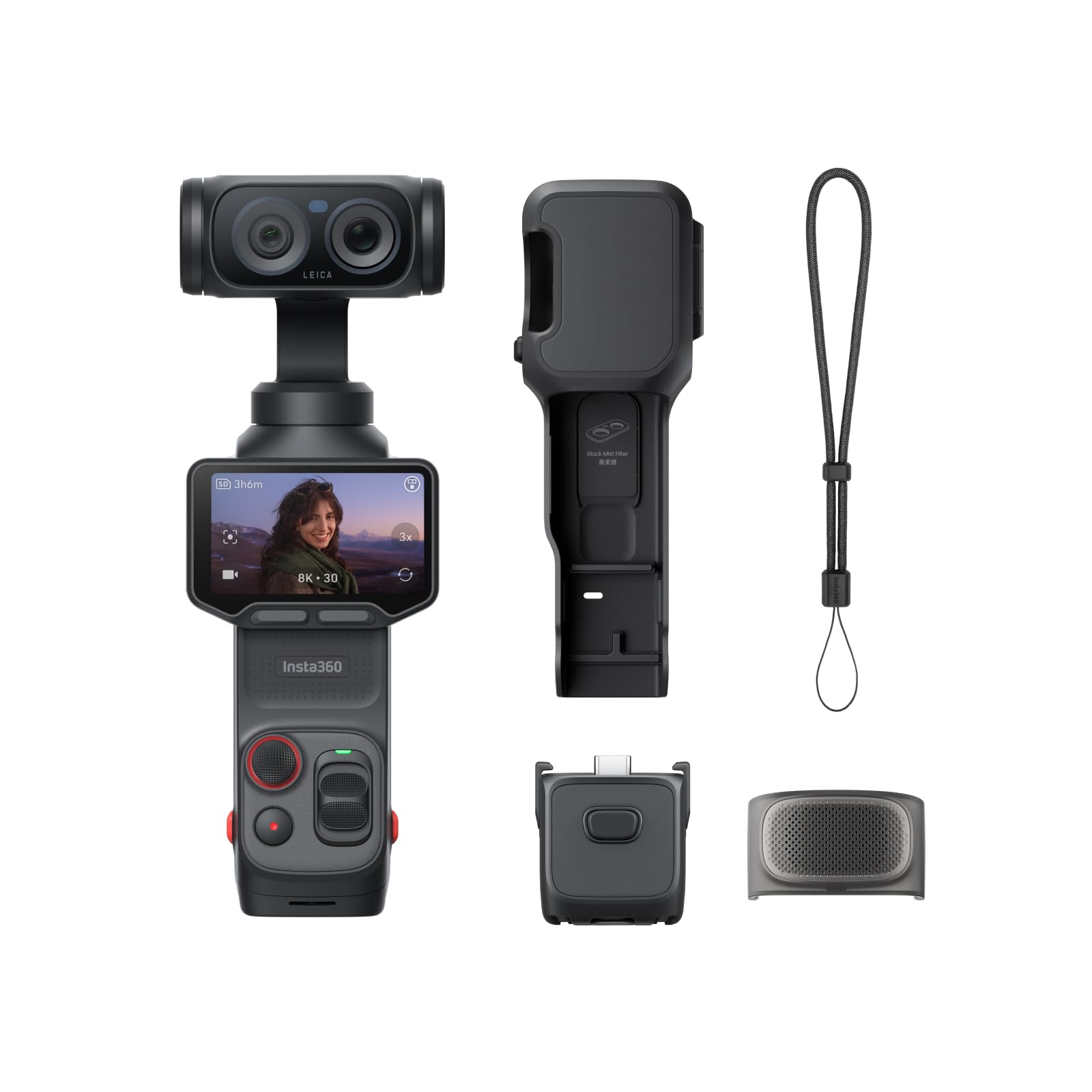
The Insta360 Luna Ultra is a pocket-sized gimbal camera with dual Leica lenses, a 1-inch main sensor, and a pro-grade telephoto lens with a 1/1.3” sensor and F2.0 aperture. It records 8K 30fps HDR video with Dolby Vision, capturing up to 14 stops of dynamic range. The triple AI chip handles advanced noise reduction and intelligent subject tracking that keeps your target centered even during motion.
The detachable 2-inch OLED touchscreen can be used as a remote viewfinder up to 20 meters away, which is a game-changer for solo vloggers and group shots. The 12x zoom range with 6x lossless zoom offers flexibility from wide establishing shots to tight close-ups. The 3-axis mechanical stabilization keeps footage smooth during walking shots, and fast charging to 80% in 23 minutes means downtime is minimal. The QR Color Share feature lets you share Leica color profiles instantly with other Luna users.
The main limitation is that this is a specialized compact gimbal camera, not a full mirrorless system with interchangeable lenses. The 1-inch sensor cannot match the low-light performance or depth-of-field control of full-frame sensors in the other contenders. However, for creators who prioritize portability, gimbal stability, and AI-assisted tracking over sensor size, the Luna Ultra delivers a unique all-in-one package.
Why it’s great
- 8K Dolby Vision with built-in 3-axis gimbal stability
- Detachable touchscreen for remote solo shooting
- Fast charging to 80% in 23 minutes
Good to know
- 1-inch sensor cannot match full-frame low-light performance
- Not interchangeable lens; what you get is fixed
- Firmware updates still needed to unlock full feature set
11. Panasonic LUMIX ZS99

The Panasonic LUMIX ZS99 is the pocket telephoto compact of this roundup. Its 24-720mm LEICA DC Vario-Elmar lens with 30x optical zoom fits into a jacket pocket, giving you an unprecedented reach for a camera that costs less. The 1/2.3-inch sensor offers 20.3 megapixels, and the 5-axis Hybrid O.I.S. keeps 720mm shots steady enough for concerts and wildlife on family trips.
Video recording maxes out at 4K 30p, with 1080p 120fps slow-motion available for creative flexibility. The 1,840k-dot tiltable touchscreen helps with framing at unusual angles, and built-in Bluetooth 5.0 with a dedicated Send Image button makes sharing to a smartphone seamless. The universal USB-C charging eliminates the need for a proprietary charger.
Image quality is typical of a small-sensor compact — serviceable in good light up to ISO 1600, but showing color aberration at corners. Autofocus can be slow in low light, and the LCD is hard to read in direct sunlight. This camera fits a specific niche: it’s for travel, concerts, and family events where reach and pocketability matter more than shallow depth-of-field or professional video specs.
Why it’s great
- 30x 24-720mm Leica zoom in a pocket-friendly body
- 5-axis O.I.S. keeps telephoto shots steady
- USB-C charging and Bluetooth 5.0 sharing
Good to know
- Small sensor yields limited low-light performance
- Autofocus hunts in dim conditions
- No RAW stills; JPEG only for photos
FAQ
What bit depth and codec should I look for in a hybrid camera?
Can I use EF lenses on a Nikon Z6 or Canon R5?
What does IBIS mean and do I need it for hybrid shooting?
Final Thoughts: The Verdict
For most users, the camera hybrid winner is the Sony Alpha 7 IV because it balances resolution (33MP), 10-bit 4K 60p video, and reliable autofocus at a reasonable cost. If you want 8K capability with 45MP stills, grab the Canon EOS R5. And for dedicated video-first work where grading and dynamic range matter most, nothing beats the Blackmagic Pocket Cinema Camera 6K Pro.