
Car photography lives and dies by the glass on your camera body. The wrong lens turns a stunning paint curve into a muddy mess, while the right one captures every reflection, every body line, and every aggressive stance with crisp, three-dimensional clarity. A fast aperture swallows low-light garage and dusk shoots, and the correct focal length lets you fill the frame without standing in traffic.
I’m Min — the co-founder and writer behind Gadgets Feed. I’ve spent countless hours analyzing optical formulas, aperture blades, and autofocus motor designs to separate lenses that deliver sharp, distortion-free car shots from those that leave you cropping out chromatic aberration in post.
Whether you shoot concours showfields or canyon runs, this guide helps you select the right camera lens for car photography that matches your rig and the kind of rolling or static shots you want to capture.
How To Choose The Best Camera Lens For Car Photography
Car photography demands glass that manages reflections, sharpens body lines, and handles fast motion. Here are the three most critical specs to consider.
Aperture And Low-Light Performance
A wide aperture — f/1.4, f/1.8, or even f/1.2 — lets in plenty of light for dusk garage shoots and showrooms. It also delivers a shallow depth of field that throws backgrounds into soft blur, making the car pop off the frame. For panning shots at golden hour, an f/2.8 zoom is a solid balance of speed and reach.
Focal Length And Composition Style
Wide primes in the 20–35mm range are the go-to for full-car static shots and exaggerated front-end perspectives. A mid-range zoom like 24–70mm covers three-quarter angles and rolling shots, while a telephoto zoom (70–200mm or more) compresses the car against its environment for dramatic rolling captures. Your choice depends on whether you shoot details or the whole build.
Autofocus Speed And Stabilization
Car photography involves motion — tracking a car while panning or shooting from a chase vehicle. A fast, silent autofocus motor (STM, Nano USM, or HLA) locks on the vehicle without hunting. Optical image stabilization helps keep sharp handheld frames at lower shutter speeds, especially with telephoto glass.
Quick Comparison
On smaller screens, swipe sideways to see the full table.
| Model | Category | Best For | Key Spec | Amazon |
|---|---|---|---|---|
| Sigma 70-200mm F2.8 DG DN OS | Telephoto Zoom | Rolling shots & track photography | F2.8 constant aperture, 1345g | Amazon |
| Canon RF24-70mm F2.8 L IS USM | Standard Zoom | Versatile static & rolling compositions | F2.8 IS, 5-stop stabilization | Amazon |
| Sony FE 35mm f/1.4 GM | Wide Prime | Low-light full-car static shots | F1.4, Nano AR Coating II | Amazon |
| Sigma 35mm F1.4 DG DN Art | Wide Prime | Sharp wide-angle three-quarter views | F1.4, 454g, Sony E mount | Amazon |
| Sony FE 24mm F1.4 GM | Wide Prime | Astro & wide rolling compositions | F1.4, XA elements, 0.98 lbs | Amazon |
| Nikon NIKKOR Z 20mm f/1.8 S | Ultra-Wide Prime | Exaggerated front-end & rolling wide-angle | F1.8, Nano Crystal Coat, 17.76 oz | Amazon |
| SIRUI Sniper 33mm F1.2 | Budget Prime | Budget-friendly low-light car portraits | F1.2, APS-C, STM AF, 400g | Amazon |
| Nikon 24-120mm f/4G ED VR | Standard Zoom | All-purpose travel walkaround | F4 constant, VR II, 710g | Amazon |
| Canon RF100-500mm F4.5-7.1 L IS USM | Super-Telephoto Zoom | Extreme reach for track & detail compression | 100-500mm, Dual Nano USM, 5-stop IS | Amazon |
In‑Depth Reviews
1. Sigma 70-200mm F2.8 DG DN OS for Sony

The Sigma 70-200mm F2.8 DG DN OS is the workhorse telephoto for car photography, providing a constant f/2.8 aperture across the entire zoom range. This allows you to compress a car against a canyon backdrop at 200mm while maintaining a fast shutter speed to freeze motion. The High-response Linear Actuator (HLA) AF motor locks onto moving vehicles instantly, making rolling shots from a chase car sharp frame after frame.
Built to Sigma’s Sports line standards, this lens features dust- and splash-resistant construction, which is critical when shooting track days where dust and debris are everywhere. The optical stabilization is strong enough to hand-hold sharp images at slower shutter speeds, which helps when panning to create that motion-blurred background effect that makes car photos dynamic.
Weighing 1345 grams, it is heavy for all-day carry, but that weight comes with pro-grade optics that deliver tack-sharp resolution and smooth bokeh. For Sony E-mount shooters who need one telephoto to handle everything from detail compression to full-car rolling compositions, this lens is a top-tier choice.
Why it’s great
- Constant f/2.8 keeps shutter speeds fast in low-light track conditions
- HLA autofocus motor locks onto moving cars without hunting
- Dust- and splash-resistant build handles dirty track environments
Good to know
- Heavy at 1345g — monopod or gimbal helps for long sessions
- Twist-screw lens cap can interfere with zoom ring if not fully removed
2. Canon RF24-70mm F2.8 L IS USM

The Canon RF24-70mm F2.8 L IS USM is the ultimate versatile companion for any Canon mirrorless shooter focused on car photography. Covering the essential 24mm wide-angle for full-car front-three-quarter shots to 70mm for tight detail crops, this lens delivers f/2.8 brightness across the entire zoom range. The 5-stop optical image stabilization pairs beautifully with the R5 or R6 IBIS for tack-sharp handheld shots at 1/10 second.
Nano USM autofocus is whisper-quiet and instant, making it perfect for video work — you can rack focus smoothly from a hood emblem to the rear taillight without audible motor noise in the footage. The weather-sealed L-series construction handles rain and dust without concern, while the control ring allows you to adjust aperture or exposure compensation without taking your eye off the viewfinder.
At 898 grams, it is lighter than the RF 28-70mm F2, making it a much more practical all-day lens for auto shows and road trip shoots. The 82mm filter thread is standard for pro lenses, but investing in quality filters for polarization will cut windshield reflections significantly.
Why it’s great
- 5-stop IS combined with IBIS for sharp handheld rolling shots
- Nano USM AF is silent and rapid for video focus pulls
- 24-70mm range covers full-car and detail comps without swapping glass
Good to know
- Slight vignetting at 24mm wide open — correctable in Lightroom
- Large 82mm filter thread drives up polarizer and ND filter costs
3. Sony FE 35mm f/1.4 GM

The Sony FE 35mm f/1.4 GM is a compact powerhouse for car photographers who prioritize low-light performance and creamy bokeh. The f/1.4 maximum aperture allows you to shoot in dimly lit garages or at dusk without cranking ISO into noisy territory. Two Extreme Aspheric (XA) elements deliver stunning edge-to-edge resolution even wide open, so the car’s paint reflections stay sharp from the bumper to the taillight.
The Nano AR Coating II aggressively suppresses flare and ghosting, which is a lifesaver when shooting a car with direct sun bouncing off chrome trim or a glossy windshield. At just 18.5 ounces, this lens is light enough to be your walkaround prime for an entire car show, and the dust- and moisture-resistant build offers peace of mind during outdoor shoots.
Autofocus is blazingly fast on the a7R V, and the lens supports Sony’s breathing compensation for video, so you can rack focus between the headlight and the grille without visible focal shift. For a single prime that delivers professional results in both photo and video, this G Master lens is a fantastic investment.
Why it’s great
- F1.4 aperture excels in low-light garage and dusk setups
- Nano AR Coating II minimizes reflections and ghosting from glossy car surfaces
- Compact and lightweight for all-day car show carry
Good to know
- Fixed 35mm focal length requires stepping back for tight detail shots
- Autofocus can be too quick for smooth video rack pulls
4. Sigma 35mm F1.4 DG DN Art

The Sigma 35mm F1.4 DG DN Art is the updated mirrorless version of the classic Art series prime, and it brings exceptional optical quality to Sony E-mount and L-mount car photographers. The 35mm focal length is ideal for three-quarter car portraits and full-car static shots with a natural perspective that doesn’t exaggerate the front end. The f/1.4 aperture creates a beautiful separation between the car and the background, making even a parking lot look cinematic.
Weighing only 454 grams, this lens is remarkably lightweight for an f/1.4 prime, making it a comfortable pairing with smaller bodies like the A7C series. The super multi-layer coating effectively reduces flare and ghosting, and the lens delivers sharp images with minimal distortion and chromatic aberration—two things that ruin car paint reflections in post-production.
Autofocus is fast and quiet, ideal for both stills and video, and the build quality feels solid with a metal barrel and weather-sealed mount. For Sony shooters who want a more affordable alternative to the GM without sacrificing sharpness or speed, this Art lens is a compelling choice.
Why it’s great
- Lightweight 454g design — easy to pack for multi-location shoots
- Excellent sharpness with minimal chromatic aberration on chrome reflections
- Smooth bokeh from 11-blade aperture adds depth to car portraits
Good to know
- Some users report the lens feels plasticky compared to older Art versions
- Autofocus is fast but not quite as silent as native Sony GM lenses
5. Sony FE 24mm F1.4 GM

The Sony FE 24mm F1.4 GM is the lens for dramatic car compositions where you want to exaggerate the front fascia or capture a wide environment shot around the vehicle. The 24mm focal length pushes the foreground larger while keeping the background vast, creating dynamic static shots that make a car look aggressive. The f/1.4 aperture is unmatched for low-light astro shots around a car at night, capturing both the stars and the vehicle in one frame.
Two XA elements deliver lifelike resolution with minimal distortion, which is crucial for maintaining straight body lines like hood edges and side skirts. The lens is compact for an f/1.4 wide-angle at 0.98 pounds, and the autofocus is fast and reliable on both full-frame and APS-C bodies. The dust- and moisture-resistant design ensures reliability during outdoor shoots in less-than-ideal weather.
While the 24mm focal length is less forgiving for car portraits compared to a 35mm, it is a powerhouse for rolling shots from a chase car, where you can keep the whole vehicle in frame while capturing the environment rushing by. For Sony shooters who want the ultimate wide-angle prime for creative car photography, this GM lens delivers exceptional results.
Why it’s great
- F1.4 aperture enables low-light astro compositions around cars
- 24mm focal length exaggerates front-end aggression for dynamic static shots
- Compact and lightweight for a fast wide-angle prime
Good to know
- 24mm field of view may not suit every composition — swapping glass required
- Premium price point versus third-party alternatives
6. Nikon NIKKOR Z 20mm f/1.8 S
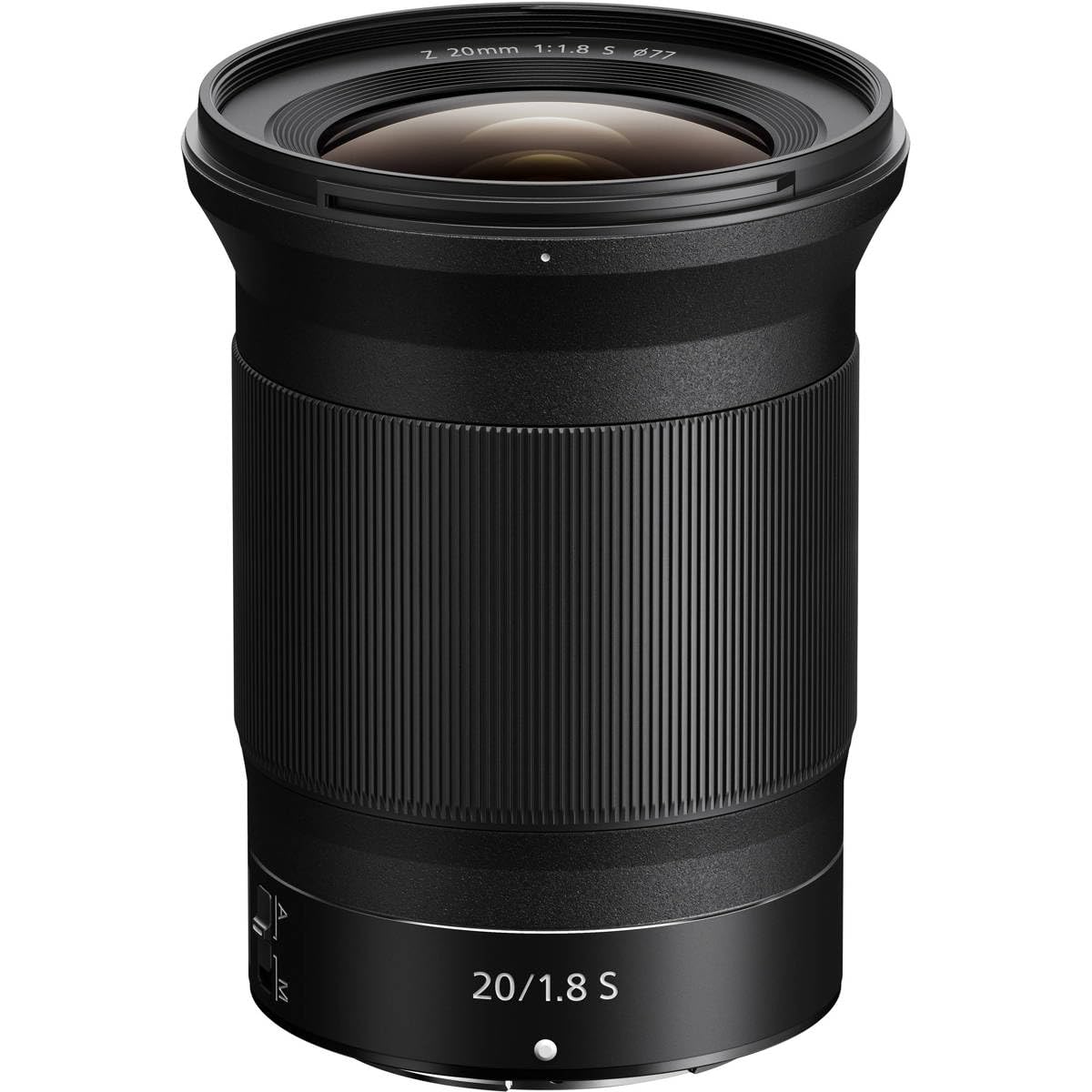
The Nikon NIKKOR Z 20mm f/1.8 S is the specialized ultra-wide prime for Nikon Z system shooters who need exaggerated perspective and massive environmental context in their car photography. At 20mm, this lens captures a field of view that makes even a small coupe look imposing against a backdrop of mountains or cityscapes. The f/1.8 aperture provides excellent low-light performance, making it a favorite for astro automotive shots where you want both the Milky Way and the car in focus.
The multi-focusing system delivers fast and accurate autofocus, while ED glass elements and Nano Crystal Coat effectively suppress ghosting and chromatic aberration when shooting into direct sunlight. At just 17.76 ounces, it is one of the lightest ultra-wide primes available for full-frame mirrorless, giving you excellent portability for location scouting. The build quality is solid with a metal mount and weather sealing.
The 20mm focal length requires careful composition to avoid making the car look distorted, but when used correctly, it provides a unique perspective that standard zooms cannot replicate. If you shoot primarily static car portraits, this might be too wide, but for rolling shots and dramatic environmental compositions, it is a unique tool in the kit.
Why it’s great
- Ultra-wide 20mm creates dramatic environmental car portraits
- F1.8 aperture works beautifully for night and astro automotive photography
- Very lightweight and compact for a fast ultra-wide prime
Good to know
- 20mm can introduce unwanted distortion if not composed carefully
- Some users feel the construction feels overly plastic for its price tier
7. SIRUI Sniper 33mm F1.2 Autofocus Lens

The SIRUI Sniper 33mm F1.2 is the budget-friendly option that brings an incredibly fast f/1.2 aperture to APS-C Sony E-mount shooters. For car photographers on a tighter budget, this lens delivers beautiful bokeh and excellent low-light performance that punches far above its price bracket. The 33mm focal length on APS-C provides a roughly 50mm equivalent field of view, which is excellent for car detail shots and three-quarter portraits.
The STM autofocus motor is reasonably quick and supports eye AF tracking, making it usable for rolling shots when paired with a body like the Sony a6400. The all-aluminum body feels solid and protects the optics, while the lens weighs only around 400g, making it a fantastic lightweight setup for car shows and meetups. ED glass and high refractive index elements keep flare and chromatic aberration in check.
While the autofocus is not as fast as premium GM lenses and some users have noted occasional front-focusing issues, the optical performance at f/1.2 is remarkable for the price. For APS-C shooters who want dreamy car portraits with creamy background separation without spending a fortune, this is the best entry point.
Why it’s great
- F1.2 aperture provides exceptional bokeh and low-light performance at this price
- All-aluminum body with ED glass keeps lens durable and flare-resistant
- Lightweight and compact for all-day car show carry
Good to know
- AF speed is adequate but not as fast as higher-end options
- Some reviewers note front-focusing inconsistency on certain bodies
8. Nikon 24-120mm f/4G ED VR

The Nikon 24-120mm f/4G ED VR is the practical all-in-one zoom for Nikon DSLR shooters who want a single lens that covers everything from wide scenic car shots to tight detail compressions. The 5x zoom range from 24mm to 120mm covers the most useful car photography focal lengths, allowing you to shoot a full car against a landscape, then zoom in for a close-up of the badge without swapping glass. The constant f/4 aperture simplifies exposure settings during variable lighting conditions.
Nikon’s VR II vibration reduction provides up to 4 stops of stabilization, which is a major advantage when shooting handheld rolling shots at slower shutter speeds. The Nano Crystal Coat and ED glass elements work together to reduce ghosting and chromatic aberration, ensuring that reflections off the car’s paint stay clean. The build quality is robust with a metal mount and a useful lens hood.
The f/4 maximum aperture is slower than f/2.8 or f/1.4 primes, meaning you will need higher ISO in low-light garage situations. It is also not the sharpest lens at the telephoto end on high-resolution bodies like the D800. For Nikon shooters who want a single travel zoom that handles most car photography situations, it is a solid workhorse.
Why it’s great
- 24-120mm range covers wide scenic to mid-telephoto detail shots
- VR II stabilization helps with handheld panning and low-light shots
- Constant f/4 aperture simplifies exposure across the zoom range
Good to know
- f/4 aperture limits low-light performance compared to f/2.8 alternatives
- Corner sharpness drops off on high-megapixel full-frame bodies
9. Canon RF100-500mm F4.5-7.1 L IS USM

The Canon RF100-500mm F4.5-7.1 L IS USM is the extreme reach specialist for car photographers who shoot track days, hill climbs, or rally events where you cannot get close to the action. At 500mm, you can fill the frame with a car while standing safely behind barriers, compressing the vehicle against the track or landscape background for unique perspective shots. The Dual Nano USM autofocus is incredibly fast and silent, easily tracking a car screaming down a straightaway.
The 5-stop optical image stabilization is a lifesaver when shooting handheld at 500mm, allowing you to get sharp shots at slower shutter speeds for panning blur effects. The L-series weather sealing is top-tier, protecting against the dust and spray common at race events. With a 1.4x or 2x extender, this lens can reach 800-1000mm, giving you exceptional detail shots of drivers, tires, and brake discs from a distance.
The variable aperture from f/4.5 at 100mm to f/7.1 at 500mm means you will need bright daylight or higher ISO settings at the long end. It is also a heavy lens that favors monopod or tripod use for extended periods. For Canon RF shooters who want to capture motorsports with incredible reach and image quality, this is the lens.
Why it’s great
- 500mm reach fills the frame with cars from spectator areas at tracks
- 5-stop IS enables sharp handheld panning at extreme telephoto lengths
- Dual Nano USM AF tracks racing cars with speed and silence
Good to know
- Variable f/4.5-7.1 aperture limits low-light performance at 500mm
- Heavy enough that a monopod or tripod is recommended for extended use
FAQ
Is a 35mm or 24mm lens better for full-car static shots?
What lens do professional car photographers use for rolling shots?
Do I need a lens with image stabilization for car photography?
Final Thoughts: The Verdict
For most users, the camera lens for car photography winner is the Sigma 70-200mm F2.8 DG DN OS because it combines constant f/2.8 speed, fast HLA autofocus, and the telephoto compression that makes rolling shots pop. If you want a versatile walkaround for static shows and three-quarter portraits, grab the Sony FE 35mm f/1.4 GM. And for ultimate reach from the stands on track day, nothing beats the Canon RF100-500mm F4.5-7.1 L IS USM.