
Our readers keep the lights on and my morning glass full of iced black tea. As an Amazon Associate, I earn from qualifying purchases.
Specs are compiled from manufacturer listings and verified buyer reviews and can change over time — please confirm the key details on the product page before buying.
Newborn photography lives or dies on two things: catching a razor-sharp focus on those tiny eyelashes and turning a cluttered nursery corner into a smooth, creamy backdrop. A fast prime lens with a wide aperture is the tool that does both, letting you shoot in available light without a flash near a sleeping baby. This guide sorts through the best options by camera mount and budget, so you can pick the one that fits your gear and your shooting style.
I’m Min — the founder and writer behind Gadgets Feed. This guide is built by comparing the manufacturers’ published specifications and the patterns across verified customer reviews, so you get each pick’s real strengths and trade-offs instead of marketing spin.
Choosing the right camera lens for newborn photography means balancing focal length, aperture speed, and autofocus reliability, and this guide breaks down the top nine contenders to make that call easier.
Our Picks at a Glance


How To Choose The Best Camera Lens For Newborn Photography
Before you sort through lenses, you need to match the glass to the camera you already own. Every lens here is built for a specific mount — Nikon Z, Sony E, Canon RF, or Fujifilm X — so the first filter is simply which brand of camera body you have.
Focal Length: The Shooting Distance
The focal length, measured in millimeters, tells you how zoomed-in the view is. A 35mm lens is wide, letting you capture the baby in a bassinet with the room around them. A 50mm is the classic “nifty fifty” that mimics how the human eye sees. An 85mm is a portrait favorite, letting you stand further back and still fill the frame, which is handy when you are trying not to wake a sleeping infant.
Aperture: The Light and Blur Control
The aperture, written as f/2.8, f/1.8, or f/1.2, is the size of the opening that lets light into the camera. A smaller number means a wider opening, which lets in more light for dim nursery conditions and creates a shallower depth of field — that beautiful soft blur behind the subject. For newborn work, you want the widest aperture you can afford, as it lets you shoot at faster shutter speeds to freeze wiggles.
Quick Comparison
| Model | Best For | Max Aperture | Focal Length | Camera Mount | Amazon |
|---|---|---|---|---|---|
| Nikon NIKKOR Z 50mm f/1.8 S★ Best Overall | Overall sharpness & versatility | f/1.8 | 50mm | Nikon Z | Amazon |
| Fujinon XF35mmF2 R WRTop Performer | Fast, silent autofocus | f/2 | 35mm (53mm equiv.) | Fujifilm X | Amazon |
| Canon RF 85mm F2 Macro IS STMMacro Pick | Close-up detail & stabilization | f/2 | 85mm | Canon RF | Amazon |
| Tamron 35mm f/2.8 Di III OSD | Budget value & macro ability | f/2.8 | 35mm | Sony E | Amazon |
| VILTROX 85mm F2.0 EVO | Budget 85mm portraiture | f/2 | 85mm | Nikon Z | Amazon |
| Canon RF50mm F1.2L USM | Ultimate low-light & bokeh | f/1.2 | 50mm | Canon RF | Amazon |
| Sony FE 35mm f/1.4 GM | Premium wide & shallow depth | f/1.4 | 35mm | Sony E | Amazon |
| Sony SEL85F18 85mm f/1.8 | Portrait compression on a budget | f/1.8 | 85mm | Sony E | Amazon |
| Nikon NIKKOR Z 85mm f/1.8 S | High-end 85mm for Nikon Z | f/1.8 | 85mm | Nikon Z | Amazon |
In‑Depth Reviews
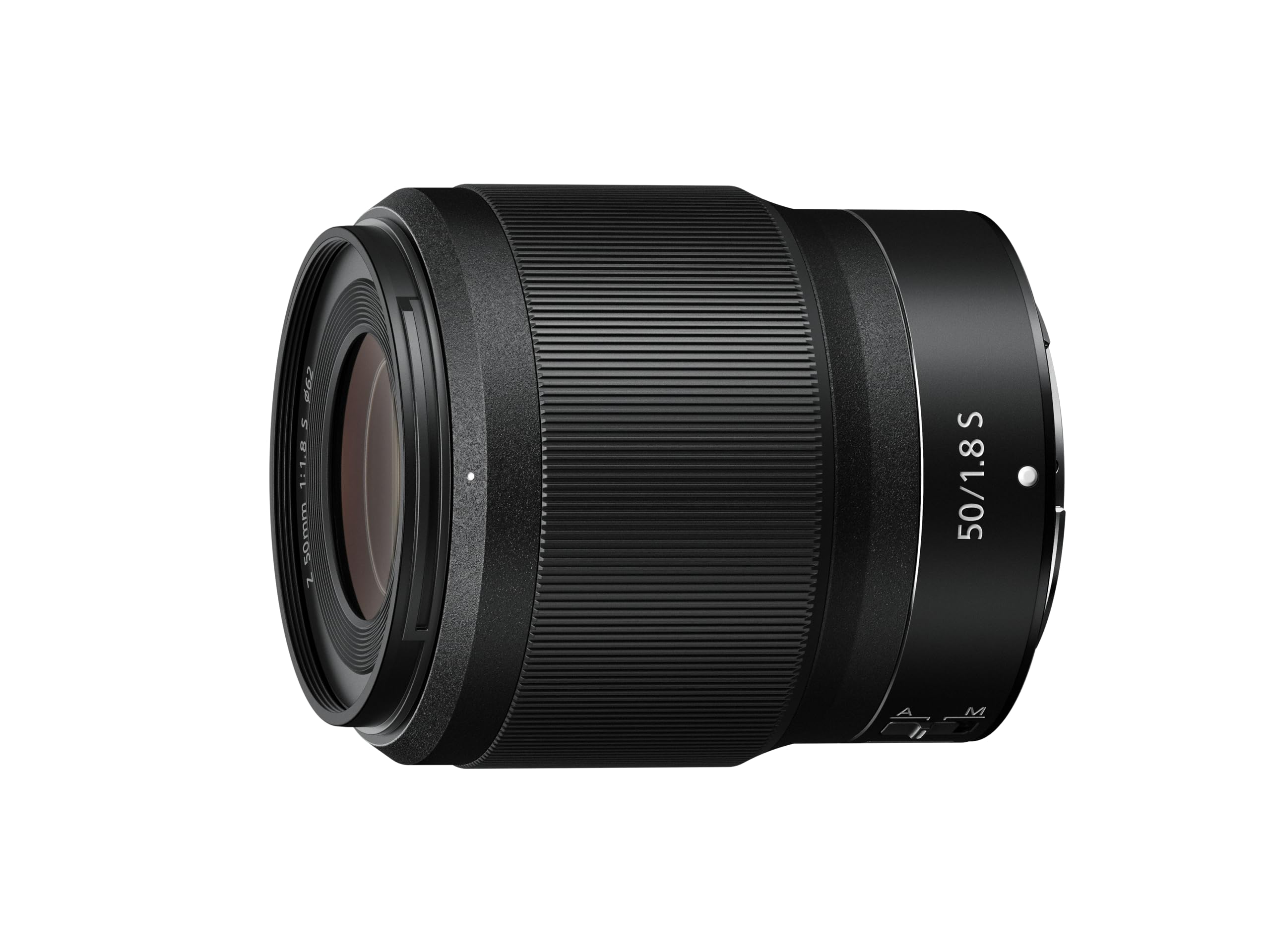
1. Nikon NIKKOR Z 50mm f/1.8 S
Our pick — over 4.5★ from 850+ verified ratings; the strongest balance of quality and price.
The sharpest all-rounder for Nikon Z shooters who want one lens for nearly every newborn shot.
The 50mm focal length is the most forgiving starting point for newborn work. It gives you a natural perspective that does not exaggerate a baby’s features, and at f/1.8 it lets in enough light to shoot in a dim room while blurring a busy background into soft bokeh. Owners consistently call out the extreme sharpness and virtually zero distortion, which means those tiny fingers and toes render with crisp detail.
The autofocus here uses an ultra-quiet stepping motor, so the lens will not click or whirr and startle a sleeping baby. It pulls focus silently and accurately, which matters when you are relying on eye detection to lock onto a newborn’s face. Weighing very little for an f/1.8 prime, it balances well on smaller Z-series bodies like the Z5 or Z50.
Buyers report that “Stunning optics: sharpness/microcontrast near Zeiss Otus at f/4-5.6,” which sums up just how good the glass is when you stop down a bit. The one honest trade-off is that value for money gets mixed feedback — it is not the cheapest 50mm around, but the optical quality justifies the premium for most. It also works with F-mount lenses via the FTZ adapter if you are migrating from a DSLR.
What wins parents over
- Extreme sharpness even wide open at f/1.8
- Silent autofocus that won’t wake the baby
- Compact, lightweight unibody design for easy handling
The honest trade-offs
- Value-for-money perception is mixed at this price
- 50mm means you need to get reasonably close for tight shots
Reach for this if: you shoot a Nikon Z camera and want one lens that handles sharp portraits, lifestyle shots, and low-light nursery scenes without compromise.
Look elsewhere if: you need a longer working distance from the baby, where an 85mm would serve you better.
2. Fujinon XF35mmF2 R WR
A featherweight Fujifilm prime with blazing-fast, near-silent autofocus that locks onto restless newborns.
Fujifilm shooters get a special treat with this 35mm f/2, which behaves like a classic 53mm lens on their APS-C sensors. That is a very natural focal length for capturing a baby swaddled in a blanket with just enough of the nursery in the frame. The f/2 maximum aperture is not as wide as f/1.4 options, but it still produces that signature smooth, circular bokeh thanks to the 9-blade aperture.
The autofocus here is the headline feature, with a 0.08-second focus speed that is nearly silent in operation. For newborn photography, that speed is gold — babies move, twitch, and squirm, and this lens keeps up without hunting. It is also weather-resistant with 8 sealing points, which is overkill for a nursery but reassuring if you ever step outside for family shots.
What wins people over is the image quality, which stays crisp even wide open at f/2. The Nano-GI coating cuts down ghosting and flare, so window-light portraits stay clean and contrasty. It is a small, metal-built lens that feels premium in the hand, and owners note it is noticeably lighter than the f/1.4 version while delivering comparable image quality for a lower price. A few users find the aperture ring a touch slippery, but that is a minor quibble on an otherwise stellar lens.
Sharp and quick: image quality and autofocus speed are the two most-praised traits here, and both matter enormously for newborn work.
The macro-like closeness: a minimum working distance of about 13 inches lets you move in for detail shots of tiny hands and feet.
Best for: Fujifilm X-mount owners who want a compact, fast-focusing everyday lens for newborn and family photography.
Think twice if: you need the extra stop of light that an f/1.4 lens provides for very dark rooms.
3. Canon RF 85mm F2 Macro IS STM
A dual-purpose Canon lens that shoots flattering portraits and extreme close-ups of tiny toes.
This 85mm f/2 lens is the Swiss Army knife of the newborn kit because it does two jobs well. At 85mm, it gives you beautiful portrait compression that flatters a baby’s rounded face, and the bright f/2 aperture produces lovely bokeh to isolate your subject. But it also doubles as a macro lens with a maximum magnification of 0.5x, letting you fill the frame with a single tiny foot or a curled hand.
The built-in optical image stabilization corrects up to 5 stops of shake, which is a real advantage when you are hand-holding at slow shutter speeds in a dim room. It compensates for both angular and shift camera shake, a feature that proves particularly useful during macro shooting where tiny movements are magnified. The minimum focusing distance of 1.15 ft means you can get genuinely close without casting a shadow on your subject.
Owners describe the images as ultra-crisp with outstanding bokeh, and many find it an unexpected upgrade over older EF 85mm lenses. The autofocus speed is where opinions split — some find it pretty fast while others call it slow for action. Since newborns are not sprinting, the slower focus is rarely a dealbreaker, and the superb image quality makes it easy to forgive. It is a lightweight lens that pairs beautifully with bodies like the EOS RP or R6.
Choose this for: Canon R-series owners who want one lens that covers both flattering baby portraits and true close-up detail shots.
skip it if: you need lightning-fast autofocus for toddlers darting around the room.
4. Tamron 35mm f/2.8 Di III OSD M1:2

A budget-friendly Sony lens that packs in a 35mm wide angle and a 1:2 macro — for the price of one.
If you are starting out and watching your budget, this Tamron gives you two lenses in one. The 35mm focal length is wide enough to capture the baby in a crib with the whole room as context, and the f/2.8 aperture still lets in decent light while offering a 1:2 macro capability for close-up details. Owners consistently highlight the superb image quality and smooth bokeh at all apertures, making it a fantastic entry point.
The lens is incredibly compact and lightweight at just 7.4 ounces, so it disappears into a camera bag without adding bulk. Its moisture-resistant construction is a nice bonus for durability. The multicoated optics keep contrast high even when shooting into window light.
The honest catch is the autofocus. Owners mention “8-week use: AF subpar, loud, slow; manual focus mitigates,” and the focus motor does make audible clicking noises. For a newborn who is asleep, you can switch to manual focus and take your time; for a wriggling baby, the slower AF may frustrate you. The value proposition is undeniable though — image quality that rivals far more expensive glass at a fraction of the cost.
Value king: image quality and value for money are the two most-discussed strengths, and both are excellent here.
The old-school AF: autofocus is noisy, slow, and can lose track, so plan to lean on manual focus for still newborn shots.
Reach for this if: you are a Sony E-mount shooter on a budget who wants wide-angle context shots plus macro detail from one small lens.
Look elsewhere if: you rely on fast, silent autofocus for active babies rather than sleeping newborns.
5. VILTROX 85mm F2.0 EVO Z-Mount
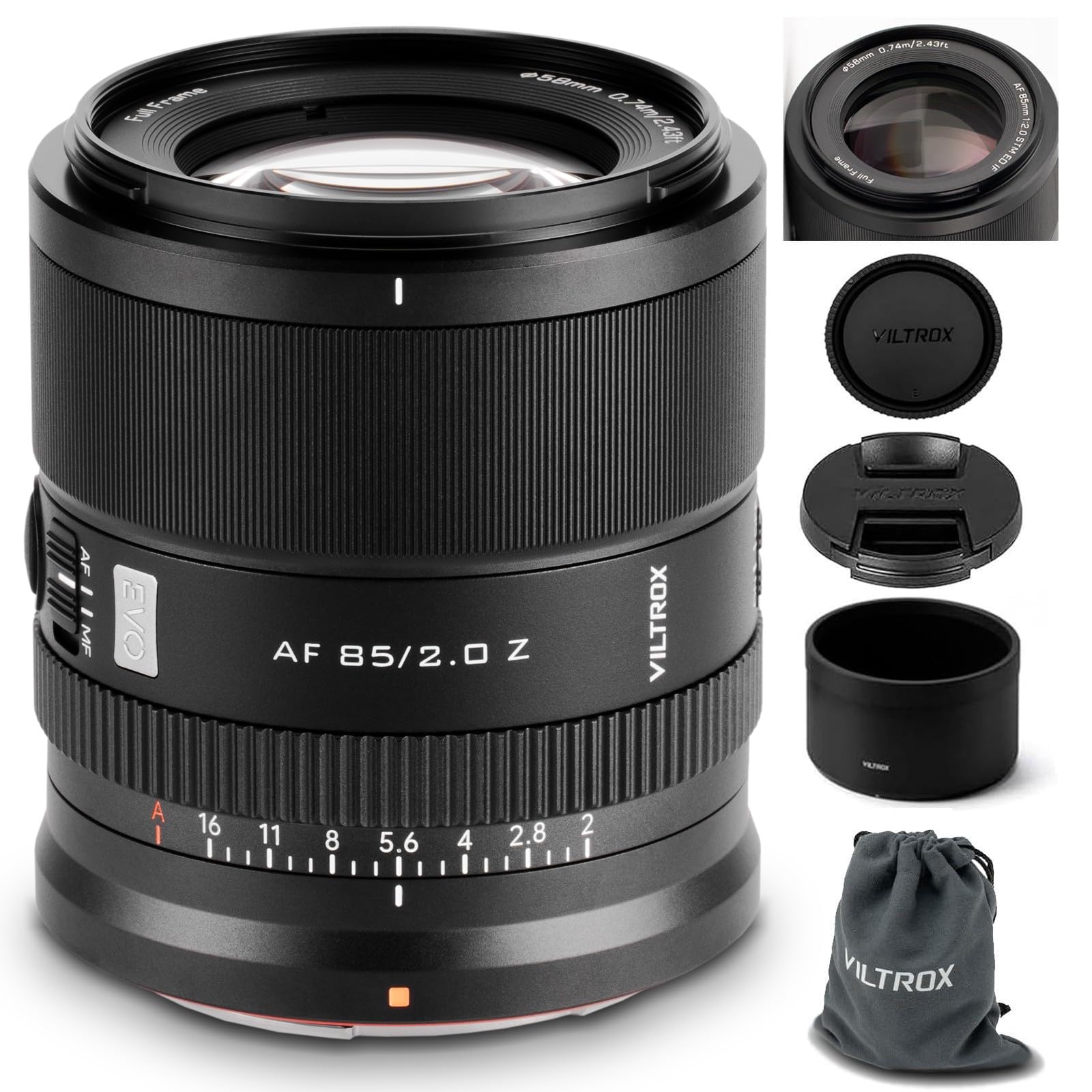
A full-metal 85mm prime that brings classic portrait compression to Nikon Z shooters on a budget.
For Nikon Z owners who want that classic 85mm portrait look without the premium price tag, this Viltrox delivers. The 85mm focal length provides the flattering compression that is the gold standard for portraits, and the wide f/2 aperture excels in low light, producing bright, clean images with excellent noise control right from the widest setting. The lens is built from full metal and feels far more premium than its price suggests.
A standout feature is the 0.74m minimum focus distance, which gets you closer than standard 85mm lenses allow. That means you can capture stunning close-ups and magnify subtle details like a baby’s eyelashes without needing a dedicated macro lens. The package also includes dust- and moisture-resistant sealing at the mount and a water- and oil-repellent coating on the front element for outdoor reliability.
Owners praise the sharp images and smooth bokeh, with many calling it pro quality at an entry-level price. The autofocus is where opinions split — some find it fairly quick while others note it is not exceptional. There is also a customizable Fn button and a Click ON/OFF switch for the aperture ring, which makes it nice for video work too. One owner noted a firmware update was needed to fix recognition issues on certain ZF bodies, so check for updates.
Pro feel, entry price: lens quality and value for money lead the praise, with the metal build and smooth bokeh impressing most.
The mixed AF: autofocus performance gets mixed feedback, so budget for some manual focusing in tricky light.
Best for: Nikon Z shooters who want the classic 85mm compression and close-up ability without spending flagship money.
Think twice if: you demand flawless, instant autofocus in every condition without any manual intervention.
6. Canon RF50mm F1.2L USM

The ultimate low-light weapon for Canon R shooters who want insane bokeh and razor-sharp eyes.
This is the lens you buy when nothing but the best will do for your newborn portraits. The f/1.2 maximum aperture is extraordinarily bright, letting in more light than almost anything else on the market. In a dim nursery with only window light, this lens lets you shoot at fast shutter speeds to freeze a baby’s movements while producing what owners describe as insane levels of bokeh. The background melts into pure cream.
The optical construction is a tour de force, with three aspherical elements and one UD element working together to control aberrations. Owners call it the best 50mm lens in Canon’s history, with sublime image quality and sharpness particularly at f/1.4 and f/1.2. The autofocus is quick and works well in low light, which is exactly what you need when the only light source is a dim lamp.
The trade-offs are real and physical. At 2.1 pounds, this is a heavy lens that becomes noticeable after about 30 minutes of handheld shooting. The build quality has also drawn some criticism for feeling less tank-like than the price suggests, and there is no image stabilization built in — you will rely on the camera body’s IBIS or a tripod. For a pro who lives on their R5, however, owners say it earns its place.
Legendary optics: lens quality and image quality lead the praise, with corner-to-corner sharpness and gorgeous color rendition.
Heavy and pricey: the 2.1-pound weight and premium cost are the main considerations for casual shooters.
Choose this for: professional Canon R users who demand the absolute best low-light performance and bokeh for their newborn portfolio.
pass on it if: you are a beginner or casual shooter who does not want to carry a heavy lens or invest at this level.
7. Sony FE 35mm f/1.4 GM

A compact G Master wide-angle that nails focus almost every time, even in tricky light.
Sony’s G Master line represents the pinnacle of their lens lineup, and this 35mm f/1.4 is a standout. The f/1.4 maximum aperture delivers extraordinary brightness and a shallow depth of field, making it perfect for capturing a baby in a bassinet with the room falling away into soft blur. Two Extreme Aspheric elements and one ED glass element work together to deliver stunning resolution while keeping chromatic aberration under control.
What makes this lens special for newborn work is its autofocus reliability. Owners note it nails focus 99% of the time, which is remarkable for a wide-angle lens. The Nano AR Coating II suppresses reflections, flare, and ghosting, so shooting toward a window for that dreamy backlit look stays clean. At 1.2 pounds, it is genuinely compact for an f/1.4 lens, making it a joy to carry on a long family session.
You get one lens that handles both photos and video, and it performs well in dim nursery light. Customers note sharp images from corner to corner, and the fluorine front element coating (a protective layer that repels water and smudges) plus dust- and moisture-resistant build means you can shoot outdoors in light rain without worry. It costs more than a basic prime, so casual shooters on a tight budget may want to look elsewhere, but for Sony users who want a single wide-angle lens for everyday family shots, this delivers.
Premium all-rounder: lens quality and image quality lead the praise, with fast autofocus and compact size close behind.
Justify the cost: value for money skews mixed, reflecting the premium price tag of G Master glass.
Reach for this if: you are a Sony E-mount owner who wants a premium, versatile wide-angle that excels in low light and video.
Look elsewhere if: you are on a tighter budget and fine with giving up a stop of light for a more affordable lens.
8. Sony SEL85F18 85mm f/1.8

A lightweight Sony 85mm that delivers creamy bokeh and fast autofocus without the GM price.
For Sony shooters who want the classic 85mm portrait look, this lens is the smart money pick. The wide f/1.8 maximum aperture enables beautiful defocusing effects, and the 9-blade circular aperture creates beautifully round, soft bokeh that makes backgrounds melt away. The ED glass element ensures corner-to-corner sharpness, so a baby’s face stays tack sharp even when you compose off-center.
The autofocus system uses a double linear motor system for fast, quiet, and precise focusing. For newborn photography, that speed and silence are exactly what you need — the lens locks onto the eye quickly and does not click or whirr. At just 10.4 ounces, it is lightweight enough to carry all day, which owners appreciate. The Nano AR Coating II keeps flare and ghosting in check when shooting toward windows.
What wins people over here is the portrait performance. Owners describe the images as super sharp with beautiful background blur, and the fast autofocus makes it easy to capture fleeting moments. The one limitation is the minimum focus distance, which is on the longer side, so you cannot get extremely close for macro-style detail shots. On an APS-C body, the 85mm becomes quite tight, so this is best suited to full-frame shooters.
Bokeh machine: overall quality and bokeh are the most-praised traits, with portrait performance a close third.
Not a macro: the longer minimum focus distance means you cannot get ultra-close for tiny detail shots.
Choose this for: full-frame Sony E-mount owners who want flattering 85mm compression and creamy bokeh at a sensible price.
Think twice if: you shoot on an APS-C body where 85mm is quite tight, or you need close-up macro ability.
9. Nikon NIKKOR Z 85mm f/1.8 S
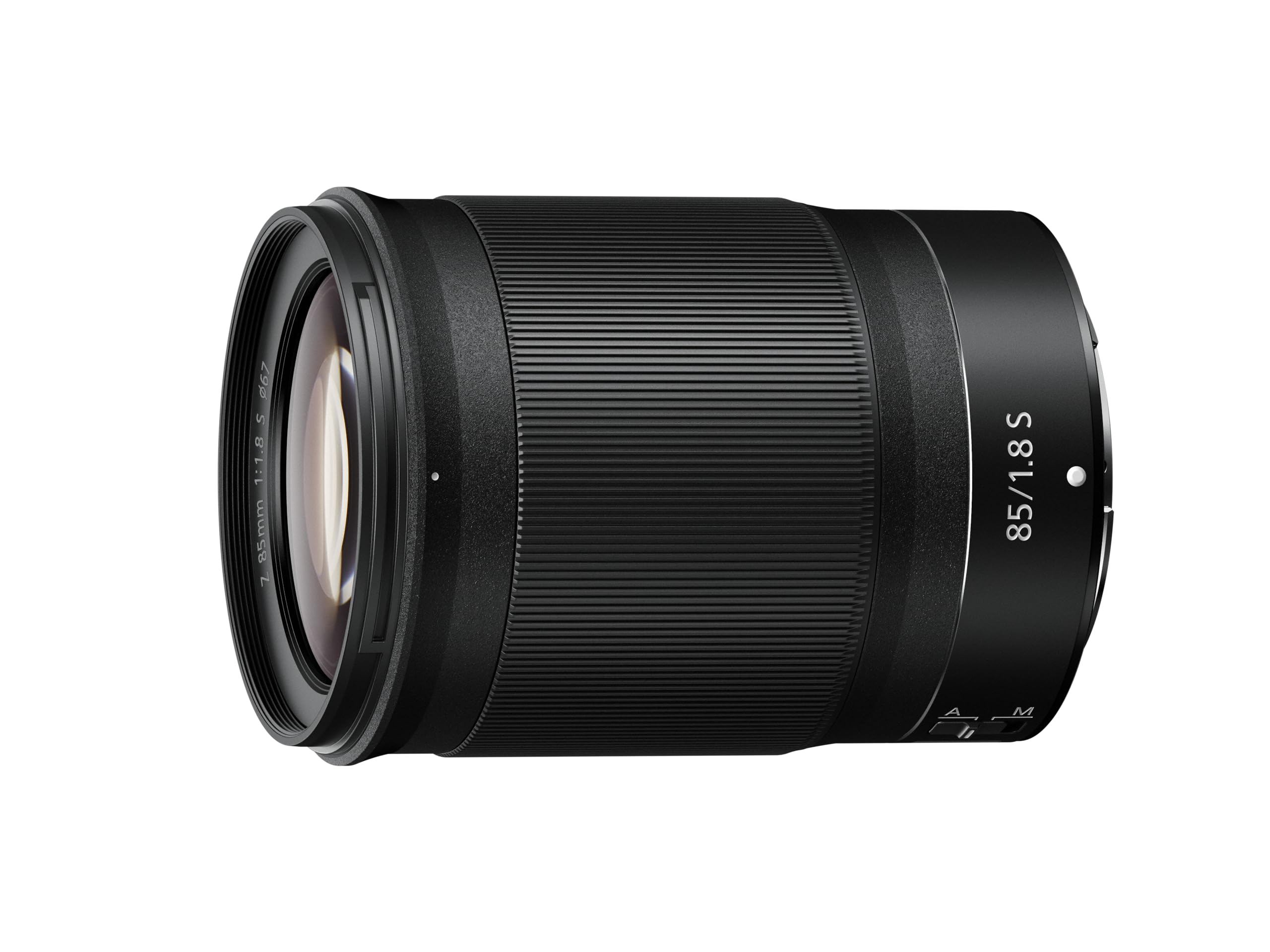
Nikon’s premium 85mm for Z shooters who demand razor-sharp eyes and dreamy background blur.
This is the lens that Nikon Z owners dream about, and for good reason. The 85mm f/1.8 S delivers razor-sharp performance from center to corners, with a nine-blade diaphragm that produces soft, rounded bokeh. Owners consistently describe it as having dreamy bokeh and compression that is ideal for family shoots, making it a perfect choice for capturing those precious newborn moments with a beautifully blurred background.
The optical design features two ED glass elements and Nano Crystal coating for lifelike accuracy and minimal chromatic aberration. That means the fine details — the delicate eyelashes, the soft fuzz on a baby’s head — render with exceptional clarity. The lens is also dust and drip resistant with extensive sealing, so it handles the occasional outdoor family session without worry. A customizable control ring lets you adjust settings without taking your eye from the viewfinder.
At 470 grams, it is lightweight for an 85mm, which owners appreciate during long shooting sessions. The autofocus gets mixed feedback — some find it fast and consistent, while others describe it as painful to use in certain situations. For newborn work where subjects are mostly still, the occasional AF quirk is easily managed. This lens is a clear step up from the kit zooms and delivers professional-level results for hobbyists and pros alike.
Sharp everywhere: lens quality and sharpness lead the praise, with beautiful bokeh close behind.
Watch the AF: autofocus performance is the most mixed aspect, so practice with it before the big shoot.
Best for: Nikon Z shooters who want a dedicated high-quality 85mm portrait lens for newborn and family photography.
Consider alternatives if: you need lightning-fast autofocus for very active toddlers, where a zoom with more versatile AF might serve better.
Understanding the Specs
Maximum Aperture (f-stop)
The f-stop number, like f/1.8 or f/2.8, tells you how wide the lens opening can go. A lower number means a wider opening that lets in more light and creates a shallower depth of field. For newborns, a wider aperture like f/1.8 or f/2 helps you shoot in dim rooms without flash and blur out distracting backgrounds.
Focal Length & Working Distance
Focal length, measured in millimeters, determines how close you need to be to your subject. A 35mm lens lets you capture the baby with the room around them. A 50mm matches natural human vision. An 85mm lets you stand further back while still filling the frame, which is useful for not disturbing a sleeping baby.
FAQ
Is 50mm or 85mm better for newborn photography?
Do I need image stabilization for newborn photos?
Can I use a macro lens for newborn photography?
Will an f/2.8 lens work for newborn photography?
What is the difference between autofocus and manual focus for newborns?
Are weather-sealed lenses worth it for indoor newborn shoots?
Is the Canon RF50mm F1.2L worth its premium price for newborns?
How does the VILTROX 85mm compare to the Nikon 85mm f/1.8 S?
What lens is best for Sony E-mount newborn photography?
Are the Nikon NIKKOR Z 50mm and 85mm lenses compatible with FTZ adapters?
Final Thoughts: The Verdict
For most people, the camera lens for newborn photography winner is the Nikon NIKKOR Z 50mm f/1.8 S because it combines extreme sharpness, silent autofocus, and a versatile focal length into one compact package. If you want a dedicated portrait look with beautiful compression, grab the Nikon NIKKOR Z 85mm f/1.8 S. And for the close-up detail shots that make newborn galleries special, the Canon RF 85mm F2 Macro IS STM is the one to reach for.
How We Picked
We do not accept paid placement. Every pick is matched to a real buyer and a real use-case; we do not hands-on test units.
Sources & Methodology
Specifications: manufacturer listings and product documentation. Review insights: verified customer reviews, as of August 2026. Pricing: not shown on this page (it changes often); check the current price via the retailer link.
As an Amazon Associate, Gadgets Feed earns from qualifying purchases. This does not affect which products we feature.