
A portrait lens isn’t just about magnification—it’s about separation. The difference between a flat snapshot and a frame with palpable depth comes down to how the lens handles focus falloff, spherical aberration, and the subtle micro-contrast that defines skin texture. Without the right glass, even a high-resolution body delivers muddy backgrounds and lifeless tones.
I’m Min — the co-founder and writer behind Gadgets Feed. This guide comes from comparing aperture mechanisms, MTF charts, and real-world bokeh rendering across dozens of optical designs to find the lenses that actually deliver subject isolation without breaking your workflow.
Whether you are building your first kit or refining a professional setup, the best camera lens for portraits balances focal length, maximum aperture, and build quality for the style of shooting you do most.
How To Choose The Best Camera Lens For Portraits
Selecting a portrait lens comes down to three interconnected decisions: focal length for your working space, maximum aperture for the bokeh you envision, and the autofocus system that matches your camera body. A mismatch in any one area will limit the creative control you have over depth of field and subject isolation.
Focal Length: 50mm, 85mm, or 135mm?
Fifty millimeters gives a natural field of view that works for environmental portraits and full-body shots in tighter rooms. Eighty-five millimeters is the classic portrait length—it offers moderate compression that flatters facial features without requiring an enormous studio. One hundred thirty-five millimeters compresses perspective heavily, ideal for headshots and outdoor work where you can stand farther back without losing detail.
Aperture and Bokeh Character
A wider aperture—f/1.4 or f/1.2—produces a shallower depth of field, letting you blur background distractions into smooth bokeh. But aperture blades also matter: nine or eleven rounded blades create rounder, creamier out-of-focus highlights, while seven-blade diaphragms tend to produce busier, polygonal bokeh balls. Look for lenses with at least nine circular blades if bokeh quality is your priority.
Autofocus System and Build Quality
Portrait sessions demand reliable eye-tracking, especially when shooting wide open at f/1.4 where the plane of focus is paper-thin. Stepper motors (STM) and voice-coil motors (VCM) offer near-silent and fast acquisition compared to older ultrasonic motors. Weather sealing is also worth the premium if you shoot outdoors or in dusty environments—dust ingress on the rear element can ruin image contrast permanently.
Quick Comparison
On smaller screens, swipe sideways to see the full table.
| Model | Category | Best For | Key Spec | Amazon |
|---|---|---|---|---|
| Sony FE 50mm f/1.2 GM | Premium | Professional shallow depth of field | f/1.2 max aperture, 11-blade circular aperture | Amazon |
| Nikon NIKKOR Z 85mm f/1.8 S | Premium | Z-system portrait perfection | 2 ED elements, Nano Crystal coating | Amazon |
| ZEISS Batis 85mm f/1.8 | Premium | Sony E-mount color science | OLED distance display, optical stabilization | Amazon |
| Sony SEL85F18 85mm f/1.8 | Mid-Range | Lightweight Sony E portrait | Double linear motor, 9-blade aperture | Amazon |
| VILTROX AF 85mm F1.4 Pro FE | Mid-Range | Budget f/1.4 for Sony E-mount | f/1.4 aperture, Dual HyperVCM motor | Amazon |
| Nikon NIKKOR Z 50mm f/1.8 S | Mid-Range | Nikon Z all-around sharpness | 5-axis dual detect optical VR | Amazon |
| Panasonic LUMIX S 50mm f/1.8 | Mid-Range | L-Mount video and stills | Suppressed focus breathing, weather-sealed | Amazon |
| Canon EF 50mm f/1.8 STM (Renewed) | Budget | Entry-level Canon portrait | STM motor, 0.35m minimum focus | Amazon |
| YONGNUO YN50mm F1.8C | Budget | Ultra-low-cost Canon 50mm | AF/MF, 52mm filter thread | Amazon |
In‑Depth Reviews
1. Sony FE 50mm f/1.2 GM Full-Frame Large-Aperture G Master Lens

The Sony FE 50mm f/1.2 GM delivers a maximum aperture that pulls in enough light to shoot handheld in near-darkness while producing a depth of field so thin that eyelashes can be in focus while the ear lobe softens. Three XA (extreme aspherical) elements suppress spherical aberration, keeping specular highlights round and smooth even at the edges of the frame.
At 27.5 ounces, this lens is surprisingly portable for an f/1.2 design, and the 11-blade circular aperture renders bokeh with minimal onion-ring texture. Autofocus via the XD linear motor locks onto eyes instantly on a7-series bodies, and the focus hold button lets you lock exposure or subject distance during a session. The included soft case adds protection without adding bulk.
Wide open at f/1.2 there is slight vignetting, but it adds a natural falloff that many portrait photographers prefer. Chromatic aberration is virtually nonexistent thanks to the Nano AR Coating II. This is the lens for professionals who need the absolute shallowest depth of field from a 50mm frame.
Why it’s great
- Extraordinary f/1.2 aperture for unmatched background separation
- Sharpness holds up wide open with minimal aberrations
Good to know
- Premium price reflects G Master build and optics
- Weight is balanced but noticeable on smaller bodies
2. Nikon NIKKOR Z 85mm f/1.8 S
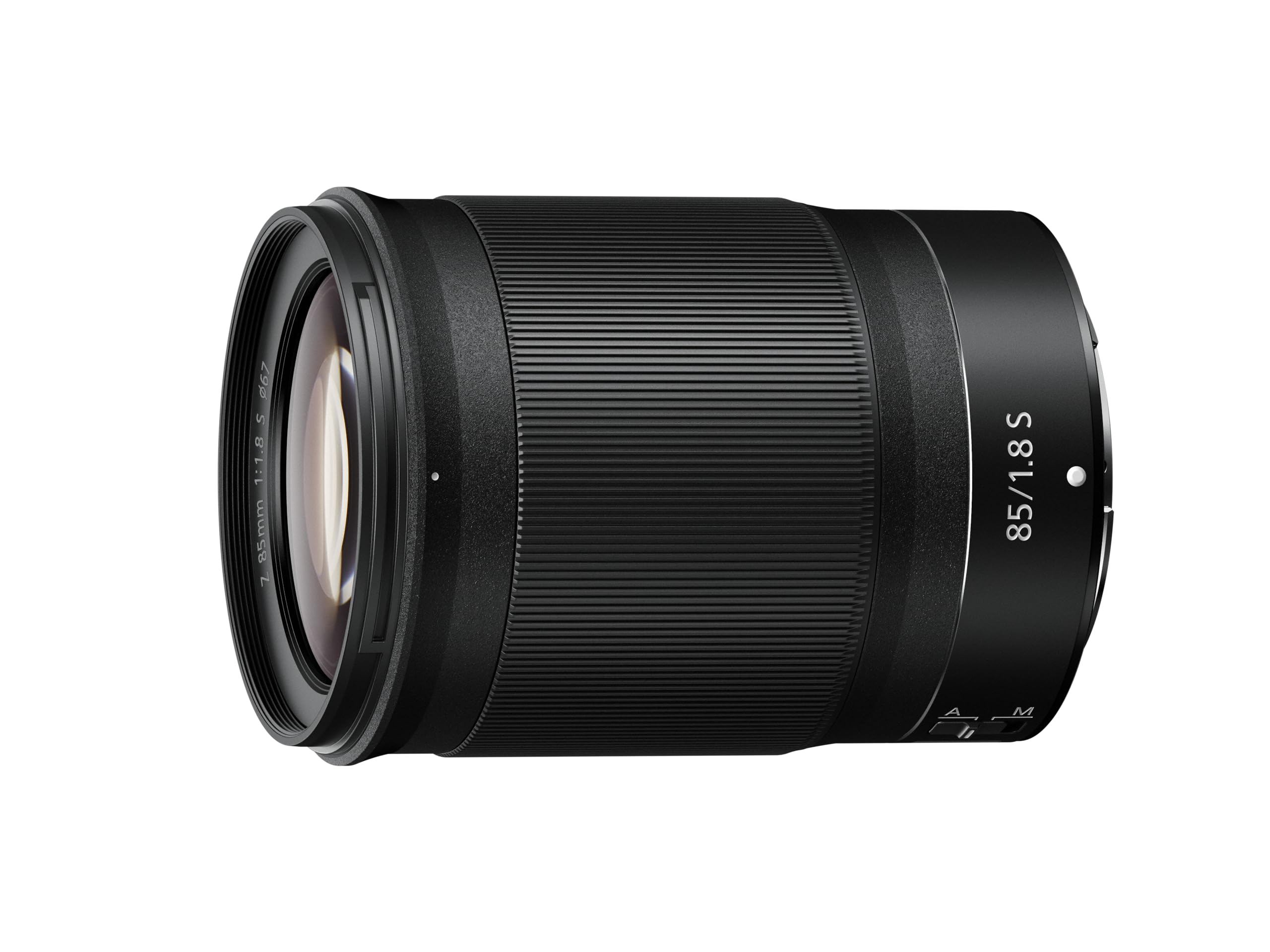
The Nikon NIKKOR Z 85mm f/1.8 S redefines what a mid-priced portrait prime can achieve on the Z mount. Two ED glass elements and the Nano Crystal coating work together to eliminate flare and chromatic aberration even when shooting into backlit scenes, while the nine-blade diaphragm produces smooth, rounded bokeh that transitions gracefully from sharp focal plane to soft background.
Autofocus is driven by a stepping motor that operates silently and accurately, locking onto eyes with the Z-series subject detection system. The dust- and drip-resistant construction means you can shoot in mist or light rain without worrying about internal moisture. At 470 grams, it balances well on Z6 and Z7 bodies without feeling front-heavy.
Image quality is tack sharp from f/1.8 through f/5.6, with micro-contrast that gives skin a three-dimensional pop. There is a slight cat’s-eye effect in the extreme corners wide open, but it disappears by f/2.8. For portrait photographers invested in the Nikon Z system, this is the lens that delivers professional results without the weight or cost of an f/1.2.
Why it’s great
- Exceptional sharpness and contrast across the frame
- Weather-sealed build for outdoor portrait sessions
Good to know
- No optical stabilization built in (uses in-body VR)
- Cat’s-eye bokeh in corners at f/1.8
3. ZEISS Batis 85mm f/1.8 Lens for Sony E Mount

The ZEISS Batis 85mm f/1.8 brings legendary T* anti-reflective coating to the Sony E-mount system, delivering color saturation and contrast that gives skin tones a natural, film-like rendering. The OLED display on the lens barrel shows focus distance and depth of field at a glance, which is incredibly useful for zone focusing or video work where silent operation is required.
Built around a robust metal construction with weather sealing, the Batis feels solid in the hand while staying light enough for all-day carry. Autofocus is fast and accurate, and the optical image stabilization helps steady handheld shots at slower shutter speeds—a rare feature in an f/1.8 prime. The 67mm filter thread is common, making it easy to add a polarizer or variable ND.
Sharpness is outstanding from f/1.8 through f/8, and the bokeh is creamy with round highlights thanks to the nine-blade aperture. Some users find the plastic lens hood and caps feel less premium than the barrel itself, but optical performance is what earns this lens its place. For Sony shooters who prize color science, the Batis is a strong alternative to native G Master glass.
Why it’s great
- ZEISS T* coating produces rich, accurate skin tones
- OLED focus display for precise manual focusing
Good to know
- Plasticky hood and caps feel out of place
- No aperture ring on the barrel
4. Sony SEL85F18 85mm f/1.8-22 Medium-Telephoto Fixed Prime

The Sony SEL85F18 85mm f/1.8 is a compact powerhouse that delivers sharp portraits with smooth bokeh at a price well below the G Master equivalent. The double linear motor system provides fast, near-silent autofocus that locks onto eyes reliably, even during burst shooting. The nine-blade circular aperture creates round out-of-focus highlights that blend smoothly together.
At only 10.4 ounces, this lens is one of the lightest 85mm primes on the market, making it ideal for travel portrait shoots or long wedding days. The ED (extra-low dispersion) glass element keeps chromatic aberration under control in high-contrast situations like backlit hair. The customizable focus hold button lets you assign eye tracking lock or other functions directly from the lens.
Wide open at f/1.8, the lens is sharp in the center with slight corner softness that most portrait framing forgives. The absence of optical stabilization means you rely on your camera’s in-body stabilization or steady technique. For Sony E-mount users who want a dedicated portrait prime without the premium price, this is the sweet spot.
Why it’s great
- Very lightweight for an 85mm f/1.8
- Fast, quiet autofocus with reliable eye tracking
Good to know
- No included lens hood
- Minimum focus distance is not macro-friendly
5. VILTROX AF 85mm F1.4 Pro FE Full Frame Lens for Sony E Mount
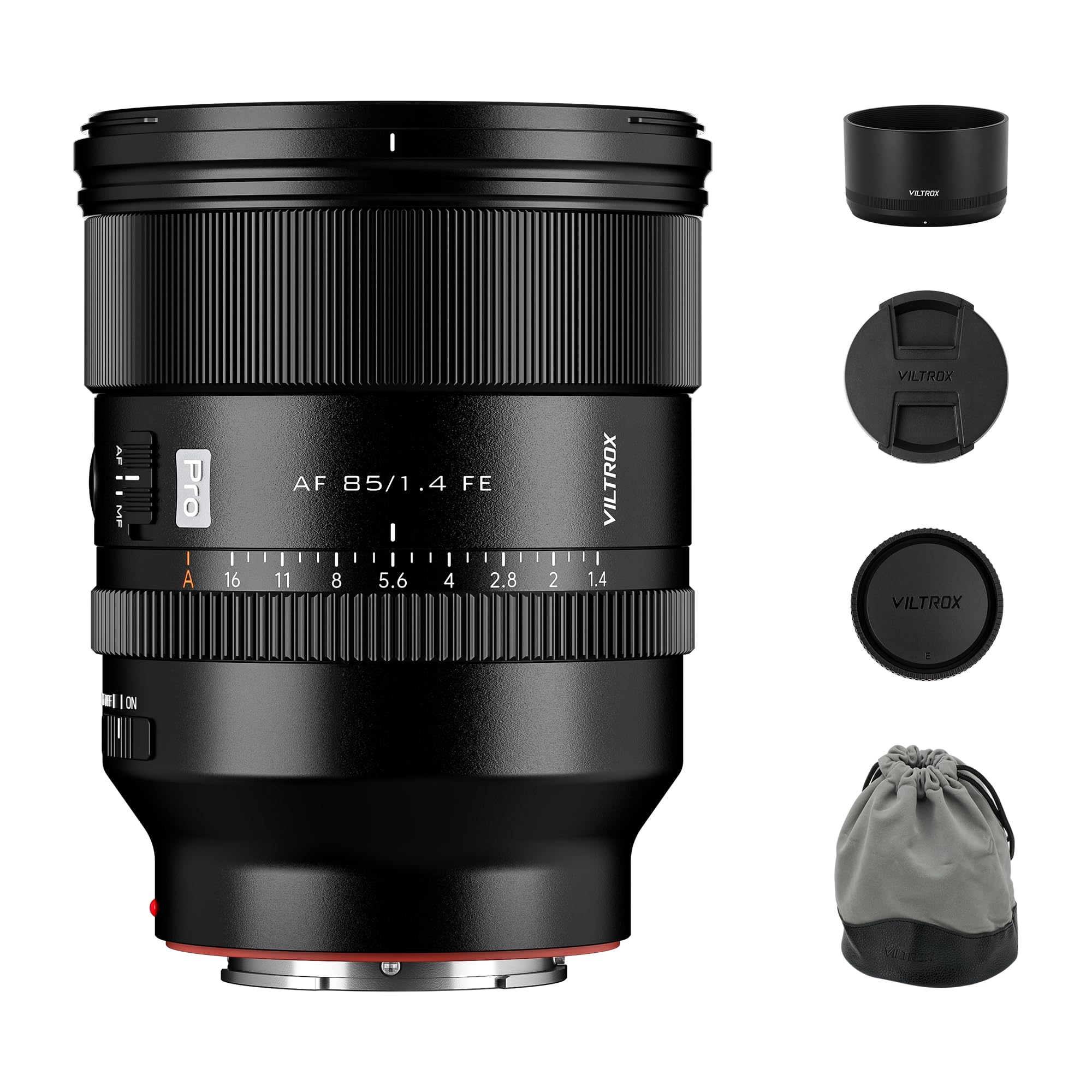
The VILTROX AF 85mm F1.4 Pro FE brings a professional-grade f/1.4 aperture to Sony E-mount shooters at a fraction of the cost of native G Master glass. The optical construction uses 15 elements in 11 groups, including three ED elements and one ultra-precision aspherical lens, which keeps chromatic aberration low and center sharpness high even wide open.
The proprietary dual HyperVCM motor delivers fast and accurate autofocus that works with Sony’s face and eye detection, so candid portraits remain in focus during movement. The all-metal body with weather sealing protects against dust and light rain, and the de-clickable aperture ring makes video transitions smooth. A USB-C port allows firmware updates via the Viltrox Lens software.
At roughly 800 grams, this lens is heavier than the Sony 85mm f/1.8 but lighter than many f/1.4 competition. The bokeh is creamy with rounded highlights, and the 3D pop effect is immediately visible in headshots. Some users report that the lens is large on a6000-series bodies, but on full-frame a7 models it balances naturally.
Why it’s great
- f/1.4 aperture at an accessible price point
- Weather-sealed metal build with de-clickable aperture ring
Good to know
- Heavier than the native Sony 85mm f/1.8
- Larger profile may feel unbalanced on APS-C bodies
6. Nikon NIKKOR Z 50mm f/1.8 S
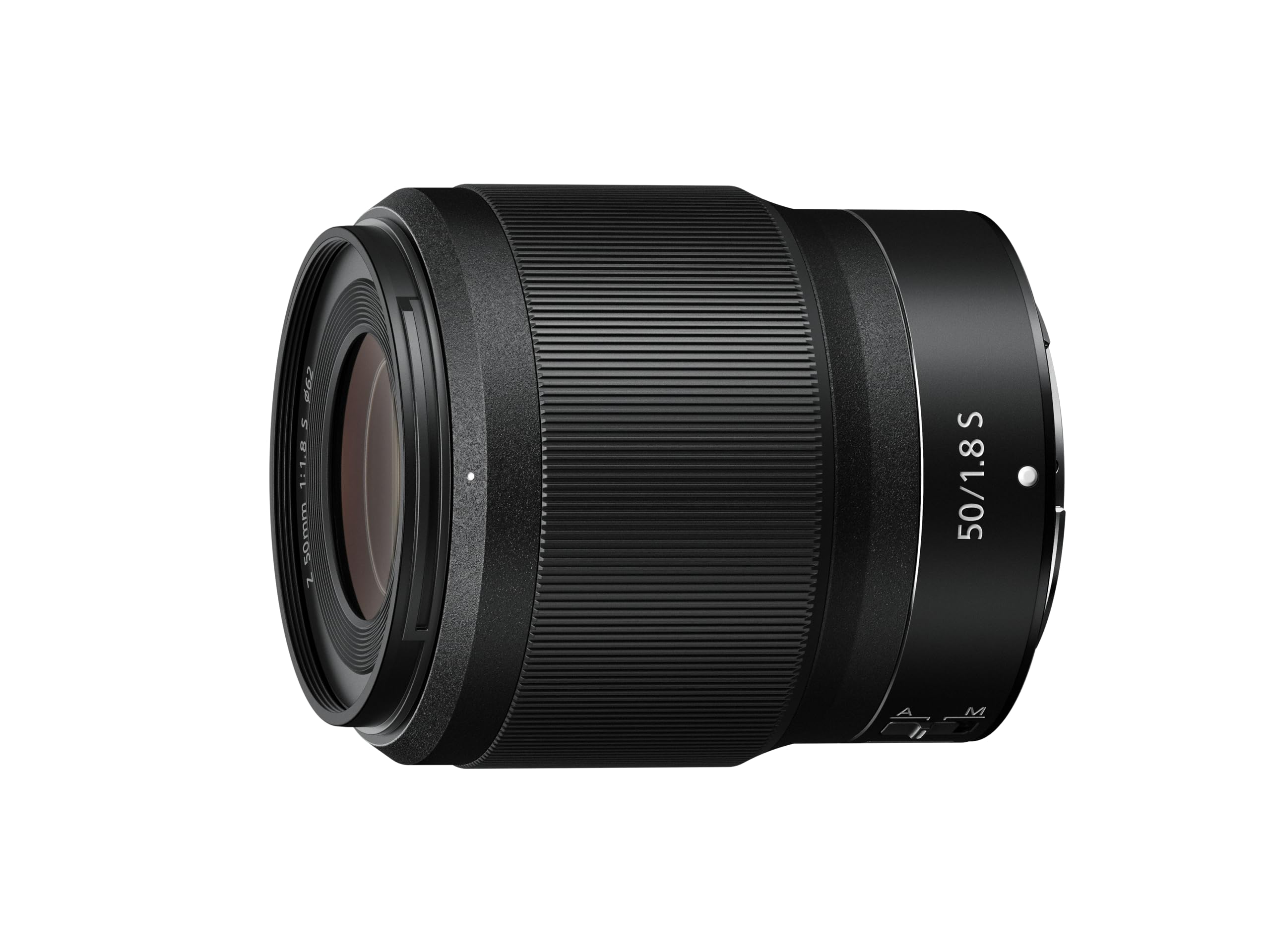
The Nikon NIKKOR Z 50mm f/1.8 S sets a new standard for what a mid-priced 50mm prime can achieve. The optical formula delivers extreme sharpness across the entire frame with virtually zero distortion, and the Nano Crystal coating eliminates flare and ghosting even when shooting directly into a light source. This lens out-resolves many f/1.4 designs from previous generations.
The stepping motor operates silently and is perfectly suited for video autofocus, where smooth transitions matter more than raw speed. The compact, monocoque body design keeps the lens slim and lightweight on Z-series cameras, and the 5-axis dual detect optical VR works with the camera’s in-body stabilization to steady handheld footage. The included HB-90 bayonet hood blocks stray light without adding much length.
Bokeh is smooth with a gentle transition zone, though the cat’s-eye effect appears in extreme corners at f/1.8. Chromatic aberration is essentially absent, and the micro-contrast gives skin a lifelike texture. For Nikon Z shooters who want a standard prime for environmental portraits, this is the sharpest option in the class.
Why it’s great
- Extreme sharpness and micro-contrast rivaling Zeiss Otus
- Silent stepping motor for video and stills
Good to know
- Cat’s-eye bokeh effect in corners wide open
- Larger than older F-mount 50mm f/1.8 designs
7. Panasonic LUMIX S Series 50mm F1.8 L-Mount
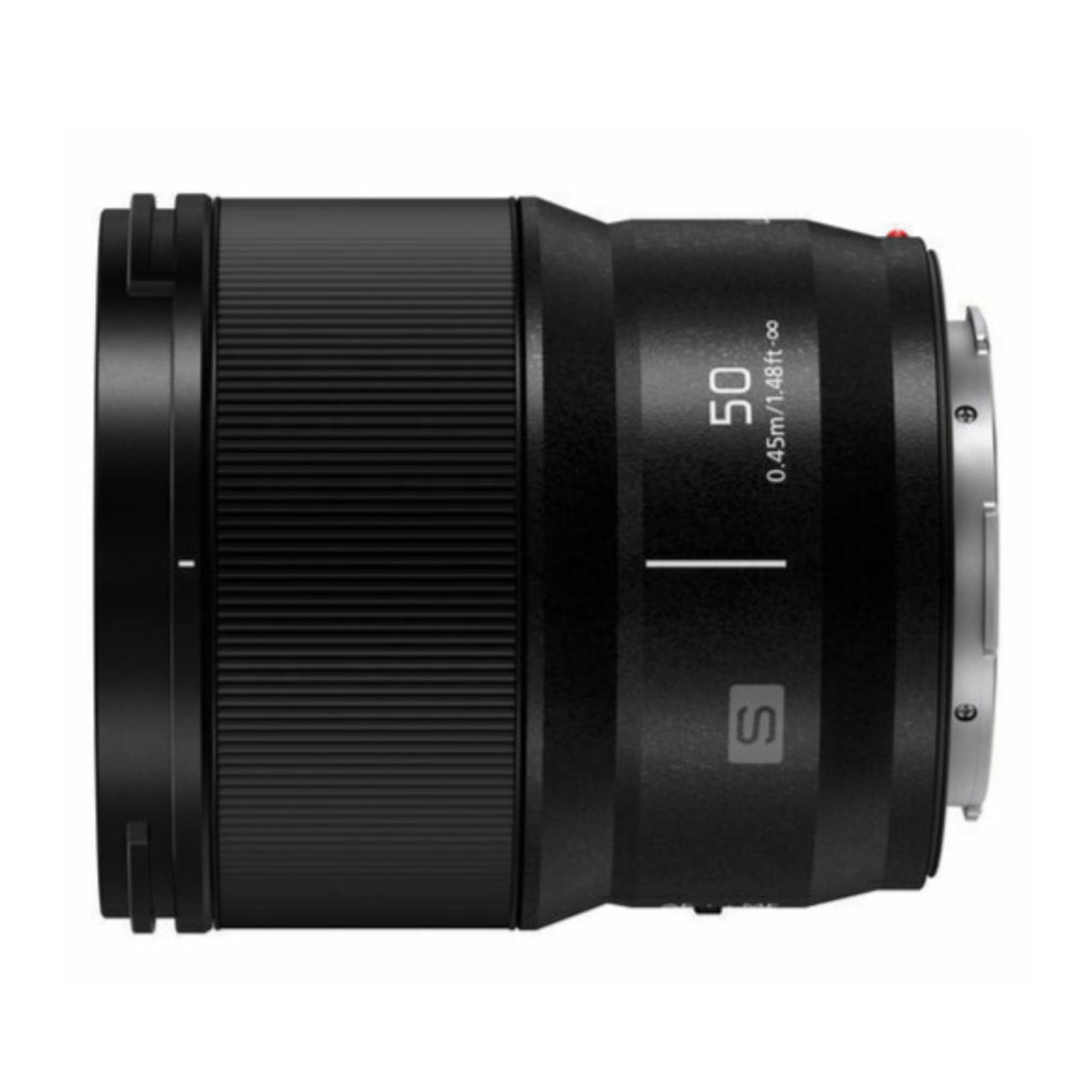
The Panasonic LUMIX S 50mm F1.8 is engineered for both still photographers and videographers who demand consistent performance across L-Mount full-frame cameras. The optical design suppresses focus breathing almost completely, meaning the angle of view stays steady during rack focusing—a critical feature for cinematic video. The smooth aperture control avoids sudden exposure jumps when changing iris mid-shot.
Weighing only 300 grams, this is one of the lightest full-frame 50mm f/1.8 lenses available, making it easy to pack for travel portrait assignments. The weather-sealed construction protects against dust and moisture, and the metal mount ensures durability over years of lens changes. Autofocus is fast and quiet, locking onto subjects reliably even in low-light reception settings.
Sharpness is excellent from f/1.8 through f/5.6, with natural bokeh that does not exhibit harsh outlining. The lens integrates perfectly with the LUMIX S5 and S1 series human-detect autofocus systems. While the plastic barrel feels slightly less premium than all-metal competition, the optical and video performance justifies the build compromise.
Why it’s great
- Virtually no focus breathing for video work
- Incredibly lightweight at 300 grams
Good to know
- Plastic construction feels less premium than rivals
- Softness at f/1.8 improves significantly by f/2
8. Canon EF 50mm f/1.8 STM Lens (Renewed)

The Canon EF 50mm f/1.8 STM is the lens that builds portrait confidence on a budget. The stepping motor delivers near-silent autofocus that is smooth enough for video, and the f/1.8 aperture provides enough background separation to push distractions out of focus for half-body and environmental portraits. The minimum focusing distance of 0.35 meters lets you get close for detail shots.
This renewed copy offers the same optical formula as the original at a lower entry point, making it the most accessible path to a fast prime on Canon EF-mount bodies. The Super Spectra Coating helps control flare and ghosting in backlit situations, which is common when positioning subjects near windows or open shade. The compact size turns a Canon Rebel or 5D into a discreet portrait setup.
Wide open at f/1.8 there is some softness that sharpens by f/2.8, and the five-blade aperture produces pentagonal bokeh highlights rather than round ones. Autofocus is slightly slower than the newer RF versions, but for photographers on a budget, this lens punches far above its weight. It remains one of the best entry-level portrait primes available.
Why it’s great
- Excellent value for the f/1.8 aperture and STM focus
- Small and light for everyday carry
Good to know
- 5-blade aperture creates non-circular bokeh highlights
- Soft wide open, needs stopping to f/2.8 for peak sharpness
9. YONGNUO YN50mm F1.8C Lens for Canon EF Mount

The YONGNUO YN50mm F1.8C is a direct alternative to Canon’s own nifty fifty, trading some build refinement for a dramatically lower cost. At 120 grams, it is incredibly light, and the recessed front element reduces the need for a hood in normal conditions. The 52mm filter thread is standard and affordable for adding protection or creative filters.
Autofocus is functional but noticeably slower and noisier than the Canon STM version, making it less suitable for video or fast-moving subjects. The manual focus ring is usable but lacks the damped smoothness of higher-end glass. On the positive side, the f/1.8 aperture still produces nice bokeh for headshots, and the center sharpness is good enough for social media and print up to 8×10.
Build quality is the main compromise—users report that units can seize if dropped, and the plastic body feels fragile compared to OEM options. For complete beginners who want to experience the look of a fast prime without financial risk, this lens opens the door to portrait photography. Just handle it with care and consider it a learning tool rather than a long-term investment.
Why it’s great
- Extremely affordable entry into f/1.8 portraiture
- Lightweight and compact with recessed front element
Good to know
- Autofocus is slow and noisy compared to OEM lenses
- Build quality is fragile and less reliable long-term
FAQ
Is 50mm or 85mm better for portrait photography?
Does a wider aperture always mean better portraits?
What is the one spec that matters most for portrait lenses?
Final Thoughts: The Verdict
For most users, the best camera lens for portraits is the Sony FE 50mm f/1.2 GM because it combines the widest usable aperture with G Master sharpness and beautiful bokeh in a reasonably portable body. If you shoot Nikon Z and want the best 85mm possible, grab the Nikon NIKKOR Z 85mm f/1.8 S. And for Sony shooters on a budget who still demand f/1.4, the VILTROX AF 85mm F1.4 Pro FE delivers pro-grade results without the premium price tag.