
The line between a product shot that sells and one that gets scrolled past is measured in millimeters of focus and fractions of a stop of light. For product photography, the lens is the single most decisive piece of gear you own — it defines reproduction ratio, working distance, sharpness from center to edge, and how much of your background stays or goes. Choosing the wrong focal length or aperture means compromising on detail you cannot fix in post.
I’m Min — the co-founder and writer behind Gadgets Feed. My workflow for this guide involved cross-referencing MTF charts, analyzing real-world sample images, and reading through hundreds of verified buyer reports to isolate which lenses actually deliver on their spec-sheet promises for small-object and tabletop photography.
Whether you shoot jewelry on a lightbox or capture fine-textured surfaces for an e-commerce catalog, the right camera lens for product photography determines whether your images reflect the true value of what you are selling.
How To Choose The Best Camera Lens For Product Photography
Product photography lenses live in a narrow performance window: you need edge-to-edge sharpness at close focus distances, minimal geometric distortion so that straight product lines stay straight, and a working distance that lets you light your subject without the lens barrel casting a shadow. Here are the three specs that separate a tabletop lens from a general-purpose walkaround lens.
Magnification Ratio and Working Distance
The most critical number for product photography is the maximum magnification ratio. A 1:1 ratio means the lens projects a life-sized image onto your sensor — a 36mm-wide object fills a full-frame sensor edge to edge. A 1:2 ratio means the same object occupies only half the frame. For small products like watches, coins, or rings, 1:1 is the baseline. Working distance — the space between the front of the lens and the subject — determines how much room you have for lights and reflectors. A 100mm lens offers roughly twice the working distance of a 50mm lens at the same magnification, making it far easier to light a product without the lens getting in the way.
Aperture, Sharpness, and Diffraction Limits
Wide apertures like f/1.4 create thin depth of field that can look beautiful in portraits but impractical for product detail shots where you want front-to-back sharpness on a bottle or box. Most product photographers stop down to f/8 or f/11 to maximize depth of field. However, stopping down past f/11 on a full-frame sensor introduces diffraction that softens fine detail. The ideal product lens holds peak sharpness between f/5.6 and f/11 and offers a minimum aperture no smaller than f/16 so you can avoid diffraction entirely.
Optical Corrections and Lens Coatings
Chromatic aberration (color fringing along high-contrast edges) ruins product photos faster than soft focus because it makes objects look artificially outlined. Look for lenses that use extra-low dispersion (ED) glass elements to suppress axial and lateral CA. Multi-layer anti-reflective coatings (like Nano AR on Sony lenses or Super Spectra on Canon L glass) reduce flare and ghosting when lighting a shiny reflective surface — a common pain point when photographing metal or glass products.
Quick Comparison
On smaller screens, swipe sideways to see the full table.
| Model | Category | Best For | Key Spec | Amazon |
|---|---|---|---|---|
| Nikon Z MC 105mm f/2.8 VR S | Macro Prime | Sharpest edge-to-edge detail | 1:1 magnification, 105mm | Amazon |
| Canon RF 100mm f/2.8 L Macro IS USM | Macro Prime | 1.4x magnification flexibility | 1.4x macro, 5-stop IS | Amazon |
| Sony 90mm f/2.8 Macro G OSS | Macro Prime | Sony E-mount with stabilization | 1:1 macro, OSS | Amazon |
| Canon EF 100mm f/2.8L IS USM | Macro Prime | DSLR legacy on EF mount | 1:1 macro, Hybrid IS | Amazon |
| Sigma 50mm f/1.4 DG DN | Standard Prime | Low-light product prep shots | f/1.4 aperture, HLA AF | Amazon |
| Sony 50mm f/2.8 Macro | Macro Standard | Lightweight macro on Sony | 1:1 macro, 0.16m MFD | Amazon |
| Fujifilm XF 30mm f/2.8 R LM WR Macro | Macro Prime | Fujifilm X-mount close-up | 1:1 macro, 10cm MFD | Amazon |
| VILTROX AF 50mm f/1.4 Pro FE | Standard Prime | Sony budget portrait/product | f/1.4, Sony E-mount | Amazon |
| Sigma 70-200mm f/2.8 DG DN OS | Telephoto Zoom | Variable working distance | 70-200mm, f/2.8, OS | Amazon |
In‑Depth Reviews
1. Nikon NIKKOR Z MC 105mm f/2.8 VR S
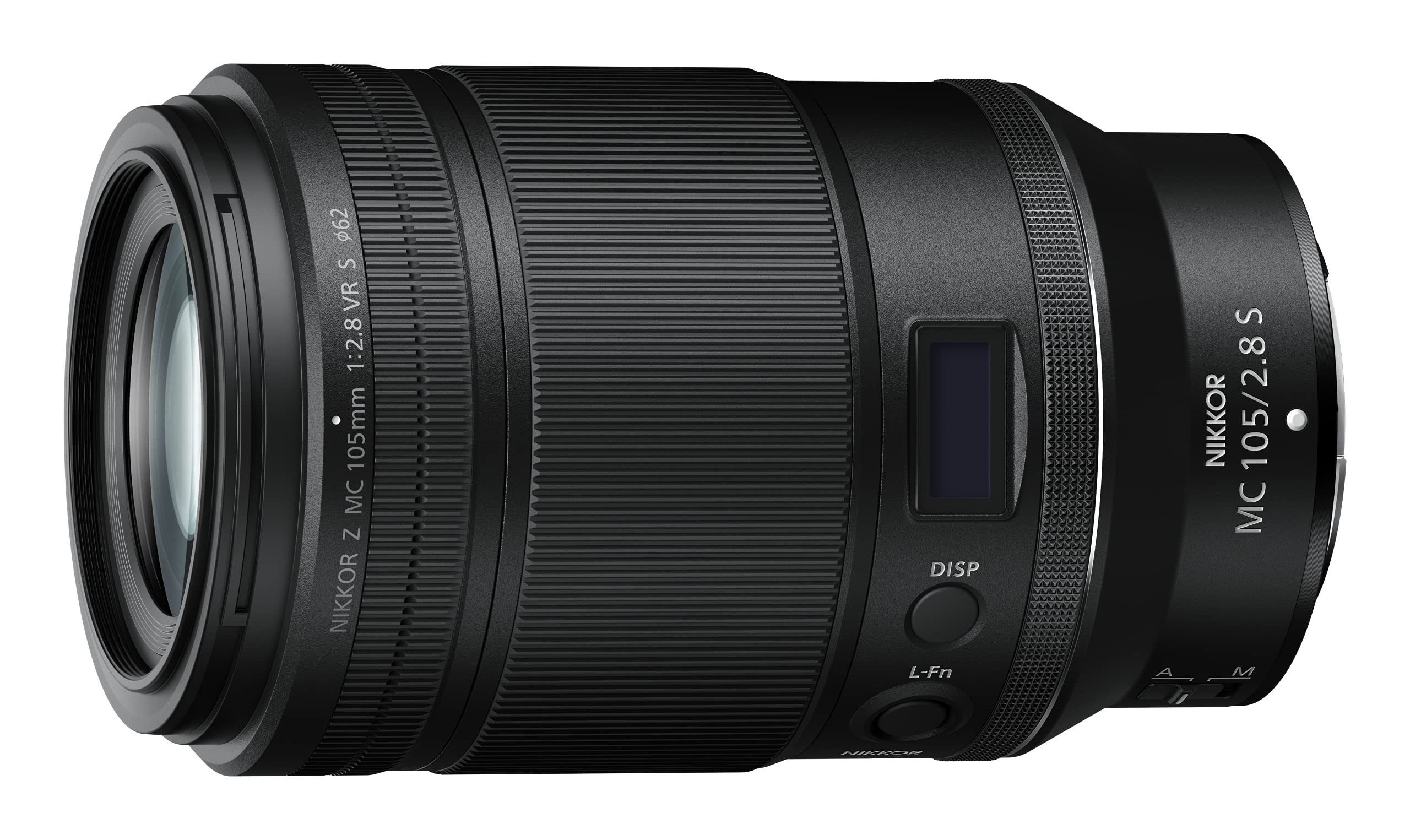
Nikon’s S-Line optics have set a new benchmark for macro sharpness, and the Z MC 105mm f/2.8 VR S delivers the kind of edge-to-edge resolving power that product photographers rely on for catalog work. At 1:1 magnification, the lens resolves fine texture — fabric weave, paper grain, metal brushing — without softening toward the frame edges. The 105mm focal length gives you a comfortable working distance of roughly 13 inches at 1:1, which is enough room to position LED panels or a ring light without the lens shadowing your subject. Vibration Reduction allows handheld operation at slow shutter speeds, though in a controlled studio environment you will typically use a tripod and lock the focus.
The f/2.8 maximum aperture is not the fastest on this list, but for product work you rarely need it wide open — you stop down to f/8 or f/11 anyway to increase depth of field. What matters more is the lens’s correction of chromatic aberration and coma; even at the closest focus distances, high-contrast edges on metal packaging stay free of purple or green fringing. The weather-sealed barrel gives you peace of mind if you shoot in a dusty studio environment, and the dedicated focus limiter reduces hunting when you are working within a narrow distance range.
Where this lens truly earns its premium position is in the rendering of specular highlights and transitions from sharp to out-of-focus areas. When photographing a glossy bottle or a piece of jewelry, the bokeh remains smooth and non-distracting, preserving the clean, professional look that e-commerce buyers expect. Pair it with a Z6 II or Z7 II body and you have a system that produces commercial-grade product images straight out of camera.
Why it’s great
- Exceptional center-to-edge sharpness at macro distances
- VR stabilization works in tandem with IBIS for handheld shooting
- Comfortable working distance for lighting setups
Good to know
- Autofocus can hunt in low-contrast scenes
- Focus breathing is noticeable at close distances
2. Canon RF100mm F2.8 L Macro IS USM

Canon’s RF 100mm f/2.8 L Macro breaks the traditional 1:1 magnification ceiling by offering a maximum magnification of 1.4x — meaning you can fill your frame with a subject smaller than your sensor dimensions. For product photographers shooting tiny components like watch gears, earring backs, or electronic connectors, that extra 0.4x translates to significantly more visible detail without needing extension tubes or a bellows system. The optical image stabilizer delivers up to five stops of shake correction, which is particularly valuable when shooting handheld at 1.4x where any camera movement is amplified.
The spherical aberration (SA) control ring is a unique addition that lets you adjust the character of out-of-focus areas from smooth to glowy. In practice, for product photography you will likely leave it neutral to keep specular highlights clean and round, but the option exists for creative packaging shots where a softer background feels editorial. The lens uses Canon’s Nano USM for fast and near-silent autofocus, which is helpful when you are tethering and reframing between product variations on a turntable.
Build quality is typical of Canon’s L series — all-metal barrel, fluorine coating on the front element to repel dust and smudges, and a weather-sealed construction that handles studio environments or location shoots. The minimum focus distance of 0.26 meters at 1x lets you get extremely close, though at 1.4x you work a few millimeters tighter, so be prepared to adjust your light placement accordingly. This lens pairs best with the R5 or R6 bodies where the IBIS and lens IS work together cooperatively.
Why it’s great
- 1.4x magnification exceeds standard 1:1 macro for tiny subjects
- Impressive 5-stop optical image stabilization
- Weather-sealed L-series durability
Good to know
- Heavier than typical 100mm macros at 730 grams
- SA control ring is locked to neutral for most product work
3. Sony SEL90M28G FE 90mm f/2.8 Macro G OSS

The Sony 90mm f/2.8 Macro G OSS remains the reference macro prime for the E-mount system, offering a focal length that balances working distance with a natural perspective for tabletop work. At 1:1 magnification, the working distance is roughly 28cm from the sensor, which translates to about 16cm from the front element — enough space to position a pair of small LED panels at a 45-degree angle without the lens barrel creating hard shadows. The Optical SteadyShot (OSS) stabilization is a genuine asset when shooting handheld detail shots at a trade show or craft fair where a tripod is impractical.
Optically, the lens uses advanced spherical elements and Super ED glass to suppress chromatic aberration almost entirely. Even when photographing a chrome-plated faucet or a silver necklace against a white background, the high-contrast edges show no measurable purple fringing. The 9-blade circular aperture maintains round bokeh highlights, which keeps the background of product images clean and professional. The Direct Drive SSM autofocus is fast and quiet for initial acquisition, though some users report slight hunting when the lens is operating near the 1:1 focus limit in low-contrast conditions.
Build quality includes dust and moisture sealing, and the sliding focus ring lets you switch between autofocus and manual focus instantly — useful when you need to fine-tune focus for a specific product detail without diving into menus. The lens supports focus-range limiting, which speeds up AF when you know your working distance is fixed. One drawback for macro purists is the need for supplemental lighting: at 1:1 and f/8, even bright daylight can leave shadows that require a dedicated macro ring light or twin flash.
Why it’s great
- Excellent OSS stabilization for handheld macro work
- Near-zero chromatic aberration on reflective subjects
- Robust dust and moisture resistant construction
Good to know
- Autofocus hunts near the close-focus limit
- Requires ring light or flash for even macro exposure
4. Canon EF 100mm f/2.8L IS USM Macro

Canon’s EF 100mm f/2.8L IS USM is the lens that convinced an entire generation of product photographers that macro optics could double as everyday lenses. Its Hybrid Image Stabilization corrects both angular and shift-type camera shake, which is uniquely effective at close focus distances where ordinary IS systems lose effectiveness. At 1:1 magnification, the working distance is about 15cm from the lens front, which is tighter than the Nikon or Sony 90mm, but still workable for tabletop setups with small continuous lights.
Sharpness across the frame is consistent with L-series expectations: wide-open at f/2.8 the lens is already very sharp in the center, and by f/5.6 it reaches peak resolution that stays uniform to the corners. Chromatic aberration is well-controlled thanks to the Super Spectra coating and one fluorite element, though you may see mild lateral CA at the edges of full-frame images when shooting high-contrast metallic objects — correctable in Lightroom with one click. The USM autofocus is noticeably faster than older macro designs, and the full-time manual focus override lets you fine-tune without switching out of AF mode.
The lens is lightweight at 625 grams and compact enough to pack in a studio bag alongside a second body. For Canon DSLR users who are not yet ready to migrate to the RF mount, this is still one of the sharpest full-frame macro lenses available, and it adapts well to mirrorless bodies with Canon’s official adapter. The only noticeable trade-off compared to the RF version is the lack of the SA control ring and the slightly slower maximum magnification being 1:1 rather than 1.4x.
Why it’s great
- Hybrid IS corrects both angular and shift shake at macro distances
- Fast USM autofocus with full-time manual override
- Excellent L-series build and optical correction
Good to know
- Slightly tighter working distance than 105mm options
- No longer compatible natively with RF mount without adapter
5. Sigma 50mm F1.4 DG DN for Sony E

The Sigma 50mm f/1.4 DG DN is not a dedicated macro lens — its maximum magnification is roughly 1:6.7 — but it earned a spot in this guide because it excels at a different product photography use case: full-product shots and flat-lay compositions where you need to separate a hero product from a complementary background. The f/1.4 aperture creates a thin depth of field that, at the right distance, makes a perfume bottle or a phone case stand out against a soft-focus backdrop. The High-response Linear Actuator (HLA) autofocus motor is snappy and silent, which helps when you are tethering and repositioning products rapidly.
Optically, the lens uses Sigma’s Super Multi-Layer Coating to minimize flare and ghosting, which is important when shooting reflective items near a window light or a diffusion panel. The 11-blade aperture produces round, natural-looking bokeh that does not distract from the product. At f/1.4, sharpness in the center is very high, but the edges show mild softness until stopped down to f/2.8 — a typical behavior for fast standard primes that does not affect product shots where the subject occupies the central zone.
The aperture ring features a de-click function that allows smooth, silent aperture transitions for video product demos. The dust and splash-resistant structure adds durability for location shoots or pop-up studios. For product photographers who shoot a mix of full-product images alongside detail shots with a dedicated macro lens, this Sigma fills the wide-to-standard gap without breaking the budget compared to Sony’s own 50mm f/1.2 GM.
Why it’s great
- Fast f/1.4 aperture for subject separation in flat-lay shots
- Silent HLA autofocus ideal for video product demos
- De-click aperture ring for smooth video work
Good to know
- Not a true macro lens — 1:6.7 max magnification
- Edge sharpness improves significantly only after f/2.8
6. Sony SEL50M28 FE 50mm F2.8 Macro

The Sony 50mm f/2.8 Macro offers true 1:1 magnification in an exceptionally compact and lightweight package — 340 grams and just 71mm in length. For product photographers who travel to client locations or pack a studio into a carry-on, this lens saves significant bag space. The 50mm focal length on full-frame provides a field of view equivalent to human vision, making it intuitive for composing product shots of mid-sized items like shoes, handbags, or kitchen appliances without needing to back up across the room.
The minimum focusing distance is 0.16 meters (6.3 inches) from the sensor, which allows you to fill the frame with a subject roughly the size of a credit card. The f/2.8 maximum aperture is modest, but for macro work you will typically stop down anyway, and the lens holds good sharpness at f/5.6 and f/8. The built-in optical image stabilization helps keep handheld shots steady, though in practice the lens is best paired with a tripod for consistent macro results. The 7-blade aperture produces acceptable bokeh for a macro standard lens, but you will notice the difference in highlight rendering compared to premium 9-blade designs.
The biggest caveat is autofocus performance — multiple verified reviews note that the AF hunts more frequently than Sony’s own 90mm macro, especially in lower light. For product photography where you are setting focus once and recomposing via a focus rail or tripod head, this is less of a limitation. If you need fast tracking of moving products (rare in still-life), this lens is not the best fit. For stationary tabletop work where size and weight are primary constraints, it delivers solid macro capability at a mid-range price point.
Why it’s great
- Lightweight and compact — ideal for mobile studio kits
- True 1:1 magnification in a 50mm field of view
- Optical image stabilization for handheld use
Good to know
- Autofocus hunts in low-contrast and low-light conditions
- Short working distance makes lighting setup challenging
7. Fujifilm Fujinon XF30mmF2.8 R LM WR Macro

For Fujifilm X-mount shooters, the XF 30mm f/2.8 R LM WR Macro breaks the mold of short-focal-length macro lenses by delivering true 1:1 magnification with a minimum focusing distance of just 10cm from the sensor. That means you can get extremely close to the subject — almost pressing the front element against the product — and still achieve life-size magnification. The 46mm equivalent field of view gives a natural perspective that works well for tabletop product arrangements and food photography where you want a flat-lay angle with sharp detail in the center and gradual fall-off toward the edges.
Optically, the lens uses three aspherical elements and two ED elements to keep chromatic aberration and field curvature well controlled. The 11-blade rounded aperture is unusual for a macro lens in this price class and produces smooth, circular bokeh that makes backgrounds look creamy even when stopped down to f/4 or f/5.6. The linear motor autofocus is fast and quiet, locking focus in as little as 0.02 seconds on modern X-T5 and X-H2 bodies — enough speed to refocus quickly when swapping products on a turntable.
The lens barrel is weather sealed in nine locations, making it resistant to moisture and dust for less controlled environments. At 195 grams, it is the lightest macro lens in this guide, which is a significant advantage for handheld shooting or gimbal use for video product demos. The main trade-off is the short working distance: at 1:1, the subject is barely 4cm from the front element, making it difficult to position lights without casting shadows. This lens works best with a ring light or twin-LED setup designed for close-up work.
Why it’s great
- True 1:1 macro with a very close 10cm MFD
- Lightweight at 195g — perfect for travel and gimbal use
- 11-blade aperture for premium bokeh rendering
Good to know
- Short working distance makes lighting placement tight
- Focal length not ideal for larger products needing distance
8. VILTROX AF 50mm F1.4 Pro FE Lens for Sony
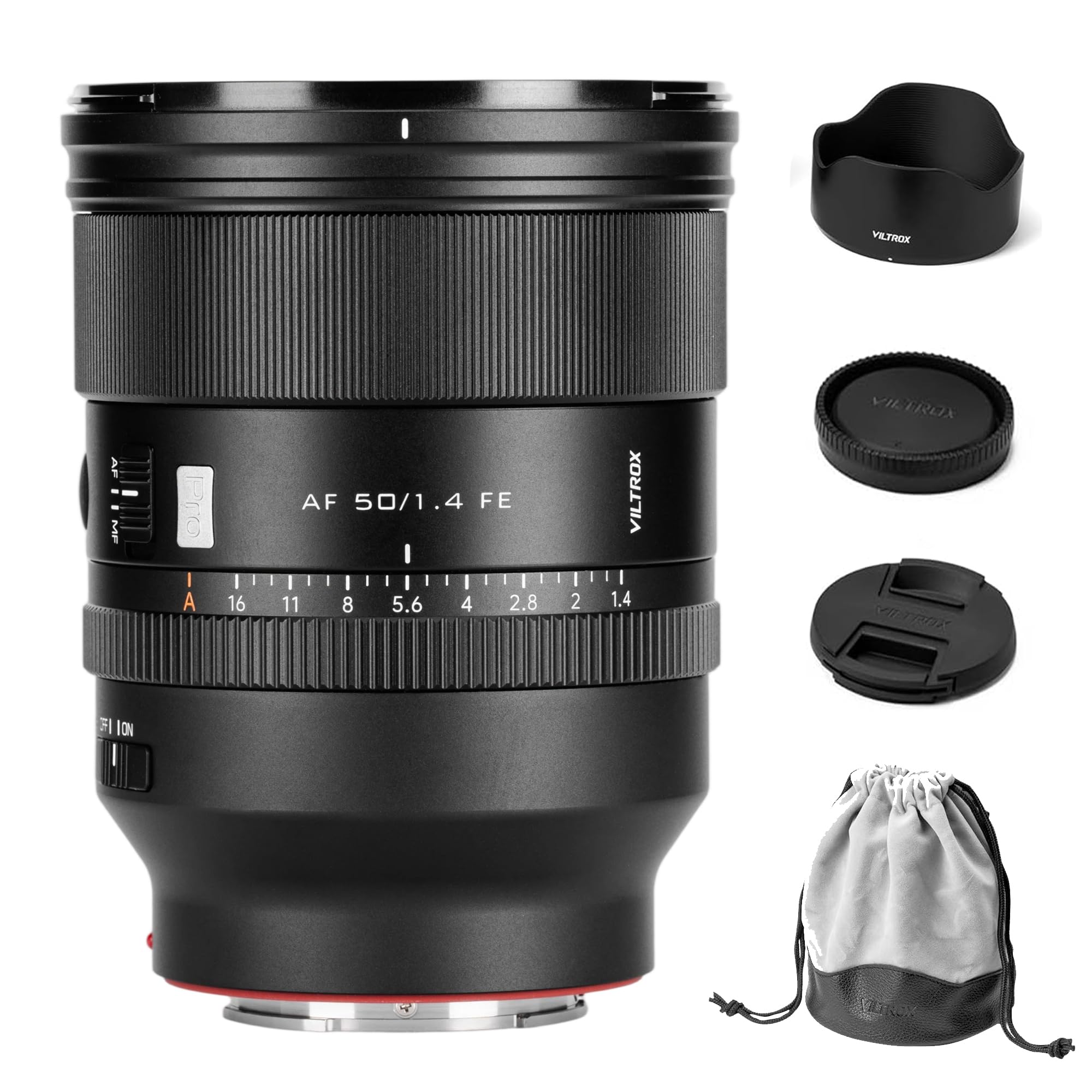
VILTROX’s AF 50mm f/1.4 Pro FE brings a large-aperture prime to Sony E-mount shooters at a price point that undercuts most native alternatives. The f/1.4 maximum aperture allows you to shoot product compositions with shallow depth of field, emphasizing a single item against a blurred background for social media or lifestyle e-commerce images. The HyperVCM autofocus motor is notably snappy for a third-party lens, and in good light the AF system tracks subject movement reliably — useful if you are shooting small products on a rotating turntable.
Optically, the lens delivers impressive sharpness at the center even wide open at f/1.4, though the corners soften noticeably until you stop down to f/2.8 or f/4. For product work where the subject is primarily in the central zone, this trade-off is acceptable. The minimum focus distance is 0.45 meters, which is not macro — you cannot fill the frame with a coin — but it is close enough for waist-up product shots of bottles, boxes, or electronics. The lens also supports manual focus override and has an aperture ring for tactile control.
Build quality feels solid with a metal mount and a weight that balances well on full-frame Sony bodies. The included lens pouch and caps are standard. The main trade-off is that this is not a dedicated macro lens, so if your work requires 1:1 detail shots of very small items, you will need a separate macro lens or extension tubes. For product photographers building their first kit on a budget, this lens covers the standard focal length gap and produces a look that separates amateur snapshots from intentional commercial imagery.
Why it’s great
- Fast f/1.4 aperture for shallow depth of field product shots
- Snappy HyperVCM autofocus for responsive shooting
- Solid metal mount and build at an entry-level price point
Good to know
- Not a macro lens — 0.45m minimum focus distance
- Corner sharpness noticeably soft until stopped down
9. Sigma 70-200mm F2.8 DG DN OS for Sony

The Sigma 70-200mm f/2.8 DG DN OS is a telephoto zoom that serves a specific niche in product photography: shooting larger items (furniture, automotive parts, mannequin displays) from a distance that compresses perspective and flattens perspective distortion. The 70-200mm range lets you stand far enough back that the product’s proportions remain natural — no barrel distortion from a wide lens, no exaggerated perspective. The constant f/2.8 aperture gives you consistent exposure throughout the zoom range and allows for faster shutter speeds in ambient-lit environments.
Optically, this lens competes directly with Sony’s own 70-200mm f/2.8 GM II at a lower price point while delivering very similar sharpness and contrast. The High-response Linear Actuator (HLA) autofocus is extremely fast and silent, making it suitable for product videography where focus pulls are needed. Optical stabilization works well in conjunction with Sony IBIS, letting you shoot handheld at slower shutter speeds without noticeable blur — useful for quick setup shots in a client’s office or outdoor product scenes.
The build quality meets Sigma’s Sports line standard with dust and splash resistance, and the included tripod collar is helpful for studio work where you are using a heavy-duty tripod. The zoom ring is smooth and well-damped. The main limitation for product photography is that the minimum focus distance at 200mm is about 65cm, giving a maximum magnification of roughly 1:5 — far from macro territory. This is not a lens for small detail shots, but for full-product catalogs, pack shots, and lifestyle environments, the 70-200mm zoom adds flexibility that primes cannot match.
Why it’s great
- Flexible 70-200mm range for perspective-compressed product shots
- Fast and silent HLA autofocus for video and stills
- Effective optical stabilization for handheld work
Good to know
- Large and heavy — not ideal for small tabletop setups
- Limited macro magnification — not for small product detail
FAQ
What focal length is best for tabletop product photography?
Do I need image stabilization for product photography on a tripod?
Is a macro lens required for product photography?
Why does my lens produce purple fringing on metal product edges?
Final Thoughts: The Verdict
For most users, the camera lens for product photography winner is the Nikon NIKKOR Z MC 105mm f/2.8 VR S because it delivers the sharpest edge-to-edge macro detail with a comfortable working distance and effective stabilization. If you want 1.4x magnification for tiny product components, grab the Canon RF 100mm f/2.8 L Macro IS USM. And for the best value in a Sony E-mount system that still delivers professional macro results, nothing beats the Sony 90mm f/2.8 Macro G OSS.