
Our readers keep the lights on and my morning glass full of iced black tea. As an Amazon Associate, I earn from qualifying purchases.
Specs are compiled from manufacturer listings and verified buyer reviews and can change over time — please confirm the key details on the product page before buying.
Tracking a sprinting player or a diving keeper demands a lens that locks on instantly and stays locked, because the difference between a sharp keeper and a blurry miss is often a single frame. You need reach to fill the frame from the sideline, a wide aperture to freeze motion in tricky light, and autofocus that feels telepathic rather than hesitant. This list digs into the zoom range, maximum aperture, and autofocus motor of each pick, then weighs what real buyers report about shooting games, matches, and races.
I’m Min — the founder and writer behind Gadgets Feed. This guide is built by comparing the manufacturers’ published specifications and the patterns across verified customer reviews, so you get each pick’s real strengths and trade-offs instead of marketing spin.
Whether you shoot weekend youth leagues or pro arenas, this breakdown of the best camera lens for sports focuses on reach, speed, and the honest trade-offs every photographer lives with.
Our Picks at a Glance


How To Choose The Best Camera Lens For Sports
Sports photography is a battle against distance, speed, and bad light. Your lens needs to pull the action close, capture it sharply while it moves, and let in enough light to keep shutter speeds high. Three specs control all of that: focal length, maximum aperture, and autofocus motor.
Focal Length: How Close You Can Get
Focal length, measured in millimeters, decides how much the lens magnifies your subject. A 70-200mm zoom covers the classic sideline range, letting you frame a player from mid-distance. A 200-600mm super-telephoto pulls in far-away action like a goalmouth scramble from the opposite end of the field, so you do not need to be physically close to fill the frame.
Maximum Aperture: The Light And Speed Trade-Off
Aperture, written as f/2.8 or f/5.6-6.3, controls how much light reaches the sensor. A wider aperture like f/2.8 lets you use faster shutter speeds in dim gyms or evening games, freezing motion instead of capturing a blur. It also blurs the background behind your subject, a look that separates athletes from the crowd. The trade-off is size and cost: f/2.8 zooms weigh more and cost more than slower telephotos.
Autofocus Motor: Speed And Silence
The autofocus motor moves the glass to lock onto your subject, and in sports every millisecond counts. Ring-type USM and STM motors focus nearly instantly and quietly, which matters when a player is sprinting toward you. Slower motors hunt back and forth in low light, so you lose shots while the lens searches for focus.
Quick Comparison
| Model | Best For | Focal Length | Max Aperture | Weight | Amazon |
|---|---|---|---|---|---|
| Canon 70-200mm f/4L USM★ Best Overall | All-day handheld reach | 70-200mm | f/4 | 25 oz | Amazon |
| SIRUI Sniper 75mm F1.2Best Value | Low-light portraits | 75mm | f/1.2 | 466 g | Amazon |
| Fujifilm XC 50-230mm OISBudget Champion | Budget reach | 50-230mm | f/4.5-6.7 | 375 g | Amazon |
| Canon RF 100-400mm IS USM | Lightweight super-telephoto | 100-400mm | f/5.6-8 | 816 g | Amazon |
| Tamron 50-400mm VC VXD | One-lens versatility | 50-400mm | f/4.5-6.3 | 2.5 lb | Amazon |
| Sigma 70-200mm F2.8 DG DN OS | Pro-grade Sony value | 70-200mm | f/2.8 | 1345 g | Amazon |
| Sigma 70-200mm F2.8 Sports | Durable Canon workhorse | 70-200mm | f/2.8 | 1805 g | Amazon |
| Nikon 70-200mm f/2.8E FL ED VR | Nikon DSLR sharpness | 70-200mm | f/2.8 | 3.2 lb | Amazon |
| Sony FE 200-600mm G OSS | Maximum wildlife reach | 200-600mm | f/5.6-6.3 | 4.7 lb | Amazon |
| Nikon Z 180-600mm VR | Z-mount super-telephoto | 180-600mm | f/5.6-6.3 | 4.7 lb | Amazon |
| Sony FE 70-200mm F2.8 GM OSS II | Flagship speed and clarity | 70-200mm | f/2.8 | 2.3 lb | Amazon |
In‑Depth Reviews
1. Canon 70-200mm F4.0 L USM AF Lens
Our pick — over 4.5★ from 800+ verified ratings; the strongest balance of quality and price.
The lightweight L-series workhorse that turns a full day of sideline shooting into a non-event
For Canon shooters who want pro-grade glass without the back strain, this 25-ounce zoom delivers the classic 70-200mm range in a body that is genuinely pleasant to carry for hours. Its ring-type ultrasonic motor focuses with speed and near-silence, so a sprinting wide receiver stays locked in the frame without hunting. Owners mention it nails the shot even in challenging conditions, with one describing a perfect run of 42/42 shots at 200mm in a dim pool — a confidence boost for any game day.
Sharpness is the headline here, and the numbers back it up. The lens stays crisp wide open at f/4, with edges tightening further at f/5.6, and the L-series optics render colors that make post-processing easier. It handles 1600 ISO with noise reduction indoors, though the f/4 aperture means you will want flash or a tripod once the lights drop. Build quality feels solid and reassuring, and the lens holds its resale value unusually well for a used market favorite.
The honest trade-off is the aperture: f/4 loses one stop of light versus f/2.8, limiting low-light performance. At f/4, you lose one stop of light versus an f/2.8 model, so dim indoor arenas test its limits, and there is no image stabilization built in. It also lacks the tripod collar and weather sealing found on IS versions, so it is best suited to daylight sports and handheld shooting. For outdoor matches and bright fields, this is arguably the smartest value in the L-series lineup.
What wins owners over
- 352 owners single out overall lens quality as the standout trait
- Sharpness earns 223 mentions, praising detail at f/4 and f/5.6
- Lightweight 25 oz design earns 87 mentions for all-day carry
Where it gives ground
- f/4 aperture struggles in low light without flash or tripod
- No image stabilization or weather sealing on this version
Reach for this if: you shoot outdoor sports and want L-series sharpness without paying f/2.8 weight or cost.
Look elsewhere if: your games run at night or indoors where an extra stop of light is non-negotiable.
2. SIRUI Sniper 75mm Autofocus F1.2 Telephoto APS-C Cine Lens, E Mount
A budget prime that brings f/1.2 light-gathering to Sony APS-C shooters chasing creamy background separation
You get that dreamy, background-melting look without emptying your wallet. The 75mm focal length (roughly a 113mm full-frame equivalent) lets you frame tight portraits from a comfortable distance, perfect for court-side or field-side candids. The f/1.2 aperture (a very wide opening that lets in lots of light) shines in evening games and creates smooth, rich bokeh (the soft blur behind your subject) that separates them from a busy crowd.
Image quality punches above its price tier, with owners reporting razor-sharp detail across the frame even wide open. The STM autofocus motor supports Eye AF and subject tracking, so it can follow a moving athlete during events, though feedback on focus is mixed in practice. Some owners call the AF fast and accurate in low light, while others find it adequate but not top-tier, and video users note visible focus breathing plus image quality that varies with lighting.
Where this lens stands apart is the balance of cost and optical character. It weighs 466 g, and the 67mm filter thread is convenient for adding a polarizer. The catch is that a wide f/1.2 body crowds the camera grip for some hands, and the autofocus is not the last word in sports tracking — this is a portrait-and-candid lens first, an action lens second.
Editor’s read: A value-driven prime that excels at low-light portraits and detail shots, but the mixed autofocus makes it a weak fit for fast, erratic sports motion.
Best paired with: Sony a6100 through a6700, FX30, or ZV-E10 bodies where the 113mm equivalent shines.
3. Fujifilm Fujinon XC 50-230mm f/4.5-6.7 OIS Lens
A featherweight 375 g zoom that stretches to 350mm equivalent and fits a modest budget
Fujifilm X-mount shooters looking for serious reach on a budget get a lot of lens for the money here. The 50-230mm range translates to a 76-350mm full-frame equivalent, covering everything from a tight portrait to distant action on a wide field. At 375 g, it is the lightest telephoto in this lineup, and the built-in optical image stabilization helps you hold a sharp shot at slower shutter speeds when the light fades.
Image quality over-delivers for the price, with owners praising sharp detail, lively colors, and no noticeable chromatic aberrations. The zoom ring is smooth, and internal focusing keeps the lens compact as you adjust. The autofocus is the recurring weak point — several owners call it slow, and it hunts in low light — so this is best matched to bright daylight games rather than floodlit evening fixtures.
The trade-offs are honest. The plastic body feels sturdy, not premium, and there is no aperture ring (you adjust via the camera dial). One owner specifically advises against the silver version for its cheap-looking focus ring. Sharpness is very good but not class-leading, with f/11 (a narrow aperture) as the balance, and indoor use typically demands a tripod.
Who it fits: Hobbyist and enthusiast photographers who want a light, cheap way to reach distant subjects in good light.
Who it tests: Anyone shooting fast night sports, where the slow autofocus and f/4.5-6.7 aperture struggle.
4. Canon RF 100-400mm F5.6-8 IS USM Telephoto Lens

A compact 816 g super-telephoto that brings distant field action into tight, sharp frames
Canon EOS R-series mirrorless owners get a versatile 100-400mm reach in a body that is remarkably easy to carry around a track or pitch. The Nano USM autofocus is fast, smooth, and quiet, locking onto moving subjects with confidence, which makes it a natural fit for capturing sports events. Owners consistently call the image quality super sharp with excellent detail, and it pairs beautifully with cropped-sensor cameras for even more effective reach.
Stabilization is a genuine asset here. The optical image stabilizer delivers up to 5.5 stops of shake correction on its own, and that jumps to 6 stops when combined with an EOS R body that has In-Body Image Stabilization. That means you can shoot handheld at 400mm and still get crisp frames, a huge advantage during a long game when you cannot set up a tripod. The minimum focus distance of 2.89 feet at 200mm also lets you capture surprisingly close detail.
The aperture is the known limitation. At f/5.6-8, this is not a low-light specialist — customers note it performs well in daylight but struggles as the sun sets, with noise creeping into images. It also lacks weather sealing, and the zoom ring rotates opposite to the standard direction, which takes a moment to adjust to. For daytime sports, though, it is a lightweight champion.
The strengths owners lean on
- 91 owners call out overall quality as the top trait, praising value
- 41 mention the light weight as a key benefit for carried shooting
- Fast, quiet Nano USM autofocus earns consistent praise
The limits to know
- f/5.6-8 aperture struggles in low light with visible noise
- No weather sealing and no lens hood included
Choose it for: bright-day sports and wildlife where 400mm reach and light weight trump low-light speed.
Pass if: your games run under lights, where the slow aperture will frustrate you.
5. Tamron 50-400mm f/4.5-6.3 Di III VC VXD Lens
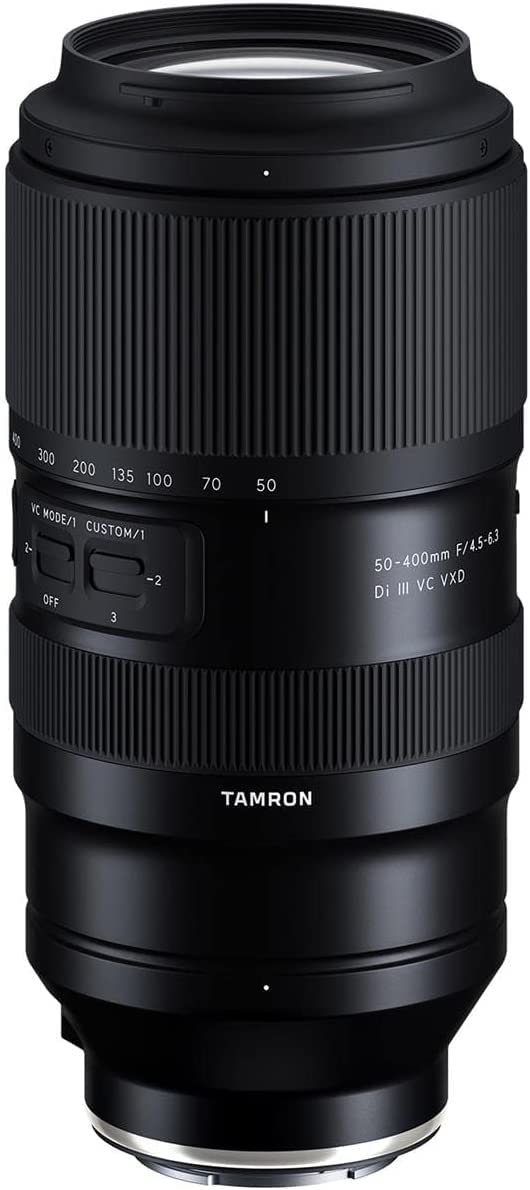
An 8x zoom that shuttles from standard 50mm to super-telephoto 400mm in one lens body
Sony full-frame owners who hate changing lenses on a busy day will see the genius of this Tamron immediately. The 8x zoom ratio covers 50mm to 400mm, meaning you can shoot a wide team huddle and then instantly pull in a player at the far touchline without swapping glass. It packs 24 elements in 18 groups, including special low-dispersion elements, to control aberrations and keep images sharp across the range.
The VXD linear motor delivers fast, high-precision autofocus that owners say keeps up with flying birds and moving subjects, and it runs extremely quietly for events where silence matters. Tamron’s VC image stabilization reduces camera shake, and one owner shot a low-light orchestra concert at 1/40 shutter speed at 400mm and still got sharp results. At 2.5 pounds, the weight earns positive reviews as perfect for travel.
The catch is the extremes: tracking fast subjects at 400mm yields only a 60% hit rate. Reviewers point out a roughly 60% hit rate when tracking fast subjects at 400mm (a long zoom), so erratic sprinters may test its limits. The size draws mixed feedback—some find it delightfully compact, others consider it a little large for daily carry. It is also not the sharpest at the very long end compared to Nikon’s 28-400mm, though most find it more than adequate.
Best for: Travelers and all-in-one shooters who want one lens for the whole stadium, from wide shots to tight action.
Not ideal for: Pro-level tracking of erratic subjects at 400mm, where a dedicated 70-200mm f/2.8 leads.
6. Sigma 70-200mm F2.8 DG DN OS for Sony

Tack-sharp f/2.8 performance that undercuts the Sony G Master by a significant margin
Sony E-mount shooters who want flagship f/2.8 results without the flagship price tag have found their lens here. This Sigma delivers the classic 70-200mm f/2.8 combination — a wide aperture for low-light arenas and beautiful background separation, plus a zoom range perfect for sideline work. Owners call it tack-sharp with excellent colors, and one went as far as calling it nearly identical optically to the Sony 70-200mm GM II, while costing notably less.
The High-response Linear Actuator motor, or HLA, provides fast, quiet autofocus that pairs well with continuous tracking for moving athletes. Build quality is pro-grade with dust and splash resistance, so a light drizzle on the sidelines will not send you running for cover. The optical stabilization works in tandem with in-body stabilization for effective handheld shooting at the long end.
The honest trade-off is weight: at 1345 g, long handheld sessions strain your back. At 1345 g, owners warn that three-plus hours of handheld shooting can strain your back, and the twist-screw lens cap can hinder the zoom if not fully removed. It is heavier than the Sony GM II, but for the price difference, most owners find the extra heft a fair deal for the optical quality.
Why it wins fans
- 27 owners lead with lens quality, calling images tack-sharp
- Fast HLA autofocus earns 7 positive mentions
- Dust and splash-resistant build for outdoor reliability
The weight tax
- 1345 g draws 10 negative mentions for fatigue on long shoots
- Twist-screw lens cap can interfere with the zoom ring
Grab it if: you want G Master-level f/2.8 quality on Sony without paying the brand premium.
Think twice if: you need the lightest possible kit, since the Sony GM II is noticeably lighter.
7. Sigma 70-200mm F2.8 Sports DG OS HSM for Canon Mount

A magnesium-alloy tank of a lens that has survived five years of professional abuse and kept shooting
Canon DSLR shooters who treat their gear hard will appreciate what this Sigma is built to endure. The Sports line construction includes a magnesium alloy barrel and dust- and splash-proofing, and one owner reports it held up through five years of professional use with only a faint autofocus squeak when hunting. The 9 FLD and 1 SLD low-dispersion glass elements deliver outstanding image quality that owners say rivals Canon’s L-series glass.
Sharpeness holds wide open at f/2.8, making it a strong choice for low-light indoor sports, and the 11-blade rounded diaphragm produces ultra-smooth bokeh that flatters portraits after the game. The autofocus is fast and accurate in low light, though a minority of owners find it slower than rivals. The tripod socket features 90 click stops and an Arca Swiss type clamp, a thoughtful touch for monopod shooters.
The trade-off is unmistakable: at 1805 g (3.97 pounds), the non-removable tripod ring and swapped focus/zoom rings demand adaptation. Owners who shoot from a monopod or tripod will not mind, but run-and-gun handheld work will tire you fast. It is cheaper than the Canon equivalent, which is exactly why pros keep coming back to it.
The pro pick: Working photographers who need a durable f/2.8 workhorse for Canon when the budget cannot stretch to OEM glass.
The fair warning: Prepare for significant weight and an unusual ring layout that demands adaptation.
8. Nikon AF-S NIKKOR 70-200mm f/2.8E FL ED VR Lens

Razor-sharp f/2.8 performance with creamy bokeh that owners say works superbly in sports arenas
Nikon DSLR owners chasing the definitive 70-200mm experience will find it here. This lens delivers razor-sharp images across the frame, fast and quiet autofocus, and that signature creamy bokeh that owners rave about for portraits and sideline shots alike. One owner specifically notes it works well in sports arenas, and another calls it clearly superior to the Tamron 70-200mm f/2.8, making it the reference standard for Nikon shooters.
The optical formula is state-of-the-art, with Nano Crystal Coating that suppresses flare and ghosting, and the 9-blade diaphragm renders smooth background blur. It focuses down to 3.6 feet, giving you flexibility for closer shots between plays. Owners on the D500 find it equals or outperforms several other telephoto options, and it works with Nikon teleconverters for even more reach when needed.
The value question is where opinions split. Some owners call it worth every dollar for the sharpness and speed, while others hate the price tag, and the 3.2-pound weight draws mixed reviews — some find it manageable, others call it super heavy. It is a future-proof investment, with one owner planning to keep it for 7-10 years, but it demands a real financial commitment.
Why it leads for Nikon: 84 owners call out lens quality and 51 praise sharpness, making it the crowd favorite for critical focus.
The honest caveat: Weight and price are the two barriers, so consider a monopod for long shoots.
9. Sony FE 200-600mm f/5.6-6.3 G OSS Super Telephoto Zoom Lens

A 600mm monster that pulls far-field action so close you can count the laces on the ball
Sony E-mount shooters who need extreme reach for big fields, tracks, or wildlife will find this lens transformative. The 200-600mm range brings distant action into tight, sharp frames, and owners consistently praise the fast, accurate autofocus and exceptional image quality. The internal zoom mechanism keeps the weight and balance constant, so the lens does not become front-heavy as you zoom, a real advantage when tracking a player sprinting across the pitch.
The optical design is serious glass. Five ED extra-low dispersion elements reduce flare and ghosting, while the Nano AR coating suppresses reflections, and the Direct Drive Supersonic Wave Motor delivers fast, quiet, precise focus. Shoppers say a high keeper rate even with fast-moving subjects, and pairing it with a 1.4x teleconverter extends reach further for distant field positions.
The trade-off is weight and balance: at 4.7 pounds, it demands a tripod or monopod for extended use. At 4.7 pounds, this lens is heavy enough that owners recommend a tripod or monopod for extended shooting, though they note the balanced internal design helps. The lens hood lacks a lock, which some find annoying, and bokeh can occasionally look busy with complex backgrounds. For reach, though, this is the class leader.
What makes it special
- 66 owners lead with lens quality, calling it excellent for wildlife and sports
- Internal zoom earns 10 positive mentions for constant balance
- Fast autofocus gets 28 positive mentions for tracking
What to prepare for
- 4.7 lb weight draws 19 mixed mentions, with tripod recommended
- Lens hood lacks a lock and bokeh can be busy at times
Pick this for: stadium and field sports where 600mm reach is the difference between a shot and a missed frame.
skip it if: you shoot handheld all day, since the weight demands support.
10. NIKON NIKKOR Z 180-600mm f/5.6-6.3 VR
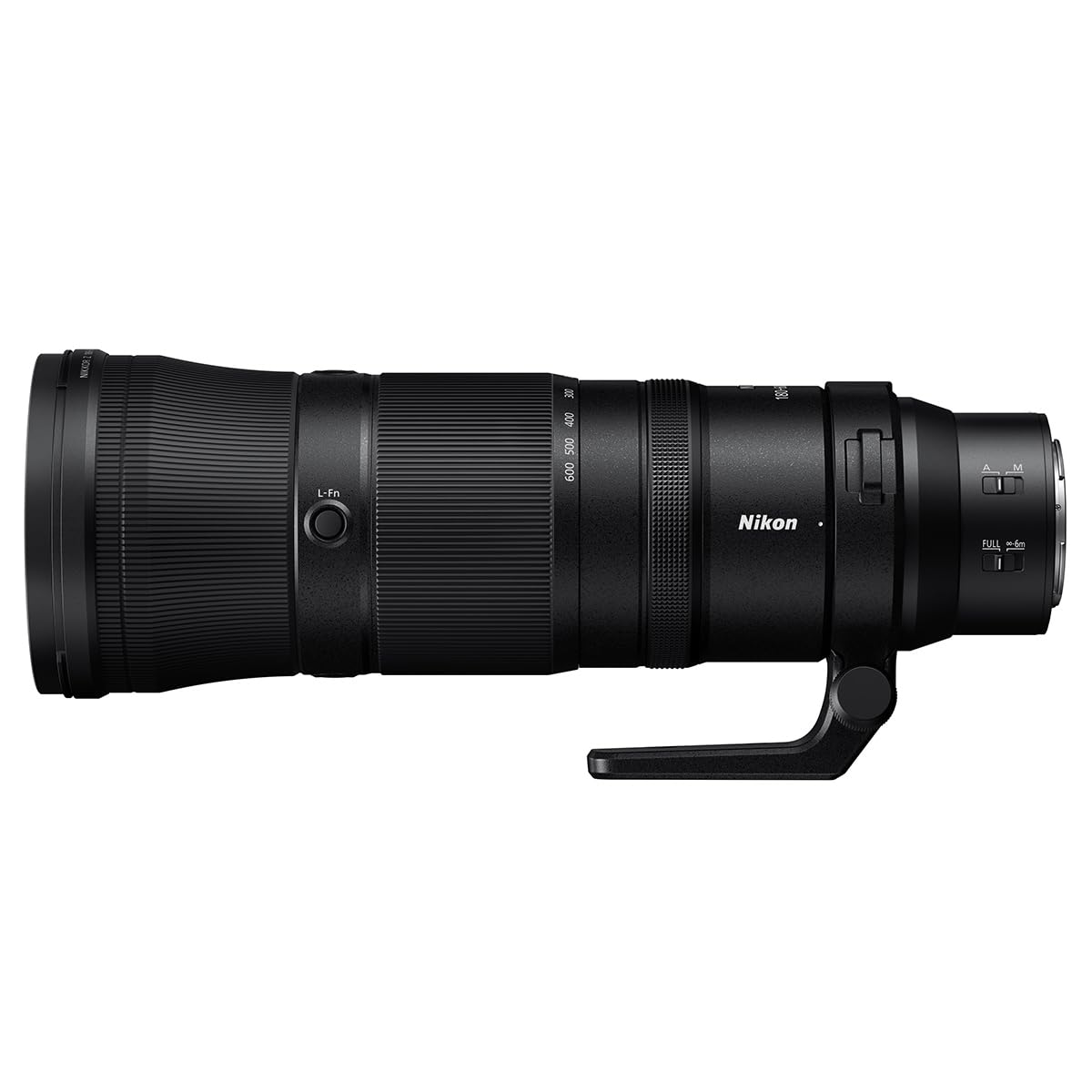
A 600mm Z-mount zoom that balances so well you can track a sprinter handheld
Nikon Z-series mirrorless owners get a super-telephoto that is surprisingly usable for handheld tracking. The 180-600mm range covers everything from a full field to a tight close-up, and the built-in Vibration Reduction (a system that steadies your shots) provides stabilization equivalent to a shutter speed 5.5 stops faster, which buyers report is solid for handheld shots even at 600mm. The internal zooming maintains the center of gravity, so you can pan smoothly to follow fast-moving subjects.
Sharpness is a consistent headline, with owners calling the lens super sharp across the entire zoom range and versatile for both wildlife and motion photography. A mere 70-degree turn of the zoom ring takes you from the wide end all the way to 600mm, which helps you find your subject fast and then frame tightly. The minimum focus distance of 4.27 feet at 180mm and a 0.25x reproduction ratio turn unexpected close encounters into sharp shots.
The autofocus speed draws mixed feedback. Some owners praise its quick focus, while others note slower performance, and one reports focus issues on the Z7 that disappear on the Z8. At 4.7 pounds, it is heavy for handheld use, with owners calling it perfect for a tripod, and the fluorine coating helps repel dust and moisture. Pair it with a Z teleconverter for up to 1200mm reach.
The verdict: A professional-level result without the weight and cost of a 600mm prime, best on newer Z bodies.
The caveat: Consider a tripod for long sessions, and match it with a Z8 if you need top autofocus speed.
11. Sony FE 70-200mm F2.8 GM OSS II Full-Frame Zoom Lens

The reference-standard f/2.8 zoom that one owner says lifted their keeper rate from 30% to 95%
Sony full-frame shooters who demand the absolute best in autofocus speed and optical clarity will find their finish line here. This second-generation G Master lens is razor sharp across the entire zoom range even at f/2.8, with four XD Linear Motors boosting autofocus speed by up to 4x compared to the previous model. Owners describe capturing individual eyelashes and hairs on athletes at 200mm with fast shutter speeds, and the AF tracking is improved by roughly 30% for subjects moving rapidly toward you.
At just 2.3 pounds, it is the world’s lightest 70-200mm f/2.8 zoom, roughly 29% lighter than its predecessor, and the constant barrel length improves balance for agile handheld shooting. The optical design includes one XA extreme aspherical element and multiple ED elements, with Nano AR Coating II to subdue flare, delivering the beautiful bokeh and stunning colors owners praise. Movie shooters benefit from reduced focus breathing and independent control rings with a click on-off switch.
The only real barrier is the price, which owners acknowledge is steep but justify through performance and build. It is extremely versatile for sports, wildlife, and events, and the weather-sealed build holds up to tough conditions. Owners are nearly unanimous: the autofocus speed and sharpness make it feel genuinely useful for sports.
Why it is the flagship
- 45 owners lead with optical quality, praising sharpness across the zoom
- Fast autofocus gets 23 positive mentions for sports tracking
- 20 owners praise the light weight for a constant f/2.8 zoom
The cost of greatness
- Premium price is the single recurring hesitation among owners
- Teleconverters for extra reach are sold separately
Worth it for: working pros and serious enthusiasts who need the fastest, sharpest 70-200mm Sony makes.
Consider first: whether the price premium over the Sigma f/2.8 is justified for your shooting volume.
Understanding the Specs
Focal Length Range
Measured in millimeters, this tells you how much the lens magnifies your subject. A 70-200mm zoom is the classic sports range, letting you frame a player from the sideline. A 200-600mm super-telephoto pulls in far-field action that would otherwise be a tiny dot in the frame, so you can shoot from across the pitch without moving.
Maximum Aperture
Written as f/2.8, f/4, or f/5.6-6.3, this controls how much light reaches the sensor. A wider aperture like f/2.8 lets you use faster shutter speeds in dim arenas, freezing motion instead of capturing blur, and it creates that creamy background separation. The trade-off is size and cost, since wider apertures require larger, heavier glass elements.
FAQ
Is 70-200mm enough for sports photography?
What does f/2.8 mean for shooting sports?
Which autofocus motor is best for tracking fast action?
Can I use a full-frame sports lens on a cropped-sensor camera?
Why is image stabilization important in a sports lens?
Is a teleconverter a good way to get more reach?
Should I choose a zoom or a prime lens for sports?
How much weight can I expect from a sports telephoto lens?
Do I need weather sealing for outdoor sports?
What is the best aperture range for daylight sports?
Final Thoughts: The Verdict
For most people, the camera lens for sports winner is the Canon 70-200mm f/4L USM because it delivers L-series sharpness and fast autofocus in a 25-ounce body that you can carry all day, backed by the strongest owner consensus in this list. If you want maximum reach for stadium and field sports, grab the Sony FE 200-600mm G OSS for its class-leading 600mm reach. And for the ultimate f/2.8 speed and clarity on Sony, the Sony FE 70-200mm F2.8 GM OSS II is the one to reach for, with its lightning-fast XD motors (high-speed autofocus drivers) and stunning optical quality.
How We Picked
We do not accept paid placement. Every pick is matched to a real buyer and a real use-case; we do not hands-on test units.
Sources & Methodology
Specifications: manufacturer listings and product documentation. Review insights: verified customer reviews, as of August 2026. Pricing: not shown on this page (it changes often); check the current price via the retailer link.
As an Amazon Associate, Gadgets Feed earns from qualifying purchases. This does not affect which products we feature.