
A camera that fits in your pocket shouldn’t force you to sacrifice image quality or stabilization. The challenge is separating true pocket-friendly performance from bulkier models that simply claim to be compact.
I’m Min — the co-founder and writer behind Gadgets Feed. I’ve spent hundreds of hours dissecting sensor sizes, gimbal mechanisms, optical zoom ranges, and real-world video framerates to understand exactly what separates a viable pocket camera from a compromise.
This guide is built on that research, cutting through the marketing to show you the best camera pocket options that genuinely deliver professional-level footage without weighing you down.
How To Choose The Best Camera Pocket
Choosing a pocket camera is a balancing act between portability and capability. The key is identifying which specs directly impact the footage you’ll actually shoot, rather than getting distracted by inflated megapixel claims or features you’ll never use.
Sensor Size is Everything
The physical size of the image sensor — measured in inches or type — determines how much light the camera captures. A 1-inch CMOS sensor (like those in the DJI Osmo Pocket 3 and Xtra Muse) delivers dramatically better low-light performance and dynamic range than the smaller 1/2.3-inch or 1/3-inch sensors found in budget point-and-shoots. For a pocket camera, a 1-inch sensor is the gold standard; anything smaller will produce noticeably noisier images in dim conditions.
Stabilization: Gimbal vs. Electronic
Handheld video without stabilization looks unwatchable. The best pocket cameras use either a physical 3-axis gimbal (mechanical stabilization) or electronic image stabilization (EIS). A gimbal physically moves the camera to counteract your hand shake, producing buttery-smooth footage even while walking or running. EIS crops into the frame and uses software to steady the image, which works well for minor movement but fails during dynamic action. For serious vlogging or travel video, a gimbal-equipped camera is non-negotiable.
Optical Zoom vs. Fixed Lens
A fixed wide-angle lens (common on gimbal cameras like the Canon PowerShot V10 or DJI Pocket 3) offers sharpness and a fast aperture but no zoom. If you need to get closer to your subject without physically moving, look for genuine optical zoom — the CAMWORLD 5K model offers 6X optical zoom, which preserves resolution, unlike digital zoom that simply crops and degrades the image. Decide based on whether you shoot mostly selfie-style vlogs (fixed wide-angle) or distant subjects like wildlife and architecture (optical zoom).
Quick Comparison
On smaller screens, swipe sideways to see the full table.
| Model | Category | Best For | Key Spec | Amazon |
|---|---|---|---|---|
| DJI Osmo Pocket 3 Vlog Combo | Premium Gimbal | Professional vlogging | 1″ CMOS, 4K/120fps, 3-axis gimbal | Amazon |
| Xtra Muse Vlogging Camera | Premium Gimbal | Budget-friendly gimbal | 1″ CMOS, 4K/120fps, 3-axis gimbal | Amazon |
| Canon PowerShot V10 | Compact Vlogger | Ultra-portable 1-inch sensor | 1″ CMOS, 4K/30fps, built-in stand | Amazon |
| Xtra Atto Wearable 4K | Wearable Action | Hands-free POV recording | 54g, 4K/60fps, 128GB built-in | Amazon |
| SJCAM C400 Travel Camera | Action Vlogger | Long battery & underwater use | 4K, 7H recording, 30M waterproof | Amazon |
| CAMWORLD 5K Camera | Optical Zoom | Zoom & vlogging mix | 6X optical zoom, 5K/30fps | Amazon |
| LOUM 8K Digital Camera | Budget 8K | First-time buyers | 8K/15fps, 88MP, WiFi, 32GB card | Amazon |
| Lmzour 4K Vlogging Camera | Rotating Lens | Solo vloggers & selfies | 330° rotating lens, face tracking | Amazon |
| Kodak PIXPRO FZ55-BK | Budget Point & Shoot | Everyday snapshots | 16MP, 5X optical zoom, 1080p | Amazon |
In‑Depth Reviews
1. DJI Osmo Pocket 3 Vlog Combo
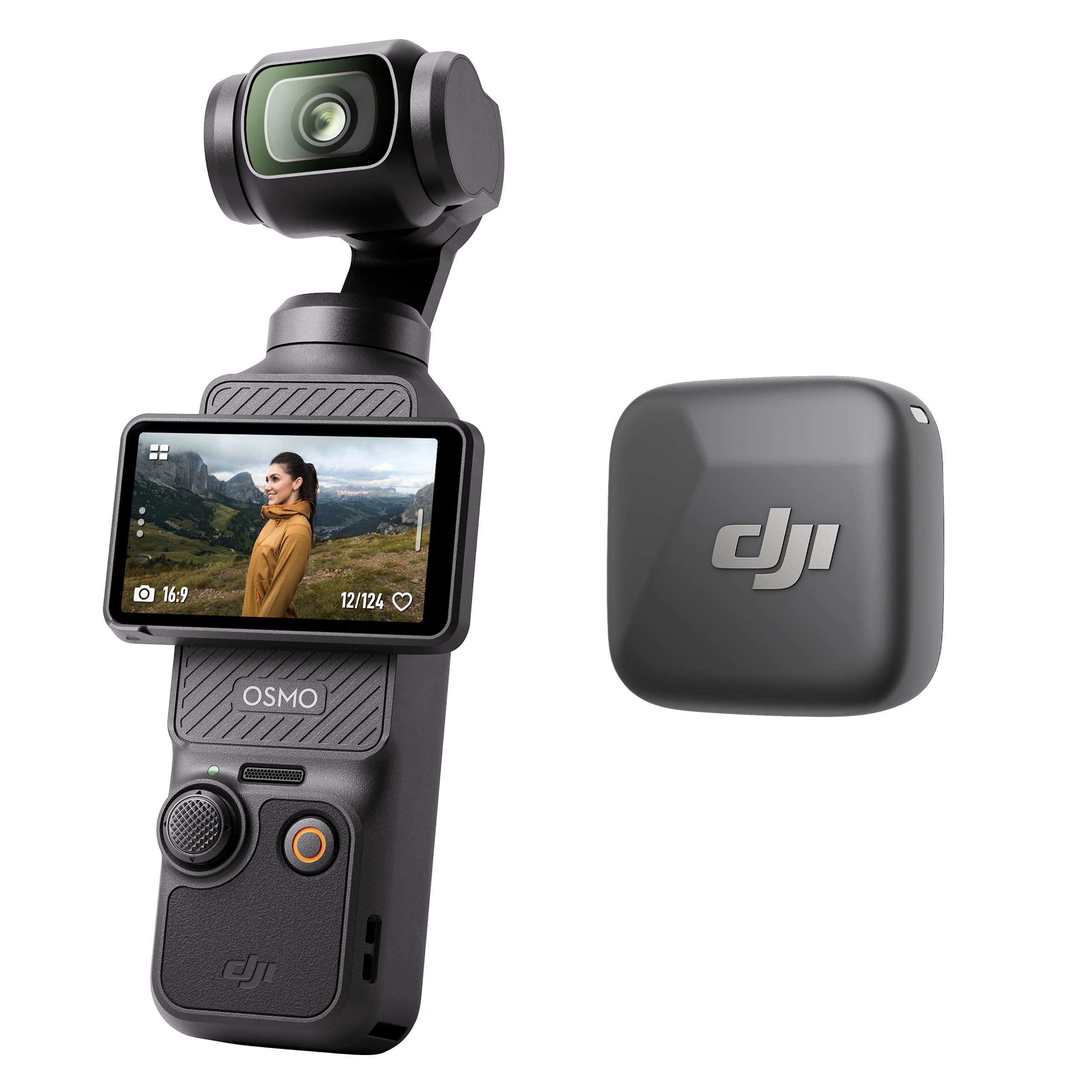
The DJI Osmo Pocket 3 sets the benchmark for what a pocket camera can achieve. Its 1-inch CMOS sensor captures 4K video at up to 120fps, giving you smooth slow-motion playback. The 3-axis mechanical gimbal delivers stabilization that rivals professional gimbals, making handheld walking shots look like they were filmed on a dolly track.
ActiveTrack 6.0 keeps subjects locked in the center frame even during movement — jumping, spinning, or chasing a pet. The 2-inch rotatable touchscreen switches between horizontal and vertical shooting instantly, ideal for both YouTube and TikTok content. The included DJI Mic Mini transmitter ensures broadcast-quality audio right out of the box.
For anyone serious about vlogging or travel content, this is the complete package. The only tradeoff is that the gimbal mechanism is delicate and requires careful handling, but the results are unmatched in this size class.
Why it’s great
- 1-inch sensor delivers superb low-light and dynamic range
- 3-axis gimbal stabilization is best-in-class for handheld smoothness
- Includes DJI Mic Mini for crystal-clear audio
Good to know
- Gimbal is delicate and requires a protective case
- Fixed wide-angle lens with no optical zoom
2. Xtra Muse Vlogging Camera

The Xtra Muse delivers a rare combination: a 1-inch CMOS sensor with a 3-axis gimbal stabilizer at a price that undercuts DJI. It records 4K video at 120fps, enabling silky slow-motion playback of action clips. The Master Follow face and object tracking keeps you centered during solo shoots, while the 2-inch touchscreen flips between landscape and portrait orientation.
True 10-bit X-Log color grading captures over a billion colors, giving editors significant flexibility in post-production to recover highlights and shadows. The built-in handle with a 1/4-inch thread mounts easily on tripods or monopods. Battery life averages 161 minutes, which is solid for a full day of casual shooting.
It’s a near-perfect alternative to the Pocket 3 for budget-conscious creators. Some users report that DJI accessories are compatible, and the addition of wireless microphone support via firmware updates shows active development. The gimbal’s response is slightly less refined than DJI’s, but for most users the difference is negligible.
Why it’s great
- 1-inch CMOS with 4K/120fps at a mid-range price
- 10-bit X-Log color for professional grading
- Portable design with tripod mount
Good to know
- Gimbal feels slightly less robust than DJI
- No built-in storage; micro SD required
3. Canon PowerShot V10

The Canon PowerShot V10 is a purpose-built pocket vlog camera with a 1-inch back-illuminated CMOS sensor. It records 4K video at 30fps and Full HD at 60fps, with three image stabilization modes available after the latest firmware update. The retractable front-facing screen is perfect for self-framing vlogs, and the built-in stand folds front or back for hands-free tabletop recording.
Audio is handled by a triple-microphone array — two stereo mics plus a center noise-canceling mic. The 19mm wide-angle lens (35mm equivalent) offers a generous field of view for capturing both yourself and the background in one frame. It has an external mic port, micro-HDMI output, and USB-C charging, making it a versatile all-rounder.
It lacks optical or digital zoom entirely, which can be limiting if you need to capture distant subjects. Battery life is average at around an hour of continuous recording. But for someone who wants a dead-simple, high-quality vlogging camera that fits in a jacket pocket, this is an excellent pick.
Why it’s great
- 1-inch sensor with excellent low-light performance
- Built-in stand and flip screen for solo vlogging
- Stereo mic with background noise reduction
Good to know
- No zoom capability at all
- Battery life is limited to roughly one hour
4. Xtra Atto Wearable 4K Action Camera
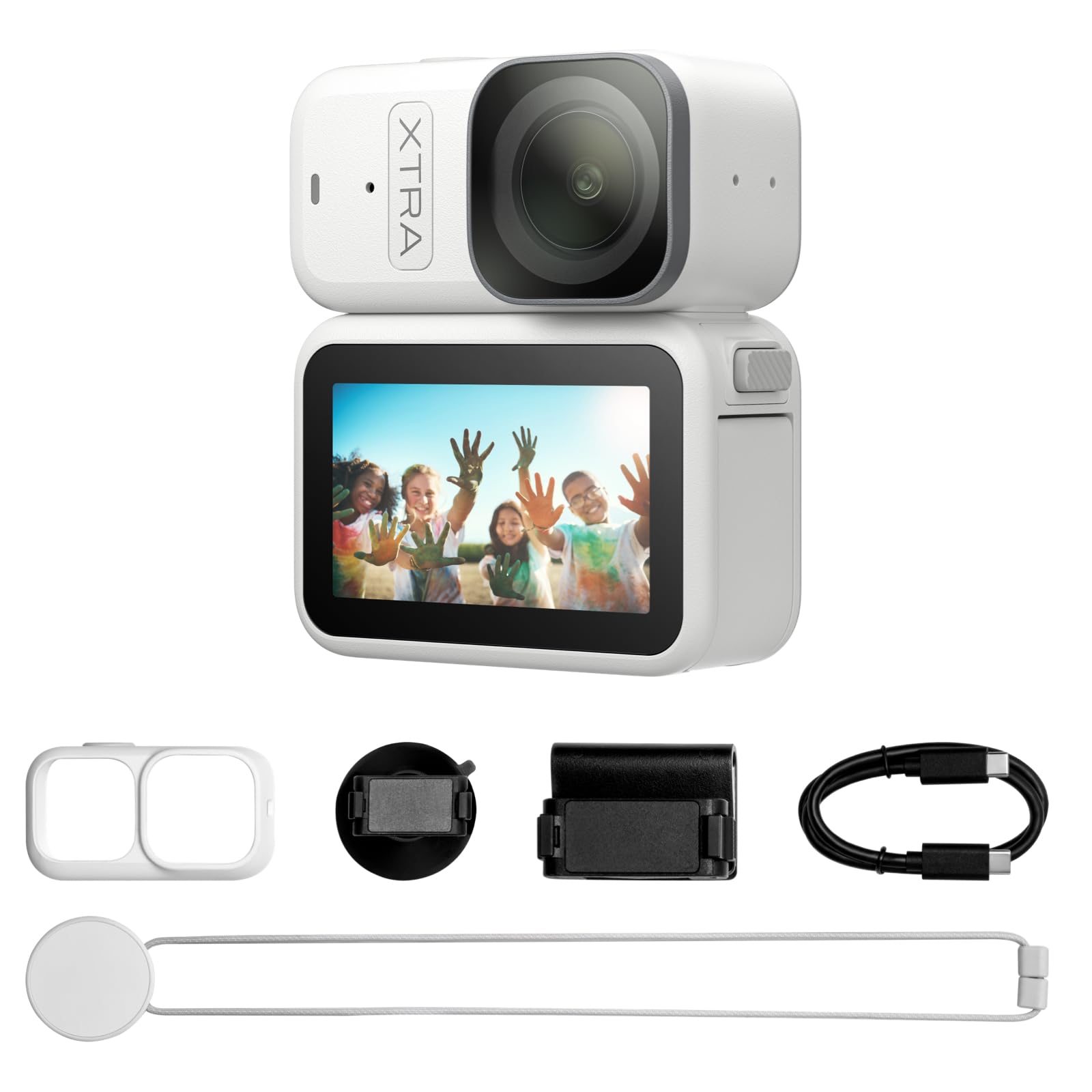
The Xtra Atto redefines pocket-sized by weighing just 54 grams — light enough to clip onto a hat brim or wear on a lanyard without noticing it. It captures 4K/60fps video with a 1/1.3-inch sensor, delivering rich 10-bit color and solid low-light performance for its size. The built-in electronic image stabilization keeps footage watchable even during bouncy activities like jogging or cycling.
Despite its tiny footprint, the Atto includes 128GB of built-in storage and supports 600MB/s transfer speeds through the Vision Dock. It offers 220 minutes of total runtime when using the dock, plus a 5-minute pre-recording buffer that captures action before you press record. The magnetic mounting system attaches to metal surfaces like car doors, gym equipment, or pet collars.
The tradeoff is that there’s no optical zoom and the screen is small for precise framing. It’s not a traditional vlogging camera — it’s a wearable POV camera. For hands-free first-person perspectives, nothing in this price range matches its combination of weight, storage, and battery life.
Why it’s great
- Ultra-light 54g design for comfortable all-day wear
- 128GB built-in storage with fast transfer speeds
- Pre-recording and 220-min max runtime
Good to know
- No optical zoom and limited manual controls
- Electronic stabilization is good but not gimbal-level
5. SJCAM C400 Travel Vlogging Camera
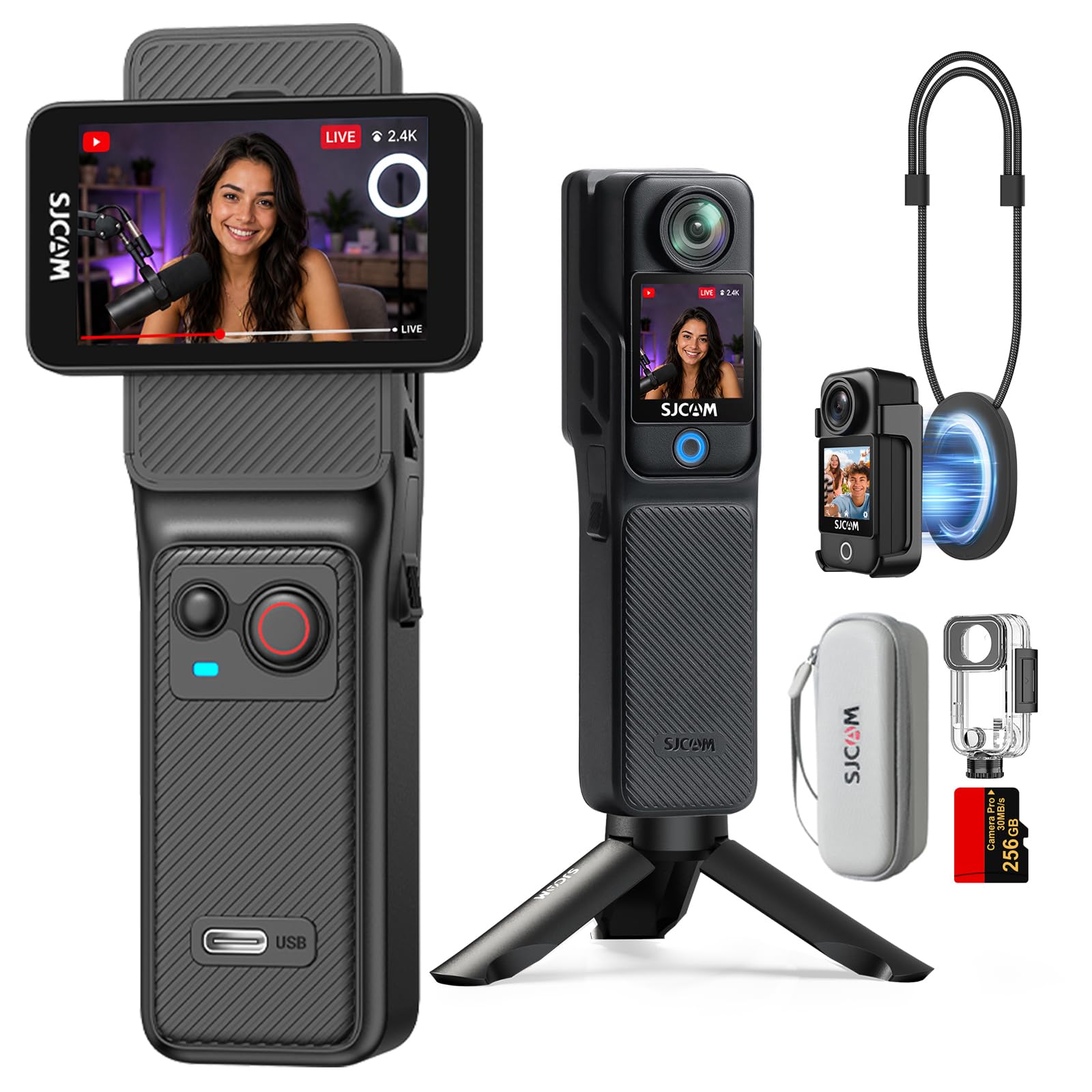
The SJCAM C400 is an action-camera-style vlogging camera that emphasizes endurance and versatility. It records 4K Ultra HD video through a 154-degree distortion-free wide-angle lens with an f/2.0 aperture. The 6-axis electronic image stabilization with horizon correction keeps footage steady during hikes, bike rides, or water sports.
The standout feature is the 7-hour continuous recording time on a single charge — far exceeding most pocket cameras. It’s also waterproof to 30 meters without an external housing, making it a strong choice for snorkeling, surfing, or rainy travel days. The included 256GB card means you can shoot all day without worrying about storage.
The video quality is decent for the price but doesn’t match the 1-inch sensor cameras in low light or detail. Some users note that the 4K/30fps footage can look softer than brand-name action cameras. However, for creators who need all-day battery life and waterproof durability in a compact form, the C400 is a unique value proposition.
Why it’s great
- 7-hour battery life for all-day shooting
- Waterproof to 30 meters without housing
- Includes 256GB card in the box
Good to know
- 4K video quality is softer than 1-inch sensor cameras
- Not ideal for vlogging; better as a POV action camera
6. CAMWORLD 5K Digital Camera
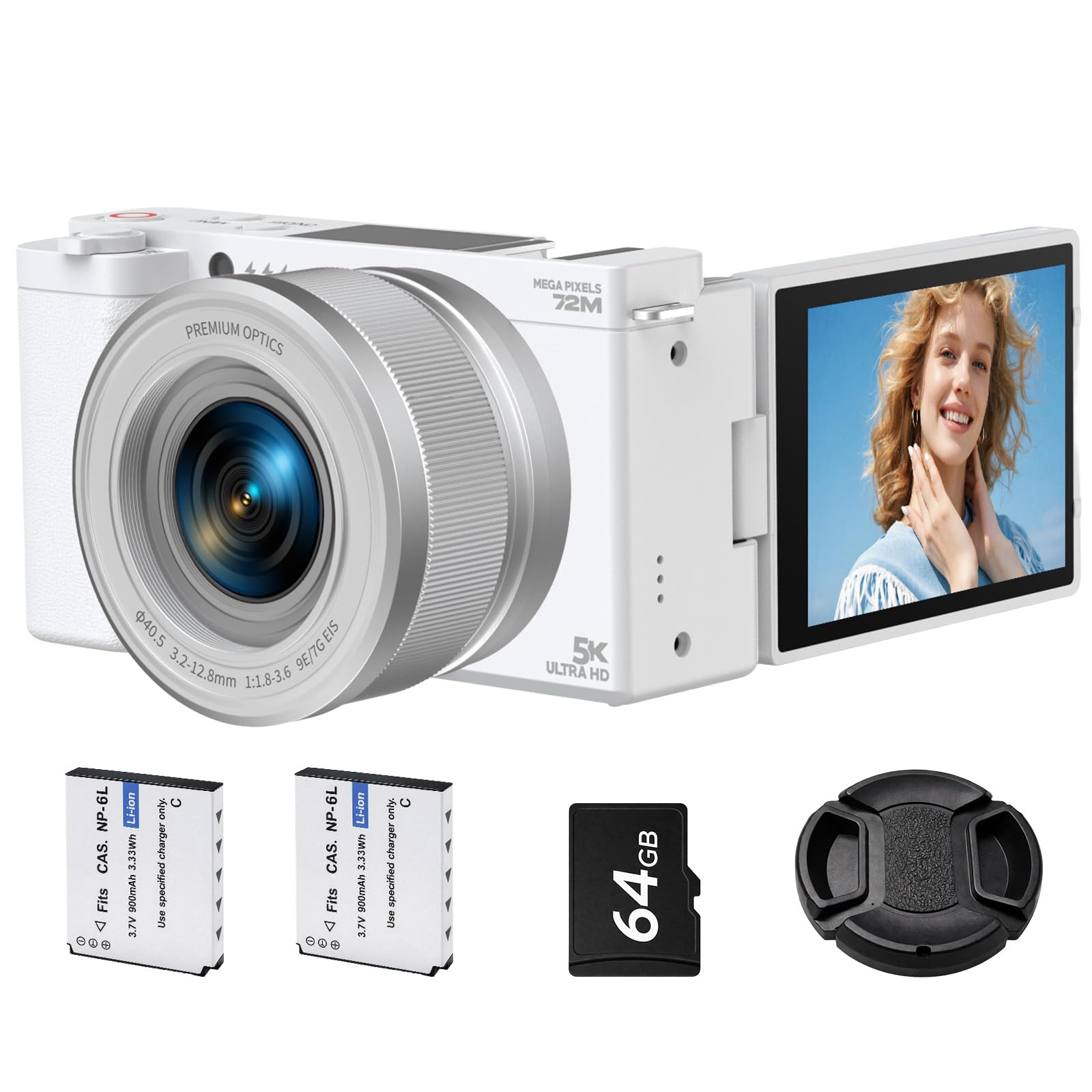
The CAMWORLD 5K camera is a rare mid-range pocket camera that includes genuine 6X optical zoom. Unlike digital zoom that degrades image quality, optical zoom physically moves the lens to maintain 72MP resolution even when zoomed in. It records 5K/30fps video and captures detailed stills with fast autofocus.
The 180-degree flip screen and built-in fill light make it easy to frame vlogs and selfies in any lighting. It doubles as a webcam via USB-C and includes a micro-HDMI output for direct TV playback. The kit comes with two 900mAh rechargeable batteries, a 64GB SD card, and a UV lens protector.
Some users report an intermittent power issue where the camera doesn’t turn on reliably with the battery, requiring a re-seat. Additionally, the model lacks WiFi, contrary to some packaging claims — only USB-C and SD card transfer are available. For the price, the optical zoom and complete kit are compelling, but check for consistency with the unit you receive.
Why it’s great
- Genuine 6X optical zoom preserves full resolution
- 180° flip screen and fill light for vlogging
- Complete kit with 64GB card and two batteries
Good to know
- Intermittent power-up issue reported by some users
- No WiFi; only USB-C and SD card transfer
7. LOUM 8K Digital Camera
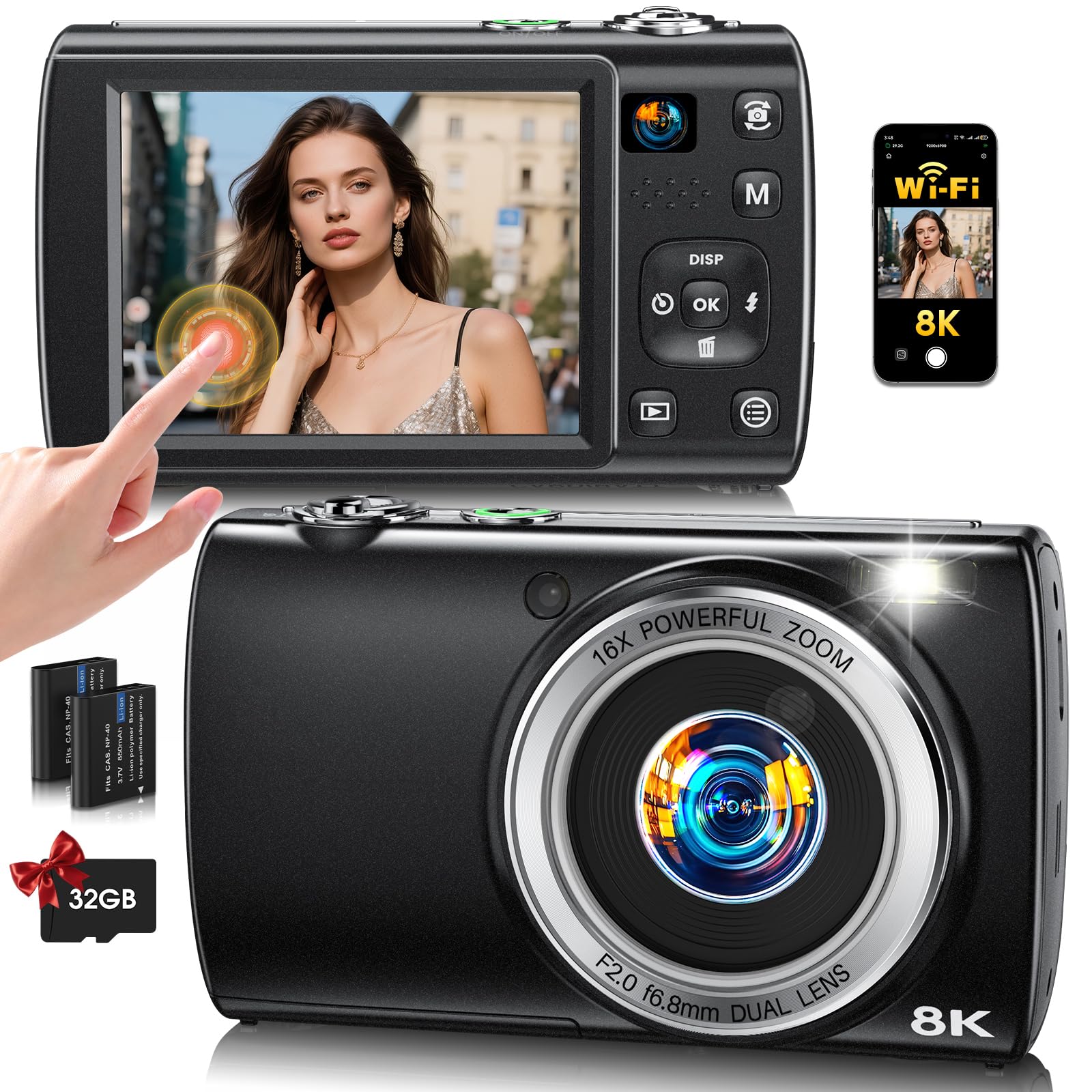
The LOUM 8K camera enters the budget segment with an ambitious spec sheet: 8K video (7680×4320 at 15fps) and 88MP interpolated photos. The dual-camera system (front and rear) supports selfie shooting, and the 2.8-inch IPS touchscreen offers vivid colors for framing. Built-in WiFi allows wireless transfer to your phone for quick social media uploads.
The kit includes a 32GB memory card, two rechargeable batteries, a charging cable, strap, and carrying bag — making it ready to shoot out of the box. The autofocus and 5-axis electronic image stabilization help maintain sharpness during handheld use, and the 16X digital zoom adds flexibility, though digital zoom inherently reduces quality past 2X.
At 8K/15fps, video is more of a marketing bullet than a practical feature — real-world recording at that resolution is choppy and uses storage quickly. 4K or 1080p is more usable for this sensor. For absolute beginners who want an affordable all-in-one kit with WiFi, it’s a solid entry point, but experienced users will outgrow it fast.
Why it’s great
- WiFi transfer for easy phone sharing
- Complete kit with 32GB card and two batteries
- Dual cameras for front and rear shooting
Good to know
- 8K recording is low-frame-rate and storage-heavy
- Digital zoom significantly degrades image quality
8. Lmzour 4K Vlogging Camera
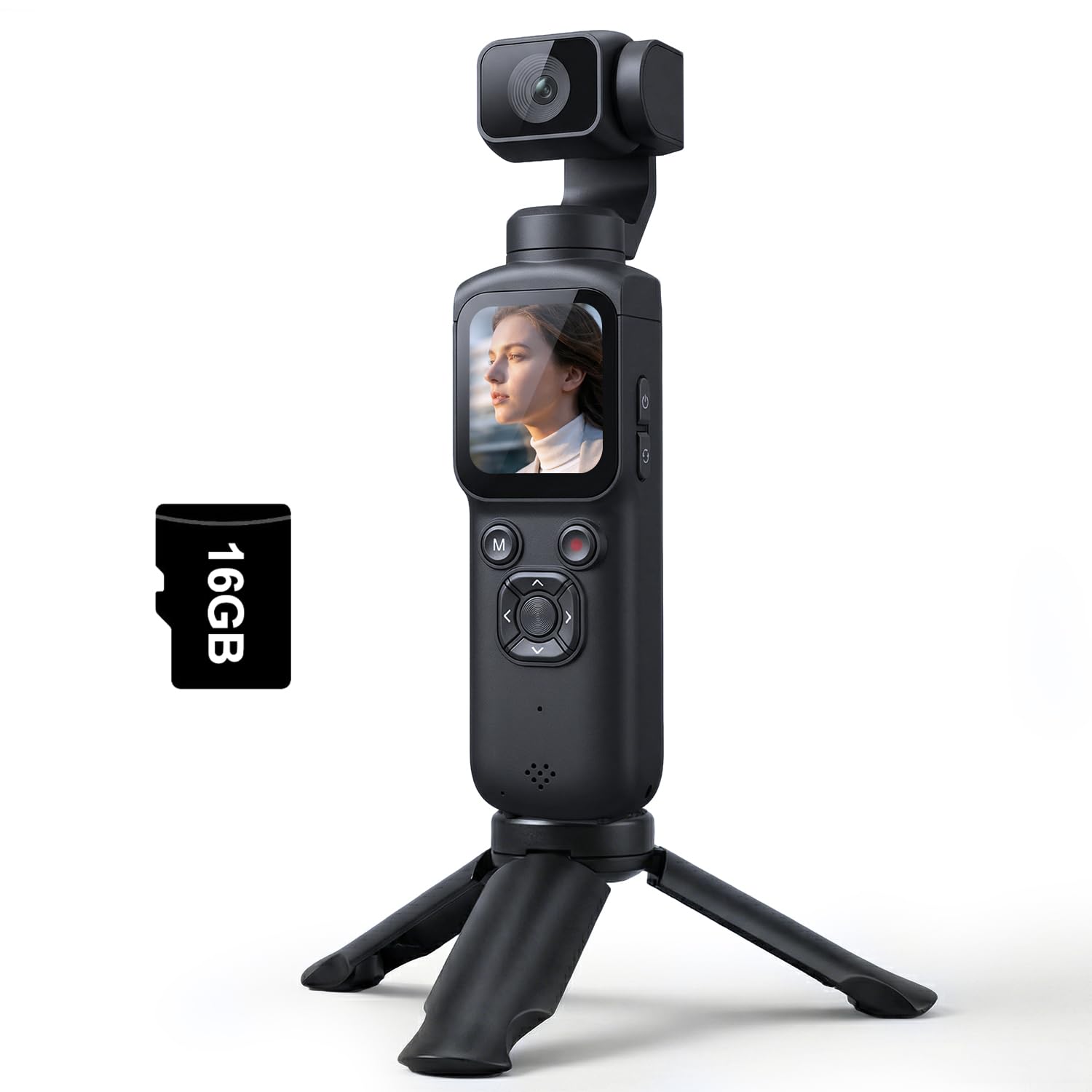
The Lmzour 4K camera is built around a 330-degree rotating lens, which allows you to shoot forward-facing video while monitoring the frame on the rear screen — a clever workaround for vloggers who want to see themselves without a flip screen. The face-tracking system keeps you centered during live streams and solo recording sessions.
It records 4K video at 30fps and captures 75MP interpolated photos. The wide-angle lens with a 79-degree field of view captures expansive backgrounds. Built-in WiFi connects to a companion app for remote control and instant content transfer. The kit includes a 16GB TF card, mini tripod, charging cable, wrist strap, and travel carrying bag.
The battery life is average at about 1.5 hours of continuous recording. There’s no flash, so low-light performance is limited. The rotating lens is a unique differentiator for selfie-focused creators, but the image quality doesn’t rival cameras with larger sensors. It’s a smart choice for TikTok beginners who prioritize self-framing convenience above all.
Why it’s great
- 330° rotating lens for easy self-framing
- Face tracking keeps you centered automatically
- Includes tripod and bag for full kit
Good to know
- No image stabilization for walking shots
- Battery lasts about 1.5 hours
9. Kodak PIXPRO FZ55-BK

The Kodak PIXPRO FZ55 is a classic point-and-shoot with a 16MP CMOS sensor and 5X optical zoom (28-140mm equivalent). It records Full HD 1080p video, which is adequate for social media clips but falls short of the 4K standard found in most pocket cameras today. The 2.7-inch LCD screen is functional for framing and playback.
It runs on a rechargeable Li-Ion battery and accepts SD, SDHC, or SDXC cards up to 512GB. The optical zoom is a genuine advantage over fixed-lens cameras, allowing you to capture distant subjects without losing detail. It’s small and lightweight, fitting easily into a pants pocket or small bag.
The image quality is decent in good light but struggles in dim conditions due to the smaller sensor and limited aperture range (F3.9-F8.0). This is a nostalgic digital camera that gives you intentional, low-stakes shooting — perfect for beginners or anyone who wants to disconnect from their phone. Don’t expect professional-grade results, but for under , it’s a reliable everyday camera.
Why it’s great
- 5X optical zoom for genuine close-up detail
- Compact and lightweight for true pocket carry
- Easy to use for beginners and kids
Good to know
- Only 1080p video, no 4K recording
- Poor low-light performance with smaller sensor
FAQ
What is the best sensor size for a pocket camera?
Is a gimbal necessary for pocket camera video?
What does 4K/120fps actually mean for my videos?
Should I get optical zoom or a fixed wide-angle lens for a pocket camera?
Final Thoughts: The Verdict
For most users, the best camera pocket winner is the DJI Osmo Pocket 3 Vlog Combo because it combines a 1-inch sensor, 3-axis gimbal, and 4K/120fps in an ultra-compact body that fits any pocket. If you want a gimbal-stabilized camera at a lower price, grab the Xtra Muse. And for hands-free POV recording where weight matters most, nothing beats the Xtra Atto at 54 grams.