
Volleyball is a game of milliseconds—the perfect set, a lightning-fast spike, a diving dig that saves the point. Capturing these moments requires a camera that can keep up with the pace, the lighting, and the court’s full width. A standard smartphone often falls short, producing blurry action or missing the play entirely when you zoom.
I’m Min — the co-founder and writer behind Gadgets Feed. I’ve spent countless hours digging through spec sheets, customer reviews, and hands-on tests to find the gear that actually works for recording fast-paced team sports like volleyball, comparing frame rates, lens angles, and stabilization systems to separate marketing hype from real performance.
Whether you’re a coach reviewing game footage, a parent wanting to share highlights, or a player building a recruitment reel, finding the right camera to record volleyball games is the first step to getting the footage you actually need.
How To Choose The Best Camera To Record Volleyball Games
Volleyball presents unique challenges for a camera: indoor gym lighting is often dim, the ball and players move unpredictably, and the court is large. Choosing the right camera means prioritizing features that solve these specific problems, not just buying the highest resolution model you can find.
Frame Rate and Shutter Speed
Recording at 60 frames per second (fps) or higher is critical for volleyball. At 30fps, a fast spike or serve becomes a blurry smear. A camera that shoots at 4K 60fps or 1080p 120fps allows you to capture clean, sharp frames of the ball hitting the floor or a player’s hand contacting the ball, making slow-motion replay actually useful for analysis.
Auto Tracking and Zoom Capability
Manually panning a camera to follow the ball is tiring and often results in missed action. Dedicated sports cameras with AI auto-tracking can follow the ball and players automatically, keeping the action centered without a dedicated camera operator. For traditional camcorders, optical zoom (not digital) is essential to get close-up shots of plays at the net or from the back row without losing image quality.
Low-Light Performance and Stabilization
Most volleyball is played in gyms with inconsistent, often poor, lighting. A camera with a larger sensor (like a 1-inch CMOS) performs significantly better in these conditions, producing cleaner footage with less grain. Image stabilization is also critical—whether you’re holding the camera, using a tripod, or mounting it on the bleachers, steady footage is the difference between watchable and unwatchable.
Quick Comparison
On smaller screens, swipe sideways to see the full table.
| Model | Category | Best For | Key Spec | Amazon |
|---|---|---|---|---|
| BallerCam BC-Series | Sports Recorder | Hands-Free Auto Tracking | 180° Full-Field Lens | Amazon |
| XbotGo Falcon | AI Sports Camera | Dedicated Sideline Recorder | 4K Dual-Lens Auto Tracking | Amazon |
| DJI Osmo Pocket 3 | Gimbal Camera | Compact Sideline Filming | 1″ CMOS, 4K/120fps | Amazon |
| Insta360 X5 | 360° Action Camera | Reframe After the Game | 8K 360° Video, 3 Hour Battery | Amazon |
| GoPro HERO13 Black | Action Camera | Durable Close-Action Mounts | 5.3K60 Video, HyperSmooth | Amazon |
| DJI Osmo Action 6 | Action Camera | High FPS & Variable Aperture | 8K Video, 4hr Battery | Amazon |
| Canon VIXIA HF G70 | Camcorder | Traditional Zoom & Time Stamp | 20x Optical Zoom, 4K UHD | Amazon |
| Canon XA70 Pro | Pro Camcorder | Professional Audio & Streaming | 1″ Sensor, 15x Optical Zoom | Amazon |
| Panasonic HC-X2 | Pro Camcorder | Broadcast-Ready Production | 1″ Sensor, 20x Optical Zoom | Amazon |
In‑Depth Reviews
1. BallerCam BC-Series
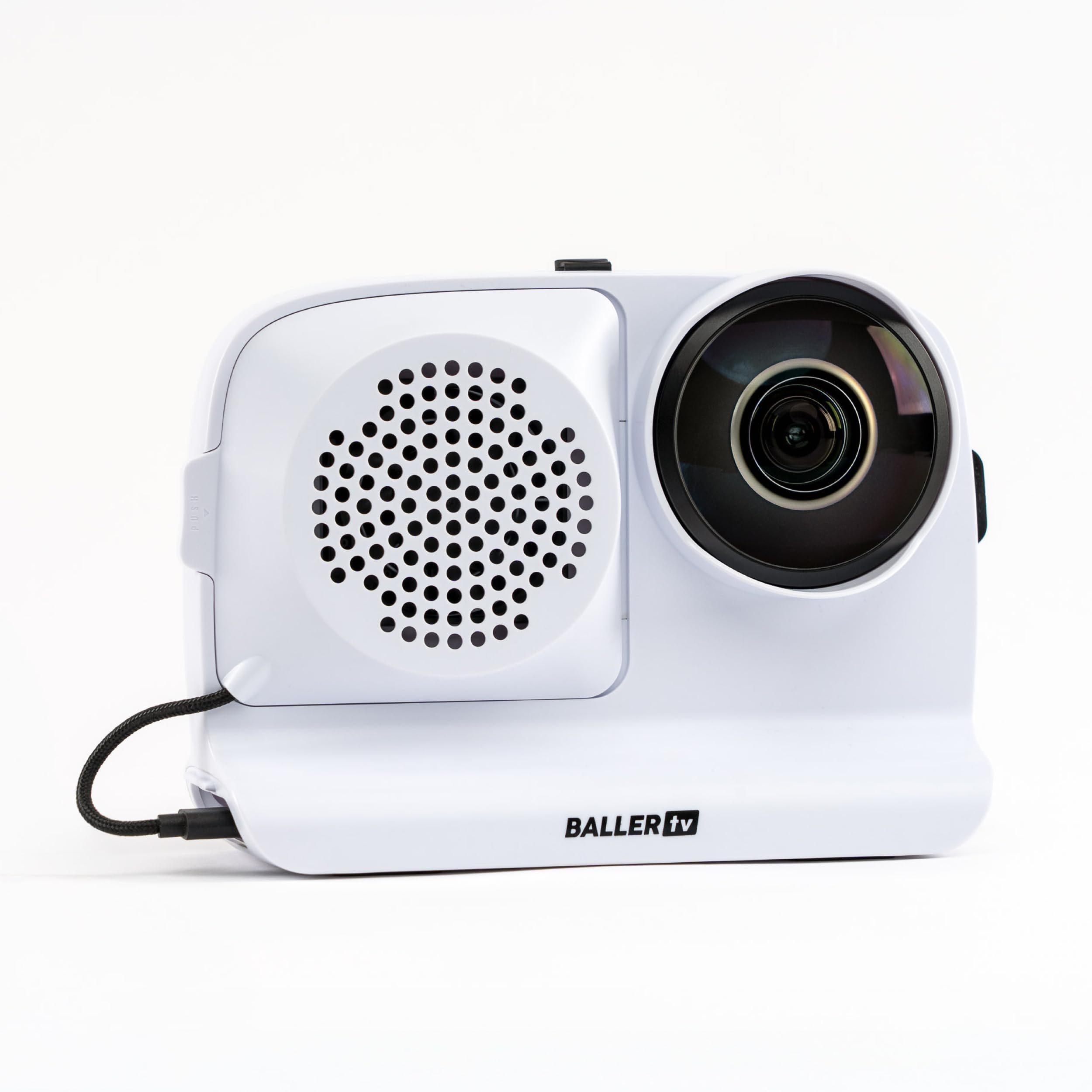
The BallerCam BC-Series is purpose-built for team sports, and it shows in every detail. Its 180° ultra-wide lens captures the entire volleyball court in one frame, eliminating the need to pan the camera manually. The AI tracking is trained on over 2 million games and intelligently follows the ball and key action, not just a single player, making it ideal for recording the flow of a match without constant adjustment.
Setup is remarkably simple: mount your iPhone on a tripod, attach the BallerCam lens and battery unit, and open the app. The system handles the rest, from auto-tracking to live streaming. The included 10,000 mAh battery can last through 2-3 full games, and the 20 hours of free cloud storage means you don’t need to worry about filling up your phone’s memory mid-tournament.
Customer reviews consistently praise the tracking accuracy and the ease of creating highlight clips directly from the app. While the tracking is about 95% accurate and manual scoring is required for stats, it remains the most reliable and user-friendly hands-free solution for volleyball parents and coaches who want to focus on watching the game, not operating a camera.
Why it’s great
- True 180° full-field view never misses sideline-to-sideline action
- Long-lasting 10,000 mAh battery powers multiple games
- No subscription required with free cloud storage and live streaming
Good to know
- Requires a compatible iPhone to function
- Tracking may occasionally lose the ball during very fast cross-court plays
2. XbotGo Falcon
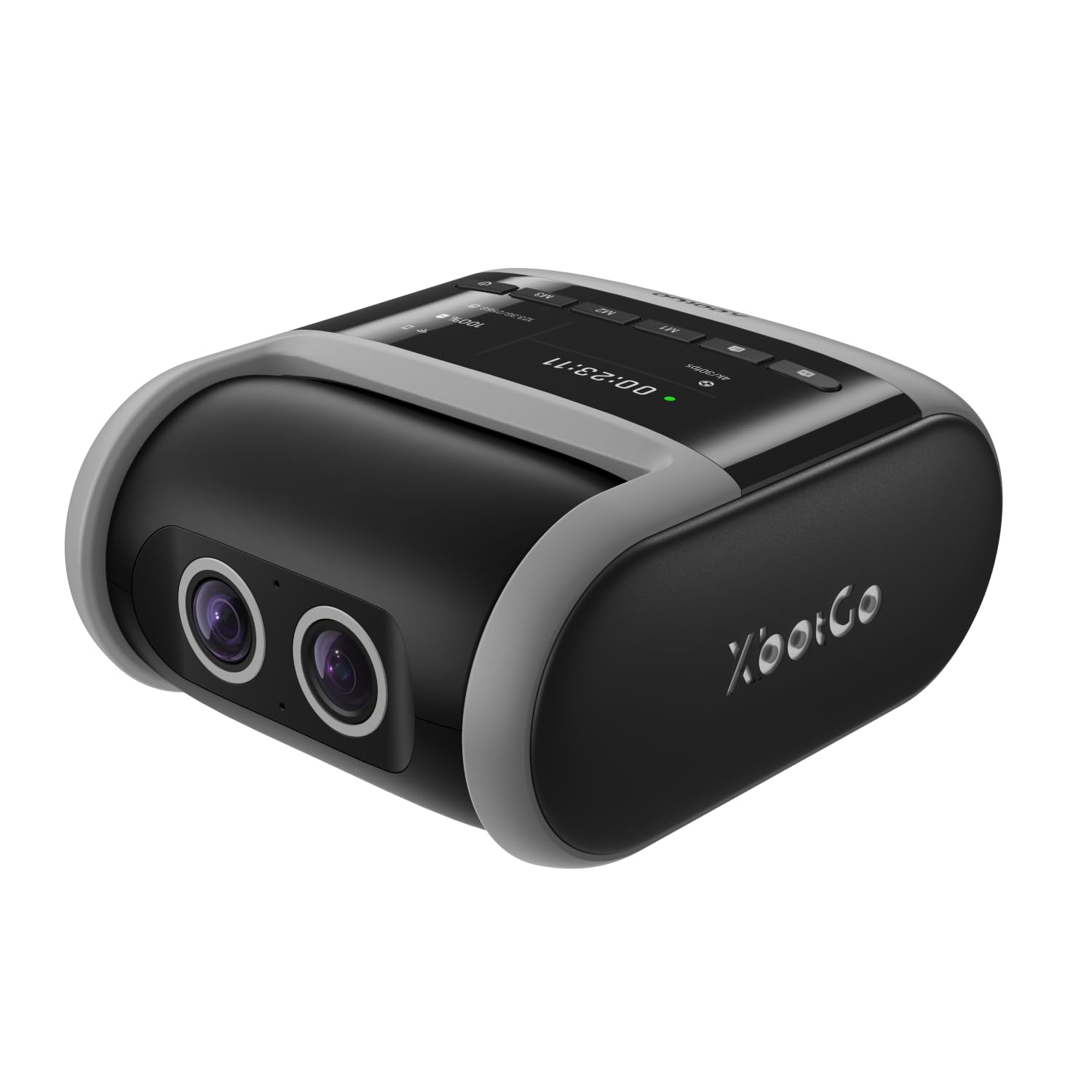
The XbotGo Falcon is a dedicated all-in-one sports recorder that combines an 8-core processor with a dual-lens system for AI-powered auto tracking. It is designed to function like a robotic cameraman, automatically following the players and the ball during soccer, basketball, and volleyball matches. This sideline-ready device records in crisp 4K and features an IPX5 water-resistant rating for real-world outdoor or gym conditions.
Setting up the Falcon is straightforward—it uses a standard 1/4-inch tripod mount, so you can bring your own heavy-duty tripod for stable footage. The integrated Wi-Fi enables instant live streaming, and there is no subscription fee required for the core tracking features. This makes it a fantastic, one-time purchase for a team or league that wants a dedicated recording solution without monthly costs.
Users report excellent picture quality and reliable tracking, with the camera’s gimbal providing smooth panning. The main trade-off is its weight—it is heavier than a standard action camera, so a sturdy tripod is mandatory. Additionally, the live stream quality can sometimes be pixelated depending on your Wi-Fi network, but the local recording is sharp and reliable for game review and highlight creation.
Why it’s great
- No subscription fees—full AI tracking out of the box
- IPX5 water-resistant for use in various weather conditions
- Sharp 4K recording with smooth gimbal-based panning
Good to know
- Heavier than standard action cameras; needs a sturdy tripod
- Battery not included; requires microSD card for recording
3. DJI Osmo Pocket 3 Creator Combo

The DJI Osmo Pocket 3 packs a professional-grade 1-inch CMOS sensor into a pocket-sized gimbal, offering incredible 4K resolution at 120fps. This high frame rate is perfect for capturing those split-second moments in volleyball—like the exact contact point of a spike or the hand deflection on a block—and playing them back in smooth slow motion. The 3-axis mechanical stabilization ensures that even if you’re holding the camera on the sideline, your footage remains butter-smooth.
ActiveTrack 6.0 is a standout feature for volleyball recording. Set the Pocket 3 on a mini tripod, select a player, and the camera will automatically keep them center frame as they move around the court. The rotating 2-inch touchscreen makes it easy to switch between horizontal and vertical orientations for social media highlights without needing to remount the camera.
The Creator Combo bundles essential accessories like the DJI Mic 2 transmitter, a battery handle, and a wide-angle lens, making it a complete package for capturing game audio and wider shots. The 1-inch sensor excels in lower-light gymnasiums, producing clean, detailed footage where smaller sensors would introduce grain. It is the best compact camera for filmmakers who want serious stabilization and frame rate options.
Why it’s great
- Large 1-inch CMOS sensor provides excellent low-light gym performance
- Records 4K at 120fps for high-quality slow-motion replay
- ActiveTrack 6.0 reliably follows a moving subject
Good to know
- Fixed lens limits optical zoom range
- Battery life is 166 minutes; longer games may require the battery handle
4. Insta360 X5 Essentials Bundle

The Insta360 X5 changes the game by recording everything in 8K 360-degree video. Place it at center court or on the sideline, and it captures every angle simultaneously. You don’t need to decide where to point the camera—it sees the entire gym. After the game, you reframe the footage in the Insta360 app, pulling out standard 16:9 clips that follow the action as if you had multiple camera operators.
Dual 1/1.28-inch sensors and a new triple AI chip design deliver excellent image quality, even in challenging gym lighting. The FlowState Stabilization and 360-degree Horizon Lock keep the footage level, even if the camera gets bumped. A major upgrade for volleyball is the replaceable lens design—scratches or impacts on the lens are no longer a death sentence for the camera.
The included 114cm invisible selfie stick lets you capture a third-person perspective, and the 208-minute battery life comfortably covers a whole tournament day. The ability to export without traditional editing using the AI-powered app is a huge time-saver for coaches and parents who just want to share highlights immediately. It is the ultimate set-and-forget option for capturing every moment of the game from every angle.
Why it’s great
- Captures 360-degree video so you never miss an out-of-frame play
- Superb 208-minute battery life for full-day tournaments
- Replaceable lenses offer durability and easy repair
Good to know
- Requires editing (reframing) to produce standard video clips
- Stitching lines may be visible on fast-moving objects at close range
5. GoPro HERO13 Black

While traditionally an action camera, the GoPro HERO13 Black is a surprisingly capable tool for recording volleyball, especially when mounted behind the end line or on the bleachers. Its 5.3K60 video resolution delivers 91% more detail than 4K, allowing you to crop into specific plays during editing without losing sharpness. The HyperSmooth stabilization is legendary, keeping the shot steady even if the mount vibrates from crowd noise or wind.
The Burst Slo-Mo feature is its secret weapon for volleyball. It can record clips at up to 13x normal speed, letting you see the rotation of the ball on a serve or the exact footwork of a hitter approach. This makes it an excellent tool for detailed technique analysis. It is also completely waterproof down to 33 feet, so rain or a spilled water bottle is no concern.
The Enduro battery provides solid battery life for its size, and the HERO13 Black is compatible with HB-Series lenses like the Ultra Wide Lens Mod, which can help capture a wider court view. Its rugged build is a clear advantage over more delicate camcorders, making it a reliable choice for parents who need a camera that can handle being tossed in a gym bag and used in any environment.
Why it’s great
- Extreme Burst Slo-Mo (13x) perfect for play analysis
- 5.3K resolution allows for post-production cropping
- Rugged, waterproof, and very durable design
Good to know
- Small sensor struggles more in dim gym lighting than larger sensors
- Battery life is about 79 minutes at high settings
6. DJI Osmo Action 6 Essential Combo
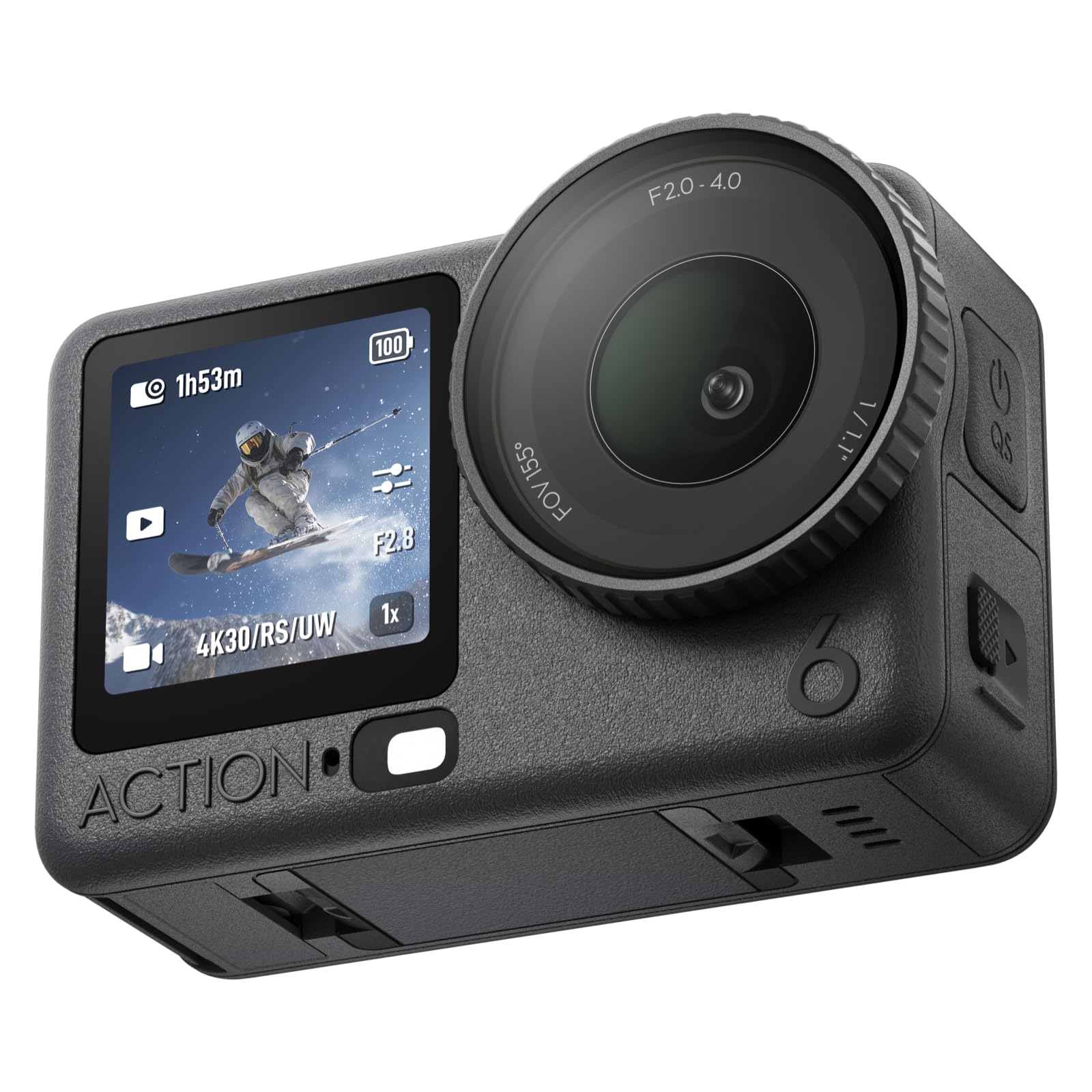
The DJI Osmo Action 6 pushes the envelope with an 8K resolution and a variable aperture (f/2.0 to f/4.0), giving you direct control over exposure in changing gym lighting. The 1/1.1-inch square sensor is larger than most action cameras, which directly translates to better low-light performance and less noise in dimmer gyms. This makes it a strong competitor to the GoPro for volleyball, especially for evening matches.
Rocksteady 3.0 stabilization ensures sideline handheld shots are smooth, and the 360-degree HorizonSteady keeps the horizon level even if the camera tilts. The 50GB of built-in storage is a generous bonus, allowing you to start recording immediately without needing a microSD card. The cold-resistant battery design is a minor plus, but the real highlight is the 4-hour battery life, which can cover a long practice or multiple matches without a recharge.
Hands-free operation via gesture and voice control is surprisingly useful in a coaching context—you can start or stop recording without touching the camera. While 8K video is overkill for most users, it provides incredible cropping flexibility in post-production. For those who want the latest sensor technology and the best image quality from a rugged action camera form factor, the Action 6 is the top choice.
Why it’s great
- Variable aperture provides superior control in inconsistent indoor lighting
- 50GB built-in storage means you can record immediately
- 4-hour battery life covers long tournaments
Good to know
- 8K video consumes massive storage space quickly
- Essential Combo does not include an extension rod or extra batteries
7. Canon VIXIA HF G70

The Canon VIXIA HF G70 is a traditional camcorder built for recording events, and it excels at volleyball with its powerful 20x optical zoom. This zoom allows you to sit in the back row of the bleachers and still get a tight, clear shot of a hitter at the net. Unlike digital zoom, optical zoom maintains full 4K resolution at every focal length, ensuring your close-ups are sharp and detailed.
One of its most useful features for volleyball coaches is the On-Screen Display (OSD) Time Stamp Recording. You can permanently embed the date, time, and even timecode directly onto the video file. This is invaluable for reviewing game footage against specific match times or scouting reports. The Hybrid AF system with face detection ensures that players remain in focus as they move around the court.
The built-in UVC livestreaming capability lets you stream HD video directly to a computer via USB, which is a nice bonus for sharing games live. However, like many camcorders with a small 1/2.3-inch sensor, its low-light performance is its weakest link—footage in darker gyms will show noticeable noise. It is best suited for well-lit gyms where the advantage of optical zoom and the time stamp feature are most impactful.
Why it’s great
- 20x optical zoom brings distant court action up close
- OSD Time Stamp directly embeds date/time on footage
- UVC livestreaming for easy PC setup
Good to know
- Small 1/2.3-inch sensor struggles in low-light gyms
- No XLR audio inputs for professional microphones
8. Canon XA70 Pro

The Canon XA70 Pro is a significant step up, designed for semi-professional and professional videographers who need reliable 4K recording with professional audio capabilities. Its 1-inch CMOS sensor captures far superior low-light footage than the HF G70, making it a much better choice for dimly lit gyms. Pair that with a 15x optical zoom lens and you have a powerful tool for capturing sharp, detailed volleyball from any seat in the house.
Dual SD card slots provide relay and simultaneous recording, ensuring you never miss a moment due to a full card—a critical feature for long tournaments. The detachable handle unit includes two XLR inputs with independent controls, allowing you to connect professional shotgun or lavalier microphones for capturing clear coach instructions or court sounds. The 3.5-inch touchscreen and OLED EVF give you precise framing control.
This camcorder supports UVC livestreaming via USB-C, making it easy to broadcast games in HD to a computer. While it is a significant investment, the XA70 Pro offers the reliability, image quality, and audio flexibility that a serious program or league needs to produce high-quality game film and live broadcasts. It is the camera you buy when you need professional-grade results every time.
Why it’s great
- 1-inch CMOS sensor delivers excellent low-light performance in gyms
- XLR audio inputs for professional microphone connectivity
- Dual SD card slots for relay recording without interruption
Good to know
- Monitor resolution is not as sharp as its price suggests
- ND filter performance is limited to three fixed stops
9. Panasonic HC-X2

The Panasonic HC-X2 is the most professional option on this list, built for broadcast and high-end production work. It features a 1-inch MOS sensor combined with a 20x optical zoom lens (starting at a wide 24.5mm), offering incredible flexibility. The 4K 60p recording in 4:2:2 10-bit color depth provides the color grading flexibility that professional editors demand, making it easy to match footage from multiple cameras or adjust for difficult gym lighting.
This camcorder is designed for a real production workflow. It includes simultaneous SDI and HDMI outputs, allowing you to send a clean feed to a live switcher while simultaneously recording internally. Ethernet connectivity provides a reliable wired live streaming option, far more stable than Wi-Fi for broadcasting matches. The 5-Axis Hybrid O.I.S. is excellent at canceling out low-frequency vibrations from a tripod on a bleacher platform.
The V-Log and HLG Gamma modes support HDR production, and the triple manual ring (focus, zoom, iris) gives a videographer precise, tactile control. It is the most expensive camera here, but it is also the most capable—a true workhorse for a university athletic department, a professional sports production company, or a club team that wants to produce broadcast-quality streams and film.
Why it’s great
- Professional 4:2:2 10-bit color for advanced post-production
- Simultaneous SDI/HDMI output for live switching
- Ethernet connectivity for reliable, stable live streaming
Good to know
- Highest investment on this list, best for serious production budgets
- Battery not included in the box
FAQ
Is 4K necessary for recording a volleyball game?
What is the best way to mount a camera for a volleyball match?
Can I use a standard action camera for volleyball?
Final Thoughts: The Verdict
For most users, the best camera to record volleyball games is the BallerCam BC-Series because its 180-degree lens and AI ball tracking capture the entire court without any manual intervention, requiring only an iPhone to operate. If you want dedicated all-in-one hardware with no phone required, grab the XbotGo Falcon. And for the ultimate in flexibility and post-game reframing, nothing beats the Insta360 X5.