
Our readers keep the lights on and my morning glass full of iced black tea. As an Amazon Associate, I earn from qualifying purchases.
Specs are compiled from manufacturer listings and verified buyer reviews and can change over time — please confirm the key details on the product page before buying.
A flip screen lets you see yourself while you record and frame a low-angle shot without lying on the ground. Sensor size, lens mount, and autofocus speed only matter once the screen can swing around to face you. This guide covers nine cameras where the display genuinely rotates or flips outward, not just tilts a few degrees, and it sorts them by what each one is honestly good at.
I’m Min — the founder and writer behind Gadgets Feed. This guide is built by comparing the manufacturers’ published specifications and the patterns across verified customer reviews, so you get each pick’s real strengths and trade-offs instead of marketing spin.
You will see full-frame bodies that shoot in near darkness, compact vlogging rigs that fit a pocket, and one superzoom that reaches across a stadium. Every pick below has an articulating screen, ranked by real-world fit. If you want the short version, the Canon EOS R6 Mark II is the strongest all-rounder and the best camera with flip screen for most buyers.
Our Picks at a Glance


How To Choose The Best Camera With Flip Screen
Start with the hinge, not the sensor. A flip screen has to swing clear of the body so it faces you on a tripod, on a gimbal, or in your own hand. Some screens only tilt up and down, which is useless the moment you want to check your framing while you talk to the lens. Every camera here passes that test, so from there you are choosing on sensor, autofocus, and how much weight you are willing to carry.
Sensor size decides your low-light ceiling
A full-frame sensor is physically larger, so it gathers more light and stays cleaner when the room gets dim. That matters if you film indoors at night or shoot events without extra lights. A smaller sensor keeps the body and the lenses lighter and cheaper, and in good daylight the difference narrows fast. If most of your shooting happens in daylight or with a window nearby, a compact-sensor camera can serve you better than a heavy full-frame kit you leave at home.
Autofocus subject detection is the spec that saves usable footage
Modern autofocus does more than lock onto a face. It can hold onto an eye, follow a pet, or track a vehicle moving across the frame while you film. This is the feature that decides how many of your clips come out sharp with no extra effort. Buyers in this category lean heavily on it, which is why the strongest picks here pair fast tracking with a screen you can see while the camera does the work.
Battery life and card type decide whether you finish the shoot
A camera that lasts through a full event without a swap is worth more than one with a slightly better sensor and a dying cell. Check the rated battery numbers and whether a spare is included. Also look at the card the camera accepts, because recording in high bit-depth or high frame rates needs a fast card, and a slow one will stall your recording at the worst moment.
Quick Comparison
| Model | Best For | Sensor | Video Top Spec | Mount | Amazon |
|---|---|---|---|---|---|
| Canon EOS R6 Mark II★ Best Overall | All-round stills and video | 24.2MP full-frame | 4K 60p / 6K oversampled | Canon RF | Amazon |
| Insta360 Ace Pro 2 Xplorer BundleTop Performer | Action and travel footage | 33MP, 1/1.3″ sensor | 8K 30fps / 4K 60fps HDR | Fixed lens | Amazon |
| Panasonic LUMIX S5Cinema Value | Cinematic video on a budget | Full-frame | 4K 60p 10-bit | Leica L | Amazon |
| Fujifilm X-S20 | Travel and colour straight out of camera | 26.1MP APS-C | 6.2K 30p 4:2:2 10-bit | Fujifilm X | Amazon |
| NIkon COOLPIX P1000 | Long-distance wildlife and sports | 16MP, 1/2.3″ sensor | 4K Ultra HD | Fixed lens | Amazon |
| Sony ZV-E10 Bundle | First vlogging kit, all included | 24.2MP APS-C | 4K 30p / 1080p 120p | Sony E | Amazon |
| Nikon Z 30 with 16-50mm Lens | Lightweight daily carry | APS-C | 4K 30p / 1080p 60p | Nikon Z | Amazon |
| Canon PowerShot V10 | Pocket vlogging with a stand | 15.2MP, 1-inch sensor | 4K 30p / 1080p 60p | Fixed 19mm lens | Amazon |
| 5K Video Camera Camcorder | Budget starter and family footage | 64MP stills | 5K 20fps / 4K 60fps | Fixed lens | Amazon |
In‑Depth Reviews
1. Canon EOS R6 Mark II Mirrorless Camera (Body Only)
Our pick — over 4.5★ from 650+ verified ratings; the strongest balance of quality and price.
The full-frame workhorse whose flip screen and tracking focus make hard shoots feel routine.
This is the pick for anyone who films and shoots in the same session and refuses to accept a soft frame. A 24.2 effective megapixel full-frame sensor (the big imaging chip that decides how much light you capture) sits behind the lens, and a DIGIC X processor (the engine that cleans up noise and drives stabilization) handles the heavy lifting. The screen is a 3.0-inch vari-angle touchscreen at 1.62 million dots, which means it swings out and rotates so you can frame yourself on a tripod or shoot from waist height without craning. There is also a 0.5-inch OLED viewfinder at 3.69 million dots with a 120 fps refresh rate, giving you a bright, smooth preview when you would rather not use the rear screen.
Speed is where it separates from cheaper bodies. Electronic shutter bursts reach up to 40 fps at 20MP, so a split-second expression change or a sprinting athlete is no longer a gamble. Autofocus locks onto a person’s head, face, or either eye, and it also recognizes horses, trains, and aircraft, plus it can pick the subject type for you instead of making you switch modes mid-shoot. Video is just as sorted: uncropped 4K up to 60 fps oversampled from 6K, Full-HD at up to 180 fps for slow motion, and up to 6 hours of continuous Full-HD recording without overheating. Compared with the Nikon Z 30 lower down this list, which tops out at 4K 30p, this camera gives you the higher frame rates that make slow motion and movement look smooth.
What owners keep coming back to is the overall quality of the thing — the build, the images, and the way it behaves under pressure. Low-light results get the most love, with night shots coming back bright and clean rather than grainy. One owner shot an 8-hour wedding on a single battery and still packed a spare, so budget for a second cell on long event days. The recurring note is battery drain compared with an older DSLR, since you can shoot a few hundred frames where an older body managed days on a charge. The honest framework: this body is sold on its own, so budget for a lens if the Canon RF mount is new to you, though an adapter lets older Canon glass fit. The screen also flips out when storing, so a tempered-glass protector is a sensible add-on.
full-frame speed king
- 24.2MP full-frame sensor with Dual Pixel CMOS AF for clean low-light stills and video
- 40 fps electronic burst and 6K-oversampled 4K 60p video without overheating
- Eye, face, body, and animal detection plus auto subject selection
- Vari-angle 1.62 million-dot touchscreen and a 3.69 million-dot OLED viewfinder
premium lens cost
- Sold as a body only, so a lens is a separate purchase
- Battery drains faster than older DSLRs — a spare is smart for long events
pro body choice: you want one body that handles professional stills and video, with autofocus that keeps up with moving subjects.
budget stretcher: you want a kit lens and a body in a single box, or you rarely shoot in low light.
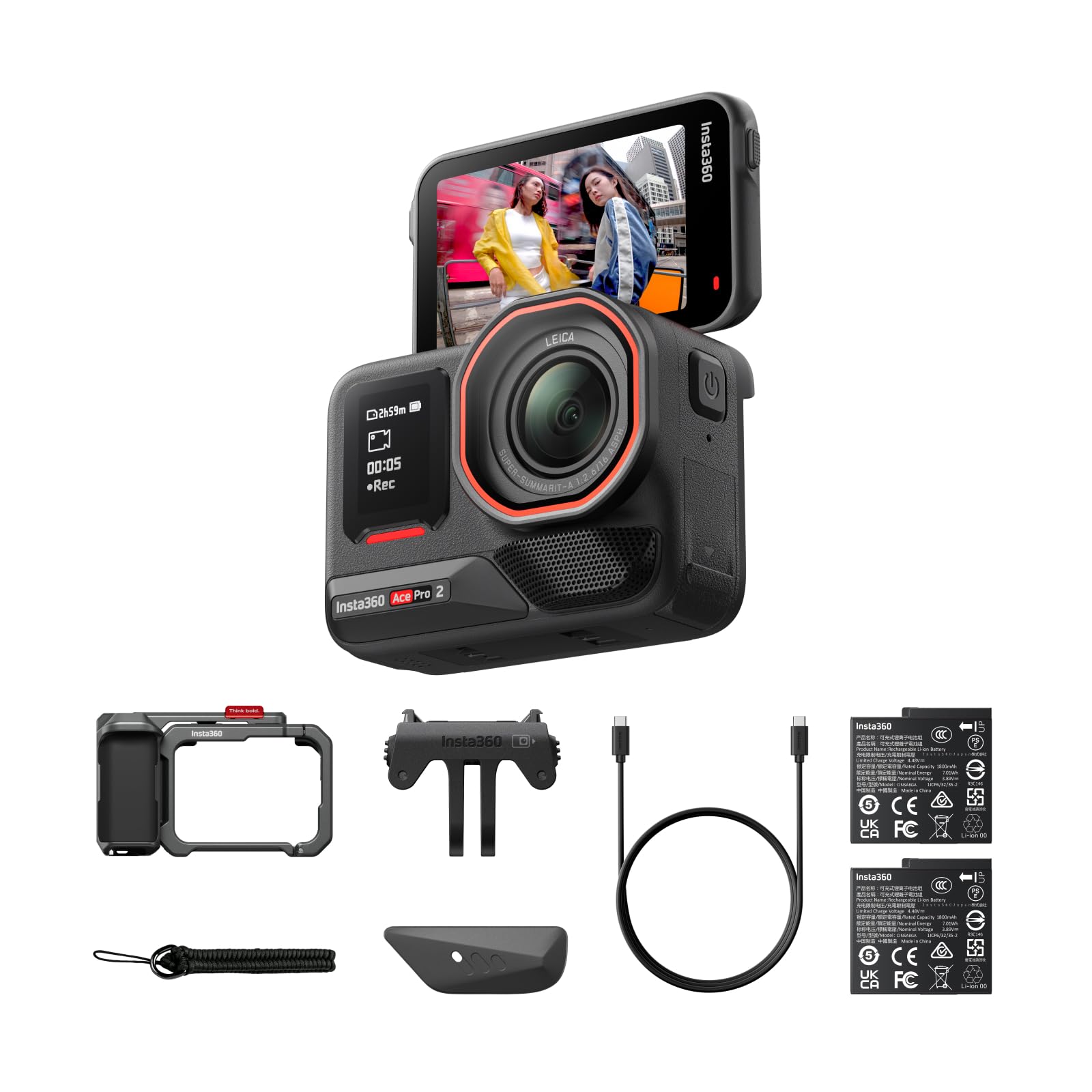
2. Insta360 Ace Pro 2 Xplorer Bundle Dual Battery
Rugged action footage with Leica optics and a screen that flips up and survives the ride.
If your filming happens on a bike, a slope, or in the water, this is the body that was built for it. The 2.5-inch flip touchscreen swings up so you can check your framing while the camera is mounted on a helmet or a bar, and the hinge is rated for durability so it holds up to repeated flipping. Underneath sits a 1/1.3-inch sensor (a relatively large imaging chip for this class) paired with Leica optics and a dual AI chip setup: one dedicated Pro Imaging Chip for noise reduction and one 5nm AI Chip for processing. The headline capture specs are 8K at 30fps and 4K at 60fps with Active HDR, plus 13.5 stops of dynamic range, which is the measure of how much detail survives in the brightest and darkest parts of one frame.
Low light is the other reason people reach for this over a cheaper action cam. PureVideo mode cuts noise with AI and brightens dark scenes, and it works up to 4K at 60fps, so night rides and evening vlogs come back usable instead of grainy. Leica color profiles are baked in, so footage looks finished without a grading session. The 157-degree wide-angle lens with MegaView framing grabs more of the scene than a standard action lens. It is waterproof down to 39 feet (12m) and rated to work in temperatures as cold as -4F (-20C), which covers diving, winter sports, and everything wet or cold in between. Streamlined 4K 60fps Active HDR capture and that wide field of view work together for vlog-style footage where you are in the frame and the surroundings still read clearly.
The bundle side is what makes this version worth considering over the base camera. You get two batteries, a grip for comfort, a utility frame and wrist strap for protection, a wind guard, a mic cap, a cold shoe shutter button, and a standard mount — enough to shoot from the start without hunting for accessories. Buyers report the picture and video quality land right where they expect for the price, and the stabilization is smooth through walking, driving, and outdoor motion. The test is the audio and the battery: the recurring honest note is that performance and battery life come in mixed, so a long cold shoot is where the spare battery in this bundle earns its place.
dual battery action: Best at the extremes The combination of 8K 30fps capture, 4K 60fps Active HDR, and 13.5 stops of dynamic range puts this camera ahead of the fixed-lens camcorders further down the list for any shooting that happens outdoors or in poor light.
bundle bulk: The trade-off to weigh The highly positive camera quality feedback still comes with mixed notes on battery and performance, so treat the second battery as part of the design, not a spare.
adventure ready: you film rides, dives, and travel footage and want a flip screen plus stabilization that keeps up.
overkill for casual: you want a single device that also does serious still photography work.
3. Panasonic LUMIX S5 Full Frame Mirrorless Camera
A full-frame cinema body for filmmakers who would rather pull focus than trust autofocus.
Here is the pick for the person shooting scripted and controlled footage. Full-frame capture in 4K 60p at 10-bit depth (more colour data per frame, so gradients and skies hold together) plus FHD slow motion at 180fps and 4:3 anamorphic support give you footage that stands up in editing. A 96MP High Resolution mode and V-Log with 14-plus stops of dynamic range round out the toolkit. The vari-angle screen flips to face you for framing, and the 5-axis Dual I.S. 2 stabilization holds shots steady at the equivalent of 6.5 stops of slower shutter speed — which in plain terms means you can shoot handheld in dimmer light before blur creeps in.
Build quality is the thing buyers keep praising, tied to image quality and a wide array of affordable lens options in the Leica L mount. Improved autofocus detects the head as well as the eyes, face, and body, so it can still hold a subject while you work. The honest split in this camera’s feedback is important to understand before you pick it: autofocus comes back mixed, and buyers focused on solo vlogging with crop-into-frame tracking find it falls short of a phone’s smarts. The people who love it are the ones shooting with manual focus on purpose. If you are a solo creator who needs the camera to chase you around a room, the Sony or Nikon picks lower down suit you better; if you are a filmmaker who wants full-frame detail, this one rewards that choice, especially against the Nikon Z 5-class bodies it matches or beats in low light and autofocus at this price point.
Battery life also splits opinion, running around an hour and a half on 10-bit video, so plan a spare and a workflow around it. The charger that ships in the box underwhelms, and the USB-C port will not power the camera while it is actively recording, so plan for offline charging. Panasonic’s own reviewers appreciate that the body stays warm rather than overheating even at 90F, and that the LCD and colour profiles are customizable. There is a Live View Composite mode that builds one image from several live exposures, useful for fireworks or a starry sky, and the grip is worth trying in hand before you commit since a few find it uncomfortable over long shoots.
full-frame video value: The buyer shift to notice Reviews that come from controlled shoots praise it without reservation; reviews that expect it to track a moving vlogger do not. Decide which person you are before buying.
hybrid creator pick: a filmmaker who lights a scene, focuses manually, and wants full-frame video quality at a fair price.
sports shooter miss: you need autofocus to follow you around and you would rather not plan the shoots.
4. Fujifilm X-S20 Mirrorless Digital Camera XC15-45mm Lens Kit

The travel body that hands you finished-looking photos the moment you press the shutter.
Portability is the opening argument. At 491g (1.08 lb) the X-S20 is light enough to carry all day, and a deep handgrip keeps it steady even with a bigger lens mounted. The 180-degree vari-angle touchscreen swings around for selfie-style framing and odd angles, which is the whole reason it sits on this list. Inside, a 26.1-megapixel X-Trans CMOS 4 sensor is paired with the X-Processor 5 engine — the first time that processor has appeared in an X-S series body — pushing bursts up to 20fps in electronic shutter mode and open up the same subject-detection autofocus as Fujifilm’s range-topping X-H2S. Five-axis in-body stabilization offers up to seven stops of compensation, a step up from the previous system, so handheld video and dim rooms stop being a worry.
Video is genuinely strong for a travel camera. It records internally up to 6.2K at 30p in 4:2:2 10-bit colour, streams 4K 60p straight over USB-C, and a 3.5mm jack takes the accessories you already own. A new Vlog mode lets you defocus a cluttered background with a tap, which is handy when you are recording in a busy space. The battery upgrade is worth calling out: the included NP-W235 battery delivers 750 frames in Normal mode, or up to 800 in economy mode, more than double what the previous model managed. Compared with the Canon PowerShot V10 further down, which is built for short vlogging bursts, this body is the one that will keep running through a full day of travel shooting.
The reasons people hesitate are honest and specific. There is no weather sealing, so rain and spray are your problem to manage, and there is a single SD card slot rather than two. A few owners find the film and command dials a little imprecise and notice occasional autofocus misses, and the electronic viewfinder and rear LCD are described as only acceptable rather than excellent. But the love here is real: users rave about the film simulations and the colour straight out of camera, with photos described as vibrant and crisp before any editing. If clean JPEGs matter more to you than two card slots, this is the friendly, compact option in this lineup.
light trip rig: someone who wants great colour straight out of camera and a light bag.
pro glass need: you shoot in rain or snow regularly, or you need dual card slots for redundancy.
5. NIkon COOLPIX P1000 Superzoom Digital Camera
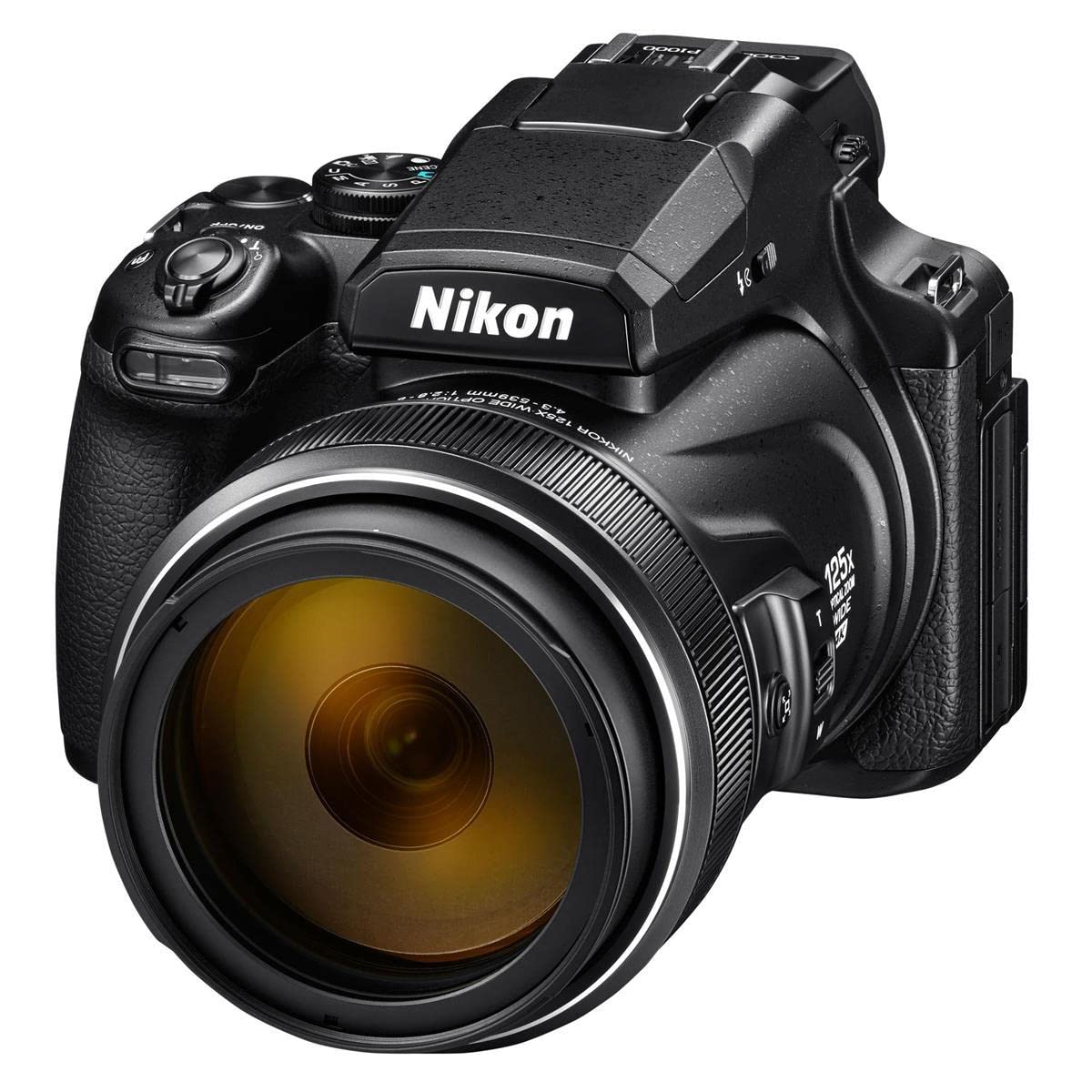
A 3000mm reach in one fixed lens, and a rotating screen so you can frame from low or odd angles.
Nobody buys this camera for the sensor. They buy it for the 3000 millimeter optical zoom, the most powerful lens ever put on a Nikon COOLPIX body, which lets a birder standing on a path pull a heron out of the reeds across a lake. The 3.2-inch vari-angle screen rotates so you can compose a long-zoom shot from a comfortable position instead of squinting at the back of the camera, and the electronic viewfinder is a 0.39-inch OLED at around 2359k dots with diopter adjustment for glasses wearers. Stabilization is dual-detected and works via lens shift for stills and lens shift plus electronic VR for movies, which is what makes handholding a long telephoto even possible.
Stills are 16 megapixels with RAW capture, and video goes up to 4K Ultra HD with HDMI out, stereo sound, and an accessory hot shoe. You get full manual controls alongside easy auto shooting, vibration reduction, time-lapse and super-lapse modes, and a top continuous speed of about 7 frames per second at full resolution. The focus range runs from roughly one foot at the wide end to infinity, with a macro close-up mode down to about 0.4 inches at the wide-angle position. The recurring, well-earned warning is that the tiny 1/2.3-inch sensor (the small imaging chip that limits how much light it captures) struggles in low light, so evening shooting means pushing ISO into the 3200 to 6400 range or accepting softness.
Where the praise lands hardest is the zoom itself, backed by strong image quality when the light is on your side. Owners describe it as a superb tool for casual wildlife photography that identifies subjects far beyond what binoculars reach, and the manual focus ring is genuinely useful at long zoom. The size is the real cost: at roughly 3.3 lb it is heavy, and owners describe it as bulkier than a mirrorless body, with a strap that lets it tilt downward and a tripod balance point that needs a plate to behave. Handheld work stays good out to around 1500mm, but beyond that, shake and heat shimmer start to soften the frame. It is a niche tool for the person who wants reach above all, not a general walk-around camera.
125x zoom reach: The one thing it does better than everything here No other camera in this list covers the distance this lens does, and the rotating screen makes that huge reach practical to aim.
low-light struggle: Know the limit going in Its tiny sensor means dusk and night shots need high ISO, and the bulk means it wants a tripod for the longest reaches.
wildlife distance tool: wildlife, birds, and stadium shots where a subject is simply too far away for any other camera here.
pocket camera seeker: you want something light to carry daily or shoot video after dark.
6. Sony ZV-E10 Mirrorless Camera Bundle (Renewed)

A starter vlog kit that puts the screen out front and the accessories in the same box.
This is the one to look at if you want to start filming yourself without buying anything else. The 3.0-inch 921.6k-dot touchscreen has a side flip-out design, so the display swings to the side and faces you, which is exactly the framing setup a one-person creator needs. The 24.2MP APS-C Exmor CMOS sensor sits behind it, with the larger sensor size of the APS-C format giving noticeably better image quality than a phone. A directional 3-capsule microphone is built into the top plate and points forward, so your voice comes through more clearly than the wide pickup on a phone or a cheaper camcorder, and a dedicated windscreen is included for cleaner outdoor audio.
The bundle is broad: a 64GB Extreme PRO memory card, a card reader, a soft case, a flexible tripod, a memory card wallet, a lens cap keeper, and a cleaning kit come with the camera and the 16-50mm lens. That means the wallet and the kit both arrive complete. Autofocus uses 425 points, so it can hold a face with real-time eye AF and tracking, and there are dedicated Background Defocus and Product Showcase modes built for single-person content. Video runs up to UHD 4K at 30p and Full HD at 120p for slow motion, with a battery rated at 1020mAh and both a headphone and a microphone port for better control over what you capture.
The camera ships as a renewed unit, so it has been professionally inspected, tested, and cleaned — a genuine path to a lower entry point if a brand-new body is more than you want to spend, and the buyers here validate the approach: reviews note the quality stands well against a more expensive brand and that the bundle is complete for a beginner. Because there are no separate reviews beyond the short ones, treat the lineup as an early-adopter pick rather than one with years of feedback. The follow-up question buyers ask is whether the single 16-50mm lens limits you — it does cover wide to short telephoto, and the Sony E mount means you can add lenses later as your skills grow.
budget vlog starter: Least setup required With card, reader, case, tripod, and the lens all in one kit, you can start filming the day it arrives.
renewed condition: The honest trade The lens is the wide-to-short-telephoto zoom from the box, and the body arrives renewed, not factory-new.
first camera buy: you want a selfie-oriented, flip-out screen and every accessory in one order.
warranty worrier: you would rather buy a brand-new body and add parts gradually.
7. Nikon Z 30 with Wide-Angle Zoom Lens

A light, friendly mirrorless body built for creators who stream as much as they shoot.
Nikon designed the Z 30 around the person who talks to the camera. The flip-out touchscreen selfie monitor lets you frame yourself without guesswork, and there is a red REC light on the front so you always know when the camera is rolling. A built-in stereo microphone with adjustable sensitivity handles your voice, and a smartphone app lets you run the camera over Wi-Fi from a compatible phone. It records in 4K resolution with autofocus that tracks eyes for both people and pets, and the background-defocus look is easy to reach when you want a subject to stand out. Bluetooth and Wi-Fi connectivity come standard, and the body is built to be carried — buyers describe it as a lightweight, compact kit that replaces heavier DSLR gear.
For live streaming, the Z 30 is genuinely plug and play. It works as a webcam over USB-C at a smooth Full HD 60p, or streams 4K 30p over HDMI, and it can run on constant power over USB-C during long sessions. The 16-50mm wide-angle zoom kit lens covers a practical range, and the lens mount means you can move up through Nikon’s line of NIKKOR Z lenses later. Autofocus uses 209 points with contrast, hybrid, and phase detection, and the 4K video quality is described as crisp and vibrant by the people using it.
The honest catch to weigh is the design choice Nikon made: there is no viewfinder and no built-in image stabilization in the body. If you are used to holding a DSLR to your eye, the screen-only framing takes an adjustment, though the rear screen does show your exposure as you change it. A few owners also report battery charging quirks, and one unit arrived non-functional — worth knowing, though the camera’s overall reputation is positive. Weighing the trade, the upside is real: the body runs unlimited video without the 30-minute overheat cutoff that older compact mirrorless bodies suffered from, so a long stream or a long take does not force a break.
wide-angle creator kit
- Flip-out selfie monitor, red REC light, and an adjustable stereo mic
- 4K shooting with eye tracking for people and pets
- USB-C powers it while you record, plus webcam and HDMI streaming
- Compact and light enough to carry for a full day of filming
crop sensor limits
- No viewfinder, so framing is screen-only
- No in-body stabilization on the camera itself
vlogger starter: vloggers and streamers who want a light body, an easy app, and reliable eye-tracking autofocus.
full-frame loyalist: if a viewfinder or built-in stabilization is a must-have for your style.
8. Canon PowerShot V10 Compact Vlogging Camera

A pocket vlogging camera with a screen that rolls out, a built-in stand, and one clear purpose.
This camera is the size of a smartphone and built to be used like one. A 15.2-megapixel 1-inch back-illuminated CMOS sensor handles the low-light side, and a retractable front-facing screen rolls out when you need to watch yourself and tucks away when you don’t. That power is what makes it a genuine flip-screen pick rather than a tilting display. The fixed 19mm wide-angle lens (35mm equivalent) is wide enough to fit a room, a landscape, or a couple of people in frame without backing up, and the built-in stand folds to the front or back for hands-free shooting at whatever angle suits you.
The dedicated approach shows in the details: 4K video at up to 30 fps and Full HD at up to 60 fps, 14 movie color filters for setting a mood, and three stabilization modes while filming — IS Off, IS On, and IS Enhanced — that arrived with updates. There are two high-quality stereo microphones plus a third in the middle that helps cut down unwanted background sound, and the ports are practical with USB-C charging, a micro-HDMI output, and an external mic input. All of this is the definition of a small body with a clear purpose: capture short, frequent content with a camera you can throw in a pocket or a fanny pack, transfer files easily to a MacBook Pro, and carry anywhere.
Battery life is the trade-off that comes with the slim body. Filming time is rated around 2 hours, and the recurring finding is that the battery does run out, so a second cell is worth keeping on hand. A few owners also mention they miss being able to zoom while filming — the fixed lens has no zoom — and that there is no lens cover or windscreen in the box. What earns it fans is the wide lens that does not feel too wide, the compact size, and the ease of use: owners describe it as a clear, simple camera for vlogs, travel, and social content. On the smaller detail level, a 3x digital zoom can be used for stills and setup, and the built-in flash helps in tight spots.
pocket vlog ease: The straight answer This camera succeeds because it knows what it is: a tiny, selfie-capable filming tool with a front screen and a stand that replaces the phone you would otherwise use.
fixed lens only: The framework to accept Expect short sessions rather than long ones, and plan for a spare battery and possibly your own windscreen attachment.
phone upgrade path: a casual creator who wants better video than a phone with a flip screen and no complicated setting.
zoom lover: you need to zoom, or you shoot long continuous takes on one charge.
9. 5K Video Camera Camcorder, UHD 64MP Vlogging Camera

A budget bundle that rotates a full 270 degrees and arrives with nearly everything included.
For the first-time buyer who wants a real flip screen without a big outlay, this is the obvious starting point. The 3.0-inch IPS touch screen rotates 270 degrees on a metal hinge, so it swings around to face you for selfies, low-angle shots, and group filming. It captures 5K video at 20fps and 4K at 60fps, with 64MP stills from the high-sensitivity CMOS sensor. Zoom is handled with a 16X range, and IR night vision handles the tricky after-dark footage. Four recording modes (normal, time-lapse, slow-mo, and loop) and four photo modes open with a tap, and the build-in anti-shake system steadies handheld footage.
The bundle is the headline value: a 32GB memory card, two 1800mAh batteries, a tripod, external noise-reduction microphone, remote control, and lens hood all ship in the box. For a YouTube beginner or a family recording recitals and events, that means no extra shopping trip — the kit is complete out of the gate. Owners mention the picture holds up especially well in natural light and that the microphone noticeably improves the audio over the built-in pickup. A classroom may not be the setting for one of these, but a birthday party, a school play, or a first vlog definitely is, and buyers describe it as effective even in complete darkness when the night mode is switched on.
The manual focus is the part that catches people out. It works best at a distance of over 0.6 meters, so shots up close or selfie-style at arm’s length come back blurry more easily than you would expect, and the lens angle makes some true selfie framing hard. It also does not play nicely with a Mac without extra handling, and downloading files to a PC needs an external app or a card reader. One owner summed up the honest trade: “Only gripe is that the camera comes with its own bag, but it can only fit the camera.” The kindest reading is that this is best suited to beginners, students, and family shooters who want to test the waters before committing to a serious mirrorless body.
5K budget camcorder: Budget bundle with a real hinge The 270-degree rotatable screen and the included card, two batteries, mic, and tripod make this the easiest place to start filming yourself.
hobby first step: parents, students, and new vloggers who want a flip screen and a full kit without a heavy spend.
cinema quality seeker: you shoot on a Mac, or you expect sharp close-up selfie footage at arm’s length.
Understanding the Specs
Flip screen (vari-angle vs tilt)
A vari-angle screen swings out on a hinge and rotates so it can face forward, sideways, or down — you can see yourself while you film without turning the camera toward a mirror. A tilt screen only angles up or down and cannot face you. That difference decides whether you can frame yourself at all. The Canon EOS R6 Mark II uses a 3.0-inch vari-angle touchscreen at 1.62 million dots; the Insta360 Ace Pro 2 uses a 2.5-inch flip touchscreen; the 5K camcorder rotates a full 270 degrees. When you compare, confirm the screen rotates, not just tilts.
Sensor size and low light
A sensor is the chip that captures light, and its physical size matters most after dark. A full-frame sensor (the largest common format) gathers more light than an APS-C one, which in turn beats the small 1/2.3-inch sensor found in superzoom bodies. That is why the Nikon COOLPIX P1000’s tiny sensor struggles in low light, while the full-frame Canon EOS R6 Mark II and Panasonic LUMIX S5 hold detail at high ISO settings. Bigger sensors also make background blur easier and give you more room to crop — but they make the body and lenses heavier and pricier, so pick the size that matches where you actually shoot.
FAQ
What does a flip screen actually let me do?
Is a flip screen the same as a tilt screen?
Will a full-frame camera like the Canon EOS R6 Mark II work with my old Canon lenses?
How long does the battery last on the Canon PowerShot V10?
Can the Nikon Z 30 work as a webcam for streaming?
What is the difference between the Insta360 Ace Pro 2 and a regular action camera?
Do I need a fast memory card for 4K and 6K video?
How far can the Nikon COOLPIX P1000 actually zoom?
Is the Fujifilm X-S20 good for vlogging?
Will my old Nikon F-mount lenses fit the Nikon Z 30?
Why do some of these cameras cost so much more than the budget camcorder?
Final Thoughts: The Verdict
For most buyers, the camera with flip screen winner is the Canon EOS R6 Mark II because it combines a full-frame sensor, 40 fps burst shooting, and eye and subject detection autofocus with a vari-angle touchscreen that makes self-recording and low-angle framing easy. If your priority is cinematic video on a budget, the Panasonic LUMIX S5 delivers 4K 60p at 10-bit depth with 6.5-stop stabilization, as long as you are happy pulling focus yourself. For vlogs and streaming in one light body, the Nikon Z 30 gives you a flip-out selfie monitor and plug-and-play USB-C streaming. And if you are starting from zero, the 5K camcorder hands you a rotatable screen, two batteries, a mic, and a card so you can begin filming the day it arrives. Match sensor size and autofocus to where you actually shoot.
How We Picked
We do not accept paid placement. Every pick is matched to a real buyer and a real use-case; we do not hands-on test units.
Sources & Methodology
Specifications: manufacturer listings and product documentation. Review insights: verified customer reviews, as of September 2026. Pricing: not shown on this page (it changes often); check the current price via the retailer link.
As an Amazon Associate, Gadgets Feed earns from qualifying purchases. This does not affect which products we feature.