
A good camp axe is the difference between a roaring fire in five minutes and a frustrating struggle with wet kindling. The wrong one leaves you exhausted, with a dull blade and a loose handle that undermines every swing. This guide cuts through the noise to find the edge that actually holds up at the campsite.
I’m Rikta — the co-founder and writer behind Gadgets Feed. I’ve spent years analyzing steel compositions, handle ergonomics, and head geometries across dozens of outdoor axes to identify the technical specs that predict real performance in the field. (And Homer 🐱 supervised the edge-angle research from a safe distance).
We focused on seven models that cover the full range of outdoor needs, from lightweight backpacking hatchets to balanced all-rounders. With sharpness, balance, durability, and portability as the core criteria, here is the definitive best camp axe guide for any outdoor enthusiast.
How To Choose The Best Camp Axe
Selecting the right camp axe comes down to matching the tool’s physical properties to your intended use. A 14-inch hatchet built for splitting kindling in a backpack is a different animal than a 28-inch chopping axe for processing campfire logs. Understanding a few key specs will ensure you pick the right tool for the task.
Head Weight and Edge Geometry
The head weight dictates how much kinetic energy transfers into the wood per swing. Lighter heads (under 1.5 pounds) are ideal for one-handed carving and small-diameter kindling, while heads over 2 pounds deliver the mass needed for splitting logs up to six inches thick. Edge geometry matters equally — a convex grind is tougher and resists chipping on hard knots, while a flat or scandi grind slices cleaner but is more fragile on impact.
Handle Material and Length
Wood handles, typically American hickory or European ash, offer excellent shock absorption and a warm, secure grip but require occasional oiling to prevent drying. Composite handles (nylon or Duraframe polymer) are lighter, impervious to moisture, and often feature rubber overmolds for slip resistance. Handle length directly affects leverage — a 14-inch handle fits in a pack and works for one-handed use, while a 28-inch handle provides two-handed chopping power for larger splitting tasks.
Quick Comparison
On smaller screens, swipe sideways to see the full table.
| Model | Category | Best For | Key Spec | Amazon |
|---|---|---|---|---|
| Fiskars 375501-1001 Hatchet | Hatchet | Lightweight kindling & backpacking | 1.5 lbs, 14″ Duraframe handle | Amazon |
| NedFoss Warthog Camping Axe | Hatchet | Compact full-tang carving | 4.2″ blade, 9″ full-tang wood handle | Amazon |
| Tivoli 15 Inch Bushcraft Axe | Bushcraft Axe | Budget-friendly wood splitting | 2.3 lbs, 15″ carbon steel head | Amazon |
| Tivoli 16.5 Inch Camping Hatchet | Hatchet | Extended reach & carving versatility | 2.63 lbs, 16.5″ beech wood handle | Amazon |
| Fiskars 28″ Chopping Axe | Chopping Axe | Two-handed log splitting | 3.5 lbs, 28″ composite handle | Amazon |
| Gerber Gear Freescape Hatchet | Hatchet | All-around campsite & bushcraft | 32.6 oz, 17.3″ forged steel head | Amazon |
| Husqvarna Hatchet | Hand Axe | Traditionalist & woodworker | 1.32 lbs head, 15″ hickory handle | Amazon |
In‑Depth Reviews
1. Fiskars 28″ Chopping Axe
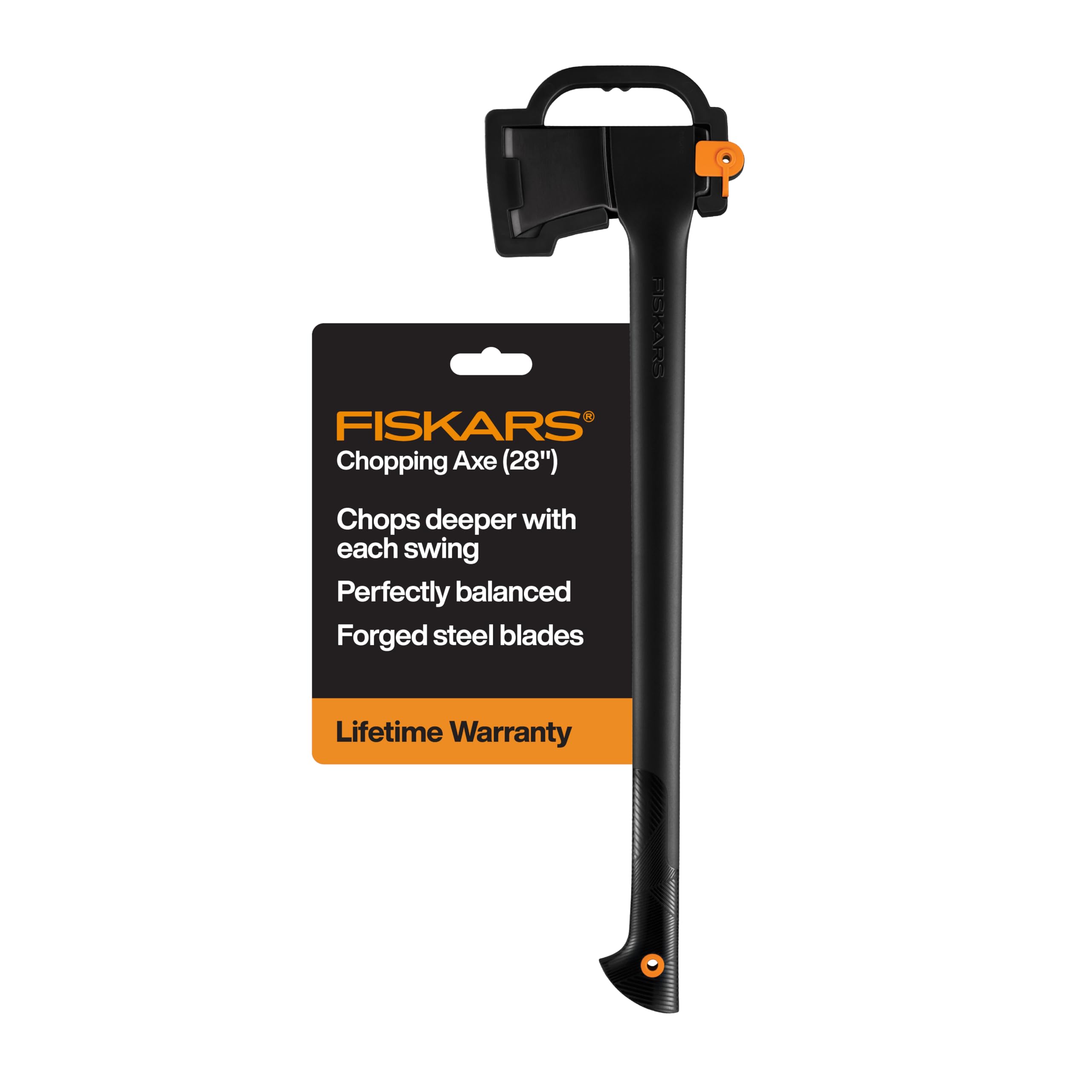
The Fiskars 28-inch chopping axe is the premium pick because it redefines what a camp axe can do when you need real power. Its 3.5-pound hardened alloy steel head, combined with a proprietary blade-grinding technique, delivers a razor-sharp edge that bites deep into wood with every strike. The low-friction PTFE coating is the standout engineering detail here — it reduces drag so the blade slices through rather than getting wedged, which means fewer swings per log.
The handle is Fiskars’ Duraframe composite, which is lighter than steel but absorbs shock better than wood, translating to noticeably less fatigue during a long splitting session. At 28 inches, this is a two-handed tool designed for felling small trees and processing campfire logs up to eight inches thick. The precision-balanced design makes it feel lighter than its 3.5-pound actual weight, and the grip remains secure even with wet hands.
Owners consistently praise its out-of-box sharpness and the way it minimizes vibration. The sheath is basic, but the lifetime warranty provides long-term confidence. If you need a single axe that handles both heavy splitting and campsite prep without wearing you out, this is the benchmark.
Why it’s great
- Ultra-sharp edge ready out of the box
- Low-friction coating prevents sticking
- Excellent shock absorption reduces arm fatigue
Good to know
- 28-inch length is too large for backpack carry
- Basic blade cover is non-insulated and bulky
2. Fiskars 375501-1001 Hatchet

The Fiskars 14-inch hatchet is the gold standard for lightweight campsite splitting and backpacking. Its 0.68-kilogram (1.5-pound) alloy steel head uses Fiskars’ proprietary grinding technique to achieve a remarkably sharp edge that makes short work of kindling and small logs. The low-friction blade coating is a game-changer at this size — it prevents the head from sticking in green wood, a common frustration with budget hatchets.
The Duraframe handle is molded directly over the head, meaning there is zero risk of loosening over time, a frequent failure point in wedged wood-handle designs. At 14 inches, this hatchet is compact enough to fit inside a backpack side pocket, yet the shock-absorbing polymer handle delivers enough swing force to split logs up to four inches in diameter. The molded head guard protects the edge during storage and transport.
Long-term owners report that it holds its edge well even after heavy use and that the grip remains comfortable without blistering. The balance is excellent for one-handed use, making it ideal for carving tent stakes or shaving tinder. This hatchet proves you do not need a big budget for a tool that punches above its weight class.
Why it’s great
- Molded head will never loosen over time
- Lightweight enough for backpacking
- Low-friction coating keeps blade from sticking
Good to know
- Short handle limits two-handed chopping power
- Sheath is basic plastic, not leather
3. Husqvarna Hatchet
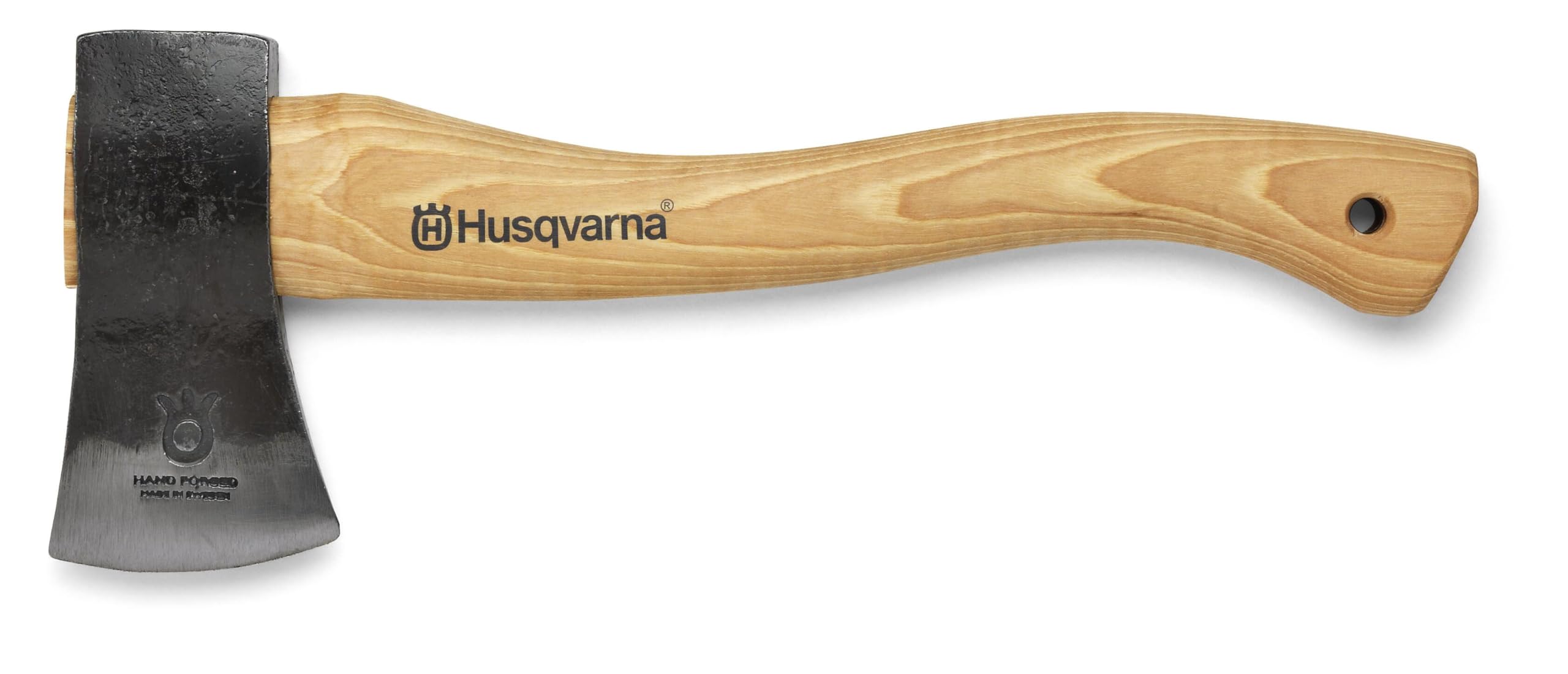
The Husqvarna hand axe is the choice for buyers who value Swedish craftsmanship, traditional forged steel, and the feel of a hickory handle. Its 1.32-pound hand-forged head, made from Swedish alloy steel, comes with visible forging marks that speak to its heritage. The head is heat-treated to a high hardness, which gives it excellent edge retention once you set the initial bevel.
The 15-inch American hickory handle is sanded and oiled, providing a warm, secure grip that absorbs shock naturally. This is a one-handed tool designed for light limbing, carving, and splitting small kindling. The included leather sheath is thick, double-stitched, and secured with a brass rivet — it protects the edge in transit and looks good doing it. Made in Sweden (by Hultafors/Hults Bruk), this hatchet carries a legacy of quality.
Be aware that the factory edge is often described as dull or uneven, requiring an hour or more of hand-filing to achieve a razor-sharp profile. Once sharpened, however, the steel takes and holds a fine edge that outperforms most mass-market alternatives. This is a tool for someone who enjoys the ritual of maintenance and wants an heirloom-quality camp axe.
Why it’s great
- Hand-forged Swedish steel with excellent edge retention
- Premium leather sheath with brass rivets
- Classic hickory handle absorbs shock naturally
Good to know
- Requires significant sharpening out of the box
- Sheath snaps are not very secure
4. Gerber Gear Freescape Hatchet

The Gerber Freescape Hatchet fills the gap between a compact hatchet and a full-size axe, offering a 17.3-inch overall length with a forged steel head that weighs 32.6 ounces. The PTFE (non-stick) coating on the blade reduces friction so the head passes through wood without binding, a feature that makes a noticeable difference when splitting resinous pine or damp logs.
The composite handle is overmolded with a soft-touch rubber grip, providing excellent shock absorption and a secure hold even in wet conditions. This 17.3-inch length allows for two-handed choking up for control or one-handed swing for power, making it versatile for both kindling and small log processing. It is manufactured in Finland (by Fiskars, the same parent company) and shares the same quality-control standards.
Reviewers note that the sheath is bulky and the blade is exceptionally sharp from the factory. The handle’s rubber surface can feel slick when wet if not gripped firmly, but the overall balance and build quality earn high marks. For a camper who wants a single tool that handles everything from splitting firewood to clearing brush with minimal effort, this is a strong mid-range contender.
Why it’s great
- PTFE coating prevents sticking on wet wood
- Excellent shock-absorbing rubber overmold
- Versatile length for one or two-handed use
Good to know
- Bulky sheath takes up space in a pack
- Grip can feel slick when wet
5. NedFoss Warthog Camping Axe

The NedFoss Warthog is a compact, full-tang survival hatchet designed for precision carving, pruning, and light splitting. Its 4.2-inch stainless steel blade is heat-treated to 55+ HRC, offering good edge retention and corrosion resistance. The full-tang construction means the steel runs the entire length of the handle, providing exceptional durability and a balanced center of mass for fine work.
The handle is carved from natural wood with an etched warthog pattern that improves grip texture. At only 9 inches in overall length and 15.2 ounces of weight, this hatchet is highly portable — it can be tucked into a pack or worn on a belt using the included leather sheath. The 5.0mm blade thickness makes it robust enough for batoning through smaller logs.
Owners appreciate the out-of-box sharpness and the comfortable wood handle, though some note the sheath is stiff and makes blade removal difficult at first. It is not designed for heavy splitting — the short handle limits leverage — but for carving tent pegs, shaving tinder, and light brush clearing, it is a precise and reliable tool.
Why it’s great
- Full-tang steel construction is exceptionally durable
- Compact 9-inch length perfect for backpacking
- Sharp stainless steel blade resists corrosion
Good to know
- Leather sheath is stiff and hard to draw from
- Too short for serious wood splitting tasks
6. Tivoli 16.5 Inch Camping Hatchet
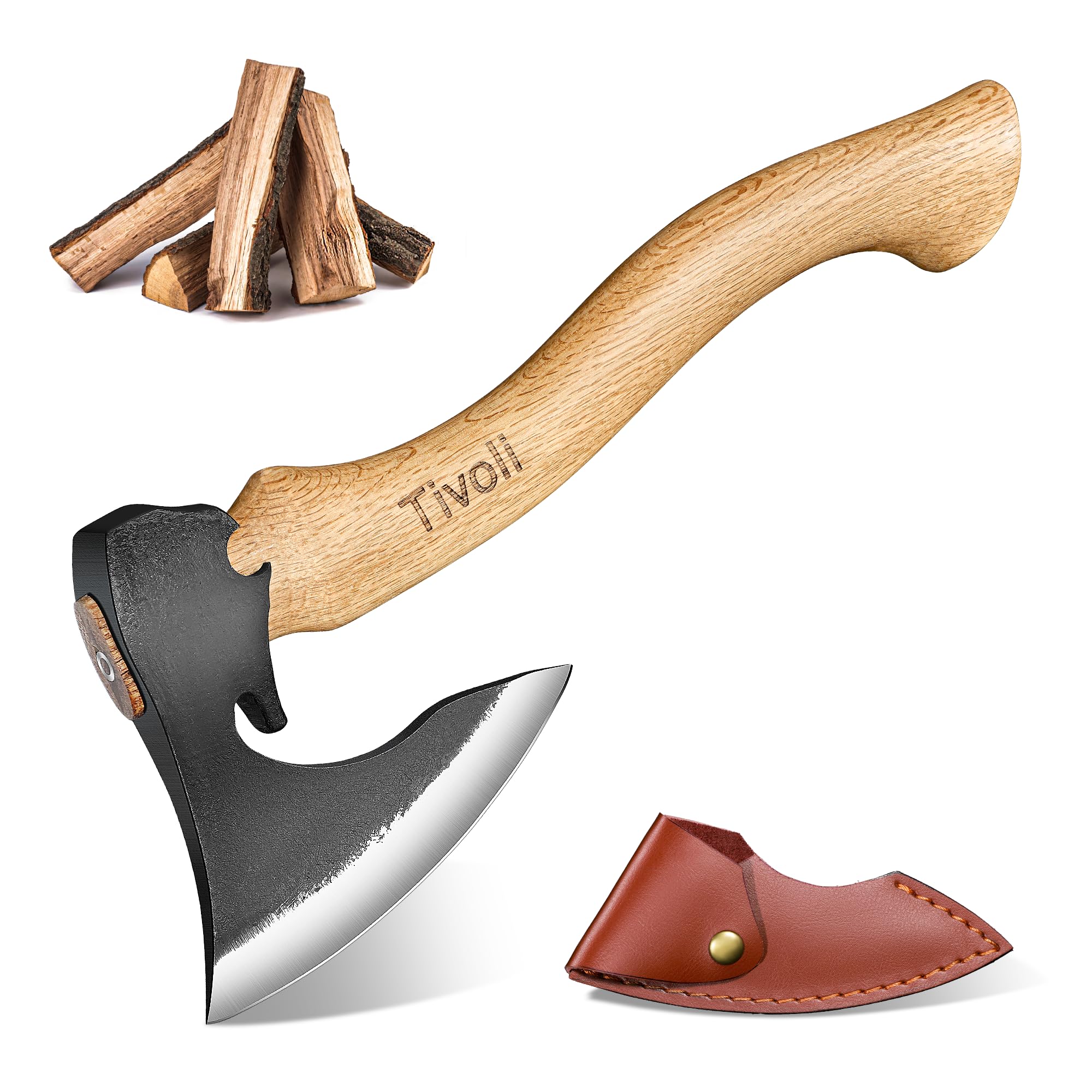
The Tivoli 16.5-inch hatchet stands out for its bearded blade profile and hand-forged high-carbon steel construction. The bearded design allows you to choke up on the blade directly behind the edge for controlled carving, making this hatchet as suited to woodworking detail as it is to splitting firewood. The 2.63-pound head provides substantial momentum for its size.
The European beech wood handle is attached using a traditional wood-and-steel wedge system, providing a secure fit that can be tightened over the life of the tool. The 16.5-inch length gives you leverage for two-handed swings while remaining compact enough for one-handed work when choked up. The included leather sheath protects the blade during storage, though it lacks a belt loop for convenient carry.
User feedback is positive on the build quality and the way the hatchet feels balanced in the hand, but many note the factory edge is dull and requires significant sharpening before first use. Once properly honed, the high-carbon steel holds a fine edge through repeated sessions. This hatchet is ideal for the bushcraft enthusiast who wants a single tool for both splitting and fine carving.
Why it’s great
- Bearded blade profile allows precise carving control
- Hand-forged high-carbon steel holds edge well
- Good balance between split power and carving detail
Good to know
- Factory edge is dull and needs sharpening
- Sheath does not have a belt attachment
7. Tivoli 15 Inch Bushcraft Axe

The Tivoli 15-inch bushcraft axe offers the most accessible entry point into a traditional wood-handled camp axe without sacrificing core performance. Its head is forged from high-carbon steel that has been heat-treated and quenched to achieve a high hardness level — the same metallurgy used in axes costing significantly more. The 2.3-pound head weight provides enough mass to split standard kindling and small logs effectively.
The imported ash wood handle is shaped ergonomically to reduce hand fatigue, with an added protective coating that resists moisture and slipping. At 15 inches, the handle length is ideal for one-handed use while still allowing a choked two-handed grip for heavier cuts. The hatchet arrives in a gift box with a leather blade cover, making it a ready-to-gift option.
The most common owner criticism is that the factory edge arrives very dull and requires filing and sharpening to reach a workable state. Once sharpened, the carbon steel holds its edge well and can handle repeated use. The lack of a belt sheath is a limitation for hikers, but for base-camp use at an entry-level investment, this axe delivers genuine utility.
Why it’s great
- Affordable entry into a carbon steel bushcraft axe
- Ergonomic ash wood handle with moisture coating
- Comes in a gift-ready presentation box
Good to know
- Requires significant sharpening before first use
- No belt-loop sheath included for carry
FAQ
How often should I sharpen my camp axe?
Can I use a camp axe for batoning wood?
What length camp axe is best for backpacking?
Final Thoughts: The Verdict
For most users, the best camp axe winner is the Fiskars 28″ Chopping Axe because its low-friction coating, shock-absorbing handle, and ultra-sharp blade make heavy splitting feel effortless. If you want a lightweight backpacking hatchet that packs a punch, grab the Fiskars 14″ Hatchet. And for traditionalists who value hand-forged Swedish steel and a hickory handle, nothing beats the Husqvarna Hatchet.