
A camp backpack that shifts weight onto your shoulders instead of your hips turns a beautiful trail into a painful chore. The frame, suspension, and hip belt determine whether you finish a multi-day hike feeling strong or counting down the miles to the trailhead. Choosing the right internal frame and capacity isn’t about brand loyalty—it’s about matching your torso length and load weight to a suspension system designed to carry it efficiently.
I’m Min — the co-founder and writer behind Gadgets Feed. I’ve analyzed the suspension designs, frame materials, and load-lifter geometry across dozens of camp backpacks to isolate what actually determines carry comfort on multi-day treks with 30 to 50 pounds of gear.
This guide breaks down the seven best options across premium and mid-range tiers so you can confidently pick the best camp backpack for your next overnighter or week-long expedition.
How To Choose The Best Camp Backpack
Selecting a camp backpack isn’t about grabbing the largest capacity you can find. An overstuffed 70-liter pack with a weak frame will hurt more than a properly fitted 50-liter pack with a stiff aluminum stay and supportive hip belt. Start with the suspension system, then match volume to your trip length.
Frame and Suspension Type
Internal frame backpacks use either a single aluminum stay or a perimeter wire frame to transfer load from your shoulders to your hips. A lightweight frame sheet alone isn’t enough for loads above 30 pounds—look for a rigid metal stay or a full wire perimeter frame. Adjustable torso length is critical: a pack that’s too tall forces the hip belt to sit below your iliac crest, making it useless for weight transfer.
Hip Belt and Load Lifter Design
A padded hip belt that wraps around your iliac crest takes 70 to 80 percent of the load off your shoulders. Thick foam padding and an ergonomic curve matter more than belt width alone. Load lifter straps, the small webbing loops at the top of the shoulder straps, pull the pack closer to your back and prevent the bag from sagging rearward. Cheaper packs often omit proper load lifters or use flimsy webbing that slips during the day.
Capacity and Compartment Layout
For a weekend trip, 30 to 50 liters is enough for a sleeping bag, tent, food, and layers. Multi-day trips beyond three nights typically require 50 to 70 liters. Look for a sleeping bag compartment with a zippered divider, side water bottle pockets that angle forward so you can reach them without removing the pack, and at least one external mesh stash pocket for wet gear or a rain jacket.
Quick Comparison
On smaller screens, swipe sideways to see the full table.
| Model | Category | Best For | Key Spec | Amazon |
|---|---|---|---|---|
| Osprey Rook 50L | Premium | Multi-day comfort up to 35 lbs | Adjustable AirSpeed suspension | Amazon |
| Kelty Redwing Tactical 50L | Mid-Range | Rugged versatility with U-zipper | Aluminum stay frame | Amazon |
| Kelty Asher 65L | Premium | Custom torso fit on the trail | Fit Pro adjustable torso | Amazon |
| Mardingtop 65L+10L | Mid-Range | Modular MOLLE customization | 600D polyester shell | Amazon |
| MOUNTAINTOP 70L | Mid-Range | Large capacity with side access | Aluminum alloy frame plate | Amazon |
| Mardingtop 60L Tactical | Budget | Budget-friendly modular pack | MOLLE webbing system | Amazon |
| Osprey Stratos 34L | Premium | Day hikes and ultralight overnighters | AirSpeed ventilated backpanel | Amazon |
In‑Depth Reviews
1. Osprey Rook 50L Men’s Backpacking Backpack

The Osprey Rook 50L delivers the brand’s hallmark AirSpeed suspension in a clean, lightweight package that handles loads up to 35 pounds without shoulder fatigue. The tensioned mesh backpanel creates a 4-inch air gap between your spine and the pack, which drastically reduces sweat buildup on warm ascents. At just 3.6 pounds, it keeps your base weight low while the LightWire frame transfers weight directly to the padded hip belt.
Integrated rain cover stows in its own pocket under the pack, so you never lose it in your tent at midnight during a sudden downpour. The zippered sleeping bag compartment with a floating divider lets you separate wet gear from dry clothes, and the angled water bottle pockets are reachable without shrugging a shoulder strap loose. Reviewers consistently note the comfort at 30-pound loads over 26-mile days, with one buyer putting hundreds of trail miles on the bag without frame failure.
The lack of a large external mesh pocket is the only notable omission for hikers who like to stash a wet tarp or jacket externally. For multi-day trips where sweat management and load stability are the top priorities, this is the most complete package in the mid-premium tier.
Why it’s great
- AirSpeed suspension keeps your back ventilated on long hikes
- Integrated rain cover is always with the pack
- LightWire frame supports up to 35 pounds comfortably
Good to know
- No large external mesh pocket for wet gear
- Panel loading only—no top access to main compartment
2. Kelty Redwing Tactical Backpack 50L
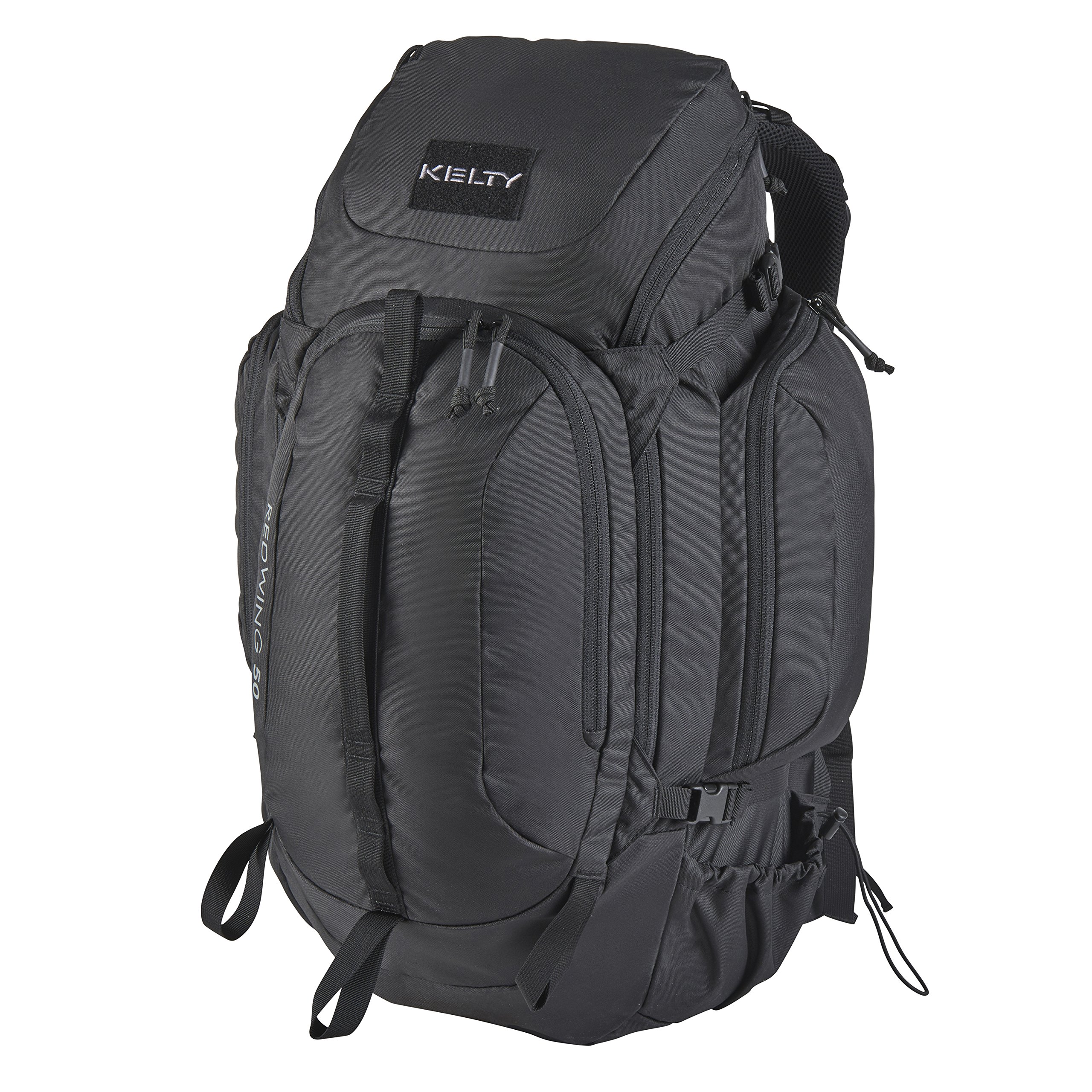
Kelty built the Redwing Tactical to military specifications, and that shows in the heavy-duty stitching, reinforced seams, and the aluminum stay that gives the frame structure even under 40-pound loads. The hybrid-loading U-zipper combined with a clamshell main opening makes packing and unpacking fast—you can see every item without fishing through a top-loading tube. The Dynamic AirFlow back panel uses a mesh-covered foam ridge that keeps some air moving, though it doesn’t match the Osprey’s suspension gap.
Side water bottle pockets double as pass-throughs for trekking poles or an ice axe, and the removable waistbelt lets you switch to a minimalist carry when you’re not hauling heavy loads. Several reviewers note that the laptop compartment also fits a 3-liter hydration bladder, and the PALS webbing on the bottom and waist belt allows you to attach accessory pouches. The pack weighs 4.1 pounds, which is reasonable for a 50-liter tactical frame.
The main compartment layout is fairly open without much internal organization—you’ll need packing cubes or stuff sacks. The grab handle is also somewhat flimsy for a pack built to military spec. For hikers who want a rugged do-everything pack that transitions from trail to travel, this is a smart mid-range workhorse.
Why it’s great
- U-zipper clamshell opening for easy gear access
- Aluminum stay frame supports heavy loads without sagging
- Pass-through side pockets hold trekking poles securely
Good to know
- Minimal internal organization requires packing cubes
- Grab handle is not as robust as the rest of the pack
3. Kelty Asher 65L Backpack

The Kelty Asher 65L brings adjustable torso length without the price premium of ultralight cottage brands. The Fit Pro system uses a ladder-style adjustment that you can tweak on the fly when you shed layers and your torso length effectively changes. The perimeter frame with an aluminum stay supports the recommended 30-to-50-pound carry range, and the Amp Flow ventilated back panel uses foam channels to reduce back sweat—a step up from basic foam slabs found on cheaper internal frame packs.
Weight is a strong point at just 3 pounds 5 ounces, making it one of the lightest 65-liter packs in its segment. The sleeping bag compartment, hydration sleeve, and load lifter straps are all present and functional. Reviewers who used the Asher for multi-day trips and daily commuting alike praise the build quality and the easy-fit adjustment, with one buyer reporting no signs of wear after two years of daily use. The materials use C0 and PFC-free DWR polyester, which is a meaningful eco-conscious choice for hikers focused on reducing their chemical footprint.
The hip belt padding is serviceable but thinner than what you’d find on a dedicated expedition pack, and it won’t be as comfortable at sustained 50-pound loads. For backpackers carrying 30 to 40 pounds on weekend trips, the weight savings and adjustable fit make this a premium pick at a reasonable entry point.
Why it’s great
- Fit Pro torso adjustment lets you dial in length mid-hike
- Weighs only 3 lb 5 oz for a 65-liter frame pack
- PFC-free DWR shell is an environmentally responsible choice
Good to know
- Hip belt padding is thinner than expedition-level packs
- Materials feel slightly less robust than premium competition
4. Mardingtop 65L+10L Internal Frame Backpack
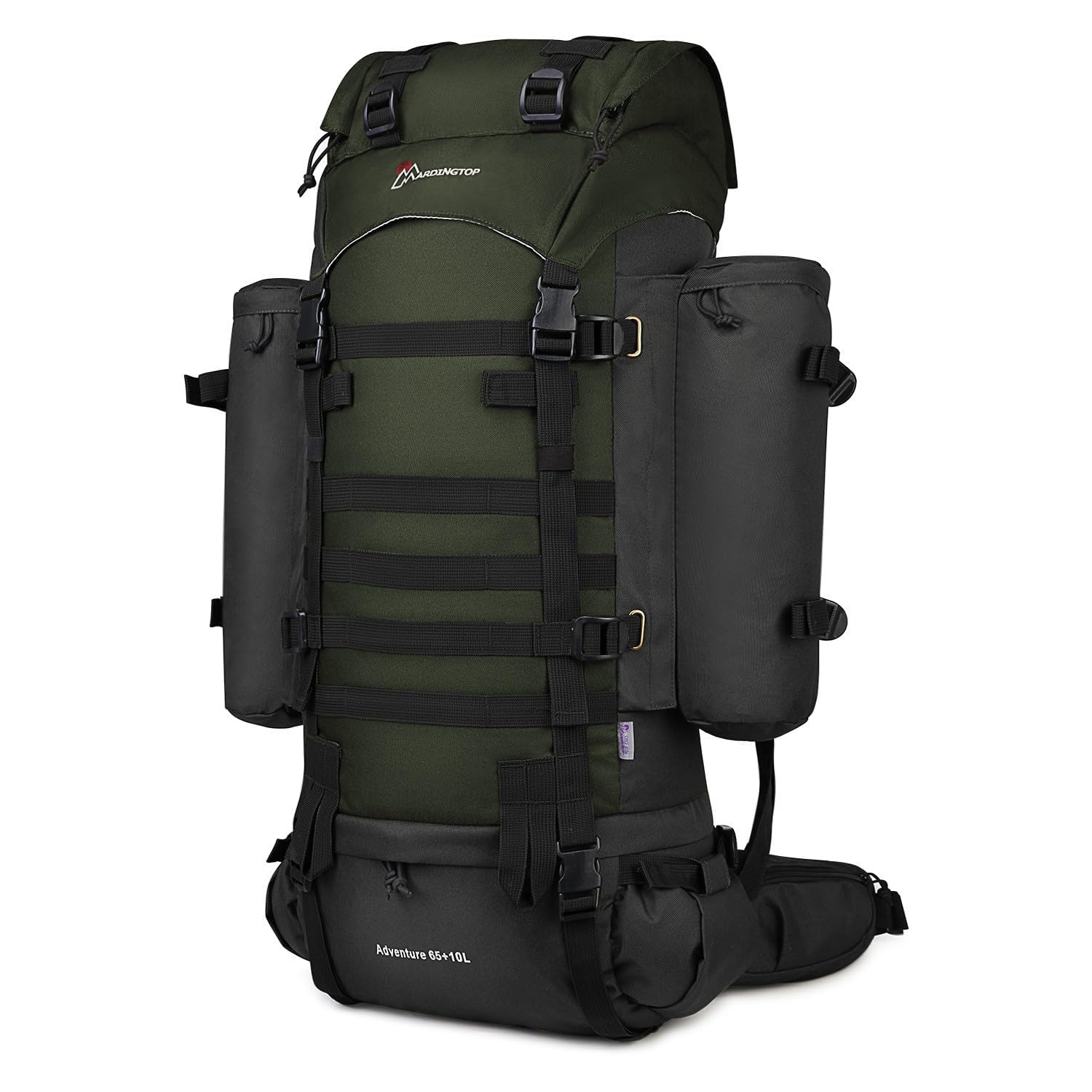
The Mardingtop 65L+10L combines a 65-liter main body with a detachable 10-liter daypack, giving you a summit pack for side excursions without carrying the full frame. The 600D polyester shell is thick enough to resist brush and abrasion, and the internal aluminum stay provides a stable frame for loads up to 40 pounds. Reviewers who hiked sections of the Pacific Crest Trail with this pack reported it held up for hundreds of miles with no frame or zipper failures, which is impressive for a mid-range pack.
The MOLLE webbing covers the front and sides, letting you attach pouches, a sleeping pad, or a tent. The internal drawstring compartment separator organizes gear by weight, and the bottom zippered compartment offers dedicated access to a sleeping bag or dirty clothes. One reviewer noted the side zipper on the main pouch tends to unzip during hiking, which is a design quirk to monitor—zipping it upward instead of downward may help.
The hydration hose exits through the top drawstring rather than a dedicated port, which makes routing the tube slightly awkward. The shoulder straps also tend to slip under heavy loads unless you cinch them tight. For hikers who prioritize modularity and durability over refined fit, this pack delivers exceptional value.
Why it’s great
- Detachable 10L daypack adds versatility for summit hikes
- 600D polyester resists abrasion from brush and rock
- Full MOLLE webbing allows extensive gear customization
Good to know
- Hydration hose exits through top drawstring, not a dedicated port
- Side pouch zipper can unzip during movement
5. MOUNTAINTOP 70L Internal Frame Backpack

The MOUNTAINTOP 70L uses a lightweight aluminum alloy frame plate rather than a tubular stay, which provides adequate load transfer for trips where you’re carrying 30 to 45 pounds. The 70-liter volume is generous enough for a full week of gear, including a tent, sleeping bag, camp stove, and food. A side zipper entry gives you access to the main compartment without untying the top lid, which is helpful when you need to grab a rain jacket mid-hike. The sleeping bag compartment at the bottom keeps your bag isolated from the rest of your gear.
YKK zippers are used throughout, a significant reliability upgrade over generic zipper tracks found on many budget packs. The adjustable torso system accommodates a wide range of body sizes, and the padded shoulder straps and mesh back panel provide reasonable comfort for a pack at this capacity. Reviewers consistently mention that the pack is comfortable even when fully loaded, and the included rain cover kept gear dry during a two-night trip in wet weather.
The hydration port is small, making it tricky to feed larger bladders through, and the side pocket is oversized, which can cause a water bottle to flop around if not full. At just over 4.4 pounds, it’s not ultralight, but the combination of YKK hardware, internal frame, and 70-liter capacity makes it a strong mid-range option for extended trips on a budget.
Why it’s great
- 70-liter capacity fits a full week of camping gear
- Side zipper lets you access items without opening the top
- YKK zippers add long-term reliability
Good to know
- Hydration port is too small for larger bladder tubes
- Side water bottle pocket is oversized for standard bottles
6. Mardingtop 60L Military Internal Frame Backpack
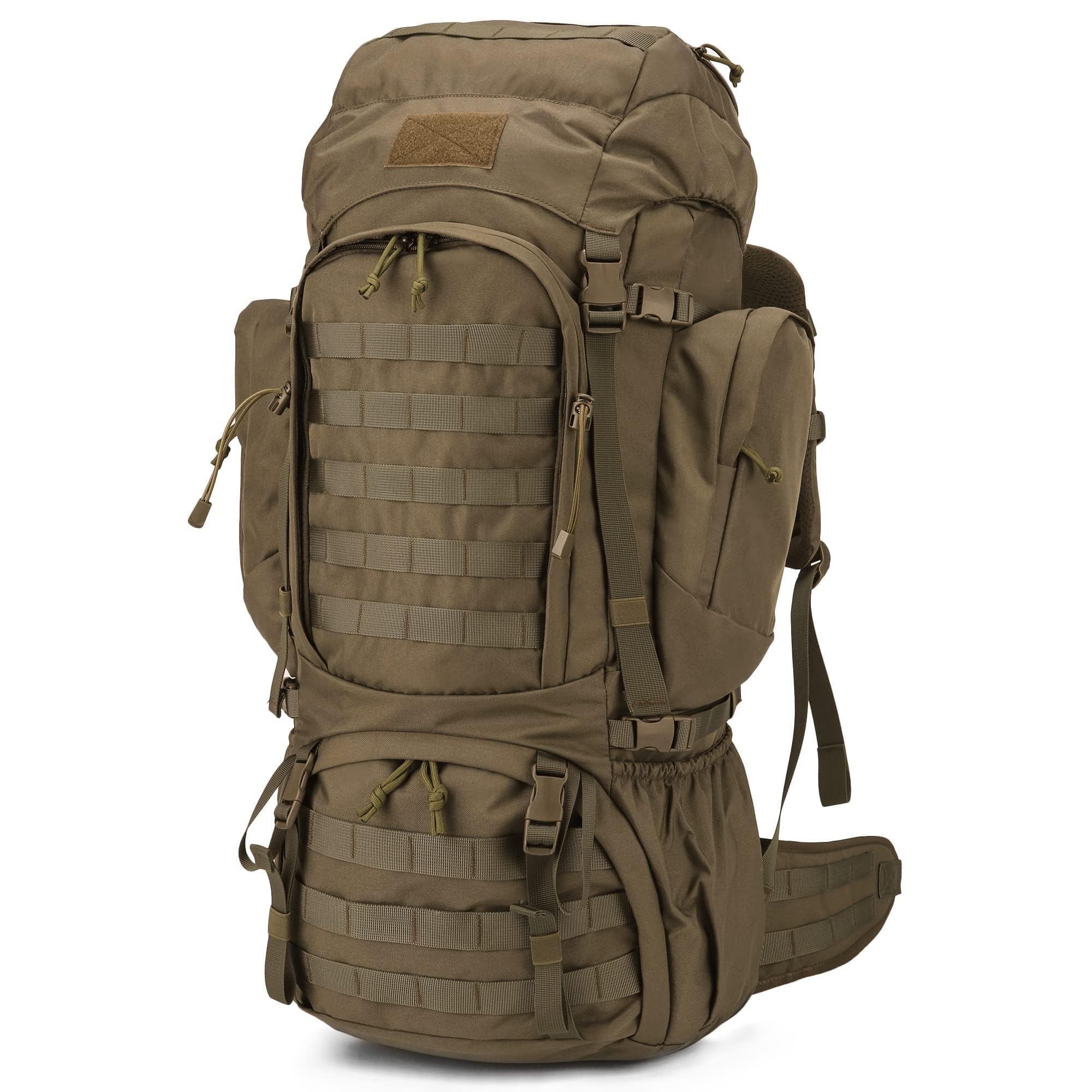
The Mardingtop 60L Tactical is the entry-level option that still brings an internal frame, YKK zippers, and full MOLLE webbing to the table. The 600D polyester shell is durable enough for bushwhacking and general abuse, and the modular layout allows you to attach extra pouches, a sleeping pad, or a tent via the MOLLE loops. The top zippered pocket is sized perfectly for the included rain cover, so that critical piece won’t get lost in the main compartment.
The hydration sleeve fits a 2.5-liter bladder and also works as a padded laptop compartment for travel versatility. Reviewers who used this pack for ruck runs reported it held up to 90 pounds for short distances, though the hip belt lacks the thick padding needed for sustained heavy loads beyond 3 miles. The shoulder straps are narrower than premium packs, which can lead to pressure points on longer carries.
The rain cover is functional but thin, and the waist belt cinches can loosen under heavy loads if not double-backed through the webbing. For beginners or customizers who want a budget-friendly platform with MOLLE modularity and YKK reliability, this pack delivers where it counts most.
Why it’s great
- YKK zippers and 600D polyester for solid build quality
- MOLLE webbing allows modular pouch attachment
- Hydration sleeve doubles as a laptop compartment
Good to know
- Hip belt lacks padding for sustained heavy loads
- Shoulder straps are narrow and may cause pressure points
7. Osprey Stratos 34L Men’s Hiking Backpack

The Osprey Stratos 34L is the day hike and ultralight overnighter specialist in this list, with a 34-liter capacity that works as a carry-on while still carrying enough gear for a one-night trip. The AirSpeed suspension system uses a tensioned mesh backpanel on an injection-molded frame, creating a gap that keeps air flowing across your entire lower back. Reviewers consistently praise this as the driest back on the trail, even during strenuous climbs.
The burly #10 zipper opens the panel-loading main compartment wide, so you can pack a change of clothes, a rain jacket, snacks, and a first aid kit without fighting a narrow opening. The internal hydration sleeve routes the hose through a dedicated backpanel port, and the included rain cover ensures your gear stays dry in sudden weather. At 3.15 pounds, it’s the lightest pack in this roundup while still having a proper frame and load lifters.
The 34-liter volume is tight for multi-day trips beyond two nights unless you’re an ultralight packer. The hard frame geometry also means it won’t compress well for airline overhead bins if you need to store it in a suitcase. For hikers focused on day trips and fast-and-light overnighters where ventilation and comfort are non-negotiable, the Stratos is the definitive premium choice.
Why it’s great
- AirSpeed suspension delivers best-in-class back ventilation
- Panel-loading with #10 zipper for wide gear access
- Included rain cover and hydration sleeve add trail convenience
Good to know
- 34L capacity is too small for multi-day trips with bulky gear
- Hard frame makes it less compressible for storage
FAQ
How many liters do I need for a 3-day camping trip?
Should the hip belt touch my hip bones or sit above them?
What does MOLLE webbing do on a camp backpack?
Final Thoughts: The Verdict
For most users, the camp backpack winner is the Osprey Rook 50L because the AirSpeed suspension keeps your back dry and the LightWire frame handles multi-day loads without shoulder strain. If you want modular MOLLE versatility and a detachable daypack, grab the Mardingtop 65L+10L. And for day hikes and ultralight overnighters where ventilation is everything, nothing beats the Osprey Stratos 34L.